TNCS Rings In Year of the Snake with a “Scaled Up” Lunar New Year Event!

As a multilingual school offering instruction in English, Spanish, and Mandarin Chinese, The New Century School honors the Lunar New Year in high style each year. Celebrating the new year and observing many of its rich cultural traditions is not only wonderful fun for TNCS students and highly anticipated each year, it also finds them eagerly speaking, reading, and writing in Mandarin Chinese—as will be revealed.
This year’s Chinese zodiac representative is the Wood Snake, which heralds a year to explore, get inspired, and share your light—a nice respite from the challenging Year of the Dragon just passed. TNCS students did just that in the Lunar New Year Event held Thursday, January 30th: they explored, they got inspired, and they shared their lovely light with packed audience.

TNCS Community Sees Red!

As in, marveling at all of the beautiful red Lunar New Year decorations gracing the auditorium! Many of these decorations are actually projects that students in all divisions worked on throughout the month of January. You’ll see Chinese penmanship, history, lore, and more!

This event was planned and executed by Yan “Eve” Lui, who has lots of event-planning experience:

The whole Chinese teacher team helped a lot. Ms. Steffan and Ms. Simonetti played key roles in the planning and operating of the event. Ms. Steffan sent emails to parents for volunteers, and the parent volunteers helped so much during the event. Ms. Arelis helped to search the leftover materials from previous years. Mr. Mike helped with the decoration and the equipment setting and training for me.  Here are some key points that helped a lot during the planning:
• I asked Ms Jia for the experiences that she had during the celebration last year.
• During the planning meeting with Ms. Steffan and Ms. Simonetti, we talked about my ideas and how we should adjust and suit the best expectation to current parents. There are cultural differences and social norm differences, and it is the communication that helped us to combine my former knowledge and experiences in China with the TNCS school and parent preferences.
• Ms. Simonetti also has experience in event planning. She took care of the layout of the stands in the consideration of the queueing directions. She organized the student hosts scripts and prepared a stand for putting the scripts of the hosts. She also tested the volume of the microphone to make sure that it was not too loud. She organized the shop stand to make it look appealing. She brought table cloths from home to make the table look neat and nice. She basically took care of the control of the whole operation and many details to make sure it went well.
• I intentionally encouraged more students to participate in the event. I talked to their teachers and organized them to volunteer. They were the hosts, the helpers, the photographers, the video designers… This is part of education, which is to provide real situations to practice what they have learned at school and gain experience and real knowledge. They practiced self-confidence, communication, team work, trust, courage, offering help, performing on the stage, skills of design, and so much more. One minor intention is to make sure that they all come to the event. Since they were involved they and their family had to come. This is to make sure more people come to the event, and we did attract around 120 people that night. This is a big success because all our performances are to show how much we have taught our students Chinese language and culture. (The performances, the happy new year greeting videos, and the posters on the wall are all presentations.)

This slideshow requires JavaScript.

TNCS Head of School Ann Marie Simonetti gave opening remarks, introducing the event and thanking attendees:

Xīnnián kuàilè—Welcome and Happy New Year! It’s wonderful to see so many of you here as we gather and welcome in a new year filled with growth, unity, and endless abilities. . . one that we hope brings joy and meaningful connections for all of you and us. We’re excited to share this special evening with you. I hope you enjoy the performances and all of the lovely things that our students and faculty and staff put together for you as well as, most importantly, the spirit of community that makes this event so meaningful here at TNCS. Thank you for being a part of our celebration this evening.

The audience was then treated to some video footage of TNCS preprimary students practicing their Chinese lessons with Liu Laoshi (Jia), who also teaches Chinese to TNCS middle schoolers.

Next, a video of TNCS K–2 students!

Then, some older TNCS students danced onstage in traditional Chinese clothing.

A group of 6th- through 8th-graders then demonstrated “pi ying xi,” which is a traditional Chinese puppet show using paper cutout puppets and shadows to create a beautiful effect. See for yourself!

After the performances, attendees had multiple activities to choose from, including traditional craft stations, games, and food—and even an auction for merchandise! Oh, and don’t forget the photo booth!

This slideshow requires JavaScript.

About the auction, Eve Laoshi explained:

We purchased products that have unique Chinese cultural features, and then it came to us that we needed to introduce those cultural features via the products to the parents as well as to generate more revenue and create an exciting atmosphere for the event as well. We also chose good causes for parents to bid on and to support our Language Immersion Program at TNCS. That is why we decided to do the auction. We had a shop stand as well to sell all other products, and most of them were sold out that night. Ms. Simonetti has experience in auction operations, and it is her wisdom to put some items together and to carry out a casual auction that suited the situation at the event. She decorated the items gorgeously on the plates and had me show the plates around the audience during the auction.

Said Ms. Simonetti:

The event was a beautiful display of community and a reminder of the transformative power of coming together. Our staff, students, and volunteers brought the space to life with beautiful artwork, traditional decorations, delicious smells, and masterful performances. But beyond that, I felt like the presence of staff, alumni, students, and families—spanning multiple generations—truly transformed the space, creating a palpable sense of connection and belonging.

Happy New Year, everyone! 新年快乐! Xīnnián kuàilè! Honor this time to renew your goals, embrace changes that align with your true self, and shed your old skin!
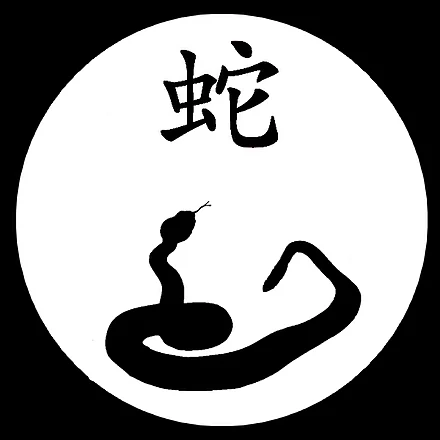

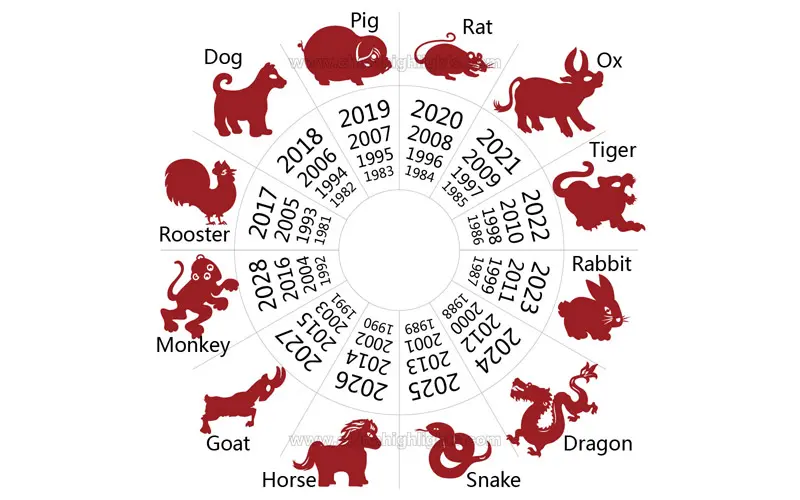
Did you know that TNCS is partway through its second full turn of the Chinese zodiac? And that this is TNCS’s second snake year? TNCS launched in the Year of the Tiger, 2010. Since then, TNCS has marked many a Lunar New Year in a variety of ways!

Immersed had not yet met the world for the Lunar New Year of 2012, but you can be sure that Year of the Dragon was one to behold.
Check-In with TNCS’s Elementary and Middle School Mandarin Chinese Program!

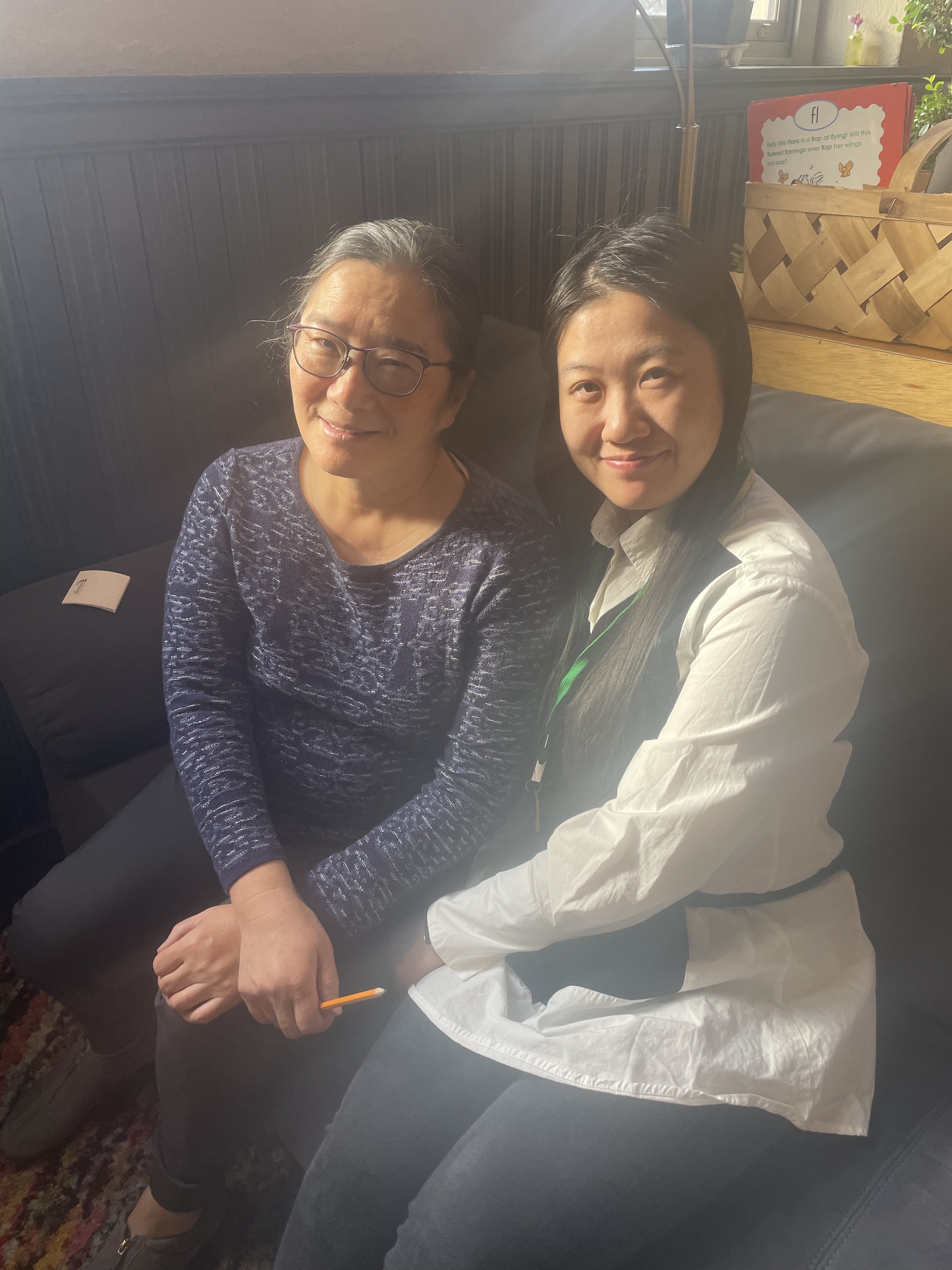
Multilingualism is a cornerstone of academics at The New Century School. The Mandarin Chinese program is therefore a “jewel” in the school’s crown, along with the Spanish and ELA programs. Speaking of jewels, the current TNCS Chinese team has the ongoing support of Xie Laoshi—aka “Jewel! Xie Laoshi is a veteran TNCS instructor, having led the classroom and multiple summer camps, including StarTalk! Xie Laoshi is very pleased to have mentored the newest member of the elementary/middle school Mandarin team, Jia Liu (“Liu Laoshi”).

Meet Jia Liu!

Liu Laoshi came to the United States in 2021 to pursue a master’s degree in Music Education at the University of Auburn. After graduating, she moved to Baltimore with her partner. As luck would have it, her neighbor turned out to be TNCs’s K/1 Mandarin immersion teacher Cui Laoshi, who recommended she apply at TNCS for the 2023–2024 school year. Xie Laoshi was immediately impressed with her work ethic, and she is now fulfilling what is known as Optional Practical Training during her time at TNCS.

Liu Laoshi is originally from Luoyang, an industrial city in central China’s Henan province, where evidence suggests Chinese civilization originated.

She plans to bring her musical prowess into the Chinese classroom in various ways to make learning fun and well-rounded for her students. Although she teaches Mandarin Chinese at TNCS, she has a rich background in teaching music—her family owns a music school (Golden Vienna Academy of Piano) in Luoyang, and Liu Laoshi still helps run it long distance.

Mandarin Chinese Curriculum

Together, the Mandarin team (that also includes Cui Laoshi in K/3 and Wang Laoshi in preschool) have ensured that the curriculum is up to date and effective. As before, Xie Laoshi’s approach aligns with that of the American Council on the Teaching of Foreign Languages (ACTFL). ACTFL continues to promote the 5 Cs—an ingrained part of the Mandarin program at TNCS from the very beginning, but they have adapted and innovated over the last decade to promote additional effective language instruction and assessment practices that align with current research in education and language acquisition. Among these, two prominent instructional approaches are “backward design” and “project-based learning” (PBL).

Xie Laoshi explained these two approaches in detail and how the Mandarin Chinese team implements them in the classroom.

Backward Design

The essence of backward design is to start with the desired results (end goals or objectives) and then design instruction and assessment to achieve these goals. This ensures that educators first identify the desired outcomes and proficiency levels for students, then they design the learning experiences and assessments to achieve these targets. ACTFL’s standards emphasize performance goals, which align well with the backward design model. By first determining what students should be able to do in the target language, educators can then plan meaningful instruction to help students reach those performance goals.

Project-Based Learning

In PBL, students work on a project over an extended period, which challenges them to solve a real-world problem or answer a complex question. PBL encourages authentic language use in meaningful, real-world contexts and promotes the integration of the three modes of communication (interpretive, interpersonal, and presentational). It encourages students to research, collaborate, communicate, and reflect in Mandarin Chinese, which makes the learning experience more engaging and relevant.

Part of PBL is the “can-do” statement: these are performance descriptors that articulate what language learners can do in terms of communication at various proficiency levels. They offer a clear way to describe language skills in the domains of speaking, listening, reading, and writing. They also serve as benchmarks for assessing a learner’s progress and growth over time; they help educators and learners to understand where a student is currently and what they need to work on to reach the next level of proficiency. In essence, can-do statements act as a bridge between the theoretical framework of the proficiency guidelines and the practical application in the classroom.

Want to see PBL in action? 

For their first-quarter project, TNCS students were asked to create characters and elaborate on who these characters are and what their lives look like. To familiarize students with what they were trying to achieve, Xie and Jia Laoshi used teaching language proficiency through storytelling (TPRS). They start with a one-word image and collaboratively build on that (such as with a name, gender, age, personality, and so on) to tell a story. Their launch visual was “door.” “Each day you circle around the image, building first maybe the appearance and continuing from there,” explained Jewel. Lots of repetition happens, and students start understanding grammar patterns and how to use conjunctions. They love this character, so they want to keep talking about it.”

Then, they were let loose to create their own individual characters! Part of the genius of this TPRS project is that students had to read, write, and think in Chinese, and they also had to present their characters to the rest of the class. As one student described it, “I thought it was a really fun project. It was really great to make our own characters. I learned a lot, and it helped improve my comprehension.” This student, by the way, is learning Mandarin Chinese for the first time! (Xie Laoshi credits the prework they did as a class as well as the concept of “comprehensible input”—a linguistic theory that states that second language learners need to be exposed to linguistic input slightly above their current language level so that they can understand new inputs—for this student’s success so far).

This slideshow requires JavaScript.

And here is a sample presentation!


Other projects that TNCS students have been working on are what Liu Laoshi calls “mini Chinese dramas.” Fortunately, she is an accomplished videographer and captured one on film for us.


All in all, Mandarin Chinese class is a highpoint of TNCS students’ day. Xiǎngshòu nǐ de xuéxí, TNCS students! 享受你的学习

New Year’s Resolutions at TNCS: Speak Up (in Spanish and Mandarin Chinese)!

Multilingualism is a cornerstone of The New Century School‘s academic approach and a key part of TNCS’s commitment to the whole child. Immersed has reported on the importance of multilingualism several times (and is even named in its honor), but ongoing research continues to reveal fresh advantages of this practice, so we’re resolving to speak up about this rich topic in the New Year!

Multilingualism at TNCS

We live in an interconnected world more so now than ever before. This interconnectedness can bring us together when we welcome and embrace diversity. Thus, being able to communicate with people of various cultural and ethnic backgrounds is vital to thriving in our global society and is among the many well-established advantages of multilingual education (listed below for your convenience).

At TNCS, students learn English, Spanish, and Mandarin Chinese, both inside the classroom and out. We’ll get more fully into what this means below, but first, let’s look at how it all starts. Students start at age 2 in either a Spanish or Mandarin Chinese immersion classroom. As they progress through the divisions, formal instruction in both languages is layered in as they are ready.

Although targeted instruction in the grammar and mechanics of a language is always going to be necessary, for true proficiency, the learner must be able to use the language—to speak it, to read it, even to learn in it. This is why multilingual education intersects so naturally with the Montessori approach, the next division a TNCS student will enter. Maria Montessori advocated for an educational style that fosters independent learning and absorption of language while engaged in “work.” The Spanish and Mandarin Chinese language programs at TNCS flow naturally into this scheme.

While the Montessori classrooms at TNCS are part of the preschool division, Montessori not only lays the foundation for students’ future academic career, but it also continues to inform the educational approach right up through middle school at TNCS with its emphasis on self-directed learning. In elementary and middle school, TNCS students study Spanish and Mandarin Chinese daily, in addition to having many opportunities to use their languages in authentic contexts, as you’ll see below.

Multilingualism Inside and Outside the Classroom

At TNCS, language immersion means being so proficient with language that students can study, for example, Global Studies in that language. Or read a book about China in Spanish. Let that resonate for a moment, and imagine how synergistic that kind of learning is . . . how many kinds of learning are taking place simultaneously within the child’s brain and how they each unlock further potential and space for yet more learning. It’s like a learning wormhole! A learning kaleidoscope!

Back to the inside and outside the classroom part—being an authentic multilingual global citizen (one of the pillars of a TNCS graduate) informs every aspect of learning at TNCS. Here are just some of the ways this happens:

  • Learning from teachers who are native speakers of the language being taught
  • Attending summer immersion camps in either Spanish or Mandarin Chinese
  • Hosting exchange students, interns, and teachers
  • Conversing with students in other countries via Skype
  • Participating in annual celebrations of the Lunar New Year and Spanish Heritage Month
  • Making art, learning songs and dances, and cooking foods that are part of the culture
  • Taking field trips to restaurants and other cultural centers

Individual stories detailing these wonderful adventures are listed at the end of this post. (Hint: and they include oodles of adorable photos of TNCS students past and present!)

Proven Benefits of Multilingualism

For a refresher on the science, here are demonstrated advantages that multilingualism confers.

Also be sure to check out our refreshed Resources page with published articles and studies on the benefits of multiculturalism.)

TNCS Celebrates the Lunar New Year 2020!

The Lunar New Year, also known as the Spring Festival in China, is always a much-anticipated event at The New Century School, but this year is even more special. For the very first time, TNCS hosted a Lunar New Year Night—an evening of songs, dances, performances, and delicious Chinese cuisine for the TNCS community! Put together by TNCS’s amazing Chinese teachers, including Li Laoshi, Ge Laoshi, Hao Laoshi, Joan Laoshi, and Cui Laoshi as well as our beloved interns Manman and Victoria. Extra support in the form of, for example, cooking, decorating, and musical accompaniment, was provided by Monica, Mrs. Hope, Ms. Klusewitz, Ms. Anebo, and Sr. Cueva, and Señora Duncan. It was truly a group effort!

Xīn Nián Kuài Lè (新年快乐 )!

Before we get to the performances, let’s take a moment to reflect on a couple of things: First, what Year of the Rat means.

tncs-happy-chinese-new-year-2020-zodiac-sign-with-gold-rat-paper-cut-art-and-craft-style-on-color-backgro

Ms. Sharma’s 5th- /6th-grade homeroom is basically a “mischief” of rats, with many of those students having been born in 2008. Here is what we can expect from them in the future: “Because of their independence and imagination, they are suitable for creative jobs. These include authors, editors, and artists. . . Rats also pay attention to fine detail. They are fit for technical work, such as engineering and architecture.”

Second, we cannot celebrate the new year without sending some warm thoughts and well wishes to our friends in China facing a lethal outbreak of the 2019-nCov virus. This virus has infected thousands of people in China, and its ill effects have been felt right here at TNCS. Due to travel restrictions, our annual visit by Chinese university students had to be canceled in everyone’s best interest. TNCS hopes to welcome the six female and one male Chinese university students from Shanghai, who were scheduled to be here from February 4th through 18th at a future date to share their talents, gain meaningful American experiences, and participate in a cross-cultural immersion.

We hope for a speedy resolution to the Coronavirus crisis for all.

Lunar New Year Night!

This event was extremely well arranged, which paid off with enthusiastic attendance. Even better, students wore beautiful ethnic costumes ordered from China!

And now to the performances!

First up, grades 2 through 8 performed “Descendants of the Dragon” (合唱: 龙的传人) with piano accompaniment by TNCS 3rd- /4th-grade teacher Taryn Klusewitz.

Next, K/1st-grade students presented a Chinese Ethnic Costume Show (中国少数民族服装秀) with an introduction by TNCS 8th-graders.

Next, 2nd- /3rd-graders presented a play “The Story of Nian” (“年的故事”), preceded by an introduction by a 5th-grader and followed by a quiz from said 5th-grader.

A dance came next, performed by 5th- through 8th-grade girls. “Dance of the Jasmine Flower” (“茉莉花”), introduced by TNCS 4th-graders, was a real treat!

Next was a choral performance of “12 Zodiacs” (“十二生肖”) by 3rd- /4th-grade students. This song was introduced by 8th-graders and followed by another quiz.

Kung fu (中国功夫) performed by 5th- through 8th-grade boys was up next.

In the penultimate performance, K/1st-grade students returned to the stage to sing “Congratulations” (“恭喜恭喜”).

For the Grand Finale, all TNCS elementary and middle school students took the stage to sing a joyous “Happy Chinese New Year” (“新年好”)!

Said Li Laoshi after the event:

新年快乐!(Happy Chinese New Year—the year of the rat!)
Our school’s first Chinese night was a huge success!. The performance was very diverse, including songs, dance, a costume show, a play, and kung fu. All of these programs strongly present Chinese culture. It also was fun and educational, especially the question part, offering a wonderful chance to get all parents involved. We feel so proud of our TNCS community, having amazing students and very supportive parents and colleagues. We looking forward to next year’s Chinese Night!

Feedback from parents has been extremely enthusiastic about TNCS’s inaugural Lunar New Year celebration! Here are some comments:

“Thanks again for everything you do to help the kids learn Mandarin while exploring Chinese culture in an engaging way.”

“Thank you so much for all of your work on this event, it was creative and engaging and a wonderful mix of song, dance, humor, dramatics, and interactive education of the parents.”

“I wanted to take a moment to share the delight of my family and largely everyone with whom I spoke regarding yesterday’s program! Wei Li, the staff and students did a tremendous job showcasing the cultural significance of the occasion. TNCS is so fortunate to have Wei Li on staff – her consistent dedication and gifts are evident in her teaching, student and parent interactions and she truly does the school community proud.”


Wishing you great happiness and prosperity, TNCS community! Gong xi fa cai (恭喜發財)!

TNCS 5th- through 8th-Graders Take the Youth Chinese Test!

On Wednesday, November 13th, upper elementary and middle school students at The New Century School accomplished another big first—they sat for the Youth Chinese Test (YCT). The YCT is an international standardized test and was launched by Hanban (Confucius Institute Headquarters) to encourage non-native students to learn Chinese and improve their Chinese language proficiency. It assesses students’ abilities to use Chinese in their daily and academic lives and consists of a writing test and a speaking test, which are independent of each other. The writing test is divided into four levels; the speaking test is divided into Beginner and Intermediate levels.

From a handout that TNCS students were given:

The YCT Speaking Test assesses test takers’ ability to express themselves orally in Chinese. It is the counterpart to the Level I and II Chinese Proficiency Scales for Speakers of Other Languages and A Level of the Common European Framework of Reference (CEF). Test takers who are able to pass the Beginner YCT can understand and use familiar everyday expressions that meet specific needs for communication.

Miss Lily and Miss Jasmine, both from the Confucius Institute at Maryland in College Park, came to TNCS to proctor the tests, which Wei Li (Li Laoshi) had arranged well in advance. Li Laoshi had been preparing TNCS students for the test for weeks. It lasted about 20 minutes and was divided into three parts comprising a total of 25 items:

  • Part I: Listen and Repeat (15)
  • Part II: Listen and Reply (5)
  • Part III: Describe Pictures (5)

See how a select few TNCS students fared (understandably, only a few consented to having a videographer in the room!).

“The students did a great job on the test,” said Li Laoshi afterward. “Our school will get the final results after 1 month, and the certificates will ship to our school from Beijing 2 weeks later!” The maximum score of the YCT is 100, and 60 is considered a passing score. Li Laoshi also offered an explanation about why this test was important:

The reasons why our students need to take the YCT are, first, they can improve their test skills, which is very crucial when they move to middle or high school. Meanwhile, through the test, our students can realize what their current Chinese levels are, which can help them to set a clear learning goal for their Chinese learning in the future.

For practice in the meantime, here are two Chinese websites Li Laoshi uses in class for Daily Three rotations:

Good luck, TNCS students! Zhù hǎo yùn! 祝好运!