The New Century School occupies an elite niche in education, providing instruction and learning opportunities for students ages 2 all the way up through 8th grade. To accomplish this mighty task, TNCS uses both programmatic and physical divisions to optimally serve the spectrum of needs all these students will have at their very different developmental levels. Importantly, the same amount of care and resources pour into each division.
Now in its 15th year, TNCS began as just a preschool. As the years went by and the student body got older, TNCS sequentially added grades—and physical spaces—to keep up with its students and to be able to continue flourishing, serving an expanded enrollment with its mission.
TNCS’s middle school (grades 6–8) is special for all these reasons, but it also stands out in other ways. It represents a double turning point: it’s the culmination of an 11-year educational journey for many TNCS students, and it’s also the safe place where TNCS students prepare to join a much larger world. As the middle school has matured, other opportunities inherently aligned with TNCS’s mission and identity have emerged—namely, scholarships. TNCS offers these scholarships to Baltimore students in underserved populations who have demonstrated academic excellence. The middle school years are critical in so many ways, and TNCS makes sure its middle school students are advantageously equipped.
Welcome, Andrew Callahan!
Its teachers are the key. Enter Andrew Callahan, who joined TNCS in the 2024–2025 school year as the middle school homeroom teacher. He also serves as both English and Global Studies teacher for grades 6–8, along with the additional role of Student Engagement Coordinator. “In that capacity, I run the social-emotional learning program, help out with the service-learning program, and try to provide additional supports to our students who need it the most,” he explains. He also helps out after school during after care.
Background
Born and raised in Taunton, Massachusetts (“about halfway between Boston and Providence, Rhode Island”), Mr. Callahan’s path to teaching—and to Baltimore—was anything but direct. His educational background includes studying film and psychology at Wesleyan University, with significant experience in leadership training through the Boy Scouts of America. On graduating in 2020, he initially found himself, like many others during that pandemic-dominated time, isolated from the world and not by choice.
His first post-college position was as a work-from-home paralegal, which meant clicking away on a computer all day with no real human interaction. He asked himself, “How can I get out of this and become a more social person again?” The answer: “There are very few more social places in the world than a school.”
So, in 2021, once vaccines became available, Callahan made a dramatic change. “I was getting tired of living so isolated and just kind of wanted the opposite,” he explains. He moved to New York City, where he taught at Brooklyn Ascend High School, a charter school in Brownsville, one of Brooklyn’s poorest neighborhoods. “I’ve always really been interested in how people learn and the way you communicate to get things to stick in the long-term memory,” he shares. “Film felt like an analog into English. A lot of the thinking work is the same, and so it really has gelled really nicely.”
While teaching the students at Ascend (he managed four classes of 30 students each) was often very rewarding, other aspects that can plague any school, like teacher apathy and burnout, had a dampening effect. Fortunately, this did not extend to his newfound passion for teaching in general.
Mr. Callahan at TNCS
When his girlfriend was accepted into a Ph.D. program in clinical psychology at Loyola University Maryland, they moved to Baltimore in August 2024. After becoming interested in TNCS through an online job search, he was further drawn by its smaller size as well as its focus on service learning, which he was well versed in through the Boy Scouts. Also, he says:
The move from high school to middle school was appealing to me because when I was teaching freshman at Ascend, I was struck by how underprepared a lot of them were, and there were so many foundational things that I didn’t have the time to work on with them because we had to keep moving through the curriculum. It’s heartbreaking to have 9th grade students who literally can’t read—and it wasn’t because of intellectual disabilities, it was because no one had given them a shot. I realized I would love the chance to lay these foundations to set students up for success in high school.
Mr. Callahan initially spoke to Head of School Ann Marie Simonetti about coming to work at TNCS, and he said he immediately felt welcomed, a feeling that has persisted. “It really does feel like a place where I’ve gotten to meet so many different types of people,” he said. “My coworkers here are incredibly diverse, and I get to learn from all of them and build relationships with people who I otherwise might not meet.” Mr. Callahan also appreciates the intimate scale of his current position. He can spend one-on-one time with each of his students, a luxury he could not afford with his former larger caseload.
The significant educational challenges he witnessed early in his teacher career have made him particularly appreciative of TNCS’s approach: “Being here is a lot more uplifting. Everyone here cares so much, and no one’s going to get through 8th grade at TNCS not knowing how to read. I’m 100% confident in that.”
In his English classes, Mr. Callahan is currently teaching memoirs. “We’re reading ‘Born a Crime’ by Trevor Noah and another memoir called ‘How Dare the Sun Rise.’ It’s a great story about a woman who was raised in the Democratic Republic of Congo during wartime and then she and her family moved as refugees to the United States when she was middle school age. It’s really exciting for the middle schoolers to be able to read about this completely different middle school experience.”
In Global Studies, he’s connecting this work to ancient African history. “We started the school year at the very beginning of time. We talked about how life formed on the earth, the Cambrian explosion, then moved into the Jurassic period, and then got to humans just before winter break. Now we’re on civilizations.” Although teaching Global Studies is new to him, an uncle taught history (Mr. Callahan was actually also his student at one point), and Mr. Callahan reached out to him for insight. “[My uncle] has this great passion for what it means to be a human, what it means to be a society, and so I used that in class. We jumped way back in time to the hominids and Homo erectus then looked at how we got to today. It’s been really fun to go on this journey with the students,” he said.
Regarding his teaching philosophy, Callahan emphasizes the importance of critical thinking and of meaningful challenge:
I think that’s what education is when it comes down to it—it’s making connections and pathways. One of the things you’re teaching is media literacy and understanding the world, but you’re also teaching students how to think. Math is great and really important for understanding things that you do in your day-to-day life. People don’t think that novels and literature come up in your day-to-day life as much, but when you’re teaching people how to think critically, that’s the skill.
I want students to feel comfortable in my classroom, but I don’t want them to feel too comfortable. Growing does not happen without a little discomfort and a little frustration. Students appreciate being taken seriously, and that means holding them accountable a lot, and that’s what I hope to bring to my classroom and to everything I do here at the school.
Regarding TNCS’s multilingual curriculum, Mr. Callahan says he’s very glad to see it. Although he currently speaks only English (with a dabble of high school Latin), he studied abroad in Sweden, where he encountered jokes like:
What do you call someone who knows two languages? Bilingual.
What do you call someone who knows three languages? Trilingual.
What do you call someone who knows one language? American.
Unless they attend TNCS, that is!
Mr. Callahan is also enjoying his new city and exploring its quirky character with his girlfriend. Coming from New York City, they are surprised by all the fun, free community events happening all over. He also maintains a range of hobbies. “I love to go on hikes, which is something that I’ve been able to do a lot more in Maryland than in New York City.” He also enjoys video games, Dungeons & Dragons, basketball, and comics—a connection that runs deep: “My dad raised me on superhero comics. That’s how I learned how to read, with the first issues of The Amazing Spider-Man from the 1960s.”
These personal interests often help him connect with his students. “My video game hobby is something I’m able to relate to students with. We’re able to talk about what games we’re playing, and it really is nice to be able to talk to each other in this way.”
Mr. Callahan has obviously settled in beautifully at TNCS, and TNCS is grateful to have him on board. He looks forward to what spring at TNCS holds in store . . . and more fun around Baltimore!
Pictured is Mr. Callahan giving an English lesson. (Just kidding—he officiated his brother’s wedding last summer!)


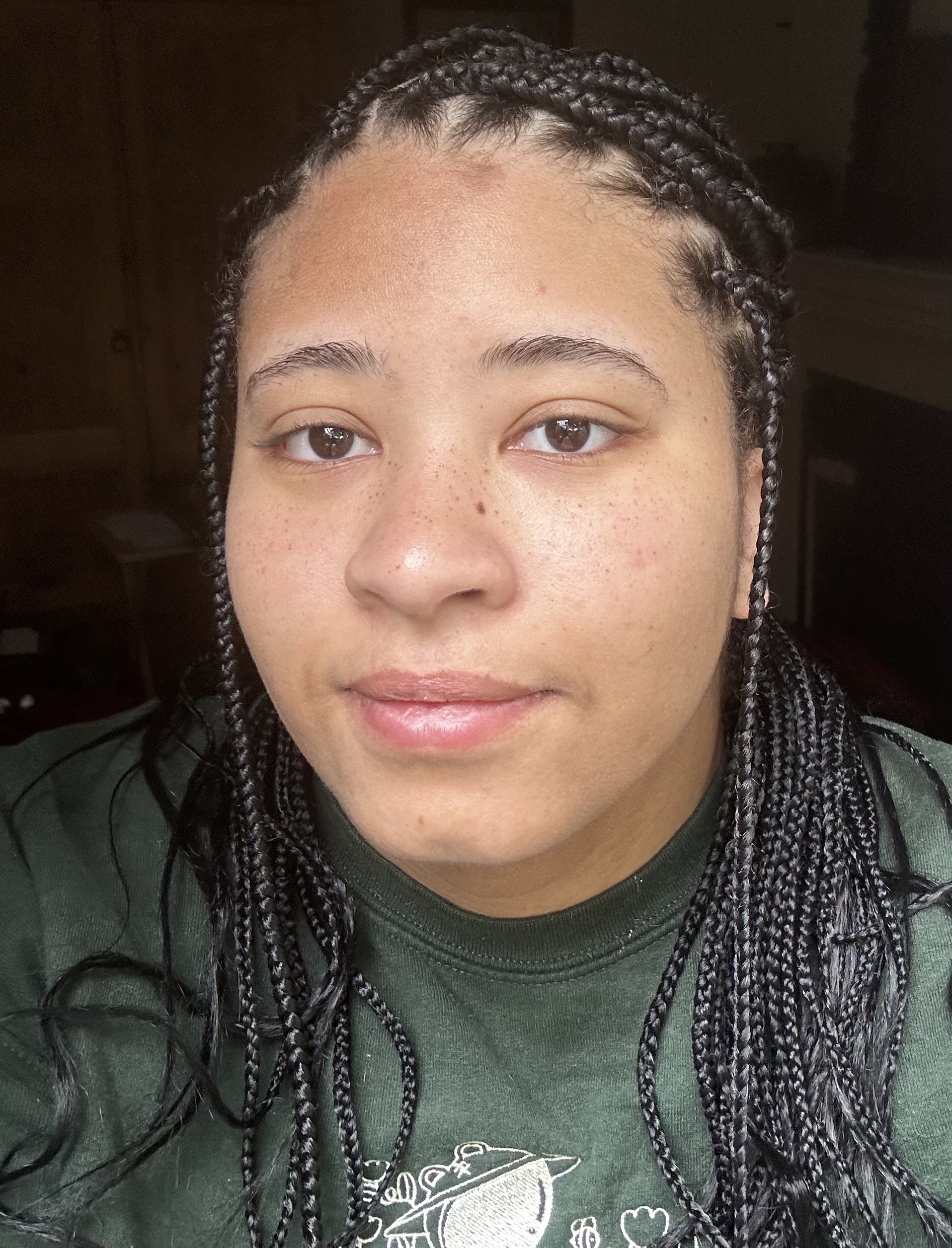
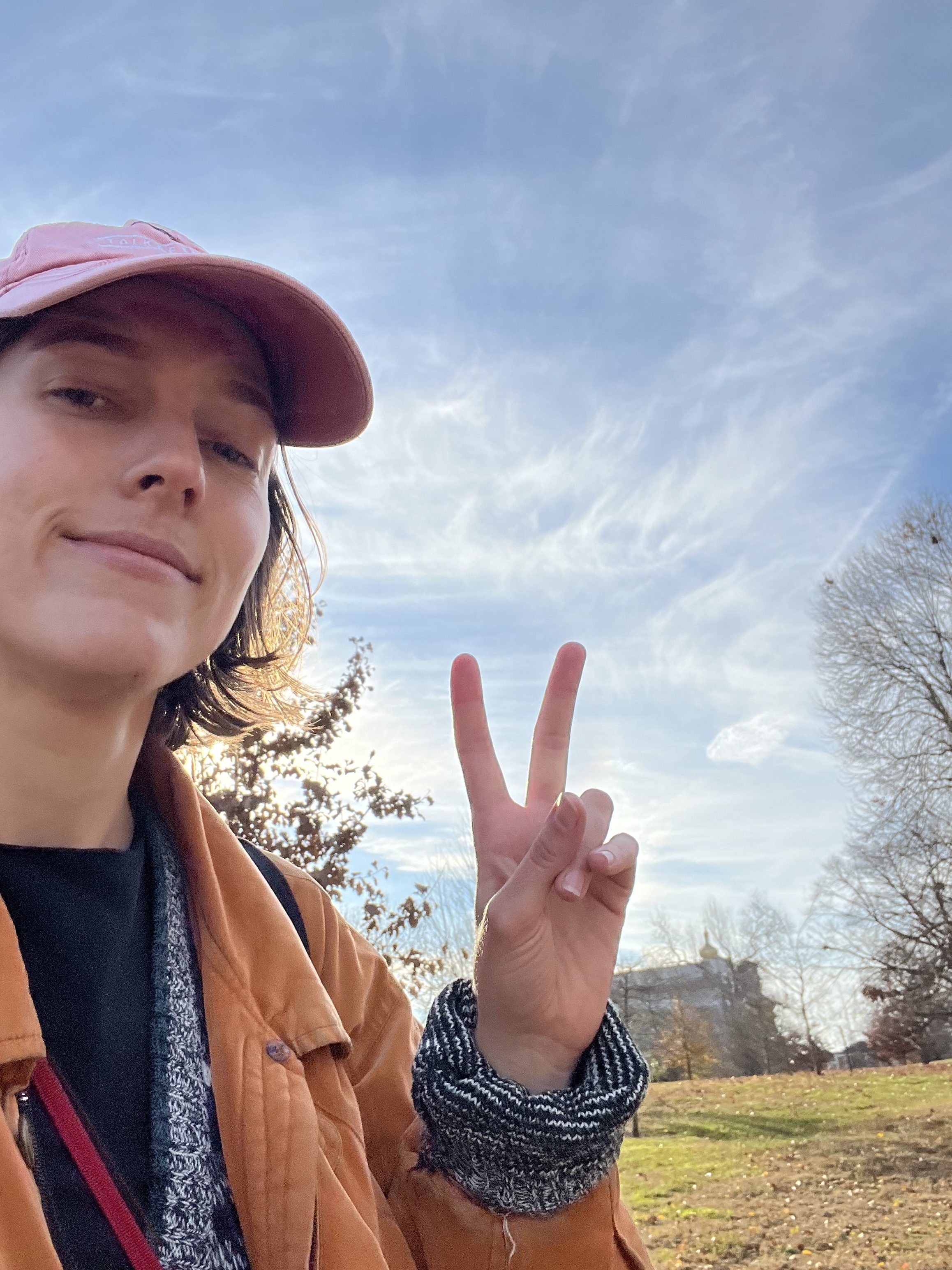 Even better, TNCS K–8 Resource Teacher Bailey Miller will be directing the camp this July! “Miss Bailey,” as she is know around campus, is also the assistant teacher in Mr. Warren’s K–2 classroom. In addition, she works in daily aftercare with TNCS primary students as well as provides after-school math tutoring.
 For anyone who remains unconvinced, if that’s possible, one of this summer’s activities is building your own claw machine! Mic drop! There’s also designing optical illusions, exploring penguins in Antarctica, and a whole lot more that, as Camp Invention® puts it, “[add] up to an imagination-stretching, confidence-boosting summer!”