TNCS Celebrates Black History Month!

Black History Month is a special time at The New Century School and in Baltimore at large. Black History Month isn’t merely a twelfth of the academic calendar; it infuses classroom lessons with narratives of resilience, triumph, and collective struggle. In a city steeped in historical significance, where the echoes of civil rights movements and the legacy of iconic figures reverberate through its streets, the observance of Black History Month takes on a profound resonance.

From preschoolers taking their first steps into the world of learning to middle schoolers navigating the complexities of identity and history, every TNCS student is invited to discover the contributions, struggles, and triumphs of Black Americans. Black History Month serves as a cornerstone for fostering empathy, understanding, and cultural appreciation. Our Maryland heritage includes trailblazers like Frederick Douglass, Harriet Tubman, and Thurgood Marshall—figures whose indelible imprint on history serves as a testament to the enduring spirit of resilience and courage—and we owe it to their legacy to honor and uplift this essential time of exploration.

Moreover, Black History Month at TNCS isn’t confined to academic discourse; it’s a celebration that permeates every facet of school life. From spirited performances and engaging presentations to art exhibits and community outreach initiatives, students are provided with platforms to explore, engage, and celebrate the multifaceted layers of Black culture and heritage. TNCS students make clear that Black history is a living, breathing testament to the enduring struggle for justice, equality, and dignity. It’s a reminder that the journey towards equity and inclusivity is ongoing—a journey that requires introspection, dialogue, and unwavering commitment from all members of the community.

Closing out the month, TNCS 2nd- through 8th-graders visited Baltimore’s own Reginald F. Lewis of Maryland African American History & Culture.

TNCS students appreciated this chance to explore Maryland’s rich cultural and historical legacy, but the main event at TNCS was the Black History Month celebration for K through 8th-graders, featuring choral and spoken performances as well as dance. The event was planned and executed by TNCS’s dynamic duo, Director of Student Support Alexis Watson and Head of School Erika Johnson, who opened and closed the show, respectively.

The program opened with an introduction by two TNCS upper elementary students:

Black History Month is an annual celebration of achievements by African Americans and a time for recognizing their central role in U.S. history. Also known as African American History Month, the event grew out of ‘Negro History Week,’ the brainchild of noted historian Carter G. Woodson and other prominent African Americans. Since 1976, every U.S. president has officially designated the month of February as Black History Month. PIA: Other countries around the world, including Canada and the United Kingdom, also devote a month to celebrating Black history. Today, the TNCS Community invites you to celebrate the triumphs, fortitude, joy and lives of Black Americans. Happy Black History Month!

From there, students launched into the “Black National Anthem”: Lift Every Voice and Sing.

Libation: Recognition of Ancestors

A tableau followed; four students interacted in this mini-play.

A: An African proverb tells us that people who lack the knowledge of their past are like a tree without roots. So, in the spirit of remembrance, we pour this libation. We pour to honor the past, so that we may learn from it. We pour to honor the importance of family.

S: We raise our cup to God to show our reverence for the original source of our lives. We use cool water to freshen the road our ancestors travel to be here with us today. We use cool water as a symbol of history, we broaden our knowledge, understanding and wisdom.

D: We remember our symbol of the continuity of life, to purify and to nourish our souls. It is said through others, we are somebody. I Am because We Are. Through our celebration heritage and recall those who gave us life. We call upon our ancestors—our mothers, grandmothers and great grandmothers, our fathers, grandfathers and our great grandfathers, uncles, aunts and cousins—the foundations of our families, immortalized in our thoughts. We call upon our elders, whose wisdom we seek in all endeavors. Our friends whom we are blessed to have in our lives, our parents and guardians who guided us along the road to adulthood.

K: We call upon family who have passed over and could not physically be here today. We ask that they be with us in our thoughts. We cast our libations to the North, to the South, to the East and to the West. Above us, below us, and within us.

Call to Celebrate the Culture: What is Kwanzaa?

A middle school student took the stage next to talk about the tradition of Kwanzaa and its rich meaning.

Kwanzaa is a time for families and communities to come together to remember the past and to celebrate African American culture.Created in 1966 by Maulana Ron Karenga, Kwanzaa is an African American and Pan-African holiday that celebrates history, values, family, community and culture. The ideas and concepts of Kwanzaa are expressed in the Swahili language, one of the most widely spoken languages in Africa. The seven principles which form its core were drawn from communitarian values found throughout the African continent. These principles are: Umoja (Unity), Kujichagulia (Self-Determination), Ujima (Collective Work and Responsibility), Ujamaa (Cooperative Economics), Nia (Purpose), Kuumba (Creativity), and Imani (Faith). Kwanzaa gets its name from the Swahili phrase, “matunda ya kwanza” and is rooted in first fruit celebrations which are found in cultures throughout Africa both in ancient and modern times.

Principles One and Two

A series of students then presented the Kwanzaa principals.

Umoja (unity) is the first and foundational principle of the Nguzo Saba. Unity is both a principle and practice and practice of togetherness in all things good and of mutual benefit. In 1908, a deadly race riot rocked the city of Springfield, eruptions of anti-black violence—particularly lynching—were horrifically commonplace, but the Springfield riot was the final tipping point that led to the creation of the NAACP. Appalled at this rampant violence, a group of liberals that included Mary White Ovington and Oswald Garrison Villard (both the descendants of famous abolitionists), William English Walling and Dr. Henry Moscowitz issued a call for a meeting to discuss racial justice. Some 60 people, including W. E. B. Du Bois, Ida B. Wells-Barnett, and Mary Church Terrell, signed the call, which was released on the centennial of Lincoln’s birth. On February 12, 1909, the nation’s largest and most widely recognized civil rights organization was born.

The second principle of the Nguzo Saba is Kujichagulia (self-determination). It demands that we as an African people define, defend and develop ourselves instead of allowing or encouraging others to do this. The first colleges for African Americans were established largely through the efforts of black churches with the support of the American Missionary Association and the Freedmen’s Bureau. The second Morrill Act of 1890 required states—especially former Confederate states—to provide land grants for institutions for black students if admission was not allowed elsewhere. As a result, many Historically Black Colleges and Universities (HBCUs) were founded. Between 1861 and 1900 more than 90 institutions of higher learning were established. Shaw University––founded in Raleigh, North Carolina, in 1865––was the first black college organized after the Civil War. Early HBCUs were established to train teachers, preachers and other community members.

Today, the number of HBCUs has grown to over 100 institutions serving students from all around the world, such as:

  • Morehouse University, founded in 1867
  • Spellman University, founded in 1881
  • Hampton University, founded in 1868
  • Howard University, founded in 1867
  • Clark Atlanta University, founded in 1865

Audience members who graduated from an HBCU were then invited to stand, to thunderous applause.

I, Too, by Langston Hughes

No Black History Month celebration would be complete without a poem by the great Langston Hughes, so another TNCS student obliged.
I, too, sing America.
I am the darker brother.
They send me to eat in the kitchen
When company comes,
But I laugh,
And eat well,
And grow strong.
Tomorrow,
I’ll be at the table
When company comes.
Nobody’ll dare
Say to me,
“Eat in the kitchen,”
Then.
Besides,
They’ll see how beautiful I am
And be ashamed—
I, too, am America.

Principles Three and Four

After that brief but inspiring interlude, the principles resumed.

The third principle is Ujima (collective work and responsibility), which is a commitment to active and informed togetherness on matters of common interest. The National Pan-Hellenic Council is a collaborative organization of nine historically Black/African American fraternities and sororities. This coalition was founded in 1930, but has a history that dates back to the early 1900s’. During that time, violent inequities of black scholars were an accepted norm in the American education system. In response to the racial segregation and disenfranchisement that denied black students entry into the previously established and predominantly white sororities and fraternities, they decided to create their own Greek organizations.

The divine nine include:

  • Zeta Phi Beta Sorority, Inc. (ZΦB)
  • Kappa Alpha Psi Fraternity, Inc. (KAΨ)
  • Omega Psi Phi Fraternity, Inc. (ΩΨΦ)
  • Phi Beta Sigma Fraternity, Inc. (ΦBΣ)
  • Alpha Kappa Alpha Sorority, Inc. (AKA)
  • Delta Sigma Theta Sorority (ΔΣΘ)
  • Sigma Gamma Rho Sorority, Inc. (ΣΓΡ)
  • Iota Phi Theta Fraternity, Inc. (ΙΦΘ)
  • Alpha Phi Alpha Fraternity, Inc. (AΦA)

Once again, audience members of any of the “divine nine” were invited to stand and be recognized.

The fourth principle is Ujamaa (cooperative economics) and is essentially a commitment to the practice of shared social wealth and the work necessary to achieve it. Ujamaa literally means familyhood. As this is Black History Month, I thought it would be appropriate to say something about one of the pioneers of the food justice movement. The name Fannie Lou Hamer is not obscure, but the civil rights and women’s rights icon of the 1960s and 1970s is less known as a food justice advocate. The term “food justice” was coined only later, since at the height of the civil rights movement, all injustices were part of its agenda. In 1969, Hamer established the Freedom Farm Cooperative, whose objective was to make land accessible to black farmers and provide a source of food and employment for marginalized communities in the Mississippi Delta.

Throughout the 20th century, African American farmers (not only in Mississippi, but nationwide) were routinely denied loans they sought from the U.S. Department of Agriculture. Most lost their land as a result and were forced to resort to sharecropping or join the Great Migration headed North and West. It was one of the most egregious examples of wealth stripping carried out by the federal government, orchestrated by unabashed racists such as Mississippi Senator James O. Eastland. Today, African Americans make up less than 2 percent of the nation’s farmers, compared to nearly 15 percent a hundred years ago. Today’s food justice advocates are not only attempting to feed communities where food systems have failed, but they have become ever mindful of preserving the sustainability of the tiny parcels of land that are all that is available to them.

Raising Voices in Song

Another brief interlude followed, this time of choral selections by TNCS K through 3rd-graders, who sang Siyahamba and Yonder Come Day, again to rousing applause.

Principles Five and Six

The fifth principle is Nia (purpose), which is a commitment to the collective vocation of building, developing, and defending our community, its culture and history in order to regain our historical initiative and greatness. Rose Huey P. Newton and Bobby Seale established The Black Panther Party (BPP) in Oakland, California in 1966. The organization—originally named the Black Panther Party for Self-Defense—first established neighborhood patrols and protected residents from police brutality. However, the black revolutionary party ultimately evolved into a Marxist revolutionary group that fought for African American weapon rights, exemption from “white American” sanctions, and financial compensation for years of racial exploitation. In addition to fighting for political and economic equality, the BPP became well known for providing access to medical clinics and free breakfasts for children.

The sixth principle is Kuumba (creativity) and logically follows from and is required by the principle of Nia. It is a commitment to being creative On March 30 1958, Alvin Ailey and a group of young, Black modern dancers performed for the first time as members of Alvin Ailey American Dance Theater at New York’s 92nd Street YM-YWHA. The Company travels on what Alvin Ailey calls “the station wagon tours” in a vehicle driven by a longtime friend of the Company, Mickey Board.

Keur Khaleyi Dance Company

TNCS welcomed back the amazing Keur Khaleyi dance company to lead 4th- and 5th-graders in a beautiful dance, thoroughly enjoyed by dancers and spectators alike. Scroll below to see last year’s post about this company!

Principle Seven

The seventh principle is Imani (faith), which is essentially a profound and enduring belief in and commitment to all that is of value to us as a family, community, people and culture. African American churches provided spiritual and practical support for civil rights advocates. The militant rhetoric of the Black Power movement troubled many ministers, but others supported demands for fundamental and immediate change. The Nation of Islam reinforced Black Power philosophy by insisting that black Americans have control over their own businesses, schools, and community organizations. The Nation’s philosophy, especially as conveyed by Malcolm X between 1957 and 1964, inspired a commitment to black liberation, including the development of black-owned businesses.

Ego Tripping, by Nikki Giovanni

Another poem was recited, the one about, well, everything.

I was born in the Congo
I walked to the fertile crescent and built
the Sphinx
I designed a pyramid so tough that a star
that only glows every 100 years
falls
into the center giving divine perfect light
I am bad
I sat on the throne
drinking nectar with Allah
I got hot and sent an Ice Age to Europe
to cool my thirst
My oldest daughter is Nefertiti
the tears from my birth pains
created the nile
I am a beautiful woman
I gazed on the forest and burned
out the Sahara desert
with a packet of goat’s meat
and a change of clothes
I crossed it in 2 hours
I am a gazelle so swift
so swift you can’t catch me
For a birthday present when he was 3
I gave my son Hannibal an elephant
He gave me Rome for mother’s day
My strength flows ever on
My son Noah built new/ark and
I stood proudly at the helm
as we sailed on a soft summer day
I turned myself into myself and was
Jesus
men intone my loving name
All praises All praises
I am the one who would save
I sowed diamonds in my back yard
My bowels deliver uranium
the filings from my fingernails are
semi-precious jewels
On a trip north
I caught a cold and blew
My nose giving oil to the Arab world
I am so hip even my errors are correct
I sailed west to reach east and had to round off
the earth as I went
The hair from my head thinned and gold

was laid
across three continents
I am so perfect so divine so ethereal so surreal
I cannot be comprehended
except by my permission
I mean . . . I . . . can fly
like a bird in the sky . . .

Choral Performance, Redux

As the evening drew to a close, students in Kindergarten through 8th-grade joined together to sing Wade In The Water and Stand Up. Cue the waterworks!

Closing Remarks

A “Meditation For Justice and Liberation for All People” was the final student performance.

Together we can….envision of a world centered in Love and not Power: Together we can…create a world where the weak are protected, and none go hungry or poor; Together we can…build a world where the riches of creation are shared, and everyone, regardless of station or caste, can enjoy them; Together we can…empower a world where different races and cultures live in harmony and mutual respect; a world where peace is built with justice, and justice is guided by love. Together we can… courageously be the Beloved Community.


Black History Month stands as a beacon of hope and inspiration—a reminder of the transformative power of education and the boundless potential that resides within each and every student. As Maya Angelou famously said, “History, despite its wrenching pain, cannot be unlived, but if faced with courage, need not be lived again.”

For past Black History Month celebrations, see:
Lunar New Year at TNCS Was a Roaring Good Time!

Every Lunar New Year at The New Century School is special, but the Year of the Dragon was really “scaled” up!

Firstly, 2024 marked the return of TNCS’s Visiting Chinese Scholars Program, which takes advantage of the 2 weeks each winter many Chinese families have off and can make the trip to the United States to immerse themselves in English language and culture. We miss “the girls” already!

Secondly, the Year of the Dragon is one of the most auspicious in the Chinese zodiac, dragons being, well, dragons! The dragon is the only mythical creature on the Chinese zodiac, that, coupled with the fact that dragons are unparalleled in majesty, strength, and all-around charisma, makes 2024 a year full of promise. TNCS Chinese teacher Jia Liu and her mentress Xia Laoshi made sure that TNCS celebrations befit the occasion. Drawing on what former TNCS Chinese instructors created in 2022 and 2023, Liu Laoshi and Xie Laoshi recreated an enchanting Chinese market/festival.

Preparations for the event that took place on February 6th began months earlier, as Liu Laoshi gathered supplies, vetted performers, and delegated tasks (like creating promotional materials and decorations—perfect projects for her students!).

The event itself had two main portions, a very well-attended live session, followed by shopping, eating, and playing games at the market/festival.

Live Performances

The live event was special not only for featuring performances in Mandarin by TNCS students, but Liu Laoshi managed to entice DC Beauty of Beijing Opera (dcbbo.org) to present the history of Chinese opera, sing, and interact with TNC students.

This slideshow requires JavaScript.

TNCs performances included “Invisible Wings” by grades 4 and 5, “Jasmine Flower” and “Congratulations” by Grades K through 3, and a traditional Chinese costume show by grades 6 to 8.

This slideshow requires JavaScript.

Market/Festival

Liu Laoshi gave TNCS middle schoolers the task of designing promotional posters for the market/festival, while TNCS 4th- and 5th-graders handled ticket creation. Just look at their impressive handiwork!

The market itself was equally impressive. It comprised three main areas: food, interactive games, and shopping.

Spring rolls, pan-fried dumplings, cookies, candied haws, cupcake with zodiac toppers, and milk tea were on sale (purchased with the tickets pictured above) at the food stalls to keep our festival-goers energized (and happy).

The interactive game area was conceptualized as a zone for parents and children to experience together, whether posing at a traditional Chinese-themed photo booth to capture memories; participating in lantern-making or paper-cutting workshops; immersing in Chinese culture with learning Chinese “Fu” character writing (calligraphy) or indulging in a tea ceremony; or having plain old fun playing bean bag toss, “pin the eye on the dragon,” or other creative Chinese-themed games.

At the arts and crafts area, handicrafts and traditional small items could be purchased with tickets.

It was the perfect way to ring in the Year of the Wood Dragon, a year that promises “opportunities, changes, and challenges,” like any good dragon would.

Xīnnián kuàilè (新年快乐), TNCS Community!


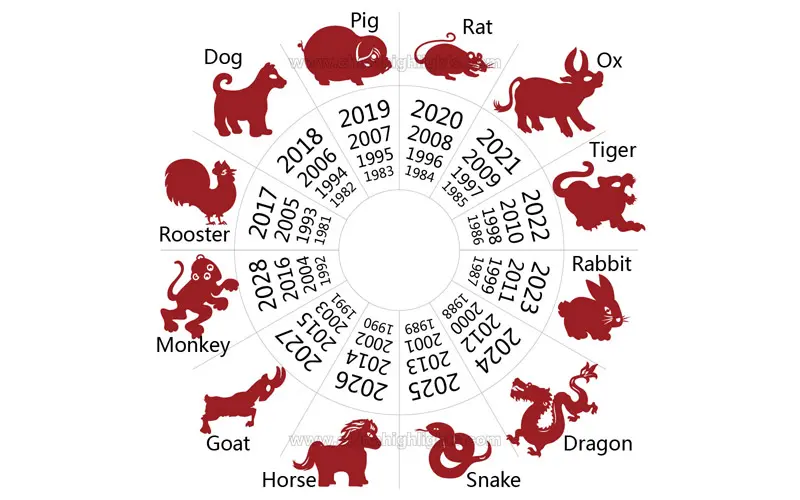
Did you know that TNCS is partway through its second full turn of the Chinese zodiac? TNCS launched in the Year of the Tiger, 2010. Since then, TNCS has marked many a Lunar New Year in a variety of ways!

Immersed had not yet met the world for the Lunar New Year of 2012, but you can be sure that Year of the Dragon was one to behold.

From Bogotá to Baltimore: Rafael Gonzalez Joins The New Century School!
At the start of 2024, The New Century School welcomed a new Spanish teacher—Rafael Gonzalez! With language learning at the heart of TNCS’s academic approach, Sr. Gonzalez’s arrival is an exciting new development. Let’s get to know him a little better!

Meet Rafael Gonzalez!

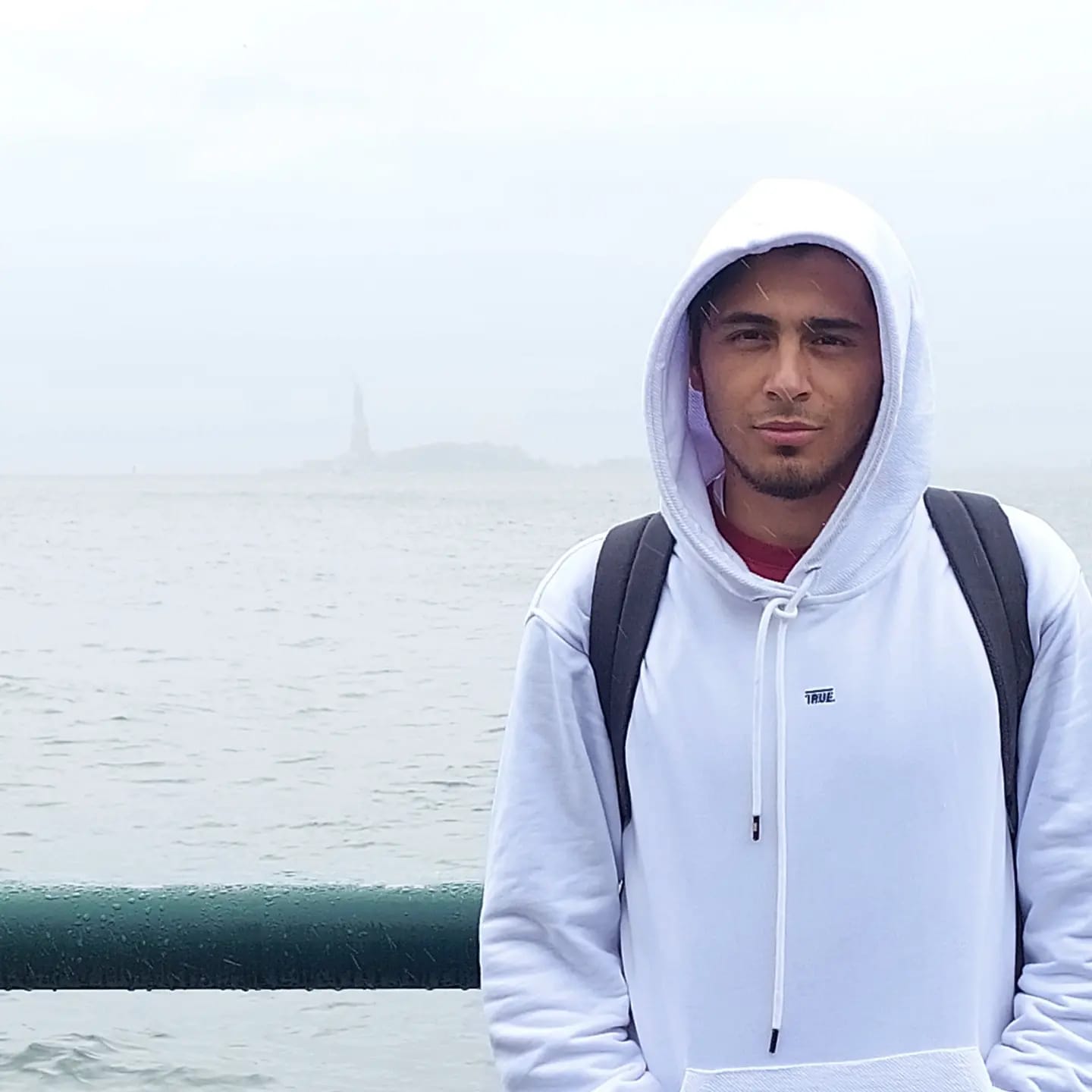
Sr. Gonzalez, pictured here with the Statue of Liberty in the background, officially started his new position as TNCS K–8 Spanish teacher on January 8th, marking the next step of his teaching career. His first 2 week have gone well, he says, despite the snow-related disruptions that kept him and his students out the classroom for a couple of days. Somewhat surprisingly, he had only arrived in the Unites States less than 2 weeks prior, on December 28th. He has nevertheless adapted beautifully to his new country and his new job in that short span of time. “Let’s start a new year with a new life! And it’s going well,” he said. He was proactive about his upcoming transitions, securing lodging before coming, so he could immediately settle in and prepare for the new school year once he arrived. His positive outlook is serving him well.

Educational Background

Sr. Gonzalez is from Bogotá, Colombia—a detail he shares with his predecessor.  There, he earned a 5-year French, English, and Spanish teaching degree at the University of La Salle, which a group of institutions around the world originally created in 17th-century France by St. Jean-Baptiste de La Salle. He obtained a master’s degree (also from La Salle) in Language Didactics in 2020, further enhancing his expertise in language education.

Although Sr. Gonzalez originally thought a career in social communication or journalism was his calling, his parents reminded him how good he was at teaching, which he started doing in high school on the weekends during religious activities. When he saw that La Salle offered a degree that included French, a language he had not then mastered, his interest was piqued. But when he started learning about teaching and its transformative impact, his fate was sealed. “Teaching can change people’s lives,” he said.

Professional Background

His teaching career officially began in 2020, he had prior experiences as an intern, teaching French in public schools. At Liceo Americano, a private institution that provides private classes for foreigners in Colombia, he taught English and French to students from 9th to 11th grades. During the pandemic, he continued teaching privately through the school. Next, at Liceo Feminino Mercedes Mariño, he taught French to 3rd- through 5th-grade and 7th- through 9th-grade students. Subsequently, he taught at SMART Training Academy, where he taught French and English.

Sr. Gonzalez at TNCS!

With this robust foundation, Sr. Gonzalez brings his knowledge and passion for languages into the TNCS classroom. He teaches five groups of students across different grade levels, from K/1 in the morning to the 6th- through 8th-graders. Managing various age groups presents its challenges, but, in keeping with TNCS’s mixed-age classroom approach, Sr. Gonzalez leverages the knowledge of the more proficient students to support the learning of others. He says to his students, “OK, you already know this, so you can explain it to the others in the way you understand it. I can do it my way, but you guys can take it further.” This collaborative approach emphasizes mutual support and shared learning experiences.

In terms of his own teaching philosophy, Sr. Gonzalez embraces interactive and kinesthetic learning styles. Incorporating games, role-playing, acting, and singing into the classroom creates an engaging environment where students can thrive. “I focus on addressing students’ needs, ensuring that they learn language skills in contexts relevant to their lives.” This approach resonates with the authentic language learning philosophy of providing practical, real-world scenarios for students, much as TNCS Chinese program does.

I love playing. When you’re in a game, you have a little bit of pressure to do well, and your mind works faster. I believe this is a better methodology than having students sitting in front of a board, copying what I’m writing there. I can teach them a lot of vocabulary, but what’s the objective of learning it? If they’re learning something, it should be because they need it for communicating. In what context are they going to use this? So, if they’re learning about their body parts, why do they need it? Well, maybe someday they are traveling to Costa Rica and they need to go to the doctor but the doctor doesn’t speak English. So how do they communicate, for example, ‘I have a backache’? So, they need to learn ‘la espalda,’ for ‘back’. I want them to learn the things that they need to learn for their lives.

Not surprisingly, TNCS students have welcomed Sr. Gonzalez warmly, after getting over a bit of initial anxiety about acclimating to a new teacher in mid school year.  Their receptivity has made the experience smoother for everyone.

When he isn’t teaching, Sr. Gonzalez is exploring Baltimore. He has joined a gym, attended a Ravens game, and celebrated the New Year in the Harbor, for example. He gets around on a bike borrowed from a TNCS parent and wants to delve into Baltimore’s history by visiting the library and the city’s many historical sites. , a bike to explore the city. Despite the differences in climate between Bogotá and Baltimore, he has been adapting well. (Bogotá’s high altitude means its cold every night and warm every day, with only two seasons—summer and winter, which means rainy!)

In his spare time, Sr. Gonzalez is an avid flag football player and has joined Volo to find a team, eagerly anticipating spring for outdoor training. Although he loved all sports in Colombia and cared more about the matches themselves than who was playing in them, here in Baltimore, he has embraced the Ravens, fervently hoping along with the rest of his adopted city for a Superbowl victory.

We are glad you have joined our TNCS team, Sr. Gonzalez! Welcome! ¡Bienvenido! Huānyíng (欢迎)! And, bienvenu!


Look for Flag Football as an upcoming Summer Camp activity . . . and possibly even some French-related extracurricular activities!

Celebrating MLK, Jr. Day in Baltimore: Your Round-up of Inspiring Events!

Monday, January 15, 2024 marks the 41st MLK, Jr. Day, honoring the towering legacy of Martin Luther King, Jr. Our own Baltimore City has a deep connection to Dr. King, who visited several times to deliver important public addresses, including 60 years ago on October 31, 1964 to help “get out the vote” just after winning the Nobel Peace Prize.

Even closer to home, The New Century School lives by much of what the Civil Rights giant made possible.

Dr. King dedicated his life to the nonviolent struggle for racial equality in the United States. His leadership was pivotal in ending entrenched segregation for African Americans and in creating the Civil Rights Act of 1964, considered a crowning achievement of the civil rights era.

Baltimore hosts several events observing Martin Luther King, Jr. Day. These events are a great way to honor King’s legacy, celebrate the progress that has been made in the fight for civil rights, engage in volunteer service, and connect with our communities.

Community Events

The Baltimore City Dr. Martin Luther King, Jr Parade wends its way down—you guessed it—MLK Blvd. and features marching bands, local colleges and universities, fraternities and sororities, and more.

The theme of the 42nd Annual Dr. Martin Luther King Jr. Commemoration hosted by Johns Hopkins University is “Where Do We Go from Here—Chaos or Community?” The program will be livestreamed and is based on Dr. King’s final book. The keynote will be given by Mae Jemison, an engineer, physician, and former NASA astronaut as well as the first African American woman to travel in space. (TNCS students know her well.)

Museums

At King Day at the Reginald F. Lewis Museum of Maryland African American History & Culture, experience Martin Luther King Jr. and Maryland’s Year of Civil Rights through art, music, and storytelling; hear a choral performance by the Carter Legacy Singers; learn about the Montgomery Bus Boycott from Deborah Pierce-Fakunle and Dr. David Fakunle, mother-and-son storytellers known as Dr. Mama; immerse yourself in “I Am A Man,” a virtual reality program; and explore the Memphis Sanitation Workers protest. Admission is free to this monumental event.

Visit the MLK Jr Day Celebration by Unique Johnson at The Walters Art Museum, an event that will explore Dr. King’s legacy through poetry and music, and is free to attend (with required registration at the link above).

Celebrate “one of history’s greatest visionaries” (see what they did there?) at MLK Dare to Dream Day at the American Visionary Arts Museum (AVAM). Admission is free on Monday, allowing you to tour the museum as well as enjoy live music and dancing performances, open mic, a poetry slam, and more.

The B&O Railroad Museum invites you to experience the fusion of music and history on hallowed grounds, presenting Wordsmith and the Baltimore Symphony Orchestra in tribute to Dr. King. An original song and composition directly inspired by the powerful narratives found in the B&O Railroad Museum’s Underground Railroad exhibit will be debuted. (The Museum was designated a National Underground Railroad Network to Freedom Site in 2021 and opened a permanent exhibit, The Underground Railroad: Freedom Seekers on the B&O Railroad, in 2022.) Tickets are free!

Service Opportunities

Volunteer at the Martin Luther King Jr. Day of Service, organized by the United Way of Central Maryland. Service opportunities include efforts to address high-impact issues affecting Marylanders, from housing and mental health to food access and transportation. Both in-person and virtual projects are available, including building bicycles, creating gardening beds, and packing hygiene kits.


How will you observe this great day honoring a great man?

Additional resources:

Ann Marie Simonetti Soars at the Blackbaud Conference in Mile-High City!

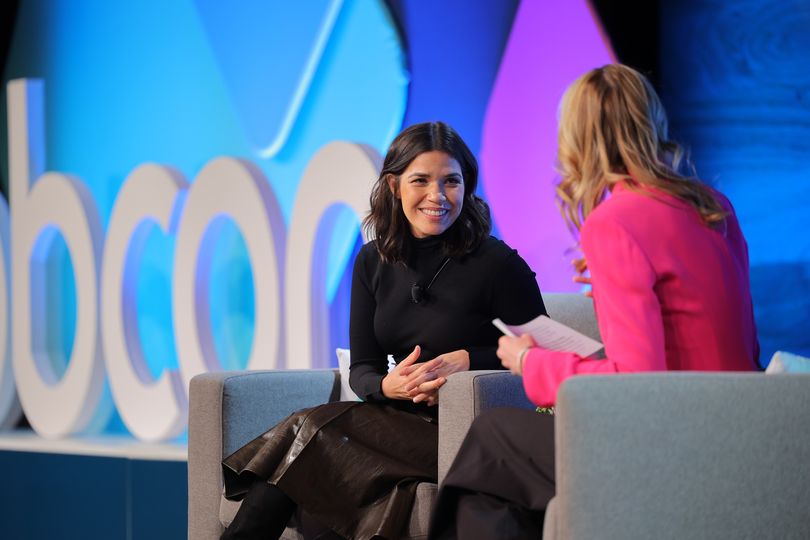
One of the integral parts of The New Century School is an emphasis on lifelong learning—and this extends to faculty and staff, who embrace the opportunities to expand and grow. Earlier this school year, TNCS Director of Admissions, Marketing and Montessori Programming Ann Marie Simonetti got some very exciting news. She was accepted as a presenter for the global event bbcon, Blackbaud’s Tech Conference to Fuel Social Impact, in Denver from October 22–24. Because she described her experience so eloquently and beautifully, we’re going to give you this blog post in Q&A format, so you can hear it exactly as she expressed it.

Immersed: Why don’t we start with what your experience was like in general.
Ann Marie Simonetti: “It was nothing short of amazing. In the same way that Blackbaud hasn’t held this conference in person and with a synchronous option for several years, I hadn’t presented in that same format since before the pandemic. Being with that specific group of individuals, the energy and excitement was absolutely phenomenal. I have not been to Blackbaud’s conference before. I have done some of their online options and resources, but I don’t know if this is just how their crowd always is or if that energy was a little heightened because this is the first time we’ve all gotten together in recent years. But I have presented at other conferences, and Blackbaud went all out. One of the first things I experienced was a kickoff with the drum line from the Denver Broncos, and it was like something right out of a pep rally. It definitely bolstered that energy and excitement about everything we were going to be doing.

The Denver Conference Center was the perfect venue. It has a humongous blue bear in front and that was even the landmark we were given to look for. It’s an outdoor sculpture multiple stories tall that made me feel welcome right off the bat by having this element of familiarity and reference that I had been learning about before I got there. Then the registration for Blackbaud was with this software designed to provide a streamlined customer experience. They did a wonderful job and seemed very mindful in designing that user experience in a way that closely mirrors the experience we’re trying to give our users as well. I’ve seen strategic planning from the Blackbaud team, and the way that was executed with that energy and enthusiasm really set the tone for me as an attendee and then as a presenter. That might be a little influenced from my time as an event planner in a conference center—I maybe thought a little more about it than other attendees might have done.

I presented with someone from Florida, and a couple members of her team were there, so I got to meet them. We had done a couple of zooms back and forth and talked multiple times beforehand, but it was the first time we had met in real life. It was very serendipitous that our personalities were great together, and we had done some mindful planning on the presentation to be sure that it flowed from one to the next but again just serendipity whereby some things that I ended up just talking about in my portion of the presentation segued really nicely into her portion.

Immersed: That sounds wonderful. Did you have time to have some fun? What did you do in your spare time?
AMS: It was a quick trip, but I packed in as much as I could. I attended some of the fun things that Blackbaud offered, like the drum line, and they also had some of the keynotes. One of my choices was four-time Olympic medalist Chaunté Lowe, who is also an author and a breast cancer survivor. She shared that “you have to be willing to set goals that take you outside of your comfort zone.”

Photo courtesy of EPNAC.

Another was actress America Ferrera, who spoke about our responsibility to ensure everyone is reflected and welcomed in our communities and shared “Community is power,” illustrating the power of coming together—when we unite, we discover our collective strength and courage.

I also attended Grammy-nominated recording artist Ruby Amanfu’s performance. In her song, “The Sun,” the lyrics “I don’t have all the answers we need. But I do have a little hope and a lot of empathy. Maybe that’s not gonna get it done; but change begins with only one. So I’ll keep the faith that change is gonna come. Cause I wanna see the sun shining on everyone.” stuck with me.

The other thing I enjoyed that I typically do with my family this time of year is volunteering. They had a booth set up for assembling health and hygiene kits to go to the Colorado Health Coalition for the Homeless, and conference attendees helping out at the booth assembled around 2000 hygiene kits. That was all really fascinating—getting to hear about software and services and tech impact but then also do some of these other more community-centric and philanthropic type of activities while I was there.

Outside the Conference Center, let’s say I definitely took advantage of the landscape, literally! The weather was great—it was in the 70s, so I did a 4-hour sightseeing excursion and got to see a nice wide range of a little spots along the mountains. That day was also a football game day, so there were lots of vendors and local artisans and craftspeople around. That was a neat experience to walk around and see what all the different wares were. On one of the tour stops on a street that’s not trafficked, there were all sorts of nice little shops to pop into, and I love to shop local as much as I can.

I also had to stop at the botanic gardens because during the pandemic, I spent a lot of time gardening, which was a really good stress outlet.

Immersed: It sounds like it was a wonderful trip all round. What are some of your main takeaways? What did you learn?
AMS: I learned some specific, granular things from the sessions I attended, but the keynotes and the artists held the most meaning. Ruby Amanfu’s song really resonated with me, and one of the things I came back really thinking about is something we talk about daily at TNCS, which is community and the power of coming together. There’s a quote from Helen Keller in Ms. Lane’s email signature that I see every time she sends me a message: “Alone we can do so little but together we can do so much.” Hearing some of these folks talk about their stories of resilience and having collective strength when we all get together, I came back thinking about how to embrace that in my daily life whether personally or professionally, how she encouraged our young people to have that experience and how we can cultivate those types of experiences for them, and having holistic opportunities to bring them into that type of awareness. What does that mean here for me and how can I take that forward and cultivate it at home and here at TNCS. I was looking at the lyrics, which are about having hope and how change begins with one. She emphasized seeing the sun shining on everyone, which made me then think about Chaunté Lowe’s keynote about how it’s our collective strength and that power up coming together. Even if it’s not a sunny day—and this is my takeaway—maybe the sun isn’t shining but one of us when we come together as a group, we can be the one to shine the light on that particular day or to offer that extra bit of strength on a day that we have more to give. Then on another day, we might be the one that needs it. So I was just coalescing and synthesizing the different things that I had heard and figuring out what to do with all of that. I’m a big music person, so I think that song was what helped me find that common thread from all of the experiences.

Immersed: It’s great that you had such a positive experience and you got so much out of it. And what you got out of it is so perfect for TNCS.
AMS: Well, I think that was part of the user experience at the conference. When you’re going in saying, ‘I have an awesome opportunity to learn, network, grow, and share TNCS with all of these wonderful people is really being mindful of how what I’m seeing, experiencing, learning, and hearing about what’s working can benefit the organization and our community as a whole. That’s the mind frame I was in while I was there, so I was thinking that out. Part of the reason I was there is that awareness of a community that is part of daily life here and is always at the forefront. That definitely was part of their focus, coincidentally, and it worked out really great.