TNCS Winter Concert 2023: Happy Holidays!

The annual Winter Concert at The New Century School is one of the TNCS community’s best-loved events. TNCS Music Director Martellies Warren outdoes himself every single time, putting together show after spectacular show. This year is no different, in that regard. Thanks to his sparkly, wintry theme, the performance on Thursday, December 7th was as beautiful as it was harmonious—in all three languages spoken at TNCS.

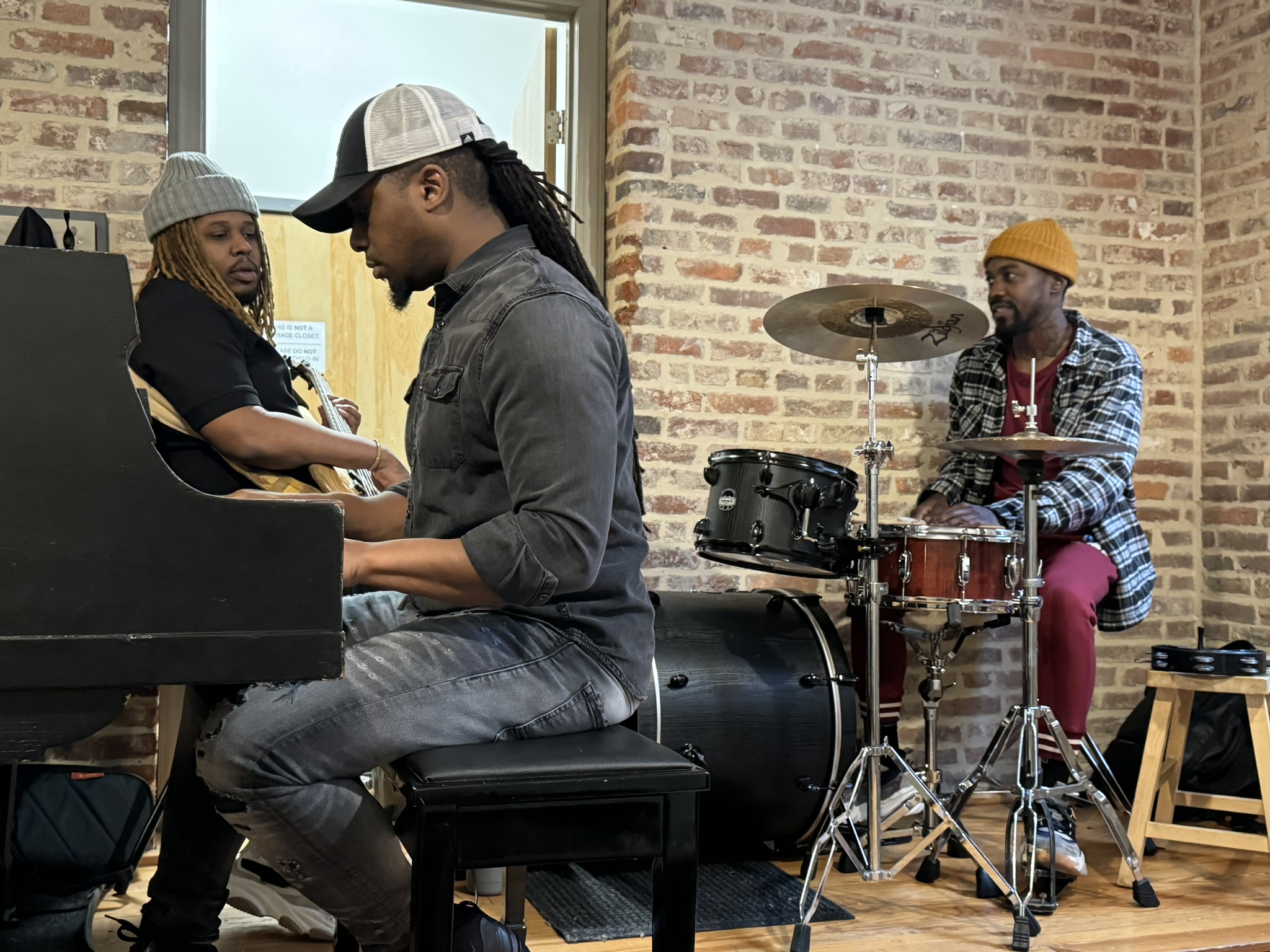
As in several years past, Mr. Warren brought in some well-known friends to help out with some lovely backing music: the Benjamin Brown trio!

Mr. Warren says, “I wanted to keep the decor clean and inspiring and the songs fun and emotional.  My love for family, the beauty of the Winter, and the pure euphoria of the holiday season inspired this year’s theme!”

TNCS Choral Performers

This slideshow requires JavaScript.

Alas, although pictures are worth 1,000 words, they fall short on hearing much. But we’ve got you covered with three choral performances!

My Wish, by Jordin Sparks

Ava Maria, by Beyoncé

This Winter, adapted by Chris Brown

Happy Holidays, TNCS community! ¡Felices vacaciones! 节日快乐 (Jiérì kuàilè)!


One last thing before you go?

This Holiday, Feast Your Eyes, TNCS Community!

Thanksgiving is an especially important holiday at The New Century School. From special feasts to deepen in-class relationships to food drives that support TNCS’s friends and neighbors, it’s a time to show gratitude in a cornucopia of ways.
That extends to you, TNCS community. This year, TNCS art teacher Devin Martin is giving back with a special art display and her beautiful reflections on what it means.


The passage of time, for young children, is deeply rooted in “special days.” Their birthday, holidays, the day they have dance class—these are concrete events that can be grasped before days of the week and months of the year are mastered. By focusing on traditions and customs linked to special days, I hope to give my students a jumping off point for telling personal narratives in their art.

Additionally, elementary-age children’s concept of self is deeply rooted in the family. Reflecting on tradition and customs within their family, as well as the families of others, will give the students an opportunity to relate as well as highlight their unique experiences. So, I wanted to share this K–3 project I’ve just finished hanging up. We’ve been talking about community, custom, and tradition in art class, and everyone illustrated and wrote about a food that they eat on a special day!

As if that isn’t special enough, Ms. Martin has more gifts in store: “Next up in art class, students are continuing their exploration of personal narrative in the form of a miniature puppet theater in a box, inspired by the Brazilian ‘Caja Lambe Lambe’,” she explained. “The Caja Lambe Lambe as a medium is deeply intriguing to children, who have an affinity for the miniature and for creating scenes for play. These miniature puppet shows use a singular ‘set’ and take only a couple minutes to perform, which provides a helpful limit so that the act of creating visuals for a story does not become overwhelming.”

We eagerly await this adorable-sounding art exhibition!

TNCS’s Montessori Professional Development Trip: A Transformative Journey

Terriann Lane has been Preschool Coordinator at The New Century School for a only few months so far, but her impact far outdistances her tenure!

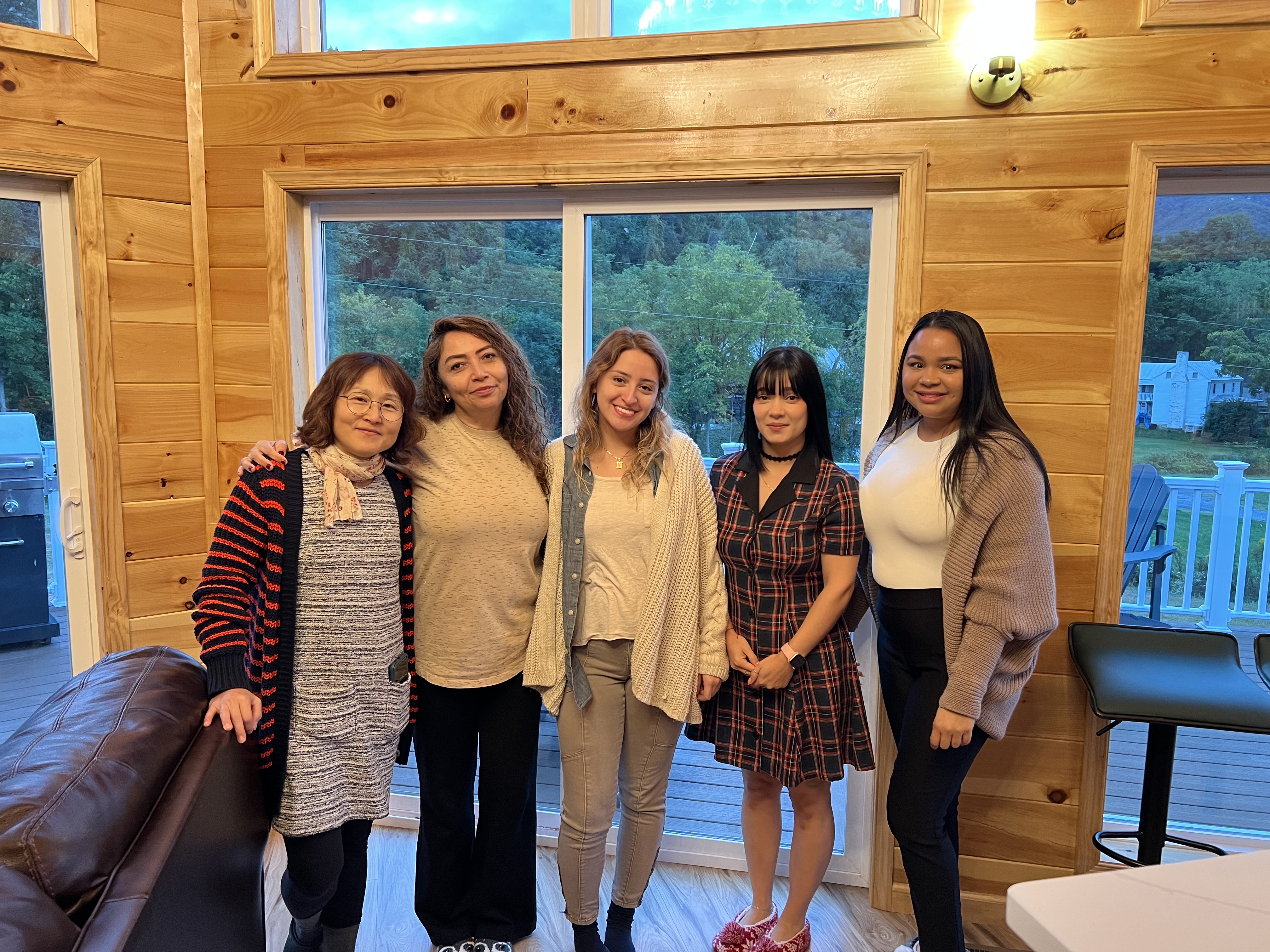
One big example of Ms. Lane’s impact happened last month. TNCS preschool teachers embarked on an enriching professional development trip to the scenic Mountain Laurel Montessori (MLM) in Front Royal, Virginia. This venture provided teachers with the opportunity to immerse themselves in an authentic Montessori environment. They observed and engaged with both toddler (preprimary) and primary classrooms, soaking in the Montessori method in action.

Ms. Lane explained: “The visit was orchestrated through the guidance of my mentor, who connected me with a stellar Montessori teacher. She said to me, ‘You are two of my favorite people, and I need to connect you!'” The idea quickly took root, and Mountain Laurel Montessori opened its doors for observation and learning.

The group departed from TNCS on Sunday, October 8 at 2:30 p.m. On Monday, they went to MLM at 7:30 a.m. to meet their hosts and be directed to classrooms to observe before the children arrive at 8:00 a.m. There were nine in total, including Ms. Lane, Ms. Simonetti, Wang Laoshi, Sra. Garcia (x2!), Ms. Sussman, Sra. Pupo, Sra. Loveras, and Sharon Laoshi.

Beyond the professional growth, the trip was a delightful adventure involving, among other things, driving the TNCS van very slowly up a mountain. “We laughed and marveled as we navigated the Shenandoah Valley, arriving at a charming Airbnb nestled in the woods. It was an idyllic setting for continued learning, with additional sessions there on material-making and curriculum development led by myself and Ms. Simonetti,” said Ms. Lane.

Ms. Simonetti said of the experience:

We had a wonderful cabin; it was rustic but beautiful, with details like a claw foot tub. It was a great experience to see a different Montessori school and all the things that we’ve been introducing to them and showing them. Even though we have training and observation videos to see what’s possible, seeing it in practice are two different things. It really helps bridge the gap. And, again being able to connect with Ms. Lane and share our complementary knowledge and make plans for, for example, when a preprimary student might be ready to move up to primary. What are the skill sets? What are the different developmental elements that may indicate that readiness?

For many, the highlight of the trip was the bonding experience—sharing meals, conversations, and a deeper understanding of each other, both personally and professionally. It ignited curiosity among the teachers, who eagerly sought to enhance their knowledge and explore the potential for their classroom environments.

Reflecting on the trip, many teachers experienced a multitude of eye-opening moments. “As a passionate observer, I enjoyed witnessing both new and familiar teaching methods, which sparked ideas for implementation and improvement,” said Ms. Lane.

The journey has already spurred positive change at TNCS. Teachers are embracing the rich offerings of Montessori education with renewed vigor. Classrooms are transforming into spaces that reflect authentic Montessori environments, showcasing the commitment of TNCS educators to more fully embrace this approach. Those inspired by the trip are now pursuing further training, with interests ranging from positive discipline to Montessori philosophy and movement in the classroom.

This trip was a pioneering step for TNCS—an overnight professional development experience that proved to be a resounding success. It’s something we look forward to making a tradition, alongside arranging local development opportunities like those the preschool assistants enjoyed at Greenspring Montessori School.

This experience was a testament to the power of community, professional camaraderie, and the pursuit of educational excellence. It’s clear that TNCS preschool teachers are not just growing as individuals but also collectively elevating TNCS to new heights.

Check-In with TNCS’s Elementary and Middle School Mandarin Chinese Program!

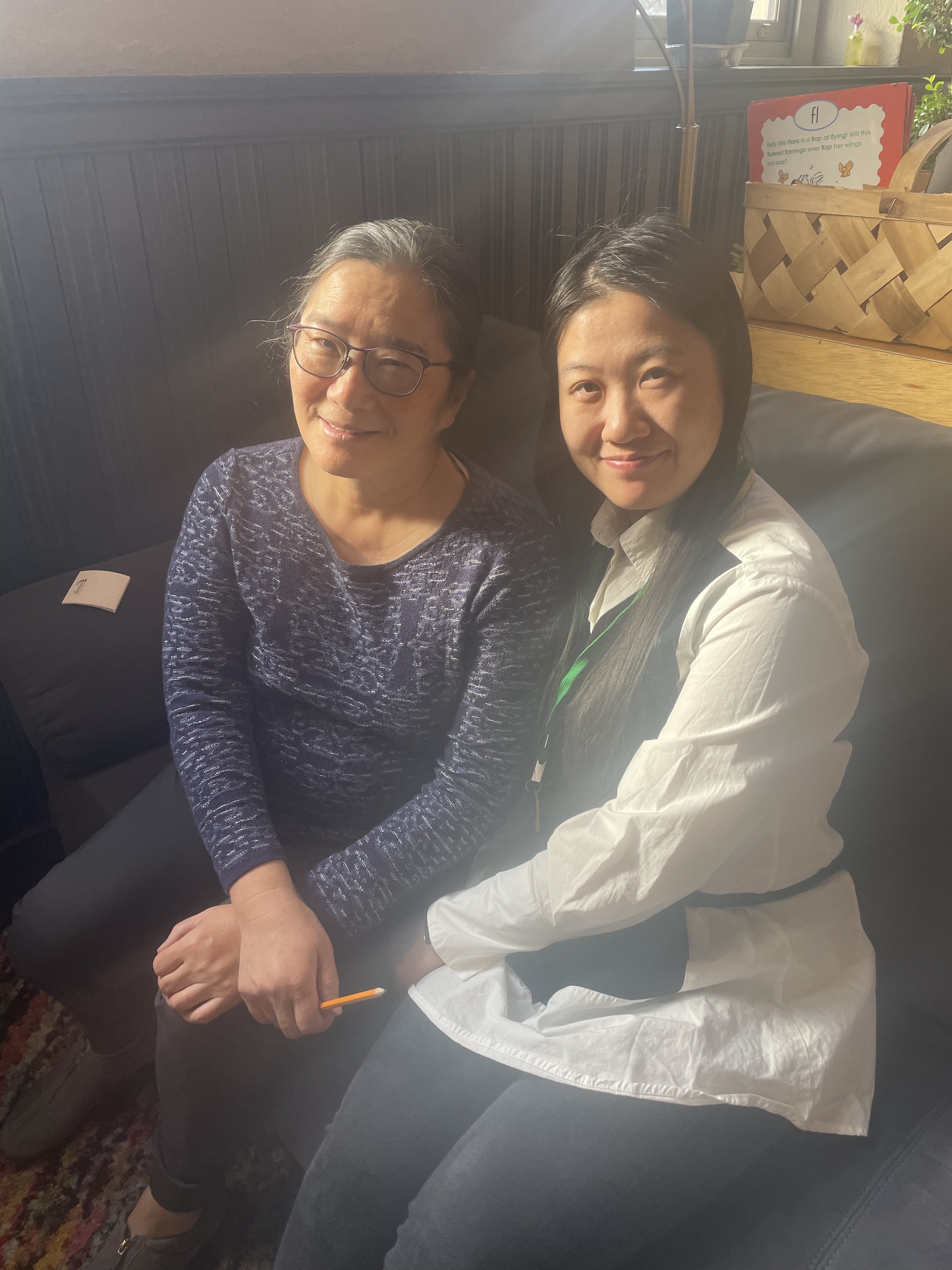
Multilingualism is a cornerstone of academics at The New Century School. The Mandarin Chinese program is therefore a “jewel” in the school’s crown, along with the Spanish and ELA programs. Speaking of jewels, the current TNCS Chinese team has the ongoing support of Xie Laoshi—aka “Jewel! Xie Laoshi is a veteran TNCS instructor, having led the classroom and multiple summer camps, including StarTalk! Xie Laoshi is very pleased to have mentored the newest member of the elementary/middle school Mandarin team, Jia Liu (“Liu Laoshi”).

Meet Jia Liu!

Liu Laoshi came to the United States in 2021 to pursue a master’s degree in Music Education at the University of Auburn. After graduating, she moved to Baltimore with her partner. As luck would have it, her neighbor turned out to be TNCs’s K/1 Mandarin immersion teacher Cui Laoshi, who recommended she apply at TNCS for the 2023–2024 school year. Xie Laoshi was immediately impressed with her work ethic, and she is now fulfilling what is known as Optional Practical Training during her time at TNCS.

Liu Laoshi is originally from Luoyang, an industrial city in central China’s Henan province, where evidence suggests Chinese civilization originated.

She plans to bring her musical prowess into the Chinese classroom in various ways to make learning fun and well-rounded for her students. Although she teaches Mandarin Chinese at TNCS, she has a rich background in teaching music—her family owns a music school (Golden Vienna Academy of Piano) in Luoyang, and Liu Laoshi still helps run it long distance.

Mandarin Chinese Curriculum

Together, the Mandarin team (that also includes Cui Laoshi in K/3 and Wang Laoshi in preschool) have ensured that the curriculum is up to date and effective. As before, Xie Laoshi’s approach aligns with that of the American Council on the Teaching of Foreign Languages (ACTFL). ACTFL continues to promote the 5 Cs—an ingrained part of the Mandarin program at TNCS from the very beginning, but they have adapted and innovated over the last decade to promote additional effective language instruction and assessment practices that align with current research in education and language acquisition. Among these, two prominent instructional approaches are “backward design” and “project-based learning” (PBL).

Xie Laoshi explained these two approaches in detail and how the Mandarin Chinese team implements them in the classroom.

Backward Design

The essence of backward design is to start with the desired results (end goals or objectives) and then design instruction and assessment to achieve these goals. This ensures that educators first identify the desired outcomes and proficiency levels for students, then they design the learning experiences and assessments to achieve these targets. ACTFL’s standards emphasize performance goals, which align well with the backward design model. By first determining what students should be able to do in the target language, educators can then plan meaningful instruction to help students reach those performance goals.

Project-Based Learning

In PBL, students work on a project over an extended period, which challenges them to solve a real-world problem or answer a complex question. PBL encourages authentic language use in meaningful, real-world contexts and promotes the integration of the three modes of communication (interpretive, interpersonal, and presentational). It encourages students to research, collaborate, communicate, and reflect in Mandarin Chinese, which makes the learning experience more engaging and relevant.

Part of PBL is the “can-do” statement: these are performance descriptors that articulate what language learners can do in terms of communication at various proficiency levels. They offer a clear way to describe language skills in the domains of speaking, listening, reading, and writing. They also serve as benchmarks for assessing a learner’s progress and growth over time; they help educators and learners to understand where a student is currently and what they need to work on to reach the next level of proficiency. In essence, can-do statements act as a bridge between the theoretical framework of the proficiency guidelines and the practical application in the classroom.

Want to see PBL in action? 

For their first-quarter project, TNCS students were asked to create characters and elaborate on who these characters are and what their lives look like. To familiarize students with what they were trying to achieve, Xie and Jia Laoshi used teaching language proficiency through storytelling (TPRS). They start with a one-word image and collaboratively build on that (such as with a name, gender, age, personality, and so on) to tell a story. Their launch visual was “door.” “Each day you circle around the image, building first maybe the appearance and continuing from there,” explained Jewel. Lots of repetition happens, and students start understanding grammar patterns and how to use conjunctions. They love this character, so they want to keep talking about it.”

Then, they were let loose to create their own individual characters! Part of the genius of this TPRS project is that students had to read, write, and think in Chinese, and they also had to present their characters to the rest of the class. As one student described it, “I thought it was a really fun project. It was really great to make our own characters. I learned a lot, and it helped improve my comprehension.” This student, by the way, is learning Mandarin Chinese for the first time! (Xie Laoshi credits the prework they did as a class as well as the concept of “comprehensible input”—a linguistic theory that states that second language learners need to be exposed to linguistic input slightly above their current language level so that they can understand new inputs—for this student’s success so far).

This slideshow requires JavaScript.

And here is a sample presentation!


Other projects that TNCS students have been working on are what Liu Laoshi calls “mini Chinese dramas.” Fortunately, she is an accomplished videographer and captured one on film for us.


All in all, Mandarin Chinese class is a highpoint of TNCS students’ day. Xiǎngshòu nǐ de xuéxí, TNCS students! 享受你的学习

Jade Wells-White: TNCS’s Administrative Assistant (and So Much More)!

In some ways, administrative assistants are the unsung heroes of the modern workplace—meticulously organizing, scheduling, and ensuring smooth operations. Their multitasking prowess, combined with an impeccable attention to detail, ensures that no task goes undone. Though they might not always be in the spotlight, their influence is felt nearly everywhere. And so we bring you, TNCS’s own office heroine!

Meet Jade Wells-White!

Jade Wells-White joined The New Century School in July, just 3 months after graduating college and just 2 months prior to the start of the 2022–2023 school year. “Administrative Assistant and Extracurricular Activities (ECAs) Coordinator are my official titles, but I also have many other roles,” she said. “I’m the onsite person for human resources and involved in the onboarding process. I also work with our international intern program, and I do accounts payable as well.” A testament to Ms. Wells-White’s work ethic and competence, the latter responsibilities developed as she proved herself.

Background

Ms. Wells-White is a Baltimorean, born and raised. “For middle school and high school, I went to McDonogh School, and for college I went to McDaniel College in Westminster, MD. I received my degree in business administration and marketing, and this is my first real-world job!”

She says that starting her job at TNCS in the summer allowed her to ease in and observe to help her make the transition. The start of a school year is always going to be hectic! Ms. Wells-White also attributes her relative soft landing into the “real world” to her own education pathway. She was familiar with the independent school sphere from her time at McDonogh, and her college experience familiarized her with how important a small, close-knit environment can be for optimizing learning.

(Is McDonogh ringing any bells? If you are a regular reader of Immersed, you’ll know that the TNCS Head of School Erika Johnson herself is an alumna!)

At TNCS

When asked how TNCS came to be her first job after graduating from McDaniel, Ms. Wells-White admits that she hadn’t been familiar with the school until doing research about it. She liked what she learned! “I felt it would be a great opportunity to work here because I was very close to becoming a Spanish minor when I was in college, and I thought working here would help me with my Spanish and working toward making it a second language. So I definitely saw that benefit, but also I felt it would be a great first job, and once I started, everyone was so supportive with onboarding and making sure that I was comfortable and up to speed.” The multilingual part of TNCS’s identity is something she feels sets the school apart. “A lot of schools don’t focus on that, but it’s important to be able to speak more than one language. The fact that three languages are taught here is such a great opportunity for students,” she said.
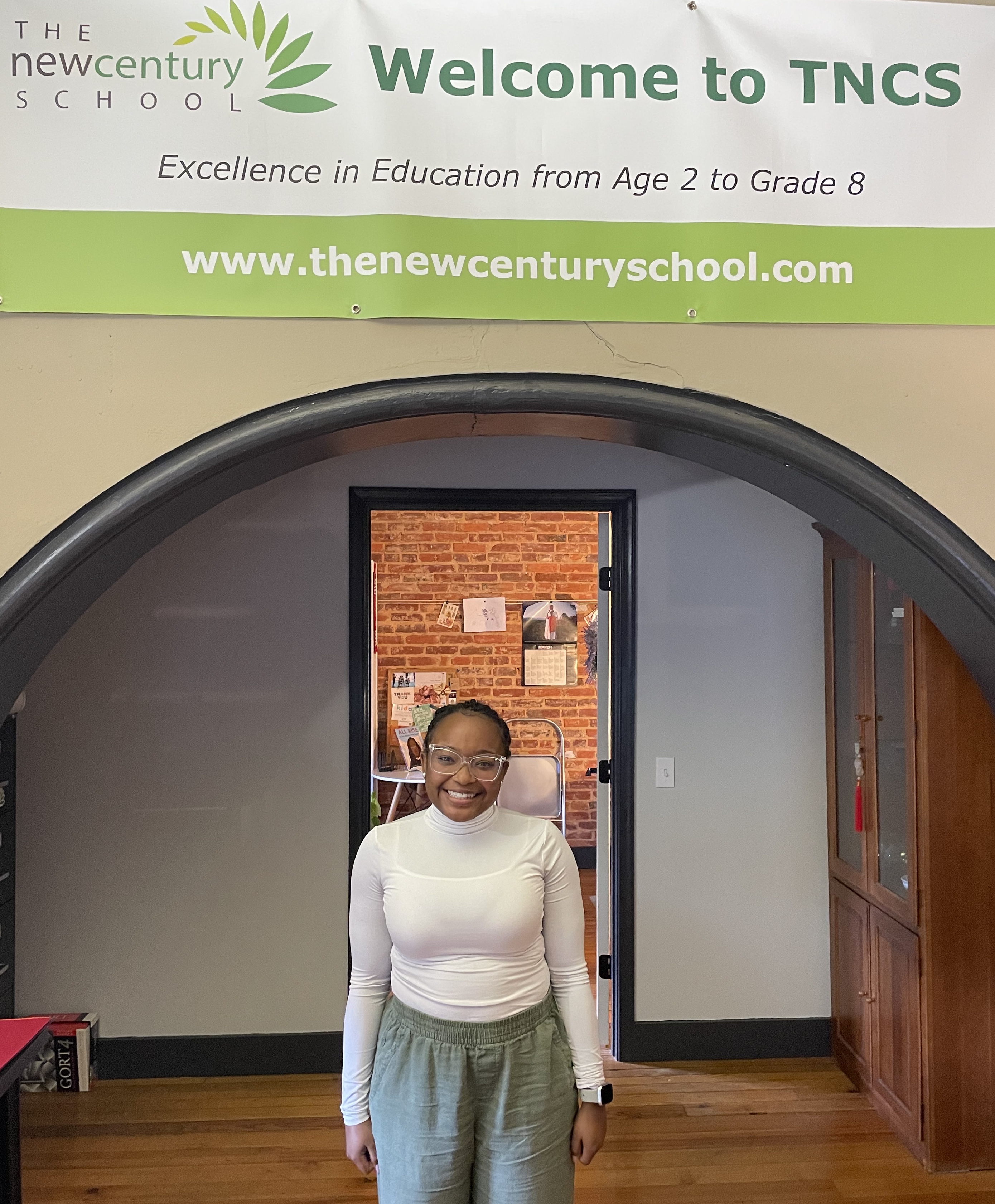
As for how it’s going now, she waxed positively poetic. “This is a great place to be, and everyone is so nice and helpful. It feels like a little family.” That family feel extends into the classroom, she has noticed. “The reason chose to go to McDaniel was because I wanted to have close relationships with my teachers. Students here are able to do that as well, and their teachers really know them as individuals and get to see them grow through their time at TNCS. The small size is definitely beneficial for students as they go through their years here.”

But there’s an additional perk, and it occurs outside her office: “I get to see the adorable little kids every day. Even though it’s a short hour out of my day, they really brighten my day—they’re always so happy and joyful!

Extracurricular Activities

“When I first got here, I looked at the data from what was going on before COVID to see what types of activities were popular here and what students were really involved in. Then I reached out to people who TNCS had already worked with and had run successful programs, like Modern Masters and Tippi Toes Dance.” Others were not pursuable for various reasons, so Ms. Wells-White embraced the opportunity to more or less “start over from scratch.” “I also reached out to families to see what kinds of things they wanted to see on campus. Through that process, I got suggestions about Soccer Shots and a jujitsu and yoga program with instructor Christy Jenkins, which have turned to be very popular this quarter. I also found a chess program that’s been going pretty well. And, I’m still trying to find more activities, like maybe horseback riding or swimming. I definitely want to hear from parents about what they want to see, but for now I just try my best to build on what was here in the past.”

Although the off-campus activities she is considering would be logistically much more challenging to implement, Ms. Wells-White has ideas how to make them work, such as contacting local colleges and high schools for students to act as chaperones, especially those interested in pursuing education careers, which would give them a rich opportunity to work with younger kids.

Speaking of younger kids, Ms. Wells-White is actively looking for more preschool ECAs, so stay tuned!

“I’m always open to suggestions. I am definitely trying to build a program that is beneficial for your students and allow them to participate in things that can help them grow, things to challenge them, and to provide something outside the regular aftercare activities. I’m always reachable by e-mail.” She also mentioned having an inside track to Ms. Johnson so can help set up meetings, ensure she’s receiving your communications, and so on.

Parents, Ms. Wells-White’s message is loud and clear: your feedback is welcome!


What is on the horizon for Ms. Wells-White? For now, she’s content to absorb all she can about this first job that she clearly enjoys—not to mention is very good at. She’s not ready to think too far down the road yet. “I wear a lot of hats here, and I have a hand in a lot of things behind the scenes. . . but I’m always open to opportunities!”