Lunar New Year at TNCS Was a Roaring Good Time!

Every Lunar New Year at The New Century School is special, but the Year of the Dragon was really “scaled” up!
Firstly, 2024 marked the return of TNCS’s Visiting Chinese Scholars Program, which takes advantage of the 2 weeks each winter many Chinese families have off and can make the trip to the United States to immerse themselves in English language and culture. We miss “the girls” already!

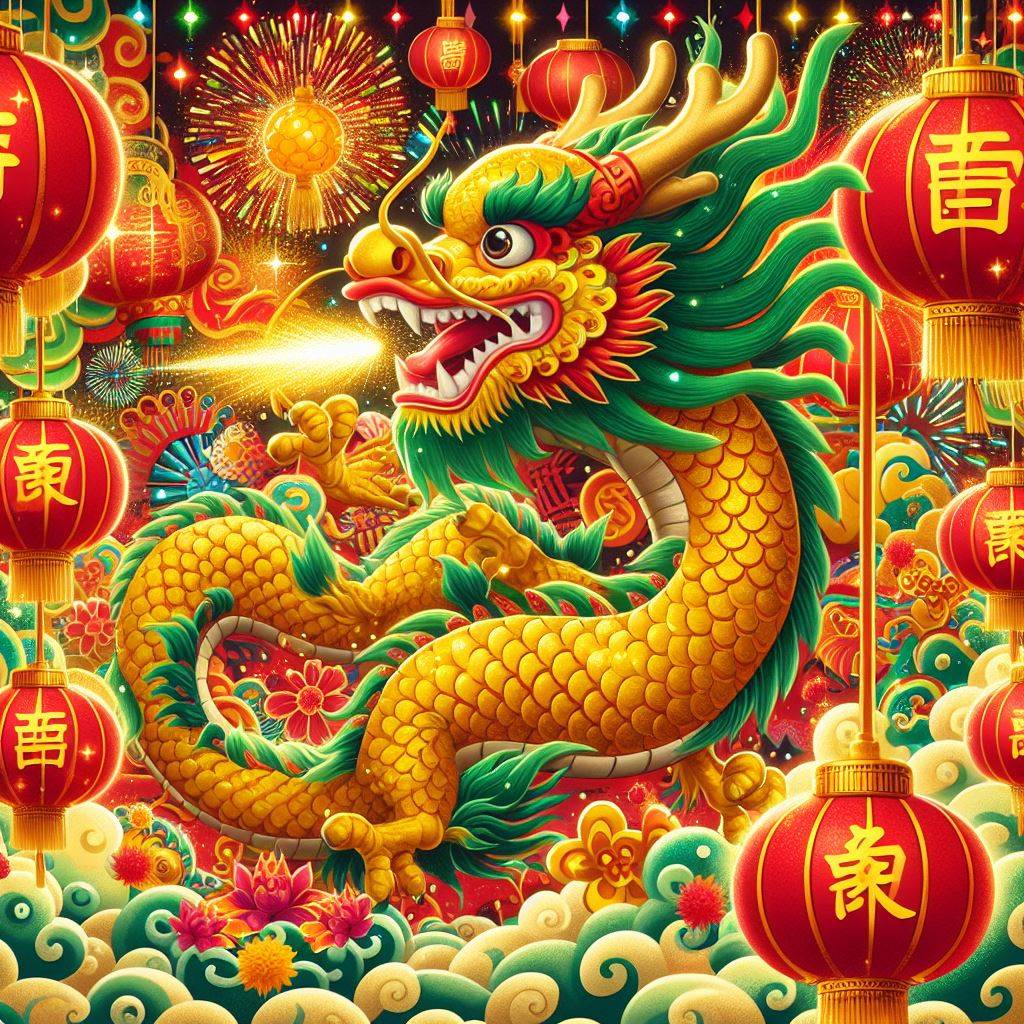
Secondly, the Year of the Dragon is one of the most auspicious in the Chinese zodiac, dragons being, well, dragons! The dragon is the only mythical creature on the Chinese zodiac, that, coupled with the fact that dragons are unparalleled in majesty, strength, and all-around charisma, makes 2024 a year full of promise. TNCS Chinese teacher Jia Liu and her mentress Xia Laoshi made sure that TNCS celebrations befit the occasion. Drawing on what former TNCS Chinese instructors created in 2022 and 2023, Liu Laoshi and Xie Laoshi recreated an enchanting Chinese market/festival.

Preparations for the event that took place on February 6th began months earlier, as Liu Laoshi gathered supplies, vetted performers, and delegated tasks (like creating promotional materials and decorations—perfect projects for her students!).

The event itself had two main portions, a very well-attended live session, followed by shopping, eating, and playing games at the market/festival.

Live Performances

The live event was special not only for featuring performances in Mandarin by TNCS students, but Liu Laoshi managed to entice DC Beauty of Beijing Opera (dcbbo.org) to present the history of Chinese opera, sing, and interact with TNC students.

This slideshow requires JavaScript.

TNCs performances included “Invisible Wings” by grades 4 and 5, “Jasmine Flower” and “Congratulations” by Grades K through 3, and a traditional Chinese costume show by grades 6 to 8.

This slideshow requires JavaScript.

Market/Festival

Liu Laoshi gave TNCS middle schoolers the task of designing promotional posters for the market/festival, while TNCS 4th- and 5th-graders handled ticket creation. Just look at their impressive handiwork!

The market itself was equally impressive. It comprised three main areas: food, interactive games, and shopping.

Spring rolls, pan-fried dumplings, cookies, candied haws, cupcake with zodiac toppers, and milk tea were on sale (purchased with the tickets pictured above) at the food stalls to keep our festival-goers energized (and happy).

The interactive game area was conceptualized as a zone for parents and children to experience together, whether posing at a traditional Chinese-themed photo booth to capture memories; participating in lantern-making or paper-cutting workshops; immersing in Chinese culture with learning Chinese “Fu” character writing (calligraphy) or indulging in a tea ceremony; or having plain old fun playing bean bag toss, “pin the eye on the dragon,” or other creative Chinese-themed games.

At the arts and crafts area, handicrafts and traditional small items could be purchased with tickets.

It was the perfect way to ring in the Year of the Wood Dragon, a year that promises “opportunities, changes, and challenges,” like any good dragon would.

Xīnnián kuàilè (新年快乐), TNCS Community!

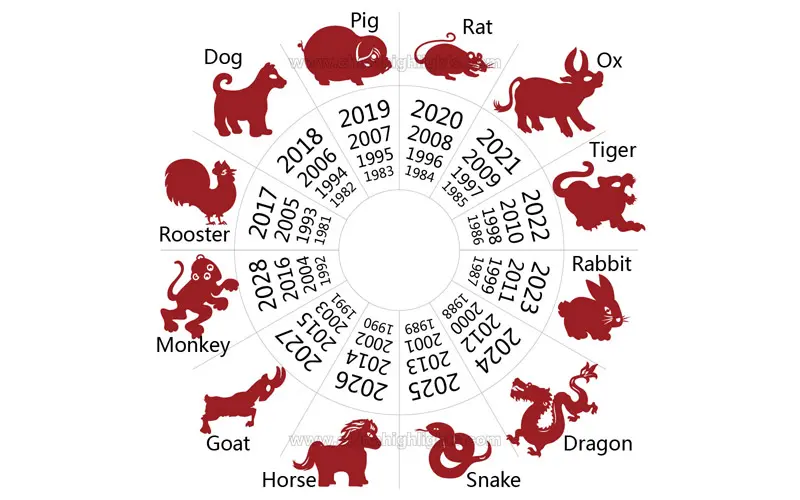
Did you know that TNCS is partway through its second full turn of the Chinese zodiac? TNCS launched in the Year of the Tiger, 2010. Since then, TNCS has marked many a Lunar New Year in a variety of ways!

Immersed had not yet met the world for the Lunar New Year of 2012, but you can be sure that Year of the Dragon was one to behold.
TNCS Celebrates Lunar New Year and the Lantern Festival!

One of the most anticipated annual events at The New Century School is celebrating the Lunar New Year. This year rang in Year of the Rabbit, TNCS’s second rabbit year, with the last happening in 2011, when TNCS was very much still in its infancy.

For the second year running, TNCS held a Chinese bazaar to honor the occasion. (See Li Laoshi’s Chinese Night Market from last year here.) So, on January 24th and 25th, the auditorium in building north was transformed into an indoor market of craft and clothing stalls, food vendors, and performances. This, says Yujie Peng (“Peng Laoshi”), allows students to collaborate with their peers and to communicate about real-life subjects in Mandarin Chinese.

The bazaar, she explained, presents an opportunity to explore different Chinese cultures. Students were so excited leading up to the event, she said, and it turned out even better than she had hoped. So much better, in fact, that she thinks she will need to double the goods offered next year (Year of the Dragon)! The bazaar was not only a sell-out, but it also came close to tripling the funds raised last year, with more proceeds still to come. Parents, said Peng Laoshi, had lots of positive feedback to share. Not surprising, as you’ll see!

This slideshow requires JavaScript.

As the photos (courtesy of Peng Laoshi) show, 4th- through 8th-grade students set up stations focusing on a topic that  interested them, such as Kung Fu, Chinese food, pandas, traditional traditional crafts, and traditional clothing. Qipao, for example, is the traditional Chinese dress and is commonly worn to celebrate the New Year. Students created trifold poster presentations and presented their topics in a mix of English (so attending parents could understand) and Mandarin Chinese, as part of the lesson in learning new vocabulary related to culture. New this year, Peng Laoshi asked her students to use the three parts of their posterboards trilingually, each in a different color to represent the three languages TNCS students learn: Chinese characters and pinyin in green, English in blue, and Spanish in orange. Younger students (K through 3rd-grade) made posters to decorate the walls of the auditorium.
Another special bonus is that each class did a classroom presentation in Mandarin that was recorded and shown on a loop during that class’s time at the bazaar. Courtesy of TNCS’s Mandarin Chinese teachers, these are sprinkled throughout the remainder of the post.

At the bazaar, students needed to demonstrate their proficiency in buying and selling in Mandarin as well as advertising their stations. Goods were bought and sold with tickets that attendees could buy prior to entering. “This not only allowed them to practice their language skills, but also practice life-ready skills,” said Peng Laoshi. “They need to know how to cooperate with their peers, because each station had two, three, or four students. They also need to know how to organize their station with the different items.” Prior to the event, more learning took place as students developed online research skills and then how to coherently present their research on Chinese culture according to parameters set by Peng Laoshi.

But it wasn’t all work for these industrious bazaar managers! Each student got a package that included a red Year of the Rabbit tee-shirt in one of two styles depending on division to wear on bazaar days. At the bazaar, they each got a red cup containing two dumplings and a spring roll—they could buy more if still hungry! (This proved to be very much the case, and next year Peng Laoshi plans to have extra air fryers on hand!)

The tee-shirts were a runaway hit and have made several subsequent appearances at school, including during this past spirit week’s Twin Day.

Peng Laoshi said she didn’t have a favorite presentation—they were all great—but she did express how impressed she was with some of the beginners, who learned very quickly and brought their A game to the bazaar. “Overall,” she said, “I see that students can really learn a lot from this kind of activity.”

And now, we look forward to the Lantern (Shangyuan) Festival, which happens on the 15th day of the lunar calendar and coincides with the full moon. That is Sunday, February 5th this year. Peng Laoshi says, “I hope more people around the world can know about the Lunar New Year and the Lantern Festival. It’s like a new beginning—everything’s new, and we have new hope and a whole new start.”

When asked what the celebration means to her personally, Peng Lasohi said:

The Chinese new year is one of the most important holidays in Chinese culture. It means reunion of family and celebration of the beginning of a new year. I am so happy to celebrate it with TNCS families, which is like a big family reunion and celebration. The rabbit symbolizes peace, longevity, and prosperity in Chinese culture. The year of the rabbit is predicted to be a year of hope. May the year of the rabbit bring every TNCS family good health, happiness, and abundance.


Wishing you lots of luck this rabbit year! Tù nián dà jí! 兔年大吉

Happy Chinese Lunar New Year 2019, TNCS Community!

The Chinese Lunar New Year is a favorite annual celebration at The New Century School. In 2019, Chinese New Year officially began on February 5th, 2019, and ends on February 19th. The occasion is subdivided into phases, however, with the so-called “Little Year” having started on January 28th and lasting until February 4th (New Year’s Eve). The “Spring Festival” ran from February 5th through February 15th, and the “Lantern Festival” phase begins February 16th and ends February 19th.

This is The Year of the Pig (猪—zhū)—a most auspicious animal representative, as pigs with their chubby faces and big ears are symbols of wealth in Chinese culture, despite their reputation for bringing up the rear.

Pig Zodiac Sign

According to the website Chinese New Year.net:

The Pig is the twelfth of all zodiac animals. According to one myth, the Jade Emperor said the order would be decided by the order in which they arrived to his party. Pig was late because he overslept. Another story says that a wolf destroyed his house. He had to rebuild his home before he could set off. When he arrived, he was the last one and could only take twelfth place.

Pigs might not stand out in a crowd. But they are very realistic. Others may be all talk and no action. Pigs are the opposite. Though not wasteful spenders, they will let themselves enjoy life. They love entertainment and will occasionally treat themselves. They are a bit materialistic, but this is motivation for them to work hard. Being able to hold solid objects in their hands gives them security.

They are energetic and are always enthusiastic, even for boring jobs. If given the chance, they will take positions of power and status. They believe that only those people have the right to speak, and that’s what they want.

Celebrations at TNCS

Although every Chinese New Year is special, this year stands out thanks to some very special guests from China. Tiger, Lucy, Tiffany, and Meg and their parents joined the TNCS community for 2 wonderful weeks of fun and cultural exchange (see more about their visit here).

Although Chinese New Year represents “out with the old, in with the new,” so wearing new clothes, often in red, is common practice, February 5th just happened to coincide with Pajama Day as part of TNCS’s Spirit Week.

Red Pockets

TNCS students did observe other Chinese New Year traditions including the always-popular “Red Pockets”! These delightful red envelopes known as hóng bāo (红包) contain “lucky money,” which is to help get the recipient off on the right foot in the new year. At TNCS, Wei Li (“Li Laoshi”) has her older students pass out hóng bāo to the preprimary and primary students (who don’t mind a bit that the yuan inside are counterfeit).

Dumpling Making

If there’s one thing TNCS students absolutely love to do, it’s make—and eat—jiǎozi ( 餃子), dumplings! On the first day of Chinese New Year, they were led by their Chinese friends’ parents, which was an added treat.

The Performance

On the first day of Chinese New Year, TNCS students and their Chinese guests collaborated on a very special performance of singing, dancing, and playing instruments.

These videos are presented to you in the order of the show. Prepare to be seriously wowed.

It was such a wonderful way to start off 2019 . . . or, rather, the year 4716. No matter how you count your years, this Chinese New Year at TNCS will be remembered for a long time to come!


For past years’ celebrations at TNCS, see: