Black History Month is a special time at The New Century School and in Baltimore at large. Black History Month isn’t merely a twelfth of the academic calendar; it infuses classroom lessons with narratives of resilience, triumph, and collective struggle. In a city steeped in historical significance, where the echoes of civil rights movements and the legacy of iconic figures reverberate through its streets, the observance of Black History Month takes on a profound resonance.
From preschoolers taking their first steps into the world of learning to middle schoolers navigating the complexities of identity and history, every TNCS student is invited to discover the contributions, struggles, and triumphs of Black Americans. Black History Month serves as a cornerstone for fostering empathy, understanding, and cultural appreciation. Our Maryland heritage includes trailblazers like Frederick Douglass, Harriet Tubman, and Thurgood Marshall—figures whose indelible imprint on history serves as a testament to the enduring spirit of resilience and courage—and we owe it to their legacy to honor and uplift this essential time of exploration.
Moreover, Black History Month at TNCS isn’t confined to academic discourse; it’s a celebration that permeates every facet of school life. From spirited performances and engaging presentations to art exhibits and community outreach initiatives, students are provided with platforms to explore, engage, and celebrate the multifaceted layers of Black culture and heritage. TNCS students make clear that Black history is a living, breathing testament to the enduring struggle for justice, equality, and dignity. It’s a reminder that the journey towards equity and inclusivity is ongoing—a journey that requires introspection, dialogue, and unwavering commitment from all members of the community.
Closing out the month, TNCS 2nd- through 8th-graders visited Baltimore’s own Reginald F. Lewis of Maryland African American History & Culture.
TNCS students appreciated this chance to explore Maryland’s rich cultural and historical legacy, but the main event at TNCS was the Black History Month celebration for K through 8th-graders, featuring choral and spoken performances as well as dance. The event was planned and executed by TNCS’s dynamic duo, Director of Student Support Alexis Watson and Head of School Erika Johnson, who opened and closed the show, respectively.
The program opened with an introduction by two TNCS upper elementary students:
Black History Month is an annual celebration of achievements by African Americans and a time for recognizing their central role in U.S. history. Also known as African American History Month, the event grew out of ‘Negro History Week,’ the brainchild of noted historian Carter G. Woodson and other prominent African Americans. Since 1976, every U.S. president has officially designated the month of February as Black History Month. PIA: Other countries around the world, including Canada and the United Kingdom, also devote a month to celebrating Black history. Today, the TNCS Community invites you to celebrate the triumphs, fortitude, joy and lives of Black Americans. Happy Black History Month!
From there, students launched into the “Black National Anthem”: Lift Every Voice and Sing.
Libation: Recognition of Ancestors
A tableau followed; four students interacted in this mini-play.
A: An African proverb tells us that people who lack the knowledge of their past are like a tree without roots. So, in the spirit of remembrance, we pour this libation. We pour to honor the past, so that we may learn from it. We pour to honor the importance of family.
S: We raise our cup to God to show our reverence for the original source of our lives. We use cool water to freshen the road our ancestors travel to be here with us today. We use cool water as a symbol of history, we broaden our knowledge, understanding and wisdom.
D: We remember our symbol of the continuity of life, to purify and to nourish our souls. It is said through others, we are somebody. I Am because We Are. Through our celebration heritage and recall those who gave us life. We call upon our ancestors—our mothers, grandmothers and great grandmothers, our fathers, grandfathers and our great grandfathers, uncles, aunts and cousins—the foundations of our families, immortalized in our thoughts. We call upon our elders, whose wisdom we seek in all endeavors. Our friends whom we are blessed to have in our lives, our parents and guardians who guided us along the road to adulthood.
K: We call upon family who have passed over and could not physically be here today. We ask that they be with us in our thoughts. We cast our libations to the North, to the South, to the East and to the West. Above us, below us, and within us.
Call to Celebrate the Culture: What is Kwanzaa?
A middle school student took the stage next to talk about the tradition of Kwanzaa and its rich meaning.
Kwanzaa is a time for families and communities to come together to remember the past and to celebrate African American culture.Created in 1966 by Maulana Ron Karenga, Kwanzaa is an African American and Pan-African holiday that celebrates history, values, family, community and culture. The ideas and concepts of Kwanzaa are expressed in the Swahili language, one of the most widely spoken languages in Africa. The seven principles which form its core were drawn from communitarian values found throughout the African continent. These principles are: Umoja (Unity), Kujichagulia (Self-Determination), Ujima (Collective Work and Responsibility), Ujamaa (Cooperative Economics), Nia (Purpose), Kuumba (Creativity), and Imani (Faith). Kwanzaa gets its name from the Swahili phrase, “matunda ya kwanza” and is rooted in first fruit celebrations which are found in cultures throughout Africa both in ancient and modern times.
Principles One and Two
A series of students then presented the Kwanzaa principals.
Umoja (unity) is the first and foundational principle of the Nguzo Saba. Unity is both a principle and practice and practice of togetherness in all things good and of mutual benefit. In 1908, a deadly race riot rocked the city of Springfield, eruptions of anti-black violence—particularly lynching—were horrifically commonplace, but the Springfield riot was the final tipping point that led to the creation of the NAACP. Appalled at this rampant violence, a group of liberals that included Mary White Ovington and Oswald Garrison Villard (both the descendants of famous abolitionists), William English Walling and Dr. Henry Moscowitz issued a call for a meeting to discuss racial justice. Some 60 people, including W. E. B. Du Bois, Ida B. Wells-Barnett, and Mary Church Terrell, signed the call, which was released on the centennial of Lincoln’s birth. On February 12, 1909, the nation’s largest and most widely recognized civil rights organization was born.
The second principle of the Nguzo Saba is Kujichagulia (self-determination). It demands that we as an African people define, defend and develop ourselves instead of allowing or encouraging others to do this. The first colleges for African Americans were established largely through the efforts of black churches with the support of the American Missionary Association and the Freedmen’s Bureau. The second Morrill Act of 1890 required states—especially former Confederate states—to provide land grants for institutions for black students if admission was not allowed elsewhere. As a result, many Historically Black Colleges and Universities (HBCUs) were founded. Between 1861 and 1900 more than 90 institutions of higher learning were established. Shaw University––founded in Raleigh, North Carolina, in 1865––was the first black college organized after the Civil War. Early HBCUs were established to train teachers, preachers and other community members.
Today, the number of HBCUs has grown to over 100 institutions serving students from all around the world, such as:
- Morehouse University, founded in 1867
- Spellman University, founded in 1881
- Hampton University, founded in 1868
- Howard University, founded in 1867
- Clark Atlanta University, founded in 1865
Audience members who graduated from an HBCU were then invited to stand, to thunderous applause.
I, Too, by Langston Hughes
No Black History Month celebration would be complete without a poem by the great Langston Hughes, so another TNCS student obliged.
I, too, sing America.
I am the darker brother.
They send me to eat in the kitchen
When company comes,
But I laugh,
And eat well,
And grow strong.
Tomorrow,
I’ll be at the table
When company comes.
Nobody’ll dare
Say to me,
“Eat in the kitchen,”
Then.
Besides,
They’ll see how beautiful I am
And be ashamed—
I, too, am America.
Principles Three and Four
After that brief but inspiring interlude, the principles resumed.
The third principle is Ujima (collective work and responsibility), which is a commitment to active and informed togetherness on matters of common interest. The National Pan-Hellenic Council is a collaborative organization of nine historically Black/African American fraternities and sororities. This coalition was founded in 1930, but has a history that dates back to the early 1900s’. During that time, violent inequities of black scholars were an accepted norm in the American education system. In response to the racial segregation and disenfranchisement that denied black students entry into the previously established and predominantly white sororities and fraternities, they decided to create their own Greek organizations.
The divine nine include:
- Zeta Phi Beta Sorority, Inc. (ZΦB)
- Kappa Alpha Psi Fraternity, Inc. (KAΨ)
- Omega Psi Phi Fraternity, Inc. (ΩΨΦ)
- Phi Beta Sigma Fraternity, Inc. (ΦBΣ)
- Alpha Kappa Alpha Sorority, Inc. (AKA)
- Delta Sigma Theta Sorority (ΔΣΘ)
- Sigma Gamma Rho Sorority, Inc. (ΣΓΡ)
- Iota Phi Theta Fraternity, Inc. (ΙΦΘ)
- Alpha Phi Alpha Fraternity, Inc. (AΦA)
Once again, audience members of any of the “divine nine” were invited to stand and be recognized.
The fourth principle is Ujamaa (cooperative economics) and is essentially a commitment to the practice of shared social wealth and the work necessary to achieve it. Ujamaa literally means familyhood. As this is Black History Month, I thought it would be appropriate to say something about one of the pioneers of the food justice movement. The name Fannie Lou Hamer is not obscure, but the civil rights and women’s rights icon of the 1960s and 1970s is less known as a food justice advocate. The term “food justice” was coined only later, since at the height of the civil rights movement, all injustices were part of its agenda. In 1969, Hamer established the Freedom Farm Cooperative, whose objective was to make land accessible to black farmers and provide a source of food and employment for marginalized communities in the Mississippi Delta.
Throughout the 20th century, African American farmers (not only in Mississippi, but nationwide) were routinely denied loans they sought from the U.S. Department of Agriculture. Most lost their land as a result and were forced to resort to sharecropping or join the Great Migration headed North and West. It was one of the most egregious examples of wealth stripping carried out by the federal government, orchestrated by unabashed racists such as Mississippi Senator James O. Eastland. Today, African Americans make up less than 2 percent of the nation’s farmers, compared to nearly 15 percent a hundred years ago. Today’s food justice advocates are not only attempting to feed communities where food systems have failed, but they have become ever mindful of preserving the sustainability of the tiny parcels of land that are all that is available to them.
Raising Voices in Song
Another brief interlude followed, this time of choral selections by TNCS K through 3rd-graders, who sang Siyahamba and Yonder Come Day, again to rousing applause.
Principles Five and Six
The fifth principle is Nia (purpose), which is a commitment to the collective vocation of building, developing, and defending our community, its culture and history in order to regain our historical initiative and greatness. Rose Huey P. Newton and Bobby Seale established The Black Panther Party (BPP) in Oakland, California in 1966. The organization—originally named the Black Panther Party for Self-Defense—first established neighborhood patrols and protected residents from police brutality. However, the black revolutionary party ultimately evolved into a Marxist revolutionary group that fought for African American weapon rights, exemption from “white American” sanctions, and financial compensation for years of racial exploitation. In addition to fighting for political and economic equality, the BPP became well known for providing access to medical clinics and free breakfasts for children.
The sixth principle is Kuumba (creativity) and logically follows from and is required by the principle of Nia. It is a commitment to being creative On March 30 1958, Alvin Ailey and a group of young, Black modern dancers performed for the first time as members of Alvin Ailey American Dance Theater at New York’s 92nd Street YM-YWHA. The Company travels on what Alvin Ailey calls “the station wagon tours” in a vehicle driven by a longtime friend of the Company, Mickey Board.
Keur Khaleyi Dance Company
TNCS welcomed back the amazing Keur Khaleyi dance company to lead 4th- and 5th-graders in a beautiful dance, thoroughly enjoyed by dancers and spectators alike. Scroll below to see last year’s post about this company!
Principle Seven
The seventh principle is Imani (faith), which is essentially a profound and enduring belief in and commitment to all that is of value to us as a family, community, people and culture. African American churches provided spiritual and practical support for civil rights advocates. The militant rhetoric of the Black Power movement troubled many ministers, but others supported demands for fundamental and immediate change. The Nation of Islam reinforced Black Power philosophy by insisting that black Americans have control over their own businesses, schools, and community organizations. The Nation’s philosophy, especially as conveyed by Malcolm X between 1957 and 1964, inspired a commitment to black liberation, including the development of black-owned businesses.
Ego Tripping, by Nikki Giovanni
Another poem was recited, the one about, well, everything.
I was born in the Congo
I walked to the fertile crescent and built
the Sphinx
I designed a pyramid so tough that a star
that only glows every 100 years
falls
into the center giving divine perfect light
I am bad
I sat on the throne
drinking nectar with Allah
I got hot and sent an Ice Age to Europe
to cool my thirst
My oldest daughter is Nefertiti
the tears from my birth pains
created the nile
I am a beautiful woman
I gazed on the forest and burned
out the Sahara desert
with a packet of goat’s meat
and a change of clothes
I crossed it in 2 hours
I am a gazelle so swift
so swift you can’t catch me
For a birthday present when he was 3
I gave my son Hannibal an elephant
He gave me Rome for mother’s day
My strength flows ever on
My son Noah built new/ark and
I stood proudly at the helm
as we sailed on a soft summer day
I turned myself into myself and was
Jesus
men intone my loving name
All praises All praises
I am the one who would save
I sowed diamonds in my back yard
My bowels deliver uranium
the filings from my fingernails are
semi-precious jewels
On a trip north
I caught a cold and blew
My nose giving oil to the Arab world
I am so hip even my errors are correct
I sailed west to reach east and had to round off
the earth as I went
The hair from my head thinned and gold
was laid
across three continents
I am so perfect so divine so ethereal so surreal
I cannot be comprehended
except by my permission
I mean . . . I . . . can fly
like a bird in the sky . . .
Choral Performance, Redux
As the evening drew to a close, students in Kindergarten through 8th-grade joined together to sing Wade In The Water and Stand Up. Cue the waterworks!
Closing Remarks
A “Meditation For Justice and Liberation for All People” was the final student performance.
Together we can….envision of a world centered in Love and not Power: Together we can…create a world where the weak are protected, and none go hungry or poor; Together we can…build a world where the riches of creation are shared, and everyone, regardless of station or caste, can enjoy them; Together we can…empower a world where different races and cultures live in harmony and mutual respect; a world where peace is built with justice, and justice is guided by love. Together we can… courageously be the Beloved Community.
Black History Month stands as a beacon of hope and inspiration—a reminder of the transformative power of education and the boundless potential that resides within each and every student. As Maya Angelou famously said, “History, despite its wrenching pain, cannot be unlived, but if faced with courage, need not be lived again.”
For past Black History Month celebrations, see:
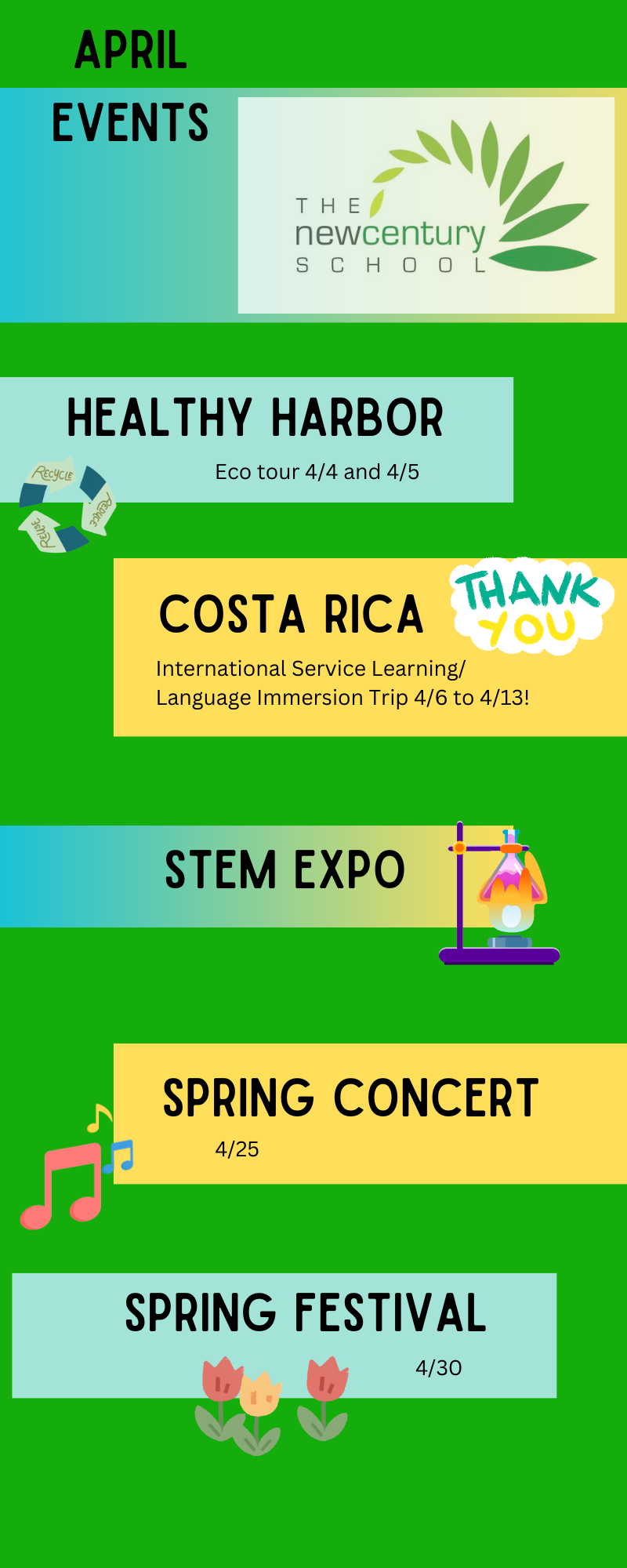 As the weather warms up and flowers begin to bloom, we are thrilled to announce a lineup of exciting events happening at TNCS this spring! From scientific exploration to meaningful service learning (and a whole lot of fun in between), there’s something for every student to look forward to.