Environmental sustainability is a key message at The New Century School, and TNCS students in all divisions learn the importance of protecting our natural world as well as regularly engage in various initiatives that actively support it. Being “green” is part of our identity—just look at the school logo!
That’s why, when TNCS Parent Council member Tilly Gurman heard about the NexTrex school challenge, she immediately thought it was ideal for TNCS students to join and brought her idea to the committee and to TNCS administration in November. “I thought, what a great opportunity to combine our Earth Day activities with this challenge,” said Ms. Gurman. “Whether or not we win, it’s just also getting people involved and doing more recycling and thinking about all of the waste we generate. It bugs me that in my own household we generate all this waste that I know can’t be recycled, and it kills me to just put it in the trashcan every time. I do everything I can to avoid those ziplock kind of bags, but at least now they can be recycled with this challenge. I can now actually do something about all that stuff.”
Although TNCS initially had a “soft start” (November 15th, America Recycles Day) to get through the end of the year, now it’s time to swing into full gear!
NexTrex School Recycling Challenge
We’ll explain more about the company and how it works, but first, let’s explore the details of the school challenge itself and get the need-to-know info up front.
What Is the Challenge?
TNCS will compete in the NexTrex Recycling Challenge through April 15th. The challenge is simple: Gather plastic grocery bags, bread bags, ziplocs, bubble wraps, case overwraps, dry cleaning bags, and newspaper sleeves and bring them to TNCS to be recycled. Wait—those items aren’t recyclable, you’re thinking? Normally, no, but this program takes many such plastics that most recycling programs (including ours in Baltimore) do not take. NexTrex, on the other hand, turns them into decking material and outdoor furniture (more on that below).
This is probably a good spot to clarify what qualifies as recyclable for this program. Basically, it’s down to #2s and #4s. Also, download a handout here.
So, bring plastic packaging materials to add to the pile at TNCS—got it.Then what? TNCS students are all in and will take it from there. Each classroom has a collection bin and has implemented an individual system for next steps. But, basically, once that initial bin is full, they weigh it and combine it with other classrooms’ loads in one of three NexTrex bins set up around the school. TNCS Facilities Manager Mike Horvath, who is overseeing the operation to ensure compliance with the NexTrex rules, then takes the combined load to Harris Teeter on a monthly basis for an official weigh-in and tallying.
To back up for a second, the enthusiasm with which TNCS students embraced this challenge is critical to its success. Children are especially sensitive to environmental issues, perhaps in part due to their still very intimate relationship with the outdoors. When they get wind of a way to protect it, every adult in their sphere is suddenly on notice! This is exactly why the NexTrex school challenge works, explains Ms. Gurman:
In my research on behavior change, we know that when children ask for acute action from their parents at home, they encourage that specific behavior change. We can put up all the posters we want around the school, but your kids at home saying, ‘Are you really going to throw that away, mom?’, will probably more effectively get your attention. When they get excited about a thing, they really push it. When I told my 2nd-grader that we were starting this at TNCS, he started looking at every piece of trash to identify whether it might be a 2 or a 4!
So, get the kids excited and check every single item that goes in the trash (kidding)—got it. Then what? Well, it is a competition, as mentioned. In our case, the competition is two tiered: TNCS is up against other mid-Atlantic schools (with comparable student body sizes), and we are also doing an intraschool competition—classroom à classroom! (Preprimary classes will combine as one class.)
For the Mid-Atlantic contest, we could win very special prizes from NexTrex such as our very own park bench made from NexTrex recyclables! Due to TNCS’s small size and mixed-age classrooms, we are able to compete as an Elementary contender in the 0 to 350 student body category and will face off against other MD schools as well as schools in Washington, DC; Delaware; Kentucky; Ohio; Virginia; and West Virginia. Every school that participates gets an award.
For the TNCS class-to-class contest, prizes are to be announced. Go teams!
In the meantime, every TNCS student gets a NexTrex magnet that’s not only fun (because it’s a magnet!) but also acts as a visual cue to remind us to recycle. Winners of both contest tiers will be announced on or around Earth Day!
And Now, About NexTrex
According to its website, the Virginia-based Trex Company, ” . . . [makes] Trex® eco-friendly composite decks from an innovative blend of 95% reclaimed wood and plastic film—that’s almost the whole thing. On top of that, [they use] some of the most earth-friendly manufacturing processes in the country, reclaiming factory waste and eliminating the use of harmful chemicals. Trex offers consumers a truly environmentally responsible choice.”
How Does Plastic Film Packaging Become Decking or Furniture?
Plastic film is near-ubiquitous in manufacturing for the convenience it offers in packaging and transporting of products that make their way to us consumers, but it’s certainly no good for the environment. Converting it to usable NexTrex materials (which are 95% recycled) significantly lessens the environmental impact.
To Earth Day, and Beyond!
“My hope is that this kind of becomes a yearly thing,” said Ms. Gurman. Indeed! Even if we don’t win this year, a huge buzz has been generated, and we can hit the ground running on November 15, 2020. We can even start collecting before the next challenge officially kicks off! Either way, many pounds of would-be non-recyclable material has been diverted from landfills to do some good in and for the world. That’s a big win for Planet Earth and its resident Earthlings!
Note: Even after Earth Day and the NexTrex School Recycling Challenge has come and gone, the giving back doesn’t have to stop! We can continue to collect plastic film and bring it to a partner location. In Maryland, these include Food Lion, Giant Eagle, Giants, Harris Teeter, Kohl’s, Martins, Redner’s Markets, Safeway, Target, and Weis.
Service is a Core Value at The New Century School, and Dean of Service Learning Alicia Danyali always has multiple initiatives going including by class/division, schoolwide, and community targeted. (To read more about TNCS Core Values, click here.) What better time of year to take a look back at how TNCS students have given back in the first half of the 2019–2020 school year?
It has been a busy semester with lots going on, so, in no particular order, let’s just jump right in!
Flashcards for Hope
Live with a Purpose reached out to Ms. Danyali in October because the Esperanza Center expressed a need for English/Spanish flashcards for their afterschool program for children new to the United States who are learning English. So, students in Ms. Lee‘s classroom made 60 packs of flashcards to assist them in learning some of the basics, like numbers and colors.
“Creating these materials also reinforced for TNCS 2nd- through 4th-graders the importance and the benefits of helping others, especially immigrants that need support when they move to a new country,” said Ms. Danyali. “The fact that our students could be supporting other kids who are learning other languages was very important to me. If the shoe fits, we’re going to wear it.”
Bake Sale for Shelter Animals
“For the older students, I prefer that their service initiatives be student led,” explained Ms. Danyali. So, the 7th- and 8th-graders held a bake sale alongside their October 23rd coffee and lemonade morning. They broke up into four groups, each researching a different organization (three were for animals and one was for support for the homeless). As part of their assignment, they were required to submit a needs assessment and what the organization does. After narrowing the organizations down to two, they then had to make a presentation about their preferred organization to be chosen, ultimately deciding to donate their proceeds to the Baltimore Humane Society. They baked their sale items with Ms. Danyali. Altogether, they made $40, which isn’t bad when you consider that their baked goods were priced at only $1 each. Based on wha the photo below shows, that’s a steal!
Reading Buddies
The always-popular Reading Buddies program provides mutual benefits to younger TNCS students paired up with older TNCS students and vice versa. Ms. Klusewitz’s and Sra. Salas’s classes comprise one pair, and Ms. Sandkuhler and Ms. Hope’s classes another (among others). “They’ve really been sticking to it,” said Ms. Danyali. “It’s so great to see.”
Biscuits (and More) for BARCS
Ms. Klusewitz’s and Sra. Salas‘s classes also partnered on an initiative for BARCS (Baltimore Rescue and Care Center). Ms. Klusewitz’s class baked homemade dog treats with Ms. Danyali, and Sra. Salas’s class decorated holiday gift bags. The two classes came together to stuff the bags with biscuits during a recent reading buddy morning.
Although it turned out that BARCS cannot accept comestibles that are not factory sealed (for the safety of their animal charges), the exercise in partnering up with older/younger friends to do some good in the world was not for nought. A 4th-grader and her family who regularly support the organization volunteered to “be ambassadors on behalf of TNCS to deliver the holiday cards and cheer to BARCS,” as Ms. Danyali put it.
Said Volunteer Coordinator Alicia Rojas: “The cards were a hit and they definitely felt the love from the students! All the students should be proud—they were extremely generous in picking this organization, that helps so many animals each year!”
Ronald McDonald House
Back to the Core Values for a moment, Ms. Danyali has been focusing on those with with lower elementary students and asked teachers to create an area in their classrooms where the Core Values can be prominent and interactive. Students might attach a slip of paper to the wall, for example, that starts with “I show courage by . . . ” to both remind and encourage them to exemplify TNCS’s Core Values.
Compassion goes hand in hand with Service, and Ms. Danyali wrapped up a unit focusing on those two words together in Ms. Sandkuler‘s and Ge Laoshi‘s kindergarten and 1st-grade homerooms. “We have started a service project to partner with the Ronald McDonald House to do an on-site visit and activity to help the families they serve after the winter break,” said Ms. Danyali. “To make this meaningful for that age group, we are making cards with compassionate messages. The messages were very mature, and they really internalized what compassion is.”
Not surprisingly, a “kindness wall” has evolved over the last few months in Ms. Sandkuhler’s classroom.
Giving Tree
The class partnerships are fluid and often mix ages. For example, Ge Laoshi and Ms. Lee’s homerooms spearheaded a “Giving Tree” drive to collect scarves, mittens, and hats for fellow Baltimore students at a nearby school. Other collections were also ongoing.
Adopt-a-Baer-Student
Ms. Hope‘s 7th- and 8th-grade homeroom adopted a student for the holidays from the William S. Baer School in Baltimore City that serves severely physically or developmentally challenged students from ages 3 to 21. TNCS middle schoolers brought holiday gifts for their “adopted” student, Rachel, then went with Ms. Danyali on a field trip to tour the school and understand how students are supported there. They also got to meet many of the staff members and students.
“Our students were deeply moved by the experience and would like to return to the school in the spring when they host the school Baer-athlon,” said Ms. Danyali. (More on that in 2020!)
Looking Ahead
Additional service learning initiatives are planned for quarter 3 in early 2020. Ms. Klusewitz’s students, for example have broken out into groups to research an organization of interest and present their ideas to Ms. Danyali.
Linus Blankets will be ongoing as well—in fact, you can register your child for the upcoming quarter 3 ECA! The postcard below is a thank-you for blankets TNCS made this fall.
“As long as it’s meaningful and helpful, and it supports our local community, then I’m board for it,” said Ms. Danyali.
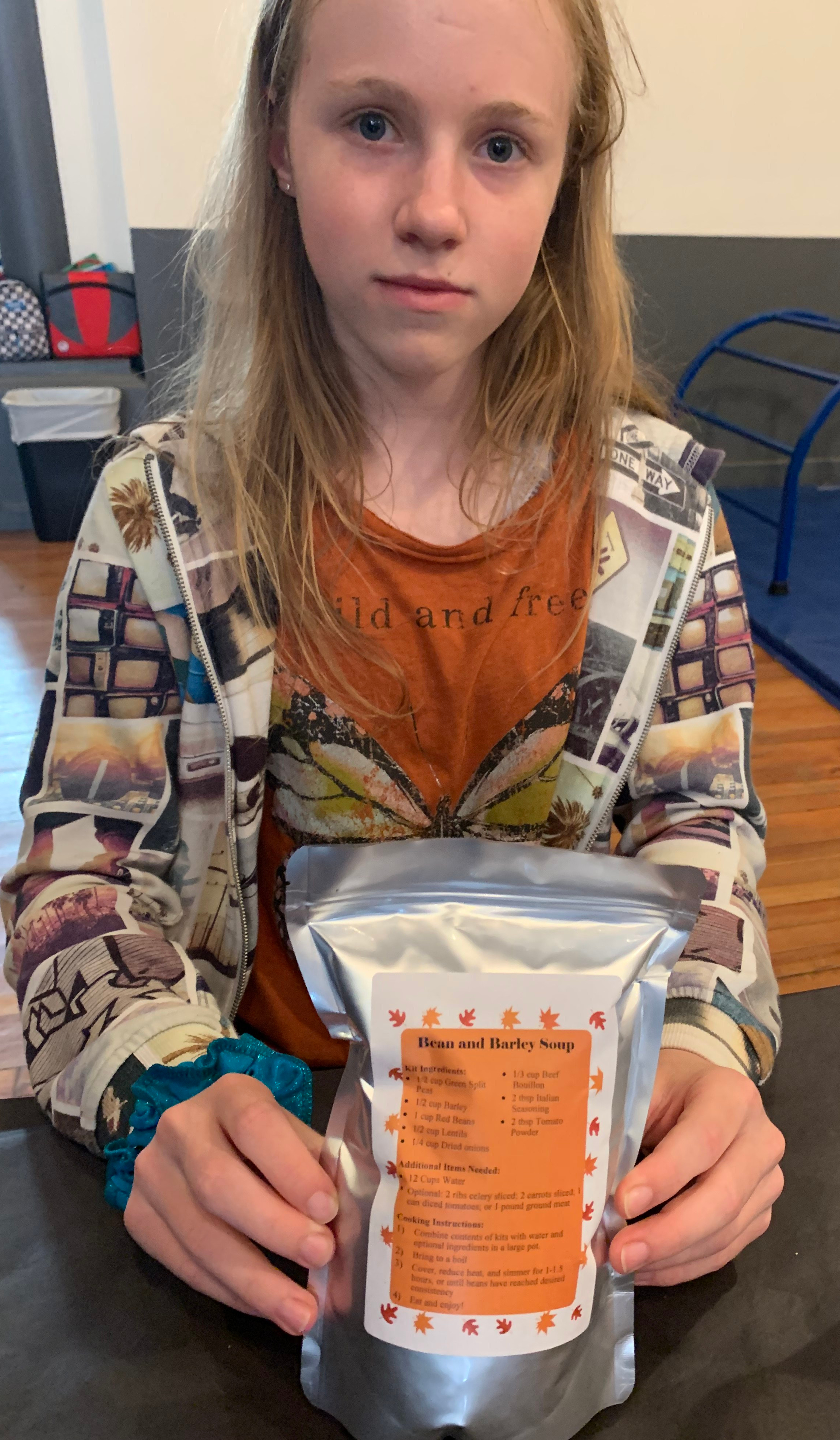
On Friday, September 27th, Ms. Danyali introduced her vision for Q1’s service learning project for TNCS 5th- through 8th-graders: making soup kits for food insecure citizens of Baltimore. She found this opportunity through an organization called Live with Purpose, whose mission is to [engage] volunteers to meet vital community needs and live with purpose through meaningful service.” The soup kits will be distributed to Living Classrooms and other local organizations like Paul’s Place who will distribute them to identified families in need to provide them “a hot and hearty meal.”
Before the kit assembly began, though, Ms. Danyali provided some context:
I know you’ve been partnering with other classrooms on some school-related service initiatives, but, today, you get to do a service activity with a focus on human dignity. No matter what anybody’s background, everybody deserves to be respected. We have to have meaning in our lives, which means that we have to take care of ourselves but also other people here in our school community and even beyond. I think it’s a really important value to serve. So, today we’re going to work on soup kits for people in Baltimore who are facing food insecurity. Food insecurity means that a person may not have the means to get enough food. When I reached out to Live with Purpose, they said they needed help making soup kits, and I said, ‘I have the perfect helpers!’
She next shared some sobering facts:
The USDA defines food insecurity as “a lack of consistent access to enough food for an active, healthy life.”
A quarter of Baltimore residents live in a food desert (an area where fresh fruit, vegetables, and other healthful whole foods are difficult to find due to a lack of grocery stores, farmers’ markets, and healthy food providers).
Nearly half of Maryland’s hungry are working—people who don’t make enough to provide both healthy food and a safe home for their families.
1 in 4 children in Baltimore City’s schools are hungry when arriving to school, having not eaten a full meal since they left school the day before.
These are terrible truths that are difficult to fathom—25% of school-aged children go to school hungry? And 25% of all Baltimoreans don’t have access to healthy food?
These soup kits could make a real difference in our neighbors’ lives. So, during Teacher’s Choice time, first middle schoolers then elementary students spent 30 minutes putting together bean and barley soup kits to serve 4 to 6 people each. Stations were set up for pairs of students, and they got right to it!
“I think this is a great way to give back to the community,” said one TNCS 6th-grader. “This is fun, and it makes me feel good because I know I’m helping,” echoed a 7th-grader. They worked very carefully and neatly to produce attractive, quality kits.
This slideshow requires JavaScript.
Thanks to TNCS students and TNCS Dean of Service Learning Alicia Danyali, some Baltimore residents might feel a little less insecure this fall. “I’m confident that knowing you’re helping other people, you’ll be very happy,” said Ms. Danyali.
The 2018–2019 school year has been an epic year for The New Century School in so many ways, but certainly not least for having the Middle School in full bloom—now all the way through 8th grade! TNCS has anticipated this moment for years, growing closer and closer to a fully fledged Middle School, and, in a few weeks, TNCS will graduate its first 8th-grade class.
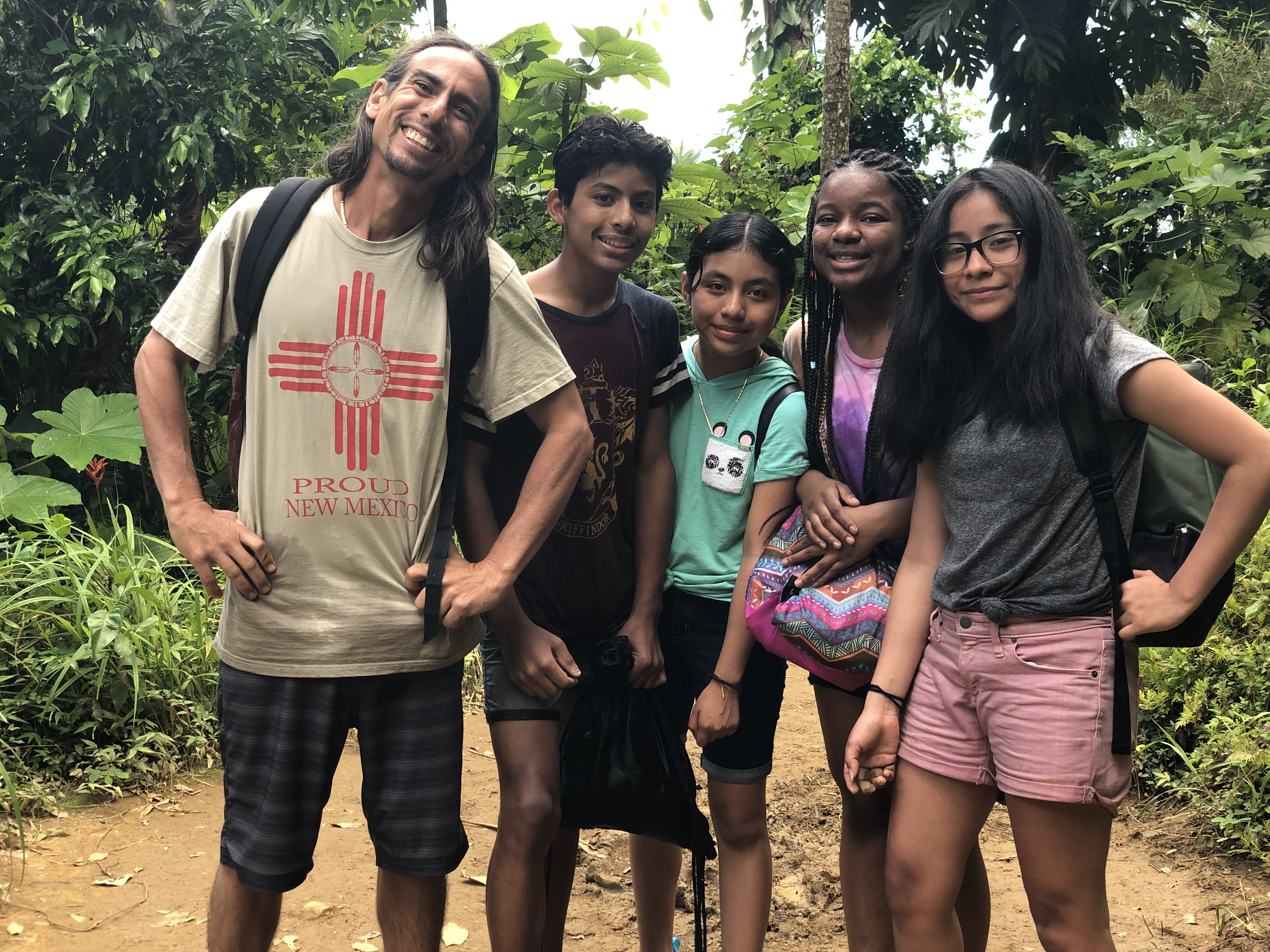
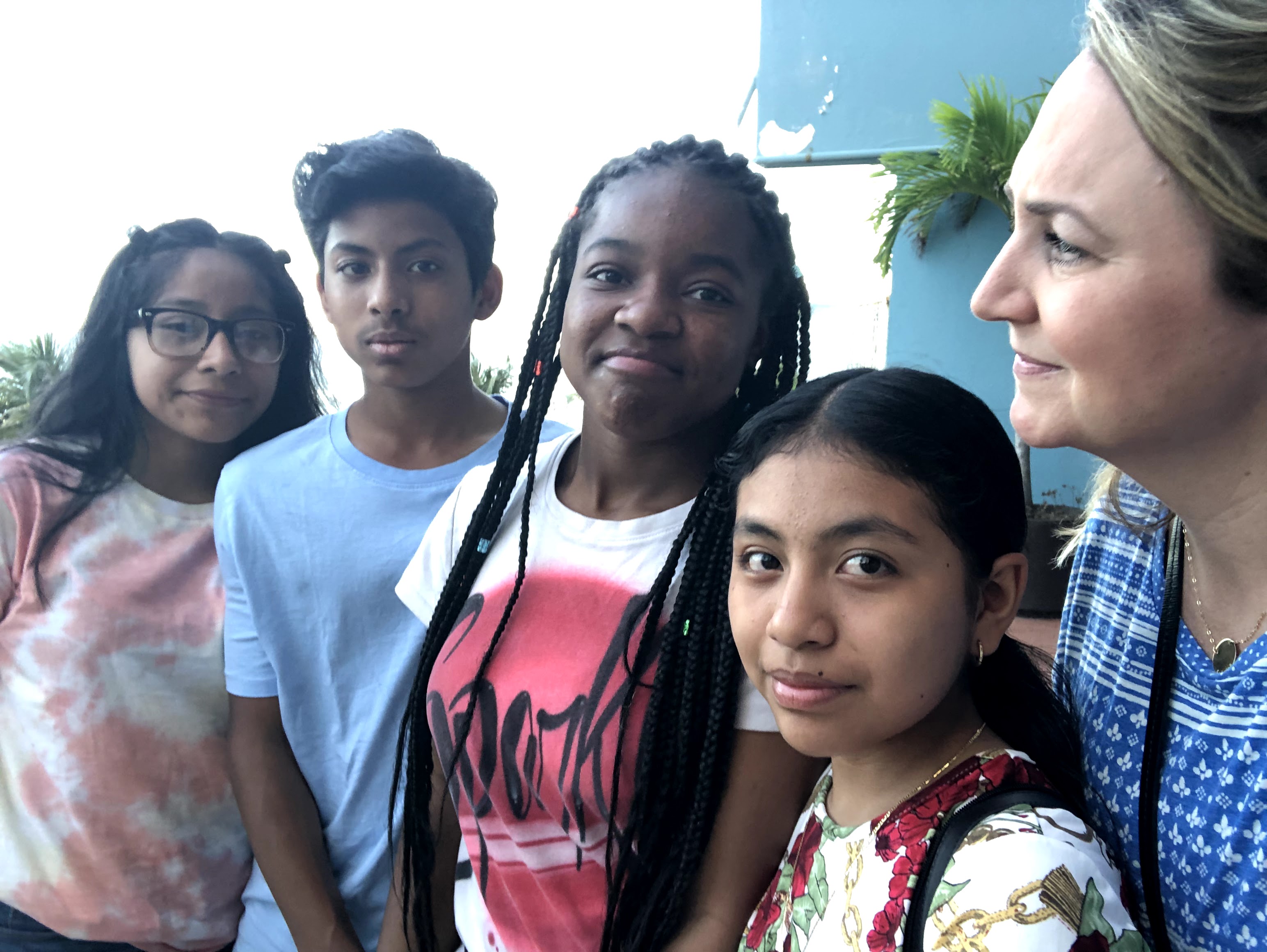
But not before we take a peek at another first they pioneered—TNCS’s first-ever international service-learning project. In March, three girls and one boy (known here as Z, F, B, and J), ages 13 and 14 years, went to Puerto Rico for 6 days! This trip has been in the works all year, and fundraising efforts, such as twice monthly pop-up hot beverage shops, toward travel expenses really paid off.
Why Service? Why Puerto Rico?
Service is a TNCS Core Value, and, throughout the year, students take on various initiatives toward their service-learning goals, from intra-campus projects to broader, community service–oriented endeavors. To really bring home what service learning means, though, TNCS students should experience how their efforts can have farther-reaching impacts.
Puerto Rico was the natural choice:
The island is readily accessible—no passports are required for TNCS students, and it’s relatively easy to get to.
Availability of resources and advice from TNCS community (staff, parents) with knowledge of Puerto Rico was an enormous help for planning.
It’s a Spanish-speaking country for students to use their developing Spanish skills.
There’s a clear need: The island is still restoring itself after hurricane damage.
Puerto Rico: Here We Come!
Adriana DuPrau escorted the group and said just prior to their departure: “They are very excited—this is the trip of a lifetime for some of them!” She facilitated getting them school IDs, helped create packing lists (hats, bug spray, closed shoes for hiking, beach gear, etc.), and generally did all of the planning with advice from Ms. Madrazo and a very helpful TNCS dad who hails from Puerto Rico. You might be wondering how Mrs. DuPrau got to be the sole chaperone, but you’d have to look no farther than back at the past school year, during which she has grown very close to the middle schoolers, such as while helping them prepare for their big transition to high school, and has discovered that she really enjoys that age group. Mrs DuPrau also spent 6 weeks in Puerto Rico in college, teaching English. “Traveling is a big part of who I was, but I haven’t been able to do that with three small children. I think this will be good for us.”
In the wake of Hurricanes Irma and Maria, a one-two punch that ravaged the island, we saw an opportunity to help affected communities, and in doing so, to deliver an unforgettable experience for our 8th graders. I got to be the lead organizer of the trip, and got to team up with multiple members within the Puerto Rican community to maximize the relief effort and add an interdisciplinary scope to the students’ experience! It was such an awesome experience and I never, ever thought I could be away from my family for 7 days . . . but I did it, and I’m so happy I did. The four 8th-grade city students completely stepped out of their comfort zone and completely killed it! I’m so incredibly proud of them!
Now, let’s break down their itinerary day by day, interspersed with some additional debriefing from Mrs. DuPrau.
Sunday
The group left on Sunday, March 17th at 5:00 pm, departing from BWI airport and arriving in Puerto Rico at 9:00 pm. After they picked up their rental minivan, they drove to their digs in Luquillo, a small beach town close to the rain forest that was recommended by TNCS English Language Arts teacher Ilia Madrazo, who is from Puerto Rico.
B was like the mom of the group; she wanted to make sure everybody was okay. She always made sure that everything was tidy. I had them wash their own dishes and clean up, so our living space was always very organized. J was also so helpful, carrying the groceries in, for example. I got to see a really nice side of him, very kind and respectful.
Monday
The group kicked off their first full day with a sail on a catamaran and snorkeling, both firsts for most of them.
As urban children, not accustomed to being around the ocean, this thought made them nervous, but we went to a very secluded spot to give them the space to get comfortable in the water. And they did it! It was really beautiful; the water was crystal blue and warm.
After their big days, they all ended up usually falling asleep watching a movie on the couch. We would have breakfast at home and usually packed lunch. They didn’t really love going out to dinner; they were more into coming home and chilling.
Tuesday
The group’s main plan on Tuesday was to explore El Yunque rain forest on the “Off the Beaten Path” tour. They also walked to waterfalls and got a chance to swim and goof off.
It was a really good trip. The kids got to see something really different, and they experienced this trip on many different levels—yes, it was service learning, and that was definitely the focus—but they got to experience so many other things, and now they all want to keep traveling. So that’s also important. We always had a full day planned, and when you’re traveling it’s important to take advantage of the fact that you’re somewhere new. This group was just so relaxed. I loved that they got to do more than just service learning because they had so much fun. I never had to calm them down. They never had any anxiety about all the new things they were doing.
Wednesday
On Wednesday, the group had planned a trip to Camuy River Cave Park, the third largest underground cave system in the world and formerly among the top 10 attractions in Puerto Rico. However, the caves have not been open to the public since the twin ravagers Irma and Maria paid them visit. So, they did some sightseeing San Juan and Ponce instead. “We had a good time visiting the forts and shopping around and seeing all the architecture of old San Juan,” said Mrs. DuPrau.
I loved seeing them speaking Spanish. I think it’s important to visit places that are Spanish speaking. All the kids practiced their Spanish—they ordered food in Spanish and tried to speak Spanish to any of our tour guides. They’d also help each other, and that was really nice.
Thursday
This being Math Kangaroo day back at TNCS, the travelers took the Math Kangaroo exam in a conference room where they stayed and then mailed in their scantron sheets. Afterward, it was time to hit the beach!
They opened up a lot as well, sharing the emotions they go through in middle school. We’d have these conversations while we were driving in the van, and they’d have all these questions. They started talking a lot about how what they go through when they’re feeling down, and I think it’s so important to equip them with how to handle those emotions. They think no one understands, but we do understand even if we’re not all in the same set of circumstances. I think community within the class is how we have to move forward and doing things all together, even though it’s 6th through 8th grade. It will help them with the social and emotional part of being a middle schooler. We can definitely add more of that in our curriculum.
Friday
The service-learning stint took place in Cabezas de San Juan Nature Reserve in Fajardo, which is “a bioluminescent lagoon, mangroves, coral reefs, dry forests, sandy and rocky beaches set between headlands.” “We went to what used to be a coconut palm conservatory, but those trees are not native to Puerto Rico,” explained Mrs. DuPrau. “They were planted there and were completely wiped out after Hurricanes Irma and Maria. So the nature conservatory wants to now plant native trees, which are stronger and better able to withstand any future hurricanes.”
Este día de las madres, sorpréndela con una membresía AMIGOS Para la Naturaleza. Pon al alcance de tus seres queridos la posibilidad de disfrutar durante todo el año de nuevas experiencias transformadoras en lugares históricos y ecosistemas únicos en Puerto Rico.
Working in pairs (they had to share shovels), the overall group planted more than 100 native trees of various species up and down the beach and into the forested area, with the TNCS contingent responsible for a large fraction of that number. The tour guide spoke only in Spanish.
The service learning part of it was awesome. It was really physical, and I’m hoping that it impacts them in a way they’ll remember. We were working with a whole bunch of other people of all ages to plant these huge trees. It was hard, but the students didn’t complain because they knew it was their community service. One thing that I’d like to change about the trip is having them do a little bit more community service, such as with animals. There were so many homeless dogs and cats, and the students really wanted to help them. I reached out to a few places but it was hard to find any that would accept younger than high school age. We met a lot of older students, who were very nice to our students.
Saturday
As they were departing Puerto Rico at 3:00 pm, they used their last hours to have some down time and enjoy the beach!
I definitely want to do it again. I was just so proud of the kids again for stepping out of their comfort zone. There was no homesickness or complaining, and, in fact, they all got along great. One of the things that I pulled away from the trip is that they all got to know each other on such a deep level. They walked away calling each other best friends. They were all really respectful of one another, yet they’re all very different. It was was also great to see how open they were to meeting new people. I felt like I saw who they really are. Z, for example, helped an elderly man across a stream without any prompting. It was nice to see how many people thought that they were such great kids—I was told multiple times that this was the best-behaved middle school group they’d ever seen.
Interview with Students
Along with Mrs. DuPrau’s great overview of the trip, let’s hear about it from the students’ perspective.
Immersed: What was your overall impression of your trip?
Z, F, and J (as a chorus):It was fun; it was amazing, great, awesome, exciting.
F: It was full of opportunities to get out of your comfort zone.
Z:Oh yes. All three of us jumped off a cliff! I was so scared to do it because I thought I was going to drown! But Carlos, our guide, made us feel more comfortable.
J: I was scared of heights, but I did it.
Immersed: What other experiences did you have?
Z: I liked planting trees.
Immersed: Planting trees—was that the service project?
Z: We planted more than 16 native baby trees altogether.
(B joins our chat. Which was really more like their chat :).)
J, F, B, and J (all completing each others’ sentences): There were a lot more trees before the hurricane, but they were palm trees. They want to get rid of those and replace them with native species because they are stronger and will be less likely to blow over in a hurricane. We planted them in the rain forest.
Immersed: Tell us more about being in the rainforest.
Z: It was very dry, surprisingly, and there were so many vines and roots snaking out.
Immersed: Tell us what you learned about your service.
F: I felt like I was helping out after the hurricane.
Z (with lots of support from F): Yeah, there are still a lot of houses that are torn down or without roofs, and they’re still fixing everything to this day. I feel like I was doing something really good by planting trees because when the next hurricane comes, they won’t be the kind of trees that knock down houses!
(Many inside jokes ensue, none of which were comprehensible to an outsider.)
Immersed: What was the best part of your trip?
Z, F, B, and J (as a chorus): The rainforest! Not where we planted the trees but where we went hiking—El Yunque.
Z: Then there was the catamaran. It was good! We went snorkeling. We saw a sea urchin.
J: I almost fell over from trying to walk in the flippers.
(Cascades of giggles.)
Z: The flippers were so hard to walk in; we looked like penguins.
Immersed: What other wildlife did you see?
Z, F, B, and J (as a chorus): We saw a huge snake! And some huge iguanas at the old fort in San Juan. They were really big.
Immersed: Wow. You guys really did a lot.
Z, F, B, and J (as a chorus): We did; we did. We went to a lot of beaches, too.
Immersed: Tell us about meals—did you cook in your apartment? Did you mostly eat out? What kinds of new foods did you try?
Z, F, B, and J (as an excited but unintelligible chorus except for a few words): Good, non-spicy, eggs, guacamole.
Z: On days that we went to the beach, we would return to the apartment and make spaghetti or pizza or cereal or something. On days we were out, we would eat out.
Immersed: What else do you want readers to know about your trip?
Z: If you go there, bring a lot of sunscreen.
F: Don’t go to Wendy’s or Burger King.
(Lots of agreement from the gang.)
Immersed: How do think this experience changed you?
Z: It made me have a closer bond with these three. It helped us understand each other more. Before we went on the trip, I was probably the only one who really spoke to J, and I was one of his first friends here. Now we all hang out.
F: This changed me in so many ways. I go to know those three better, and we have a better bond.
J: It made me appreciate them a lot more. Because honestly B and F and I weren’t that close. But once we got to Puerto Rico, and I actually got to spend time with them, it was just all fun.
(Next the group reflected on their changing dynamics back at school and how other students also have begun respecting them more.)
F: Even the teachers see us differently. We may be more mature.
Immersed: Think about the service aspect of your trip. Did it make you want to do more?
Z: I now look around at things and see what I can do at the moment.
J: I’ve been helping out more around the house and saying hi to strangers when I pass them on the street.
(After several attempts to wrap things up, it soon became clear that the group was stalling in order to miss science class. Ahem.)
Immersed: Did the trip awaken the love of travel in you?
Z: I like travel—I just don’t like airplanes!
F:I enjoyed my first airplane ride.
J: There was a lot of turbulence, but it was fun to be on a plane.
(Next we had a bittersweet conversation about where they are going to high school. Sniff.)
Immersed:Okay, any last thoughts? Anything at all?
Z: We are very grateful for all of the people who came to our fundraising and also to the private donors—other TNCS parents. We wouldn’t have been able to go without them.
Immersed: What will your next service projects be? Anything over the summer?
Z: I’m coming to volunteer here as a camp counselor over the summer.
The energy the four students had as they reflected on their international service-learning trip was so tremendously positive—this was clearly a very wonderful experience for them. Interestingly, they took away from it exactly what we would hope: expanded horizons and a broader outlook on life and on people as well as a deepening sense of the beneficial impact they can have on the world.
Souvenir from the group.
Well done, you four—you’ve made an indelible mark on 724 S. Ann St. We will miss you next year but know that you will make your respective high schools all the nicer for your presence!
The group reflects on a wonderful experience . . . and looks ahead to the amazing adventures awaiting them.
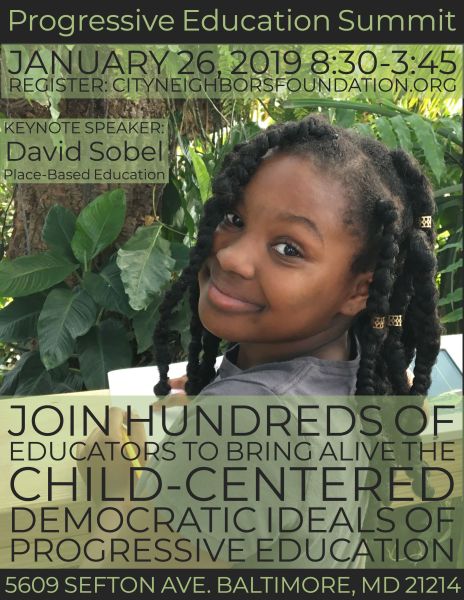
As a key part of its identity, The New Century School embraces progressive education. It was a natural fit, then for TNCS Dean of Students and Head of Lower School Alicia Danyali to attend City Neighbors Progressive Education Summit here in Baltimore at the end of January. According to its website, “The Progressive Education Summit brings together hundreds of educators from around the region and the country to share best practices, work with great educational thinkers and practitioners, connect with other educators, and work to bring alive the child-centered, democratic ideals of progressive education.” Attendant schools were an equal mix of public and independent, and about 550 educators from across the country participated.
The 2019 summit, the eighth annual, featured master classes, the first summit storytelling event by 10 to 15 storytellers, over 30 workshops, a Baltimore resource fair, and abundant networking opportunities. In addition, this year, David Sobel was the Keynote Speaker. The author of Place-Based Education: Connecting Classrooms and Community, Sobel is a leading national voice in place-based education. He was recognized as one of the Daring Dozen educational leaders in the United States in 2007 by Edutopia magazine.
Mrs. Danyali had much to say about her experience at the summit, all glowingly affirmative. “I loved everything about it,” she said. “There were a lot of opportunities to attend workshops and hear speakers throughout the day—more than any single person could actually attend.” The conference was divided into categories: Educator Reflection and Care, Arts Integration, Place-Based Education, Leadership, Learning Disabilities, Health, Trauma, Cultural Relevance, Development, Social Justice, and Progressive Education. “When I heard that David Sobel was the Keynote, I was really excited. I am a big fan of his.” She absorbed quite a lot from the presentations and will bring her perspectives to bear at TNCS. She started by describing the overall spirit of the conference then discussed the presentations that stood out most to her.
Progressive Education Talks
“The conference started off with some Baltimore high school students speaking, and I thought that set the tone so beautifully. The speeches were very uplifting,” said Mrs. Danyali. One was from City Neighbors and spoke about how a teacher changed his life, believed in him and supported him, despite the odds being very heavily stacked against this student just because of growing up in what is considered quite a dangerous part of the city. Another, from Digital Harbor, immigrated here 2 years ago speaking no English and is now fully English proficient. She spoke about all of the opportunities the school has afforded her in pursuing her dream of becoming a pilot. “Both of these demonstrated right from the start of the conference that educators should not label students. Even when we feel defeated by a set of circumstances, there are a lot of resources that we can solicit. We can network with other schools, for example. No matter how well funded a school is, there will always be social challenges to deal with. So just knowing that support is out there is helpful,” explained Mrs. Danyali.
The purpose of the conference was about how progressive education looks in different settings. One of the main themes was storytelling, and how an educator’s story can shape how he or she guides students. “What I really was interested in was how there can be different takes on various philosophies, like civic engagement or helping people with trauma, and how that can be embedded in the curriculum and not so stand alone,” said Mrs. Danyali.
Place-Based Education
Although place-based education was one of the categories/presentations of the conference, it informed everything. Said Mrs. Danyali:
The philosophy is very much in line with TNCS’s approach. You use what’s in your neighborhood, and you use what’s in your surroundings as part of developing curiosity and an open-ended inquiry-based curriculum. For me, it was great because [Sobel] had so many inspiring, real-life examples in his presentation from not only high school but also all the way down to preschool, where this should start. I was really impressed with the examples he shared from around the country of students exemplifying place-based learning in all age groups. Creative City, right here in Baltimore, is one school implementing the approach.
This slideshow requires JavaScript.
Mrs. Danyali explains that all three preprimary classes this spring will follow Sobel’s teaching prescriptively, which is essentially student driven. “All of the preprimary students seem to be really interested right now in fire trucks and the fire brigade, so we’re looking to connect with a local fire department to get them to come and do a presentation. This will also help to take away that fear of hearing the siren by knowing they are here to help,” she said. “We’ll make that connection right here in their own community and do more investigation.”
As noted, place-based education is for all age levels; in fact, it is inherently a developmentally appropriate approach because it is authentically student driven. “As I drive to work in the morning, I’m always thinking about what Baltimore offers for place-based education,” said Mrs. Danyali. “This happens to be Black History month, and we have Frederick Douglass, the Underground Railroad, and so on. We make connections with local businesses, such as Greedy Reads Bookstore. We’ll get to know the Post Office around the corner. This gives students a sense of identity in the community and less fear, because Baltimore sometimes gets a bad rap. Also, understanding the cultures that make up the community is vital—inclusivity and diversity.”
Importantly, place-based education integrates all subject areas, including service into the unit of focus. Students learn all of the other disciplines as well, but rather than having the idea that doing math, for example, is all drudgery, they develop the mindset that they can use math to find answers to something they have gotten curious about in their community surroundings. They start to grasp that learning is not for learning’s sake but is useful and meaningful and a way of navigating the world. They are empowered—they see that their intellects make an impact on that world; they become problem-solvers. “It’s a concept called ‘firsthandness,’ explained Mrs. Danyali.” Firsthandness sort of speaks for itself, but, essentially, it’s experiencing the world as it is, where it is, rather than how it’s packaged and presented inside a classroom.
Service Learning
Another important value at TNCS is Service, and TNCS students in all divisions pursue regular service-oriented activities around the campus (e.g., taking out the trash, helping escort younger students into the building at morning drop-off, beautifying the grounds) and in the wider community (e.g., blanket-making, stenciling storm drains with environmental awareness messages—the list is too long to reproduce here!).
So, sitting in on a service-learning talk appealed very much to Mrs. Danyali.
With my role in service for the school, I learned about service-related programs for students going into high school that are happening right here in Baltimore. One is a 5-week community garden project that they apply for that happens once a week starting in April in a community that is currently a food desert. I shared this with Mrs. DuPrau as a possible area to explore for some of our students to help them get that experience, because they will have a service commitment in high school to fulfill in order to graduate. So, this could be a jumping-off point if they’re interested in being outside and meeting other students. It’s almost like a camp in that way. This volunteering might even lead to part-time paid work. The programs also have a lot of community support.
Positive Schools
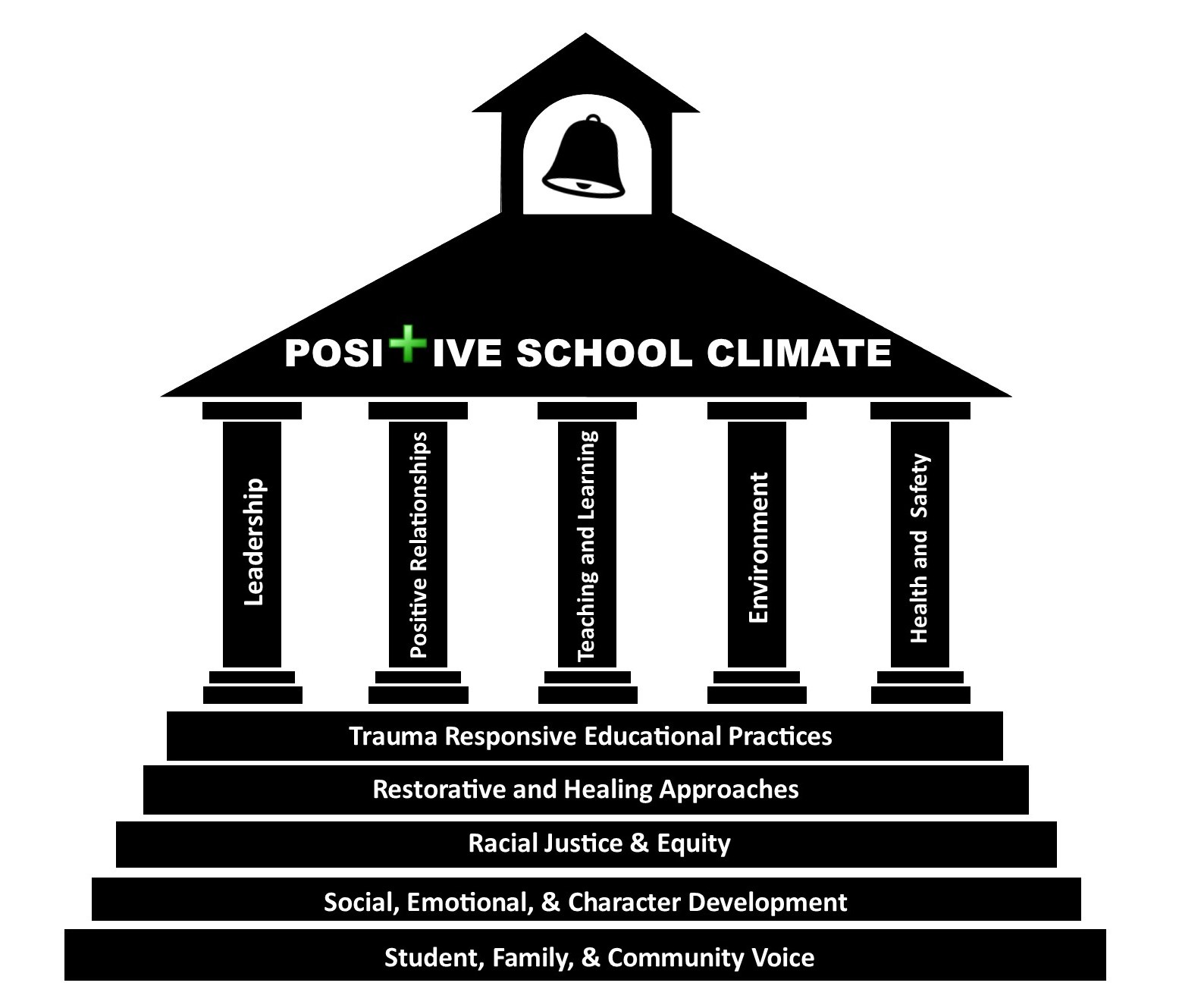
Mrs. Danyali was also very moved by a presentation by Shantay M. McKinily, Director of the Positive Schools Center, University of Maryland School of Social Work.
The presentation was on the Maryland Commission on the School-to-Prison Pipeline and Restorative Practices, a statewide campaign on training teachers on how to implement and teach restorative practices, which is a passion of Mrs. Danyali’s. Ms. McKinily covered new and emerging research out of Harvard on cutting the “school-to-prison pipeline,” the unfortunate trend of so-called “problem students” coming out of schools and going right into the criminal justice system. “Something that is really shocking to me and has been occupying my thoughts is that, as prisons are privatized, they are somehow able to get data from schools on detentions and other disciplinary measures taking place in 4th grade and using that information to project where to build prisons and where prisons will be needed,” said Mrs. Danyali.
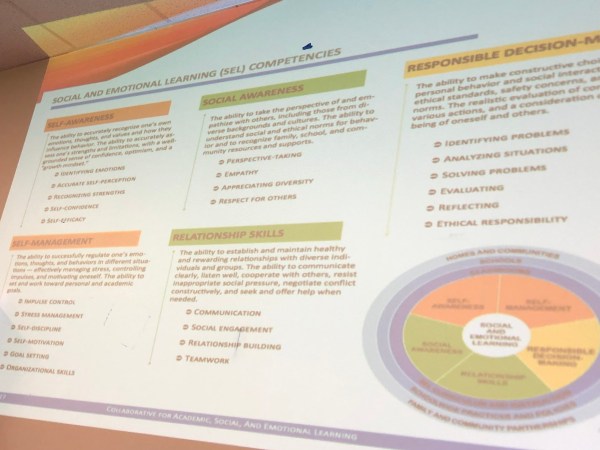
This idea leads her right back to a truth she holds dear—that we need to attend to the social and emotional needs of our youngest students:
This is game-changing in the sense that, although we put a lot of thought and energy and time into the middle and high school years about where our children will end up, in reality, our society has allowed the prison system to get information on percentages of younger children who are chronically absent or chronic behavior problems and use those numbers. It defeats the purpose of all of these research-based grass roots efforts. As hard as people are working to tell their real story, the narrative already in place—that if they are in this position by 4th grade, they’re doomed—comes from a much bigger system working against them.
Ms. Mckinily gave lots of examples, some from personal experience, such as the need to build more schools and have smaller class sizes so that teachers are not having to contend with such large numbers of students, upward of 30 a class. She explained that the prevailing classroom management principle at her school was to divide the class into three groups. Imagine a hypothetical top group, who is more or less left to their own because they can work independently. and score well. The hypothetical middle group might show promise but needs help, and, although it can be difficult to determine exactly what they need, they will likely get tutoring and other support. The lower group needs lots of catching up and are treated almost like a lost cause.
Ms. McKinily felt that she may have contributed to the prison pipeline when she was an educator because that hypothetical lower group never got what they needed. This is partly because her school was counting on her to get as many students as possible to that high group so the school would receive better government funding. In addition to being academically behind, the lower group might have many other social challenges to contend with, and so their host of problems was just too overwhelming to deal with, and school resources would go to students who had a chance to make it to the higher-achieving group. The lower group, of course, became the group identified as a problem—fodder for the prison pipeline. Ms. McKinily felt strongly that she needed to get the word out there: That lower group needs the biggest focus to avoid the devastating and lifelong repercussions of being identified as a societal problem and put away.
“Her goal was to change the narrative, to get the support that they need for student wholeness, for literacy, and for staff leadership,” explained Mrs. Danyali. “The Positive Schools Center works with schools in Baltimore City, such as Wolfe Street Academy and Benjamin Franklin High School. These are ‘big small steps’ for change, but the success stories are amazing.”
Onward and Upward
“It was a great experience and definitely relative to many aspects of the mission at TNCS,” concluded Mrs. Danyali, about the summit. As a result of her attendance, Mrs. Danyali will have the chance to take her expertise into the wider educational sphere. She was asked to join two D.C. groups geared toward early childhood education—one is on progressive education and another is for more specifically preschool immersion educators who are also doing place-based curricula. “We network through workshops, emails, and newsletters and focus on developmentally appropriate curriculum and how to bring school out into the community . . . being flexible and more student-driven. You can cultivate that in preschool and build on it.”
 Environmental sustainability is a key message at The New Century School, and TNCS students in all divisions learn the importance of protecting our natural world as well as regularly engage in various initiatives that actively support it. Being “green” is part of our identity—just look at the school logo!
 TNCS will compete in the NexTrex Recycling Challenge through April 15th. The challenge is simple: Gather plastic grocery bags, bread bags, ziplocs, bubble wraps, case overwraps, dry cleaning bags, and newspaper sleeves and bring them to TNCS to be recycled. Wait—those items aren’t recyclable, you’re thinking? Normally, no, but this program takes many such plastics that most recycling programs (including ours in Baltimore) do not take. NexTrex, on the other hand, turns them into decking material and outdoor furniture (more on that below).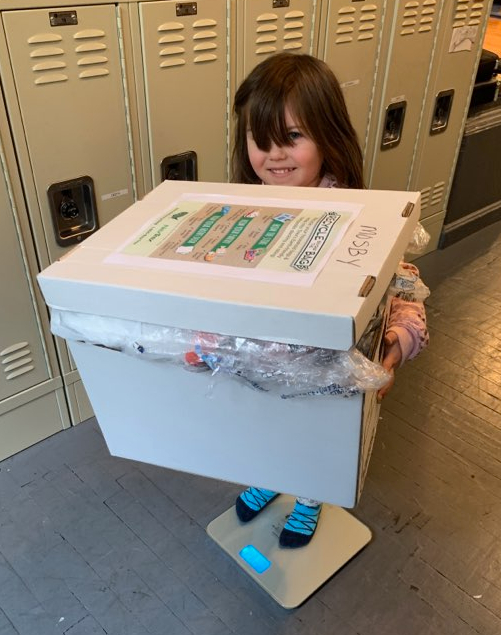
 For the Mid-Atlantic contest, we could win very special prizes from NexTrex such as our very own park bench made from NexTrex recyclables! Due to TNCS’s small size and mixed-age classrooms, we are able to compete as an Elementary contender in the 0 to 350 student body category and will face off against other MD schools as well as schools in Washington, DC; Delaware; Kentucky; Ohio; Virginia; and West Virginia. Every school that participates gets an award.
 Service is a Core Value at


 Back to the Core Values for a moment, Ms. Danyali has been focusing on those with with lower elementary students and asked teachers to create an area in their classrooms where the Core Values can be prominent and interactive. Students might attach a slip of paper to the wall, for example, that starts with “I show courage by . . . ” to both remind and encourage them to exemplify TNCS’s Core Values.


 “Our students were deeply moved by the experience and would like to return to the school in the spring when they host the school Baer-athlon,” said Ms. Danyali. (More on that in 2020!)







 This idea leads her right back to a truth she holds dear—that we need to attend to the social and emotional needs of our youngest students: