See What’s Jumping at The Lingo Leap!

LEAP! (They spell "leap"!)

LEAP! (They spell “leap”!)

Since The Lingo Leap‘s 2012 launch, the more-than-just-a-kiddie gym has made some significant changes and refinements. Now under the supervision of The New Century School‘s Sharon DaCosta, TLL is becoming the go-to studio for the 2- to 10-year-old set. TLL is unique in integrating movement with learning as well as learning about movement. Neuronal synapses fire more readily to juice up the brain when the rest of the body is also active. This is one reason why treadmill desks are catching on for adults—they get to move around instead of being sedentary at work and reap all of the exercise-associated benefits, but they also find that they think better and are more productive. The mind–body connection isn’t just for yogis and yoginis. (For more on the related science, check out an older post on TLL: Exercising that Mind–Body Connection.)

The Lingo Leap coordinator, Sharon DaCosta

The Lingo Leap coordinator, Sharon DaCosta

Says Ms. DaCosta, “Our goal is to create classes that no other aftercare or other facility offers. So, we do things like language immersion movement classes to expose kids to another language.” Not all classes are immersion or language related, however. Drama, Ballet, Hip-hop, Together with Tots, and Team-building classes, for example, have also attracted a solid following. The roster remains flexible; classes are offered based on market demands. Specialty classes like French Yoga, which isn’t currently on the schedule, might return if the interest is there. Ms. DaCosta conducts surveys and does other marketing outreach to find out just what parents want to see available.

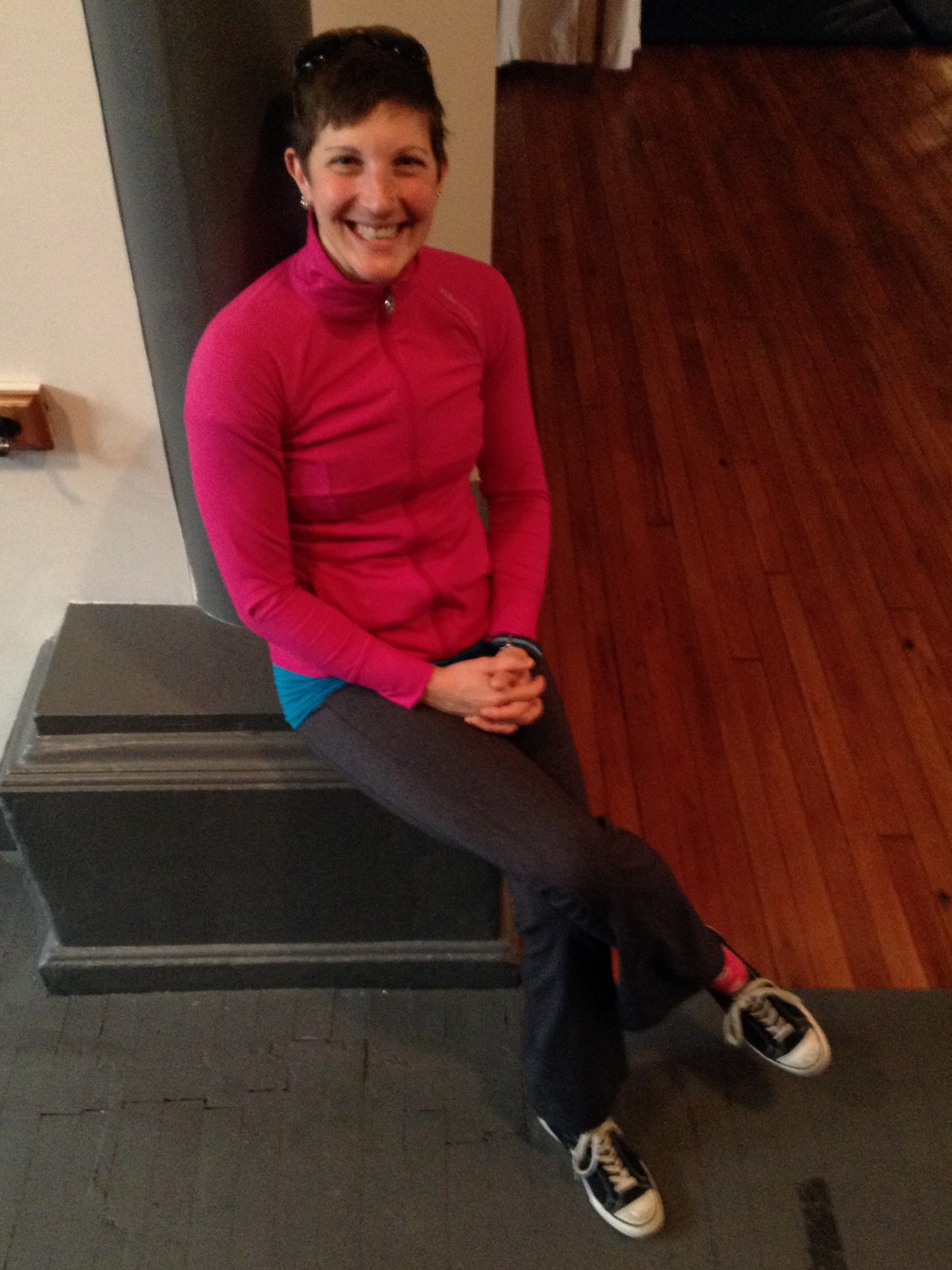
Aftercare Director (TNCS) and Events Manager (TLL), Emily Feinberg.

Aftercare Director (TNCS) and Events Manager (TLL), Emily Feinberg.

Finding the right target market is one of her primary means to keep TLL thriving. “Getting the word out there,”  says Ms. DaCosta, whose background is in marketing, “is extremely important. We have such fantastic offerings, but many community parents still aren’t aware.” Currently, TLL draws heavily from the TNCS aftercare student body, but Ms. DaCosta sees TLL as having a much broader reach and providing a much-needed service to the larger Baltimore community. Working in collaboration with Emily Feinberg, TNCS Aftercare Director and TLL Events Manager, the two have developed a very special set of services. “There’s a lot of overlap between our roles,” says Ms. Feinberg, “but basically I try to integrate TNCS’s aftercare program with TLL to give parents lots of intriguing aftercare options.” In other words, students can spend some of their after-school hours in one of TLL’s specialty classes. TNCS and TLL are closely affiliated but function as separate entities.

Finding great instructors is another one of Ms. DaCosta’s tasks in her official capacity as Activity Coordinator. She searches extensively to find just the right fit, and the instructors she has brought on board have elevated the classes to new levels of excitement and energy. Drama instructor Rebecca Kenton is one, and is new to TLL this year. She is an experienced drama teacher committed to learning, creativity, and curiosity. “I think of my teaching career as an adventure,” she says. “Over the past 16 years, I have taught Drama to children ranging in age from 5–18 with the Pumpkin Theatre, Drama Learning Center, The Painting Workshop, and Friends School of Baltimore.” TLL is thrilled to welcome someone with such chops! Young performers in her class will develop their confidence and concentration through a range of improvisational and story-telling exercises. “I’m looking forward to discovering drama with the tiny (yet tenacious) thespians of [TLL] and meeting all of you,” she says. Her Discovering Drama class, which began January 31st and meets at 3:30 for 2- and 3-year-olds and at 4:15 for 4- to 6-year-olds, will conclude with an informal showcase on Friday, April 4th.

Cuban native Danay Rodriguez is another high-caliber instructor, already familiar to TLL and about to assume expanded duties overlapping with TNCS. She teaches the very popular Together with Tots class on Saturday mornings and is now additionally going to be in charge of the overall Spanish Creative Movement program. A one-time Clinical Psychologist and counselor as well as a Developmental Psychology teacher at The University of Havana, Señorita Rodriquez will lead the 2- and 3-year-old and the 4- to 6-year-old groups in this immersion-style introduction to movement class.

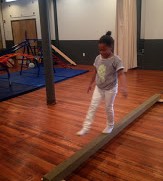
Balancing and walking on the beam hones coordination.

Balancing and walking on the beam hones coordination.

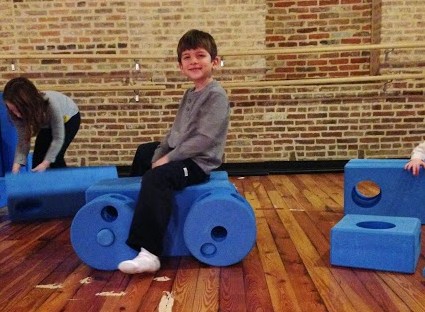
Look---I made a car that actually moves!

Look—I made a car that actually moves!

The current full schedule and class description can be found on TLL’s website. But exciting extracurricular movement classes aren’t all that TLL has to offer. During the schoolday, it functions as TNCS’s gymnasium and boasts such features as authentic Gerstung equipment, which “[encourages] children to use their own innate curiosity to stimulate movement,” and the Imagination Playground, a “play system that encourages unstructured, child-directed ‘free play.’” (Read more about the super-awesome Imagination Playground here.) Ms. DaCosta says that despite recent changes, TLL has stayed true to its original mission of integrating movement and learning and that this philosophy is something that everyone (TLL and TNCS staff) has a hand in implementing. “Mr. Gerstung himself actually came to TLL and trained all of us in August on how to use his specially designed equipment,” she says. “We know the purpose of each piece of equipment and what goals we can accomplish with each one.” Pre-primary and primary students have gym classes with their regular-class assistant teachers, who instruct them in Spanish or Mandarin. Elementary students have a more targeted physical education class taught by kids’ strength and agility trainer Emily Socolinsky.

TLL is also fast becoming the place to throw a kid’s birthday party—just ask your kids. Events Manager Emily Feinberg is available to help you plan your event and clearly enjoys her job. She knows kids’ parties! Catering is available, as needed, as well as decorations, balloons, face painting—you name it. Some perks come with your party package, like the ever-popular Moon Bounce; others are priced accordingly. The best thing about hosting a party at TLL from a parent’s perspective (besides, of course, extremely happy kids), is that your party is tailored exactly to your needs. If you want to handle all the details, you may. If you prefer to let TLL do the work, so be it. Or, you can opt to take on what aspects you want and let TLL manage the others. It’s a very civilized form of events planning!

Date Nights at TLL are another offering that have really caught on and are all-around brilliant. Drop the kids off at TLL at 5:30 pm (or later) and have a night out on the town, utterly guilt-free! Parents get some probably much-needed “we time,” while the kids are having an equally great time. They get to socialize with other kids, participate in group games, eat a nutritious dinner, and put the long schoolweek behind them in a melée of play. It’s the kids’ version of TGIF! New this year, hours are extended to 9 pm, to give parents more choices for their evening out. Date Nights occur on a standing schedule, monthly, every third Friday. Sign up in advance here!

Camps are another great service TLL provides. Whether it’s an extended school vacation that parents need coverage for, or a single school holiday, TLL offers an enriching, lively experience for kids. It’s the perfect balance—kids get a break from school, but they don’t have to take a break from movement and learning! Sign up for Spring Break camp here.

Finally, Ms. DaCosta is working with Sanctuary Bodyworks to develop parallel programs in which parents can go work out at the boutique studio upstairs from TLL, while kids are attending movement classes downstairs. The two facilities have offered Salsa Nights so far, for adults (not necessarily couples nor even pairs) to dance (or learn to) and enjoy hors d’oeuvres and wine (olé!), while the kids are happily occupied in their own Friday night fun. Ms. DaCosta says she goes to extreme lengths to get the word out about such events and hopes for increased participation. “I want parents to know how much I want to please everybody. I sit here and think and think and think,” she says, “about how to make TLL the best place to bring their kids.”

Her hard work is bearing fruit; TLL is exciting, engaging, and fun! So take the leap—find out for yourself all that this special kids’ activity realm has to offer!

TNCS’s Inaugural Town Hall

On Thursday, January 9th, The New Century School held its first-ever Town Hall meeting for an auditorium full of eager participants. The Town Hall was conceived, says Admissions Director and Town Hall Moderator Robin Munro, because “We are a new school, so meetings like this are critical. We will have a meeting like this once a year for families to get a state of the school update and have a forum to ask questions.” The meeting followed directly on the heels of an Elementary Information Night, and the two presentations together made for an informative and synergistic event. What made it especially effective is the obvious level of planning and organization that went into it as well as the efforts made to accommodate families to quite an extensive degree. Free childcare with dinner, free parking, and wine and hors’ d’oeuvres were some of the inducements to attend, but the real attraction was in being able to submit questions well ahead of time to allow the event speakers to shape the discussion accordingly. This evening was clearly for us.

Thus, as Ms. Munro said, TNCS’s status as a new school means that it is still maturing, becoming itself. To alleviate the uncertainty inherent in that development process, the Town Hall gave the audience some transparency into the inner workings of our beloved school. Based on the topics submitted by attendees, Ms. Munro organized the overall discussion into seven umbrella categories: Growth, TNCS Leadership, Tuition and Fundraising, Standardized Testing, TNCS Community: Internal and External, Life after TNCS, and TNCS Policies. These topics combine to provide a comprehensive overview of the school and its future direction. Following is a synopsis.

Growth

The growth category was subdivided into Projections, Instruction Space, and Curriculum. Projections: What are the school’s growth plans for the future? Individual questions under this topic centered on whether expansion into a Middle School is likely and were mostly submitted by parents whose children are currently in the elementary program (or are about to be) and hoping to stay awhile! One family is even considering moving to within walking distance of the school. Are enrollment numbers supporting this plan? A resounding yes! is the unequivocal answer. For enrollment, near-future projections are 150–200 students school wide (i.e., including preschool, elementary, and middle school). The plan is to stay bottom heavy—keep the preschool large because it feeds the upper levels but there is a natural attrition rate as families move or change schools as their particular situations warrant. Here is the breakdown:

  • Pre-primary (~24 students): Maintain Spanish and Mandarin Chinese immersion.
  • Primary, including K (70–90 students): Maintain Montessori model with mixed-age, small class sizes in a 3-year cycle.
  • Elementary + Middle School (60~80 students): Expand to four or five mixed-age/mixed-grade classes, including 1st and 2nd (and “pre-1st” as needed), 3rd and 4th, 5th and 6th, and 7th and 8th.

Regarding elementary, the target size is no more than 16 students per class to allow for TNCS’s signature individualized, differentiated instruction. TNCS is currently approved to teach through Grade 5 and will continue annually adding a grade through Grade 8. TNCS “officially” follows basic Maryland age guidelines in grade assignments (i.e., must be age 5 by September 1st to enter Kindergarten and so forth), but internally, students are treated as individuals, not as a level. Some fun elementary facts include:

  • In 5 years, TNCS will graduate its first 8th-grade student
  • The TNCS Middle School will “open” Fall 2016
  • TNCS’s first 8th-grade class will graduate Spring 2019 (whoa!)

Sound like a too-lofty goal? Not when you consider that, so far, TNCS has hit every major planned milestone, including opening an Elementary in Fall 2010, launching a Greenhouse in Spring 2011, implementing a School Lunch Program in Fall 2011, establishing a Gymnasium and Performance Space in Fall 2012, and bringing in Gerstung gym equipment and the Imagination Playground in Spring 2013. With this kind of momentum, not only is a Middle School a certainty, but a playground redesign for a Fall 2014 launch is also well within reach (see below)! Finally, while all of this goes on around us, internally, the administration will be renewing their  focus on school infrastructure, such as curricula, materials, teacher and student retention, etc.

Instruction Space: How will the school accommodate future classes? This question is immediately relevant. With a Kindergarten class about to join the ranks of elementary in a few months, another classroom as well as another teacher are on the horizon. Said Ms. Munro, “We have the physical space to grow. Next semester we are moving the library to shelves lining the halls, and the art room to the existing library to open up a third classroom.” Thus, all three elementary classrooms will be on the third floor. The library occupying the hall spaces is sheer genius—the constant exposure to books will likely trigger increased interest in reading them! Even bigger news is that TNCS now owns the 710 building as well as the 724 S. Ann St. location, providing an additional 1,500 square feet of space on two levels. Already home to The Lingo Leap and to the pre-primary classrooms, making use of other parts of this building is a logical next step. A Middle School Science Lab will eventually occupy part of this space.

Finally, to round out TNCS’s cozy but expanding campus, big plans are afoot for a playground redesign. “This is the year to plan and make changes to create a space that can work for our preschool, our elementary students, and our future middle school students,” said Ms. Munro and asked for parent volunteers to get creative and make some suggestions. Other sources TNCS will tap for design inspiration are MICA students, who might get class credits or other incentives for their assistance. We don’t want “big plastic structures,” said Ms. Munro, “and you’ll be relieved to hear that we want to get rid of the rocks!” (This last is a nod to the parents of some of the younger students whose pockets are always full of washing machine–destroying pebbles.)

Curriculum: What is the curriculum for Upper Elementary and Middle School? Questions here were very specific. Parents want to know what the curriculum will “look like” as the students mature away from the lower Montessori levels. Will there be a Chinese and Spanish language program,  additional after-school enrichment, physical fitness testing, musical instrument instruction? How will TNCS deal with Common Core standards, if at all? How does TNCS compare with local public and private schools in terms of academic achievement?

Being independent and committed to small-classroom size, TNCS can and will “do it all.” Art, music, foreign languages, and physical education will continue to be spotlighted—yet not at the expense of rigorous instruction in science, math, and language arts (reading, writing spelling, etc.). Head of School Alicia Danyali addressed these curriculum questions; please read TNCS Elementary Information Night: A School Grows and Flourishes for details. Regarding Common Core, which is often vilified in the media, TNCS is fortunate to be able to cherry-pick the best of that approach and implement selectively. It’s not all bad, she says, and “[We] use it when it speaks to what’s going on in the classroom.” The guiding principle of Common Core is to promote independent learning, problem-solving ability, and critical thinking, all ideals very much in line with TNCS’s philosophy. It’s important to note that rather than dictating the sequence of the day, Common Core at TNCS supplements what’s already happening.

True to TNCS form, however, simply continuing is categorically insufficient as a future plan. TNCS was built on innovation in education, and the Co-Executive Directors Roberta Faux and Jennifer Lawner continuously explore new approaches to inspire kids to learn and be excited about that learning. The International Baccalaureate is one such program on the horizon. “The International Baccalaureate aims to develop inquiring, knowledgeable and caring young people who help to create a better and more peaceful world through intercultural understanding and respect,” through challenging and rigorous education programs. Elementary teachers Ms. DuPrau and Ms. Roberts also chimed in to assure parents that they “don’t just show up and teach whatever they feel like that particular day.” Expectations are high, yet teachers are never asked to simply “teach to the test.” They have freedom to accomplish their goals how they deem suitable, based on and tailored specifically to the individuals they teach.

TNCS Leadership

This topic was evidently on the minds of many TNCS families and seemed to center on whether a Board of Directors exists or will be appointed. Said Moderator Ms. Munro, “The simple answer to this questions is ‘No,’ and the deeper answer really starts to address how the school was founded, the state of the school today, and where the school is headed in the future. I think [the Co-Founders/Co-Executive Directors] can speak a bit more to how the school was founded and to some of the advantages of staying small and not having a Board of Directors at this stage of development.”

Excuse the oversimplification, but, basically, the school is still coming into its own and needs some room to establish firm footing before transforming into something else entirely. Let’s face it, we like the school, and “our kids have benefited tremendously from what [the Co-Founders] have built,” as one dad in the audience eloquently put it. From what we’ve seen so far, we can trust that it’s headed in the right direction.

Said Ms. Lawner, “Staying small allows us to really use peoples’ talents, to cultivate those talents the same way we cultivate your children’s talents and skills.” She elaborated on the school’s beginnings and how she and Ms. Faux investigated setting up as a non-profit or funding the school through grants but quickly found that grant money tends to go to charter schools, which are bound by restrictions that TNCS simply can’t support. “We were able to self-fund and grow this, and it’s working very well” she said. “In this stage of our development, we feel that staying small allows us to make the kind of bold decisions we feel we need to make.” She used Mandarin instruction as an example of something that likely would not get approval via a grant route.

A parental advisory board (a 501c, for example) is something very different from getting and even acting on parent feedback—which is welcome and encouraged, added Ms. Faux. “We are doing something different and not running everything through a committee—the way every other school has been run,” she said. She left the possibility open of becoming a 501c school in future, so long as that aligns with the school’s values at that time. Also, changing to non-profit status is not easily achieved. The Co-Founders roles, moreover, would be unclear. If someone is ready to endow the school, say in 20 years, then that might be the time to become a proper non-profit. In the present, however, as one parent put it, the advantages conferred by for-profit status far outweigh those of non-profit status.

Ms. Munro stepped up once more to review some of the ways that parents can make their voices heard in school-related issues. Again, feedback is always welcome and encouraged, and meetings such as the now-annual Town Hall, Open Houses, and Information Nights are ideal forums for asking questions and weighing in. Another  suggestion she made was to formalize a PTA-esque parent committee through the Parent Liaison. “We are open,” she said. “If what you want is a formal quarterly meeting, we’ll make that happen.” The message is clear: Structurally, things need to stay as they are for the near future, but within that framework, there’s plenty of maneuverability to accommodate families’ reasonable desires.

Tuition and Fundraising

This question came up from parents wanting to know how to help raise money for the school (thanks parents!). Here again, grants probably are not within TNCS’s reach. For now, the small annual tuition increase every year and the expanding student body may suffice.

Within the for-profit structure, a separate 501c will exist soon to fund scholarships and thus make TNCS accessible to a wider student pool.

Standardized Testing

“Will TNCS be implementing standardized testing?” was another popular question. “To be in line with the other private schools, it makes sense,” said Ms. Danyali. “We are leaning toward the ERB, but it’s not set in stone yet. We want something that would match this independent, dual-language learning environment.” According to the ERB–Lighting the Pathways to Learning website (ERB stands for Education Resources Bureau), “ERB is the only not-for-profit member educational services organization offering assessments for both admission and achievement for independent and public schools PreK–grade 12. . . With the diverse needs and requirements in today’s academic landscape, ERB takes a customized approach to our services.” Ms. Danyali says she is grateful that TNCS isn’t forced to implement standardized testing, “but students also need to know how to take a test—it’s important to have that exposure.”

Such testing, albeit less pressurized than it would be in a public school setting, will also prepare students for matriculation into secondary school and beyond.

TNCS Community: Internal and External

With the internal community covered in multiple ways throughout the discussion, Moderator Ms. Munro directed this portion to the broader community, focusing on partnerships with the city, community service, and even potential environmental hazards. In the latter category, chromium exposure from the piercing of the capped old Allied Chemical facility at Harbor Point during construction of the new Exelon building was specifically mentioned, and TNCS administration has been assured that Baltimore City has taken the appropriate steps to ensure the population’s safety. This is in contrast to how that situation was formerly managed, evidently. Councilman Jim Kraft has been with TNCS “every step of the way” to help, said Ms. Lawner.

As for community service, there’s usually something going on to help our city at TNCS. Please read TNCS Gives Thanks By Giving Back, Heifer International,  and TNCS Holiday Outreach Programs for details.

Life after TNCS

Though we didn’t get the chance to address this one head on, a theme throughout the discussion emerged that could serve to answer questions about how well students will be prepared for the next steps (whatever those might be) in their academic careers and lives. With the attention to whole-child development, the carefully differentiated instruction, the administration policies that ensure that TNCS doesn’t exist in a vacuum but is part of the city and state educational corps, etc. all combine to guarantee not just preparedness but that the TNCS-educated student will thrive in his or her future environs.

TNCS Policies

Having run out of time, the Town Hall had to end before all questions were addressed. Important issues such as how and when to introduce sex education will have to wait until the next opportunity. In the meantime, keep these topical questions coming, parents!
New Year’s Resolutions TNCS Style

Keeping New Year’s resolutions is notoriously difficult. Some experts advise against making any at all due to the consequent self-loathing that can envelope us once we realize we have failed epically! A new study claims that only 8% of those who make New Year’s resolutions keep them, and those who don’t give up after just 1 week. On the flip side, however, “People who explicitly make resolutions are 10 times more likely to attain their goals than people who don’t explicitly make resolutions.” So do we or don’t we make resolutions?!

We absolutely should (we’re actually hardwired to) . . . but with two key differences. Part of the key is not putting so much emphasis on target dates. Without room to slip, fall, and pick yourself back up, a resolution becomes one of those all-or-nothing pipe dreams with a built-in escape hatch—“I just couldn’t do it. Maybe next year.” Failure and recovery is an inherent part of any worthwhile process, so be realistic about that and don’t let slip-ups completely derail you. “Fail better.” The other difference is in setting small, specific goals instead of grand, sweeping changes. Abstractions such as “lose weight” or “stop smoking” are doomed without a plan in place that provides incremental and achievable daily steps. Ultimately, those small steps will yield the desired result.

Thus, the list below comprises a manageable, realistic, yet worthy set of goals that are universally beneficial. Even better, methods to accomplish each individual goal are also given, taking all of the guesswork out of making 2014 a healthy, happy year!

1. Eat a healthier diet, full of fresh vegetables and fruit: Join One Straw Farm CSA (even if it isn’t a stated goal, you’ll likely drop some pounds in the bargain).

The available bounty ranges from onions, peppers, lettuces, chard, kale, cabbage, broccoli, cauliflower, etc. to herbs—rosemary, oregano, thyme, chives, cilantro, parsley, etc.—and fruit, such as raspberries, strawberries, watermelon, and gorgeous varieties of heirloom tomatoes. . . Starting in June and running through November, on a set day of the week, “shareholders” get 8 pieces of 3–6 items, primarily vegetables . . . for about $24 per week.

2. Read more: Spend 20 minutes reading with your kids before bedtime (as well as curl up with your own reading material before lights-out). The benefits are varied and far-reaching . . . and what better way to close out the day?

[A study shows] that math and reading ability at age 7 years are linked with socioeconomic status (SES) in adulthood. Interestingly, although math and reading ability was also significantly associated with intelligence scores, academic motivation, and education duration, the association with later SES was independent of the family’s SES during childhood. Moreover, the researchers were not expecting to find that specifically math and reading ability were more important than general intelligence in determining SES. In other words, what we’re born with and what we’re born into may not be as important as what we learn in second grade. [The] findings emphasize the importance of learned skills. What this boils down to is really good news for students—the return on improving these skills at all levels is huge, from remedial to the most gifted. “Math and reading are two of the most intervention-friendly topics,” [researchers] say. “Practice improves nearly all children.”

3. Hone math skills: Spend 15 minutes playing math games with the kids before bedtime (like the TNCS Facebook page for games you can play at home to dovetail with Ms. Roberts’s work in class). You may be surprised at how these simple exercises improve your own day-to-day efficiency and obviate that smartphone calculator!

STEM is all over the media, and with good reason. STEM subjects are inherently investigative in nature, cultivating self-guided exploration and producing a greater understanding of the physical world. Ms. Roberts says, “STEM is important for everyday life; for example, we use math at the grocery store and at the bank. And science explains how the world works.” Another appeal of early STEM learning is the downstream payoff. Recently, NPR did a Planet Money story about what job fields yield the highest incomes. In “The Most (And Least) Lucrative College Majors, In 1 Graph,” STEM came out almost scarily far ahead (that discrepancy is another story). The focus of other media coverage is the nation’s big move to catch up to other developed countries, whom the United States currently lags far behind in depth and breadth of STEM education.

4. Get more sleep: Impose a consistent bedtime (for kids’ and parents’ improved overall health).

“Sleep is no less important than food, drink, or safety in the lives of children.” And yet, with our busy lives and comings and goings, we can inadvertently contribute to sleep deprivation in our kids. “With parents working long hours, schedules packed with school, after-school activities, and other lifestyle factors, naps are missed, bedtimes are pushed back, mornings start earlier and nights may be anything but peaceful. Missing naps or going to bed a little late may not seem like a big deal, but it is. It all adds up, with consequences that may last a lifetime.”

5. Be more altruistic: Donate to local and international charities through TNCS’s food, clothing, and dime drives.

Howsoever you decide to share your wealth, remember that you will actually derive personal benefit from your selflessness—a beautiful paradox! Being altruistic is a  recognized happiness inducer!

6. Be more environmentally conscious: Join Clean Currents (bonus—you’ll actually save money on your power bill).

The most obvious benefit to wind energy is its environmental friendliness. “Windustry” ameliorates climate change by not only providing a non-polluting source of energy but also by displacing the greenhouse gas emissions that have already polluted the atmosphere from conventional power. But there are other tremendous advantages, too. By reducing our dependence on fossil fuels, for instance, clean energy also makes us less vulnerable as a nation to the vagaries of the international oil market . . . and to the associated security risks. Moreover, ever-renewable wind is a cash cow for farmers. Wind farming almost effortlessly generates considerable income without taking up land needed for crops as well as creating jobs and boosting the economy.

7. Learn a foreign language: Practice Words of the Week with the kids, and read the monthly classroom newsletters. Words of the Week are posted each Monday on both The New Century School website (during active school semesters) and on TNCS’s Facebook page (with pronunciations). Stay tuned for a blog post this month dedicated to other ways you can learn Mandarin and Spanish along with your kids at home!

8. Get more exercise: Take a class at Sanctuary Bodyworks while the kids are downstairs at The Lingo Leap. People who exercise are not only in better physical shape, they are also more cognitively and emotionally fit.

Exercise dramatically enhances circulation to the brain and encourages synaptic growth, thereby priming the brain for improved function—providing the “spark,” in other words. Improvements in function include both mental health as well as cognitive ability.

9. Make mornings less stressful:  Sign up the kids for the Garden Tuck Shop lunch program. As if you don’t have enough to do in the mornings—why not let somebody else provide your child with a wholesome, nutrition-packed homemade hot lunch? Even better many ingredients come from TNCS’s on-premise greenhouse, and all others are locally sourced.

You grow in the same environment as your food, so you have a divine connection. Your children and your plants are growing under the same sun and being touched by the same wind, seeing the same clouds and the same moon. The plants growing in your environment have withstood those particular elements. They are perfectly engineered by nature to be exactly what you physically need, right now.

10. Volunteer!: Complete your volunteer hours. Another way to connect with your community is to give something back to it.

Volunteering at TNCS is not a burden; it’s a pleasure—no, an opportunity, a gift even. It’s a chance to be deeply involved in your children’s day-to-day school lives, to connect with them on their turf, and to see and experience what’s going on in their lives from their points of view, all while providing a service to the school. There’s nothing so reassuring in parenting than to get proof that your child is happy and flourishing even when you aren’t there.

So go ahead—pick one (or several) and reap the fruits of your labor. Just don’t get discouraged by bumps in the road. We’ve got all year!

Elementary Strength Training

Among the many great things about The New Century School is its equal emphasis on The Arts and Humanities with other more scientific subjects—TNCS calls them “specials.” This focus may be a factor in many TNCS families’ decisions to send their children to TNCS instead of public school, where the utility of these subjects seems to be eternally up for debate.

This year, TNCS added a new element to the array of specials: strength training during physical education/movement classes. Emily Socolinsky joined TNCS staff this year to teach phys ed to the two elementary classes. Before we meet Mrs. Socolinsky, let’s clarify what we mean by “strength training” in this context. Although weight-lifting is certainly a means of strength training, it certainly isn’t the only way to get stronger or more fit. Everything from climbing trees to participating in gymnastics to doing squats and sit-ups helps to condition the muscles and build strength. In her recent article in Baltimore’s Child, Mrs. Socolinsky writes that strength training (or resistance training) is a specialized method of physical conditioning . . . [that] is not only safe but beneficial for children to participate in.” And she should know. She is a certified Starting Strength coach with lots of research into the subject under her belt. The most current findings show that “incorporating strength training into a child’s fitness program can increase that child’s bone density, decrease his or her risk of incurring sports-related injury, and improve his or her muscular strength and endurance, body composition, and self-confidence.”

Background

Mrs. Socolinsky owns 5x3 Studio, in Fell's POint, and is also the newest member of TNCS's elementary staff.

Pictured here in our very own TLL, Mrs. Socolinsky owns Fivex3 Training, in Harbor East.

Mrs. Socolinsky also owns her own fitness studio, Fivex3 Training, in Harbor East, in addition to being a Precision Nutrition Level One Coach. Despite all of her credentials, she came to fitness training in sort of a roundabout way. With ballet training starting at age 7, she participated in the TWIGS program at Baltimore School for the Arts, went on to major in dance at UMBC, did an internship in New York City in Production Administration, stayed on at The Juilliard School as a wardrobe supervisor, and then returned to Baltimore (where she grew up) to oversee wardrobe at Center Stage. She switched gears in adulthood, obtaining a Master’s in education to teach 5th grade in Baltimore City schools and later to become school director of Kinetics Dance Theater School of Contemporary Dance. Then, a debilitating back injury prompted her to begin strength training, and suddenly a whole new world opened up. In 2011, she opened Fivex3 (which is training speak for 5 reps times 3 sets), where she says she was able to “integrate all of [her] experience—dance, education, and running a business.” She explains that although she was at first nervous to open a gym, she soon realized that fitness and dancing go hand in hand. She knew how to instruct people to move correctly from her dance experience, so once they have developed sufficient body and movement awareness, she just adds resistance. At Fivex3, she instructs 6–8 participants at a time in a hybrid of group classes and personal training.

Strength Training at TNCS

Back to TLL, what she does with TNCS elementary kids is the same basic training class she teaches at Fivex3, but modified for 6–9- year-olds. Exercise for kids this age should primarily be fun, says Mrs. Socolinsky. She strives to make sure they are engaged and enthusiastic about movement class, which has clear benefits for lifelong physical health, not the least of which is habituating kids to regular, intentioned movement. “Kids are more sedentary than they used to be,” says Mrs. Socolinsky, “this is a chance for them to get some exercise as well as an outlet for those kids who don’t like sports.”

This month was her first full month at TNCS, and she says she has spent it priming the kids for what’s to come. Getting to know each other as well as class expectations was important, she says, before moving into more structured classes. Once she had a good idea of what each of the two classes needed, she nailed down her approach and the gamut of activities for each one. The older elementary children (third-graders) needed some work in team-building as is developmentally typical for the age group, so their class might involve working in pairs or in a big circle. She wants them to always be moving yet simultaneously be aware of what team- and classmates are doing so they are “successful in their own right and as a group.” She says this teamwork could even filter back into the classroom proper, and they may start to better understand this concept of working with and helping one another.

A typical movement class for the older elementary class first starts with a dynamic warm-up that she likens to a combination of yoga and pilates core exercises (e.g., planks, “dead bugs,” “cat/cows,” and “bird dog”). Next, the students move through “Fitness (or Power) Circuits” in pairs or in teams in which they hone gross motor skills as well as develop spatial awareness. These circuits comprise 45-second exercises such as squats, crawling through hula hoops, chest presses with a medicine ball, and jumping over cones or broad jumping. Through such circuits, Mrs. Socolinsky hits a number of Physical Education Standards for the age group, such as stability, throwing and catching, and even cooperation. Once correct movement is established, she will bring the Gerstung equipment into the rotation.

For the younger elementary class (first- and second-graders), class is markedly different. Mrs. Socolinsky says she teaches this one in a “more creative movement–centered way, using songs that give guidance.” She also incorporates a lot of imagery for this age-group. Warm-up here might consist of “making a pizza,” for example, in which the kids sit around a large “table” and stretch across it to prepare the pizza, miming rolling out the dough, smoothing on the sauce, and adding toppings. Imagination playground is also a component of this class, in which basic spatial awareness is an important concept to grasp. Each 40-minute class ends with a cool-down.

This gym class certainly sounds more fun than the tedious rounds of calisthenics (or worse, dodge ball) many of us grew up on. Who remembers jogging that mile around the track year after year to demonstrate . . . what, exactly? Anyway, these movement classes are designed to engage and be enjoyed, true, but Mrs. Socolinksky is nonetheless quite serious about them: “There’s no such word as ‘can’t’ in my gym!” she says ;)!

Happy Birthday, Immersed!

Dear Readers, this is a proud day, marking the end of Year 1 of The New Century School‘s blog. That’s right, 52 posts later, here we are (this is #53). To celebrate, let’s take a look back at what your favorite posts have been—after all, we’re here for you.

Top 10 Most Popular Posts

  1. Preschool Conundrum Solved: Research Demonstrates Benefits of Montessori Education  (224 views so far)
  2. Achieving Balance in Education at TNCS  (215 views so far)
  3. Sustainable School Lunch: Garden Tuck Shop Program Part I  (199 views so far)
  4. Elementary Science Fair!   (175 views so far)
  5. Top 10 Reasons to Attend Montessori Kindergarten  (171 views so far)
  6. Inside the Montessori Classroom  (156 views so far)
  7. Exercising That Mind–Body Connection  (146 views so far)
  8. Elementary Program Merges Montessori and Progressive Education at The New Century School  (130 views so far)
  9. A TNCS Original  (128 views so far)
  10. Language, Math, and Science—Montessori Style!  (125 views so far)

Because a little analysis is just irresistible, let’s draw some conclusions. It’s pretty clear that Montessori and Elementary are the  commonest themes on this list, which is entirely appropriate. TNCS is achieving something entirely unique in education in meshing a progressive, rigorous curriculum with the gentleness and humanity of the Montessori approach. TNCS students learn the standard academics but also get a firm grounding in foreign language and an abundance of the arts, movement, and technology. Perhaps most important and often overlooked in conventional schools is the attention to social relationships and building mutually respectful interactions with peers and with the administration.

So thank you, readers, for your following and your support. What would you like to read more about in future?