Sanctuary Bodyworks: An Exercise Haven

The exterior of Sanctuary Bodyworks features a sign approved by the historical society.

The exterior of Sanctuary Bodyworks features an historical society–approved sign.

Sanctuary Bodyworks shares more than just building space with The New Century School, it also shares important values, like fostering personal growth, and a commitment to the surrounding community. Located at 710 S. Ann St., this “boutique gym” occupies the second floor of what TNCS families know as “Building North.” Perhaps more famously, this storied location originally housed St. Stanislaus Kostka Roman Catholic Church, the hub of the Polish Catholic community in Fell’s Point from 1889–2000. With due reverence to the building’s exalted origins, Sanctuary Bodyworks opened there September 12, 2012, offering 5,000 square feet of personal and group fitness instruction. Of particular relevance to and convenience for TNCS families, several morning classes coincide with school drop-off.

If a former cathedral strikes you as being an incongruous site for a gym (the one divine, the other traditionally considered fully secular), think again. Owner Brandon Hallock’s choice of the former church to open his “bodyworks” was quite deliberate. Consider the name he gave it: Sanctuary—it’s not just a playful take on the building’s origins. Mr. Hallock says he wanted to create a “more therapeutic, spa-like, relaxing atmosphere—a retreat from urban living.” He even kept as is or repurposed architectural elements from the church to maintain the peaceful ambience this hallowed place continues to impart. Though no longer a place of religious worship, and re-created to focus on the physical body, it is nevertheless inherently spiritual.

He Sells Sanctuary

Owner Brandon Hallock wants Sanctuary Bodyworks to be the perfect blend of what  an exercise environment should be.

Owner Brandon Hallock wants Sanctuary Bodyworks to achieve the perfect balance in what an exercise environment should be.

Indeed, Sanctuary Bodyworks is not your typical gym. Design, aesthetic, and approach are unique to this special place. In terms of design, Mr. Hallock believes that his bodyworks’ image should match the space. He envisioned a place where multiple private sessions as well as group classes could take place simultaneously yet allow privacy to each. “The space speaks for itself,” he says, “it allows lots of things to be going on without disrupting each other.” There is plenty of room to breath within his open yet intimate design. Patrons are not packed in like sardines; rather, handmade wood and leather Gratz pilates equipment unobtrusively lines the walls for individual users, and classes take place either in separate rooms or in the loft above the main space. Areas in the main open space are discreetly delineated with lush green palms and other plants. There’s even a lounge furnished with leather chairs and a sofa to take a break in for quiet conversation or flipping through a magazine.

The Sanctuary Bodyworks’ aesthetic also strikes a lovely balance between form and function, modern and historic. The architects who transformed the space skillfully combined new industrial brick and steel with the existing graceful arches and faded though still ornate painted designs. Images of saints, their facial features somewhat rubbed away by time, hover on ceilings and walls as if sanctioning your fitness efforts. At Hallock’s urging, the architects used the cathedral’s stained glass wherever possible, adding brilliant jewel tones here and there in the space’s otherwise muted palette. The overall effect manages to be at once calming and invigorating. It’s probably safe to say that a more beautiful gym—boutique or otherwise—would be hard to find in Baltimore, and perhaps much farther afield.

The approach, however, is what truly sets Sanctuary Bodyworks apart. “To provide both a space and instruction that maintain quality for like-minded individuals who take care of themselves” was Mr. Hallock’s original aim. That goal has grown even loftier in his 9 months of operation. He focuses not just on in-house training with his clients, but more broadly on educating them so they can carry what they learn in a session into their daily lives, to sit with postural efficiency at their work desks or while driving, for example. Moreover, the multidisciplinary team of practitioners he has assembled meet his own very high standards for instruction. With multiple practitioners, he believes, the most appropriate fitness plan can be implemented for each client. In fact, Hallock describes his approach to personal training as “thoughtful.” “I look at what gravity, stress, occupation, and time do to the body and develop a realistic plan for mitigating that damage. Instead of overloading a trainer with weights, I concentrate on maintaining or increasing his or her mobility by balancing length and tension.”

This approach is also holistic—when a client plateaus in his or her established fitness routine, another member of the team might suggest a deviation, into Rolfing®, for example, to regain momentum. Hallock emphasizes the skill of his instructors (both individual and group) as well as the uniqueness of their offerings. Group classes range from Zumba to tango and belly-dancing to several styles of yoga, including AcroYoga (more on that below). With quality foremost in mind, Hallock keeps group classes at a manageable size; this allows instructors to differentiate their instruction within a class to participants’ varying levels of skill. Whether beginner or advanced, each participant gets what he or she needs.

Together, design, aesthetic, and approach contribute to what Mr. Hallock calls a very “gentle, effective environment.” (Workouts needn’t be raucous affairs to get the job of physical fitness done.) As stated above, Sanctuary Bodyworks caters specifically to TNCS families by scheduling Monday, Wednesday, and Friday morning classes starting just after school drop-off (personal training, moreover, can be scheduled by appointment whenever it suits). It’s the ideal of convenience, both in terms of timing and location. In the near future, Sanctuary Bodyworks also hopes to “piggyback” on The Lingo Leap classtimes so that while their kids are engaged downstairs, parents can work out one floor above, such as in one of the many group classes.

Some Unique Class Offerings

Eleanor Bramwell is one of Sanctuary Bodyworks' yoga instructors.

Eleanor Bramwell is one of Sanctuary Bodyworks’ inspiring yoga instructors.

For instance, Eleanor Bramwell (just one of Sanctuary’s many talented instructors), offers a variety of yoga classes that appeal to both men and women at every level of proficiency. This self-described “self-growth junkie” grew up in Baltimore, but after graduating she began traveling the globe—first to Costa Rica (where she started an experiential tutoring service for Montessori families) then to India (where she was project manager for a nonprofit created to educate the indigenous children on the benefits of recycling) to Nepal, Israel, China, Thailand—learning new skills the while, including Thai massage and Iyengar yoga, in each locale. “I’m not sure where I was trying to get to in such a rush, but I was in a rush,” she said. Along the way, she has lived in ashrams and mentored with yogis who required 14 hours of practice a day, among other exciting adventures. To Baltimore’s great luck, Ms. Bramwell has recently returned to share her well-honed practice with us. When asked what drew her to Sanctuary rather than to a more traditional yoga studio, she replied, “practicing and teaching there feels good. There is an amazing energy in a space where people went for more than a hundred years to pray.” And, she is no longer rushing. “I have learned to slow down and appreciate the simple beauty of life around me. Less is more,” she says.

Gina stands atop Amanda, who "flies" atop John, while Eleanor and Asa carefully spot them.

Gina stands atop Amanda, who “flies” atop John, while Eleanor and Asa carefully spot them.

Her dedication to her practice is evident in and elevates every class. “Yoga is an opportunity to fix and heal the body—it’s medicine,” she says. “You can heal your body with your body if you have the right guidance.” Indeed, she is a very spiritual person, which also “fits” the Sanctuary approach to fitness. “And,” she says grinning, “AcroYoga is my passion.” Imagine playing “Helicopter” with adults, and you have the first glimmer of what AcroYoga—one of the “unique offerings,” Brandon Hallock spoke of—is about. Watch a brief video of some more advanced AcroYoga here (but even complete beginners can achieve level-appropriate poses). AcroYoga isn’t just a great workout (and fun!), however. “It has taught me to communicate very skillfully,” says Ms. Bramwell, “because to succeed in an acrobatic partnership—or any sport for that matter—I must be clear what my needs are, ask for them to be met, and meet my partners or teammate’s needs. This clarity regarding needs translates off the mat, and into regular life.”

With private clients including members of the Baltimore Ravens and olympic trial swimmers, she is also interested in studying how yoga can improve athletic performance. Even though she’s back home, she’s still journeying.

View a schedule of available group classes here. Workshops, massage therapy, Rolfing, and personal training are also available.

With its thoughtful menu of exercises, its attention to community restoration and sustainability, and its talented and dedicated staff, TNCS’s sister site is a wonderful addition to the South Ann St. compound. Check it out—it’ll really lift your spirits!

Imagination Playground Comes to TNCS

“Play is the work of the child,” said Maria Montessori a century ago, and with that simple yet compelling concept, launched a revolution in early childhood education. The Montessori method is often mistakenly faulted for not making room for “imaginative play,” but the converse is actually true, and it’s also why the method is so downright effective. By integrating “work” (i.e., learning) with materials and lessons that children are naturally drawn to, the Montessori method allows kids to do what they do best—play, explore, touch, smell, absorb—but in a constructive, productive way. In other words, they are learning because they want to without even realize it’s happening. It’s sheer genius.

Fast-forward to this century, and an offshoot of this concept has begun to take root: play facilitated by “playworkers.” Playworkers describe (they resist defining it—you’ll see why) play as “a set of behaviors that are freely chosen, personally directed, and intrinsically motivated.” Activities such as building a sand castle and playing make-believe fit this description, whereas playing Angry Birds on an iPad is something else entirely (no judgment implicit here, parents!). It’s no accident that the playwork model of play sounds a lot like what Dr. Montessori had in mind. Playworkers’ (also called “play associates”) roles are to be the caretakers of the play environment. Unlike the bored, inattentive playground monitor of yore, these are trained adults who oversee an open setting in which children can direct their own play, maintaining a safe, welcoming environment for them.

Trained to what, exactly? Enter Imagination Playground, The New Century School’s latest schoolwide initiative to ensure a happy, adjusted, engaged student body. Launching soon, a focus on constructive play is what makes Imagination Playground a natural fit for TNCS. Says school cofounder Jennifer Lawner, “We will begin using it in the gym space during school hours and also make it available to The Lingo Leap for birthday parties and other activities.”

So What is Imagination Playground, Exactly?

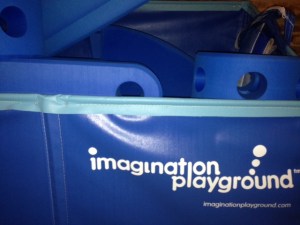
Imagination Playground blocks close-up

A close-up of the foam blocks . . . makes you want to reach out, grab one, and start playing!

The flagship Imagination Playground opened in New York City in 2010; since then, more than 700 Imagination Playground sets have been implemented internationally . . . including right here in Fell’s Point, Baltimore, very soon. To backtrack a bit, Imagination Playground is a “play system that encourages unstructured, child-directed ‘free play.’” It looks like giant Tinker Toys—only soft, on an extremely large scale, and powder blue! Developed by the architectural firm The Rockwell Group, this play system “in a box” (or cart, as the case may be) can be used anywhere, indoors or outdoors, and comprises three key elements:

1. Manipulable Environment: Traditional playgrounds consist of fixed equipment. The experience kids get from swinging or sliding is somehow passive, even though they are actively moving. There is still the element of deriving enjoyment passively rather than having created/designed the experience. Not so here, where kids manipulate the play environment according to their own lights, then do with it what they will.

2. Loose Parts: An assortment of age-appropriate “found parts” can be integrated with the signature blue building blocks to expand on and extend play in new directions.

3. Play Associates: Workers are trained with a specific curriculum developed by KaBOOM!, a national nonprofit organization dedicated to “saving play” as well as addressing America’s “play deficit” to properly implement and oversee an Imagination Playground.

According to Imagination Playground website’s FAQs, “This unique combination of elements enables children to create a great new playground each time they visit.” Click here for a video demonstration/profile.

More About the Blocks, Please

These are really the core of the Imagination Playground. The biodegradable foam blocks are nontoxic, cleanable, recyclable, resistant to microorganisms, and nonflammable. They are all blue—no variations are possible. This is to both encourage the use of, that’s right, imagination, rather than getting distracted by colors (or worse, fighting over them) as well as because that color was best received among kid focus groups. The blocks kit includes shapes like “l’il cheeses,” “clover gears,” and “arched chutes.” Are you getting excited yet? This basic kit can enhanced with angles and curves add-on sets to build endless combinations of kid-engineered “playgrounds.” They also promote collaboration among children to build their place space together.

And the Play Associates?

Must be the world’s best job, right? Probably pretty close, though training is a nonnegotiable prerequisite. This job is really more about managing the environment than playing with kids, however. Performing safety checks, setting up and putting away the loose parts, and cleaning the materials are their primary responsibilities, all to enable kids to let their imaginations take them where they will. “Play Associates set up and step back.”

As stated above, Play Associates are a kind of “playworker,” a profession written extensively about by Penny Wilson in the U.K., herself a professional playworker. Together with a nonprofit organization right here in our own backyard, Ms. Wilson and the Alliance for Childhood in College Park, MD aim to “[establish] playwork as a profession in the U.S. . . . [in] its efforts to restore play to children’s lives.” Read their Playwork Primer 2010 here.

Play: Not Something to Mess Around With

In the end, there’s a very serious side to play—not in a bad way, but in terms of the no-nonsense list of benefits that this kind of play yields. Playing with loose and found parts, researchers agree, hones cognitive, creative, and social development. In fact, it is precisely through play that kids develop. By playing, they are actually transforming their dreams into reality as noted pediatrician-turned-psychoanalyst David Winnicott believed and for whom the concept of play was a central motif. Tied to influential architect Simon Nicholson’s Theory of Loose Parts:

“in any environment, both the degree of inventiveness and creativity and the possibility of discovery are directly proportional to the number and kind of variables in it”

and the fundamental logic of Imagination Playground emerges. Did you watch the video yet? Those parent and education professional testimonials were full of words like “problem-solving,” “engaged,” “higher-level thinking,” “teamwork,” and even “character strengths like grit, resilience, and self-control.” (Remember education researcher/author Paul Tough? One of the NYC school principles he wrote about, Dominic Randolph, is an Imagination Playground advocate and user.) All of these blog themes are really starting to, uh, “connect”!

For a final word on the child’s sheer driving need to play, here is an excerpt from an interview with playworker Penny Wilson in the American Journal of Play:

“It is a common mistake that adults make to think that play is frivolous and fun, a pretty frill of childhood. But play not only develops physical and mental strength and agility, it is the mechanism by which children work out their thoughts and emotions. As adults we struggle to explain and understand ourselves and the things that happen around us. We wrestle with words. For example, I find it very difficult to capture the words I need to explain this thought to you now. Children have exactly the same need to grapple with their thoughts. But they use their playing as their language.”

Please contribute to this dialogue; let us know your thoughts or share an anecdote in the Comments section!

Language Curriculum Specialist Joins TNCS

Lisa Warren, Language Curriculum Specialist

Lisa Warren, Language Curriculum Specialist

Piggybacking on a post (Multilingualism at TNCS: Optimizing Your Child’s Executive Function) from earlier this year, this discussion profiles Lisa Warren, on-staff language curriculum specialist at The New Century School. Ms. Warren came on board in October 2012 to organize and standardize the existing language education at the school. With a Master’s Degree in linguistics from Georgetown University that combined research into how kids acquire second language with curriculum design as well as previous experience teaching Spanish, French, and English, she is well qualified for this new role.

Her role, she says, is primarily to integrate language education throughout TNCS’s progressive, Montessori-inspired curriculum. The primary components of language education are already firmly in place—the teachers, the native speakers, the classes, and (in some cases) the immersion—but Ms. Warren has erected a framework on which these pieces can connect, be reproduced in successive classes annually as well as across the same level (i.e., all primary classes are focusing on the same lessons), and meet national standards. As she puts it, “There was a lot happening in language education around the school.”

She came to TNCS as the result of Head of School Alicia Cooper-Danyali’s active search for such a specialist. Mrs. Cooper-Danyali herself brings a wealth of language-immersion experience to her position and saw the need for the dedicated staff member who could connect all the language dots at TNCS in addition to crafting “plans that document the school’s long-term goals, which include a language curriculum both reproducible and adjustable.”

The Curriculum Map

Key to this exciting new TNCS initiative is a rubric called the curriculum map*. This level-specific document serves two purposes: 1) it provides a comprehensive overview of what is being taught in a given language (i.e., Spanish or Mandarin) and 2) it allows Ms. Warren to identify gaps and fill those in. Aspects of language education like culture and how well a particular class matches up with current themes guide her assessments. She is passionate about her work.

“Being able to talk about something in a lot of different ways is very important for cognitive development,” she says, drawing on her impressive research background. Indeed, the benefits of learning another language have been touched on in earlier blog posts, but Ms. Warren adds to the growing list. Wider cultural understanding, the ability to communicate with multiple populations, and keener analytic skills are among her special foci in what advantages speaking more than one language affords. Multilinguals have an “expanded view,” she says, “which makes them more creative and better problem-solvers.” She cites a study in which a cohort of bilingual kids and another of monolingual kids were asked to list alternative uses for a plastic water bottle. The monolinguals averaged only a couple; the bilinguals’ list stretched to 10 or more. This ingenuity translated to better Scholastic Aptitude Test (SAT) scores in a related study. It’s a known, but unfortunate fact that kids from lower socioeconomic groups tend to fare worse on standardized tests. Speaking more than one language abolishes this demographic disadvantage—bilinguals, no matter what their socioeconomic stratum, score higher in both math and verbal sections as well as overall. Click here for a comprehensive, annotated bibliography on this critical research.

Perhaps the best part of the curriculum map is that it allows teachers to target their teaching to students in the same class according to their individual levels. This means that students can enter TNCS at any age and have their learning needs met. This “differentiated instruction” is also rounded out by groupwork, such that, for example, elementary students are currently working on sustainable environment projects (sponsored by Clean Currents) for the Science Fair, part of which they are required to do in Spanish. Because they are working as a group, all levels support and help each other with the result that they learn the scientific method in two languages!

In the Classroom

Ms. Warren’s work is not all behind the scenes. She likes to spend time in the classroom, getting to know the kids and working with the teachers to have a very clear sense of the application of her work. She provides a library of resources for teachers to draw from, for example, that includes books, puppets, costumes, flashcards, music, and more. She also offers professional development. For the latter, she might model certain behaviors to show a teacher how to maintain a focus on language while redirecting a disruptive student. Or, she might serve as her own “lab rat” in language class: if she is able to follow an activity in Mandarin, which she doesn’t currently speak, she knows it’s an appropriate activity for the students. If she gets lost, she helps the teacher reshape the activity to the students’ level.

Part of this is ensuring that activities/lessons meet The American Council on the Teaching of Foreign Language (ACTFL)’s  “5 Cs”: Communication, Cultures, Connections, Comparisons, and Communities, each of which is subdivided into series of standards. (Click here to read the standards.) It’s reassuring to know that TNCS students are organically acquiring other languages via their interactions with native speakers around the school, but that there is also a sound pedagogic infrastructure supporting that process. Again, though, this kind of balance is what TNCS is all about.

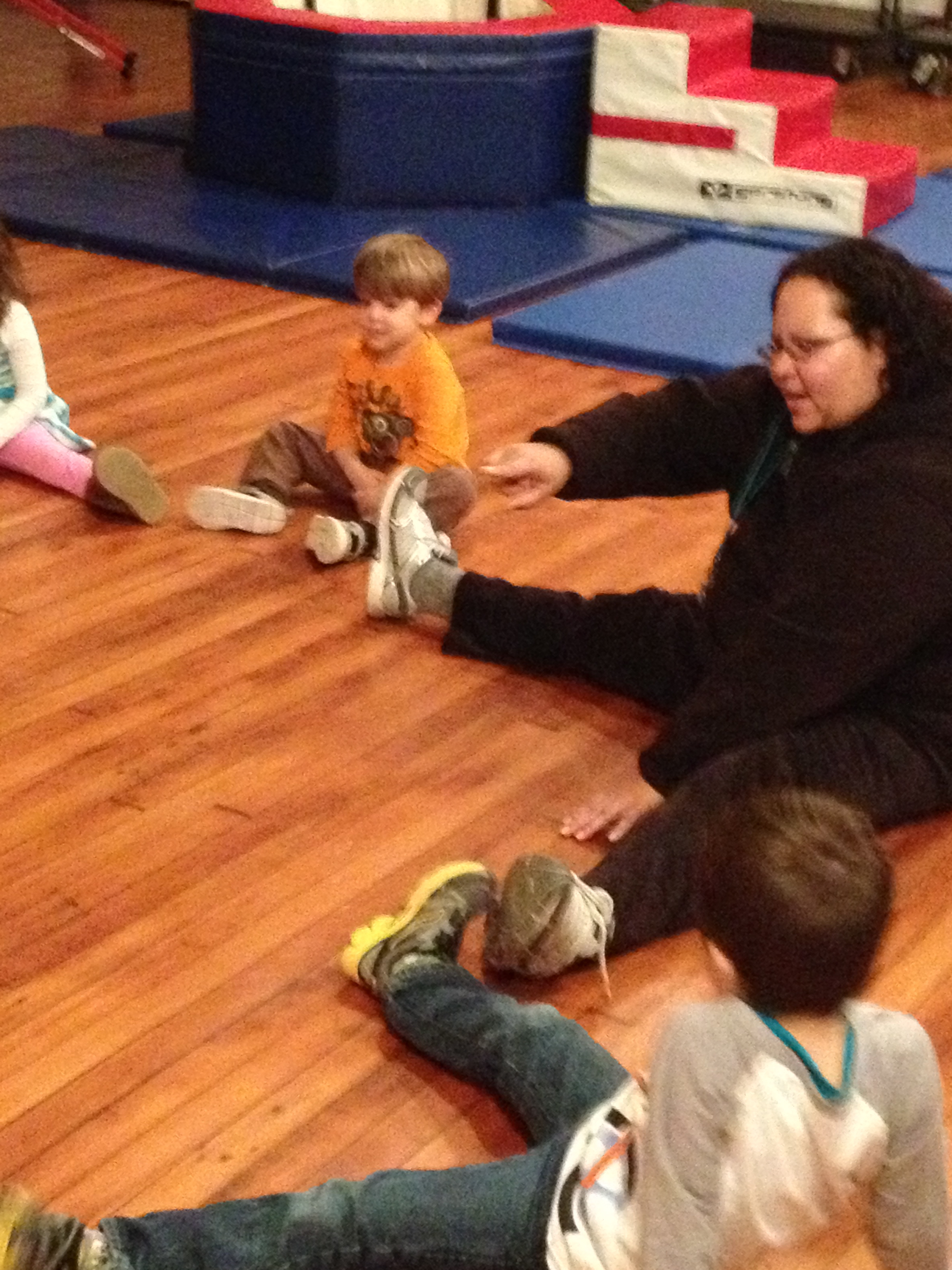
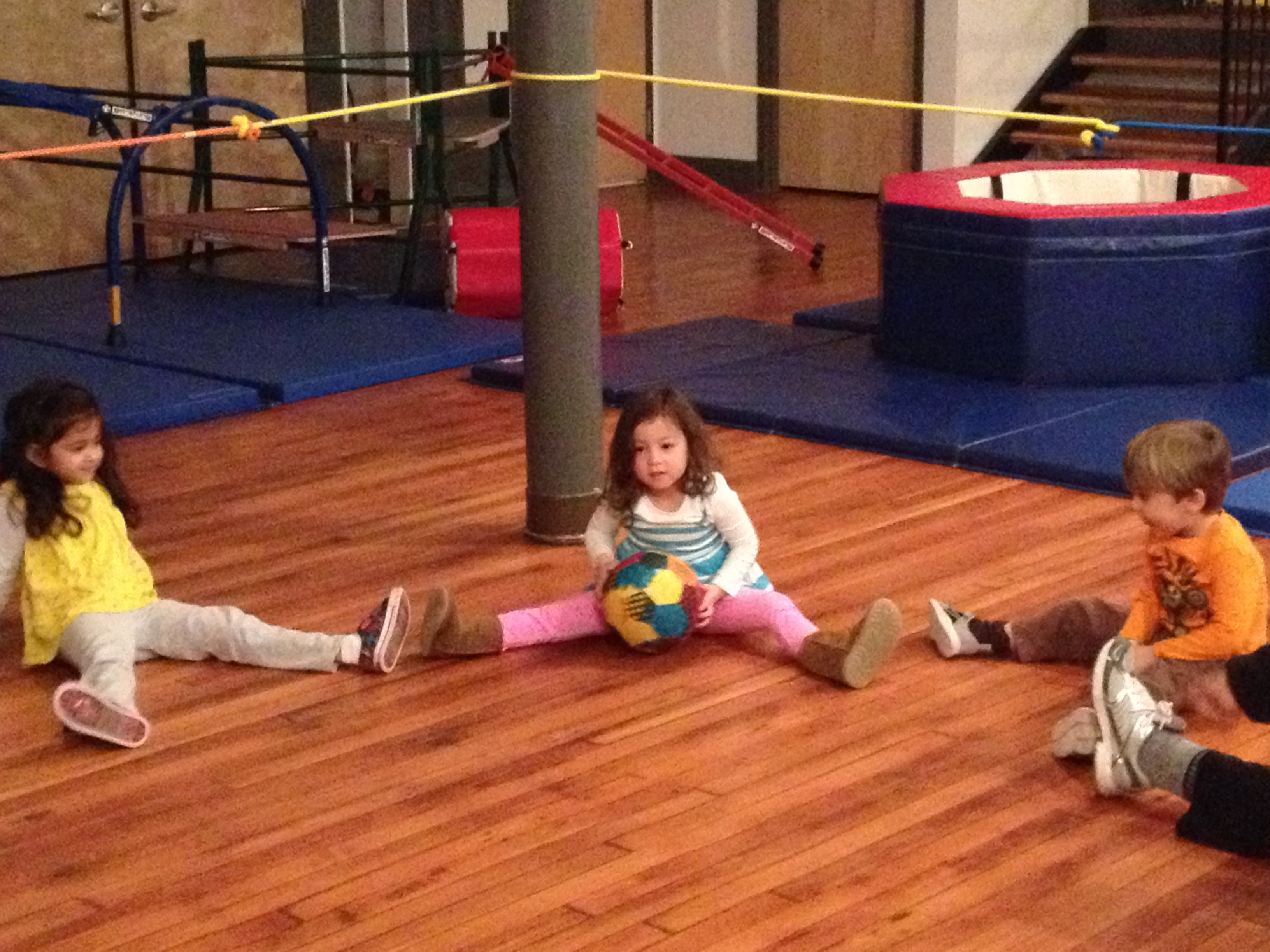
Spanish gym class

Senora Casado plays a game with primary students during gym class. “Encouraging the children to speak and communicate in Spanish is the goal in our weekly gym lessons,” she says.

To play, students must understand and respond to commands given solely in Spanish. They learn lots of action verbs this way!

Students play Rolling the Ball (“Rueda la bola”), in which they roll the ball to a friend while reciting a Spanish chant. To play, students must also understand and respond to commands given solely in Spanish. They learn lots of action verbs this way!

At Home

A final piece that Ms. Warren is locking into place is with parents. Regardless of whether parents are themselves multilingual or not, TNCS is exploring ways to encourage and support language acquisition at home. You can learn along with your kid(s), or you can print and post the Word of the Week around the house. Ms. Warren can usually be found in attendance at TNCS Info Nights, and she is even considering holding an Info Night dedicated to language strategies parents can use at home.

Welcome to TNCS, Lisa Warren!

Have an anecdote, question, or comment to share? Your participation in this important discussion is welcome!

*Note: Mrs. Cooper-Danyali plans to implement curriculum maps for all other disciplines as well.

Achieving Balance in Education at TNCS

With 2013’s New Year’s resolutions newly minted (and some as yet unbroken, even), it’s a good time to turn our attention to physical fitness. And don’t worry—no guilt trips or discount gym membership pitches! This discussion is about balance balls (for kids).

At The New Century School, elementary students (currently including grades 1–3) have the option of sitting on balance balls instead of chairs as they work. Elementary teacher Adriana DuPrau says, “the children love the balls while working on certain activities. It seems that being in motion allows their brains to be engaged.” Initially, students used them at the computer station, but, says Mrs. DuPrau, “we are slowly beginning to incorporate them more in the class area as well. For example, they like to bounce when reading a book or working on math.”

strengthening core muscles while honing core academic skills

Students have the option of sitting on a chair or balancing on a stability ball at the computer station.

Chairs Are So “Old School” (Not in a Good Way)

Also known as stability balls, these large inflatables are more traditionally used for pilates-type exercise, but they are rolling into more and more classrooms as seating, particularly for elementary kids with all that energy to burn. They are considered effective for strengthening core muscles and improving spinal alignment. In the classroom, they additionally help students sit up straight, reduce their distractibility, and keep them aroused.

Classroom balance balls were originally used in an occupational therapy context. They improved focus in kids with attention deficit hyperactivity and sensory processing disorders, presumably by giving an outlet to their “wiggles.” Think of it as channeling all that excess energy for positive use. Then researchers noticed other incidental improvements, in obesity and classroom productivity, for instance. Regarding obesity, scientist have long known that even the smallest additional daily movement reaps disproportionately large physiologic rewards. So, the balance ball, by requiring continuous core muscle engagement to remain seated on it, is eliciting constant movement, thereby enhancing health and fitness.

stability balls are perfect for computer work

Note this student’s posture as he balances fitness with his Daily 5.

But better academic performance? Though sounding far-fetched to some, this makes sense given that the brain’s vestibular system, which regulates balance, also plays a key role in our alertness levels. Thus, movement, by stimulating the brain, sharpens focus. (See Exercising that Mind–Body Connection for more on the related science.) Better focus translates very readily to increased learning, and TNCS elementary students are really getting on the ball. (Oops—there goes Resolution #457, no more bad puns. . .)

You’re Invited!

By the way, you can learn more about the balance balls firsthand at the TNCS Elementary Information Night on Thursday, January 17, 2013 from 6:00–7:30 p.m. for current and prospective families. This will be the ideal opportunity to familiarize yourself with TNCS’s elementary programs (expanding to include through grade 4 in the Fall of 2013), to ask questions, and to hear other families’ experiences. Free childcare is also available. Click the above link to find out more and to RSVP. You don’t want to miss it!

Kindly let us know your thoughts about this post in the comments section—we love to hear from you!

Also, did you know? Any green text within the body of a post is a clickable link that takes you to related online content. There’s a lot of good information to be explored this way!

Exercising That Mind–Body Connection

New for the 2012–2013 school year, The New Century School provides a gymnasium for physical education! In keeping with TNCS’s progressive, forward-thinking style, though, this gym is no ordinary gym. The Lingo Leap (TLL), as it is now known officially, integrates physical exercise with cognitive development—moving and learning!

TLL’s philosophy is that brains work more efficiently when the body is also engaged, and there’s plenty of hard science to back up this notion. In fact, neuroimaging shows that during movement, more brain areas are lit up, meaning that more of the brain is active and in use. Why not take advantage of this “powered-up” state and give the brain something to do with its extra energy? Let’s face it—one of the most challenging tasks we can give our hungry brains is learning a new language.

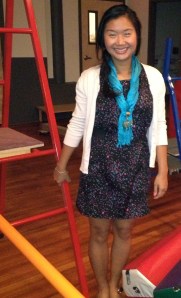
The Lingo Leap is run by Amy Pothong

TLL Director Amy Pothong

So, TLL focuses on multiple language acquisition; currently, yoga, dance, and other movement classes are being offered for ages 2 and up (including for interested parents) in your choice of English, French, or Spanish with plans to add classes in Mandarin and Arabic soon. TNCS students, by the way, get regular phys ed at the gym in Spanish. TLL Director Amy Pothong says that “when [students] are totally immersed, they speak like natives.” Although this idea might sound revolutionary, it’s actually “getting back to the basics.” “As we get older,” says Pothong, we must get more socially standardized, which can hinder our natural ability to learn through movement.” Babies, she points out, largely communicate through gestures, which are a very basic form of movement and hearken back to the earliest human communication by our ancient ancestors.

The connection, then, between bodily movement and thought conveyance is well established in our being. Two main schools of thought have emerged to explore how we can optimize this connection to actually learn to communicate better (or at least in more than one language). First was Total Physical Response (TPR), developed in the mid-1960s by Dr. James Asher as a method of learning a second language. Asher noted that the conventional approach to learning second languages differed dramatically from how infants learn their first language. Infants learn to communicate by internalizing language, a process of protracted listening and absorbing. TPR is a technique that replicates that process for learning second languages and beyond by giving a command, modeling the action described in the command, and then having the student imitate that action. Students are not initially asked to speak, but to comprehend and obey the command. Understanding is at the root of language acquisition, according to Asher. This makes a lot of sense when you consider how babies learn to respond to increasingly complex utterances before ever verbalizing a thought.

Language acquisition expert Stephen Krashen has found this method very effective. Read his article on TPR here. He says, “A constraint on all activities that we might consider is that they be interesting for both the teacher and the students; it is difficult to fake enthusiasm.” Enter TLL with engaging movement classes for kids plus their parents!

The second school of thought is known as SPARK. SPARK was put forth by Dr. John J. Ratey, a clinical associate professor of psychiatry at Harvard Medical School. Exercise, contends Ratey, dramatically enhances circulation to the brain and encourages synaptic growth, thereby priming the brain for improved function—providing the “spark,” in other words. Improvements in function include both mental health as well as cognitive ability (think, learning languages at TLL!). A significant corollary to SPARK theory is that exercise also improves academic performance after exercise, whereas TPR focuses on learning during movement. Read more about Dr. Ratey’s findings and about his latest book, Spark: The Revolutionary New Science of Exercise and the Brain, on his website. (His wasn’t the first, incidentally: Plato argued for the ideal education to incorporate physical training in The Republic more than 2,000 years ago.)

Gerstung equipment can be moved and reconfigured in endless ways

Gerstung Movement Education equipment at TLL

About that physical training, TLL features state-of-the-art Gerstung gym equipment that “[encourages] children to use their own innate curiosity to stimulate movement. Created by Siegfried Gerstung, a world-renowned educator, Gerstung equipment is not only customizable and moveable to provide “movement education” in three dimensions, but the Gerstung company is locally owned, with that commitment to community shared by TNCS and TLL.

Director Pothong and her staff are themselves polylingual, and instructors are native speakers of the language they are teaching in. Pothong is Thai and may even hold Thai cooking classes at TLL next year. It’s a “multipurpose space,” she says, “that encourages social, mental, verbal, and physical development.” (And culinary!)

Registering for classes is a snap on TLL website–make the jump to polylingualism!

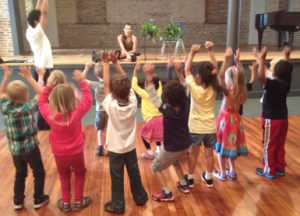
TMCS students stretch and move, following instructions given in Spanish

TMCS students participate in Spanish gym class