TNCS Teachers Get Mindful!

Last week Immersed featured guest blogger Carisa Perry-Parrish writing about her presentation to The New Century School staff on how to bring mindfulness principles into the classroom in Stop and Smell the Roses. This week, we’ll hear from some of the TNCS attendees about what they took away from the presentation.

Screen Shot 2016-03-25 at 3.16.51 PM

Courtesy of Dr. Carisa Perry-Parrish

TNCS Head of School Alicia Danyali organized this staff development initiative after hearing from several staff members that Dr. Perry-Parrish’s mindfulness workshop for parents inspired them to want to learn more about the topic and how to use it to help them better relate to their students. This meshed very well with Mrs. Danyali’s own overall approach. “My mom always reminds me that when you are on an airplane and the oxygen masks drop, you are instructed to care for self before assisting others. What this translates to for me personally is, the more we take care of self, incorporate deliberate choices to model appropriate behaviors when it comes to support, the more others around us benefit,” she said. Thus, for Mrs. Danyali, practicing mindfulness is an important part of personal and social health.

tncs-mindfulness-classroom

Courtesy of Carisa Perry-Parrish.

Although practicing mindfulness is arguably beneficial everywhere, all the time, for educators it has a particular resonance. A central tenet of mindfulness is regulation of emotion, the ability to make a considered response rather than reflexively react, as Dr. Perry-Parrish’s slide at right illustrates. This idea reverberates in many ways inside the classroom, where teachers continuously interact with children who are still in varying stages of development. Teachers must find ways to bridge the cognitive, emotional, and social gaps this interaction entails as well as model for their students the right way to handle various challenges.

Says Mrs. Danyali: “The role teachers play in a student’s life is defined in part by cultural expectations, social norms, and organizational rules that usually operate outside the classroom. Mindfulness is one more ‘tool’ in a teacher’s toolbox to help their students think things through for themselves, take accountability, and make choices that tune into their emotional needs. On the social aspects of teaching, mindful practices encourage students to feel important and cared about, as well as gain confidence in their own abilities. To acquire a personal sense of respect and responsibility for themselves and others is the focus.”
tncs-mindfulness-classroom

Courtesy of Dr. Carisa Perry-Parrish

This seminar was a very natural fit for the primary teachers, who implement a classic Montessori curriculum in their classrooms. Maria Montessori was a proponent of what would evolve as what we know today as mindfulness practice. Let’s hear from a TNCS teachers who asked for, attended, and learned from this seminar.

TNCS primary teacher Maria Mosby: “It was great to get a more in-depth understanding of mindfulness and its many benefits for adults and children alike. Several teachers that I talked to were excited to read and learn more, and begin incorporating mindfulness into their lives and classrooms. I would definitely like to begin a practice of mindfulness meditation before each school day begins, to help prepare myself for being more present with the children and other teachers. It was interesting to learn how the practice has helped so many others in many different professions and walks of life. Though we occasionally do a group meditation in class (such as the flower and candle breathing exercise), I think it would be a great way to begin every day, as opposed to the typical circle time. When the children are sitting in the peace corner alone or as a group sitting on the rug, you can see them begin to try to quiet their bodies and minds and prepare for the day. It’s a practice we can all benefit from- tugging at the leash, and getting the easily distracted little puppy dog in our minds to focus on the path in front of us. Everyone needs time to breathe between tasks and have a moment to themselves.

The children who have a teacher who is present and is calm, not reacting based on his or her instinctive thoughts in a given situation, are likely to learn better coping and social skills themselves. They will also have more focus and joy in the classroom environment. Integrating mindfulness into any classroom can help everyone to become more focused on each individual task, and improve student-teacher and student-student relations, thus enhancing the experience for the entire class.”

Other non-Montessori TNCS teachers also benefited in multiple and sometimes surprising ways, as well. The elementary teachers, for example, face daily challenges that are different from what teachers of 3 to 5-year-olds might face, but these challenges are no less real and no less vital to handle in the best way for the child.

TNCS upper elementary STEM teacher Dan McGonigal: “My take-away from this presentation was really simple but something I need to remind myself of is that our students are not adults and they aren’t going to behave that way. After this presentation I have tried to take a step back and just teach in the moment and be present for that moment and not think about past or future difficulties. I try to remind myself of what was important to me when I was 7–11 years’ old. This has helped me better relate to some of the decisions students make on a daily basis. I try to better appreciate the student’s perspective of things, especially those that may have a learning disability or behavioral challenges. Teaching can be difficult because you are constantly looking for progress and, at times times, their progress may appear invisible. But students often need time, numerous examples, and development to start making progress.”
That’s a clear benefit of employing mindfulness as a teacher, and here is another perspective on the importance of teaching mindfulness.
TNCS upper elementary Language Arts and Global Studies teacher Kiley Stasch: “I thoroughly enjoyed the mindfulness presentation, not only from the perspective of a teacher but also for myself. As a teacher, it has helped me to take a step back and understand that teaching these skills explicitly is important and essential to do. We often assume these students have learned how to best manage their own emotions, but even older students have not necessarily had someone to help them through the steps they should be taking. Breaking it down for the students and helping them to understand where their emotions are stemming from helps them to reduce a poor reaction at that moment as well as in similar instances that will come up in the future.”
As for future staff mindfulness initiatives, Mrs. Danyali says, “The hopes are that this training was a nice reminder or a validation of current approaches, but also encouragement for implementing new strategies that will not only benefit one or two students, but the class as a whole.” Dr. Perry-Parrish also provided three models for continued development in this arena: CARE, SMART, and MWBE, detailed in the slides below.

This slideshow requires JavaScript.

These final words from Ms. Mosby might best encapsulate the experience for TNCS teachers and perhaps all teachers, worldwide: “Mindfulness is an experience we all can and should offer our students each day. It’s easy to become so focused on the specific learning goals and daily tasks of teaching that one doesn’t always stop to slow down and truly listen, observe, and enjoy the children. There are so many wonderful moments that we miss out on this way.”

Anyone reading this post has already hit pause on the day to stop and be in a moment. We recognize that, and we thank you. The kids around you will thank you, too, both for knowing how to be truly present with them now and for showing them how to grow up to be adults who embody this critical awareness in their future lives.

So What’s Bugging You?

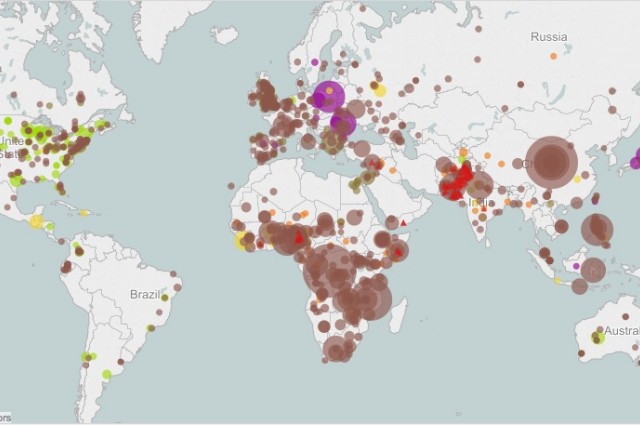
This map shows the resurgence of measles, mumps, rubella, polio, and whooping cough caused by the anti-vaccination movement. Red triangles indicate health care workers who have been affected by the outbreaks.

This map shows the global resurgence of measles, mumps, rubella, polio, and whooping cough caused by the anti-vaccination movement. Red triangles indicate health care workers who have been affected by the outbreaks.

Viruses, viruses, viruses—they’re everywhere! Whether the kids are coming home from school* with fevers, or coworkers are too busy with workloads to keep their upper respiratory infections out of the office, or we’re barraged with the latest news stories everywhere we go, nasty bugs seem to be the order of the day. Just as new cases of Ebola had begun to rapidly decline in even the worst hit countries (whew!), suddenly, a measles outbreak in California this month has reminded us once again that bugs can be real threats. Measles is one of the most highly infectious diseases there is, and it can be deadly. This year is setting up to be the worst year for measles in the United States since 1994. Read more here: The New Measles.

But wait! There’s good news abloom in the microscopic world. In fact, there’s a lot of good news. The truth is, we are more hosts to more microorganisms—yeasts, bacteria, viruses, etc.—than to our own human cells. We have thrived on this symbiosis, and we’d do well to get to know our teeny tiny friends, frenemies, and outright enemies a little better. So, go on, do yourself a favor and watch this charming representation of our microbiome. It keeps us healthy and happy.

http://www.npr.org/templates/event/embeddedVideo.php?storyId=242361826&mediaId=

That animation tells the story of the good guys, but what of the pathogens that wreak havoc on us? There’s good news on that front, too! Because, guess what? The 5-second rule has been reinstated! It turns out that food dropped on the floor can still be relatively safe for consumption, depending on length of time it spends there and on its own physical properties (e.g., moisture content, consistency, etc.). Or perhaps a better way to say it is, floor food might pick up fewer pathogens in under 5 seconds than it would take to make someone really sick. Read the dirt here: UK Study Shows Five Second Rule Exists. And note that this rule certainly can’t apply to highly trafficked public places. Ewwwww!

Kinda grossed out? Well maybe this story is more to your liking. A new study just published today in Science Daily has found the key to decipher the complex language of the linemen of our immune systems, the T and B lymphocytes, which are our first lines of defense against potentially harmful pathogens like many viruses and even tumors.

Combining methods of Next Generation Sequencing with in vitro stimulation and analysis of specific T cells, the researchers were able for the first time to establish a complete catalogue of the immune response to pathogens and vaccines. In particular, they have catalogued all the clones that respond to a particular microorganism, determining their specificity and their functional properties, for example their ability to produce inflammatory mediators (cytokines) or to migrate to different tissues.

It’s like having the opposing team’s exhaustive playbook—we could potentially have an answering play ready for every viral/bacterial/neoplastic offensive move. The therapeutic possibilities are dizzying. Read more here: The language of T lymphocytes deciphered, the “Rosetta Stone” of the immune system.

For now, though, the little guys are proving more effective at survival than we are, so they deserve some respect. We should above all strive to keep the good ones happy, which ironically, may help stave off the not-so-good ones. Eating right, getting plenty of sleep, and exercising are just what the doctor ordered.

*Note that The New Century School‘s policy mandates that students with infectious illnesses be kept out of school until the danger of contagion has passed (at least 24 hours without symptoms). Please consult the Parent Handbook for more details regarding TNCS’s communicable disease policy.

Phys Ed Is Going Strong at TNCS!

phys-ed-teacher

Phys ed teacher Robert Bekas joined TNCS at the start of the 2014–2015 academic school year.

The New Century School was founded on the principle of educating the whole child, which many schools have neither the luxury nor the capacity to do. Art, Music, and Physical Education are typically first on the chopping block in the current standardized education environment. But, in keeping with its firm commitment to providing a well-rounded scholastic experience, TNCS has not only retained these disciplines critical for development of creativity as well as specific skills, but it has continued to grow its “specials” program and offers a very balanced ratio of academic-to-specials classes.

One emphasis of the 2014–2015 school year is on movement, explained Head of School Alicia Danyali in the fall. True to her word, she has implemented regular yoga throughout the upper programs, encourages teachers to allow plenty of time for their students to move within their individual classrooms—such as K/1st teacher Mrs. Jacoby’s games to hone hand–eye coordination (see TNCS Gets the Wiggles Out and the Learning In!)—in addition to providing dedicated gym time in a formal physical education class. Movement is not only essential for physical health, but evidence in support of movement being just as vital for cognitive health is mounting fast.

Enter Mr. Robert Bekas, TNCS’s new phys ed instructor. Mr. Bekas is The Real Deal in terms of what he brings to the gym. Born and raised in Poland, he graduated with a Master’s Degree in Physical Education from the Academy of Physical Education. His main interest was in martial arts, and he competed for many years in karate, specifically, the Shotokan style. After graduating from college, he opened his own kickboxing academy and taught there for 4 years. In 2004, he came to the United States to do an internship at Sport FIT, a fitness club. (He met his future wife there and has been here ever since apart from brief annual trips back home.) He then worked for 7 years at a Wheaton Catholic school, but when it closed, he came here to teach K and up.

His classes start with basic stretching, then advance to an activity that incorporates some cardio (e.g., playing “Freeze,” “Sharks and Minnows,” or “Lions and Tigers”), and wrap up with skill-building in strength training, gymnastics, or team sports. He is hoping to increase classes from once a week to twice a week so the students are more accustomed to the routine. In Poland, he explained, PE class is usually four times a week. “Elsewhere, it seems to be getting less and less. This is bad for kids; they are spending too much time indoors and on devices and will end up with postural problems. I know this is the 21st century, but playing too many video games is a bad habit.” For his own fitness routine, he does a whole-body workout at the gym incorporating stretching, strength training, and cardio. For fun, he continues his martial arts training and also enjoys hiking.

As for his TNCS students he says, “The kids are doing great. The goal is overall fitness, but I also want them to learn the basic rules of baseball, football, soccer as well as fairplay. I also try incorporate team spirit. When we play, we play for fun. We don’t keep score; I want the students to be nice to each other, not get in arguments over who is winning. I try to keep it on the fun level, not necessarily the sports level.” He also uses the Gerstung equipment to teach basic gymnastics, such as forward and backward roll on the balance beam.

This slideshow requires JavaScript.

Mr. Bekas commands respect from his students, and they adore him. “I like being at this school,” he said. “It’s a great place. It’s family oriented, and the classes are kept small.” By the way, Mr. Bekas also speaks four languages (Polish, English, German, and Russian) and might attempt to learn Japanese to support his martial arts endeavors. He is certainly a good fit for the multilingual/multicultural environment at TNCS! Future projects at the school for Mr. Bekas might include some extracurricular martial arts instruction; stay tuned for developments!

TNCS Knows Safe Urban Gardening!

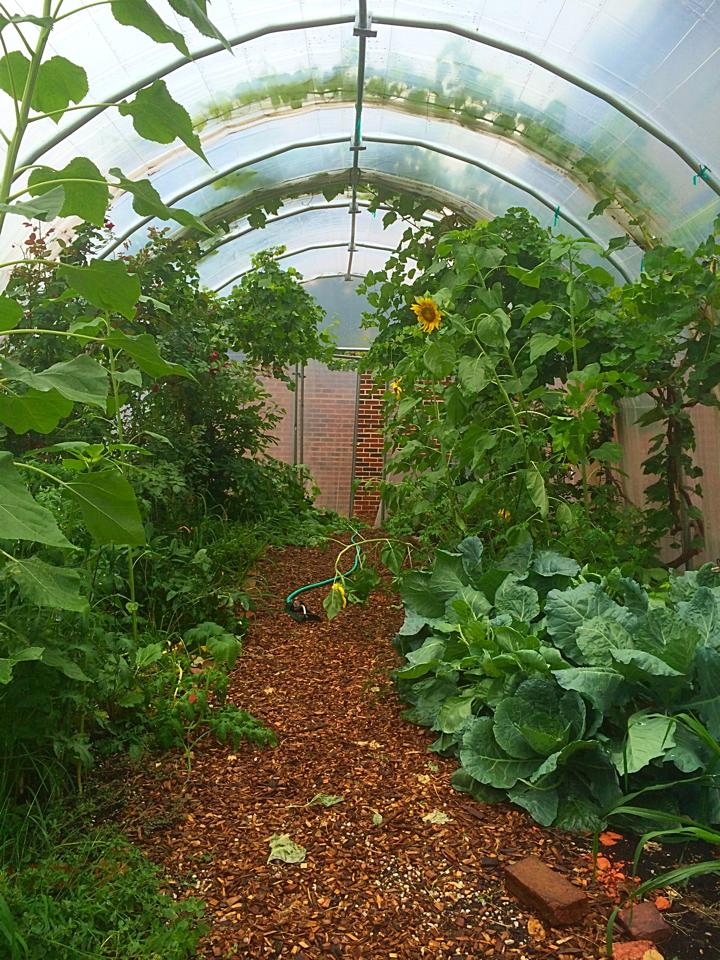
The greenhouse is a magical place for TNCS students, full of wonder and possibility.

The greenhouse is a magical place for TNCS students, full of wonder and possibility.

When then-prospective parent Lori Rosman contacted The New Century School this past Spring about enrolling her son in the pre-primary program, one of her first questions was about TNCS’s on-premise greenhouse. “I was excited that TNCS has a garden and is growing some of their own food,” she said. “Our son is very curious about cooking and always asks, ‘what are the ingredients?’ in everything.” Ms. Rosman also happens to be a Public Health Informationist at Johns Hopkins University, where an article about urban gardening had recently circulated. The article warned about some potential health risks of unsafe urban gardening methods, such as using contaminated soil. City soil can contain unsafe lead and asbestos levels, for example, especially in areas where construction or demolition has been going on. Urban gardening can be perfectly safe, but the gardener needs to take certain precautions, which novice gardeners might be unaware of. And the number of urban gardeners in the United States is steadily growing—up 29% in the last 5 years from 7 million to 9 million people, according to the National Gardening Association, so this information comes none too soon.

“I felt an obligation to educate myself,” said Ms. Rosman, so she approached TNCS Admissions Director Robin Munro with her questions. “I appreciated that Robin took my questions seriously and suggested going to talk to Chef Emma [Novashinski] about my concerns.” Chef Emma was well aware of the issue, and, together, the three discussed the safe practices she uses. “It was very reassuring!” said Ms. Rosman.

For obvious reasons, please keep the four-legged friends out of the greenhouse :)!

For obvious reasons, please keep the four-legged friends out of the greenhouse :)!

TNCS Master Gardener and Executive Chef Emma Novashinski was aware of the site’s history, which is the first step for planning an urban garden safe for food-growing, according to a guide by Johns Hopkins Center for a Livable Future on soil safety. The Center also provides interactive maps of Baltimore food gardens and other resources. As luck would have it, Chef Emma selected the location for TNCS’s greenhouse on the very spot a large community garden had recently occupied. Those savvy gardeners employed regular composting and wood-chipping to keep their soil healthy as well as annually replenished it.

Once it’s clear that the site is probably contaminant free, regular soil testing is the next step to ensure safe food-growing. Naturally, this is also something Chef Emma always knew. “When I first suggested the greenhouse project,” she said, “[TNCS Co-Executive Directors] questioned the safety. We’re feeding children after all. I test lead levels and alkalinity about every 8 months, and the pH is usually neutral and the lead level has always been well below a hazardous level.”

Soil testing

Soil testing

In a case of very good timing, Chef was due to test the soil for the coming 2014–2015 academic year. On Friday, 8/8/14, she reported: “We are sufficient in all levels except nitrogen, so we will be incorporating blood meal [an organic fertilizer] and nitrate of soda into the soil to remedy this nutrient deficiency, which was probably caused by watering and rainfall.” All fine!

Says the Center for a Livable Future’s website:

The potential health, social, environmental, and economic benefits of urban farms and gardens are far-reaching. For example, studies have found associations between urban community gardens and increased access to healthy food, opportunities for exercise, stronger social cohesion in neighborhoods, and higher property values. And like any green space, urban farms and gardens offer essential ecosystem services like moderating temperatures and reducing storm water runoff.

And, TNCS is feeding students hands down the best homemade, locally sourced lunch around as a direct result of the greenhouse and other nearby gardens and farms. So let’s keep this wonderful—and safe when done right—practice going and growing!

Welcome to TNCS’s 2014–2015 academic year, Rosman family, and thanks for suggesting this extremely worthwhile topic for Immersed!

TNCS’s Garden Tuck Shop Program Relaunches!

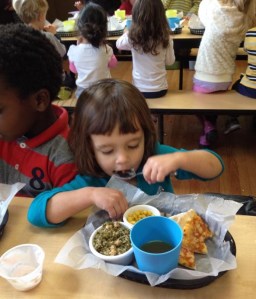
This wee one enjoys her lunch of pizza, tabouleh, and corn.

This wee one enjoys her lunch of pizza, tabouleh, and corn.

Now in its third year,  The New Century School‘s Garden Tuck Shop Lunch Program has implemented some exciting new changes, a new lunch menu foremost among them. These modifications grew out of some parent and TNCS staff feedback that Chef Emma Novashinski used to enhance and refine her already popular program. Menus and newsletters will also be part of this relaunch to ensure that communication about her meals is precise and detailed. “This is exciting,” she says, “it’s a nice turning point that has renewed my vigor to figure out which direction to take the program in.” She calls her refreshed program “the cleanest kids’ lunch downtown”! By “clean,” she refers to the source of the foods she serves. The closer to you it originates, the cleaner (healthier) it is. Trickling Springs Creamery in Chambersburg, PA provides local milk, produce and eggs come from nearby Tuscarora Farms, and fresh local bread comes daily from Cunningham’s Bakery in Towson.

Pilot Program

In mid-November, Chef Emma began piloting a series of new lunches that assembled components most popular with former and existing program participants. Popularity was not the only prerequisite, however. Chef Emma’s primary target for this new lunch series was to include food items “high in both protein and lysine to have the full plate components that the kids need for lunch.” As before, the lunches are vegetarian. L-lysine is an essential amino acid that—although it is necessary for every protein in our bodies—our bodies don’t produce, so it must be ingested. Both protein and L-lysine are critical for proper growth. Chef Emma says, “Protein and lysine content are big concerns for parents faced with a vegetarian school lunch. . . I have developed 13 perfectly balanced meals, which are appealing to tiny taste buds.”
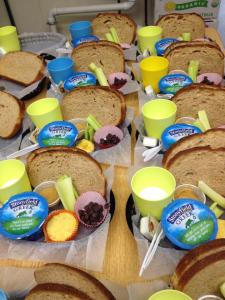
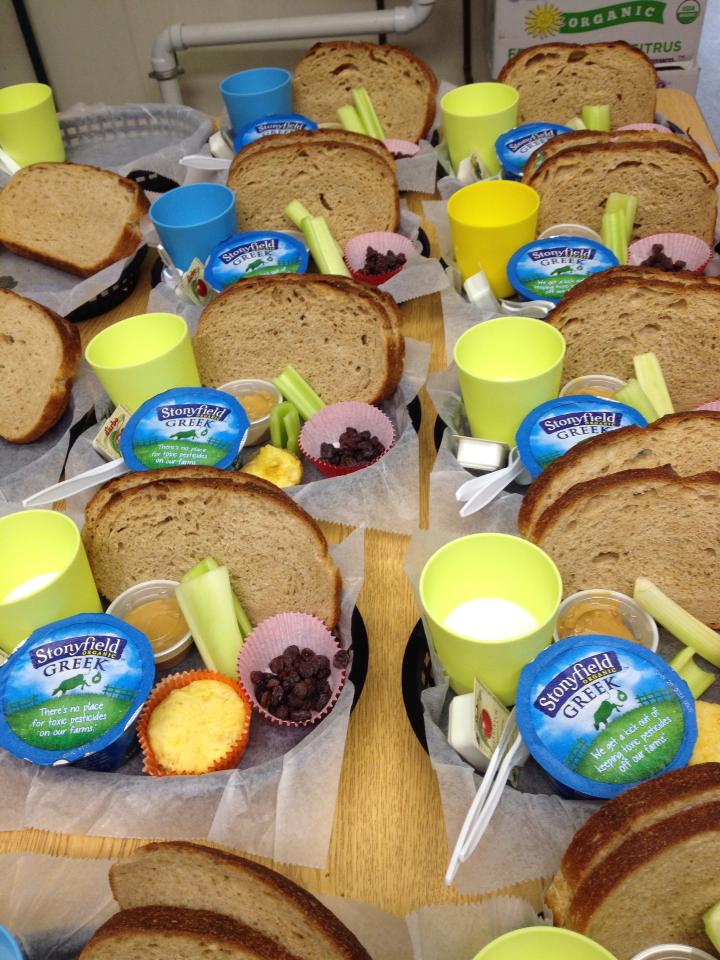
A typical lunch includes an organic dairy item or two, fruits, veggies, a home-baked item, and multi-grain  bread.

A typical lunch includes an organic dairy item or two, fruits, veggies, a home-baked item, and multi-grain bread.

She used November and December to nail down her menu to be able to hit the ground running when school started back up this month. “I just kept honing, and honing, and honing it until the kids were getting a product they like,” she said. Having previously juggled a range of about 30 meals, she started thinking, why not pick 2 weeks’ worth of food and keep repeating those meals? She wants TNCS students to really embrace the Garden Tuck Shop program in all its facets, from enjoying the food to understanding its importance for their health. By using a regularly rotating system of meals, she would limit the unfamiliarity aspect that turns some kids off to a new food. “They might respond better to something that’s a bit more consistent,” she says. “Simplicity is better; you can put as much protein into a meal as you want, if they don’t eat it, it doesn’t really matter how protein-packed it is.”
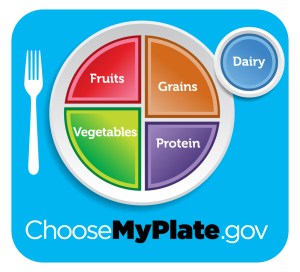
The MyPlate poster hangs on the cafeteria wall to remind students that eating a balanced meal is necessary for optimum functioning and health!

The MyPlate poster hangs on the cafeteria wall to remind students that eating a balanced meal is necessary for optimum functioning and health!

Transitioning

During this 2-month transition phase, Chef Emma also made “personal appearances” in the classrooms to talk to the kids about their lunches. “Once I went round to the classroom to discuss color, texture, and taste and well as vitamins and nutrients and what they do for your body, even kids who hadn’t previously been eating very much had at least tried everything on the plate, and overall the results were really quite amazing.” To support the educational component, she posted MyPlate information around the cafeteria. “I want the kids to be able to tell me where the dairy is coming from on the plate, where the grains are,” she says. MyPlate is a visual reminder to kids to balance their meal with healthful choices and is endorsed by First Lady and healthy school lunch advocate Michelle Obama.

Also during the transition phase, Chef Emma received a lot of parent questions about some of the newly appearing menu items, particularly with desserts. She said she suddenly realized that what she does in the kitchen hasn’t always been quite clear to parents. “I cook from scratch every single day. The ‘cookie’ is homemade; the sandwich is homemade with homemade bread.” Concerns arose that kids participating in the program would come to expect dessert every day or, worse, eat only the dessert item. Says Chef Emma, “If the kids were going to eat anything, it was going to be dessert, so if I could hide vegetables and seeds in those baked goods, the kids are still getting proper nutrition. However, I just want to reassure everybody that during the transition, when we were trying to see how far we could go with certain salads, breads, and other baked items, that whenever you saw a cookie, a cupcake, or a slice of cake, it was enriched with hemp, chia, flax, sunflower seeds, or poppy seeds, because I know that there were concerns about having desserts on the menu.”
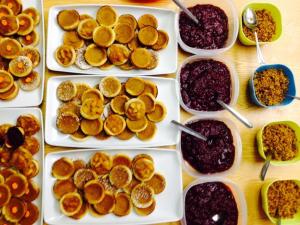
Each  component of this dessert is homemade, nutritious, and thoughtful.

Each component of this dessert is homemade, nutritious, and thoughtful.

She has arrived at a happy medium, she reports. Program participants get their main dish (e.g., pizza, faux chicken nuggets, tomato soup with cheesy toasts, etc.), which is consistently accompanied by sides such as tabouleh, cous cous, warm bean salad, or Waldorf salad as well as the CSA supplementary vegetables and plenty of fresh fruit. “The homemade muffin or granola bar is there only to get more dried fruit and seeds into the kids—not as a treat per se,” says Chef Emma.

Another change is that she now serves lunch in a basket to avoid using so many disposables. “Also, clean-up isn’t so bad and lunch is a bit more fun.” It’s certainly appetizing! Another advantage is that the basket helps kids know what to expect, which is, again, part of Chef’s overall strategy. “When confronted with something they don’t all know, if we repeat it every 2 weeks the year round,” she says, “eventually they’ll grow to like it.”

The repetition is ideal for young kids, but it also presents challenges to the menu creator. “If the foods aren’t locally available because of seasonal changes, I’m going to have to supplement with conventional foods. But I also add in whatever local ingredients are available to balance.” That rolls into her greenhouse curriculum as well. “I want to get more students gardening and cooking.” So, they harvest what’s available and pickle and preserve what they can for these “leaner” months in addition to keeping season-appropriate vegetables and herbs growing all year to supplement the Garden Tuck Shop program. “The plants in the greenhouse are indigenous and perennial, allowing the children to witness the changing of the seasons and to become familiar with the plants they can grow in their temperature zone. We have a fig tree, an olive tree, three grape vines, an asparagus patch, a strawberry patch, a rhubarb patch, blackberry and raspberry brambles, and two blueberry bushes!” They also seasonally plant root veggies like carrots and sweet potatoes, and lettuce, tomatoes, peppers, and cucumbers in spring. Herbs include rosemary, mint, lavender, marjoram, oregano, sage, thyme, and bay laurel leaf. (Parents are welcome to the fresh herbs!)

Her next step was to calculate the exact nutrient content (proteins, carbs, lysine, etc. down to the smallest mineral) of each meal, based on portion size. “I want kids to understand that food is fuel and that’s why nature gives us the food that it does at the time of the year that it does. It’s so we can remain balanced and feel good.”
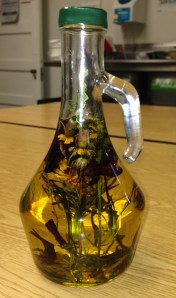
Flavoring oil is just one way Chef Emma makes use of herbs and flowers growing in the greenhouse.

Flavoring oil is just one way Chef Emma makes use of herbs and flowers growing in the greenhouse.

“Cleanest Kids’ Lunch Downtown!”

In early January, she held a seminar for teachers to educate them about each plate, and at a coming TNCS Information Night or Potluck she will also present to parents. “The last couple of years with this program have taught me that it’s all down to communication,” she said. “Success is really about communication, and I don’t want that to fall to the wayside going forward.” We’ll also be learning about how the greenhouse factors in. Classes have been drying herbs and flowers to make potpourris, flavored oils, and bouquets garni, and body scrubs and other products may also soon be available.

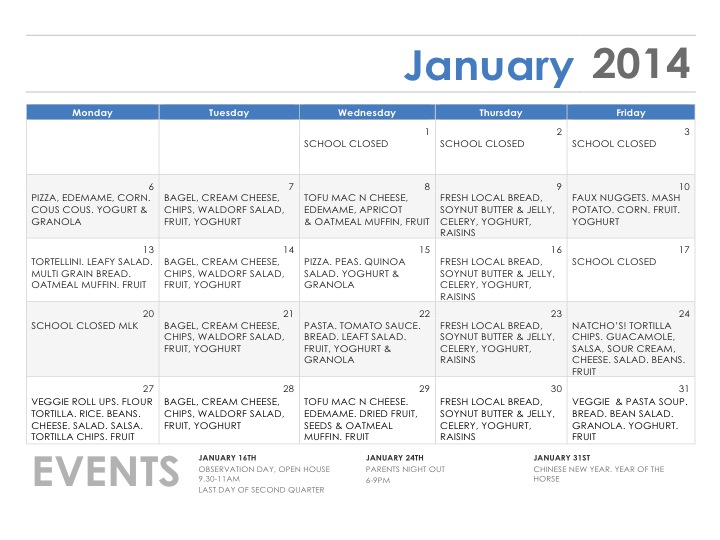
About program participants Chef Emma says, “They’ve been superstars putting up with all of this experimentation, and I think we’ve really gotten to a marketable product.” Typical lunches are faux (soy) nuggets, edamame and corn, organic Greek yogurt, fruit, and milk; spinach and cheese tortellini or ravioli, leafy salad, apricot and banana muffin, fruit, and milk; or bagel with soy nut butter and jelly, celery, raisins, organic Greek yogurt, and milk. See much of the rotating roster of 13 complete lunches, each with a minimum of 24 g protein and 1,925 mg lysine, below. Click Menu: January 2014 to download.
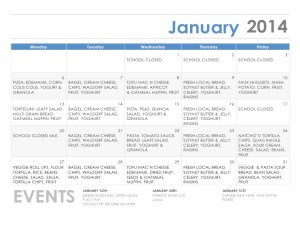
January's menu features most of the 13 available meals. Looks delicious!

January’s menu features most of the 13 available meals. Looks delicious!

Haven’t signed your child up yet? Click here to register for the Garden Tuck Shop program at TNCS!

Like Garden Tuck Shop’s Facebook page to receive updates and photos of Chef Emma’s beautiful, delicious, and healthful lunches!

Composting and collecting rainwater are next on the horizon, possibly this spring!