New Year’s Resolutions TNCS Style

Keeping New Year’s resolutions is notoriously difficult. Some experts advise against making any at all due to the consequent self-loathing that can envelope us once we realize we have failed epically! A new study claims that only 8% of those who make New Year’s resolutions keep them, and those who don’t give up after just 1 week. On the flip side, however, “People who explicitly make resolutions are 10 times more likely to attain their goals than people who don’t explicitly make resolutions.” So do we or don’t we make resolutions?!

We absolutely should (we’re actually hardwired to) . . . but with two key differences. Part of the key is not putting so much emphasis on target dates. Without room to slip, fall, and pick yourself back up, a resolution becomes one of those all-or-nothing pipe dreams with a built-in escape hatch—“I just couldn’t do it. Maybe next year.” Failure and recovery is an inherent part of any worthwhile process, so be realistic about that and don’t let slip-ups completely derail you. “Fail better.” The other difference is in setting small, specific goals instead of grand, sweeping changes. Abstractions such as “lose weight” or “stop smoking” are doomed without a plan in place that provides incremental and achievable daily steps. Ultimately, those small steps will yield the desired result.

Thus, the list below comprises a manageable, realistic, yet worthy set of goals that are universally beneficial. Even better, methods to accomplish each individual goal are also given, taking all of the guesswork out of making 2014 a healthy, happy year!

1. Eat a healthier diet, full of fresh vegetables and fruit: Join One Straw Farm CSA (even if it isn’t a stated goal, you’ll likely drop some pounds in the bargain).

The available bounty ranges from onions, peppers, lettuces, chard, kale, cabbage, broccoli, cauliflower, etc. to herbs—rosemary, oregano, thyme, chives, cilantro, parsley, etc.—and fruit, such as raspberries, strawberries, watermelon, and gorgeous varieties of heirloom tomatoes. . . Starting in June and running through November, on a set day of the week, “shareholders” get 8 pieces of 3–6 items, primarily vegetables . . . for about $24 per week.

2. Read more: Spend 20 minutes reading with your kids before bedtime (as well as curl up with your own reading material before lights-out). The benefits are varied and far-reaching . . . and what better way to close out the day?

[A study shows] that math and reading ability at age 7 years are linked with socioeconomic status (SES) in adulthood. Interestingly, although math and reading ability was also significantly associated with intelligence scores, academic motivation, and education duration, the association with later SES was independent of the family’s SES during childhood. Moreover, the researchers were not expecting to find that specifically math and reading ability were more important than general intelligence in determining SES. In other words, what we’re born with and what we’re born into may not be as important as what we learn in second grade. [The] findings emphasize the importance of learned skills. What this boils down to is really good news for students—the return on improving these skills at all levels is huge, from remedial to the most gifted. “Math and reading are two of the most intervention-friendly topics,” [researchers] say. “Practice improves nearly all children.”

3. Hone math skills: Spend 15 minutes playing math games with the kids before bedtime (like the TNCS Facebook page for games you can play at home to dovetail with Ms. Roberts’s work in class). You may be surprised at how these simple exercises improve your own day-to-day efficiency and obviate that smartphone calculator!

STEM is all over the media, and with good reason. STEM subjects are inherently investigative in nature, cultivating self-guided exploration and producing a greater understanding of the physical world. Ms. Roberts says, “STEM is important for everyday life; for example, we use math at the grocery store and at the bank. And science explains how the world works.” Another appeal of early STEM learning is the downstream payoff. Recently, NPR did a Planet Money story about what job fields yield the highest incomes. In “The Most (And Least) Lucrative College Majors, In 1 Graph,” STEM came out almost scarily far ahead (that discrepancy is another story). The focus of other media coverage is the nation’s big move to catch up to other developed countries, whom the United States currently lags far behind in depth and breadth of STEM education.

4. Get more sleep: Impose a consistent bedtime (for kids’ and parents’ improved overall health).

“Sleep is no less important than food, drink, or safety in the lives of children.” And yet, with our busy lives and comings and goings, we can inadvertently contribute to sleep deprivation in our kids. “With parents working long hours, schedules packed with school, after-school activities, and other lifestyle factors, naps are missed, bedtimes are pushed back, mornings start earlier and nights may be anything but peaceful. Missing naps or going to bed a little late may not seem like a big deal, but it is. It all adds up, with consequences that may last a lifetime.”

5. Be more altruistic: Donate to local and international charities through TNCS’s food, clothing, and dime drives.

Howsoever you decide to share your wealth, remember that you will actually derive personal benefit from your selflessness—a beautiful paradox! Being altruistic is a  recognized happiness inducer!

6. Be more environmentally conscious: Join Clean Currents (bonus—you’ll actually save money on your power bill).

The most obvious benefit to wind energy is its environmental friendliness. “Windustry” ameliorates climate change by not only providing a non-polluting source of energy but also by displacing the greenhouse gas emissions that have already polluted the atmosphere from conventional power. But there are other tremendous advantages, too. By reducing our dependence on fossil fuels, for instance, clean energy also makes us less vulnerable as a nation to the vagaries of the international oil market . . . and to the associated security risks. Moreover, ever-renewable wind is a cash cow for farmers. Wind farming almost effortlessly generates considerable income without taking up land needed for crops as well as creating jobs and boosting the economy.

7. Learn a foreign language: Practice Words of the Week with the kids, and read the monthly classroom newsletters. Words of the Week are posted each Monday on both The New Century School website (during active school semesters) and on TNCS’s Facebook page (with pronunciations). Stay tuned for a blog post this month dedicated to other ways you can learn Mandarin and Spanish along with your kids at home!

8. Get more exercise: Take a class at Sanctuary Bodyworks while the kids are downstairs at The Lingo Leap. People who exercise are not only in better physical shape, they are also more cognitively and emotionally fit.

Exercise dramatically enhances circulation to the brain and encourages synaptic growth, thereby priming the brain for improved function—providing the “spark,” in other words. Improvements in function include both mental health as well as cognitive ability.

9. Make mornings less stressful:  Sign up the kids for the Garden Tuck Shop lunch program. As if you don’t have enough to do in the mornings—why not let somebody else provide your child with a wholesome, nutrition-packed homemade hot lunch? Even better many ingredients come from TNCS’s on-premise greenhouse, and all others are locally sourced.

You grow in the same environment as your food, so you have a divine connection. Your children and your plants are growing under the same sun and being touched by the same wind, seeing the same clouds and the same moon. The plants growing in your environment have withstood those particular elements. They are perfectly engineered by nature to be exactly what you physically need, right now.

10. Volunteer!: Complete your volunteer hours. Another way to connect with your community is to give something back to it.

Volunteering at TNCS is not a burden; it’s a pleasure—no, an opportunity, a gift even. It’s a chance to be deeply involved in your children’s day-to-day school lives, to connect with them on their turf, and to see and experience what’s going on in their lives from their points of view, all while providing a service to the school. There’s nothing so reassuring in parenting than to get proof that your child is happy and flourishing even when you aren’t there.

So go ahead—pick one (or several) and reap the fruits of your labor. Just don’t get discouraged by bumps in the road. We’ve got all year!

The ABCs of ZZZs at TNCS

Looks nice, huh?

Looks nice, huh?

Sleep. That beautiful, elusive state of dormant consciousness we just can’t get enough of. As adults, many of us enjoy a torrid relationship with sleep: desiring it mightily, while in return, it plays hard to get.

But for kids, sleep is not something to flirt with. Say doctors writing for WebMD, “Sleep is no less important than food, drink, or safety in the lives of children.” And yet, with our busy lives and comings and goings, we can inadvertently contribute to sleep deprivation in our kids. “With parents working long hours, schedules packed with school, after-school activities, and other lifestyle factors, naps are missed, bedtimes are pushed back, mornings start earlier and nights may be anything but peaceful. Missing naps or going to bed a little late may not seem like a big deal, but it is. It all adds up, with consequences that may last a lifetime.”

This dire pronouncement is no exaggeration, as more and more research on the importance of sleep illuminates. In Healthy Sleep Habits, Happy Child, Marc Weissbluth, M.D., writes,

“Sleep is the power source that keeps your mind alert and calm. Every night and at every nap, sleep recharges the brain’s battery. Sleeping well increases brainpower just as weight lifting builds stronger muscles, because sleeping well increases your attention span and allows you to be physically relaxed and mentally alert at the same time. Then you are at your personal best.”

Sleep Tight

We all have our sleep triggers. This baby girl gets to sleep with--and on--a pacifier.

We all have our sleep triggers. This baby girl gets to sleep with–and on–a pacifier.

According to the National Sleep Foundation, here are the recommended number of hours per age group.

  • Toddlers: Kids ages 1–3 years need about 12–14 hours of sleep in a 24-hour period.
  • Preschoolers: Kids ages 3–5 years need about 11–13 hours of sleep in a 24-hour period. Most do not nap after age 5.
  • School-aged kids: Kids ages 5–10 years need about 10–11 hours of sleep in a 24-hour period.

In addition to sleeping in sufficient amounts, sleep should have certain other important characteristics. Sleep should be:

  • uninterrupted to allow the child to cycle through all sleep stages, which is important for brain development;
  • timed correctly and with the right number of age-appropriate naps, which will optimize the child’s alertness; and
  • in sync with the child’s circadian rhythms.

Golden Slumbers

Healthy sleep will provide the necessary foundation for your child’s optimal mind and body development. Although it may seem counterintuitive to trade your budding genius’s classroom time for sleep, the opposite is true. In fact, check out these sleep stats (compiled from multiple sleep studies):

  • Children who sleep longer during the day have longer attention spans.
  • Children with higher IQs sleep longer.
  • Toddlers who sleep more are more sociable and less demanding, whereas those who sleep less can exhibit hyperactivity.
  • Sleeping more helps children with attention deficit/hyperactivity disorder both socially and academically.
  • Healthy sleep enhances neurologic development and can prevent both learning and behavioral problems.

The New Century School takes naptime seriously. All preprimary and primary kids either nap or have a resting (quiet) period every day. Naptimes are consistent, and so are the rules. Our kids are healthier and happier for it—and they are learning the good sleep habits that will keep them that way throughout their adult lives.

Speaking of adults, healthy sleep is essential for us, too. The Harvard Medical School gives us the following inducements to grab some zzzz’s:

  • Learning and memory: Sleep helps the brain commit new information to memory through a process called memory consolidation. In studies, people who’d slept after learning a task did better on tests later.
  • Metabolism and weight: Chronic sleep deprivation may cause weight gain by affecting the way our bodies process and store carbohydrates, and by altering levels of hormones that affect our appetite.
  • Safety: Sleep debt contributes to a greater tendency to fall asleep during the daytime. These lapses may cause falls and mistakes such as medical errors, air traffic mishaps, and road accidents.
  • Mood: Sleep loss may result in irritability, impatience, inability to concentrate, and moodiness. Too little sleep can also leave you too tired to do the things you like to do.
  • Cardiovascular health: Serious sleep disorders have been linked to hypertension, increased stress hormone levels, and irregular heartbeat.
  • Disease: Sleep deprivation alters immune function, including the activity of the body’s killer cells. Keeping up with sleep may also help fight cancer.

In October, a new U.S. study hypothesizes a new benefit to sleep, one that begins to explain why we and, in fact, every animal on earth (some up to 20 hours a day!) and even some primitive life forms like nematodes, evolved requiring sleep. In Sleep Drives Metabolite Clearance from the Adult Brain, researchers report that when we sleep, cerebrospinal fluid washes through the brain, flushing out built-up debris. “I think we have discovered why we sleep,” the study leader Maiken Nedergaard said. “We sleep to clean our brains.” The mechanism sounds kind of like MacKeeper for your head. At any rate, it’s a very cool theory.

What time we go to bed also makes a difference. You may have heard that every hour you sleep before midnight counts double? It’s not a myth. The underlying physiology probably has to do with hormones and metabolism, says Susan R. Johnson, M.D. in The Importance of Sleep.

Need any more convincing? Thought not. Now go get some rest—you probably need it. Smiles await you when you rise.

TNCS Makes Strides Against Breast Cancer

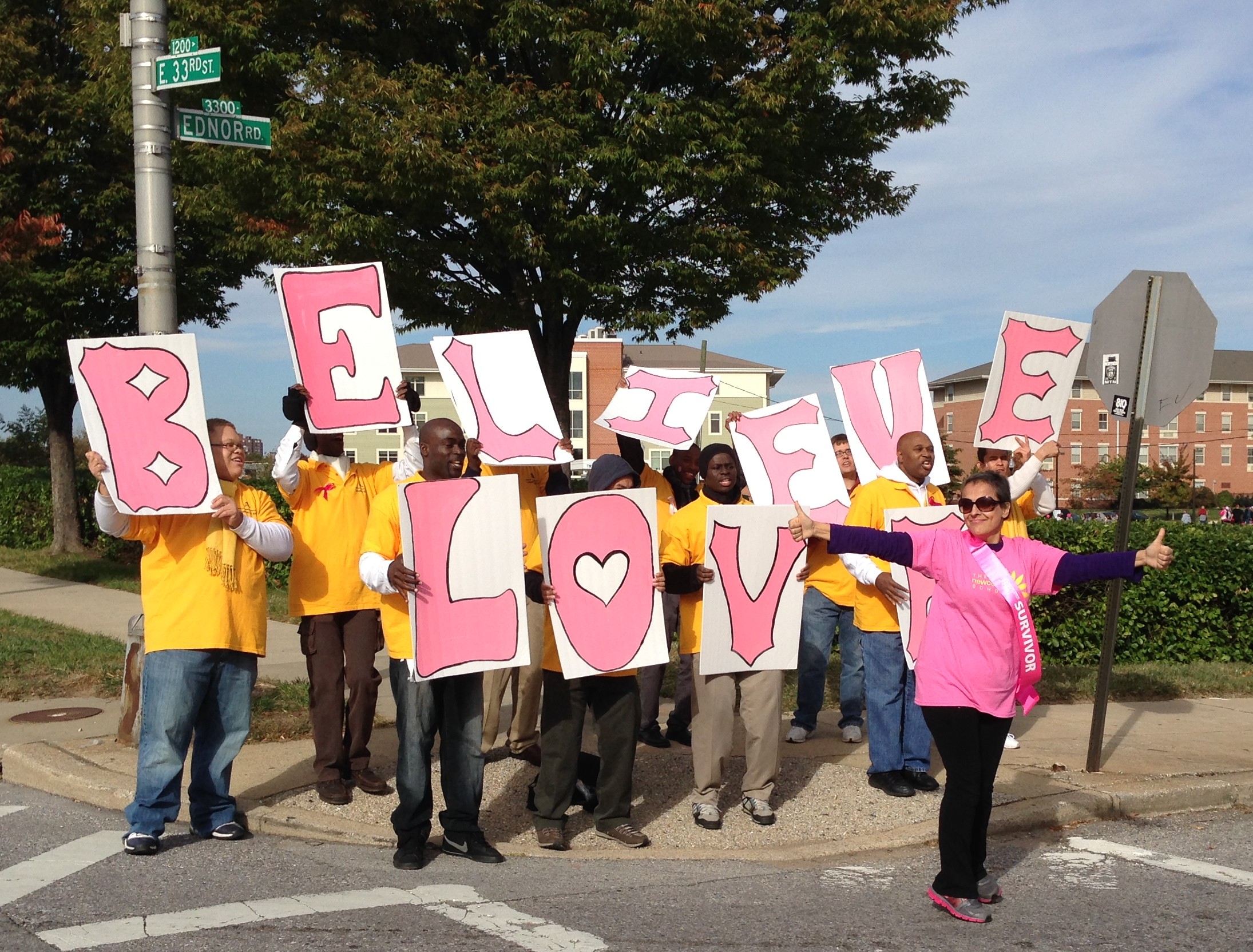
Wearing our TNCS tee-shirts, team TNCS poses for a quick snap before heading out on the trail.

Wearing our TNCS tee-shirts, team TNCS poses for a quick snap before heading out on the trail.

Breast cancer is a scourge that has affected nearly everyone on the planet, whether directly or indirectly. On Sunday, October 27th, The New Century School, represented by Team TNCS, joined the walk to raise money for breast cancer research as part of an ongoing commitment to our school, Baltimore, and global communities. The event had 6,000 walkers and raised $400,000 and counting. Our team pledged to raise $5,000 of that number and we’ve raised just over half of our targeted amount so far.

Held at the Harry and Jeanette Weinberg Y at Stadium Place, the event was inspirational on so many levels. Seeing so many survivors taking part, looking hale and hearty, and beaming with happiness reduced scores of participants to tears. Baltimore was a sea of pink along the 4-mile trail. Even the weather seemed determined to cooperate—walkers could not have asked for a more pleasant day of warmth and sunshine.

Did You Know?*

  • In 2013, an estimated 232,340 new cases of invasive breast cancer are expected to be diagnosed among U.S. women and 2,240 in U.S. men (and an estimated 64,640 additional cases of in situ breast cancer).
  • Approximately 39,620 U.S. women and 410 U.S. men are expected to die from breast cancer in 2013.
  • Breast cancer is the second deadliest cancer for women (only lung cancer accounts for more).
  • 1 in 8 women will be diagnosed with breast cancer.
  • The most significant risk factors for getting breast cancer are being female and getting older.
  • One case of breast cancer is diagnosed every 2 minutes, and one woman will die of breast cancer every 13 minutes in the United States.
  • Only 53% of U.S. women 40 and older reported having a mammogram in the last year.

 . . . And the Good News*

This photo needs no caption. . .

This photo needs no caption. . .

  • There are 2.9 million breast cancer survivors alive in the United States today—the largest group of all cancer survivors.
  • About 80%–90% of breast cancers in U.S. women without symptoms will be detected by mammography.

*Statistics collected from the American Cancer Society and the Susan G. Komen Foundation.

It’s not too late to donate, folks. Click here to show your support for this worthiest of causes. (Note: Click on “sign up,” then “join a team,” and then search the team name “TNCS.”)

Bagging Bagged Lettuce

The perils of bagged lettuce have been all over the media this year; in 2012, a debate raged on whether to rewash or not to rewash bagged lettuce. Now, some recent NPR coverage has brought this issue back to the forefront. So with lettuce season upon us, this seems like a good time to show some gratitude for the fresh produce that The New Century School community has access to, both from One Straw Farm’s CSA for families at home and from Chef Emma Novashinki’s Garden Tuck Shop Program for school lunch. “Lettuce rejoice!”

Salad washed & ready to eat . . . 2 weeks ago!

Salad washed & ready to eat . . . 2 weeks ago!

You might be thinking, “Pshaw. Prepackaged lettuce is so convenient—it’s already washed and ready to go! I have a full time job, already!” But if you’ve ever opened that Mixed Herb Salad with a use-by date several days in the future only to be choked by the smell of decomposing greenstuff, then you know that those bagged or boxed greens were actually harvested a good 2 weeks or more prior to your purchase. The waste of money aside, rotting lettuce tastes terrible and robs you of the significant health benefits you’d be reaping from fresh produce. So, really, what’s the point? The would-be convenience is negated by the glaring disadvantages. And, if you bother returning your rotten package to the grocery store, you haven’t even actually saved any time by not having to wash your lettuce yourself. However, the real shocker is, the triple-washing that prepackaged lettuce companies conscientiously implemented (to their credit) after the 2006 Escherichia coli outbreak probably doesn’t remove those intractable pathogens trapped just below the leaf’s surface that can make us really sick. Then there are the pesticides in nonorganic varieties. Although triple-washing probably removes the majority of chemicals, considering that lettuce is one of the most chemical-intensive crops, there’s likely some residue left behind (your chances of achieving cleaner lettuce are better at home, leaf by closely scrutinized leaf). To boot, triple-washing is enormously costly and a considerable drain on already scarce water resources in the nation’s biggest lettuce-producing areas like southern California.

Cleaner, healthier, tastier---no contest.

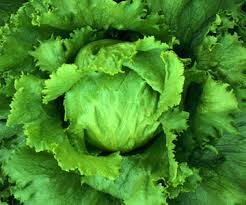
Cleaner, healthier, tastier—no contest.

Let’s get back to the health benefits of fresh lettuce. Buying a head whole and washing and prepping it yourself at home halts the nutrient-loss process. Turns out, lettuce and spinach are among those superfoods we should all be consuming in vast quantities but that almost immediately on picking begin to lose antioxidant content. According to Eating on the Wild Side: The Missing Link to Optimum Health author Jo Robinson, they should be on your refrigerator’s “Eat Me First” list. Moreover, doing the prep work yourself actually makes your lettuce healthier! “If you take your lettuce right from the store and rinse it and dry it and then, if you rip it into bite-sized pieces before you store it, you’re going to increase the antioxidant activity … fourfold. The next time you eat it, it’s going to have four times as many antioxidants.” Ms. Robinson recently appeared on Fresh Air; read more of the transcript here.

So, thank you, thank you, thank you TNCS for providing access to fresh, local produce both in school and at home. Now where did that darn salad spinner get to?

Unrelated, but definitely summery!

Unrelated, but definitely summery!

Check out this clever (okay strange) way to preserve fresh greens longer here.

Meet Dave, the friendly Bag O’Lettuce frog here (not joking).