Breaking Down the GMO Issue: Some Earth Day Musings

With Earth Day less than 2 weeks away, media coverage of all things environmental is really heating up. Among the widely covered controversies this past week is the issue of genetically modified organisms (GMOs). From the Washington Post to the New York Times, GMO foods and crops are the environmental topic du jour.
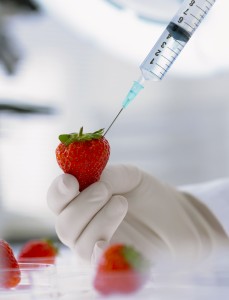
Lab-berry

Scientists modify the genes of seeds, fruits, and vegetables to produce new strains.

Whether you are for or against GMOs (or are even blissfully unaware that a controversy rages about them), nearly everyone can agree that we need to know more about them. To date, research on their downstream effects on the environment—and on us!—has been sorely lacking. Claims on both sides of the debate abound. The proponents argue that GM corn, soy, rice, etc. can help end world hunger and are perfectly safe for consumption; the opponents rebut that those full bellies will come at the cost of mass infertility/sterility or who knows what reproductive, physiologic, or neurologic impairments. Scientists issue warnings, retract them, then retract the retractions. Meanwhile, as much as 70% of the food stocked on grocery store shelves already contains GMOs.

Because Earth Day is a very important day at environmentally conscious The New Century School, let’s look at some GMO-related current events as well as rationally view the issue from both sides of the corncob.

Why We Have GMOs in the First Place

The Monsanto stance (and that of other GMO-using companies such as Nestle, PepsiCo, etc.) is that they are using biotechnology as well as sustainable agricultural practices to produce enough food for the globe. Billionaire philanthropist Bill Gates himself supports this practice.

Papaya superfood

With the help of genetic engineering, certain strains of papayas have become resistant to viruses that threaten their extinction.

Arguably one of the main goals of genetic modification is to produce disease-resistance traits. Some say that genetic engineering saved the papaya from possible global extinction due to the particularly virulent ringspot virus. Papaya is a superfood and a vitally important source of vitamins and nutrients for many tropics dwellers. Its loss would be catastrophic.

Others have argued that the environment and the economy also benefit. GMO crops can be engineered to reduce stress on the environment, and farmers can rest assured that the GMO crops they have grown will find a buyer in GMO companies (or even be subsidized by them).

Click here for a list of other potential GMO benefits.

Kernels of Truth

Thus, GMO food companies’ aims are, at least on the face of it, laudable. The issue gets stickier and the truth harder to zero in on, however, when we learn that the U.S. Food and Drug Administration (FDA)’s approach with these companies so far has been seemingly laissez faire, leaving the onus of ensuring a food’s safety on the food producer, according to the FDA’s Statement of Policy on genetically modified and other new plant varieties.

And stickier still when we consider that genes operate far beyond our ken. They switch on and off, mutate, and behave in often confounding ways we are still uncovering. Only time will tell what implications the wiliness of genes (i.e., those that were lab derived instead of occurring naturally) has in and for our foods. So what’s the regulatory holdup?

First there was Big Tobacco, then there was Big Soda, now . . . Big Soy?

Or so say the members of the growing resistance movement to GMOs. They claim that food policy in the United States is plagued by croneyism—that it’s being underwritten by the Monsanto company, the very company that sells GMO foods and remains one of the biggest makers of genetically modified seeds. They say that Monsanto has such entrenched political muscle that passing any legislation that might in any way hurt the company bottom line (e.g., requiring that GMO food be labeled as containing GMOs) will be as uphill a battle as was the decades-long fight against tobacco companies like Phillip Morris to cease aggressive marketing even in the face of incontrovertible evidence that smoking kills. So, as federal and state governments work to establish policy on GMOs, GMO opponents say that Monsanto is actually controlling this policymaking by, among other things, removing “whistleblowers.” According to one California dietician working on such a policy panel for the Academy of Nutrition and Dietetics, when she pointed out in February that two other panelists had clear links with Monsanto, she was dismissed. Read the full New York Times story here.

Truth in Labeling
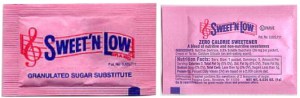
Sweet 'n Low

Chemicals such as saccharin that some studies have suggested cause cancer are labeled on this packet.

Back to labeling GMO foods—which the European Union has required for more than a decade—what’s the big objection, ask many? It’s as if GMO companies are afraid that if we know what’s in the foods made with GMOs, we’ll stop buying them. Or that naming the ingredients implies that they are potentially harmful. But whether it’s safe or unsafe, don’t we have the right to know what we’re eating? Shoppers know what’s in Sweet ‘N Low (another Monsanto product, incidentally) thanks to the label, and restaurants still stock it and consumers still use it aplenty. The point is that they can choose not to ingest it and perhaps opt for a more natural alternative or they can disregard all of the conflicting reports about saccharin and dump it in their coffee all day long because they are informed.

Occupy Monsanto is a group dedicated to raising awareness about GMOs. Although their ultimate goal is probably the complete eradication of GMOs, they have spawned other less radical movements as well such as the “eat-in” in front of the College Park, MD FDA offices earlier this week. Demonstrators gathered there to make their thoughts about GMOs known, encourage the FDA to require GMO labeling, and cook and eat a big pot of “stone soup” (just like what TNCS primary students collaboratively cooked up last November to celebrate Thanksgiving), each contributing an ingredient that was most certainly not genetically engineered. It was about as wholesome a protest as we’re likely ever to see, especially for such a polarizing issue. Read the full Washington Post story here.
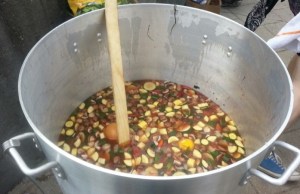
Eat-in protestors gently demonstrated their disapproval of GMOs by cooking soup with homegrown ingredients. No tear gas required!

Eat-in protestors gently demonstrated their disapproval of GMOs by cooking soup with homegrown ingredients. No tear gas required!

For more about what GMO opponents say against GMOs, read this.

Bringing it Home

Not surprisingly, considering the ferocity of this battle, many of us are either hopelessly confused or just plain undecided which side of the issue we fall on due to the paucity of long-term empirical data. A couple of things still seem crystal clear, however, and those are that labeling GMO foods seems logical (not to mention ethical) because we have a right to know what we’re eating (whether we choose to pay attention or not) and that lots of full-scale studies on the effects of GMOs must be conducted.
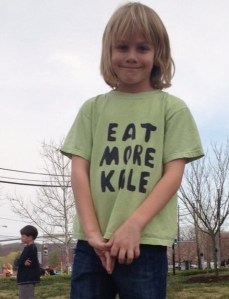
EAT MORE KALE

This handsome young GMO protestor at the College Park “eat-in” urges us to eat more kale :).

In the meantime, TNCS families can keep well out of the fray if they so prefer. With the Garden Tuck Shop Program for student lunches, for example, kids eat locally sourced, largely organic fruits, veggies, and baked dishes from Chef Emma Novashinski’s thoughtfully and lovingly constructed menus. At home, parents can also avail themselves of locally grown, Food Alliance–certified produce by joining the One Straw Farm CSA. Weekly shares can be picked up right at TNCS with a total of 10 enrollees (we currently have 6!). Please join here!

Have a comment, correction, anecdote? Please let us know how you feel about this issue.

And, oh yeah! Happy Earth Day on April 22nd!
Community-supported Agriculture and TNCS

The New Century School families recently got an email from Chef Emma Novashinski, detailing a CSA (community-supported agriculture) share program offered by One Straw Farm in Whitehall, MD. This is TNCS’s second year participating in the CSA; Chef Novashinski is hoping to garner enough support to make TNCS a drop-off point again in 2013. TNCS needs a total of 10 shares to be a drop-off location, and One Straw Farm throws in a bonus share for the school to use if we make that number. Chef Novashinski relies on locally sourced produce in her school lunch program, so the extra share would go right into TNCS students’ tummies! Visit her Garden Tuck Shop facebook page to see a gallery of her marvelous lunches.

Why CSA? 

For readers unfamiliar with what CSA is and how it works, Wikipedia defines it as, “an alternative, locally-based economic model of agriculture and food distribution . . . CSA members or subscribers pay at the onset of the growing season for a share of the anticipated harvest; once harvesting begins, they receive weekly shares of vegetables and fruit [etc.] . . .” Or, as the very funny and very quotable Joan Norman (co-owner of One Straw Farm with husband Drew) boils it down, “You give me money, and I give you food.” Paying for this food subscription service up front tells the farmer how much to plant, thereby reducing waste and keeping the farm solvent. The customers save money and eat more “vegetables, glorious vegetables” than they otherwise might. Everybody wins.

And then there’s the contrast between most grocery store produce and locally sourced produce. Consider that produce grown in California might get picked on a Monday, crosses the country and lands in the supermarket Friday, gets put behind the older goods already on the shelf Saturday, and is eventually purchased by you the following Monday or so. By the time it reaches your refrigerator, the two qualities we look for in food have been degraded dramatically—the taste and the nutritive content. All of which begs the question, why are we eating this??? CSA, on the other hand, is as fresh as you’re going to get (unless you’re growing it yourself), with flavor and nutrients at their peaks.

Chef Novashinski adds a couple more dimensions to this issue. She strongly believes that what is growing in your particular environment is what is best for you to eat. So, if it’s rhubarb and asparagus being harvested in central Maryland now, that’s what central Marylanders should be eating. Leave the corn and tomatoes for summer, when they’re in season here. She is also personally a shareholder. “I like it,” she says, “because I already eat local food, but this way I get my Saturdays back. I don’t have to go to the Farmer’s Market, I can go to the pool. They’ve picked the best stuff for me.” Very practical!

Why One Straw Farm?

One Straw Farm

One Straw Farm

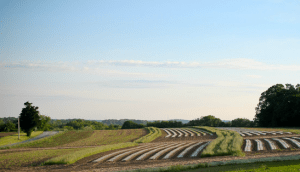
Located on 350 gently rolling acres near the Maryland/Pennsylvania border, One Straw Farm is Food Alliance certified since 2010, meaning that they adhere to sustainability standards and guarantee food integrity (i.e., no genetically  engineered or artificial ingredients) and is the largest such vegetable farm in Maryland. They boast some prestigious customers, too, on the basis of these important principles. Popular farm-to-table Baltimore restaurant Woodberry Kitchen is one, and the relationship seems to be working out quite well for them. (In fact, it was announced this month that chef and owner Spike Gjerde is the only Baltimore chef to become a 2013 James Beard Award Finalist. The winner, chosen from an elite pantheon of only five mid-atlantic chefs, will be announced May 6th. Go Spike!)

Says Joan Norman: “If you learn nothing else, know where your food comes from. I’m liable to the people who buy my food. I will grow you the safest food I can.”

The Deets on the Beets

The available bounty ranges from onions, peppers, lettuces, chard, kale, cabbage, broccoli, cauliflower, etc. to herbs—rosemary, oregano, thyme, chives, cilantro, parsley, etc.—and fruit, such as raspberries, strawberries, watermelon, and gorgeous varieties of heirloom tomatoes.

Greenhouse veg

These vegetables are started in the greenhouse and transplanted to the fields 6–8 weeks later.

Starting in June and running through November, on a set day of the week, “shareholders” get 8 pieces of 3–6 items, primarily vegetables (for example, 1 head of lettuce, 3 cucumbers, 1 watermelon, a bunch of herbs, and maybe a few tomatoes). This year we get an extra week, totaling 25 weeks of locally, sustainably grown produce. The cost is $600 (remember to sign up early next year to receive a discount), which is only $24 per week. CSA makes eating right so easy; click here for a chart of what’s harvested when.

Becoming a Shareholder

If you’re like many of us, you might be wondering how you could manage a weekly share in your household. Common questions are: What if I don’t like what I get? Can I possibly eat all that produce each week? After thinking hard about purchasing a share myself, this writer just had to see the farm and learn about CSA from those experienced in this business. So, a day after Baltimore’s surprise Spring snowstorm, I drove up to One Straw Farm to meet Joan and Drew as well as my future food. Joan drove me around in a four-wheeler and showed me everything, “from the ground up,” as it were. It was amazing. We munched red leaf lettuce growing right at our feet, smelled handfuls of rich black compost (surprisingly pleasant!), and talked farming. We were often accompanied by Easy, one of the Normans’ Labrador Retrievers, whose favorite toy is a bucket. Easy and bucket must come in very handy at harvest time.

I learned that unbeknownst to the Normans when they bought the farm back in 1983, the land had once belonged to Drew’s great-grandfather. Talk about serendipity! I learned that the name One Straw Farm derives from the book One Straw Revolution, a manifesto that unites the practice of sustainability with the philosophy of common sense by a Japanese scientist-turned-farmer. I also learned that the 75–80 acres of food crops are lovingly hand-tilled at least once each year. Their full-time crew consists of between 20 and 25 people, most of whom are more like family than employees. But the, uh, “meat” of the conversation was veggies. “I love growing food for people,” says Joan. “I love helping kids eat vegetables and giving them that advantage.”

Tricks of the Trade

Both Joan Norman and Chef Novashinski also have plenty of helpful tips for how to use your share. There are lots of creative recipes on the One Straw Farm website, for example, for dishes like Kale Enchiladas (the kale is the wrapper—ingenious!). Chef Novashinski also encourages getting creative when you find yourself with leftover produce. You can add a little sugar and vinegar to almost anything and make jams, jellies, chutneys, or piccalillies, she says. “Instead of wasting it, experiment with it—what have you got to lose?” Other suggestions are to make juices and to “share your share”: give food gifts to your friends and family. The bottom line is, she says, “access to organic, home-cooked food is better for us.”

TNCS needs just four more sign-ups to qualify as a drop-off site. Sign up for your share here (make sure to mention that you’re associated with TNCS) or email Chef Novashinski.

Green Neighborhood Energy Challenge: TNCS Update

It’s a good week for clean energy. It started off with President Obama pledging renewed attention to clean energy in his State of the Union address:

“Today, no area holds more promise than our investments in American energy. After years of talking about it, we’re finally poised to control our own energy future . . . We have doubled the distance our cars will go on a gallon of gas, and the amount of renewable energy we generate from sources like wind and solar — with tens of thousands of good American jobs to show for it . . . And over the last four years, our emissions of the dangerous carbon pollution that threatens our planet have actually fallen.”

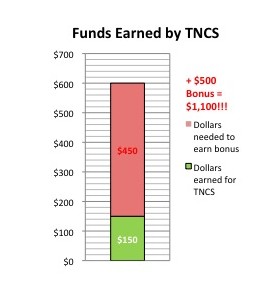
Then we heard that the ozone hole has shrunk to a record low. And, the week is closing with The New Century School’s own continued commitment a little closer to home. In TNCS Launches Green Neighborhood Energy Challenge, we detailed Clean Currents’ initiative to spread the green with GNEC. Having switched both TNCS and The Lingo Leap to 100% wind and solar power, they are now helping local families also switch over. GNEC brings 100% renewable, sustainable energy into your home. Plus, for every family who makes the switch, Clean Currents donates $30 to TNCS for their use in a school initiative of their choice and, with just 20 enrollments, Clean Currents will donate an additional $500 to TNCS!

What is that school initiative? Alicia Cooper-Danyali, TNCS Head of School, says, “The donation from Clean Currents for each family that signs up for Wind Power will be used toward a sound and lighting system for Building North.” Exciting news indeed!

So, How Are We Doing???

Well, today, February 15th is the exact midpoint of the GNEC, which began January 15th and runs through March 15th. So far, 5 households have made the switch. That’s great progress, but we can do better—for our families, our school, and our environment.

To make this process even easier, Clean Currents’ representative Emily Conrad is attending TNCS’s potluck tonight, where you can sign up on the spot. “There are only 4 weeks left in TNCS’s Green Neighborhood Challenge!” says Mrs. Cooper-Danyali. “Clean Currents will be at the potluck to answer any questions you might have and help you sign up for wind power at home. Please remember to bring your electricity bill or BGE Electric Choice ID (10 digit # on the top left of the 2nd page of your bill).”
Did you know that you can calculate your household’s carbon footprint with this online tool? You might be surprised by the amount of greenhouse gases you generate. One big step you can take to reduce this footprint is by converting your household to clean, renewable energy.

TNCS Launches Green Neighborhood Energy Challenge

Exciting events are already afoot at The New Century School in 2013, a mere 2 weeks into the year! As reported last November, it’s time to kick off TNCS’s Green Neighborhood Energy Challenge (GNEC), sponsored by TNCS’s new green energy supplier, Clean Currents. By the way, Clean Currents was the December 2012 recipient of the Green America’s People & Planet award for their clean energy innovations and community-minded business operations—Congratulations Clean Currents!

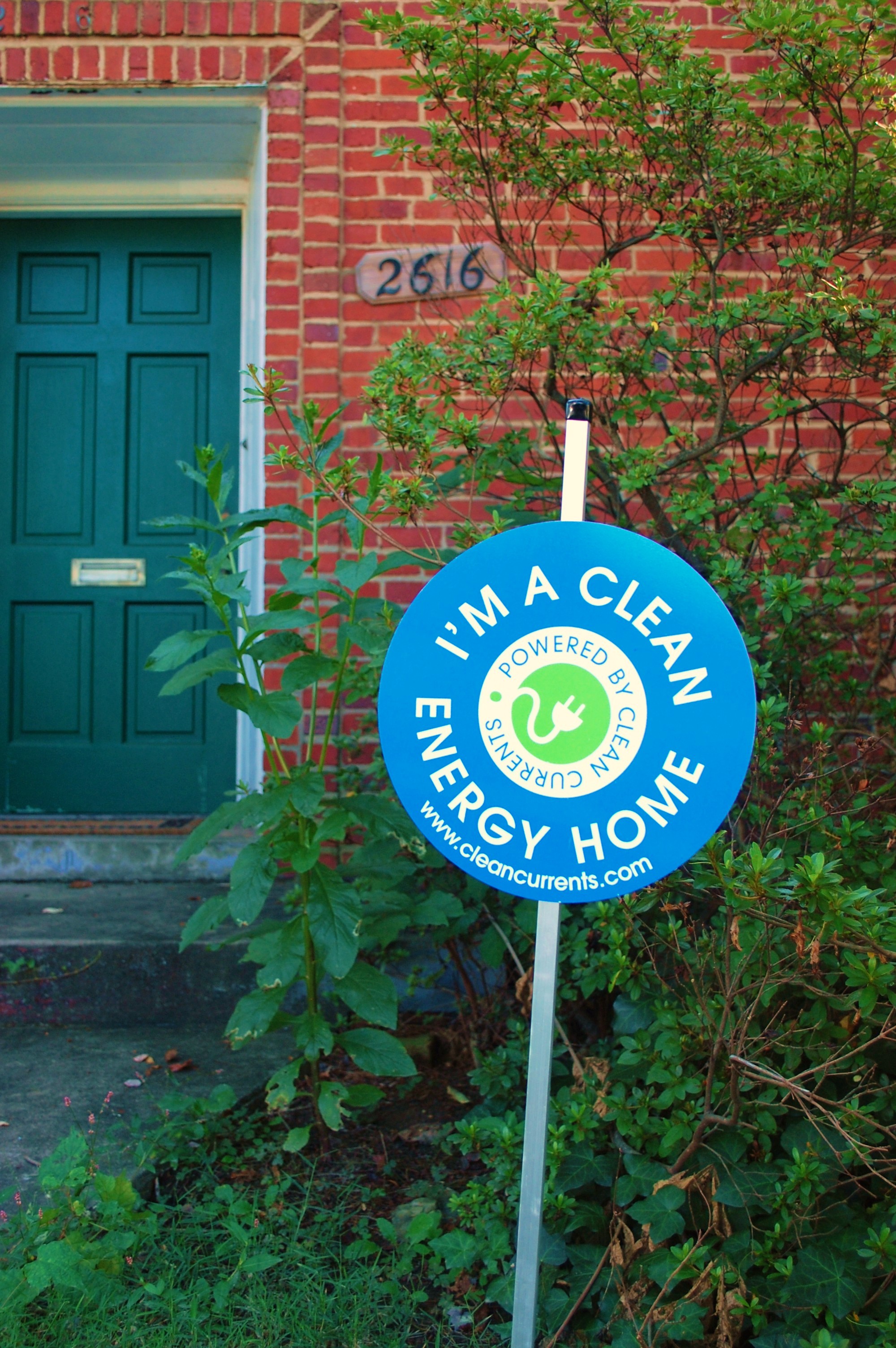
yard sign proclaiming sustainable energy use

Join the Green Energy Neighborhood Challenge and clean up your home’s energy source!

Profiled in this blog in Blown Away with Wind Energy, Clean Currents is a local, independent green energy company, supplying TNCS and other commercial customers with wind and solar power options. In fact, TNCS and the Lingo Leap have been running on 100% wind power since October. Now, it’s time to bring it on home. Starting Monday, January 14th and running through Friday, March 15th, TNCS is partnering with Clean Currents during the Green Neighborhood Challenge to bring clean energy to you.

What is the Green Neighborhood Energy Challenge?

GNEC is Clean Current’s community engagement program. Since 2008, more than 150 Maryland and D.C. communities, schools, groups, and environmental non-profits have participated in GNEC, and, in 2013, Clean Currents is expanding into PA. The program provides both education about why sustainable energy is so important and the support for actually switching to wind power, all while raising money for local green projects. In other words, it brings 100% renewable, sustainable energy into your home. Plus, for every family who makes the switch, Clean Currents donates $30 to TNCS for their use in a school environmental initiative of their choice.

Benefits Galore

Sounds too good to be true, right? It isn’t. Sounds like a lot of effort, expensive, and time-consuming? It’s none of those either. By enrolling in TNCS’s GNEC online, families will see a line item on the power bill they are already accustomed to receiving each month. This line item is not an additional charge, it just means that the money you are putting toward energy suppy is going exclusively to fund wind power production (not power sourced from dirty and carbon-intensive fossil fuels). The charge is right around the same cost (give or take a few tenths of a cent, depending on the particular service) as, for instance, Baltimore Gas & Electric’s current charges. Even better, while BGE and other power companies’ rates fluctuate with the market and also throughout the day (i.e., peak-hour usage costs more than off–peak-hour usage), Clean Currents’ energy rates are fixed; rates are quoted in 12- and 24-month increments. The online enrollment process takes no more than a few minutes, and, once that’s complete, Clean Currents takes over. Your energy bill will reflect the changes within one or two meter readings. There’s nothing to install, and there are no hidden or additional fees.

And, again, TNCS gets $30 for every household who makes the switch! Note: this opportunity is not limited to TNCS-enrolled families. Anyone who wants clean, green energy can join the GNEC . . . but do please mention TNCS on the enrollment form!

Says Emily Conrad, Clean Currents Community Outreach Coordinator, “Our hope is that the Green Neighborhood Challenge will provide an excellent platform to bring The New Century School community together and empower both the students and their families to positively and quantifiably contribute to the school and the planet.”

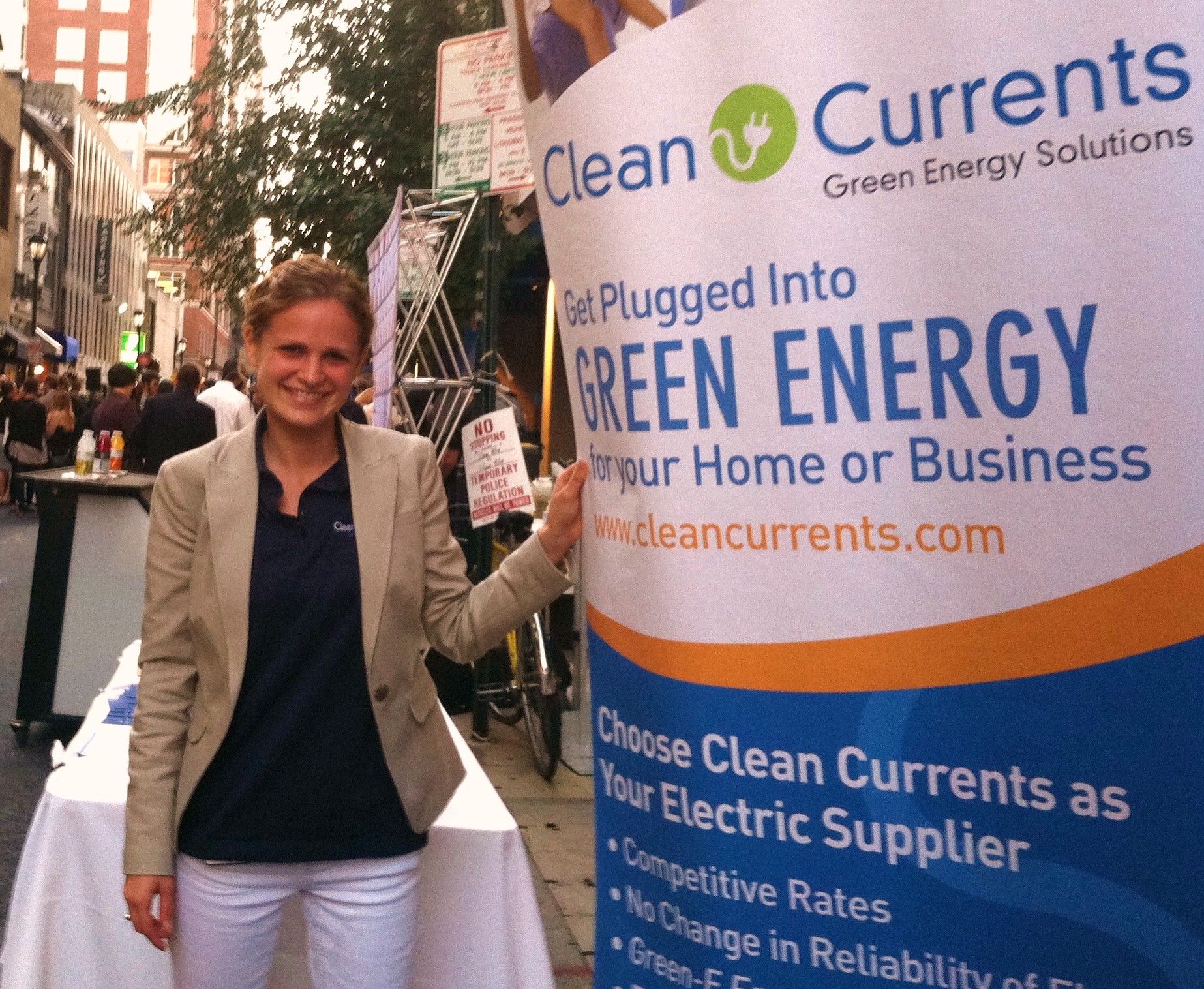
Emily Conrad Community Outreach Coordinator for Clean Currents

Emily Conrad, Clean Currents’ Community Outreach Coordinator

5 Quick, Easy Steps to Joining the GNEC

Having trouble believing that such dramatic benefits can come from next to no effort? Read on.

Step 1: Go to http://www.cleancurrents.com/ (or click here).

Step 2: Click the orange circle on the right of the page that says, “sign up NOW”.

Step 3: Enter your zip code and click “VIEW RATES”.

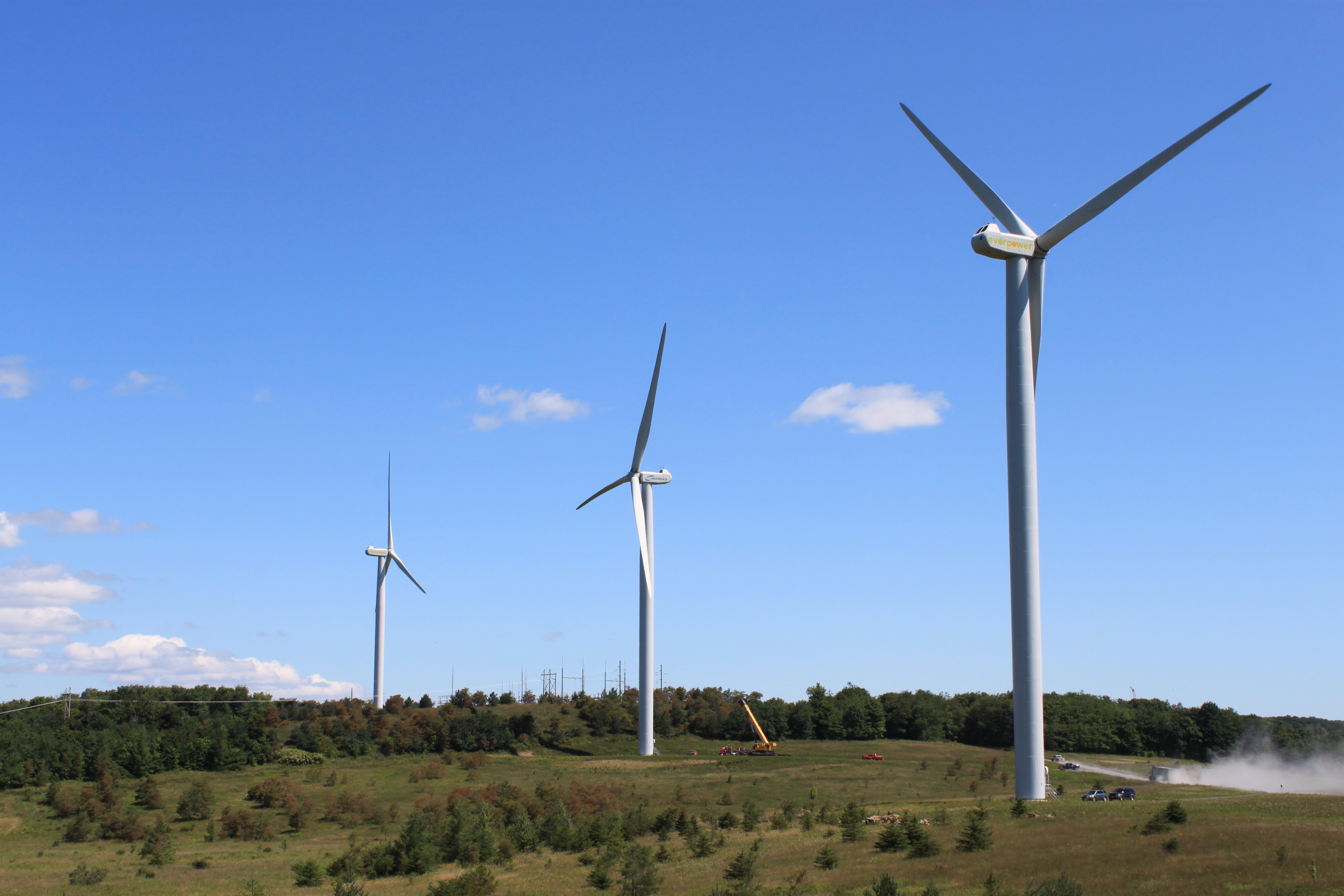
wind turbines at Pennsylvania wind far,

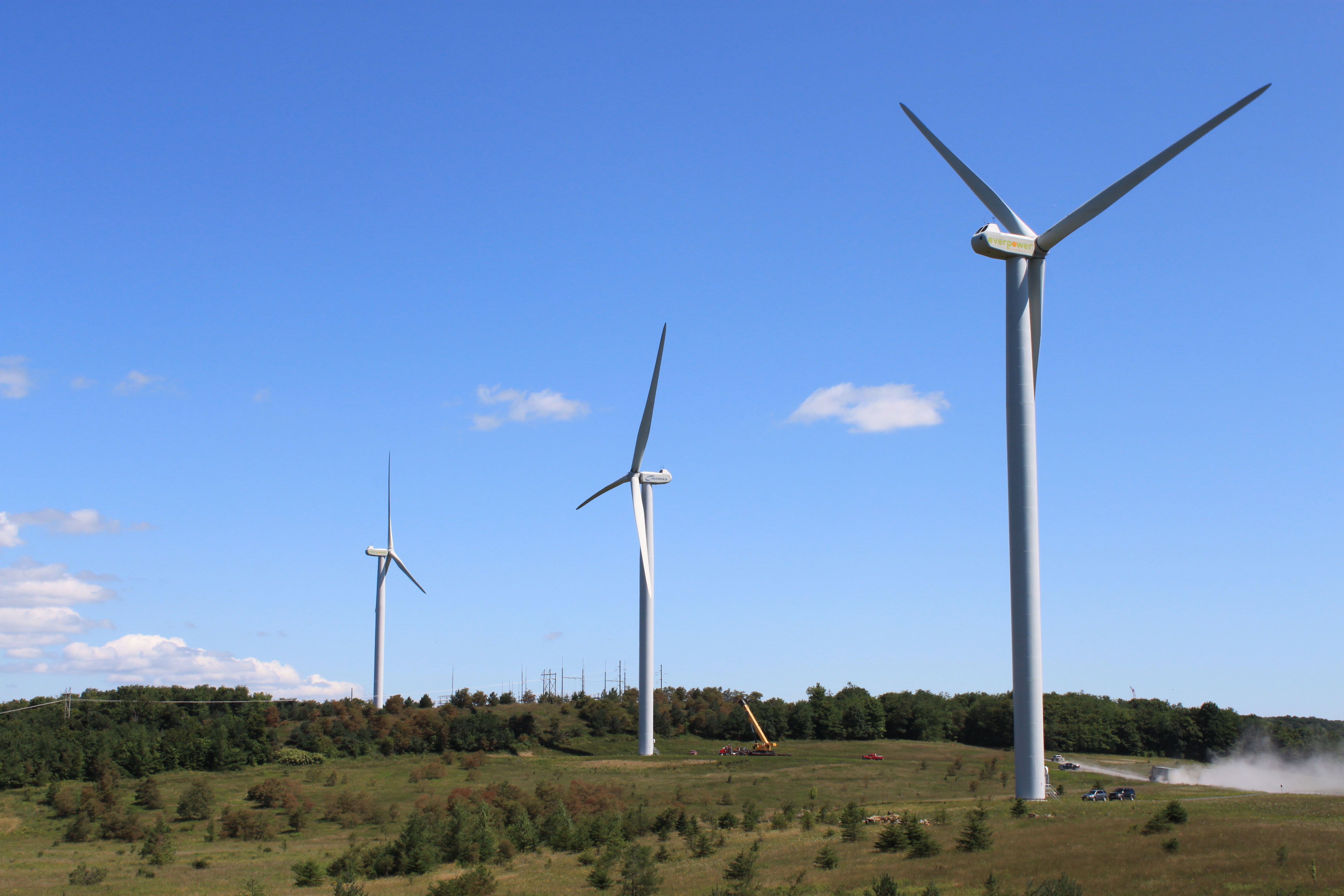
This Pennsylvania wind farm is Clean Currents’ supplier.

Step 4: Choose from one of five listed plans that include 1) 12-month or 24-month options, 2) neighborhood or national (via Renewable Energy Certificates—RECs; watch the video) wind suppliers (see map of Clean Currents’ wind farms) that are both Green e-Energy Certified, and 3) 50% or 100% wind power and then click “Enroll now”.

Step 5: Complete the very brief electronic form, accept the terms, click “Submit”, and congratulate yourself for reducing your family’s carbon footprint in an immediate and quantifiable way!

Seriously—it’s that simple!

Do note that on the form you will be asked to “Please provide further details and your Green Neighborhood Challenge name, if applicable”; this is where you fill in “The New Century School” so TNCS gets credit for participating in GNEC. Another field on the form asks for your Electronic I.D., which is not the same as your account number, and can be found at the top left on the second page of your bill. A final note about the form concerns whether you are currently under contract with another supplier. Unless you have voluntarily opted for a supplier other than the utility company (in Baltimore City’s case, BGE), you are not currently under contract (BGE doesn’t count). If you are under separate contract, however, you may want to wait until your renewable window comes around before signing up with Clean Currents to avoid an early termination fee.

So come on everybody, make the choice between 1/14/13 and 3/15/13 to GO GREEN by accepting the Green Neighborhood Energy Challenge! You won’t regret it, and . . . it’s a “breeze.”

As always, kindly let us know your thoughts about this post in the comments section—we love to hear from you! Plus, stay tuned to see TNCS’s measurable process in reducing greenhouse gas emissions in Baltimore!

Blown Away with Wind Energy

On October 31, 2012, The New Century School decided to come clean. As part of an ongoing sustainability plan, TNCS switched off fossil fuel–derived energy and turned on with the environmental-friendly, clean energy provided by Clean Currents. Clean Currents delivers 100% wind- and solar-powered energy, a service that benefits the school; the environment; and, some say, the U.S. economy.

Clean Currents logo illustrates that power sources can be green

TNCS gets greener every day!

TNCS is fortunate to be located in Maryland, one of a handful of states (see map) currently enjoying a deregulated energy market for both electricity and gas (most states have deregulated one or the other or are not yet deregulated). This means that although Baltimore Gas & Electric owns and maintains the power lines, Clean Currents’ wind energy is what’s coming through those lines to power the school. In other words, consumers can choose not only who provides their power, but also have a choice in what type of power they buy, thanks to companies like Clean Currents.

With choices come advantages. The most obvious benefit to wind energy is its environmental friendliness. “Windustry” ameliorates climate change by not only providing a non-polluting source of energy but also by displacing the greenhouse gas emissions that have already polluted the atmosphere from conventional power. But there are other tremendous advantages, too. By reducing our dependence on fossil fuels, for instance, clean energy also makes us less vulnerable as a nation to the vagaries of the international oil market . . . and to the associated security risks. Moreover, ever-renewable wind is a cash cow for farmers. Wind farming almost effortlessly generates considerable income without taking up land needed for crops as well as creating jobs and boosting the economy.

So, as President Obama has pledged to move the United States toward energy independence, TNCS is doing their part to get there at the community level. Clean Currents was a natural choice for collaboration. Being a “benefit corporation, we have elected to build in commitment to the local communities we serve along with the environment. It’s part of our operating agreement,” says Emily Conrad, Community Outreach Coordinator for Clean Currents.

wind energy is sustainable, renewable, and readily available

Wind turbines harvest wind on a midwestern wind farm

And TNCS likes a company that is motivated as much by doing lasting good for its community as by its bottom line. The benefits to the school itself are also numerous. Besides going green, TNCS will host Clean Currents workshops with students that will focus on “age-appropriate activities around the world of energy,” says Conrad. This is another way that TNCS can reinforce to students the importance of respecting our world.

Finally, readers, you’re invited to ponder these very wise words:

When green is all there is to be
It could make you wonder why
But why wonder why wonder
I am green, and it’ll do fine
It’s beautiful, and I think it’s what I want to be . . .

Kermit acts as TNCS mascot for environmental sustainability

Sometimes, it IS easy being green!

P.S. Stay tuned to learn about the upcoming Green Neighborhood Challenge that will bring green energy to your door. That’s right—TNCS and Clean Currents are partnering to expand clean energy availability to the surrounding community. Look for a post about the Green Neighborhood Challenge in early 2013!