Transitioning from Preprimary to Primary at TNCS

parallel-play-with-montessori-materials

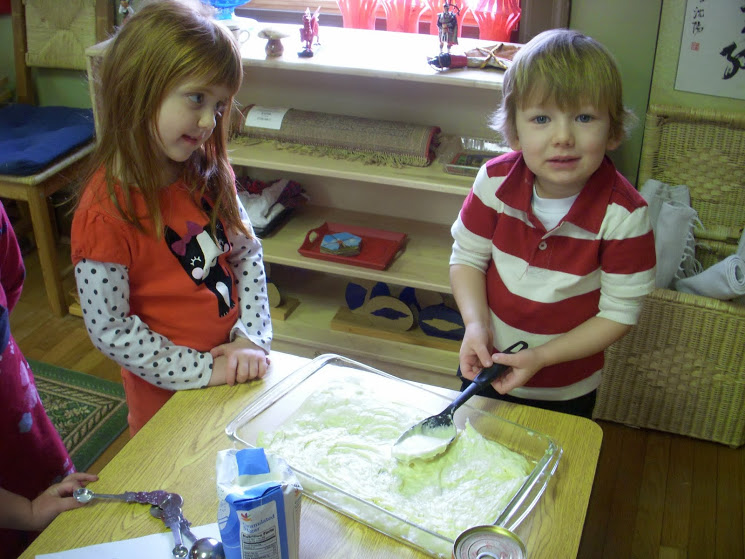
These preprimary students are very excited to be working with Montessori materials at age 2!

Accommodating children from ages 2 years through 10 years (and soon to be 12 years) and ultimately comprising four programs, including preprimary, primary, elementary, and middle school, The New Century School has always focused on how to make the transition from program to program as smooth as possible for students. Continuity is built into the school’s approach, arising as a very natural consequence from its philosophy and mission. No matter what point a TNCS student starts from, he or she is headed toward the same basic goals of self-motivated inquiry and discovery as well as how to be a nice person along the way.
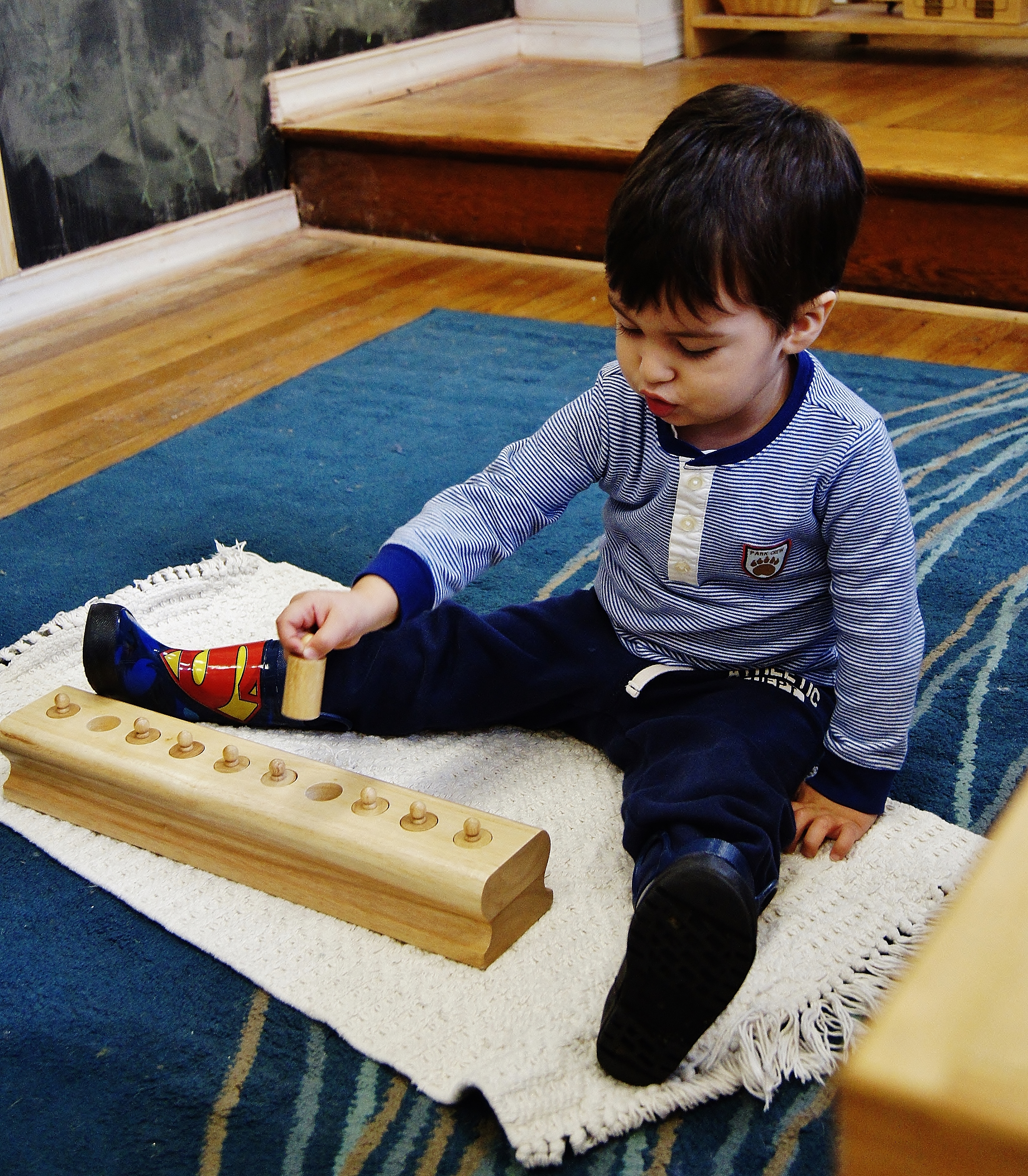
tiny-TNCS-tot-explores-multiple-dimensions-with-Graduated-Cylinder-Blocks

This tiny TNCS tot is exploring multiple dimensions with the Graduated Cylinder Blocks.

Perhaps the most challenging transition that TNCS students (and their parents) face is moving from the preprimary program up to the primary program when the child turns at least 3 years old. At age 2, they might well still be in diapers—still babies, practically—then, a year later, they enter a completely new milieu, with new teachers, new classmates (most of whom are older), and a whole new set of expectations. They become, in short, tiny students.

Historically, this shift has always been more difficult for the parents. The toddlers, meanwhile, accept these changes more or less in stride, even eagerly. It’s safe to say that the children’s ability to adapt so quickly and so well has a lot to do with TNCS’s very well-considered transitional process. On Thursday, February 5th, Head of School Alicia Danyali and the three preprimary teachers, Mrs. Reynolds, Lin Laoshi, and Señora Ramos held a Preprimary Workshop to walk parents through what this process entails. It was a full house; preprimary parents are clearly curious, if not anxious, about what lies ahead for their kids. Rest assured, Mrs. Danyali’s and the teachers’ presentations allayed all concerns!

The talk focused on three key aspects of the move to the primary program: 1) the differences between the two programs, 2) the necessary milestones each child must have met in order to move up, and 3) how each child is placed in one of the four primary classrooms. All of these themes are interrelated, as will become clear.

Differences Between TNCS Preprimary and Primary Programs

The two biggest differences between the programs is that the primary classroom is not a language immersion environment, and it is a classic Montessori environment. These differences start to become less striking, however, when you consider that the children are introduced to the Montessori materials as well as the Montessori teaching style of nurturing guidance the moment they step foot into the TNCS preprimary classroom. Thus, 3-year-olds will enter the primary classroom with a good deal of familiarity with their surroundings and with the manipulative materials they will be working with. And, as with the preprimary classroom, the primary classroom is specially engineered and furnished to accommodate their size. For more on how the Montessori classroom functions at TNCS, please read previous Immersed posts “Language, Math, and Science—Montessori Style!,” “Inside the Montessori Classroom,” and “Preschool Conundrum Solved: Research Demonstrates Benefits of Montessori Education.” The main point here is that Maria Montessori knew that kids need, above all else, to feel secure for optimal development; therefore, in the TNCS Montessori primary classroom, new skills are introduced when the child is ready for them, not when the calendar arbitrarily dictates.

Regarding the shift away from language immersion, that, too, is really only a partial shift. Although the class is “led” by a Montessori-trained teacher, a second teacher who speaks exclusively to the children in either Spanish or Mandarin Chinese is also always on hand. Even better, these teachers switch back and forth among the classrooms on alternating days to ensure that the primary students are now receiving exposure to and instruction in both languages.

Milestones Demonstrating that a Child is Ready for the Primary Classroom

montessori-button-frame

This TNCS preprimary student practices her fastening skills on the Montessori Button Frame. She is well on her way to independent dressing!

Some of the current preprimary students have only just turned 2. Their parents might be wondering how conceivable it really is that their child might be sharing a classroom with kids who are starting to read and write in under a year from now. In diapers in May but using the bathroom by late August? Able to don outdoor clothing independently? Able to articulate daily needs? Those are some of so many hurdles jumped for lots of kids, towering obstacles for others. These are, however, prerequisites for moving up to primary. No matter where your child falls along that continuum, the overriding message that emerged from Mrs. Danyali’s presentation was that the child will be supported and nurtured along the way to readiness. These benchmarks are not in place for ranking or comparing student achievement, by any means. They are simply necessary from an operational standpoint. The primary teacher cannot sacrifice time away from giving the very specific Montessori lessons or helping a student master a task to change diapers, for example. The primary student is able to use the bathroom and get dressed to go outdoors more or less independently (assistance and guidance are always readily forthcoming, of course, and supervision is a constant).

This might sound rather stark at first. In fact, however, the first steps toward such independence have already been taken in the preprimary classroom, where independence and competence are very tenderly fostered. The TNCS student has become a fairly autonomous classroom resident even at age 2, as Mrs. Reynold’s gorgeous photos attest (also see slideshow below). Their ability to pursue their own interests will serve them very well, academically. They are internalizing/honing the four pillars of Montessori: Concentration, Coordination, Independence, and Order. Order? Indeed. Primary students are not only expected to select an activity that they want to work with, but they are also expected to complete that work as well as put it away correctly upon completion—it’s the Montessori “Work Cycle,” and it teaches accountability and a sense of accomplishment in addition to the importance of maintaining order. All “works” are designed to absorb the child (concentration) and also to develop both large and fine motor movements (coordination).

Parents are encouraged to reinforce the expectation of independence at home as well. Children can be allowed to pour their own drinks and zip up their own outerwear, for instance. Pants with elastic waists and shoes that fasten with velcro straps can facilitate their ability to get dressed by themselves and develop their confidence with such processes. Another way parents can aid such transitioning is by considering a TNCS summer camp for primary-age students rather than a preprimary camp to give them a taste of the fun in store.

Placement in a Primary Classroom

Although not an exact science, this aspect of the transition out of preprimary is very thoughtfully undertaken. Many factors are weighed in the decision-making: your child’s proclivities, the prospective teachers’ proclivities, and the ages and genders of the current students in the class. Each Montessori classroom should have a well-rounded mix of ages 3, 4, and 5 in order to function optimally. (Please see above links for the rationale behind the mixed ages of Montessori classrooms. In short, they promote incredibly fruitful mentor–mentee relationships that continuously evolve.) The child will remain in the primary classroom for 3 years, so a “good fit” is critical. TNCS may not be able to honor specific requests in all circumstances, but your child will always be placed in a classroom environment fully devoted to addressing each student’s needs.

And Finally . . . 

Even though the advance to the primary program is made as smooth as possible, TNCS students do face transitions and changes, as all students do. The important difference at TNCS is in the thoughtful, child-appropriate way these transitions are managed. As always, parents, you are encouraged to see how it all comes together for yourself—you’ll be amazed, gratified, and reassured. Here are four great ways you can do so:

  1. Attend an Admissions Fridays event held most Fridays through the end of the school year (register here).
  2. Attend the Primary Workshop, “Four Areas of the Montessori Classroom that Unleash Your Child’s Potential” being held February 12th, 2015 from 6:00 pm–7:30 pm. (Childcare is available; sign up here by February 9th.)
  3. Read any of the related Immersed posts linked above, or simply search with keyword “Montessori” in the Immersed archives.
  4. Read Mrs. Danyali’s recommended books Montessori: The Science Behind the Genius (Angeline Lillard) and A Parents’ Guide to the Montessori Classroom (Aline Wolf).
This slideshow requires JavaScript.

Meet the Teacher: Montessori-Trained Maria Mosby Joins TNCS

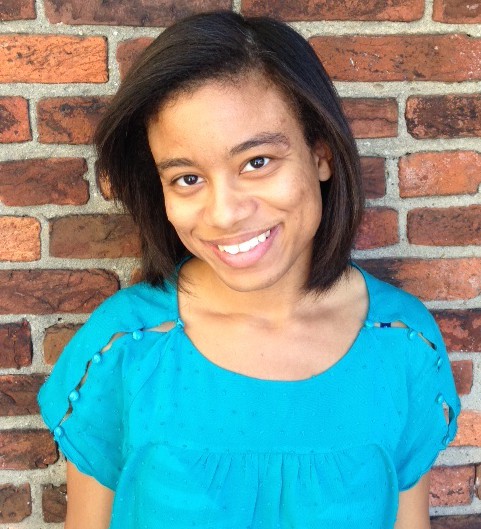
It's clear from her beautiful smile that this is one caring educator!

It’s clear from her beautiful smile that this is one caring educator!

The Montessori environment has “felt like home” to Maria Mosby for quite some time, she says, so she was a natural fit for Lead Teacher in one of The New Century School‘s four Primary Montessori classrooms. In fact, she began her own education at age 2 1/2 years at Columbia Montessori School, in Columbia, MD. “I grew up in Montessori,” she says, “so it has always been in my heart.”

After several moves with her family throughout New England and the Washington, D.C. area, which entailed a stint in public school, she rediscovered Montessori while studying Early Childhood Education at Towson University, and it has been Montessori all the way ever since. She had considered studying psychology, but says, “I’ve always had an affinity for children and wanted to be around them in my career. As a teacher, you do end up being a psychologist of sorts.” She knew that the primary age group was her target age group all along. “I worked with older children, elementary-age children, toddlers . . . but the 3 to 6 age group is really where my heart is.”

Even though she just joined TNCS full time this academic year, Ms. Mosby was no stranger to the school. As a primary assistant for 3 years and a toddler assistant for 5 years at Greenspring Montessori School (formerly, The Montessori School), she decided to take Early Childhood training through the Maryland Center for Montessori Studies. During her internship, she worked at TNCS’s summer camp and “loved the warm, peaceful community.” Even with a whole year-long absence, students remembered her and were excited to have her back.

Having been through the first semester and ironed out those wrinkles that inevitably come with introducing young children to new routines and new faces, she reports that “things are going very well. I love my students with their unique personalities, and I’m glad that there’s a 3-year cycle to look forward to with them. It has really been a growing experience for me.” She also attributes some of the successful transition-making to her Assistant Teacher Elizabeth Salas, who also joined TNCS this academic year. Señora Salas came to TNCS from Chile and besides being “wonderful,” in Ms. Mosby’s words, provides the Spanish immersion component to the classroom. Ms. Mosby herself is picking up some Spanish, although not as quickly as the students, she confessed.

Being such a staunch proponent of Montessori education, Ms. Mosby has a lot of insight from several perspectives into what makes it so effective. “The children are given the opportunity to reach their potential,” she said. “They’re not stifled. When I compare [Montessori education] to traditional education, I remember how I struggled with math, especially when my family was moving around. I needed help with fractions, but the class I entered had already studied them and were not going to backtrack just for me. And that’s not an issue here. Everyone is working at their own pace.”

Once a shy student, she also credits the independence that Montessori confers as part of its success. She sees daily in her classroom younger and older children working together, which often means a younger child absorbing a lesson he or she might be considered too young for in a conventional learning environment. “I don’t hinder them,” she says. “I let them see what they can do and also let them learn from their mistakes, which fosters that sense of independence that I love about Montessori.” It’s easy to see how this process builds confidence in children and primes them to learn.

Although she is incredibly well versed with all of them, her favorite Montessori materials are those associated with Practical Life. “They make a really nice school–home connection,” she said. Kids can play at cooking, flower arranging, tidying up, etc., and as they perfect these skills, they translate them to home and develop motor skills and a sense of responsibility to the immediate environment in the bargain.

“Another thing they have been working on is how to use the ‘peace table’ if upset and words to use when solving a conflict with others. They really enjoy the sensory items at the peace table, and it’s a good place to go when someone needs a place to chill out.” Just like the other Maria M., Ms. Mosby values treating others with kindness and receiving the same in return.

One very special project they have been working on as a group is writing to another Montessori class in Saskatoon, Canada. “The children have been very excited about it and have been drawing pictures to include. They have been learning about Canada’s cities and will also be learning a few French words,” she said.

In her free time, Maria enjoys running and does the Casey Cares Foundation 5K every year, which raises money for critically ill children in Baltimore and surrounding areas so that they can have things like birthday presents, vacations, and pajamas for long hospital stays. “I also work with Girls on the Run of Central Maryland as a “SoleMate.” “GOTR coaches pre-teen and middle school–aged girls to run their first 5K. It is a great organization that increases the girls’ self-esteem, overall health, and sense of sisterhood,” she says. She is also a certified children’s yoga instructor and will complete her 200-hour yoga training this year.

In closing, she said, “After I was away for a year, coming back [to TNCS] just felt like coming home. Everyone is so welcoming, and I feel very supported from the other teachers and from the administration. We all have something to offer. We collaborate and work together very well, even among the different divisions.” TNCS is thrilled to have the warm, compassionate Ms. Mosby in her very first Lead Montessori Teacher role!

Making School Transitions: Pre-primary to Primary at TNCS

Editor’s Note: For the 2014–2015 school year, TNCS modified the kindergarten program to better accommodate the growing student body. While the primary program still comprises a 3-year cycle, kindergarteners now move up to the elementary floor for a mixed-age K/1st classroom instead of kindergarten taking place within the primary classroom. This adaptation has proven a marvelous success and provides another very important transition mark for students as they broach their elementary years. The gist of the post below, therefore, still very much applies.

A recent stressor has been added to the list of 21st-century parenting tribulations: how to ensure that children are ready for kindergarten. There was a time in the not-so-distant past when that question wouldn’t even make sense to parents—Ready? For kindergarten? (Here’s a crayon; there’s a piece of paper. Go!) But with kindergarten morphing from extended preschool more and more into what resembles grade school around the mid-90s, educators observed a huge disconnect between what they were expecting of children and what those children were actually able to deliver in terms of concrete skills, independence, and maturity. We began to see a frighteningly pressurized climate in which parents competed to produce the most knowledgeable 5-year-old on the block. As if to heighten this pressure, studies found that the achievement gap that emerges in elementary school has its origins in the pre-school and kindergarten years, and the A-B-C/1-2-3 scramble accordingly intensified.

Successful transitions, however, are more than simply a function of individual children and their skills. More recent studies from the U.S. Department of Education demonstrate that “Children’s transitions are most strongly influenced by their home environment, the preschool program they attend, and the continuity between preschool and kindergarten.” This is not news to many of us, but it echoes a primary theme at The New Century School that bears exploring from a new perspective: continuity. TNCS academic programs come close to obviating the notion of hard and fast changes, such as preschool to kindergarten, by their very design. Maria Montessori knew that kids need, above all else, to feel secure for optimal development; therefore, the Montessori primary classroom encompasses ages 3–5/6 to soften those hard edges and eliminate the inherently false notion that “last year I was a little-kid; this year I’m a big-kid” that is the foundation of the preschool to kindergarten problem. Kindergarten at TNCS happens within the primary classroom, where the child has already been flourishing for 2 years. New skills are introduced when the child is ready for them, not when the calendar arbitrarily dictates. That holds true for all ages at TNCS, no matter what program, pre-primary, primary, or elementary. It’s a founding principle.

As mentioned, this post is meant to take a slightly different perspective, because even though the advance to kindergarten is made as smooth as possible, TNCS students do face transitions and changes, as all students do. The important difference is in the thoughtful, child-appropriate way these transitions are undertaken. Last month, TNCS held a Pre-primary Information Night focusing on The Next Step—transitioning out of the pre-primary program into the primary program. This is a big move for tiny kids and one that inspires dread, doubt, or sheer terror in many parents. In diapers in May but using the bathroom by late August? Able to don outdoor clothing independently? Able to articulate daily needs? Those are one of so many hurdles jumped for lots of kids, towering obstacles for others. No matter where your child falls along that continuum, the overriding message that emerged from Head of School Alicia Danyali’s presentation was that the child will be supported and nurtured along the way.

These bins hold students' indoor shoes and any paper work they accumulate throughout the week.

These bins hold students’ indoor shoes and any paper work they accumulate throughout the week.

Preparation for the primary program begins in the pre-primary program. Potty-training, for example, is initiated here as well as teaching how to put on jackets and outdoor shoes. Kids are also encouraged to be responsible for their own belongings by replacing jackets and shoes on labeled hooks or in cubbies. The immersion-style pre-primary program is where many students are first exposed to a second language. It’s also where they first get their chubby little hands on some of the Montessori materials that utterly fascinate and delight them. All of these are important introductions to primary classroom life. Kids enter the primary program already familiar with most aspects of it. The Montessori-trained teacher leading the primary classroom is there to gently guide and facilitate their process of becoming more independent.

A younger student gets some pointed help from his older classmate.

A younger student gets some pointed help from his older classmate.

But here’s the best part. Remember that kindergartners have spent 2 previous years in the same classroom, where they have gained the confidence to spread their academic and social wings? Well, that 3-year-cycle works the other way, too. Kids enter the primary classroom not as strangers in a strange land but as little friends taken under the wings of their older friends. The 5-year-olds who were nurtured into thriving kindergartners become the mentors and role models of the 3- and 4-year-olds, and this is the beauty of the mixed-age classroom. It makes for a much gentler way to start preschool. Does the span of ages present special challenges for the teacher? Rather the opposite; this model is all many Montessori teachers have ever known and is what they were trained in. “Seeing older kids helping their younger peers is my favorite part of the Montessori classroom,” says experienced Montessori teacher Angela Lazarony, who represented primary teachers at the Information Night.

Because of the primary 3-year cycle, which is an extended commitment, matching each child with the right classroom is a well-thought-out procedure in which school administration, the child’s pre-primary teacher, the primary teachers, and parents collaborate. Just as each child has a unique personality, so too each of the four primary classrooms has its own distinct “flavor.” (In addition to Ms. Lazarony, Mrs. Lawson, Mr. Warren, and Ms. Reynolds are the other primary teachers.) The teachers weighing in are trained observers who know their students well and probably have the keenest acuity to judge where each student will best thrive. A good fit between child and classroom ensures harmony and will enhance the child’s development. Other factors also influence the placement decision, such as making sure an even distribution of 3-, 4-, and 5-year-olds is achieved across classrooms, which is an integral component of the Montessori classroom.

Another primary classroom operating harmoniously.

Another primary classroom operating harmoniously.

Morning worktime is productive, harmonious, and orderly!

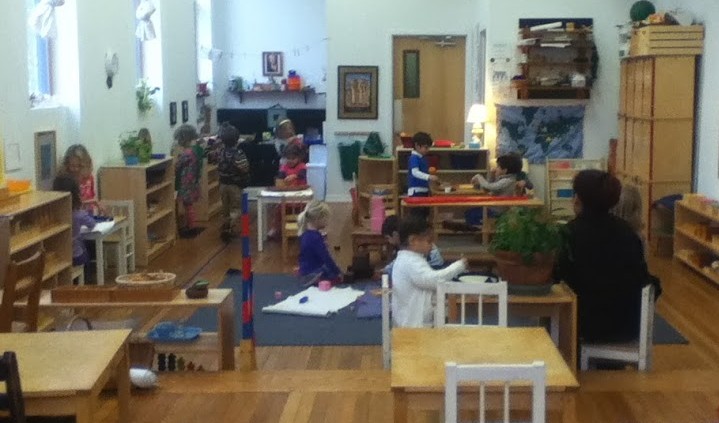
Morning worktime is productive, harmonious, and orderly!

Once there, what does the brand-new primary student’s day look like? Much of it will be very familiar to the child. Although the lead teacher speaks English, an assistant teacher in the classroom will be speaking only in his or her native Chinese or Spanish, so the child is still getting some immersion in that language. The other language will now be introduced in a slightly more formalized way three times weekly, when an assistant teacher from another primary classroom rotates in for this purpose. Thus, all primary students get both Mandarin and Spanish instruction. The day also begins in a way the child is already accustomed to, with “circle time” to greet each other, get oriented (calendar, weather, etc.), sing a song, and generally settle in to the schoolday. From there, the child gets free time with the Montessori materials, what they call “doing a work.” The idea is that each child will gravitate naturally to the manipulative that most interests him or her at that given moment, thereby cultivating a skill appropriate for his or her current stage of development. But what if my child gets stuck in a rut with a particular work, never trying anything new even when he or she has mastered the old work? many parents wonder. Says Ms. Lazarony, “we’re watching them to see where they’re going, but we’re leading them where we think they should go.” Amidst free time, teachers observe, guide, and circulate among small groups to give specific lessons in new works or skills.

Other familiar aspects are art, music, and movement instruction. Primary students met the amazing and gifted “specials” teachers Ms. Raccuglia (art) and Mr. Warren (music) as pre-primary students. Their activities in The Lingo Leap are supervised by an assistant teacher or sometimes by parent volunteers, which the kids love. By the way, volunteering is the ideal way for parents to be part of their child’s schoolday and another means to help him or her feel secure in the new classroom. Napping and playground time are also still in the mix.

The differences between the pre-primary and primary programs really lie in the degree of instruction taking place by the teacher and in the extent to which the student can explore. Because the primary program is self-paced, the student can reach well beyond conventional expectations for his or her age. Likewise, the child who needs more time absorbing the surroundings is supported and affirmed.

Big kids, little kids---we're all one big happy family!

Big kids, little kids—we’re all one big happy family!

Readiness is an important consideration in another way here. Not all 3-year-olds are ready to transition to the primary program, and this is something the parent should reflect on very carefully. The child not only has to demonstrate readiness in terms of being potty-trained and able to dress independently, but also should have the social competence to handle more than one age group and the maturity to participate in a group learning environment. The parent’s feelings are also important: Is this what you want for your child right now? Maybe you aren’t sure. Many parents opt for a half day in the primary program, which many preschools don’t even offer. (Note that kindergartners are state-mandated to be in school for a full day.)

The takeaway is clear: Children should get the space to develop at their own paces, but when they show willingness to expand, TNCS is going to make sure the transition is pleasant by supporting them in the way that will best serve them. Back to the study finding that continuity is critical to successfully making scholastic transitions, TNCS goes it a step or two beyond, adding nurturance and support to that continuity already very much in place at each scholastic level. No scramble here!

TNCS Elementary Information Night: A School Grows and Flourishes

The New Century School started off 2014 with a bang—on the very first Thursday of the new semester, TNCS held a 1-hour Elementary Information Night followed in a second hour by the first-ever Town Hall. This exciting and important double event was geared toward all current TNCS families regardless of student age and to prospective families interested in joining TNCS’s community. Acknowledging the 2-hour duration, a table of gorgeous appetizers was prepared by Chef Emma Novashinski to see us through, and light beverages were also served. To make attendance even easier, free parking was provided as well as free childcare. The lucky kids got Fell’s Point’s B.O.P. pizza and healthy snacks. This delightful evening, which TNCS administration plans to repeat annually, was a testament to the dedication and commitment of both the TNCS staff for organizing and executing it as well as the families who gladly attended in order to learn more about how TNCS was founded, the current state of the elementary program, and TNCS’s future. These joint efforts ensure that this special school will continue to flourish.

Chef Emma Novashinski provided an array of healthy but delicious hors d'oeuvres to tide over guests arriving just after work.

Chef Emma Novashinski provided an array of healthy but delicious hors d’oeuvres to tide over guests arriving just after work.

After an introduction to the evening by Admissions Director Robin Munro, Co-Executive Director Roberta Faux gave a heartfelt, enthusiastic, and at times funny speech about TNCS’s rather surprising origins as well as where its heading—“why we got started and how we got here,” as she put it. After attempting to eschew childcare for their daughter born in 2005 and care for her themselves with their “flexible work schedules,” Ms. Faux says that process wore her and her husband down pretty quickly (drawing quite a sympathetic collective chuckle from the audience). She met the other TNCS Co-Executive Director Jennifer Lawner soon thereafter, and together they decided to do something about the lack of stimulating preschool options in Baltimore. They especially identified with the work of education luminaries such as Dr. Maria Montessori and creativity expert Sir Ken Robinson. “In October of 2007, we opened Patterson Park Montessori with five students,” she recalled. That one-room preschool would very quickly prove too small, and TNCS came to be in its current incarnation at 724 S. Ann St. in Fell’s Point in 2010. The Co-Executive Directors felt that the Montessori method “really resonated” with their vision of what early childhood education should be. “Prepared spaces,” said Ms. Faux, set the stage for individual discovery. Within this “freedom within limits that fosters independence,” kids can explore, wonder, touch, and learn about their worlds. They are, moreover, empowered to do so.

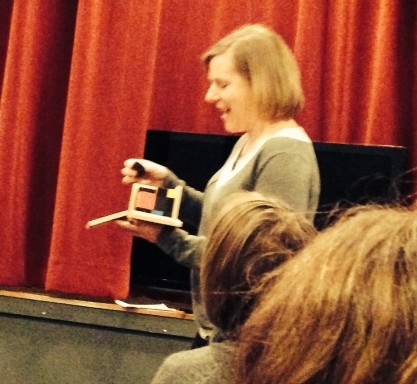
Co-Executive Director Roberta Faux speaks fondly of discovering how naturally children learn with Montessori materials and how eye-opening and gratifying an experience that was for her.

Co-Executive Director Roberta Faux speaks fondly of discovering how naturally children learn with Montessori materials and how eye-opening and gratifying an experience that was for her.

This story becomes the more poignant when you consider that both Founders/Co-Executive Directors not only have children attending TNCS in the Elementary and Primary classes, but also that the programs were created very much for those children. And isn’t it very comforting to know that your kids are being taught, nurtured, and cared for every day by a staff hand-picked by these mothers of fellow students? As any new school—or any other kind of establishment for that matter—goes through certain growing pains, that process of becoming can be unsettling. Though TNCS is  still a new school and is still coming into itself, the knowledge that it was born out of the simple desire to provide actual, real children a place to truly thrive preempts any doubt about its integrity, its child-centered approach, and the rosy future it promises itself and its graduates.

After Ms. Faux spoke for about 15 minutes, Head of School Alicia Danyali next took the floor to give an overview of TNCS’s philosophy for elementary education. As the school matures alongside the student body, it’s more and more identifying itself as an elementary school rather than a preschool. A tremendous amount of thought, planning, and resources have gone into the creation of this special elementary program to continue fostering the school’s defining value—whole-child education. Unlike the pre-primary and primary programs, the elementary is not strictly Montessori by any means, which is entirely intentional. With the spirit of independent but guided inquiry very much intact, however, it is certainly “Montessori-inspired.” The commitment to small class sizes as well as the mixed ages within them, says Ms. Danyali, ensures that each student gets individualized instruction and that no one is pigeon-holed according to age but is rather met at his or her skill level. For Ms. Danyali, the emphasis on multilingualism is also a key component of TNCS’s elementary program and one that sets the school truly apart. Elementary students get 45 minutes in each Mandarin and Spanish instruction daily. No other area school can boast this degree of language concentration, even despite the multitude of benefits experts agree that learning other languages confers. (See Top 10 Benefits of Multilingualism.)

Another point Ms. Danyali drove home was that the elementary program is designed to teach kids to learn and be curious about the world around them rather than set up primarily to see them through a test. But she was likewise not about to throw the baby out with the bathwater. Though many curricula are criticized for “teaching to the test,” there is a value to testing when it’s done appropriately. Ms. Danyali wants to implement a test used in other language immersion schools that would give TNCS a yardstick on which to measure overall progress and to give students that practice . . . but not to guide or interfere with the school’s scholastic approach and especially not to assess a teacher’s performance, a criticism that has been leveled at standardized testing in recent news (see the article here). There are also elements of the new Common Core curriculum standards for public schools that she feels are on the right track and could be selectively implemented if appropriate.

And that’s just it. Being a small, independent school offers the freedom to stretch and explore and continue to find ways to really engage students in learning that many schools just cannot have. Another advantage is in the simply amazing educators such an educational model attracts. Speaking of whom, elementary teachers Alisha Roberts and Adriana DuPrau next spoke, each presenting a 10-minute overview of their specialties. Ms. Roberts handles Math and Science (read more here), while Ms. DuPrau teaches English Language Arts, and both teachers mix independent work with small groups. They also create synergies among their disciplines, such that reading and writing is always a component of the science classroom, and discussion and inquiry likewise a component of the reading lesson. Foreign Language Curriculum Director Xie Laoshi spoke last and painted a portrait of how and why teaching foreign language at TNCS is a unique affair. Xie Laoshi creates a dynamic classroom, emphasizing the importance of making the activities relevant for students rather than asking them to complete book lesson after dreary book lesson. In fact, she had the audience in stitches after recounting how she ordered a slew of the best acclaimed books and materials for her curriculum, only to judge them unsuitable and set about making her own from scratch!

An evident degree of preparation and planning went into this evening. Why? Because the elementary program is where it all coalesces—it’s where all of the students are headed and it will define the school in a way that the pre-primary and primary programs do not. Not that those programs aren’t important—they absolutely are! They set the stage for what comes next, and building that solid foundation is critical for development. But making the decision of where to send your child to elementary school carries a lot of additional weight insofar as that education is what will equip him or her for life. The choice to send your child to an environment where his or her whole self is nurtured, not just the academic part, is certainly a lucky choice to have. Again, TNCS is unparalleled in this regard. In addition to their math, science, language arts, and foreign language instruction, elementary students get art, music, and physical education twice weekly to stimulate all areas of development. They also get “Teacher’s Choice” time, which often targets the cultivation of those character qualities a conventional classroom probably lacks the resources for. For instance, Ms. Roberts’s class is learning to crochet, with the help of some parent volunteers, and the scarves they make will be given to Baltimore’s homeless community. Pitching in and helping out is a school-wide value that manifests continually, setting an example to kids to be active, responsible members of their communities (as Dr. Montessori would have utterly sanctioned).

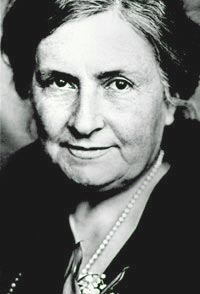
Maria Tecla Artemesia Montessori (August 31, 1870 – May 6, 1952) created the child-centered approach to education that TNCS grounds itself in and grows from.

Maria Tecla Artemesia Montessori (August 31, 1870–May 6, 1952) created the child-centered approach to education that TNCS grounds itself in and grows from.

In one of her very first remarks of the evening, Ms. Faux perhaps best described TNCS’s elementary program trajectory, which has its roots in Montessori but also branches beyond into language immersion and other forms of progressive education and continues to grow. In mentioning that Dr. Montessori, who believed that revolutionizing education would ultimately give rise to a more peaceful society, had been nominated for the Nobel Peace Prize no less than five times, she paused and said, “She would have continued to evolve, just as we are doing.” It was quite a revelatory moment. Of course Dr. Montessori would be exploring new ways to engage children and  embracing new platforms on which to do so—her methodology was built around innovation. TNCS is currently approved to teach through Grade 5 and will continue to add a grade level annually through Grade 8, staying one or two steps ahead of the current “pioneer” elementary student body as well as continuing to find new ways to stimulate and engage them. In the Fall of 2014, a third elementary classroom will be added and a new teacher hired to accommodate that growing elementary student body.

Wait a sec, did you say Grade 8? That’s right. A Middle School comprising Grades 6-8 will open in the Fall of 2016, with new classrooms, new spaces, a science lab, etc. But you’ll have to check back for a follow-up post on what happened during the Town Hall meeting that followed the elementary discussion. Stay tuned!

Happy Birthday, Immersed!

Dear Readers, this is a proud day, marking the end of Year 1 of The New Century School‘s blog. That’s right, 52 posts later, here we are (this is #53). To celebrate, let’s take a look back at what your favorite posts have been—after all, we’re here for you.

Top 10 Most Popular Posts

  1. Preschool Conundrum Solved: Research Demonstrates Benefits of Montessori Education  (224 views so far)
  2. Achieving Balance in Education at TNCS  (215 views so far)
  3. Sustainable School Lunch: Garden Tuck Shop Program Part I  (199 views so far)
  4. Elementary Science Fair!   (175 views so far)
  5. Top 10 Reasons to Attend Montessori Kindergarten  (171 views so far)
  6. Inside the Montessori Classroom  (156 views so far)
  7. Exercising That Mind–Body Connection  (146 views so far)
  8. Elementary Program Merges Montessori and Progressive Education at The New Century School  (130 views so far)
  9. A TNCS Original  (128 views so far)
  10. Language, Math, and Science—Montessori Style!  (125 views so far)

Because a little analysis is just irresistible, let’s draw some conclusions. It’s pretty clear that Montessori and Elementary are the  commonest themes on this list, which is entirely appropriate. TNCS is achieving something entirely unique in education in meshing a progressive, rigorous curriculum with the gentleness and humanity of the Montessori approach. TNCS students learn the standard academics but also get a firm grounding in foreign language and an abundance of the arts, movement, and technology. Perhaps most important and often overlooked in conventional schools is the attention to social relationships and building mutually respectful interactions with peers and with the administration.

So thank you, readers, for your following and your support. What would you like to read more about in future?