Charmed by TNCS’s Year of the Snake Performance

February 10th, 2013 marked the beginning of The Year of the Snake (蛇 Shé) in the Chinese Lunar New Year, also known as the Spring Festival.  Although in Chinese lore the snake year is commonly considered less propitious than its predecessor (Year of the Dragon), The New Century School rang in the new year in high style. The meteor strikes, nightmare cruises, and olympic athlete scandals that the lunar year commenced with notwithstanding, TNCS honored the snake with weeklong festivities (such as making and eating dumplings, or 饺 jiǎo), culminating with a special performance at Port Discovery on Saturday, February 16th.

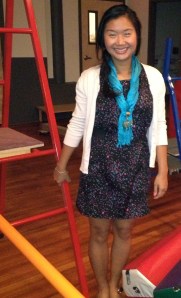
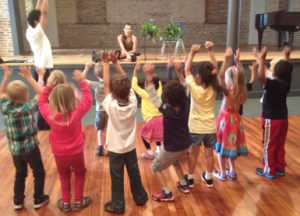
This was TNCS’s second annual Port Discovery performance in honor of Chinese New Year, and the primary and elementary students just loved it! The Chinese teachers spent weeks teaching them the songs and poems that made up the program. Chen Laoshi (a.k.a. Charlotte) and Xue Laoshi (a.k.a Cici, or 薛雪) presided over the actual performance, keeping their little red-and-gold-garbed snakes, mice, roosters, dragons, etc. on task. Xue Laoshi  says, “I am so proud of all the students. They all did a good job.”

The performance comprised two songs and a poem. Xue Laoshi explains that the first song was the Happy New Year song, sung by the primary students. Next, the primary and elementary students together sang the Chinese Zodiac Song and acted out the characters they were describing. Lastly, the elementary students recited a famous Chinese poem about a snowy landscape. Because the poem is quite long, they read in unison from placards printed with both English phonetic and Chinese characters. The students are clearly making remarkable progress—not only can they speak Mandarin beautifully, but they can also read and write it!

Xue Laoshi isn’t prepared to stop there, however. She says, “For the Year of Snake, I plan to help the students make even more progress. Maybe they will even tell you a story in Chinese not just read it!”

Sounds like this Year of the Snake might not be so bad after all!

Language Curriculum Specialist Joins TNCS

Lisa Warren, Language Curriculum Specialist

Lisa Warren, Language Curriculum Specialist

Piggybacking on a post (Multilingualism at TNCS: Optimizing Your Child’s Executive Function) from earlier this year, this discussion profiles Lisa Warren, on-staff language curriculum specialist at The New Century School. Ms. Warren came on board in October 2012 to organize and standardize the existing language education at the school. With a Master’s Degree in linguistics from Georgetown University that combined research into how kids acquire second language with curriculum design as well as previous experience teaching Spanish, French, and English, she is well qualified for this new role.

Her role, she says, is primarily to integrate language education throughout TNCS’s progressive, Montessori-inspired curriculum. The primary components of language education are already firmly in place—the teachers, the native speakers, the classes, and (in some cases) the immersion—but Ms. Warren has erected a framework on which these pieces can connect, be reproduced in successive classes annually as well as across the same level (i.e., all primary classes are focusing on the same lessons), and meet national standards. As she puts it, “There was a lot happening in language education around the school.”

She came to TNCS as the result of Head of School Alicia Cooper-Danyali’s active search for such a specialist. Mrs. Cooper-Danyali herself brings a wealth of language-immersion experience to her position and saw the need for the dedicated staff member who could connect all the language dots at TNCS in addition to crafting “plans that document the school’s long-term goals, which include a language curriculum both reproducible and adjustable.”

The Curriculum Map

Key to this exciting new TNCS initiative is a rubric called the curriculum map*. This level-specific document serves two purposes: 1) it provides a comprehensive overview of what is being taught in a given language (i.e., Spanish or Mandarin) and 2) it allows Ms. Warren to identify gaps and fill those in. Aspects of language education like culture and how well a particular class matches up with current themes guide her assessments. She is passionate about her work.

“Being able to talk about something in a lot of different ways is very important for cognitive development,” she says, drawing on her impressive research background. Indeed, the benefits of learning another language have been touched on in earlier blog posts, but Ms. Warren adds to the growing list. Wider cultural understanding, the ability to communicate with multiple populations, and keener analytic skills are among her special foci in what advantages speaking more than one language affords. Multilinguals have an “expanded view,” she says, “which makes them more creative and better problem-solvers.” She cites a study in which a cohort of bilingual kids and another of monolingual kids were asked to list alternative uses for a plastic water bottle. The monolinguals averaged only a couple; the bilinguals’ list stretched to 10 or more. This ingenuity translated to better Scholastic Aptitude Test (SAT) scores in a related study. It’s a known, but unfortunate fact that kids from lower socioeconomic groups tend to fare worse on standardized tests. Speaking more than one language abolishes this demographic disadvantage—bilinguals, no matter what their socioeconomic stratum, score higher in both math and verbal sections as well as overall. Click here for a comprehensive, annotated bibliography on this critical research.

Perhaps the best part of the curriculum map is that it allows teachers to target their teaching to students in the same class according to their individual levels. This means that students can enter TNCS at any age and have their learning needs met. This “differentiated instruction” is also rounded out by groupwork, such that, for example, elementary students are currently working on sustainable environment projects (sponsored by Clean Currents) for the Science Fair, part of which they are required to do in Spanish. Because they are working as a group, all levels support and help each other with the result that they learn the scientific method in two languages!

In the Classroom

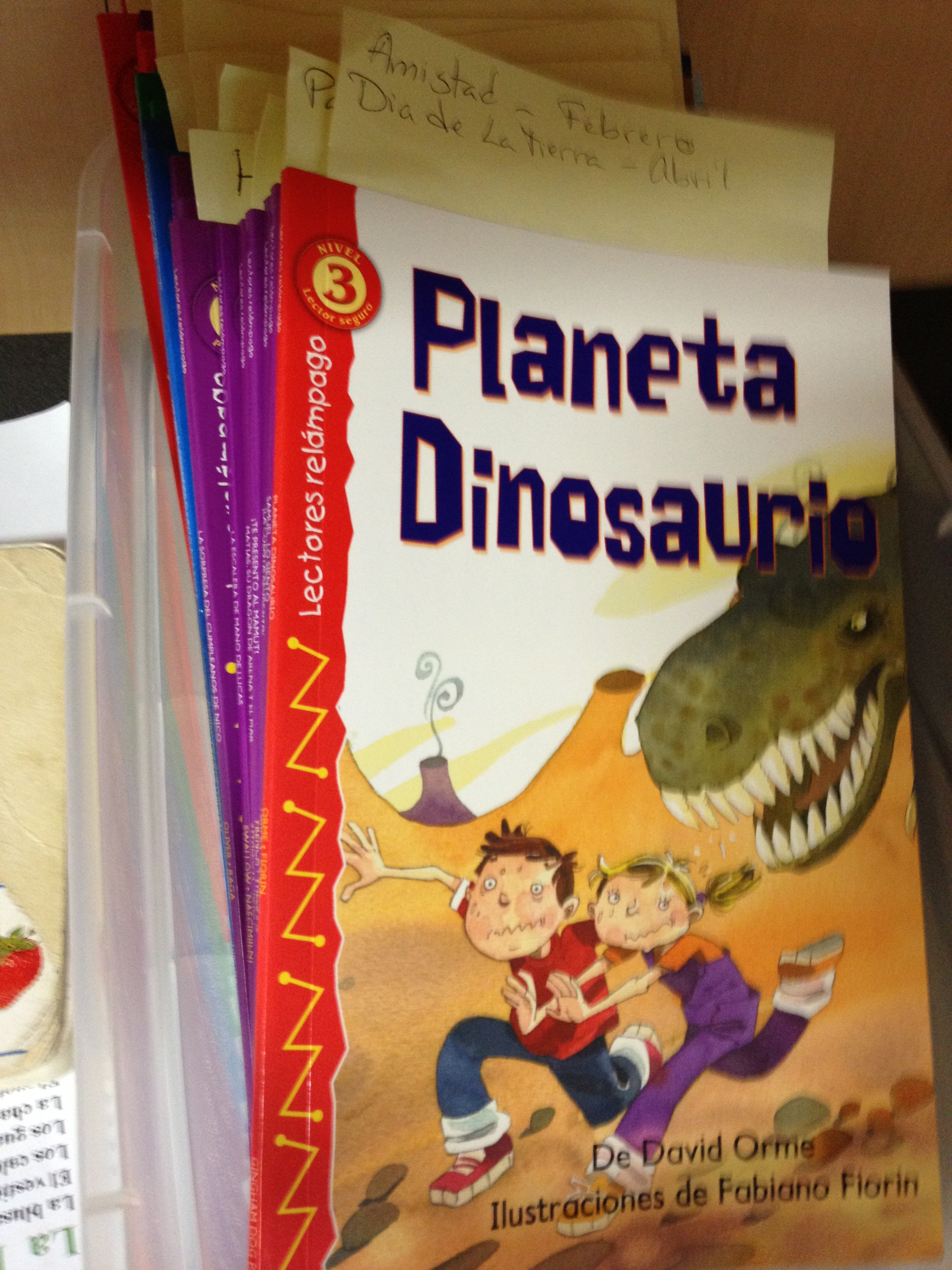
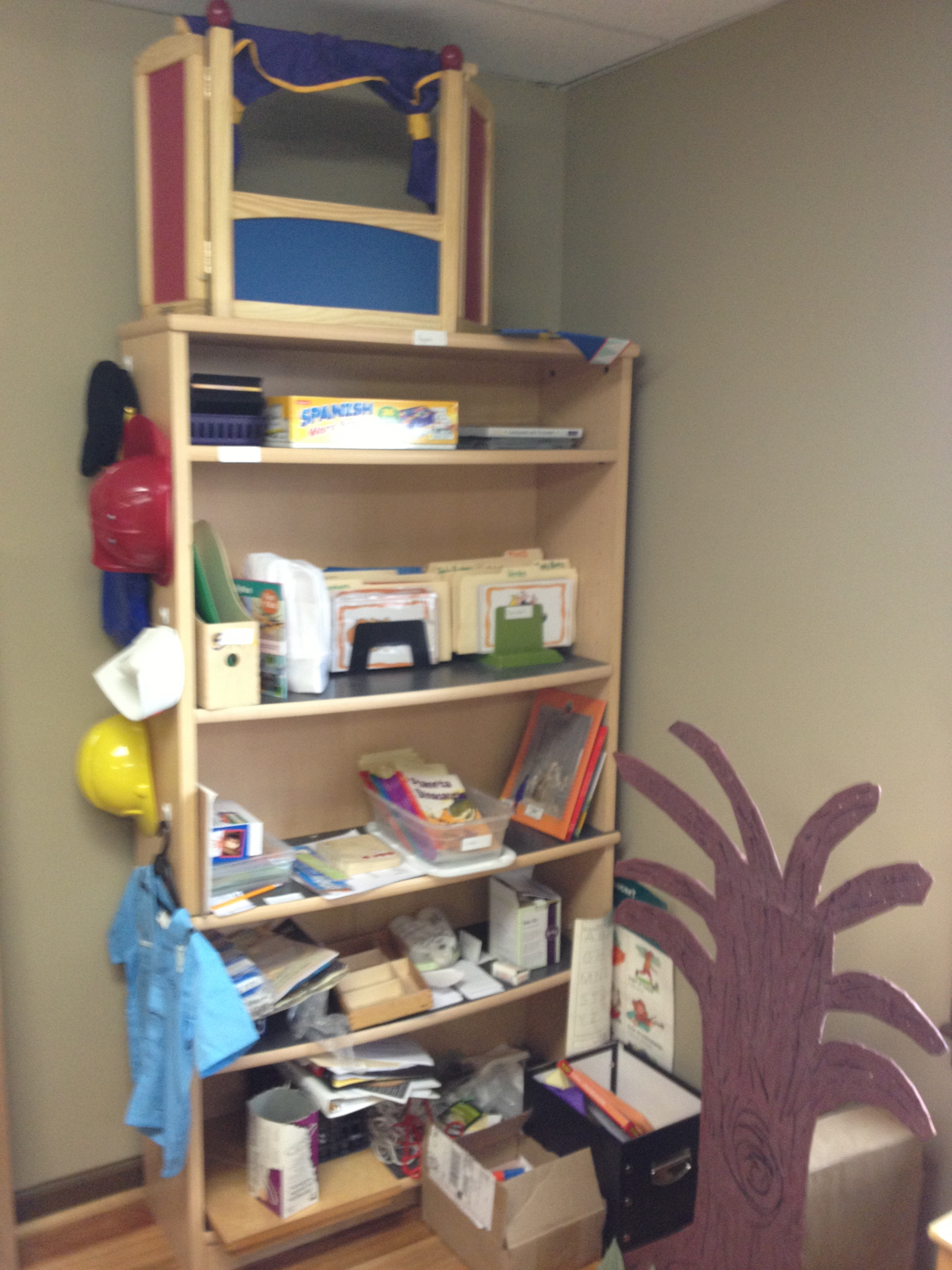
Ms. Warren’s work is not all behind the scenes. She likes to spend time in the classroom, getting to know the kids and working with the teachers to have a very clear sense of the application of her work. She provides a library of resources for teachers to draw from, for example, that includes books, puppets, costumes, flashcards, music, and more. She also offers professional development. For the latter, she might model certain behaviors to show a teacher how to maintain a focus on language while redirecting a disruptive student. Or, she might serve as her own “lab rat” in language class: if she is able to follow an activity in Mandarin, which she doesn’t currently speak, she knows it’s an appropriate activity for the students. If she gets lost, she helps the teacher reshape the activity to the students’ level.

Part of this is ensuring that activities/lessons meet The American Council on the Teaching of Foreign Language (ACTFL)’s  “5 Cs”: Communication, Cultures, Connections, Comparisons, and Communities, each of which is subdivided into series of standards. (Click here to read the standards.) It’s reassuring to know that TNCS students are organically acquiring other languages via their interactions with native speakers around the school, but that there is also a sound pedagogic infrastructure supporting that process. Again, though, this kind of balance is what TNCS is all about.

Spanish gym class

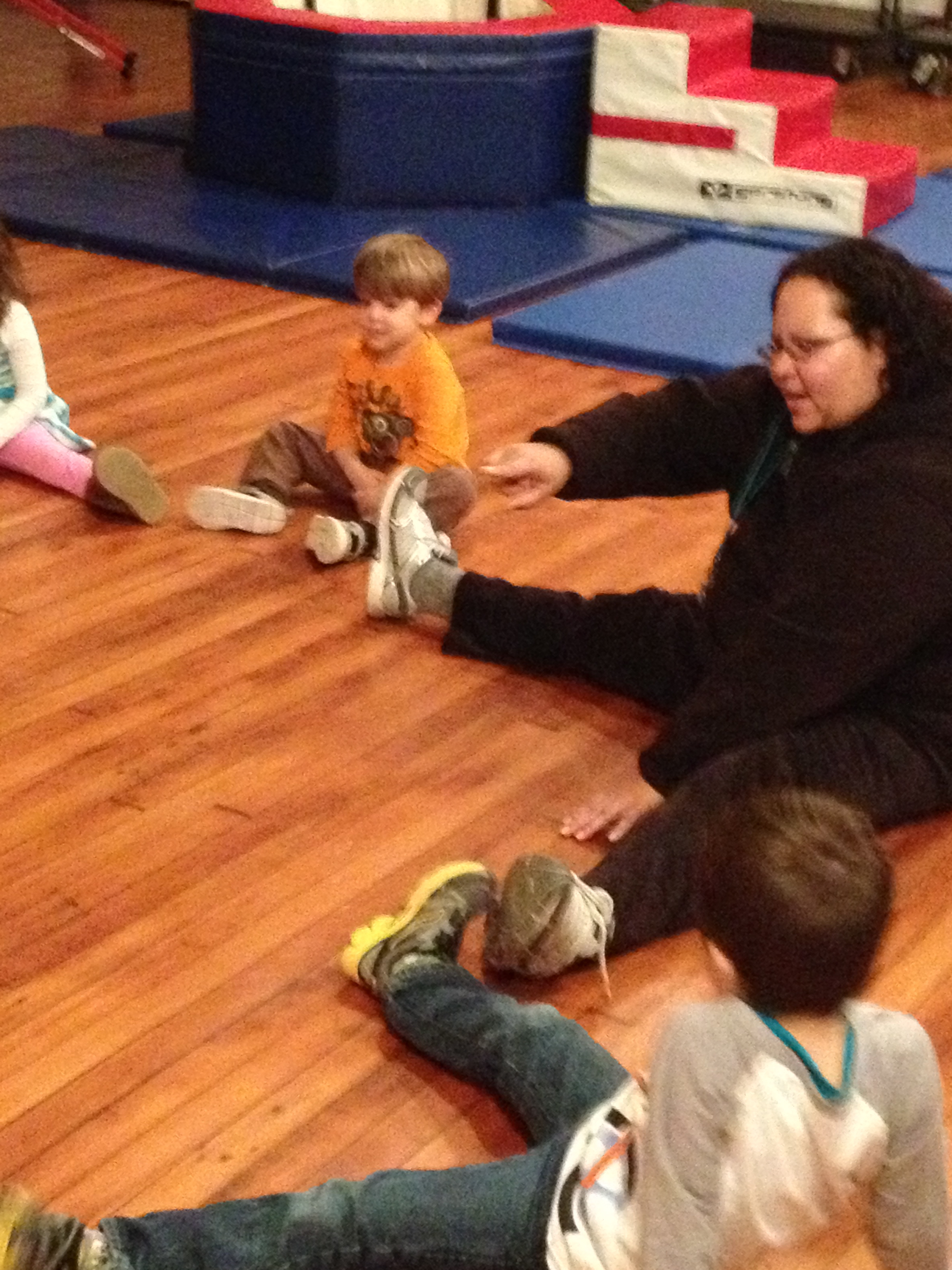
Senora Casado plays a game with primary students during gym class. “Encouraging the children to speak and communicate in Spanish is the goal in our weekly gym lessons,” she says.

To play, students must understand and respond to commands given solely in Spanish. They learn lots of action verbs this way!

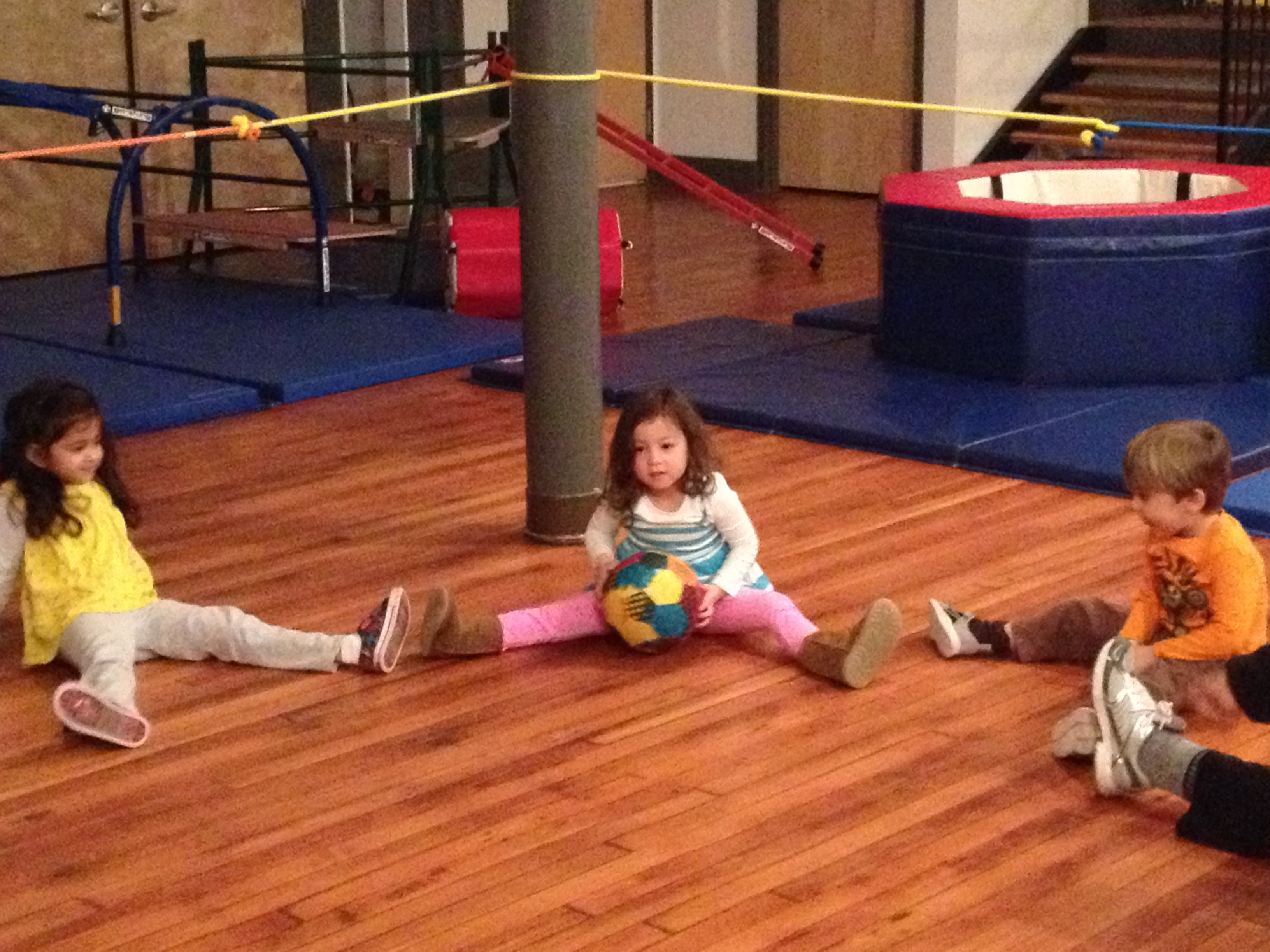
Students play Rolling the Ball (“Rueda la bola”), in which they roll the ball to a friend while reciting a Spanish chant. To play, students must also understand and respond to commands given solely in Spanish. They learn lots of action verbs this way!

At Home

A final piece that Ms. Warren is locking into place is with parents. Regardless of whether parents are themselves multilingual or not, TNCS is exploring ways to encourage and support language acquisition at home. You can learn along with your kid(s), or you can print and post the Word of the Week around the house. Ms. Warren can usually be found in attendance at TNCS Info Nights, and she is even considering holding an Info Night dedicated to language strategies parents can use at home.

Welcome to TNCS, Lisa Warren!

Have an anecdote, question, or comment to share? Your participation in this important discussion is welcome!

*Note: Mrs. Cooper-Danyali plans to implement curriculum maps for all other disciplines as well.

Multilingualism at TNCS: Optimizing Your Child’s Executive Function

Mandarin class

Combining games with Mandarin instruction. Hmmm—what does that carpet say?

There’s a lot of buzz currently circulating about bi- and multilingualism—people who speak more than one language are smarter, they tend to earn higher wages, and they have clear communication advantages amid increasing globalization, according to a recent NY Times article. Learning second and third (and beyond) languages is becoming an educational priority; in fact, the language instruction at The New Century School is a big factor in why some parents choose TNCS for their kids.

Those parents are even more on target with that choice than they might have initially known, as multiplying evidence shows. Turns out, how you acquire new languages is also important, according to preliminary research sponsored by the American Councils for International Education. Initial findings suggest that the more language kids get, the bigger their improvements in all sorts of metrics, from literacy to math to creativity to executive function . . .  and the list goes on.

Why Learning Another Language Matters: The Benefits

But before we get deeper into the how, let’s look more closely at the whys and wherefores of multilingualism. Learning a foreign language is not easy for most adults, if the proliferation of Rosetta Stone–type products is any indication. For kids (the younger the better), it’s a heck of a lot easier, which begs the question, why do public school systems generally wait until high school to offer foreign language instruction? Experts at the American Council on the Teaching of Foreign Languages agree that starting a second language early in childhood has many benefits, including increased competence in that language. More importantly, “Children who learn a foreign language beginning in early childhood demonstrate certain cognitive advantages over children who do not.” Furthermore, they argue that language acquisition is fundamentally a cognitive, rather than a linguistic exercise. In other words, learning a new language requires and hones problem-solving skills, which children are actively developing. Their flexible brains are ideal for the mental calisthenics language acquisition demands.

There are other ways in which “the earlier the better” comes into play—increased fluency in both the foreign and the native languages, for instance, as well as more accurate pronunciation and intonation are more easily achieved by young learners. By no means does this suggest that older learners, including adults, should give up trying to learn a new language; it just means that gains will likely be more modest. The point is, the optimal window for language acquisition is during early childhood.

Not only are kids’ brains better suited to the mental workout, but the workout itself—just as physical exercise does to the body—actually reshapes their brains to function even better. Bilingual kids’ brains always have both languages active internally even when they are only speaking one at a time. This forces their brains to be constantly monitoring their surroundings for what utterance is appropriate in the given context, sort of like being continuously presented with a minor problem to solve (or, to continue the exercise metaphor, posing low-level chronic resistance to muscles). Far from confusing kids, as once thought, the internal conflict makes their brains more nimble; they think more clearly, not less. To test this, in one experiment, scientists presented a group of kids ages 4 and 5 years with the Dimensional Change Card Sort Task, which required them to sort the cards first by color, then by shape, even when the color didn’t match (this video shows how difficult this task is for preschoolers). To perform the task, the child needs to be able to manage conflicting stimuli, a marker of executive function (for which we’ll borrow this definition: “a set of processes that are responsible for the conscious control of thought and action”). The bilingual children consistently outperformed the monolinguals.

Merging Practical Life skills with immersion in Spanish in a Primary classroom.

The student carries out instructions given in Spanish, successfully coordinating a progression of cognitive functions in order to assist the teacher with cleaning the chalkboard.

With evidence that bilingualism leads to “cognitive flexibility” accumulating in several studies in the early 2000s, researchers next investigated at what age the advantages begin to manifest and found through meta-analysis of existing studies that at age 2 years and even earlier, bilinguals exhibit better cognitive function than their single- language counterparts.

And, although it’s easier to learn other languages at younger ages, the benefits are lifelong. Bilingual patients stave off dementia in older adulthood better and longer, for example. (See below for links to the original research papers with loads more information and data.)

TNCS’s Approach

Now back to the “how,” for the latest development in this ongoing inquiry, it seems that immersion in another language facilitates its acquisition. So, with language, it’s not just the earlier the better, but also the deeper the better. Language immersion is just what it sounds like, except with an additional nuance in the scholastic environment: the student learns the language and is also learning other subjects in that second language. Thus, math, phys ed, or art instructions are presented in, for example, Spanish to native English speakers. Given the increasing diversity of the U.S. population, the U.S. Department of Education’s Institute of Education Sciences is currently funding research on the efficacy of the immersion approach, with all indices pointing to favorable results. As stated above, the preliminary findings show better academic performance.

So, to wrap up, what does all this have to do with TNCS? Well, in several important ways, TNCS is getting it right.

  • First, TNCS provides both Spanish and Mandarin language instruction, arguably the two most relevant non-English languages in the changing U.S. demography.
  • Second, language instruction begins as early as possible—as soon as the student matriculates. For pre-primary–enrolled students, this is age 2 years.
  • Third, immersion is central to TNCS philosophy. Pre-primary students are fully immersed in either a Spanish or Mandarin classroom. Primary and elementary students get both formal instruction in Mandarin and Spanish and partial immersion in Spanish (e.g., phys ed at The Lingo Leap might be taught in Spanish, etc.).
  • Fourth, TNCS encourages parent participation in this important process. Print and post the Word of the Week in Spanish and Mandarin featured on TNCS’s website. Parents can learn right along with their kids!
  • Fifth, Montessori education inherently cultivates executive function; therefore, the pairing of Montessori-inspired and language curricula is synergistic—each component enhances the other.

It’s a beautiful thing.

Hello Kitty signifies a job well done!

Elementary students even learn Mandarin characters, recording them in practice books!

For more information:

  • Read the seminal 2004 article from Developmental Science here.
  • Read the 2009 article from Proceedings of the National Academy of Sciences of the United States of America here.
  • Read the 2010 article from Journal of Experimental Child Psychology here.

Ciao! ¡Adiós! Auf Wiedersehen! Au revoir! Zàijiàn! Ilalliqa! Shalom! Sayonara!

Please contribute to this dialogue; let us know your thoughts in the Comments section.

Exercising That Mind–Body Connection

New for the 2012–2013 school year, The New Century School provides a gymnasium for physical education! In keeping with TNCS’s progressive, forward-thinking style, though, this gym is no ordinary gym. The Lingo Leap (TLL), as it is now known officially, integrates physical exercise with cognitive development—moving and learning!

TLL’s philosophy is that brains work more efficiently when the body is also engaged, and there’s plenty of hard science to back up this notion. In fact, neuroimaging shows that during movement, more brain areas are lit up, meaning that more of the brain is active and in use. Why not take advantage of this “powered-up” state and give the brain something to do with its extra energy? Let’s face it—one of the most challenging tasks we can give our hungry brains is learning a new language.

The Lingo Leap is run by Amy Pothong

TLL Director Amy Pothong

So, TLL focuses on multiple language acquisition; currently, yoga, dance, and other movement classes are being offered for ages 2 and up (including for interested parents) in your choice of English, French, or Spanish with plans to add classes in Mandarin and Arabic soon. TNCS students, by the way, get regular phys ed at the gym in Spanish. TLL Director Amy Pothong says that “when [students] are totally immersed, they speak like natives.” Although this idea might sound revolutionary, it’s actually “getting back to the basics.” “As we get older,” says Pothong, we must get more socially standardized, which can hinder our natural ability to learn through movement.” Babies, she points out, largely communicate through gestures, which are a very basic form of movement and hearken back to the earliest human communication by our ancient ancestors.

The connection, then, between bodily movement and thought conveyance is well established in our being. Two main schools of thought have emerged to explore how we can optimize this connection to actually learn to communicate better (or at least in more than one language). First was Total Physical Response (TPR), developed in the mid-1960s by Dr. James Asher as a method of learning a second language. Asher noted that the conventional approach to learning second languages differed dramatically from how infants learn their first language. Infants learn to communicate by internalizing language, a process of protracted listening and absorbing. TPR is a technique that replicates that process for learning second languages and beyond by giving a command, modeling the action described in the command, and then having the student imitate that action. Students are not initially asked to speak, but to comprehend and obey the command. Understanding is at the root of language acquisition, according to Asher. This makes a lot of sense when you consider how babies learn to respond to increasingly complex utterances before ever verbalizing a thought.

Language acquisition expert Stephen Krashen has found this method very effective. Read his article on TPR here. He says, “A constraint on all activities that we might consider is that they be interesting for both the teacher and the students; it is difficult to fake enthusiasm.” Enter TLL with engaging movement classes for kids plus their parents!

The second school of thought is known as SPARK. SPARK was put forth by Dr. John J. Ratey, a clinical associate professor of psychiatry at Harvard Medical School. Exercise, contends Ratey, dramatically enhances circulation to the brain and encourages synaptic growth, thereby priming the brain for improved function—providing the “spark,” in other words. Improvements in function include both mental health as well as cognitive ability (think, learning languages at TLL!). A significant corollary to SPARK theory is that exercise also improves academic performance after exercise, whereas TPR focuses on learning during movement. Read more about Dr. Ratey’s findings and about his latest book, Spark: The Revolutionary New Science of Exercise and the Brain, on his website. (His wasn’t the first, incidentally: Plato argued for the ideal education to incorporate physical training in The Republic more than 2,000 years ago.)

Gerstung equipment can be moved and reconfigured in endless ways

Gerstung Movement Education equipment at TLL

About that physical training, TLL features state-of-the-art Gerstung gym equipment that “[encourages] children to use their own innate curiosity to stimulate movement. Created by Siegfried Gerstung, a world-renowned educator, Gerstung equipment is not only customizable and moveable to provide “movement education” in three dimensions, but the Gerstung company is locally owned, with that commitment to community shared by TNCS and TLL.

Director Pothong and her staff are themselves polylingual, and instructors are native speakers of the language they are teaching in. Pothong is Thai and may even hold Thai cooking classes at TLL next year. It’s a “multipurpose space,” she says, “that encourages social, mental, verbal, and physical development.” (And culinary!)

Registering for classes is a snap on TLL website–make the jump to polylingualism!

TMCS students stretch and move, following instructions given in Spanish

TMCS students participate in Spanish gym class

Hello World!

The New Century School (TNCS) is aptly named. It provides a learning environment that is in sync with the times–this is a new century after all, not to mention a new and changing world. To be responsible, conscientious, engaged members of that world, our children will benefit from a fresh approach to education. TNCS is about participating in a community, and community happens at both the micro and the macro levels. Students of TNCS learn appropriate interaction with one another in the classroom and throughout the school as well as how to navigate broader social contexts through immersion in other languages such as Spanish and Mandarin Chinese. The one-language model of education just won’t cut it in today’s global community.

picture of the front of the school

Welcome to TNCS!

So, welcome, friends and families, to the inaugural edition of TNCS blog! We are thrilled to be officially up and running with what we hope becomes a forum to share language immersion and Montessori education–related news and research as well as to promote dialogue among readers.

This blog’s mission is to explore what it means to be a Montessori-inspired language immersion school, what it means for the children to be attending such a progressive school, and what it means for the parents of those children. TNCS brings a distinctive flavor to language immersion and Montessori education in many ways, and we’ll explore those unique offerings, too!

The 2012–2013 school year brings many exciting new things to TNCS. Stay tuned to learn all about these fantastic new features!

Enjoy!