TNCS Middle School Capstone Trip: Return to Costa Rica!

At The New Century School, Service is a Core Value, and, throughout the year, students take on various initiatives toward their service-learning goals, from intra-campus projects to broader, community service–oriented endeavors. To really bring home what service learning means, though, every other year, TNCS students get to experience how their efforts can have farther-reaching impacts.

Costa Rica, Here We Come!

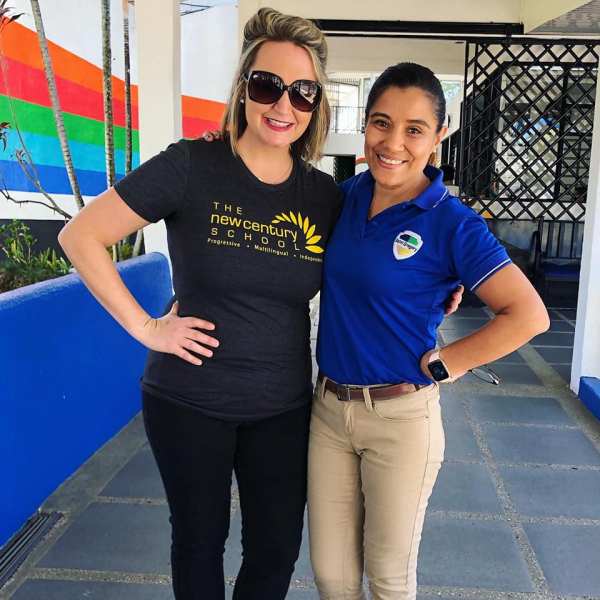
On April 6th, TNCS Head of School Erika Johnson, along with Alexis Watson, TNCS Director of Student Support, accompanied nine 7th- and 8th-graders on their wonderful, amazing, long-awaited capstone trip to Costa Rica! This was the fourth such international service-learning trip, with the very first happening in Puerto Rico in 2019, followed by Costa Rica in 2020, and back to PR in 2022. Ms. Johnson is the first TNCS Head of School to chaperone the trip, but, recognizing the weighty responsibility of students traveling abroad, she felt it necessary to ensure their safety and guide them through the experience as well as to represent the school.

For many of the students, this trip marked significant firsts: first time out of the country, first time with passports, and the first time traveling without immediate family. It was a wonderful way to develop responsibility and independence. “At times, students were overwhelmed with the logistics of it all,” said Ms. Johnson, “like navigating immigration, where they had to stand in line and show their passports and other documents. Understanding how important all those documents are and being serious in the moment when asked questions by officers, all of those things became very real. That was a big revelation for them.”

Activities and Adventures

Their trip comprised 5 days in Costa Rica, bookended by a day of travel coming and going. The group arrived in San José and then drove to Arenal, a place bursting with natural beauty and adventure. Their visits also included Puntarenas on the Pacific Coast (there was a lot of criss-crossing the country by bus—a 4-hour ride!)

Their itinerary, planned by Explorica, was absolutely packed with exciting activities, including hiking up a volcano, horseback riding, ziplining, kayaking, and swimming in the ocean. They walked between 15,000 and 20,000 steps each day! The service-learning aspect came in the form of community service work at a local nature preserve (Manuel Antonio National Park), which meant clearing the brush from the road so it didn’t catch fire and then cause a threat to the resident animals.

Said Ms. Johnson: “I knew from experience that Explorica would provide that necessary level of care and professionalism. Our local guide, Raquel, was amazing. She took care of the logistics so I could focus on caring for students. She managed our busy schedule, which allowed me to make sure that students needs were met.” As Ms. Johnson described it, throughout the trip, every moment was maximized, from early morning wake-up calls to late-night reflections. “It rained the first 4 days,” she said, “but we did not miss a beat. It’s a tropical climate, and rainy weather is expected—‘la pura vida’!”

“Students were overjoyed with being in the tropical environment because it was just stunning. On a hike up the volcano we stopped in our tracks at the sounds of a howler monkey. Iguanas ran across our paths and snakes stared at us from the trees. They loved it all.”

Hablando Español

Beyond the thrill of adventure, one of the primary purposes of the middle school capstone trip is to use one of the languages students have been learning throughout their academic careers at TNCS in an authentic/immersive environment. Consider this box checked! Said Ms. Johnson:

It took a day or so for students to really jump in and use their Spanish continuously. But, as they exercised those muscles, their confidence grew. My Spanish improved, too, because I was trying to model using it. My Spanish is limited, so it was nice when they corrected me or explained something. That was helpful, especially when we were at local restaurants. One of my favorite aspects of this trip was seeing students realize that speaking Spanish is a skill and a talent. That really strengthened their confidence in their own personhood.

Reflections and Transformations

The trip fostered personal growth all around. Students not only learned to rely on each other for support, and discovered the fun and value of speaking Spanish in an authentic environment, but they also gained a deeper appreciation for shared experiences. This latter discovery is all down to Ms. Johnson, who, for the first time in a TNCS capstone trip, made journaling a part of the trip. She passed the journals out at the airport prior to departure and asked students to write about five things they each want to accomplish on the trip. (Final reflections on the trip in its entirety were due a week after returning to TNCS.) Once back at school, they can visit classrooms to share with younger students what they learned on the trip.

When we don’t incorporate those kinds of activities, it’s a missed opportunity for the bonding and even for their own appreciation for what has happened to them internally. I think those are some of the ingredients of that special sauce that make group dynamics work. It takes some intentionality to achieve what we’re trying to get out of the trip. So, each day students journaled about their experience, and I think the ability to reflect on what they did that day allows them to solidify memories and carry that information forward.

Journaling happened daily and was freestyle apart from the beginning and ending prompts from Ms. Johnson. This not only helped students gain insights into their experience, but it also infused the trip with deeper meaning. Ms. Johnson made sure that layer of meaning shone through in other ways as well: “On the last day, students had two activities: one was a recorded thank you message to their family and the second was that I made a little book from Ms. Watson, and each student wrote a thank you note to her.”

Meanwhile, Ms. Johnson herself participated in some reflection as well. She also had goals, both as an educator and as a traveler, all of which she accomplished:

My first goal was to learn something new about each student. Another was conquering the zip line—you can’t come this far not to do everything. Others were to see a sloth (I saw five, including a baby—they were so cute!); lay out in the sun, which I love; and last but least was to eat fresh mangoes.

As for her favorite parts of the trip, Ms. Johnson again approaches that wearing both her personal and her professional educator hats.

My favorite part when I’m in tropical places is always watching the sun go down. It was so lovely with the waves and the palm trees and the quiet. Seeing the students overcome challenges was also memorable. They might have started off saying, ‘I don’t know if I can do this,’ but to hear them say, ‘I did it’ by the end was really special.  Additionally, the trip was transformative for the students in that they have a different appreciation for each other. I don’t think it’s possible to have shared experiences and not see each other.

Ms. Watson also shared some reflections. “My favorite experience was ziplining!” she said. “To be amongst nature in that way was truly breathtaking. To be in the middle of the tropical forest flying is a once-in-a-lifetime experience that I will never forget.” As for goals, she says:

My goal was to support students in trying new things and following through with all the amazing adventures we went on. I believe they received a newfound piece of their independence along with a sense of cultural understanding of traditions and customs outside of their own. Our students were able to see how other people do some of the same tasks they do in a different way. I believe they were able to see that the world is so much bigger than what is in their backyard, and to me that is the joy of international traveling. In supporting students, I was able to explore new things myself and partake in new adventures as well.

Student Perspective

Immersed was able to convene briefly with the students to learn about the experience from their points of view. While some clear themes emerge, it’s also true that their experiences were unique—each student got something a little different out of it. It’s eminently clear that this trip was deeply meaningful to them. Their responses cover their favorite part of the experience, what most surprised them, and what they feel they took away from the experience overall.

I learned a lot of new skills like responsibility and how to be away from my mom. I also learned a lot more Spanish. We did a lot of really cool activities. My favorite was going to the beach.

I also learned how to be away from home for the first time. It was also just it was a nice country. I think my favorite part of the trip was being able to communicate in Spanish, to be able to practice it. I also liked going to the hot springs, which was really relaxing and calming.

My favorite part of the trip was the horseback riding. What I learned from this trip was to be more independent because I rely a lot on my mom. I practiced a lot of my Spanish over there. The most surprising thing for me was how much I missed my family. The most surprising thing was the weather, the constant change from rain to sun.

I liked going to a new country and experiencing things for the first time, especially with my school. I liked being more independent and speaking the language. My favorite part was definitely the food—the rice and beans. The food was also the most surprising because they stick to the same meals for breakfast, lunch, and dinner, unlike here.

The most surprising thing was how different the money was: 500 colónes (₡) equal 1 dollar. It was fun to figure it out. It was a really good opportunity for me to learn how to talk to people in a different language, and it was good to experience the culture. My favorite experience was going to the fruit markets because I got to try new fruits.

Most surprising to me is that there was a lot of wildlife and nature in Costa Rica. I could tell they really care about it a lot. My favorite experience was learning about the country with my friends. We got to go hiking up a volcano, which was really fun with friends. We also learned about the volcano and how it formed. What I got out of the trip was learning how to be independent; we weren’t there with our parents, we only had our friends and teachers, which was kind of different, but I liked how it taught me to be independent.

The most the most surprising thing to me was that there were sloths. We went to an animal sanctuary and there they were! Not only did I get to learn some Spanish words from just natural exposure, but I got to speak Spanish to other people and practice my pronunciation with someone who actually spoke the language. My favorite experience would probably have to be hiking, just because I like the opportunity to be active. Even though there was a lot of rain, the rain cleared, and when we reached the top, the view was just breathtaking.


On this important journey, goals were achieved, memories were made, and bonds were strengthened. From spotting sloths to conquering fears, each student left Costa Rica with a sense of accomplishment and a trove of unforgettable moments. Returning home, they carry with them not just memories, but a deeper understanding of themselves and the world around them.
TNCS 7th- and 8th-Grade Capstone Trip: Costa Rica!

For the first time in several weeks, Immersed is pleased to bring you a post about something that starts with C-O that is not COVID-19! This week, we return to the halcyon pre-pandemic days when things we used to take for granted, like travel, happened all the time. For 7th- and 8th-grade students at The New Century School, this meant their capstone middle school trip to Costa Rica.

In the nick of time, TNCS students accompanied by homeroom teacher Daphnée Hope and Curriculum Coordinator Adriana DuPrau (who chaperoned the first such trip in 2019), departed Baltimore on March 3rd, destination, San José. The trip was a success from the moment it started—even the flight over was fun! “For example, the flight attendants asked one of the students to come up and share what our school name is and what we were doing,” said Mrs. DuPrau. They returned home on March 8th.

Getting Acclimated

On arrival in San José, they met their wonderful driver, Ronald (whom the students affectionately renamed “Ronnie” and then “Uncle Ronnie”). Uncle Ronnie drove them to their first house just outside of San José in the mountainous Cloud Forest region. “We went in first to see how we wanted to set up the kids—two to a room in bunks, boys with boys and girls with girls,” explained Mrs. DuPrau. “Our first house was really nice,” said Mrs. Hope. “It had a big, beautiful yard and dogs, so the kids loved playing outside. They would play tag, play with the dogs, go on a little hike. There wasn’t a TV in the first house, which meant that we were really together. We also took away their phones; they were only allowed to have them to call their parents. This was so the kids actually hung out with each other without that technology barrier. [Mrs. DuPrau] had learned that from prior experience,” she continued.

This slideshow requires JavaScript.

“Our landlord was so helpful and really wanted to find ways to make it a learning experience for the students, even arranging for us to have a Costa Rican cooking lesson!” said Mrs. DuPrau. “Cooking is one of our funniest memories, and the students still talk about it,” added Mrs Hope.

Legend of the Psycho Sauce

—As recounted by Mrs. Hope with asides from Mrs. DuPrau.

The experience of our first grocery store was pretty awful. I’m a really good cook when I have the right ingredients, but our driver misunderstood when we said we needed groceries but didn’t want to spend a lot of money and took us to a budget store that didn’t have what we expected. We had been traveling since 2:00 a.m., the kids were hungry, and it’s already evening. So, we decide we’ll just make something simple—how about pasta? Well, they didn’t have normal pasta sauce—just little tiny packets of tomato sauce and salsa. Everything’s in Spanish, we were confused, we couldn’t find fresh produce, we’ve never fed 13 people before . . . (that was the hardest part). I find a carrot and what I think is spinach (it wasn’t—I still don’t know what it was) to throw in the sauce because I’m thinking the kids probably need some vegetables. Then, we realized at home we don’t have enough tomato sauce. So, we add in some salsa. It was just disgusting and way too spicy. The kids thought it was so funny—they call it the ‘psycho sauce’.

After tasting it, some students decided they weren’t actually hungry. Others got really silly and blamed it on the psycho sauce. We were all deliriously laughing.

One night we did make really good tacos. We explained to Uncle Ronnie that we needed a different store.

Saint Gregory School Visit

88129714_10157336338973983_479570348849758208_nOnce they were all settled in to their new digs and (somewhat?) well fed, the group trundled off to their first big adventure—a visit to Saint Gregory, former TNCS teacher Raquel Álvarez’s current school. Sra. Álvarez and her husband Robert are well known to the TNCS community, and Sra. Álvarez and Mrs. DuPrau taught together in the very beginning of TNCS, Sra. Álvarez teaching a preprimary Spanish immersion homeroom as well as Spanish to the kindergarteners, and Mrs. DuPrau teaching kindergarten homeroom. As a side note, some of the graduating middle schoolers on this trip were taught by those two as little ‘uns, so, it was really like one big happy family reunion! The Álvarezes also helped plan the trip and activities, being locals! They also know Uncle Ronnie very well—he is a cousin of Sr. Álvarez!

Via Facebook chat, Sra. Álvarez described the experience from her perspective:

When I returned home after leaving TNCS, I always had the dream of having students from Baltimore come to visit my country. In March, my 3rd-grade class was extremely excited to welcome Mrs. DuPrau and Mrs. Hope and their students to our school. Some of the students were even mine, when I taught at TNCS. It was a wonderful experience for our students from different grades to interact socially with TNCS students and playing soccer and basketball together. However, for me, the best part was watching the kids carry out conversations. We highly enjoyed having a piece of TNCS here in Costa Rica, and we look forward to having more opportunities like that in the future. Pura Vida!

The group’s visit to Saint Gregory’s was designed as both a service-learning activity and to get an idea of what education in Costa Rica is like. The school itself is a private English immersion school with a student body starting with preschool and going all the way through high school. “They were really thankful for us to be there and to speak English with them,” explained Mrs. DuPrau. “We separated the TNCS kids into groups of three or four, and some sat in with elementary classes and some in upper elementary. We also worked on organizing the library, which the principal was so excited about as well as about our visit in general.” Mrs. Hope agreed: “They loved it—the kids there loved it, and our kids loved it. They got to just sit and chat together.” They also had lunch altogether and played sports games at recess. “Our 8th-graders were completely schooled by their 4th-grade boys in soccer,” laughed Mrs. DuPrau.

This slideshow requires JavaScript.

“Now that they know us, they want us to come back. Next time we could help more with their library, for example, by everybody bring two favorite books to add to it,” said Mrs. DuPrau. “We came in with good intentions,” agreed Mrs. Hope, “but next time we’d like to do more.”

Nature, Here We Come!

After the school visit, Uncle Ronnie drove to them to their second house by Esterillos beach. “This was a really big house with a beautiful backyard and a pool,” said Mrs. Hope. “The kids swam every morning and every night. Being so near the beach was really fun, and the kids especially loved the pool,” she said. Mrs. DuPrau agreed:

We let them swim each morning because they would always be ready to go when we asked, no matter how early. They were very cooperative and had very good attitudes. We set some rules in the beginning, for instance, they had to stay in their rooms until at least 6:30 am (a few of our friends had shared that they are early risers). When they did come out, they were so respectful and quiet. Mrs. Hope and I would wake up and find a few of them just hanging out. We also asked the kids to clean up after themselves as well as help clean the kitchen in small group rotations.

La Paz Waterfall Gardens

The next day they visited La Paz Waterfall Gardens, where they were inches away from some adorable sloths. “We got to see all of the beautiful plants and the flowers—Costa Rica is so lush and green. We also saw lots of other animals, like jaguars,” said Mrs. DuPrau.

This slideshow requires JavaScript.

The next day was their “day off.” “We went tourist shopping, had a typical Costa Rican lunch (rice, beans, meat, plantains), and then headed to the beach for about an hour, but the kids wanted to get back to the pool,” explained Mrs. Hope.

Manuel Antonio National Park

Next up: an amazing tour of Manuel Antonio National Park. “The beach was absolutely incredible. It was like kind of like an inlet, so there were no big waves or undercurrent, and the water was so warm and clear. We spent our whole last day just relaxing there,” said Mrs. Hope.

Reflections on the Trip

With this trip becoming an annual event for TNCS middle schoolers, Mrs. DuPrau and Mrs. Hope are finding ways to refine it and make it better each time.

Mrs. DuPrau’s Takeaways

Something I’ve learned is that I tend to overbook. I did this with Puerto Rico and maybe here again in Costa Rica. Middle schoolers do need time to chill, as they kept telling me. We did a lot with nature, which the kids would maybe prefer less of because they really just wanted to hang out at the pool! They did use their Spanish a lot, which is important. I really want to go back to Costa Rica on future capstone trips.

Our saving grace for the trip was having our own personal chauffeur. He took us to great restaurants we never would have been able to find on our own. He always connected me to wi-fi in his car, so that anytime parents sent me a message or a question, I was always able to respond quickly.

Both of our houses ended up working really well space-wise. And the kids could not have been better behaved. Mrs. Hope and I still talk about that. Nobody got in trouble; we never had to call parents. It was really nice. We really get to know a lot of the kids in a different way.

I wanted them to have a new experience—to enjoy being teenagers away from their parents and showing that they could be independent and responsible. I wanted them to get to be happy for a week straight and hang out with their friends. They have such a small cohort, and I just loved seeing them love each other so much and getting to have so much fun.

IMG_7503-M.jpgMrs. Hope’s Takeaways

In the second house, our bedroom was on the first floor, and so was the boys’ bedroom—they were all in one big room. We couldn’t believe how quiet they were being, even all together like that. Then, on the last day, we realized it was because our bedroom door was soundproof. We happened to open it at one point and discovered how loud it actually was out there!

Maybe we should rebrand this capstone trip as less of a service trip, because nobody wants middle schoolers as volunteers, just high school age and up. We’ve learned what works, what doesn’t. We’ll do some service, but I also want to make it fun.

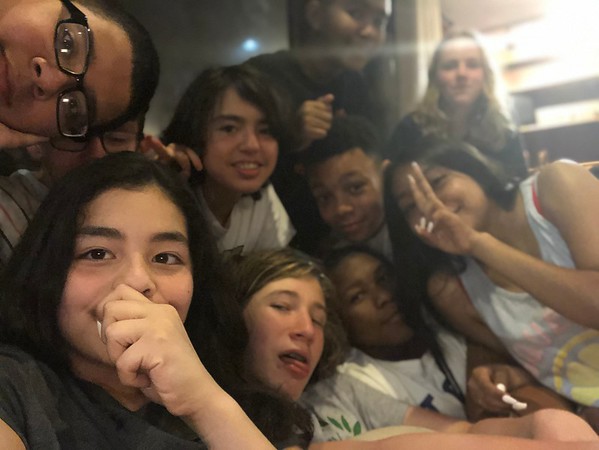
This cohort was like one big family the whole time. Everybody got along from the moment we met at the school at 2:00 in the morning to getting dropped off to their parents at 2:00 in the morning a week later. Everybody was a big fan. They were so supportive of each other, especially with the zip lining. They were each other’s biggest cheerleaders. They all got along really, really well. I feel like this trip really unified them afterward; they have been even more vulnerable and open and honest with each other since then. It’s really neat to see that.

I feel like the best activity we had was the zip line because it got everybody out of their comfort zone. But for me what was most important was the kids just having fun, getting to experience a new culture, and introducing them to the idea that it’s a big world. It was really neat to watch them open their eyes to it.

“My favorite activity was zip lining on the Superman course!”

Student Takeaways

The students’ reflections are quite touching and will also help inform the planning of future trips. Note that many of their quotes have also been interspersed with photos as captions throughout this post.

The pool was where we got to hang out as as real, real good friends and not just as classmates.

What stuck with me was how similar Costa Rica’s landscape and architecture is to Indonesia, my mother’s birth country. There was a volcano near us.

I got a lot closer to the class. That was definitely one of the biggest things.

I wasn’t that close with everyone in my class, and I bonded more with them during the trip. It was nice. I want to stay in touch with them after we go to our separate high schools.

It was good practice speaking Spanish. We have been learning it for so long—it was fun to use it.

I enjoyed getting to see another country and especially being able to do it with my classmates.

I left feeling like a different person and realizing that I can just be myself. I grew a lot by being around so many other people who were kind and wanted to be good friends.

I’m a big beachgoer so I really liked Manuel Antonio beach, with the clear water and being able to see the rocks and coral underneath. I’ve been to a lot of beaches, but this one was pretty special. It was also memorable because one of the other guys was pretending there was a poisonous vulture in the water. It was rather amusing. Squawk!

I would say that I grew some because I got somewhat more confident, like from the zip lining and being 130 feet in the air. My friendships were also strengthened.

It was my first time going out of the states, so I was pretty jittery, but Costa Rica was nice because it was a new feel of things and a new place to see and explore. The climate was so different. In Baltimore, the weather is just all-around crazy. But, in Costa Rica, it’s always sunny and hot—it’s a good climate to hang out in. I also liked learning about a new currency, the colón (plural, colones).

I grew a lot socially, because I didn’t really use to like talking to people. I realized that once you get to know them, they’re usually pretty cool. I also liked practicing Spanish with Uncle Ronnie.


This post would not be complete without a huuuuuge thank-you to TNCS parent Damian Mosely, who so generously hosted two Blacksauce Kitchen (his restaurant) breakfast biscuit sales at TNCS and donated all of the proceeds to the middle schoolers. Their trip would not have happened without his incredible support.