Daphnee Hope: TNCS’s School Counselor Shares Her Philosophy of Positivity!

At The New Century School, the whole child is important, and this is not just lip service. Not just students’ academic selves, but their psychological, social, emotional, and artistic sides are cared for and cultivated. So, although the 2021–2021 school year has been particularly challenging for students who are still coping with the fallout from the pandemic, TNCS students are fortunate to have a very important addition to faculty this year to help: Daphnee Hope, TNCS School Counselor. Mrs. Hope began counseling during the last school year in a limited capacity but has now made it official, and TNCS students are flourishing under her guidance. Together, her and TNCS Dean of Students Adriana DuPrau have joined forces to ensure their health and happiness.

Counseling

Mrs. Hope has been meeting with TNCS students through whole group lessons, targeted small groups, and one-on-one counseling. Counseling has been really fun this year,” said Mrs. Hope. She feels she can really blossom in this role, and with no existing curriculum to draw on, she has been developing her own. This has given her the freedom to move in the directions she feels most necessary and that will yield the most fruit. At the same time, she says, “there’s a big learning curve, and I am still finding my voice as a counselor. There’s a lot of wonderful things, but it’s also challenging, so I’ve been making connections with other school counselors in the area and asking questions about general policy and what resources they use.”

She is on campus Mondays, Wednesdays, and Thursdays and sees each classroom (elementary and up) twice a month. Character-building lessons differ and are based on developmental age.

Kindergarten Through 3rd Grade

For this age group, Mrs. Hope does a 45-minute character-building lesson based on the Positive Action curriculum, whose premise is that positive actions make us feel better about ourselves and brighten our lives, which leads to making more positive choices. “It’s all about how positive actions make you feel better as a person. When you feel better, you radiate goodness, and then you’re making other things better—a ripple effect,” she said. She uses puppet animals with the kindergarten students, and a system of adding the names of students spotted making positive actions on a special elephant hanging on the wall for all to see for the second- and third-grade students. She says this is helping all students notice more and more good things happening around them.

“For K through 3, the whole month of November was about communication,” she explained. “We started with nonverbal communication and body language. We practiced how it’s important to look in the eyes of the person you’re talking to, and we also talked about active listening versus passive listening. When somebody asks you something, you don’t immediately change the subject to talk about yourself; you listen and then you make a follow-up comment.”

4th Through 6th Grades

Although Mrs. Hope started this group out with Positive Actions, she found the need to adapt and adjust for this spectrum of ages. So she polled them on what kinds of things they might enjoy exploring. Relationships and other social aspects are historically challenging areas for this age group, so Mrs. Hope has been talking with them about peer influences and otherwise tailoring her monthly themes to what their needs are.

“They need a lot of support with self-control, so I’m trying to work in partnership with the teachers to make plans for individual students,” she said.

7th and 8th Grades

For middle schoolers, Mrs. Hope is using the Habitudes® curriculum that the counselor at Friends School recommended. “It involves lessons centered around the core values of self-discipline, motivation, and responsibility,” she explained, to cultivate leaders and “[equip] them to navigate through life’s challenges and opportunities”. Mrs. Hope says TNCS 7th- and 8th-graders are loving it!

“Habitudes has challenged our middle schoolers to slow down and think about the qualities that make great leaders. Last month we focused on perspective taking,” she said. This month, we are jumping into responding with empathy, both with ourselves and others.”

Advisory has a place here, too.

Small-Group Sessions

In between classroom-session weeks during the first two school quarters, Mrs. Hope also holds small-group sessions during lunch for 4th- through 8th-graders. Students join these groups based on their individual needs, such as managing anxiety, building self-esteem, or managing grief and loss.

Every other week we do a ‘lunch bunch’ depending on their needs, so I surveyed students about what areas they feel they need support in and how they rank their mental health. That’s a big focus right now, just giving them the space to work on their mental health because I think a lot of them are struggling with it. So, for example, in the managing anxiety group, we talk about irrational thoughts and how they snowball. We think our thoughts are reality, but I’m trying to work with them on just because you think something, doesn’t mean that’s what is true.

In quarters three and four, she’ll hold small-group sessions for the younger TNCS students in building north. Their needs are much different, given their developmental stage.

One-on-One Counseling

As her time spent with students is fairly intensive, Mrs. Hope has picked up on some issues. “I have become aware that many of our middle schoolers are struggling with their mental health,” she said. Mental health issues are all-too common in this age group, but the last 2 years have only increased the incidence:

Poor mental health impacts all areas of a child’s life, ranging from academic success to feelings of self-worth to healthy peer interactions. The last two years have been particularly hard on our children as they journey through adolescence. Scary statistics show that between February and March 2021 alone, the number of emergency room visits increased by 50.6% for presumed suicide attempts among youth in comparison to 2019. At the moment, I am working on improving the mental health of our students.

In addition to having one-on-one conversations with students, Mrs. Hope might also make health referrals to outside therapists for those who could benefit.

Social and Emotional Learning

The structure Mrs. Hope has created for reaching all TNCS students in various ways is very well thought out and executed, but how is she putting all of this into practice?

Suffice to say, she has been busy. She created a social-emotional learning (SEL) calendar for every grade level with monthly themed topics, for example. This month, because it’s a short one, we are doing gratitude across the board,” she explained. “It’s going to look different in each classroom. For 7th and 8th grade, it’s looking at the physical, mental, social, and spiritual effects of gratitude on the body (see the slide show they’ve been studying from here). With younger kids, it’s exploring the power of saying, ‘thank you’. Teachers are implementing these conversations in their morning circle time, core classes, hallway transitions, lunch, and so on, all across the board.” Mrs. Hope is trying to make it easy for teachers to implement and reinforce these mini-lessons anywhere. “The message that I’m conveying twice a month has to be reiterated by teachers, who are with their students 85% of the time, or else it’s not going to stick.” Younger students work on things like respecting physical space.

Social Media

In the 7th- and 8th-grade classroom, discussions about social media have been foremost. “As you may know,” wrote Mrs. Hope in an email to parents, “there is a worrying correlation between screen time and depressive symptoms, particularly amongst teens. Ms. Sussman and I are spending the month of November discussing all things social media with your children—the pros, the cons, and the in betweens. We would love your partnership in this conversation and in your attention to your child’s weekly screen time.”

After watching a TEDx talk by a social media expert, Bailey Parnell, students shared that they appreciated how honest and realistic she was, particularly about how important social media is many peoples’ lives and how it all comes down to how it’s used. “Learning about and talking about these topics allows us to make informed and intentional decisions. Parnell called this, ‘practicing safe social,’ which, yes, a few students chuckled at,” said Mrs. Hope.

After they took the ISEE exam in mid November, middle schoolers watched The Social Dilemma, a “documentary that explores the relationship between technology and human behavior and will prompt more discussion and reflection about student usage,” said Mrs. Hope. (You can read more here about the film.)

So, they have been talking about the effects of addictive behaviors and how unplugging from time to time is so important. Homeroom teacher Gab Sussman has been all for it, saying, “Mrs. Hope has assigned our class to learn more about and discuss the roles of social media in our lives. This week, we watched some videos that touched upon a few important topics, such as how social media affects our friendships, both positively and negatively, and how social media can portray and influence falsehoods about our lives. I appreciate the opportunity to be having these important conversations within our Homeroom!”

To demonstrate the rewards of de-screening, Mrs. Hope came up with the idea of monthly nature days; read about the very first below.

Gender Inclusivity

As TNCS has aged up and developed a true middle school, the needs of these older students have also grown. Even so, TNCS has always fostered an environment of inclusivity. “TNCS students embrace this inclusivity, especially around the evolving topic of gender identity,” said Head of School Tad Jacks in a letter* to parents.

In a separate email to parents, Mrs. Hope wrote:

In my role as the school counselor, I will be delivering developmentally appropriate health lessons that are inclusive of all sexual orientations and gender identities. Research notes that there is a direct correlation between a student’s sense of belonging and their academic achievement. In fact, ‘many students may be more likely to prosper academically in settings with more collaborative modes of learning that acknowledge students’ personal experiences’ (Kaplan and Miller 2007). As a result, it is vital for educators to carve out spaces where students feel seen and supported as their most authentic selves.

So, when she’s not with students, she has been working on writing TNCS’s gender-inclusive policies for the last 3 months. “We’ve been talking to other schools and looking at research and trying to develop policies that are very supportive of all of our students and also respecting their privacy. The 7th and 8th grade are definitely keeping me on my toes!”

The first gender-identity lesson for middle schoolers took place in November. “We explored how gender exists on a spectrum, clarified terms such as ‘gender expression’ and ‘gender identity’ and unpacked how to support each other by using correct pronouns. Many students were already educated and comfortable with this topic,” she said. Students were very engaged, respectful and asked supportive questions. I am very proud of the dialogue that emerged from this discussion.”

At the end of the lesson, they could complete a form for their teachers that shared more about their gender identity and pronouns if they chose.

The resources they used to launch their gender identity and gender inclusive discussions were amaze.org, GLSEN, and the Genderbread Person v4.0, “a teaching tool for breaking the big concept of gender down into bite-sized, digestible pieces.”

*Read Mr. Jack’s full letter here.

Pen Pals

The 3rd- through 5th-grade groups are partnering with the United states Postal Service to do a pen pal project. “They place you with classrooms in different regions of America, and you get a pen pal for the rest of the year. Then they actually coordinate a zoom visit with the homeroom classes so everyone can see what their pen pals look like,” said Mrs. Hope.

Students will write four total letters beginning in January. The idea is to learn about a child who has grown up in a different area of the country and build rapport, which is why it falls under SEL, but this neat project also weaves in academics by honing letter-writing skills and how to have a conversation and ask interesting questions.

Schoolwide SEL Initiatives

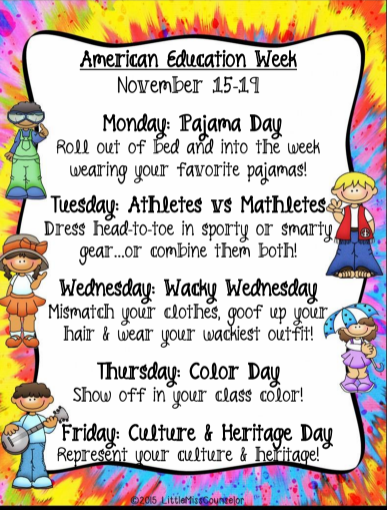
As mentioned in the introduction, Mrs. Hope and Mrs. DuPrau have partnered on several initiatives to increase students’ day-to-day happiness. They held the Blue Out anti-bullying awareness day, for example, for which the entire school dressed head to toe in blue. A spirit award was handed out to the “bluest” class, which was Ms. Weiskopf’s 2nd- and 3rd-graders, and they were treated to ice cream. A subsequent spirit week took place during American Education Week during which classes again competed for who could show the most school spirit.

This slideshow requires JavaScript.

The dynamic duo will also be working with the TNCS Parent Council on recognizing our teachers and all-around making it fun to be at school.

Cuddles and Crafts

And now, you get a sneak peek into an upcoming SEL initiative that TNCS students will be absolutely bananas over. Mrs. Hope found Pets on Wheels, a nonprofit that brings therapy dogs to folks in need of a little cuddle, and came up with the idea of Cuddles and Crafts for TNCS students. “We’ll do a mindfulness craft for 45 minutes or so and then we’ll have the dogs come through the classrooms for a little bit of self-care, mental health positivity . . . just taking a breather and having some fun,” she said.

TNCS students always beg for projects that involve animals, so this should be quite the hit. Pictures to come!

Unplugging and Getting Out and About

You might be noticing the emphasis on fun, and there’s good reason for that. As Mrs. Hope puts it, “This is our first smooth full year back, and I’m seeing a lot of SEL issues popping up like at recess—simple communication and relationship issues. So to wind out quarter 2, she is developing ways “to focus on reconnecting with ourselves.” This means getting off campus and getting off screens!

Reflection Day

As a way of reconnecting with themselves and improving their mental health, middle schoolers participated in the first-ever Reflection Day as a homeroom. This involved spending the day on a local hiking trail, relaxing in nature, and carving out time for self care.

Mrs. Hope had been talking to students about putting phones away and the healing power of nature—how good it is for our bodies and our minds. She hopes for this to be a quarterly event, and the first one was a huge hit. Students throughly enjoyed their hike to Annapolis Rock. “It was a bit chilly,” said Mrs. Hope, “but students said multiple times how nice it was to unplug and talk to each other. They appreciated having the face masks off, too. It’s so nice to see someone’s whole face and expression.”

They hiked 5.87 miles, and students were utterly in awe of the views. “We got to make some wonderful memories together as a class,” said Mrs. Hope. “They are already keeping me on my toes and asking what hike we are doing next!”

What was Ms. Sussman’s take? “Our unplugged hike along the Appalachian Trail on Monday was absolutely amazing! A major shoutout to Mrs. Hope for dreaming up and organizing this trip for us. It felt so special to be out in nature for the day together as a homeroom. We certainly missed the students who couldn’t make it, and look forward to future opportunities to spend quality time outside of the classroom with each other.”

She plans a smaller hike in Patapsco State Park with the 4th- through 6th-graders and is hoping to partner with Living Classrooms to implement an off-campus day for the K through 3rd-graders.

Mini Trips off Campus

To keep spirits up, Mrs. Hope and TNCS teachers are finding all kinds of ways to insert rewarding mini excursions throughout the school day. As a reward for taking the grueling ISEE exam, for example, middle schoolers walked to BOP Pizza for a class field trip and some lunch. Mrs, Hope said they displayed hard work and determination throughout this tough test.

Mrs. Hope’s advisory group asked about grabbing a bagel and cup of cocoa for breakfast. They decided to make it a regular thing and will visit a neighboring shop like Pitango or the Daily Grind each first Thursday of the month.

The K through 3rd group will take a walking trip to Kilwins for a treat next week. “We’re working really closely to create opportunities for the kids to just get out of classroom and build community,” said Mrs. Hope.

Edit 12/7/21: Photos from the Kilwins trip!

This slideshow requires JavaScript.

And the older kids!


Girls on the Run

From the beginning of the school year, female TNCS students had the option of participating in Girls on the Run (3rd through 5th grades) or Hearts and Soles (6th through 8th grades), a twice weekly running program that culminated on Sunday, December 5th with a 5K race. According to their website, GOTR’s mission is “to inspire all girls to build confidence and make intentional decisions, while fostering care and compassion for self and others. Trained coaches use physical activity and dynamic discussions to build social, emotional and physical skills in every girl while encouraging healthy habits for life.”

TNCS students fell in love with the program, which Mrs. Hope credits their amazing coaches for—huge thanks to TNCS mom Debbie Casanova for coaching the younger girls and Gab Sussman and Nameeta Sharma for coaching the older ones! Although it’s sad to see the end of this truly inspirational program, you can bet it’ll be back next year!

This slideshow requires JavaScript.


It’s clear that Mrs. Hope is energized and committed to optimizing the mental health of TNCS students. “My philosophy with our counseling program is to focus on the mental health of our children and to put a big emphasis on positivity and gratitude and things that lift them up, because there’s so much that’s happening right now in the world,” she said.

Adriana DuPrau: TNCS’s Dean of Students on Service-Learning, Fundraising, Community-Building, and the All-New Advisory Board!

Adriana DuPrau has been an integral member of The New Century School since its inception. She was one of the original teachers, a role she held for several years, then became the Curriculum Director for a few years, and is now embracing her brand-new position as Dean of Students. When we say “embracing,” we really mean it. Mrs. DuPrau is shaking up the 2021–2022 school year in ways never before seen at TNCS!

In just the first couple of months of school, Mrs. DuPrau has initiated several service-learning, fundraising, and community-building projects, and she has also been an important member of the all-new Advisory Board (along with TNCS Head of School Tad Jacks, Student Counselor Daphnee Hope, and other faculty members). Here is an overview of what’s been happening!

Service-Learning Projects

Service-learning is annually a big deal at TNCS, but Mrs. DuPrau approached it a bit differently this time around. “I met with all the K–8 classes and found out what their interested in,” she explained. “Animals are definitely at the top of the list!

BARCS

I wanted to do something related to what their wishes are because I feel like when they get to make the choices, they are that much more involved.” They decided to go with BARCS (The Baltimore Animal Rescue and Care Shelter), who compiled a wishlist of items so that our TNCS community can help support these wonderful animals in need.

This service-learning initiative will continue for the entire month of November, and items can be dropped off directly at TNCS. “We thought abut donating through Amazon, but then I thought, there’s something really special about like holding on to the item that you’re going to donate and walking into the school and putting it in a bin versus just ordering something and never really getting the actual item,” said Mrs. DuPrau. Students can drop off their items in bins placed by the front desk. The TNCS Student Council will help handle all the items, which will be delivered to BARCS on Tuesday, November 30th. (Wait, what TNCS Student Council? Keep reading!)

Puerto Rico

Although details are still being hashed out, the annual middle school capstone service-learning trip will be to Puerto Rico this February. COVID-19 continues to complicate and sometimes thwart big plans, but TNCS family the Waylands were instrumental in making this happen. Mrs. DuPrau and Mrs. Hope will chaperone, and everyone is excited about undertaking a service project in a tropical locale where they can also practice their Spanish-speaking skills and foster independence!

Other Service-Learning Projects

Smaller but no less important initiatives are happening all over TNCS. The Kindergarteners and 1st-graders are writing letters to veterans and walking them to the post office to mail them, which includes all kinds of incidental opportunities for learning, and Mrs. DuPrau also hopes to find a way to have TNCS students donate leftover Halloween candy to send to troops overseas. This aligns well with TNCS’s sugar-free mandate, and parents will appreciate the chance to get rid of some of it!

The TNCS Parent Council is also in the planning stages of some initiatives like the annual Adopt-A-Family for the holidays, the Coat and Warm Clothing Drive for Wolfe St. Academy that has taken place over the last few years, and hygiene boxes around MLK Day. We’ll dig deeper into all things Parent Council–related in a separate post.

Fundraising Initiatives

Related to at least one service-learning project—Puerto Rico—the TNCS student body needs to raise some funds!

TNCS School Store!

For the first time ever, TNCS students opened a pop-up school store happening on Fridays (weather permitting). See our Facebook event for more!

The grand opening last month was a huge success,
and you’ve got plenty more chances to shop ’til you drop on successive Fridays throughout the fall and winter.

This slideshow requires JavaScript.

Breakfast with Blacksauce Kitchen!

TNCS dad and restauranteur Damian Mosely once again donated his valuable time and his delicious homemade Blacksauce Kitchen biscuits to help raise funds for the big trip. Mrs. DuPrau says this will really help bring down the cost of flying to Puerto Rico, and she also locked in a great group rate. So thank you, Blacksauce, and thank you Southwest!

This slideshow requires JavaScript.

Community-Building Initiatives

The internal community building Mrs. DuPrau has engendered so far this year is off the charts.

Student Council

in yet another first at TNCS, this year saw the creation of an official Student Council. Students voted today for President and Vice President, after candidates built their campaigns throughout the month of October, culminating with presenting their speeches on Monday, November 1st and debating their opponents on Wednesday the 3rd. We are pleased to salute Indigo Mosely as President and Schonbeck Glazer as her trusty VP.

This slideshow requires JavaScript.

Spirit Days

Mrs. DuPrau has held several Spirit Days this year, with good reason. She has sensed some lingering social and emotional issues from the recent pandemic and felt that injecting some extra fun into the school day would lift everyone’s “spirits”! “After our COVID year last year of hybrid learning, it seems like some students are still struggling with their social connections.” she said

Good Neighbor Day was the first Spirit Day of the school year. “It was so much fun to see everybody in their TNCS shirts outside smiling and laughing and taking pictures together,” said Mrs. DuPrau. The race was on to see who demonstrated the most school spirit both on campus and as a good neighbor!

This slideshow requires JavaScript.

“I worked with all the homeroom teachers to get kids out of the classroom and off of campus with mini field trips, such as to go get a pretzel and lemonade for Kindergarten teacher Mrs. Longchamps birthday or buying plants at Fell’s Point Cultivated Creations for lessons in genetics for science class. I want students to get time together outside of the class so they can work on their relationships by doing fun things,” she said.

This slideshow requires JavaScript.

TNCS students are also going to ethnic restaurants and ordering food in the language spoken there. They went to an El Salvadoran restaurant during Hispanic Heritage Month, and on Thursday, November 4th, TNCS middle school students went to a Chinese restaurant and ordered their lunch in Chinese. “The Chinese owner of the restaurant was so impressed by our students’ good manners and amazing Chinese,” said Li Laoshi. “Also, our students really enjoyed their yummy Chinese lunch and learned a lot from this field trip. You should feel so proud of your child!”

This slideshow requires JavaScript.

Anti-Bullying Campaign

Hand in hand with building community, Mrs. DuPrau and Mrs. Hope held a Blue Out day to address bullying. Everyone, and we mean everyone, wore blue to school that day in solidarity. “I got a chance to kind of get into each class and do a fun restorative circle as well as a follow-up activity. Each student created a puzzle piece, which were then hung up in their classrooms to show that they are all part of the puzzle. We all fit,” explained Mrs. DuPrau.

This slideshow requires JavaScript.

The class with the most blue—Ms. Weiskopf’s 2nd- and 3rd-graders—won bragging rights!

American Education Week

Finally, American Education Week happens the week of November 15th through 18th, and Mrs. DuPrau is working hard to get everyone excited about that. “We’re going to hold an assembly that gets us all together. I want the assembly to be super fun, and I want to jump into our core values, but I mainly want us to also work on building our school spirit—singing songs and fun things like that,” she said.

Creating a TNCS cookbook is planned for this week also. The cookbook will be full of international recipes to celebrate all of our diverse cultures and backgrounds and available for purchase online.

Let’s make school fun. We want to make school a place that children want to come to, that makes them feel special. Of course academics are important, but it’s also important that we feel like we’re a family, that we feel comfortable and not overly stressed, and we can let our hair down a little bit. So I’m hoping that spirit days and assemblies and off-campus field trips are helping build that community feel.

Advisory Program

And, finally, the new Advisory Program has been doing wonders for TNCS students. Mr. Jacks and Mrs. Hope work mostly with the 8th-graders, Lori Gorbey works with mostly 7th-graders, Ms. Sussman works with a group of 6th- and 7th-graders, Mrs. DuPrau works with a group of 5th- and 6th-grades, and Mrs. Sharma and Mr. Brosius work grades 4 and 5.

In an email, Mrs. Hope described what this program is all about. Advisory is a program in which students meet regularly with a caring faculty member during a scheduled period in the school day. The underlying goal of advisory programs is to provide each student with consistent support and guidance from a member of the school staff. This adult, called the advisor, advocates for their group of students and runs the day-to-day activities of the advisory program. These activities range from the implementation of a curriculum to facilitation of a discussion to the distribution of important school information.

Perhaps the most talked-about benefits of an advisory program are the positive relationships that are created. Advisories help to build a sense of community in schools, which is important for preventing alienation. Furthermore, studies have shown that students’ educational success is based on academic as well as social support.

“We all do different things with our groups since our groups are all so different,” explained Mrs. DuPrau. Mrs. Sharma’s advisory meeting, for example, focuses on wellness and social relationships through dialogue and game-playing.

Mr. Brosius’s meeting encourages role-playing to think more critically about character traits. They built an imaginary village where each student adopted a different role. They discuss why they chose the roles while trying to relate this to goals in their own lives. When things get a little too rambunctious, he leads the group in light yoga to re-center them.

Mrs. DuPrau has an all-female advisory group. She introduced journaling as a way for her students to understand their emotions and how to gain control of them.  They do restorative circles to get to know each another on a deeper level. They also decorated their lockers with inspirational pictures and quotes. They also spend time in the all-new Harmony Room in Building North to relieve stress.

Ms. Sussman’s group is building trust through conversation and art. They use a deck of affirmation cards throughout the week to share their more reflective sides. They will also work on creative activities that will allow them to better appreciate each other’s uniqueness.

Ms. Gorbey’s group spent the first couple of weeks of school participating in open-ended circle time and playing games like Uno or Get-To-Know-You Bingo. During “Mindful Mondays,” students discuss their goals for the week. On “Words of Affirmation Wednesday,” students learn to confront their weaknesses and share how they can turn them into strengths.

Mr. Jacks and Mrs. Hope guide the 8th-graders through their final year at TNCS and get them ready for the transition to high school. These students have attended school with each other for several years and, as a result, have created warm and trusting relationships. As teenagers, they often want to talk about their feelings regarding ongoing issues in the world.

Stay tuned for further updates on this truly wonderful and important program.


After an undeniably tumultuous period for the world, Mrs. DuPrau and everyone at TNCS are making sure TNCS students continue to thrive in all ways, including academically, socially, and emotionally. The TNCS community is beyond grateful for this very special care.

Devin Martin: Giving TNCS the Whole Picture!

Part of The New Century School‘s mission is to nurture the whole child. This means faculty and staff focus not just on academics but also on, among other things, social and emotional learning, physical education, and The Arts.

Background

For the 2021–2021 school year, art class has a brand-new teacher: Meet Devin Martin. She even has “art”in her name!

But that’s not the whole picture. Ms. Devin is a natural fit at TNCS in several ways, as you’ll quickly see. She originally came to Baltimore from Ithaca, New York, where she grew up, to attend Maryland Institute College of Art—which we all know as MICA, of course! She graduated in 2013 with a bachelor’s degree in Fine Art and also did some course work in Art Education.

She found that Baltimore felt like home to her and has been here ever since. “I’ve made great friends here, and I’m never bored in this city. The art community here is so collaborative, and every time I spend time with my friends we come up with something artistic to do together. People are always performing at each other shows and collaborating, and it’s just a really great place to make interesting art,” she explained.

As for what her medium as an artist is, she says that the general Fine Arts degree allowed her to pursue multiple ways to create. “Fine Arts is a little bit of everything, which works well for me because I used to get bored with just one medium. I bounced around from photography to miniature painting to book arts . . . but what all of that ended up coalescing into was shadow puppetry, which became my main thing. It’s cut paper, it’s more theatrical, and I really got into theater arts after graduating.”

Ms. Devin uses transparencies, water, and ink to illustrate scenes in a stage adaptation of “A Wrinkle in Time.”

Art Meets Montessori

Alongside this passion for art, Ms. Devin also has known that she wanted to teach since she was 16 years old and has worked with children in various capacities since then. After college, she began leading after-school community art programs. Shortly thereafter, she got a job at the Baltimore Montessori Public Charter School, and as you’ve probably guessed, became intrigued with Montessori education. “I was doing after-school things with them and realized that I wanted to be around there all the time! That was also one of the first times I worked with early childhood in the primary classroom. It was a good fit for my personality. Young kids and I have a lot in common in terms of enjoying tactile experiences in nature and art and animals . . . so I feel like I can engage them really easily.” She went on to tie that fascination with small objects to the Montessori tenet of the characteristics of the primary-age child.

So, she started working as a primary assistant (eventually going on to lead a classroom) and decided to pursue Montessori training. She did her assistant Montessori training at Loyola University Maryland’s Center for Montessori Education and her Lead training at the Barrie Institute for Advanced Montessori Studies, where she also worked for a while.

Here at TNCS

And then the pandemic hit, so Ms. Devin had to shift gears. She answered a job listing put up by a group of TNCS families who were interested in finding a Montessori-trained teacher to teach their young children in a home/pod setting. Says Ms. Devin:

It was a wonderful group of seven kids age 2 1/2 through 6 years, and met every day in the guest room one of the families had turned into a primary classroom. We also spent most of the afternoon in Patterson Park learning about nature. We learned all about what kinds of trees grow there, and we extensively studied the cicadas. We learned all about their life cycle, their body parts, and what they do and why they sing. It was a fun way to be able to bring my passion for early childhood science into this wonderful, wonderful park. It was a really great experience, and I think I learned a lot about myself as a teacher during that time.

As will now seem predestined, this is how she ultimately found out about TNCS. She first began long-term substituting in the primary classroom while Señora Salas is out on maternity leave but then saw the art education opening. “A lot of my background is in art education, and it’s definitely a major passion of mine, so I asked if I can do both. In the morning I’m teaching in the primary classroom, and then in the afternoon I’m teaching K through 8 art,” she said.

Although this schedule might sound daunting, it’s easy to see how she blends her various talents and makes it all work. (Puppets in the primary classroom? Match made in heaven! She also makes great use of her skill with miniatures.)

So how is she faring so far this year? Short answer: beautifully in both spheres. In the primary world, she says, “All the primary teachers are kind of new this year, so we were able to figure out how we wanted to run things ourselves. Although I have a lot of experience in primary classrooms, this year is totally different because of COVID. There are all sorts of different considerations for how to stay COVID-safe, from the way we do lunch to the way we do play time. So, there’s a lot of trying new things, but the kids are really adaptable, and I think we’ve fallen into a nice little rhythm and routine.”

As for art . . .

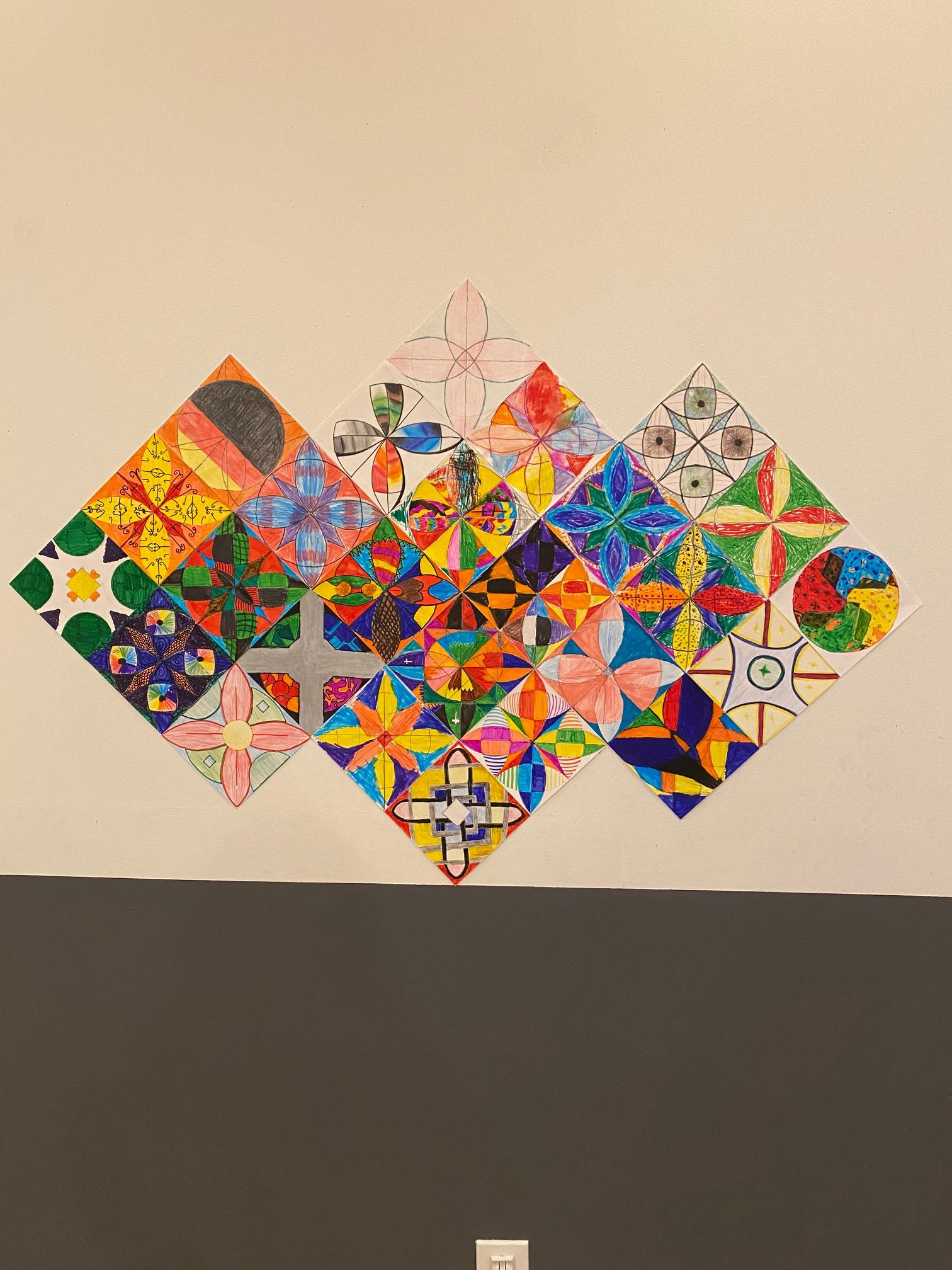
In the afternoon, I’m running around doing art in all the classrooms, and I’ve just been loving it. I think art teaching is really what I’m best at in the world. I’m always smiling so big when I’m walking around the classroom, looking at everyone’s art. They’re all elementary and middle school age and at that point where they haven’t quite decided whether they’re an artist or not. They might say they can’t draw, but they they can and with a bit of encouragement, they’re able to do things that really impress them. For example, we did a geometric tile project looking at Islamic, Moroccan, and Mexican tile-work, and we made simple designs using a straight edge and a circle. At the end of one of the classes, one of the students said, ‘how did you do that?’ and, I replied, ‘you did that.’ They responded, ‘how did you get me to do that?!’ It was funny, and she was so surprised at her own skills.

During the first quarter, students have been focused on building drawing skills through observational drawing as well as imaginative drawing. Recent projects have included drawings based on the colors, compositions, and motifs of Panamanian textiles and a street art–inspired project using bent wire to bring line drawings to life. “I like to take a skill and apply it in a bunch of different ways, but soon we’ll be moving on from drawing into 3D stuff like sewing and clay work. It’s been very fun to figure out what I want to teach and what areas of art I want to delve into.”


Ms. Martin will display student works of art around the two TNCS buildings—get a peek when you can!

Tad Jacks Joins TNCS as Interim Head of School!

On July 1, 2021, Tad Jacks joined The New Century School as Interim Head of School. Before he had even started, though, he expressed how much he was looking forward to being part of such a multicultural environment. TNCS Executive Directors and Co-Founders Roberta Faux and Jennifer Lawner told parents that, “[Mr. Jacks] comes to us with a wealth of experience, pedagogical expertise, and leadership skills.”

Let’s explore that wealth!

An Abundant Career

Mr. Jacks’ road to TNCS stretches far—overseas, in fact. He was born and grew up in the King of Prussia area of Pennsylvania, but he began his career in education at the American School in London as a student teacher and baseball coach. Although his love lay with working with kids, his first job out of college was as a college admissions officer before re-entering the independent school realm. Re-entering? Mr. Jacks attended Friends’ Central School, a Quaker co-ed day school, in Pennsylvania as a student, so it was a good fit for him to join Friends School of Baltimore. At Friends, he wore a variety of hats, from admissions to development (for example, he started up a a center for Russian language and culture) to teaching (for example, a high school class called “US society 1900 to 1960”) and even coaching golf.

After 23 years at Friends and all of those many hats, he was approached by The Odyssey School to become their Head of School. Although Odyssey’s mission is to provide an education environment conducive to learning difference like dyslexia, they wanted Mr. Jacks for his extensive experience with governance, strategic plans, accreditation, admissions, and development. Within a few years, though, his athletic daughter was about to go to college. He needed the flexibility to attend her matches and provide all the support college students need. As she was attending school in New England, he decided to take a position as Assistant Head of School at the Wooster School, in Danbury, Connecticut, alongside the Headmaster who just happened to be a dear friend of Mr. Jacks’ as well as his former teacher. He actually commuted to Connecticut from Baltimore for 5 years! And called it fun!

Back in Baltimore, he embarked temporarily on a project to lead and support the Middle Grades Partnership with the Baltimore Community Foundation. Before the next school year began, Mr. Jacks was contacted about heading The Craig School in Mountain Lakes, New Jersey. That 7-year stint came to a close just last year when the commuting finally did get to him (he was only home in Baltimore on weekends and holidays). “I decided that I’ve done this commuting enough, and I’m going to come home,” he explained. “So for the last year, I’ve been doing really interesting projects for people, mostly in education.”

TNCS and Tad Jacks: A Natural Fit

All in all, his career in education spans 42 years, a career he is grateful for. The depth and breadth of such an illustrious career might have tired out a less high-energy person than Mr. Jacks, but it’s clear he’s got plenty of ideas still to develop. And that brings us to TNCS. He says he had heard about TNCS both from friends of his daughter and from his natural habit of staying abreast of the independent schools in the area.

He has also worked side by side on diversity programs with our former Head of School Shara Khon Duncan. “I’ve known Tad since the 90s,” she said, “and TNCS is in good hands. He has a heart for diversity, and he digs right in and does the work.”

(Mr. Jacks says he is also eager to gain a little Mandarin Chinese and Spanish, not that multilingualism is his forte per se.)

Not surprisingly, given his background in development, he has begun to shape a vision of what his time at TNCS could mean.

I want a concept—a spirit—that as a school in Baltimore City we must continue making a difference for this city. And maybe it’ll come out in different forms along the way. There are so many problems that come to school even before a teacher can get to work with education. So I’ve always asked how I can make a difference in the city. I have way too much energy to not be in school right now. I just feel like it’s not just where I want to be, it’s also where I need to be.

Of course this kind of empathic orientation aligns beautifully with TNCS’s commitment to service learning, and Mr. Jacks says that’s another aspect of TNCS that attracted him. “It would be nice to put a solid foundation in place so that every year students in the different divisions know what big projects they’ll be working on,” he said.

That’s not to say that Mr. Jacks plans to make drastic changes—instead, he’s here to help. In an email to staff, he wrote:

My hope is that I will learn more during each meeting and want to hear from you about your roles, your interests, and how best I can help you. My pledge to all of you is that I will do my best to help each of you in your work and to support you on your objectives and goals. During the coming year, I plan to immerse myself in the life of the school, capitalizing on opportunities to build school spirit and support progress in key areas. I will be listening for ideas that foster relevant, engaging, and inspired learning.

And he’s eager to advance TNCS’s Core Values of Compassion, Courage, Respect, and Service. “In my first few days here, I have found that many individuals are compassionate about working with young children, have the courage to help a parent understand that their child may need more attention, have a respect for each other, and are in service to our community,” said Mr. Jacks.

Said Ms. Faux and Ms. Lawner: “It was clear from our interactions and from his amazing references that Tad’s philosophy of education, commitment to children, and auxiliary skill set would make him a fantastic fit for TNCS. We are confident and enthusiastic that this next step will move TNCS to an even stronger future as a leader in progressive, diverse, and joyful education.”

Although it may seem like he’d have time for nothing else, given his involvement in so many facets fo education, Mr. Jacks also has a personal life complete with hobbies and predilections, like contemporary music and visual arts. And yet, somehow, the conversation always swivels back to education in the best way. Mr. Jacks still remembers being in high school—elementary school, even. “I’m in education because of things that happened in the 4th grade; 4th grade and 11th grade were two watershed years, and I don’t think that’s any different for students now.”

How fortunate that TNCS’s current student body will have at least one of their watershed years under such capable and compassionate leadership. Welcome to TNCS, Tad Jacks!

TNCS-Curated Academic Resources for Summer 2021!

Each year at The New Century School, teachers offer resources to families to help prevent the “summer slide” phenomenon that can happen to kids over summer break when they might be less academically engaged than during the school year and lose scholastic ground as a consequence. Although this problem disproportionately affects underserved communities, it is nevertheless felt to a certain degree across the board, as teachers find themselves re-teaching concepts that were learned the previous year and then forgotten. Some research has shown that students can lose as much as 3 months of reading and math achievement over the course of just one summer. (See Making Summer Count for more details on relevant studies.)

To negate this effect, here are this year’s recommended resources in core subjects. (Look for your child’s division within some subjects.)

English Language Arts

For elementary and middle school students, ELA teacher Jalynn Harris assigned a mandatory novel and a secondary novel (middle school students) and gave Summer Writing Prompts to encourage a minimum of 30 minutes of writing twice a week. Grammar Review and keeping a Reading Log are also encouraged.

Mandatory Middle School Novel: Divergent by Veronica Roth

Secondary Middle School Novel: Choose from the list below or from your own library.

  • A Wrinkle in Time by Madeline L’Engle
  • The Adventures of Tom Sawyer by Mark Twain
  • The Maze Runner by James Dashner
  • Call of the Wild by Jack London
  • The Absolutely True Diary of a Part-Time Indian by Sherman Alexie
  • CHERUB series by Robert Muchamore
  • We Were Liars by E. Lockhart
  • Cinder by Marissa Meyer
  • Little Women by Louisa May Alcott
  • Out of the Dust by Karen Hesse
  • Legend trilogy by Marie Lu
  • The Sisterhood of the Traveling Pants by Ann Brashares
  • Hidden Figures by Margot Lee Shetterly

Finally, i-Ready, TNCS’s online reading and vocabulary program, will be available all summer. Students should complete a minimum of 30 minutes of i-Ready lessons per week.

Math

In addition to making practice workbooks available for purchase to elementary and middle school, math teacher Nameeta Sharma recommends these sites:

  1. iReady math is available to students over summer. Please encourage your child to do  iReady lessons at least an hour per week. This will help them stay on level, especially since they will have the first math diagnostic test in fall for the next school year.
  2. Khan academy. – Please remind students to use the school gmail account to log in so as to save their progress.
  3. Free printable math worksheets are available at these sites too:

Mandarin Chinese

“Wow, what a year!” said Li Laoshi. “To better state that what a complicated but great year!” Please see the following information and resources that will help your child can review and maintain their Chinese proficiency during the summer holiday. 

Websites

  • Duolingo
    • Target Age: 1st–8th grades
    • Target Level: Beginner and up
  • Hello-World
    • Target Age: 1st–3rd grades
    • Target Level: Beginner
  • Epic
    • Target Age: 1st–8th grades
    • Target Level: Beginner and up

Books

  • Better Chinese, Volumes 1–4
    • Target Age: 1st–8th grades
    • Target Level: Beginner and up

Global Studies and Science

Mr. Brosius offered the following optional summer activities with detailed instructions for Global Studies and Science extended projects.
The Summer Road Trip was primarily designed to be a global studies assignment, but does touch on a few science themes. The Time Lapse was primarily designed to be a science assignment, but can be adapted for various uses.
Also, check out citizen science projects in the United States!

Spanish

For 3rd- to 8th-graders, Sra. Noletto strongly recommends continued exposure to Spanish language during the summer fun days. “The more practice, the easier for them to remember what they learned,” she said.
Collection of Spanish Books

  1. Go to https://www.getepic.com/students
  2. Enter class code gun8437
  3. Select your child name
  4. Check his/her mailbox
  5. Enjoy!

Practice Reading Skills: Kindergarten, 1st and 2nd Grades:

  1. EL Mono Silabo has a complete collection of educational videos of the Spanish “Silabas” to teach and practice reading in Spanish for emerging readers. Kindergarten students already have practiced reading skills using this educational resource. Ask your children to tell you what sounds “Silabas” they remember from classes and then watch the corresponding chapter from EL Mono Silabo.

  1. 123 Andrés has a complete collection of educational videos for every letter of the Spanish alphabet (samples shown below, but there are 24 more!).

3. If you want to make a good investment, You can pair the experience educational videos of El Mono-Silabo with the collection of books made by Scholastic of 36 different books, one for each silaba. Or you can buy just a few depending on the level of engagement of your student.

4. If your student hasn’t finished the entire book of “Silabas” called “El Silabario,” you can find this interactive book at the summer resources folder from the Google Classroom along with other printable materials ideal for summer reading.

Apps and Websites

  • Spanishdict.com: The students are familiar with this app, and my classrooms are linked to it. It has grammar lessons, conjugations, vocabulary, conversations, videos, quizzes, and assessments that the students like to practice with.
    • Target Age: Elementary school and up
    • Target Level: Beginner and up
  • Conjuguemos: This website is packed with Spanish learning games that your student can use to practice verb conjugations, new vocabulary, and tricky grammar rules like “por versus para.” It is easy to navigate and helps students retain what they learn by reviewing their mistakes and providing explanations for the correct answers. For students looking for additional instruction, Conjuguemos also provides a reference section with clear, straightforward explanations of Spanish verb tenses and how they function.
    • Target Age: Elementary school and up
    • Target Level: Beginner and up
  • Duolingo: This gamified language-learning app can help your student learn Spanish on-the-go through short, daily practice sessions. Duolingo is based on a communicative model of language teaching, so it focuses on getting your child to use Spanish from the start and skips the long, technical grammar lessons.
    • Target Age: Middle school and up
    • Target Level: Beginner and up
  • Mango Languages: This popular language-learning program is available for free through many public libraries. Through its innovative multimedia platform, it helps students build proficiency in reading, writing, listening and even speaking in Spanish.
    • Target Age: Middle School and up
    • Target Level: Beginner and up
  • Spanish Playground: This is an amazing resource for parents who want to help their children learn Spanish through fun, hands-on activities! You can search through their activities by age, theme, or type (e.g., curricula versus music), so there’s something for everyone.
    • Target Age: Preschool and up
    • Target Level: Beginner and up
  • Spanish con salsa: Originally developed as a television series to teach Spanish to young children, Salsa Spanish is now available online, with free activities designed to accompany its 42 video lessons. The 15-minute videos are similar to Sesame Street and focus on a single Spanish concept—like food vocabulary or colors. The dialogue is easy to understand, so it’s appropriate for students who are just starting to learn Spanish, although true beginners might benefit from some additional parental support.
    • Target Age: Preschool through Elementary
    • Target Level: Beginner (best with some prior exposure to Spanish)
  • FluentU Spanish: Language teachers often tell their students to watch television in Spanish to further improve their listening and speaking skills. While this is a great suggestion; sometimes what students like is too challenging for them, not challenging enough, or even terribly scripted because of the direct translation. This is what makes FluentU Spanish a unique app for all Spanish students. First, browse through their library of multimedia content ranging from Spanish music videos, world-issue related interviews, and sporting events. While watching the video, users can click on any word in the script to read the definition before continuing. What’s even cooler is you can save these words and add them to a reference list which FluentU allows users to save and go through any time afterward. The app goes even further to suggest videos and other media content featuring those specific words.
  • Think Bilingual!: The basis of this game-based educational app is for Spanish students to not only memorize new words; but also act them out. Listening and doing is Think Bilingual’s way of teaching. Students will be introduced to two aliens who they will have to guide through everyday situations from cleaning, cooking, and driving on different levels. Before the start of each new level, a vocabulary list is shown so students can have a look and study. Once ready, students have to write out the words correlating to the actions the aliens must do to continue onto the next level.
  • Memrise: Like its name, Memrise, uses the technique of memorization and repetition for users to reach their next level language skills. Before each level’s test; users can listen to words and see how its spelled. Right under the word there’s also attributes to the word such as the phonetics and seeing how to pronounce it correctly. Each level is categorized by different subjects; greetings, cooking, directions etc.
  • Mosalingua: Mosalingua knows that motivation is the key to learning another language, therefore the app combines both motivation and repetition so learners don’t quickly forget everything they learn. Rather than quickly forgetting all that new information, Mosalingua builds new exercises that are repeated but simply delivered in different ways so users continue to be motivated and absorb all there is to know about Spanish.

Books

Kindergarten:

Beginner:

Intermediate:

Advanced:

Spanish Songs Playlist

You can also make a Spotify or Apple iTunes playlist with the most popular songs that we sang during the school year by these popular children’s groups:

  1. Una idea tengo yo, 123 Andrés
  2. La semilla, 123 Andrés
  3. El baile de la fruta, de Pica Pica
  4. El Baile de los Animales
  5. Chocolate de Jose Orozco
  6. El Pirata Benjamin, 123 Andrés
  7. Salta, Salta 123 Andrés
  8. Buenos Días, Jose Orozco
  9. Vamos a contar mentiras de Enrique y Ana
  10.  De Colores, 123 Andrés
  11. Un elefante, 123 Andrés
  12. El Girasol, 123 Andrés
  13.  Soy una serpiente
  14. Hola amigo, 123 Andrés
  15.  El Pirata capirote de Juana la Iguana

Whatever activities and summer fun your child has planned this summer, make time for reading, writing, speaking, and tinkering!