Kids and Safety: When (If) to Let Go

A growing movement has parents asking themselves, am I being overprotective? Could I be the dreaded helicopter parent? Especially for parents of younger children, the question of when and how to loosen the reins a bit probably looms large. Helicopter parenting, also known as “hyper-parenting” is nothing new, nor is it location specific. Helicopter parenting (so named because Mom and Dad are always “hovering” about) was criticized as far back as ancient Rome. Schoolteacher Lucius Orbilius Pupillus considered pushy parents an occupational hazard in his classroom, and that was 2,000 years ago. In present day Scandinavia, “curling parents” sweep the proverbial ice in front of their kids, and “education mothers” literally steer their children through the school system in Japan.

It’s a natural and certainly well-intentioned instinct to want to protect our young. In fact, isn’t the whole point of civilization to make our world safe enough to allow individual and community flourishing? We know from The Lord of the Flies what can happen when rules evaporate, at least on fictional islands among fictional castaways. Ironically, recent (nonfictional) studies show, too much safety can be, well, dangerous.

It might look primitive to adults, but imagine being a kid in this place!

It might look primitive to adults, but imagine being a kid in this place!

In the April issue of The Atlantic, Hannah Rosin takes up the hue and cry, urging, “Hey, parents, leave those kids alone”! Her story, “The Overprotected Kid” details examples of parents doing just that by sending their kids to places like “The Land,” an adventure playground more akin to a junkyard than an amusement park. Have the vivid reds, blues, and yellows of the neighborhood playground seared your retinas one too many times? Prefer rusted metal and dry-rotted rubber to eye-popping plastics? The Land might just be the place for you(r kid)! Complete with firepits and old mattresses for trampolines, this playground is located in North Wales and was inspired by social experiments in post-World War II Europe. Although the emotional climate of that era was vastly different than that of today, the mission might still be worth pursuing: fostering independence and problem-solving ability as well as the ability to assess risk/benefit ratios.

In the later 1940s, Lady Marjory Allen began designing “playgrounds with loose parts that kids could move around and manipulate, to create their own makeshift structures. But more important, she wanted to encourage a ‘free and permissive atmosphere’ with as little adult supervision as possible. The idea was that kids should face what to them seem like ‘really dangerous risks’ and then conquer them alone. That, she said, is what builds self-confidence and courage.” The specific dangers we face may have shifted, but surely trying, getting knocked down, and getting back up again are skills necessary for any age.
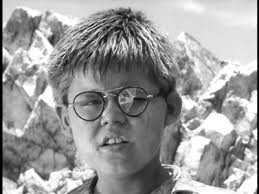
In "The Lord of the Flies," William Golding presented a much more dystopian view of what happens when kids are left to their own devices than what new research suggests.

In “The Lord of the Flies,” William Golding presented a much more dystopian view of what happens when kids are left to their own devices than what new research suggests.

Grit—it’s the education buzzword of the 2010s. Many of us fondly recall childhoods devoid of helmets, buckles, and, restraints of other kinds. Some of us might even long for a return to that freedom to scrape a knee and bleed. Are we gritty? Or just abraded and scarred? A primary school in New Zealand would vote for the former. After ditching their playground rules at recess as part of an academic study by two NZ universities, they found that chaos did not ensue; instead, bullying and vandalism went down and, even more surprisingly, grades went up. Piggy gets to keep his glasses, in short.

“The great paradox of cotton-woolling children is it’s more dangerous in the long-run,” said one of the researchers. “Society’s obsession with protecting children ignores the benefits of risk-taking.” Children develop the frontal lobe of their brain when taking risks, meaning they learn to work through possible consequences in advance and then weigh the payoff of an action against them. The NZ researchers would argue that this can’t be taught but must be learned in real time. So, the Swanson Primary School in Auckland features a playground with bike-riding, mud-sliding, tree-climbing, and all of those other super fun kids things really, really like to do. Happy children evidently make for engaged students, to the surprise of the school’s teachers, many whom were initially opposed to having the school participate in the research.

According to current data, unsupervised play confers plenty of emotional, cognitive, and behavioral benefits, whereas—almost counterintuitively—rates of physical harm do not correspondingly rise.

This issue is absolutely polarizing, and this post makes no claims one way or the other, except that “The Overprotected Kid” is a fascinating read. The author, in an NPR interview about the piece, stated, “One sad thought I had while doing this is that we often say children grow up too fast, but maybe they never get the chance to grow up at all— to take the necessary interim steps in order to feel independent, in order to manage risk, in order to manage sadness. I love the close relationship I have with my children. This is going to be a fine line we all try to walk without having a suffocating or stifling relationship with them.” And research shows that those kinds of stifling relationships are practically petri dishes for developing colonies of phobias and neuroses in adulthood.

Still and all, fire? For kids? What do you think? Please let us know in comments!

Related stories: Why Parents Need To Let Their Children Fail

Kids These Days: Growing Up Too Fast or Never at All

When This New Zealand School Got Rid of Playtime Rules, It Actually Got Safer

Let Kids Play with Fire, and Other Good Rules for Parenting

Making School Transitions: Pre-primary to Primary at TNCS

Editor’s Note: For the 2014–2015 school year, TNCS modified the kindergarten program to better accommodate the growing student body. While the primary program still comprises a 3-year cycle, kindergarteners now move up to the elementary floor for a mixed-age K/1st classroom instead of kindergarten taking place within the primary classroom. This adaptation has proven a marvelous success and provides another very important transition mark for students as they broach their elementary years. The gist of the post below, therefore, still very much applies.

A recent stressor has been added to the list of 21st-century parenting tribulations: how to ensure that children are ready for kindergarten. There was a time in the not-so-distant past when that question wouldn’t even make sense to parents—Ready? For kindergarten? (Here’s a crayon; there’s a piece of paper. Go!) But with kindergarten morphing from extended preschool more and more into what resembles grade school around the mid-90s, educators observed a huge disconnect between what they were expecting of children and what those children were actually able to deliver in terms of concrete skills, independence, and maturity. We began to see a frighteningly pressurized climate in which parents competed to produce the most knowledgeable 5-year-old on the block. As if to heighten this pressure, studies found that the achievement gap that emerges in elementary school has its origins in the pre-school and kindergarten years, and the A-B-C/1-2-3 scramble accordingly intensified.

Successful transitions, however, are more than simply a function of individual children and their skills. More recent studies from the U.S. Department of Education demonstrate that “Children’s transitions are most strongly influenced by their home environment, the preschool program they attend, and the continuity between preschool and kindergarten.” This is not news to many of us, but it echoes a primary theme at The New Century School that bears exploring from a new perspective: continuity. TNCS academic programs come close to obviating the notion of hard and fast changes, such as preschool to kindergarten, by their very design. Maria Montessori knew that kids need, above all else, to feel secure for optimal development; therefore, the Montessori primary classroom encompasses ages 3–5/6 to soften those hard edges and eliminate the inherently false notion that “last year I was a little-kid; this year I’m a big-kid” that is the foundation of the preschool to kindergarten problem. Kindergarten at TNCS happens within the primary classroom, where the child has already been flourishing for 2 years. New skills are introduced when the child is ready for them, not when the calendar arbitrarily dictates. That holds true for all ages at TNCS, no matter what program, pre-primary, primary, or elementary. It’s a founding principle.

As mentioned, this post is meant to take a slightly different perspective, because even though the advance to kindergarten is made as smooth as possible, TNCS students do face transitions and changes, as all students do. The important difference is in the thoughtful, child-appropriate way these transitions are undertaken. Last month, TNCS held a Pre-primary Information Night focusing on The Next Step—transitioning out of the pre-primary program into the primary program. This is a big move for tiny kids and one that inspires dread, doubt, or sheer terror in many parents. In diapers in May but using the bathroom by late August? Able to don outdoor clothing independently? Able to articulate daily needs? Those are one of so many hurdles jumped for lots of kids, towering obstacles for others. No matter where your child falls along that continuum, the overriding message that emerged from Head of School Alicia Danyali’s presentation was that the child will be supported and nurtured along the way.

These bins hold students' indoor shoes and any paper work they accumulate throughout the week.

These bins hold students’ indoor shoes and any paper work they accumulate throughout the week.

Preparation for the primary program begins in the pre-primary program. Potty-training, for example, is initiated here as well as teaching how to put on jackets and outdoor shoes. Kids are also encouraged to be responsible for their own belongings by replacing jackets and shoes on labeled hooks or in cubbies. The immersion-style pre-primary program is where many students are first exposed to a second language. It’s also where they first get their chubby little hands on some of the Montessori materials that utterly fascinate and delight them. All of these are important introductions to primary classroom life. Kids enter the primary program already familiar with most aspects of it. The Montessori-trained teacher leading the primary classroom is there to gently guide and facilitate their process of becoming more independent.

A younger student gets some pointed help from his older classmate.

A younger student gets some pointed help from his older classmate.

But here’s the best part. Remember that kindergartners have spent 2 previous years in the same classroom, where they have gained the confidence to spread their academic and social wings? Well, that 3-year-cycle works the other way, too. Kids enter the primary classroom not as strangers in a strange land but as little friends taken under the wings of their older friends. The 5-year-olds who were nurtured into thriving kindergartners become the mentors and role models of the 3- and 4-year-olds, and this is the beauty of the mixed-age classroom. It makes for a much gentler way to start preschool. Does the span of ages present special challenges for the teacher? Rather the opposite; this model is all many Montessori teachers have ever known and is what they were trained in. “Seeing older kids helping their younger peers is my favorite part of the Montessori classroom,” says experienced Montessori teacher Angela Lazarony, who represented primary teachers at the Information Night.

Because of the primary 3-year cycle, which is an extended commitment, matching each child with the right classroom is a well-thought-out procedure in which school administration, the child’s pre-primary teacher, the primary teachers, and parents collaborate. Just as each child has a unique personality, so too each of the four primary classrooms has its own distinct “flavor.” (In addition to Ms. Lazarony, Mrs. Lawson, Mr. Warren, and Ms. Reynolds are the other primary teachers.) The teachers weighing in are trained observers who know their students well and probably have the keenest acuity to judge where each student will best thrive. A good fit between child and classroom ensures harmony and will enhance the child’s development. Other factors also influence the placement decision, such as making sure an even distribution of 3-, 4-, and 5-year-olds is achieved across classrooms, which is an integral component of the Montessori classroom.

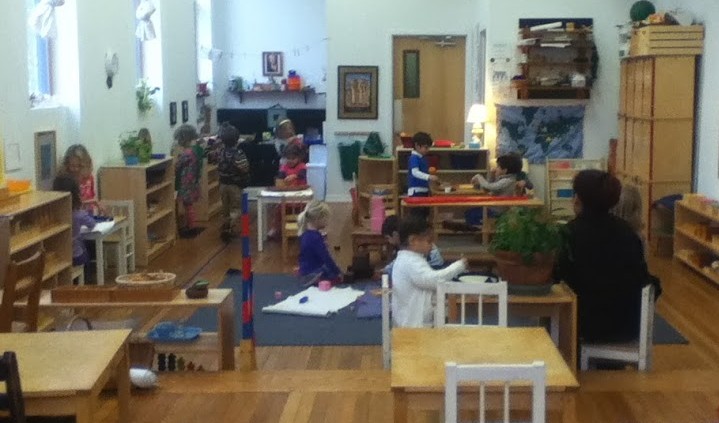
Another primary classroom operating harmoniously.

Another primary classroom operating harmoniously.

Morning worktime is productive, harmonious, and orderly!

Morning worktime is productive, harmonious, and orderly!

Once there, what does the brand-new primary student’s day look like? Much of it will be very familiar to the child. Although the lead teacher speaks English, an assistant teacher in the classroom will be speaking only in his or her native Chinese or Spanish, so the child is still getting some immersion in that language. The other language will now be introduced in a slightly more formalized way three times weekly, when an assistant teacher from another primary classroom rotates in for this purpose. Thus, all primary students get both Mandarin and Spanish instruction. The day also begins in a way the child is already accustomed to, with “circle time” to greet each other, get oriented (calendar, weather, etc.), sing a song, and generally settle in to the schoolday. From there, the child gets free time with the Montessori materials, what they call “doing a work.” The idea is that each child will gravitate naturally to the manipulative that most interests him or her at that given moment, thereby cultivating a skill appropriate for his or her current stage of development. But what if my child gets stuck in a rut with a particular work, never trying anything new even when he or she has mastered the old work? many parents wonder. Says Ms. Lazarony, “we’re watching them to see where they’re going, but we’re leading them where we think they should go.” Amidst free time, teachers observe, guide, and circulate among small groups to give specific lessons in new works or skills.

Other familiar aspects are art, music, and movement instruction. Primary students met the amazing and gifted “specials” teachers Ms. Raccuglia (art) and Mr. Warren (music) as pre-primary students. Their activities in The Lingo Leap are supervised by an assistant teacher or sometimes by parent volunteers, which the kids love. By the way, volunteering is the ideal way for parents to be part of their child’s schoolday and another means to help him or her feel secure in the new classroom. Napping and playground time are also still in the mix.

The differences between the pre-primary and primary programs really lie in the degree of instruction taking place by the teacher and in the extent to which the student can explore. Because the primary program is self-paced, the student can reach well beyond conventional expectations for his or her age. Likewise, the child who needs more time absorbing the surroundings is supported and affirmed.

Big kids, little kids---we're all one big happy family!

Big kids, little kids—we’re all one big happy family!

Readiness is an important consideration in another way here. Not all 3-year-olds are ready to transition to the primary program, and this is something the parent should reflect on very carefully. The child not only has to demonstrate readiness in terms of being potty-trained and able to dress independently, but also should have the social competence to handle more than one age group and the maturity to participate in a group learning environment. The parent’s feelings are also important: Is this what you want for your child right now? Maybe you aren’t sure. Many parents opt for a half day in the primary program, which many preschools don’t even offer. (Note that kindergartners are state-mandated to be in school for a full day.)

The takeaway is clear: Children should get the space to develop at their own paces, but when they show willingness to expand, TNCS is going to make sure the transition is pleasant by supporting them in the way that will best serve them. Back to the study finding that continuity is critical to successfully making scholastic transitions, TNCS goes it a step or two beyond, adding nurturance and support to that continuity already very much in place at each scholastic level. No scramble here!

Spaceship Club Elevates Aftercare at TNCS!

One of the perhaps unfortunate developments in modern society is that school lets out midafternoon, but the workday continues, making aftercare an essential service for many families. Isn’t it nice to know that at The New Century School, aftercare is just as enriching an experience as the rest of the schoolday?

Enter Emily Feinberg, Aftercare Coordinator, who strives to make sure that kids are engaged and happy and using the gap time between school and home in worthwhile ways by creating “clubs” that appeal to individual student predilections. Clubs range from music themed to math, drama, and world culture. Prior to the beginning of the 2013–2014 school year, Ms. Feinberg approached Aftercare Instructor Ron Shalom and asked him to suggest an idea for a club. That was no problem, says Mr. Shalom, who has spent lots of time with TNCS students and has developed a good feel for what appeals to them. He’s not particularly a fan of science fiction himself, but says that kids are forever asking him about all things Outer Space. And so, to give the people what they want, Spaceship Club was, er, launched!

Mr. Shalom is just the kind of well-rounded person TNCS likes to have around. The Maryland native joined TNCS staff on moving to Baltimore in March 2013. Prior to that, he studied linguistics and music at Oberlin College and Conservatory. In addition to teaching, Mr. Shalom is a talented composer and songwriter and plays the piano, double bass, and guitar. He also speaks Spanish and Hebrew. (Music, art, languages—a Renaissance Man, indeed!) Naturally, he brings a lot of his innate creativity to aftercare.

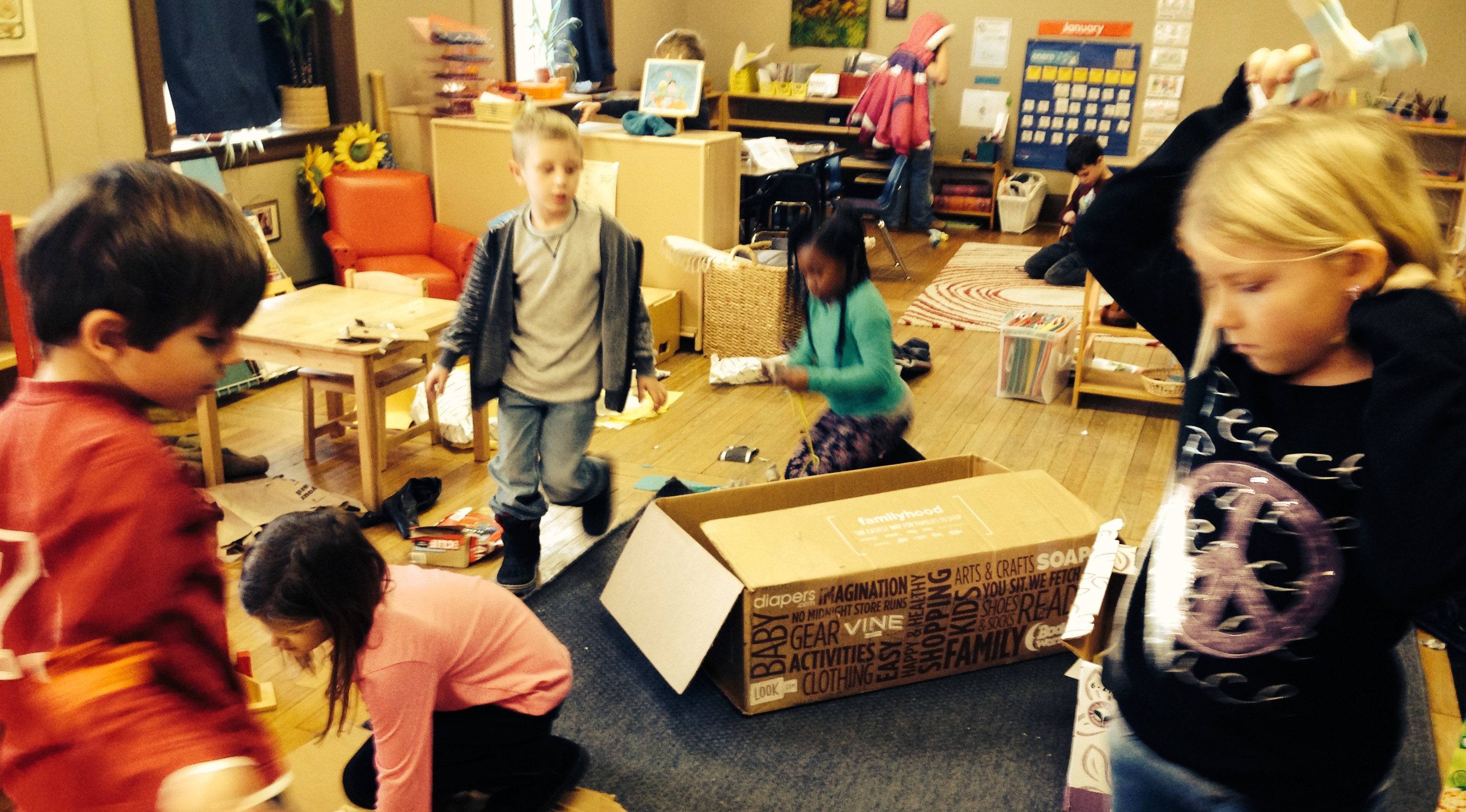
This spaceship workshop is a hive of activity on Mission Days.

This spaceship workshop is a hive of activity on Mission Days.

So, enough orbiting around the subject—what is Spaceship Club? “The premise behind the club,” says Mr. Shalom, “is that all of the students are aliens from Planet Ickydoo, and they’ve come to Planet Earth to explore.” Basically, Spaceship Club is an imaginative new world where kids create, pretend, and participate in a collective narrative. It’s really quite special. But it’s also one of those amazing organic things that you really have to witness to fully appreciate (see video below). A story underpins the hour-long club, and this story unfolds a new way each and every time the kids meet because they are spinning the narrative as they go.

The interactive story-telling aspect alone is quite inspiring to see, but it’s not the only way kids tap into their creativity in Spaceship Club. They also actually build spaceships! The skills they cultivate in the process are limitless—engineering, math, physics . . . even communication technology! Then there’s the astronomy and geography that also come into play. Wait—also anthropology, sociology, and zoology!

Before we get too far ahead of ourselves, let’s back up and start at the beginning (no, not the Big Bang, more like 4:00 on a Friday afternoon). Between 11 and 13 kids assemble in the day’s designated space (sometimes The Lingo Leap, sometimes outside, sometimes a classroom), and the space is instantly transformed into Planet Ickydoo, our Spaceship Club participants’ home and headquarters. The Ickydooians immediately commence repairs on or, if necessary, new construction of their spaceships to be ready for the day’s mission to Earth. The purpose of these missions is data collection. Ickydooians observe, take notes, and report back on earthly goings-on, such as climate, inhabitants (animal and human), topography, and vegetation. Endless subnarratives are possible during these missions, and the kids take full advantage! They adopt special names, for example, or discover Dr. Seussian fruits, or (humanely) trap and carry back snakes to headquarters for more intensive testing and observation.

Some days, work on the spaceship necessarily occupies most of the club. After the holidays, in fact, some crafts were in fairly bad shape. Mr. Shalom provides large cardboard boxes for the spaceships’ outer casing and an assortment of other found/recycled materials (tubes, smaller boxes of all shapes and sizes, twine, duct tape) to trick out each one. The kids team up and construct their spaceships according to their specializations. “The Snake Company,” for example, is an elaborate system of working parts piloted by two lower elementary students with a shared affinity for reptiles. Although the kids usually have the mechanics under control, Mr. Shalom patiently navigates the jumble of spare parts, assisting with more complex repairs and recommending alternative ways to approach problems. It’s obvious that he also relishes the kids’ curiosity and capacity for innovation, praising any particularly useful adaptations he sees them making. (Here and there, he may have to interject an admonishment or two to a particularly energetic Ickydooian, but his stated role is something akin to Air-Traffic Controller or Mission Control.)

With the ever-changing variety of source materials at their disposal, the students have branched out into making other implements that might come in handy on missions. You never know when you might need your suit of armor on Earth, for instance, and there’s no upper limit on the variety of transmitters and scanners that might serve. “When pointed at an unfamiliar object, the scanners can tell you everything you need to know about that object,” says Mr. Shalom. One key piece of equipment is the ansible, a sort of transponder “[they] made out of an old internet modem and a busted RCA cable,” says Mr. Shalom. Any Ursula K.Le Guin fans will know just what this “superluminal communication” device is.

About midway through the hour, the activity ramps up. Mr. Shalom announces the Liftoff schedule and keeps Ickydooians informed with a countdown so they’ll be sure to be “spaceworthy” in time. Liftoff is the high point of the club. Kids scramble into their boxes–oops, ships—and really get into the pretend play. Sounds, sights, and dialogue all enhance the performance as the Ickydooians hurtle toward Earth. Mr. Shalom talks them through each phase of breeching another planet’s successive “-spheres,” lending a little drama to the scene, and then reestablishes a line of communication with each Ickydoo Spacepod.

On landing, the little space travelers engage in the aforementioned scientific study of the strange, new planet and are continuously reminded by Mr. Shalom to remember to gather plenty of “space algae” for the necessary fuel to return to Ickydoo. All the while, they are garnering insight into other worlds, cultures, and beings and how to live in peace and harmony among them in our shared universe. And so we can add philanthropy to the growing list of important attributes that Spaceship Club cultivates. Working parents, rest easy. Aftercare kids are having an out-of this-world learning experience!

There’s a starman waiting in the sky
He’d like to come and meet us
But he thinks he’d blow our minds
There’s a starman waiting in the sky
He’s told us not to blow it
Cause he knows it’s all worthwhile
He told me:
Let the children lose it
Let the children use it
Let all the children boogie

—Ziggy Stardust

The ABCs of ZZZs at TNCS

Looks nice, huh?

Looks nice, huh?

Sleep. That beautiful, elusive state of dormant consciousness we just can’t get enough of. As adults, many of us enjoy a torrid relationship with sleep: desiring it mightily, while in return, it plays hard to get.

But for kids, sleep is not something to flirt with. Say doctors writing for WebMD, “Sleep is no less important than food, drink, or safety in the lives of children.” And yet, with our busy lives and comings and goings, we can inadvertently contribute to sleep deprivation in our kids. “With parents working long hours, schedules packed with school, after-school activities, and other lifestyle factors, naps are missed, bedtimes are pushed back, mornings start earlier and nights may be anything but peaceful. Missing naps or going to bed a little late may not seem like a big deal, but it is. It all adds up, with consequences that may last a lifetime.”

This dire pronouncement is no exaggeration, as more and more research on the importance of sleep illuminates. In Healthy Sleep Habits, Happy Child, Marc Weissbluth, M.D., writes,

“Sleep is the power source that keeps your mind alert and calm. Every night and at every nap, sleep recharges the brain’s battery. Sleeping well increases brainpower just as weight lifting builds stronger muscles, because sleeping well increases your attention span and allows you to be physically relaxed and mentally alert at the same time. Then you are at your personal best.”

Sleep Tight

We all have our sleep triggers. This baby girl gets to sleep with--and on--a pacifier.

We all have our sleep triggers. This baby girl gets to sleep with–and on–a pacifier.

According to the National Sleep Foundation, here are the recommended number of hours per age group.

  • Toddlers: Kids ages 1–3 years need about 12–14 hours of sleep in a 24-hour period.
  • Preschoolers: Kids ages 3–5 years need about 11–13 hours of sleep in a 24-hour period. Most do not nap after age 5.
  • School-aged kids: Kids ages 5–10 years need about 10–11 hours of sleep in a 24-hour period.

In addition to sleeping in sufficient amounts, sleep should have certain other important characteristics. Sleep should be:

  • uninterrupted to allow the child to cycle through all sleep stages, which is important for brain development;
  • timed correctly and with the right number of age-appropriate naps, which will optimize the child’s alertness; and
  • in sync with the child’s circadian rhythms.

Golden Slumbers

Healthy sleep will provide the necessary foundation for your child’s optimal mind and body development. Although it may seem counterintuitive to trade your budding genius’s classroom time for sleep, the opposite is true. In fact, check out these sleep stats (compiled from multiple sleep studies):

  • Children who sleep longer during the day have longer attention spans.
  • Children with higher IQs sleep longer.
  • Toddlers who sleep more are more sociable and less demanding, whereas those who sleep less can exhibit hyperactivity.
  • Sleeping more helps children with attention deficit/hyperactivity disorder both socially and academically.
  • Healthy sleep enhances neurologic development and can prevent both learning and behavioral problems.

The New Century School takes naptime seriously. All preprimary and primary kids either nap or have a resting (quiet) period every day. Naptimes are consistent, and so are the rules. Our kids are healthier and happier for it—and they are learning the good sleep habits that will keep them that way throughout their adult lives.

Speaking of adults, healthy sleep is essential for us, too. The Harvard Medical School gives us the following inducements to grab some zzzz’s:

  • Learning and memory: Sleep helps the brain commit new information to memory through a process called memory consolidation. In studies, people who’d slept after learning a task did better on tests later.
  • Metabolism and weight: Chronic sleep deprivation may cause weight gain by affecting the way our bodies process and store carbohydrates, and by altering levels of hormones that affect our appetite.
  • Safety: Sleep debt contributes to a greater tendency to fall asleep during the daytime. These lapses may cause falls and mistakes such as medical errors, air traffic mishaps, and road accidents.
  • Mood: Sleep loss may result in irritability, impatience, inability to concentrate, and moodiness. Too little sleep can also leave you too tired to do the things you like to do.
  • Cardiovascular health: Serious sleep disorders have been linked to hypertension, increased stress hormone levels, and irregular heartbeat.
  • Disease: Sleep deprivation alters immune function, including the activity of the body’s killer cells. Keeping up with sleep may also help fight cancer.

In October, a new U.S. study hypothesizes a new benefit to sleep, one that begins to explain why we and, in fact, every animal on earth (some up to 20 hours a day!) and even some primitive life forms like nematodes, evolved requiring sleep. In Sleep Drives Metabolite Clearance from the Adult Brain, researchers report that when we sleep, cerebrospinal fluid washes through the brain, flushing out built-up debris. “I think we have discovered why we sleep,” the study leader Maiken Nedergaard said. “We sleep to clean our brains.” The mechanism sounds kind of like MacKeeper for your head. At any rate, it’s a very cool theory.

What time we go to bed also makes a difference. You may have heard that every hour you sleep before midnight counts double? It’s not a myth. The underlying physiology probably has to do with hormones and metabolism, says Susan R. Johnson, M.D. in The Importance of Sleep.

Need any more convincing? Thought not. Now go get some rest—you probably need it. Smiles await you when you rise.

Anxiety-Free Kids at TNCS

Dr. Bonnie Zucker, Psy.D., speaks at TNCS about the importance of teaching our kids how to manage stress and anxiety.

Dr. Bonnie Zucker, Psy.D., speaks at TNCS about the importance of teaching our kids how to manage stress and anxiety.

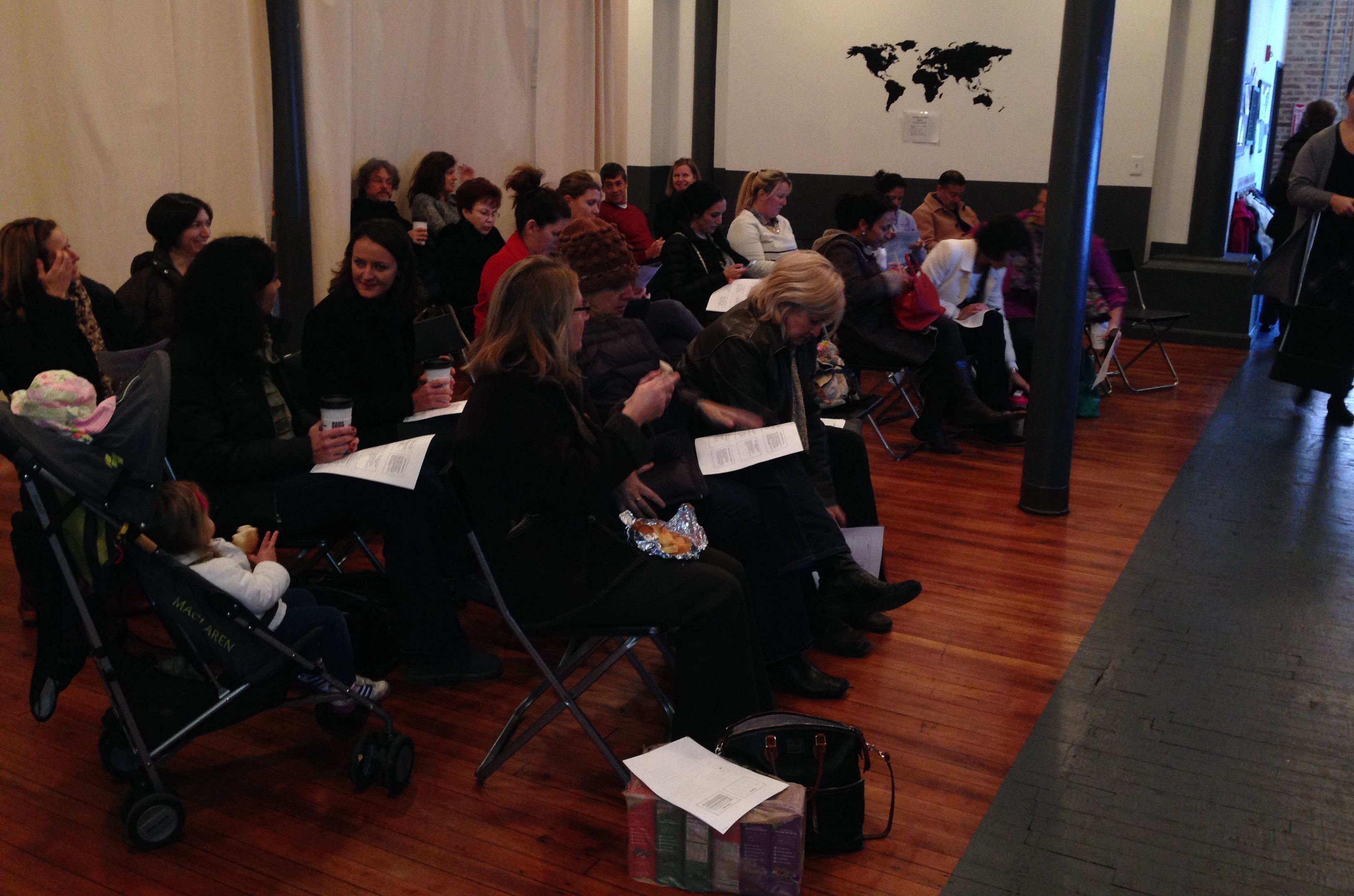
Parents came out in droves on Wednesday to attend the inaugural presentation of The New Century School‘s new lecture series. Dr. Bonnie Zucker, Psy.D, a psychotherapist at The National Center for the Treatment of Phobias, Anxiety, and Depression (Washington, D.C.) and at Alvord, Baker, & Associates (Rockville, MD) spoke to the audience about using cognitive behavioral therapy (CBT) to reduce or completely abolish anxiety disorders in children. You might think that handling kids’ anxiety and related emotions tends to be the provenance of mothers, but the number of dads present disproves that assumption. Anxiety disorders, evidently, do not discriminate along gender lines. Nor do they prefer adults so much any longer. Pyschopathology rates have been skyrocketing in children and adolescents for several decades, according to the American Pyschological Association; some even call this The Age of Anxiety. Kids can begin to manifest anxiety disorders as early as age 4 or 5 years.

Anxiety is a normal response to stressful situations, but chronic anxiety can cause a cascade of health problems, from depression and substance abuse to serious digestive disorders (e.g., inflammatory bowel disease, irritable bowel syndrome, ulcers) and heart disease. Learning to manage our response to stressors can significantly reduce the health risks associated with anxiety as well as make daily living altogether more enjoyable. And that’s exactly what Dr. Zucker helps parents to do: “I speak about five times a year at schools,” she says, “targeting parents to be more aware of their kids’ anxiety and giving them strategies to help them manage it whether it’s a disorder or not.”

In her presentation, we learned first and foremost that the tools she would be demonstrating are useful for everybody—“there’s nobody who doesn’t get stressed,” she made clear. Several parents attended for just that reason: Sundai Valcich, mother of three kids ranging from age 1 year to age 6 years, said, “My children do not have severe anxiety at this point in their lives, but I thought it would be useful to learn some techniques for how to address anxiety should it occur. Dr. Zucker presented some great techniques for helping our children—and ourselves—deal with anxiety. I hope to introduce ‘calm breathing’ to my family to help all of us do better in stressful situations.” More on calm breathing in a bit.

A full house in Building North came out for the Anxiety-Free Kids presentation. And they kept coming!

A full house in Building North came out for the Anxiety-Free Kids presentation. And they kept coming!

Other parents wanted to know how to distinguish between natural anxiety responses and potentially problematic ones. Dr. Zucker emphasized that anxiety only becomes a true problem—a disorder—when it interferes with daily living. When a child cannot attend a birthday party because social situations stress her out, that’s an interference. When a child can’t go play baseball at the park because he might encounter a dog there, that’s an interference. The fact is, anxiety disorders are the most common form of psychopathology in children, adolescents, and adults. Moreover, a strong correlation exists between childhood and adult disorders; if you were an anxious child, you may well be an anxious adult. Nipping excess anxiety in the bud, even learning to recognize it, will set our kids on a healthier mental path. Another TNCS mom of three, Meredith McCormack, says she came because, “I was interested in learning about what type of behaviors might signal an underlying problem with stress and anxiety and I thought that practical tools for addressing anxious behaviors would be helpful. I thought that the talk was great and very interactive. The fact that Dr. Zucker got on the floor to demonstrate deep breathing techniques was a good example of the types of very practical examples that she used throughout the talk. I was very glad that I attended!”

Dr. Zucker demonstrates the calm breathing technique in her interactive, informative, and very entertaining presentation.

Dr. Zucker demonstrates the calm breathing technique in her interactive, informative, and very entertaining presentation.

So what did Dr. Zucker show us? As mentioned, her approach is CBT. Anxiety, she says, affects our bodies, our behaviors, and our thoughts. By repeatedly exposing a child to his or her anxiety trigger, in a safe, controlled environment, Dr. Zucker can teach heuristics to deal with these effects. So, when the little boy who can’t play in the park sees a dog, his muscles probably tense up, his heart rate accelerates, and his stomach might even hurt (indeed, Dr. Zucker explained that our digestive tracts are home to greater quantities of neurotransmitters than even our brains, giving credence to that old claim of a “nervous stomach”). These bodily effects can be lessened with calm breathing, yoga, meditation, and guided imagery, for example. (A huge advocate of yoga and meditation, Dr. Zucker, exhorted everyone present to take up these activities if they have not already done so and “call [her] in a year” to thank her for the resulting life improvements :)!) We can employ calm breathing in any situation but, first, refining this technique is necessary–it’s not a simple matter of taking deep, slow breaths. To practice calm breathing, lie down (Dr. Zucker recommends donning a yoga mat) and place an object on your chest. When you inhale, if the object moves, you are not breathing calmly! The breath should originate from the deep, low abdominal muscles; the chest remains static. It’s harder—and therefore far more rewarding—than it sounds!

Next, our little boy needs to address the avoidance behavior he resorts to out of fear. “Behavior change happens first;” says Dr. Zucker, “thought change comes second.” At the child’s pace, expose him step by step to dogs or to dog-related situations. “Face your fear!” she says. She makes “ladders” to help the child both chart and see his progress and to convey a sense of climbing/achieving. One rung at a time, the child conquers his fear. (Works for adults, too!) As for thoughts, the little boy is probably experiencing a lot of worry as well as “negative self-talk” (e.g., “I can’t”) and thinking “errors” (e.g., magnifying/distorting the intensity of the problem). To address the thought component, Dr. Zucker suggests replacing the errors and negativity with positive thinking, and, here, practice makes perfect. “Anxiety breeds self-doubt,” she says. “Fostering resilience can prevent self-esteem issues.” Thus, our body, behaviors, and our thoughts intersect and influence each other continuously. Harnessing this interaction is the key to CBT and using it to overcome anxiety.

We can thank Head of School Alicia Danyali for introducing us to Dr. Zucker. “I thought bringing someone into the school with expertise in the area of anxiety would speak to many families that have their own questions about their child’s behaviors, and to confirm or cancel out any ‘anxiety’ they may have regarding their observations. Also, in this overstimulating world, how does overstimulation affect those predisposed to anxiety or any signs of these behaviors mentioned in the talk?”

Dr. Zucker’s take-away message is clear—teaching our kids how to manage anxiety and anxiety-inducing situations is on us parents. We need to both educate ourselves in CBT techniques, and we also need to model our own correct responses to stress. “I look at managing anxiety as a life skill,” she says. She’s right on target. We cannot delude ourselves that our kids are never going to experience these unpleasant emotions or that we can always shield them from situations that might induce such feelings. What we can do is teach them how to rally and move on. Yes, you have to get a flu shot, and, yes, the needle is going to hurt. It’s okay to cry, but know that it will be over quickly, and you’ll be just fine. There’s that buzzword resilience again!

Want to learn more? Check out Dr. Zucker’s book, Anxiety-Free Kids: An Interactive Guide for Parents and Children!