How To Be an “Askable” Parent

how-to-be-an-askable-parent

Originally scheduled for 2/17/15, this presentation was moved to 3/31/15 due to snow.

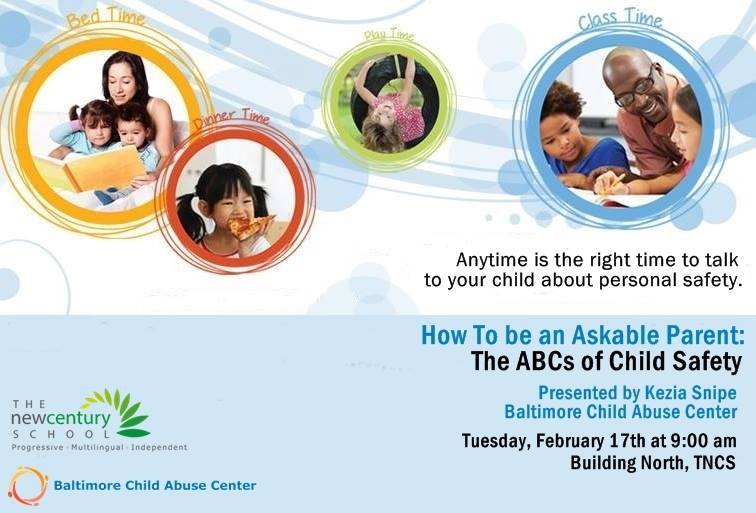
On March 31st, 2015, The New Century School hosted a community presentation on how to keep children safe from sexual predation. Said Head of School Alicia Danyali: “[How To Be an Askable Parent] is to not create an alarmist mentality, but to inform and educate parents to the realities and practical approach to conversations with your child at any age.” Crimson Barocca, LCSW-C, Senior Forensic Interviewer with the Baltimore Child Abuse Center led the presentation. “It was a great discussion and maybe we can repeat at some point in the future!” she said. This is good news for those who were unable to attend, because this topic—while not the cheeriest—is of paramount importance for parents.

Two myths she dispelled during the talk are that preschool-age children are too young to understand this topic and that children should use euphemisms for their body parts. You can talk to your child as soon as you feel he or she will understand you, and using anatomically correct terms for body parts is actually a means of protection for your child by demonstrating to a potential predator that he or she is educated about this topic and therefore not such easy prey.

What Is an Askable Parent?

An “askable” parent is approachable and listens well. The askable parent recognizes that teaching involves verbal and nonverbal communication, and that your child will learn not only from what you say, but also how you behave and react to situations. Other traits of askability include:

  • Respecting the child (e.g., not laughing when the child asks a question)
  • Realizing that every difficult situation is not a crisis
  • Knowing that the most important part of communication is listening

One primary goal of the presentation was to help parents learn how to decrease kids’ vulnerability. And that again comes down to communication. Ms. Barocca shared lots of helpful tips for how to start talking about this uncomfortable subject. One point she emphasized was that, although it is certainly important to talk about so-called “stranger danger,” it is just as important to talk about people your children know and trust. Most abduction and abuse happens at the hands of people children know very well, not strangers.

But how do you broach this subject with young children without terrifying them? Emphasizing the safety aspect rather than danger will go a long way to preventing or reducing their anxiety. The National Center for Missing and Exploited Kids (NCMEC) provides Discussion Guides broken down by age group (download them here). The singlemost effective means of protecting your children is communication, because if they know they can talk about their true feelings, they will be more likely to reveal that they have been in an uncomfortable situation. Currently, only about 10% of children who are sexually abused report it.

Ms. Barocca drove home the message that 90% of abusers are known to the child—doctor, clergy, neighbor, family, etc. She also updated the good touch/bad touch metric to safe touch versus unsafe touch to make this concept clearer for children (sometimes what we would consider a “good” touch can feel bad to a child, such as getting a shot, whereas a “bad” touch such as inappropriate tickling can feel good). Using the terms “safe” and “not safe” eliminates this possible confusion. This is a great starting point for your conversation. You can give examples of safe touches, such as well-check exams at the doctor’s office or being washed by parents in the bathtub. Ask your child to give an example of a safe touch so that you can be sure the concept is understood.

Then, inhale, move onto unsafe touches. A sickening fact is that 1 in 4 girls and 1 in 6 boys will be sexually abused by their 18th birthday. Explain what this means (such as an adult asking the child to “play a game” of touching private parts) and, again, ask the child to give you an example to demonstrate understanding.

Next, emphasize to your child that he or she must tell you right away if he or she ever experiences an unsafe touch and keep on telling until you receive the message. The predator has likely commanded the child to keep quiet, so be sure to explain that this is not a situation to keep secret. Finally, two extremely essential parts of this conversation are that 1) make sure the child knows this is not/would not be his or her fault—it’s always the adult’s fault—and 2) reinforce to the child that as the parent, it’s your job to protect him or her.

“Stranger Danger” Rules

Make sure your children understand . . .

  • That you will never send a stranger to pick them up from somewhere. Establish a “code word” that anyone picking them up unexpectedly would know—“meatball,” “pierogi,” etc. Make it something pertinent to your family but that a clever stranger wouldn’t be able to guess.
  • A grownup should never ask a child for help with directions or finding a lost pet. Run away if approached.
  • That if separated in a store or park, to stay where they are; you will find them. Tell them to seek help from another nearby mom.
  • To always ask you before going anywhere and to give you all the details about where they’re going, who is going with them, and when they’ll be back. (For older children.)
  • That it is okay in any situation in which they feel uncomfortable to walk or run away and, if grabbed, to yell, kick, scream, and do whatever it takes to draw attention. Teach them to yell, “This is not my [parent]!” to alert passersby.
  • That they have the right to say no to any touch or actions by others that makes them feel scared, uncomfortable, or confused. Reassure them that they can tell you anything.
  • The anatomically correct terms for their body parts. Educated = less vulnerable.

For parents to be especially mindful of . . . 

  • Look and listen to small cues and clues that something may be troubling your children. Some children may not be able to tell you when something happens, because they have been threatened that bad things will happen if they do.
  • Pay attention if they tell you they don’t want to be with someone or go somewhere.
  • Notice when someone shows one or all of your children a great deal of attention or begins giving them gifts.
  • Children may be especially fearful of being punished, being embarrassed, or experiencing the loss of the love and respect of their family members and friends. If your children do confide in you, remain calm, noncritical, and nonjudgmental.
  • Be sure to screen babysitters and caregivers.
  • Establish rules and guidelines for computer use for your children (see Netsmartz and Net Nanny).

For additional details, see Immersed’s “Community Conversation: Protecting Our Children.”

List of Resources

In addition to providing some helpful handouts such as a Family Safety plan (download here), Ms. Barocca shared lots of great resources to help us navigate these treacherous waters. Click Recommendations for her list of recommended books.

Hotline

  • 1-800-THE-LOST (1-800-843-5678): 24-hour hotline or cybertipline for reporting information about a missing child or suspect child sexual exploitation.

Articles

Websites

Video

Transitioning from Preprimary to Primary at TNCS

parallel-play-with-montessori-materials

These preprimary students are very excited to be working with Montessori materials at age 2!

Accommodating children from ages 2 years through 10 years (and soon to be 12 years) and ultimately comprising four programs, including preprimary, primary, elementary, and middle school, The New Century School has always focused on how to make the transition from program to program as smooth as possible for students. Continuity is built into the school’s approach, arising as a very natural consequence from its philosophy and mission. No matter what point a TNCS student starts from, he or she is headed toward the same basic goals of self-motivated inquiry and discovery as well as how to be a nice person along the way.

tiny-TNCS-tot-explores-multiple-dimensions-with-Graduated-Cylinder-Blocks

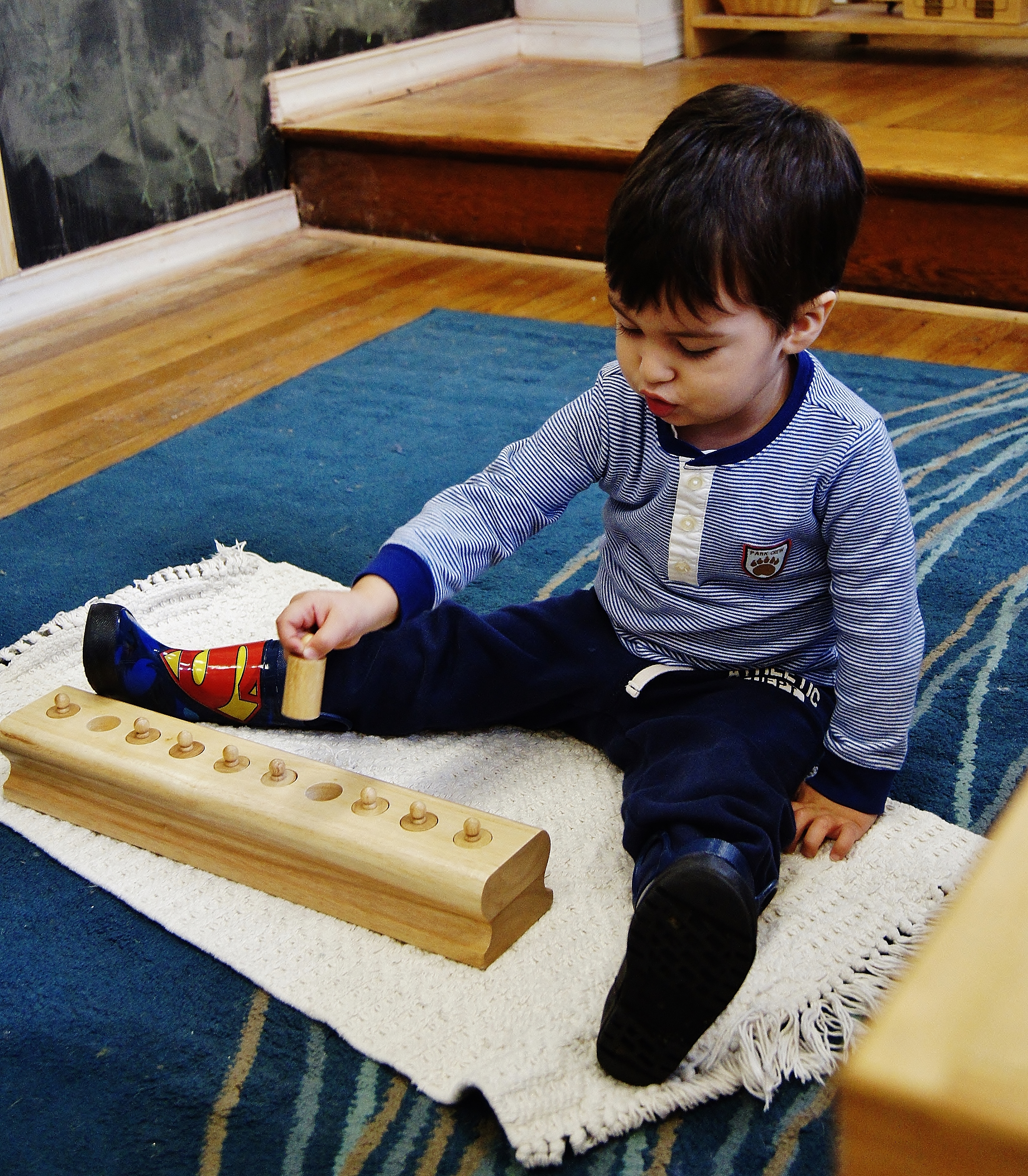
This tiny TNCS tot is exploring multiple dimensions with the Graduated Cylinder Blocks.

Perhaps the most challenging transition that TNCS students (and their parents) face is moving from the preprimary program up to the primary program when the child turns at least 3 years old. At age 2, they might well still be in diapers—still babies, practically—then, a year later, they enter a completely new milieu, with new teachers, new classmates (most of whom are older), and a whole new set of expectations. They become, in short, tiny students.

Historically, this shift has always been more difficult for the parents. The toddlers, meanwhile, accept these changes more or less in stride, even eagerly. It’s safe to say that the children’s ability to adapt so quickly and so well has a lot to do with TNCS’s very well-considered transitional process. On Thursday, February 5th, Head of School Alicia Danyali and the three preprimary teachers, Mrs. Reynolds, Lin Laoshi, and Señora Ramos held a Preprimary Workshop to walk parents through what this process entails. It was a full house; preprimary parents are clearly curious, if not anxious, about what lies ahead for their kids. Rest assured, Mrs. Danyali’s and the teachers’ presentations allayed all concerns!

The talk focused on three key aspects of the move to the primary program: 1) the differences between the two programs, 2) the necessary milestones each child must have met in order to move up, and 3) how each child is placed in one of the four primary classrooms. All of these themes are interrelated, as will become clear.

Differences Between TNCS Preprimary and Primary Programs

The two biggest differences between the programs is that the primary classroom is not a language immersion environment, and it is a classic Montessori environment. These differences start to become less striking, however, when you consider that the children are introduced to the Montessori materials as well as the Montessori teaching style of nurturing guidance the moment they step foot into the TNCS preprimary classroom. Thus, 3-year-olds will enter the primary classroom with a good deal of familiarity with their surroundings and with the manipulative materials they will be working with. And, as with the preprimary classroom, the primary classroom is specially engineered and furnished to accommodate their size. For more on how the Montessori classroom functions at TNCS, please read previous Immersed posts “Language, Math, and Science—Montessori Style!,” “Inside the Montessori Classroom,” and “Preschool Conundrum Solved: Research Demonstrates Benefits of Montessori Education.” The main point here is that Maria Montessori knew that kids need, above all else, to feel secure for optimal development; therefore, in the TNCS Montessori primary classroom, new skills are introduced when the child is ready for them, not when the calendar arbitrarily dictates.

Regarding the shift away from language immersion, that, too, is really only a partial shift. Although the class is “led” by a Montessori-trained teacher, a second teacher who speaks exclusively to the children in either Spanish or Mandarin Chinese is also always on hand. Even better, these teachers switch back and forth among the classrooms on alternating days to ensure that the primary students are now receiving exposure to and instruction in both languages.

Milestones Demonstrating that a Child is Ready for the Primary Classroom

montessori-button-frame

This TNCS preprimary student practices her fastening skills on the Montessori Button Frame. She is well on her way to independent dressing!

Some of the current preprimary students have only just turned 2. Their parents might be wondering how conceivable it really is that their child might be sharing a classroom with kids who are starting to read and write in under a year from now. In diapers in May but using the bathroom by late August? Able to don outdoor clothing independently? Able to articulate daily needs? Those are some of so many hurdles jumped for lots of kids, towering obstacles for others. These are, however, prerequisites for moving up to primary. No matter where your child falls along that continuum, the overriding message that emerged from Mrs. Danyali’s presentation was that the child will be supported and nurtured along the way to readiness. These benchmarks are not in place for ranking or comparing student achievement, by any means. They are simply necessary from an operational standpoint. The primary teacher cannot sacrifice time away from giving the very specific Montessori lessons or helping a student master a task to change diapers, for example. The primary student is able to use the bathroom and get dressed to go outdoors more or less independently (assistance and guidance are always readily forthcoming, of course, and supervision is a constant).

This might sound rather stark at first. In fact, however, the first steps toward such independence have already been taken in the preprimary classroom, where independence and competence are very tenderly fostered. The TNCS student has become a fairly autonomous classroom resident even at age 2, as Mrs. Reynold’s gorgeous photos attest (also see slideshow below). Their ability to pursue their own interests will serve them very well, academically. They are internalizing/honing the four pillars of Montessori: Concentration, Coordination, Independence, and Order. Order? Indeed. Primary students are not only expected to select an activity that they want to work with, but they are also expected to complete that work as well as put it away correctly upon completion—it’s the Montessori “Work Cycle,” and it teaches accountability and a sense of accomplishment in addition to the importance of maintaining order. All “works” are designed to absorb the child (concentration) and also to develop both large and fine motor movements (coordination).

Parents are encouraged to reinforce the expectation of independence at home as well. Children can be allowed to pour their own drinks and zip up their own outerwear, for instance. Pants with elastic waists and shoes that fasten with velcro straps can facilitate their ability to get dressed by themselves and develop their confidence with such processes. Another way parents can aid such transitioning is by considering a TNCS summer camp for primary-age students rather than a preprimary camp to give them a taste of the fun in store.

Placement in a Primary Classroom

Although not an exact science, this aspect of the transition out of preprimary is very thoughtfully undertaken. Many factors are weighed in the decision-making: your child’s proclivities, the prospective teachers’ proclivities, and the ages and genders of the current students in the class. Each Montessori classroom should have a well-rounded mix of ages 3, 4, and 5 in order to function optimally. (Please see above links for the rationale behind the mixed ages of Montessori classrooms. In short, they promote incredibly fruitful mentor–mentee relationships that continuously evolve.) The child will remain in the primary classroom for 3 years, so a “good fit” is critical. TNCS may not be able to honor specific requests in all circumstances, but your child will always be placed in a classroom environment fully devoted to addressing each student’s needs.

And Finally . . . 

Even though the advance to the primary program is made as smooth as possible, TNCS students do face transitions and changes, as all students do. The important difference at TNCS is in the thoughtful, child-appropriate way these transitions are managed. As always, parents, you are encouraged to see how it all comes together for yourself—you’ll be amazed, gratified, and reassured. Here are four great ways you can do so:

  1. Attend an Admissions Fridays event held most Fridays through the end of the school year (register here).
  2. Attend the Primary Workshop, “Four Areas of the Montessori Classroom that Unleash Your Child’s Potential” being held February 12th, 2015 from 6:00 pm–7:30 pm. (Childcare is available; sign up here by February 9th.)
  3. Read any of the related Immersed posts linked above, or simply search with keyword “Montessori” in the Immersed archives.
  4. Read Mrs. Danyali’s recommended books Montessori: The Science Behind the Genius (Angeline Lillard) and A Parents’ Guide to the Montessori Classroom (Aline Wolf).

This slideshow requires JavaScript.

TNCS Welcomes DBFA and the “Big Kids”!

tncs-gymnasium-accomodates-dbfa-event

For the second year in a row, TNCS hosted this DBFA event, providing plenty of space in the gymnasium.

On Wednesday, January 28th, The New Century School once again had the pleasure of hosting the Downtown Baltimore Family Alliance‘s annual signature event, “Meet the Big Kids (and Their Parents).” This event featured participants from neighborhoods all over the city (e.g., Fell’s Point, Butcher’s Hill, Otterbein, Roland Park, Federal Hill, etc.) to provide the inside scoop on the challenges and benefits of growing up and going to school in our urban environment. TNCS was perfectly situated to host again, with plans to open its very own middle school in the fall of 2016 and welcome some big kids of its own!

happy-hour-light-fare-provided

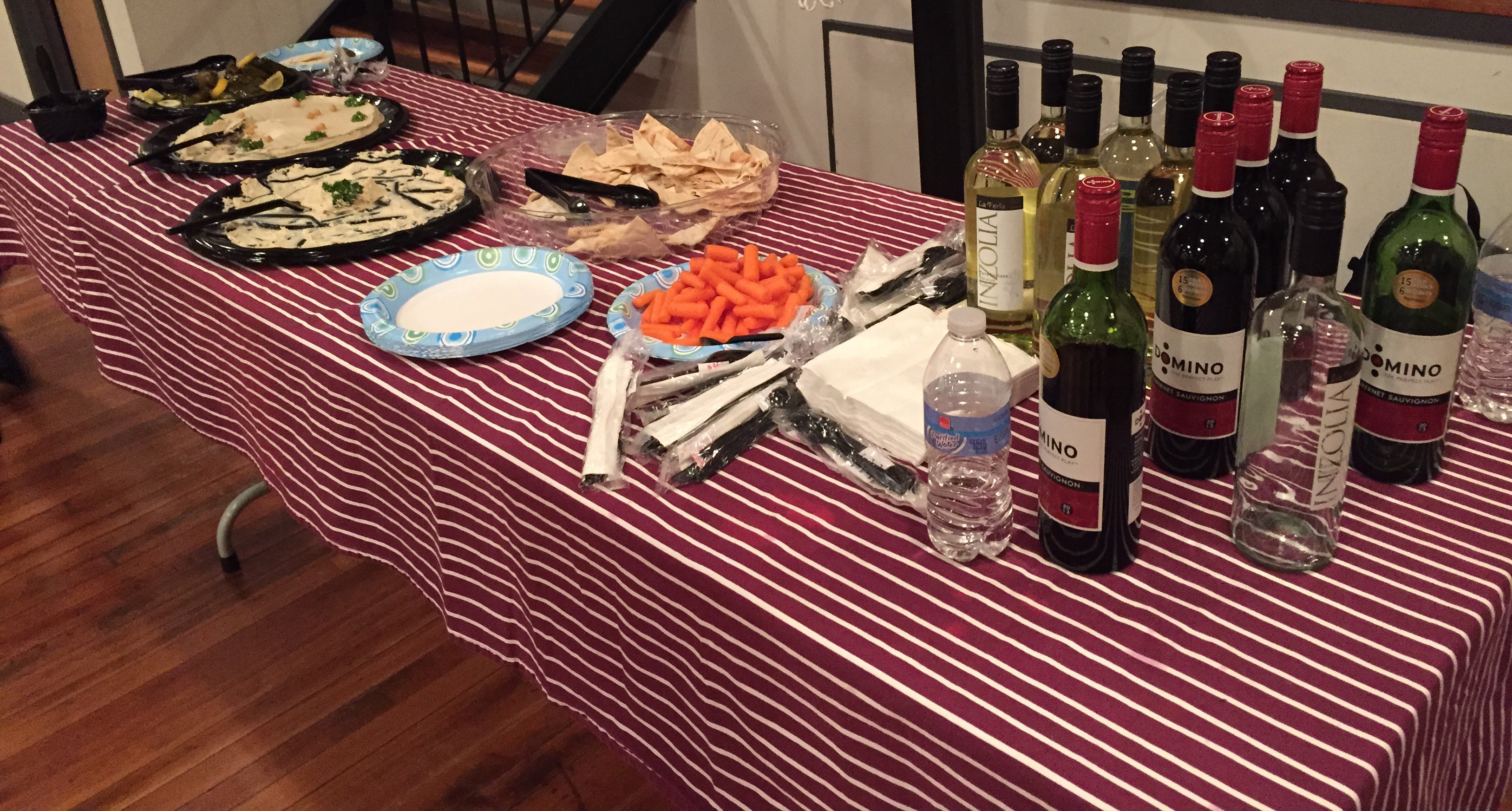
Hors d’oeuvres from Lebanese Taverna gave attendees time to arrive at a leisurely pace, mingle, and recharge before getting down to business.

The event, designed to accommodate working parents, commenced with a happy hour with hors d’oeuvres from Harbor East’s Lebanese Taverna, while children were given pizza and snacks in an adjoining classroom with childcare by Wondersitters. The audience turnout was high—how to raise healthy, happy older children in downtown Baltimore is a popular topic! DBFA solicited questions for the panel in advance to make sure everyone’s concerns were addressed in a timely fashion. Said mediator Beth Laverick, “[This event] is 150% worth your time, and you will walk away with more information than you thought possible.”

This year, the event took a slightly different tack, focusing more on the kids themselves and letting them express their opinions in their own voices. One especially nice touch was in the variety of perspectives that the panel shared. In addition to middle school–age and high school–age kids, parents were also on hand to provide their viewpoints. Thirdly, the panel included two young working professionals who had grown up in Baltimore, gone to college, launched successful careers, and returned to Baltimore to live and work. The resounding message was that staying in Baltimore to raise a family is not only fine, but it has many advantages—big advantages—that the panel was happy to enumerate.

So how do they do it? How do downtown families manage “without yards, two-car garages, and shopping malls”?

DBFA Executive Director John Bullock introduced the event by explaining DBFA’s mission to keep Baltimore families connected and to provide the resources they need to enhance family life in Charm City. Mediator Mrs. Laverick then took over to introduce the panelists. Each was asked to describe where he or she lives and what it is about Baltimore that has him or her committed to city living. Walkability was a key theme as was the sense of community pervading the neighborhoods. Many consider Baltimore a “small, close-knit community within a big city.” In other words, you get the best of both worlds here. All of your neighbors know you and keep an eye out for your family as in a small town, while first-rate theatre, dining, farmers’ markets, and shopping are abundantly available—big-city perks. “There’s never a dull moment,” said Big Kid Sebastian Towles, which got a laugh from the audience. We could all agree with that statement!

Discussion Topics

Not surprisingly, schools were the biggest issue, just as they were last year. In some ways, this issue is fast becoming a non-issue. Almost soon as the Big Kids opened their mouths, audience members’ concerns about Baltimore City high schools were quelled. The panelists were smart, witty, eloquent, and extremely self-possessed. They were perfectly at ease speaking from the stage to a large audience, all of which says a lot about the education (a mix of public and private schools) they are receiving. “Do you have concerns that the education your child is getting is not on a par with national standards? parents were asked. “Not even a little bit,” said one, which was echoed unanimously. If anything, it’s the opposite. Fun fact: students graduating from Baltimore City public high schools get free tuition to Johns Hopkins University upon acceptance! (See below for a list of the top-performing Baltimore City high schools. Also note that Baltimore is nationally renowned for its private high schools (e.g., Gilman, Calvert Hall). “Where did you go to school?” when asked of a Baltimore native, does not refer to college, but to high school.

meet-the-big-kids-panel

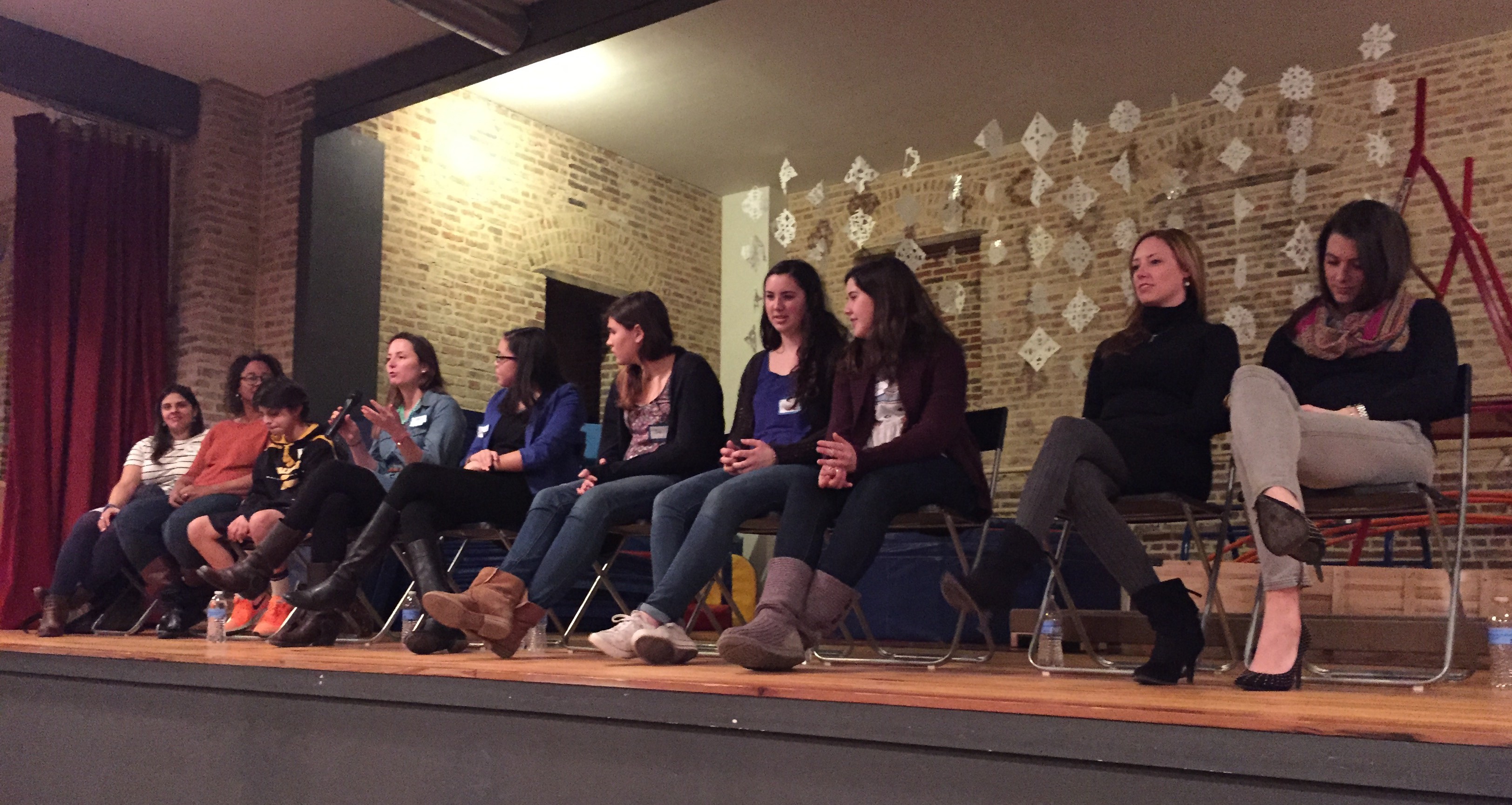
This year’s panel included the kids, their parents, and a couple of “former kids”!

What about school safety? What about transportation to school? In Baltimore City, no high schools are zoned, so all are by choice. Prospective enrollees apply to their top picks and make the decision based on where they are accepted. This system is really wonderful for matching a Big Kid to the right learning environment (some schools focus on The Arts, others on STEM, for example). It also presents a couple of challenges, such as getting to a school that isn’t located in the immediate vicinity. Are parents forced to spend hours each morning chauffering their kids to school and making all manner of sacrifices for this inconvenience? Panelists laughed off the very idea. Part of urban living is developing the competence and independence to navigate the city. Most of the school-aged panelists take the MTA busses and are happy to do so. Carpools can also be arranged in certain instances, but to hear the kids themselves, availing themselves of the public transportation at hand clearly makes the most sense. Busses on the school routes are full of students, and it’s easy to develop “bus buddies” should a helping hand or just some companionship ever be needed.

As for safety in the school, this was again a moment during which the panelists impressed the audience. It’s true that cell phones and valuable items get stolen in Baltimore (as anywhere, city or no). These kids seemed almost puzzled by the idea that they wouldn’t use common sense en route to school or anywhere else. Don’t display valuable items; travel in groups. Duh ;)! As for larger safety issues such as bodily harm or worse, look at the statistics, said one of the grown-up “kids.” Violence in schools not only happens everywhere, but actually seems to be more prevalent in non-urban areas. This fact seems difficult to fathom until you consider that with a greater population density comes correspondingly more infrastructure to maintain order, such as police presence (and number of streetlights, pointed out Amuse Toys owner Claudia Towles, winning another audience laugh). The grown-up kids were quick to point out the harrowing experiences they met with after leaving Baltimore for college in small towns. The kids are right: It’s all down to using common sense, and urban parents might be more likely to begin instilling these lessons early, resulting in some pretty savvy young urban dwellers.

big-audience-turnout-TNCS-gymnasium

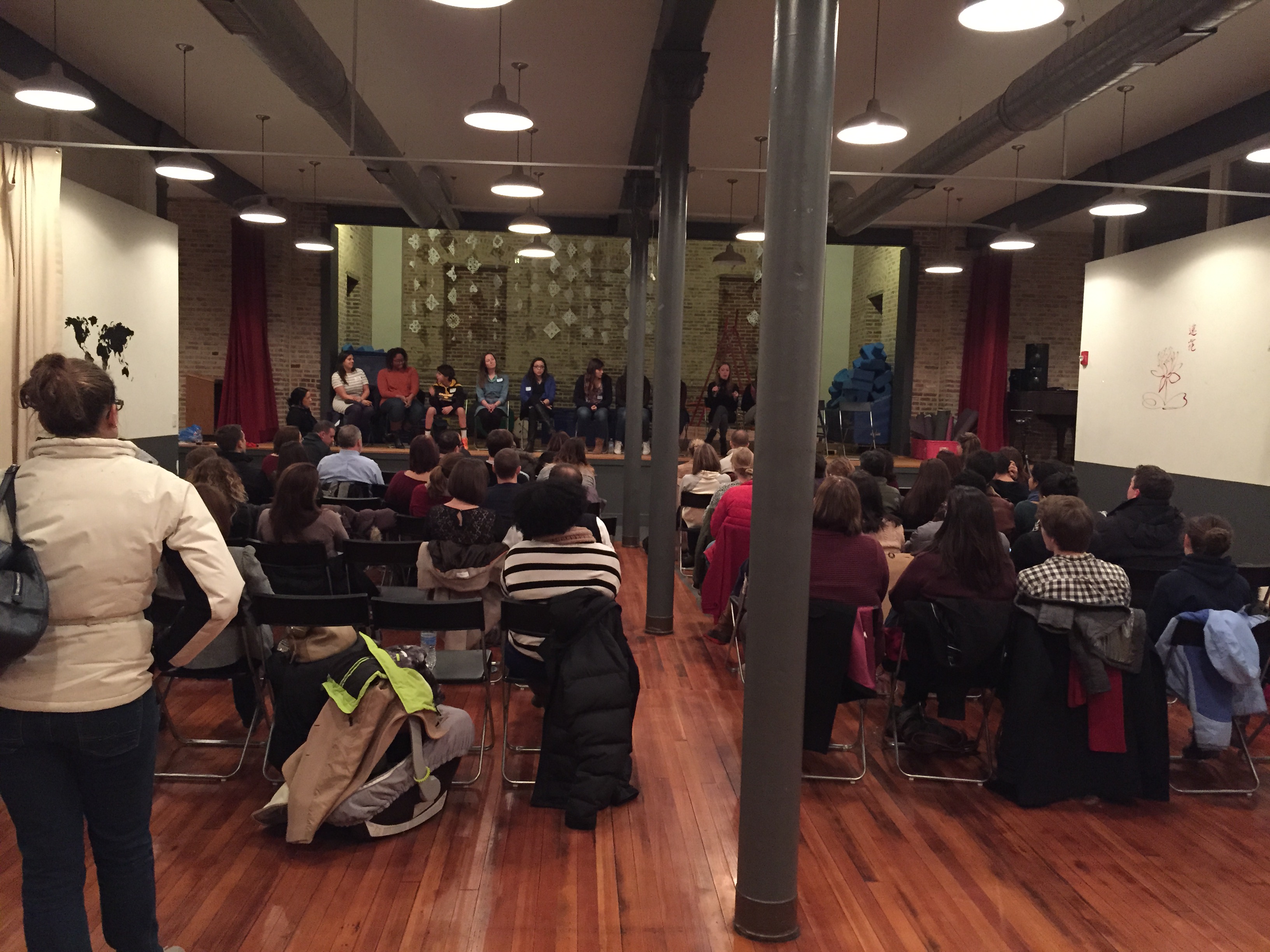
More than 40 parents turned out to Meet the Big Kids (and Their Parents) to learn about the next phase of parenting and schooling in Baltimore.

From this point, a unifying motif emerged during all topics. City kids are resourceful. They are creative, innovative, and welcoming of a challenge. No yard to play outside in? Text your buddies to meet up at the neighborhood park or initiate a ball game in a very-low-trafficked alley. “Learn your community like the back of your hand,” they advised. Walk around; get to know the city. Parents agreed. Grant independence in increments, said Fell’s Point mom Melanie Hood Wilson. Teach them their boundaries and to be mindful of their surroundings.

As happened throughout the night, what was presented in question form as something to be overcome turned out to be a clear advantage in panelist answers. For example, no backyard (or one made of bricks—another laugh) opens up the city as a playground with a wealth to do and explore. Mrs. Wilson shared an anecdote that when her teenage daughter had just finished a grueling morning of exams and had an afternoon available to do with whatever she chose, she and her friends opted for a visit to the art museum. And, Baltimore’s walkability and abundant public transportation means that our teenagers aren’t driving as much, which parents and grown-up kids say translate into fewer accidents and fewer DUIs compared to teens in the suburbs who tend to have to drive almost everywhere.

Although the view was overall pretty rosy, it isn’t perfect. But Baltimore families and stakeholders are working on establishing more high schools, especially charter schools, to increase the number of excellent options. The DaVinci Academy for the Arts and Sciences (working name) is in development in Southeast Baltimore, for example, with hopes to open in fall 2017. “Baltimore has a way to go,” said Mrs. Wilson, “to develop the same diversity of options for high school that we have for elementary. And that’s only going to happen if families stay in the city and demand it.” Another way you can make your voice heard on the topic of schools in Baltimore is by visiting the Baltimore City Public Schools website, which actively solicits feedback. This organization also conducts annual School Effectiveness Reviews (SERs) that are published on the site for your perusal.

Finally, if you would like a deeper dive into the most frequently asked questions and their answers, please see Immersed‘s write-up of 2014’s event, which dealt with many of the same topics: Meet The Big Kids.

Community Conversation: Protecting Our Children

A couple of months ago, a Baltimore mom posted a question on the Southeast Baltimore City Kids listserv and wound up galvanizing a community. Her question was directed at other parents and, though simple, was very important. “I am wondering if there are any local programs/seminars put on by experts for parents on the topic of teaching your kids about strangers, sex offenders, online safety, etc.?” asked Mila Lowery. “Is this a topic that is addressed in school? Or maybe the police department has something? It is scary to think about but necessary.” Although this topic does not involve The New Century School specifically, it is a universal parenting concern and therefore well worth exploring here. This is not a fun post, but certainly a timely one. With the hundreds of teenage girls abducted and still missing in Nigeria last month and this month’s upcoming National Missing Children’s Day (May 25th), this issue is uppermost in the minds of many.

Several moms responded to that initial query posed back in March with anecdotes, books, websites, and advice (see below for a list of some of those resources). One mom, in particular, took up the thread and offered specifics for taking on so-called “stranger danger” (see below for her list of rules). As it turns out, she works with law enforcement locally and throughout the country on abductions, sexual abuse, internet safety, and child sexual exploitation with the National Center for Missing and Exploited Children (NCMEC). Mom and child advocate Cindy Pappas next approached the administration at DuBurns Arena to ask them to host a parent safety night and and allow her to do a presentation for the community. That 2-hour event took place on Wednesday, May 7th and was informative, full of practical tips, and eye-opening to say the least.

Presentation: Protecting Our Children

Ms. Pappas introduced the event and detailed the rules she had previously shared on the listserv. She explained that the goal of her presentation was to help us parents learn how to decrease our kids’ vulnerability. The presentation quickly took a turn that shocked many in the audience. “While it is important to talk about ‘stranger danger,’ ” said Ms. Pappas,  “it is just as important to talk about people your children know and trust.” Most abduction and abuse happens at the hands of people your children know very well, not strangers. While we digested this (unexpected for some) information, Ms. Pappas provided the following abduction statistics:

  • 13,000 missing children in Maryland annually; 1,000 of whom remain unrecovered
  • 69% female
  • 41% age 10–14 years
  • 35% walking to/from school or riding a bike
  • 96% male suspects; 48% white
  • 72% involve a vehicle

Butcher’s Hill mom of three Susan Albrecht said she was attending the event, “to learn how to talk to [her] children about this sensitive matter without scaring them.” According to Ms. Pappas, “the singlemost effective means of protecting your child is communication. If they know they can talk about their true feelings, they will be more likely to reveal that they have been in an uncomfortable situation.” Currently, only about 10% of children who are sexually abused report it. NCMEC provides Discussion Guides broken down by age group; download them here.

A representative from the Baltimore Child Abuse Center spoke next. In addition to providing lots of great handouts such as a Family Safety plan (download here), she drove home the message that 90% of abusers are known to the child—doctor, clergy, neighbor, family, etc. She also updated the good touch/bad touch metric to safe touch versus unsafe touch. Finally, she shared the sickening fact that 1 in 4 girls and 1 in 6 boys will be sexually abused by their 18th birthday.

The third speaker was a detective from the Baltimore City Police Department who had two main points (and many colorful anecdotes!) to share: First, most abusers are in positions of authority. This is what makes empowering your child to communicate so important, whether to say no to the would-be perpetrator or to feel comfortable enough to tell you when someone has approached his or her inappropriately. Second, if something happens, stay calm and call 911. Don’t try to play detective yourself; don’t increase the child’s distress. Trust the process.

The final speaker of the night was Assistant State’s Attorney Kelly Burrell who urged us to report any suspicious actions we might witness, even if we aren’t sure. “Don’t put your head in the sand,” she said. “If it’s happening or you think it might be happening, tell someone!”

Thank you to all of the speakers for giving their time to the 40 or so audience members who were so keen to get this education. It may not be pleasant to talk about these issues with your kids, but taking some precautionary steps now just might help them stay kids longer. Ms. Lowery (the mom who started the listserv discussion) summed up the event by saying, “I was very grateful to Cindy and the other experts who took time out of their schedules to hold this event for the community. I came away with some great tips and handouts on how to broach the safety topic with young kids. We also gained a better understanding of how the system works from the point of view of the police and the agencies involved in helping to keep children safe and prosecuting offenders.”

“Stranger Danger” Rules

Make sure your children understand . . .

  • That you will never send a stranger to pick them up from somewhere. Establish a “code word” that anyone picking them up unexpectedly would know. Moms on the listserv shared theirs—“meatball,” “pierogi,” etc. Make it something pertinent to your family but that a clever stranger wouldn’t be able to guess.
  • A grownup should never ask a child for help with directions or finding a lost pet. Run away if approached.
  • That if separated in a store or park, to stay where they are; you will find them. Tell them to seek help from another nearby mom.
  • To always ask you before going anywhere and to give you all the details about where they’re going, who is going with them, and when they’ll be back. (For older children.)
  • That it is okay in any situation in which they feel uncomfortable to walk or run away and, if grabbed, to yell, kick, scream, and do whatever it takes to draw attention. Teach them to yell, “This is not my [parent]!” to alert passersby.
  • That they have the right to say no to any touch or actions by others that makes them feel scared, uncomfortable, or confused. Reassure them that they can tell you anything.
  • The anatomically correct terms for their body parts. Educated = less vulnerable.

For parents to be especially mindful of . . . 

  • Look and listen to small cues and clues that something may be troubling your children. Some children may not be able to tell you when something happens, because they have been threatened that bad things will happen if they do.
  • Pay attention if they tell you they don’t want to be with someone or go somewhere.
  • Notice when someone shows one or all of your children a great deal of attention or begins giving them gifts.
  • Children may be especially fearful of being punished, being embarrassed, or experiencing the loss of the love and respect of their family members and friends. If your children do confide in you, remain calm, noncritical, and nonjudgmental.
  • Be sure to screen babysitters and caregivers.
  • Establish rules and guidelines for computer use for your children.

List of Mom-Vetted Resources

Meet the Big Kids with TNCS!

On Wednesday, April 9th, The New Century School had the honor of hosting the Downtown Baltimore Family Alliance‘s annual event, “Meet the Big Kids’ Parents.” This event featured “local parents from neighborhoods all over the city, each with at least one child older than age 8 years, [to provide] the inside scoop on the challenges and benefits of parenting the school-aged child in our urban environment.” TNCS was perfectly situated to host this one, with plans to open its very own middle school in the Fall of 2016.

A synopsis is provided here if you missed the event or just want to revisit some of these important themes.
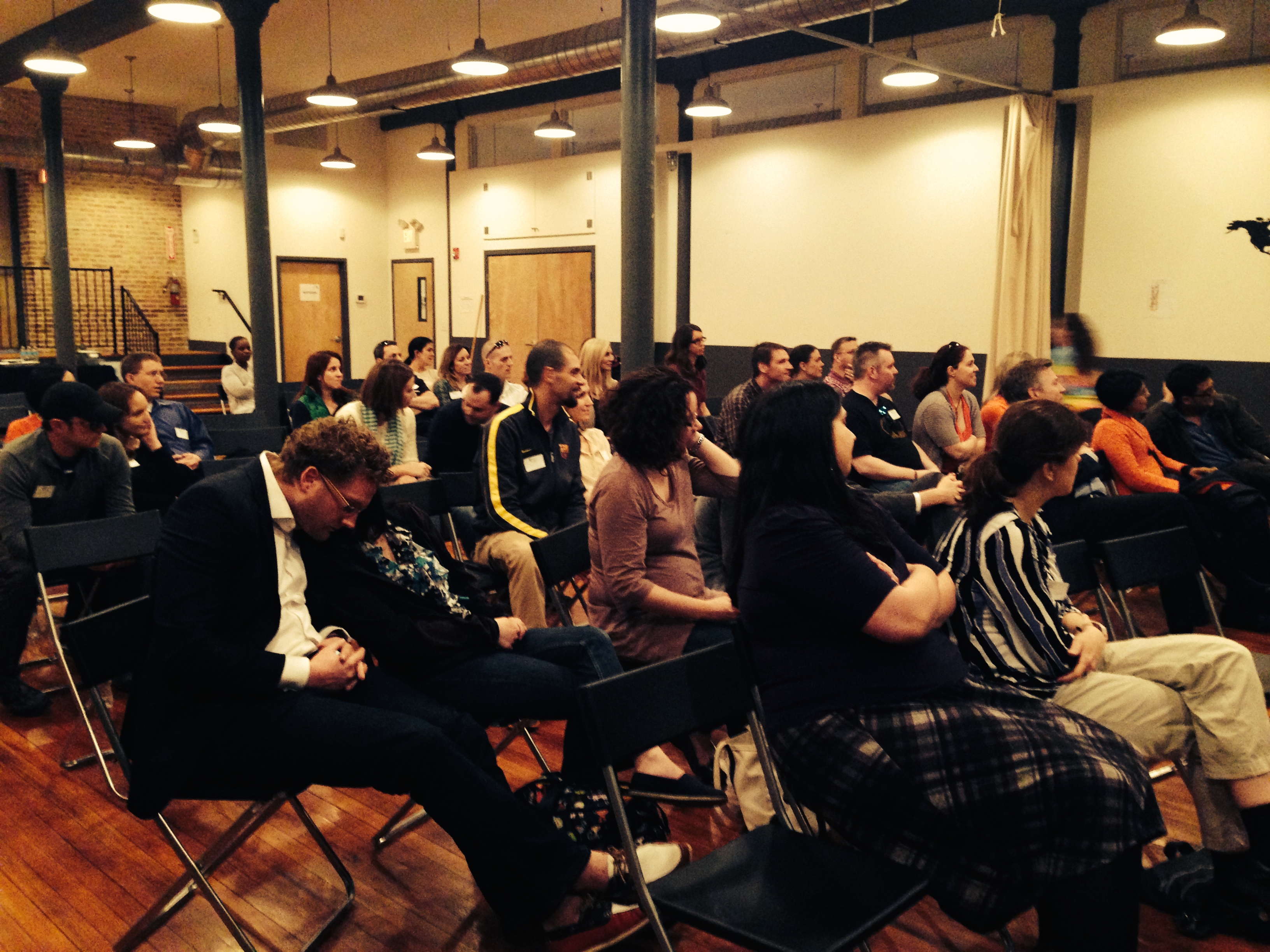
More than 40 parents turned out to Meet the Big Kids' Parents (and the kids) to learn about the next phase of parenting and schooling in Baltimore.

More than 40 parents turned out to Meet the Big Kids’ Parents (and the kids) to learn about the next phase of parenting and schooling in Baltimore.

The event was very well organized and designed to accommodate working parents. A happy hour with complimentary light fare and wine gave attendees time to arrive at a leisurely pace, mingle, and recharge before getting down to business. The turnout was high—how to raise healthy, happy older children in downtown Baltimore is evidently foremost on the minds of city parents! DBFA solicited questions for the panel in advance to make sure everyone’s concerns were addressed in a timely fashion. So how do they do it? How do downtown parents manage “without yards, two-car garages, and shopping malls”?

To get things started, panelists explained what it is about Baltimore that has them committed to city living. “Has to be the diversity,” said a Federal Hill dad who grew up in a small New England town. The wealth of resources, such as easy-to-access harp lessons, was another advantage he cited. One mother expressed her love of the walkability of her Fell’s Point neighborhood and joked that it’s also the perfect excuse to prolong the process of getting her son a driver’s license. She also appreciates the sense of community pervading her neighborhood. Another Fell’s Point mom echoed loving walkability and that her pre-teen and teenage daughters can travel about independently to pick up groceries and snacks or go browse the local comics shop. She also appreciates the breadth of school choice available in Baltimore that allowed her to pick just the right schools to amplify and enhance her daughters’ particular strengths. A Canton mom expressed that her and her husband always assumed they’d move out of the city once children arrived, but found they preferred to stay and have been thrilled with their decision because of good schooling and the confidence and empowerment that city life has given their sons. A Federal Hill mom likes the small-town-in-a-city feel that is uniquely Baltimore. Neighbors look out for neighbors, and everyone knows each other, which creates a closely knit community as well as a sort of safety net. Another Federal Hill mom also appreciates the familiarity of her neighborhood and its strong sense of community. She knows “the shopkeepers, the restaurant owners, the teachers,” she said and considers giving that up to live elsewhere not worth the price.

Meet the Big Kids’ Parents: Questions for the Panel

Questions were sorted by topic, and each panel member was invited to provide his or her own take on the issue. The panel comprised both parents and their kids, who ranged in age from 10 to 15 years. Their responses have been edited and condensed for (relative) brevity.

Friends

Where do your kids friends live? In your neighborhood or do you have to drive them around town for play dates? 

Friends tend to be within walking distance, fortunately. Although Baltimore middle and high schools do not follow neighborhood zoning, meaning that students at a given school have come from all over the city, neighborhood kids have grown up together and just naturally gravitate to each other. That, and moms say they made “blood pacts” (which drew a lot of laughter and sympathetic head nodding) to make city living work and have stuck together from infant play groups right up through middle school and beyond.

One of the best things about Baltimore is the diversity. That being said, our child has started to ask for play dates with children who come from a much different background and we are not sure if we feel comfortable allowing our child to go to someone’s house that may not have some of the same rules, level of parental supervision, etc. How did you handle this?

This question really isn’t unique to Baltimore or even to cities, for that matter. Parents are going to vet the households of their kids’ potential playmates before sending them over. “Know the parents; know the kids,” said a Fell’s Point mom. It’s that simple. And, if you can’t always achieve a level of familiarity you’re comfortable with, meet for playdates on neutral ground, such as at the park. Backgrounds might be vastly different, but diligent parents aren’t unique to one type of family or another, said another mom. You can kind of sense it. The resident dad said the distrust is mutual. Crossing boundaries is hard, he said, but Baltimore and the country at large can’t make social progress until we learn how to explore the other side.

Urban Challenges

We moved across the city to a larger row house for more space. So space is not an issue, however, there are times we do wish we had a garage and yard. How do your kids feel about not having a yard? Where do they play? At your local park or front/back yard if you have one?

Green spaces abound in Baltimore, as the panelists enthusiastically attested. Baltimore parks are basically like expanded back yards, according to the kids, where everyone meets up and plays and hangs out. Then again, this is a city, and some kids choose the more urban atmosphere of the alley, where they can play soccer and lacrosse, for example. These cosmopolitan kids know how to warn of approaching cars and to stay safe. Many of these kids have never known a different environment and don’t experience the lack of a back yard as any kind of disadvantage in the first place. “Kids know what they know,” in the words of one mom. Sidewalks are fun places to play, too! And, as she put it, “Yeah, [so and so] might have a great backyard, but does he have a water taxi?” Great point!

Our children love all of the fun attractions and events that take place in the city and are truly happy. As they get older, do you feel like your children were happy with their urban lifestyle?

The kids fielded this one, exclusively, and very enthusiastically. Simply put, they love living in the city! Far from outgrowing what the city has to offer, they mentioned the wealth of fun, stimulating things there are to do at any and all ages. They also enjoy feeling sorta special à la “That Girl”! They’re urbane, shopping and going out to eat along the harbor in gaggles and thoroughly enjoying it. “Where else can you do that?” asked one girl rhetorically. They know how to get around with public transportation to school or activities. They’re savvy and independent, and these qualities will serve them well through adolescence into adulthood.

Have you had problems with crime in school?

In fact, big school-related violent crimes seem to happen outside the city. Petty crimes such as having a cell phone stolen at a bus stop are easily avoided, said the parents. Teach your kids a few common sense practices, like don’t walk around the city with your valuables on display, they said. The kids spoke up to say they feel safe, despite not always going to school in “the best neighborhoods.” As must be the case in any U.S. school these days, they are coached on what to do in a variety of adverse circumstances.

Freedom

How do you deal with freedom/extending the “leash”? I feel like if we were living in the suburbs I’d be able to say to my oldest go out and play . . . but in the city you can’t really do that. Any suggestions for letting him feel like I’m trusting him to do more but still being safe?

A Fell’s Point mom turned this question on its head and made a really great point in so doing. “I feel like we can extend the leash more because we live in the city,” she said. The assumption tends to be that cities are dangerous and suburbs are safe, but relevant data hardly bears that out. City neighbors are closer in proximity and more likely to be looking out for each other, for example. Another great point she made is that with so much to do in the city, kids are less likely to go looking for trouble. Another parent pointed out that this generation of parents is much more cautious to begin with; it’s not that the city is inherently more dangerous for kids. Finally, one mom shared her strategies for reeling out freedom gradually. As your child successfully handles each milestone, he or she is granted a little more at a time, such as 15 minutes of independent exploration at the aquarium and then meeting back up/checking in at the cafeteria. “It’s really just another version,” she said, of the same kind of freedom suburban parents give. Kids can go three or four houses away to play but probably aren’t going all the way across town by themselves.

Afterschool Activities

Where do your afterschool/weekend activities take place? Suburbs? In the city/close by? 

This is one area where Baltimore has the hands down advantage. The variety and quality of available extracurricular activities is staggering. Whether your kids are into art, music, drama—whatever—there’s plenty to do! And much of it is even free. With sports, the answer is a little different, according to these parents, but that’s just the way it is no matter where you live. With competitive sports, you’re almost certainly going to have do some driving because the teams travel to compete, which requires both a commitment and a bit of a lifestyle change to keep up with weekday practices and games on weekends. It’s a decision your family and your kids will probably have to make. “Don’t get into ice hockey!” warned one mom, who finds herself driving regularly up and down the east coast, though it started as “Hockey in the Hood” (more laughter). This situation is not unique to the city, each parent was quick to remind the audience, but is the state of travel leagues in the suburbs also.

Where we grew up in the suburbs, we had great sports programs. Are there many options in the city?

Without the travel league aspect, there are plenty of kids’ sports facilities in the city, probably more than one in your neighborhood alone! Coppermine and DuBurns came up repeatedly. The Lingo Leap (where we were all sitting, coincidentally) also offers plenty of fun, unique ways to engage in physical activity!

Our child does Fitness Fun and Games after school. Are there any options for older children?

This, again, is far from a troublesome issue. One working mom explained that her daughters like to hang out at the library after school with their friends. They get their homework done there as a bonus! Each school also usually offers really terrific afterschool options, which vary from tennis to volleyball to the Audubon Society to mandolin lessons. This, said one mom, is quite different from county schools who don’t offer such school-based afterschool clubs. Another parent suggested making the afterschool offerings a criterion for choosing the middle school and high school that’ll best suit your child.

Schools (the Biggie!)

We were lucky enough to get into a great public charter school. It runs from preschool to 8th grade. But now I’m already starting to worry about high school. (My oldest is ONLY in 1st grade but I’m a planner!) Have you been through the high school process? What are your thoughts? I think that is weighing heavily on my mind as we start thinking about our next (forever) home.

The high school process is not easy, said parents and kids alike, but it’s well worth it—moreover you’re amply prepared for it in middle school. Baltimore is unique in “matching” students to schools much like is done for medical students looking for a residency hospital. There are no neighborhood-zoned schools any longer. Each child picks five schools and ranks them according to preference, then makes his or choice among those that awarded acceptance. It’s a bit complicated, but it means that your child goes to school where he or she wants to, which must make a dramatic difference in the overall high school experience.

Unfortunately, there really aren’t that many great ones to choose from, currently. Of course we have great private schools, but public options really narrow in the high school realm. The kids, however, explained “shadowing” at various highs schools and that, instead of being disappointed by their lack of choice, were almost equally enamored of each school they toured. Their excitement for high school was palpable.

As if reading the collective audience mind, the Federal Hill dad spoke next and “threw some numbers” on the problem, because many of us were probably wondering if our kids would be facing the same glorious choices that the panel kids described, or would ours not fare so well? The available spots in Baltimore Polytechnic Institute, Baltimore City College, Baltimore School for the Arts, and Western High School, for example, which are Blue Ribbon schools universally considered outstanding, are enough to ensure that kids in the upper quartiles of eligibility will land one. “The fact that you’re here, concerned about your child’s education,” he continued, “says your child stands a pretty good chance.” Eligibility (except in School for the Arts, which is exclusively audition based) is based on a composite score from tests and grades in middle school, and each school weights aspects of the score differently, depending on the thrust of the school (i.e., science or art driven). Choosing a school, moreover, is based on many nonacademic aspects, and you and your child will make the choice based on what’s right for you and your circumstances.

Also, Baltimore has a way to go, said one mom, to develop the same diversity of options for high school that we have for elementary. And that’s only going to happen, she said, if families stay in the city and demand it.

Our son was lucky enough to get into a great public school that goes through 8th grade. Unfortunately, it is across the city and can be a nightmare cutting across the city. We realize that there are others who travel much farther for school. As they get older, are there transportation options?

Carpooling is a popular way to address this very real issue, so that each family is only having to drive a couple times per week. Traffic snarls, I83—driving any distance within the city can be a huge hassle. Or, not so much, said one mom. She embraces this opportunity to chat with her 15-year-old daughter who is not very forthcoming about what’s going on in her life under less “captive” circumstances.

For the parents who are sending their children to a Baltimore City Public school—do you have any safety concerns? Do you feel like they are getting a quality education and on par with other children their age?

This was another one that parents downright rejected. One mom pointed out that there’s really nothing to the stereotype that suburban schools are good and city schools are bad. Another mom cited hard data, and, if anything, her daughter’s school outperforms those in the county. Why? One mom says it’s because city schools, frankly, have to try harder. The resident dad likewise picked apart the assumption that private is better than public. There followed several personal anecdotes about school experience, with the upshot that everyone is doing just fine. A mom then spoke up with some great advise to visit the school under consideration during a typical day to see what going there is really like. Do you like what’s happening there? Is it a good fit for your child? She finished with, “You know your kid better than anybody else. You’re the expert on your child. Some kids need more structure; some are really going to do better in an environment where they can explore. You know your kid.” Another mom chimed in to say make note of what you don’t like also, because no school is going to be perfect. Which imperfections can you live with?

The bottom line is, not an audience member could have walked away without being utterly reassured that raising a family in downtown Baltimore is not only fine, but that it confers lots of advantages over suburban life. The kids on the panel were bright, articulate, self-confident, and clearly happy. They spoke for themselves in more ways than one!