TNCS Knows Safe Urban Gardening!

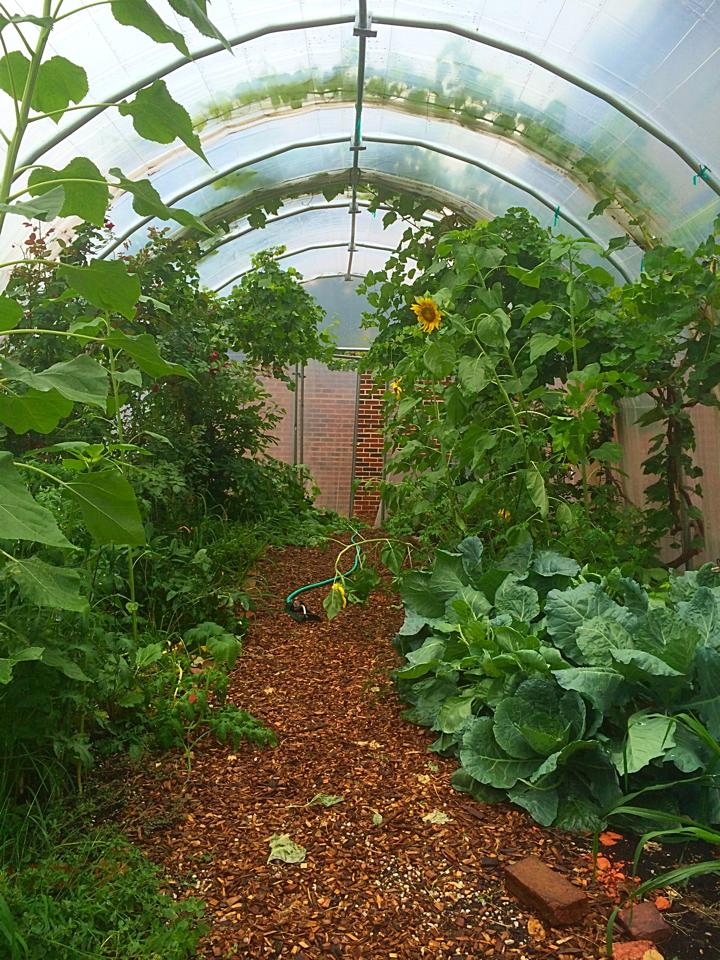
The greenhouse is a magical place for TNCS students, full of wonder and possibility.

The greenhouse is a magical place for TNCS students, full of wonder and possibility.

When then-prospective parent Lori Rosman contacted The New Century School this past Spring about enrolling her son in the pre-primary program, one of her first questions was about TNCS’s on-premise greenhouse. “I was excited that TNCS has a garden and is growing some of their own food,” she said. “Our son is very curious about cooking and always asks, ‘what are the ingredients?’ in everything.” Ms. Rosman also happens to be a Public Health Informationist at Johns Hopkins University, where an article about urban gardening had recently circulated. The article warned about some potential health risks of unsafe urban gardening methods, such as using contaminated soil. City soil can contain unsafe lead and asbestos levels, for example, especially in areas where construction or demolition has been going on. Urban gardening can be perfectly safe, but the gardener needs to take certain precautions, which novice gardeners might be unaware of. And the number of urban gardeners in the United States is steadily growing—up 29% in the last 5 years from 7 million to 9 million people, according to the National Gardening Association, so this information comes none too soon.

“I felt an obligation to educate myself,” said Ms. Rosman, so she approached TNCS Admissions Director Robin Munro with her questions. “I appreciated that Robin took my questions seriously and suggested going to talk to Chef Emma [Novashinski] about my concerns.” Chef Emma was well aware of the issue, and, together, the three discussed the safe practices she uses. “It was very reassuring!” said Ms. Rosman.

For obvious reasons, please keep the four-legged friends out of the greenhouse :)!

For obvious reasons, please keep the four-legged friends out of the greenhouse :)!

TNCS Master Gardener and Executive Chef Emma Novashinski was aware of the site’s history, which is the first step for planning an urban garden safe for food-growing, according to a guide by Johns Hopkins Center for a Livable Future on soil safety. The Center also provides interactive maps of Baltimore food gardens and other resources. As luck would have it, Chef Emma selected the location for TNCS’s greenhouse on the very spot a large community garden had recently occupied. Those savvy gardeners employed regular composting and wood-chipping to keep their soil healthy as well as annually replenished it.

Once it’s clear that the site is probably contaminant free, regular soil testing is the next step to ensure safe food-growing. Naturally, this is also something Chef Emma always knew. “When I first suggested the greenhouse project,” she said, “[TNCS Co-Executive Directors] questioned the safety. We’re feeding children after all. I test lead levels and alkalinity about every 8 months, and the pH is usually neutral and the lead level has always been well below a hazardous level.”

Soil testing

Soil testing

In a case of very good timing, Chef was due to test the soil for the coming 2014–2015 academic year. On Friday, 8/8/14, she reported: “We are sufficient in all levels except nitrogen, so we will be incorporating blood meal [an organic fertilizer] and nitrate of soda into the soil to remedy this nutrient deficiency, which was probably caused by watering and rainfall.” All fine!

Says the Center for a Livable Future’s website:

The potential health, social, environmental, and economic benefits of urban farms and gardens are far-reaching. For example, studies have found associations between urban community gardens and increased access to healthy food, opportunities for exercise, stronger social cohesion in neighborhoods, and higher property values. And like any green space, urban farms and gardens offer essential ecosystem services like moderating temperatures and reducing storm water runoff.

And, TNCS is feeding students hands down the best homemade, locally sourced lunch around as a direct result of the greenhouse and other nearby gardens and farms. So let’s keep this wonderful—and safe when done right—practice going and growing!

Welcome to TNCS’s 2014–2015 academic year, Rosman family, and thanks for suggesting this extremely worthwhile topic for Immersed!

Cooking and Gardening Camp at TNCS Is a Recipe for Fun!

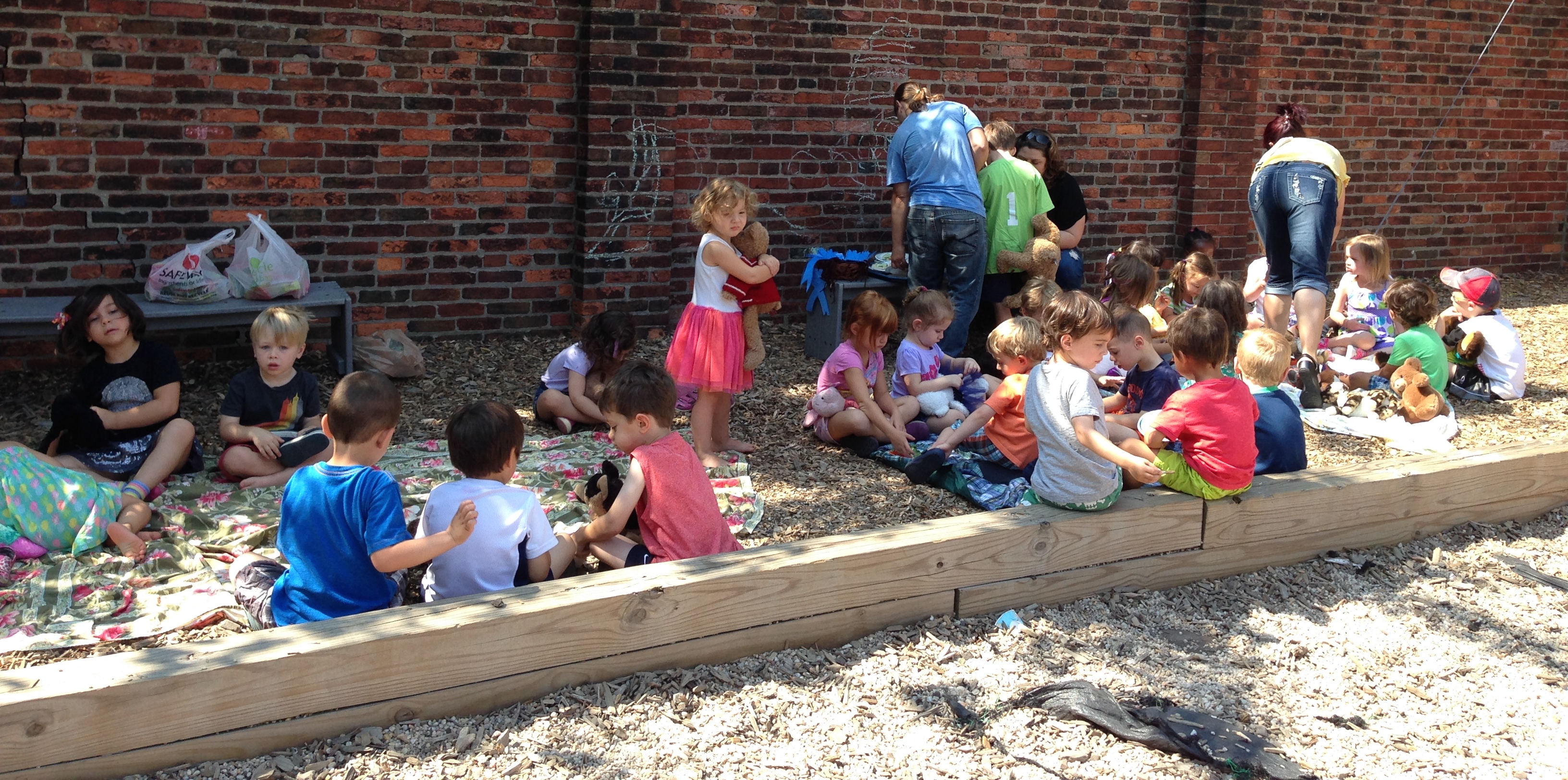
Mrs. Reynolds' and Mrs. Lazarony's campers joined forces for the Teddy Bear Picnic.

Mrs. Reynolds’ and Mrs. Lazarony’s campers joined forces for the Teddy Bear Picnic.

What do you get when you group together about a dozen 2- to 4-year-olds and teach them to grow produce that they can turn into lunch? “Cuteness overload.” At least that’s how camp teachers Angela Lazarony and Lisa Reynolds describe it. The second installment of Cooking and Gardening camp at The New Century School started the last week of July and continues through the second week of August. This one is led by Mrs. Reynolds with TNCS Spanish teacher Yurisan Gonzalez assisting. Campers spend most of the morning outside, usually in TNCS’s on-premise greenhouse. They learn to cultivate vegetables and fruit, and they also create recipes with the ingredients they harvest. All in all, they are learning about healthy eating habits while enjoying getting their hands dirty!

The first week of the 2-week camp included such projects as making sun tea, learning about the various kinds of gardens (potted, urban, greenhouse, herb, flower, vegetable, etc.), drying herbs and making tea bags, learning the parts of a flower and sculpting “anatomically correct” versions with clay, and making so-called “clean dirt” with dish detergent and shredded toilet paper rolls. Each of these projects included a learning component coupled with a hands-on experience, which is how kids learn best. With the clean dirt, for example, which has the consistency of mud, kids were able to enjoy a sensorial experience while engaging in a practical application, although it cannot be used for actual gardening. They sculpted with their clean dirt and practiced working with it. Mrs. Reynolds herself designed the projects. “I really enjoy cooking and gardening,” she said, “and so do the kids. We are having a lot of fun—they get so excited about each activity!”

Week 1 culminated with a Teddy Bear Picnic (hence the aforementioned cuteness overload). For the picnic, Mrs. Reynolds’ and Mrs. Lazarony’s campers joined forces, and there was a perfect riot of plush animals also in attendance. Picnic fare consisted of a bounty of fruits, a salad, and veggie sandwiches. As a special contribution, Mrs. Reynolds’ campers concocted a salad dressing, mostly from greenhouse ingredients. Who came up with recipe? They did. “It’s a little on the sweet side,” said Mrs. Reynolds, “but actually pretty good!” Peppermint, vinegar, sugar, lemon, oil, bananas (!), etc. all went into the blender and out came a lovely green emulsion. The kids did a taste test to make sure their dressing was suitable for sharing.

After eating their snacks, games and crafts closed out the Teddy Bear Picnic. Campers raced with (toy) eggs in wooden spoons, made parachutes for their plushies, and played other field day–type games. Everyone was awarded a blue ribbon. Using artichokes as stamps, they also painted flowers. Clever!

This slideshow requires JavaScript.

With Cooking and Gardening Camp off to such a great start, Week 2 promises to continue growing the fun!

TNCS “Pops” the Trash!

“I want to do at least one project a year in which students work with the community outside the school,” said The New Century School art teacher Jenny Miller. “Doing community art is good for them.” Working for and with the larger Baltimore community is also an important TNCS value.

So, in continuing his 2013 “Hack the Trash” campaign, when environmental advocate and photographer Brian Schneider invited six area schools to contribute new trash drums as part of a larger initiative to beautify Baltimore’s parks (called “Hack the Parks”), TNCS was in! Mr. Schneider especially hoped for TNCS’s participation and was thrilled when Ms. Miller requested six cans for her upper elementary class to paint. Said Mr. Schneider, “I’m excited to see what TNCS produced and to have them debut in the park along with the other schools participating: Patterson Park Charter, Highlandtown Elementary/Middle, Hampstead Hill Academy, The John Rogers School, and Christo Rey Jesuit.”

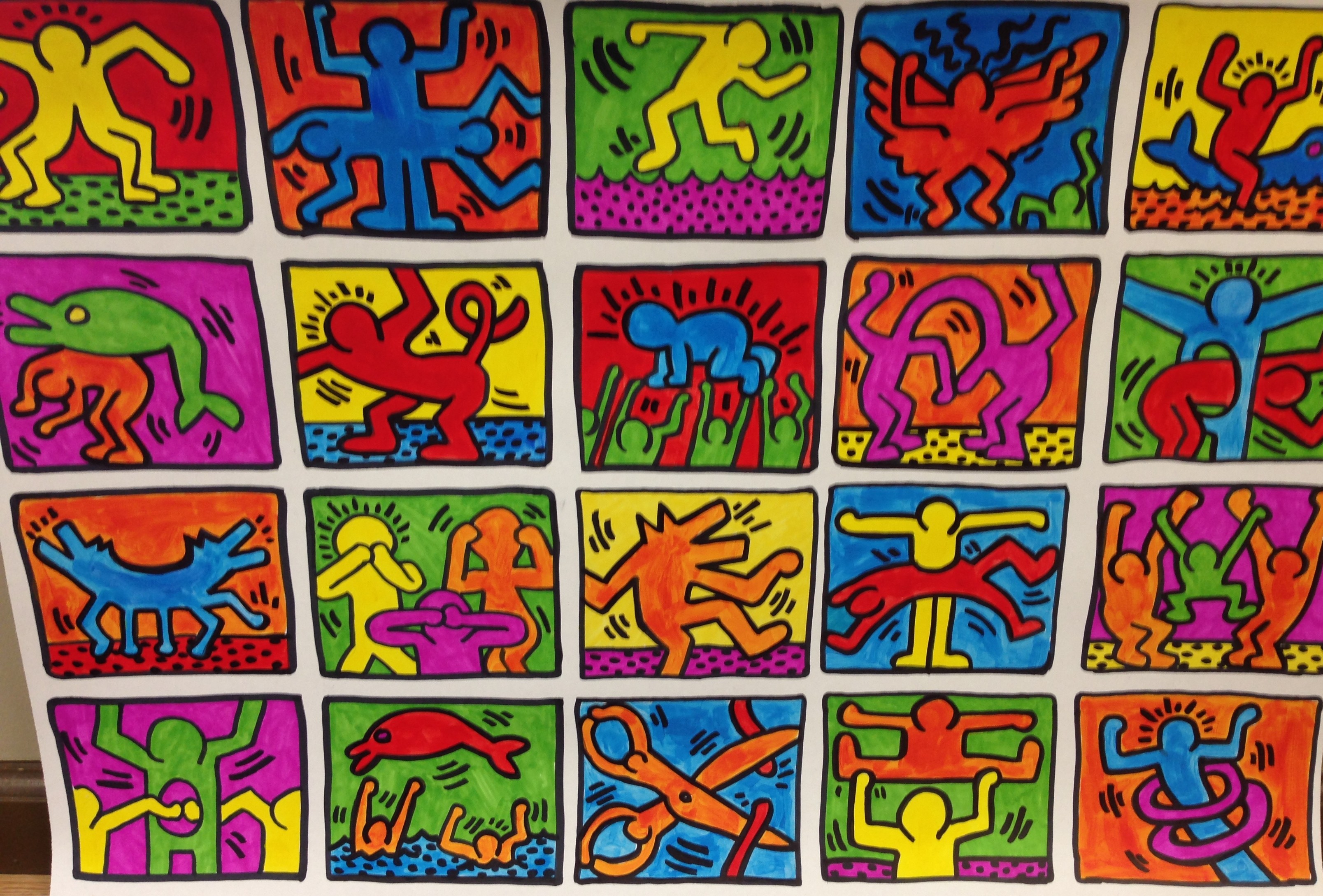
Keith Haring

Keith Haring was an American artist and social activist whose “imagery has become a widely recognized visual language of the 20th century.”

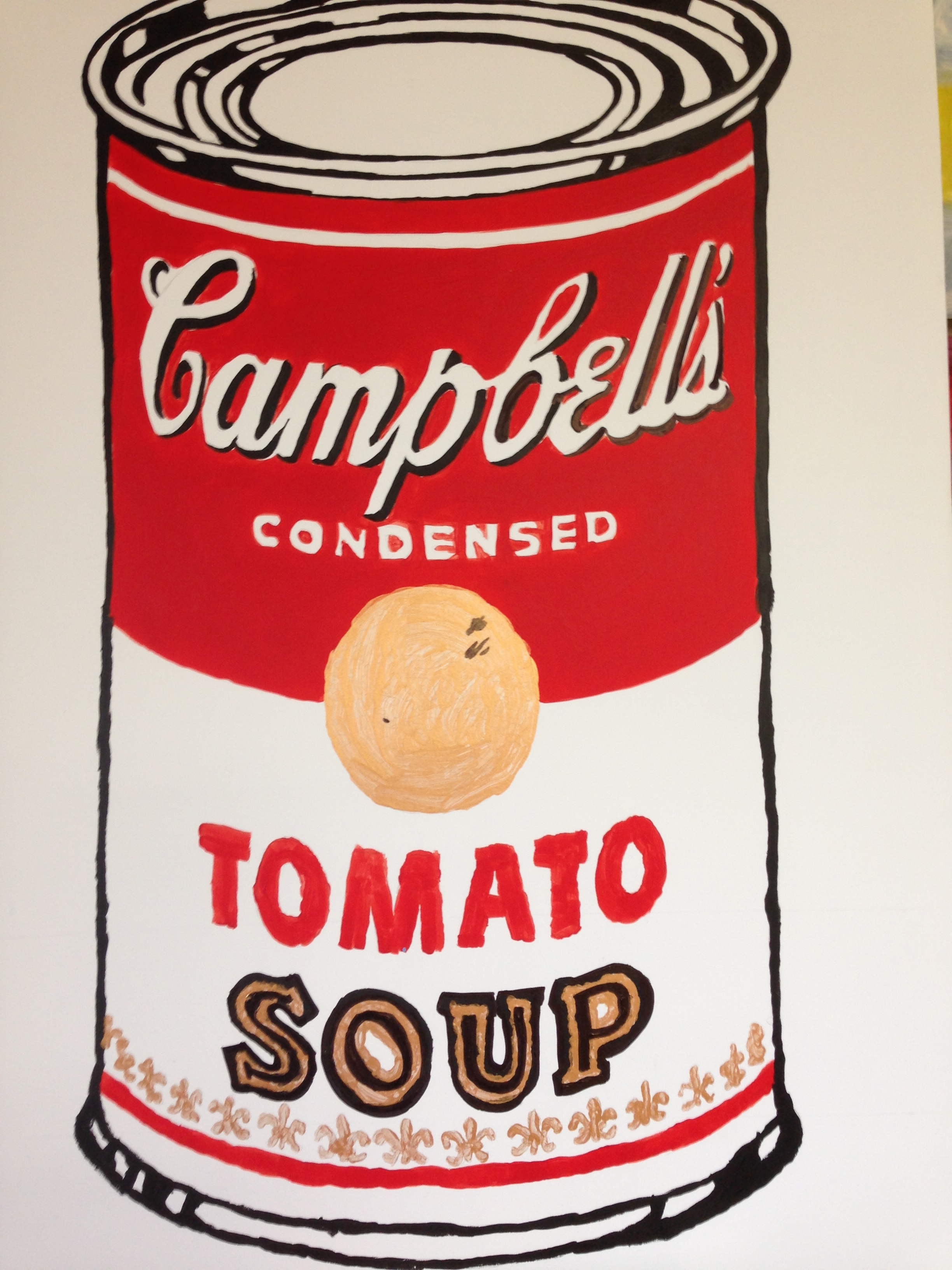
The elementary students studied Warhol's iconic style, recreated here by Mrs. Raccuglia!

The elementary students studied Warhol’s iconic style, recreated here by Mrs. Raccuglia!

Pop the Trash in the Can

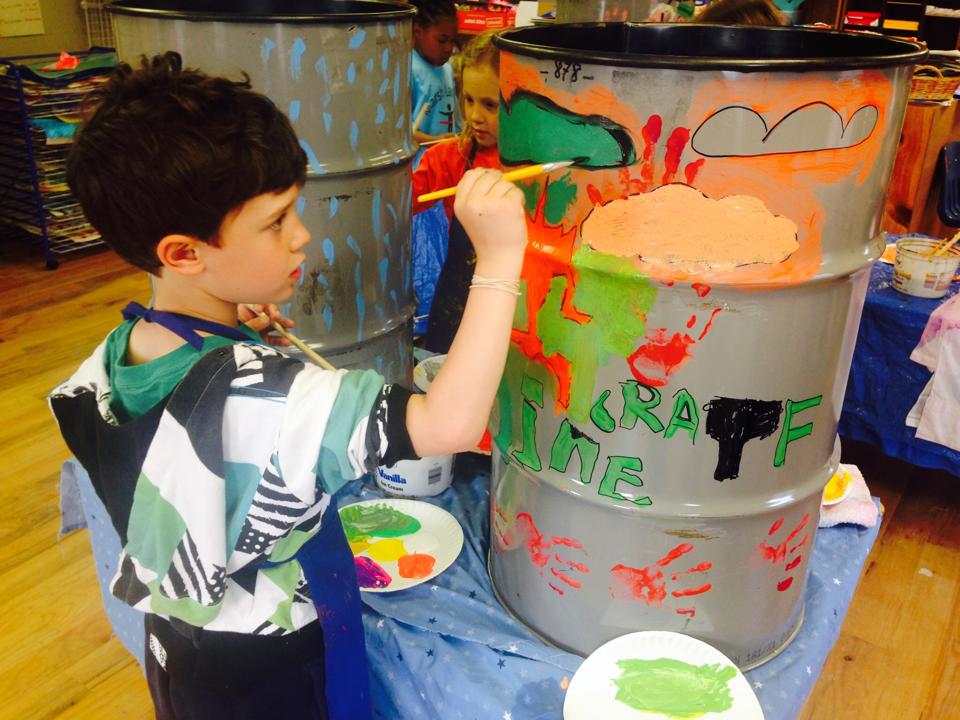
Instead of using stencils as has been done in Patterson Park’s existing “hacked” cans, Ms. Miller seized the opportunity to hone her students’ brush skills while simultaneously introducing them to Pop Art. As such, “Pop the Trash in the Can” was born, a project spanning the last 8 weeks of the 2013–2014 academic year. Students created their own designs based on the Pop Art artists they studied—Andy Warhol, Keith Haring, Yayoi Kusama, and Takashi Murakami. These artists use imagery from popular culture, simple shapes, cartoon-like images, bright colors, and lots of patterns to create their own special brand of fine art.

Collaborative Art

Another aspect of this fun, educational, multidimensional art project is that students were asked to collaborate on the cans. Working in pairs or trios, they brainstormed their ideas, drew up their designs, and then transferred them onto transparencies, which were projected onto the trash drums on a larger scale for the students to trace and fill in. Incidentally, this is not only how some of the pop artists they studied also work, but also a process familiar to them from their mural creation with the Baltimore Love Project artists.

“It’s been fun just painting the cans,” said Ms. Miller. “They’ve been really into it, making little impromptu adjustments as they go along and see what works and what doesn’t.” Once the basic design had been painted onto the cans, Ms. Miller next had the students add the bold black outlines and clean lines so characteristic of pop art. “Outlining something can make it look better and hide mistakes!” It will also help the cans be seen from a distant across the park. “They really want people to throw their trash in these cans,” said Ms. Miller. “They’re proud of them and really understand the environmental benefit.”

This elementary student works hard at getting his design just right

This elementary student works hard at getting his design just right

TNCS elementary students thoroughly enjoyed “Pop the Trash in the Can.” “They loved working ‘big,’ they loved working for the public and knowing that lots of people would see their work, and they actually liked working together on this,” said Ms. Miller. They worked through disagreements about design, palette, and approach as they arose and figured out how to resolve their conflicts as a team. It was the ideal TNCS assignment, bringing together creativity, investigation, and problem-solving. “They were true collaborators,” said Ms. Miller. “They treated each other’s work with respect and always asked before painting someone else’s side.”

Don’t Throw It All Away!

As the project drew to an end, catastrophe nearly thwarted the students’ efforts when they discovered that their initial  painting did not produce the desired results on the cans. “The paint was thin and transparent and not nearly as bright as they had been anticipating. “Some were very unhappy and ready to abandon their efforts,” said Ms. Miller, “but  they were encouraged to rework some of the areas, and this perseverance has yielded results that they are very proud of. It was a great learning experience.”

We have to agree, Ms. Miller! Don’t forget to look for these cans any day now in Patterson Park after Mr. Schneider clear-coats and unveils them—finding all six would make a great scavenger hunt!

TNCS’s Garden Tuck Shop Program Relaunches!

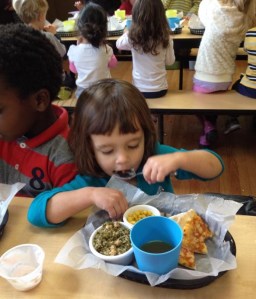
This wee one enjoys her lunch of pizza, tabouleh, and corn.

This wee one enjoys her lunch of pizza, tabouleh, and corn.

Now in its third year,  The New Century School‘s Garden Tuck Shop Lunch Program has implemented some exciting new changes, a new lunch menu foremost among them. These modifications grew out of some parent and TNCS staff feedback that Chef Emma Novashinski used to enhance and refine her already popular program. Menus and newsletters will also be part of this relaunch to ensure that communication about her meals is precise and detailed. “This is exciting,” she says, “it’s a nice turning point that has renewed my vigor to figure out which direction to take the program in.” She calls her refreshed program “the cleanest kids’ lunch downtown”! By “clean,” she refers to the source of the foods she serves. The closer to you it originates, the cleaner (healthier) it is. Trickling Springs Creamery in Chambersburg, PA provides local milk, produce and eggs come from nearby Tuscarora Farms, and fresh local bread comes daily from Cunningham’s Bakery in Towson.

Pilot Program

In mid-November, Chef Emma began piloting a series of new lunches that assembled components most popular with former and existing program participants. Popularity was not the only prerequisite, however. Chef Emma’s primary target for this new lunch series was to include food items “high in both protein and lysine to have the full plate components that the kids need for lunch.” As before, the lunches are vegetarian. L-lysine is an essential amino acid that—although it is necessary for every protein in our bodies—our bodies don’t produce, so it must be ingested. Both protein and L-lysine are critical for proper growth. Chef Emma says, “Protein and lysine content are big concerns for parents faced with a vegetarian school lunch. . . I have developed 13 perfectly balanced meals, which are appealing to tiny taste buds.”
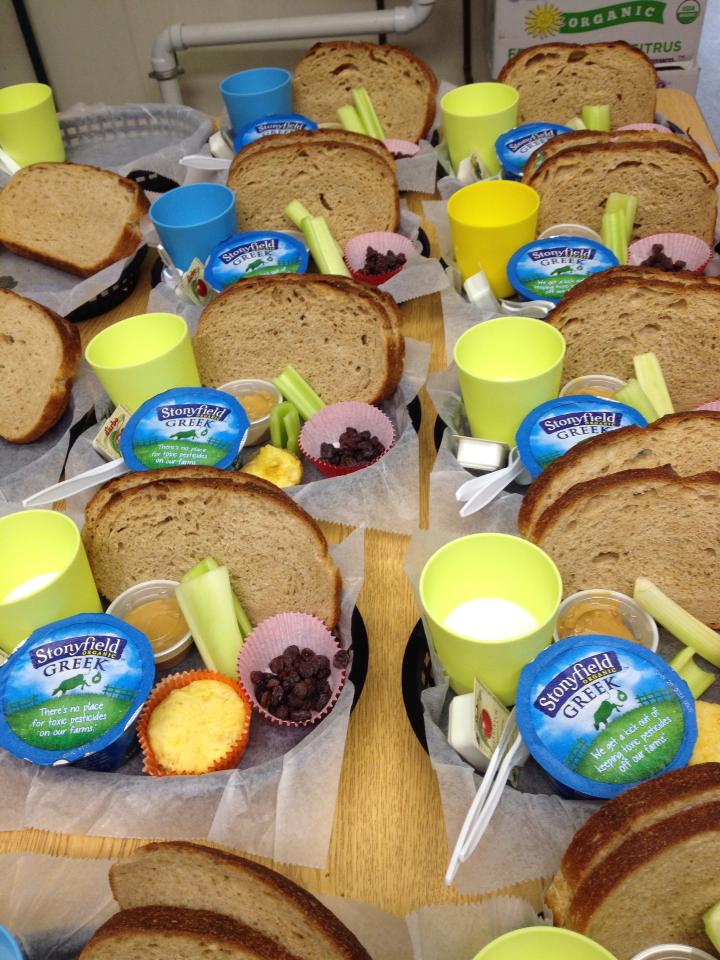
A typical lunch includes an organic dairy item or two, fruits, veggies, a home-baked item, and multi-grain  bread.

A typical lunch includes an organic dairy item or two, fruits, veggies, a home-baked item, and multi-grain bread.

She used November and December to nail down her menu to be able to hit the ground running when school started back up this month. “I just kept honing, and honing, and honing it until the kids were getting a product they like,” she said. Having previously juggled a range of about 30 meals, she started thinking, why not pick 2 weeks’ worth of food and keep repeating those meals? She wants TNCS students to really embrace the Garden Tuck Shop program in all its facets, from enjoying the food to understanding its importance for their health. By using a regularly rotating system of meals, she would limit the unfamiliarity aspect that turns some kids off to a new food. “They might respond better to something that’s a bit more consistent,” she says. “Simplicity is better; you can put as much protein into a meal as you want, if they don’t eat it, it doesn’t really matter how protein-packed it is.”
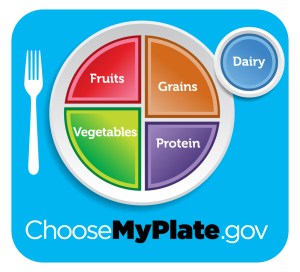
The MyPlate poster hangs on the cafeteria wall to remind students that eating a balanced meal is necessary for optimum functioning and health!

The MyPlate poster hangs on the cafeteria wall to remind students that eating a balanced meal is necessary for optimum functioning and health!

Transitioning

During this 2-month transition phase, Chef Emma also made “personal appearances” in the classrooms to talk to the kids about their lunches. “Once I went round to the classroom to discuss color, texture, and taste and well as vitamins and nutrients and what they do for your body, even kids who hadn’t previously been eating very much had at least tried everything on the plate, and overall the results were really quite amazing.” To support the educational component, she posted MyPlate information around the cafeteria. “I want the kids to be able to tell me where the dairy is coming from on the plate, where the grains are,” she says. MyPlate is a visual reminder to kids to balance their meal with healthful choices and is endorsed by First Lady and healthy school lunch advocate Michelle Obama.

Also during the transition phase, Chef Emma received a lot of parent questions about some of the newly appearing menu items, particularly with desserts. She said she suddenly realized that what she does in the kitchen hasn’t always been quite clear to parents. “I cook from scratch every single day. The ‘cookie’ is homemade; the sandwich is homemade with homemade bread.” Concerns arose that kids participating in the program would come to expect dessert every day or, worse, eat only the dessert item. Says Chef Emma, “If the kids were going to eat anything, it was going to be dessert, so if I could hide vegetables and seeds in those baked goods, the kids are still getting proper nutrition. However, I just want to reassure everybody that during the transition, when we were trying to see how far we could go with certain salads, breads, and other baked items, that whenever you saw a cookie, a cupcake, or a slice of cake, it was enriched with hemp, chia, flax, sunflower seeds, or poppy seeds, because I know that there were concerns about having desserts on the menu.”
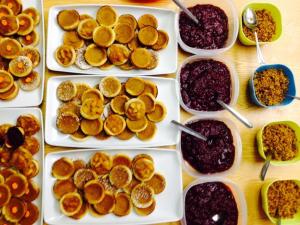
Each  component of this dessert is homemade, nutritious, and thoughtful.

Each component of this dessert is homemade, nutritious, and thoughtful.

She has arrived at a happy medium, she reports. Program participants get their main dish (e.g., pizza, faux chicken nuggets, tomato soup with cheesy toasts, etc.), which is consistently accompanied by sides such as tabouleh, cous cous, warm bean salad, or Waldorf salad as well as the CSA supplementary vegetables and plenty of fresh fruit. “The homemade muffin or granola bar is there only to get more dried fruit and seeds into the kids—not as a treat per se,” says Chef Emma.

Another change is that she now serves lunch in a basket to avoid using so many disposables. “Also, clean-up isn’t so bad and lunch is a bit more fun.” It’s certainly appetizing! Another advantage is that the basket helps kids know what to expect, which is, again, part of Chef’s overall strategy. “When confronted with something they don’t all know, if we repeat it every 2 weeks the year round,” she says, “eventually they’ll grow to like it.”

The repetition is ideal for young kids, but it also presents challenges to the menu creator. “If the foods aren’t locally available because of seasonal changes, I’m going to have to supplement with conventional foods. But I also add in whatever local ingredients are available to balance.” That rolls into her greenhouse curriculum as well. “I want to get more students gardening and cooking.” So, they harvest what’s available and pickle and preserve what they can for these “leaner” months in addition to keeping season-appropriate vegetables and herbs growing all year to supplement the Garden Tuck Shop program. “The plants in the greenhouse are indigenous and perennial, allowing the children to witness the changing of the seasons and to become familiar with the plants they can grow in their temperature zone. We have a fig tree, an olive tree, three grape vines, an asparagus patch, a strawberry patch, a rhubarb patch, blackberry and raspberry brambles, and two blueberry bushes!” They also seasonally plant root veggies like carrots and sweet potatoes, and lettuce, tomatoes, peppers, and cucumbers in spring. Herbs include rosemary, mint, lavender, marjoram, oregano, sage, thyme, and bay laurel leaf. (Parents are welcome to the fresh herbs!)

Her next step was to calculate the exact nutrient content (proteins, carbs, lysine, etc. down to the smallest mineral) of each meal, based on portion size. “I want kids to understand that food is fuel and that’s why nature gives us the food that it does at the time of the year that it does. It’s so we can remain balanced and feel good.”
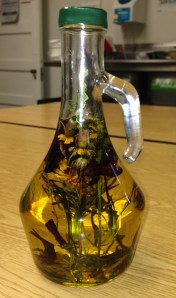
Flavoring oil is just one way Chef Emma makes use of herbs and flowers growing in the greenhouse.

Flavoring oil is just one way Chef Emma makes use of herbs and flowers growing in the greenhouse.

“Cleanest Kids’ Lunch Downtown!”

In early January, she held a seminar for teachers to educate them about each plate, and at a coming TNCS Information Night or Potluck she will also present to parents. “The last couple of years with this program have taught me that it’s all down to communication,” she said. “Success is really about communication, and I don’t want that to fall to the wayside going forward.” We’ll also be learning about how the greenhouse factors in. Classes have been drying herbs and flowers to make potpourris, flavored oils, and bouquets garni, and body scrubs and other products may also soon be available.

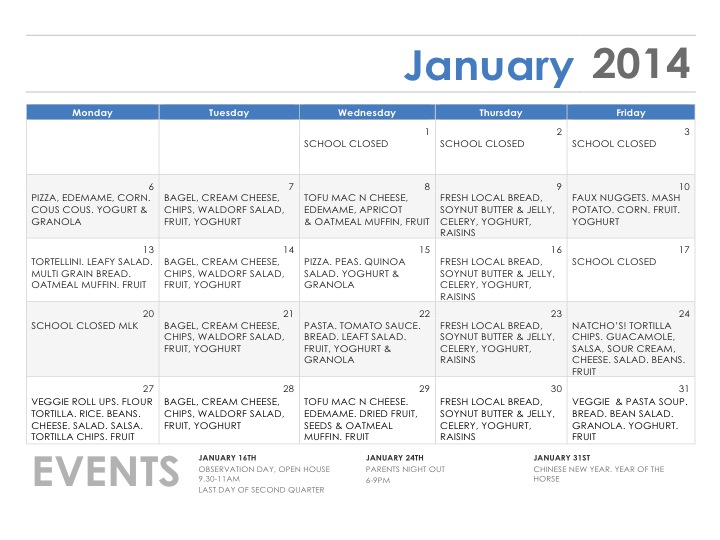
About program participants Chef Emma says, “They’ve been superstars putting up with all of this experimentation, and I think we’ve really gotten to a marketable product.” Typical lunches are faux (soy) nuggets, edamame and corn, organic Greek yogurt, fruit, and milk; spinach and cheese tortellini or ravioli, leafy salad, apricot and banana muffin, fruit, and milk; or bagel with soy nut butter and jelly, celery, raisins, organic Greek yogurt, and milk. See much of the rotating roster of 13 complete lunches, each with a minimum of 24 g protein and 1,925 mg lysine, below. Click Menu: January 2014 to download.
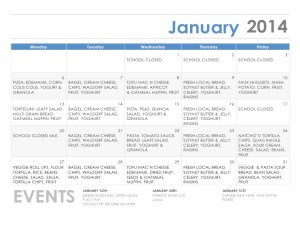
January's menu features most of the 13 available meals. Looks delicious!

January’s menu features most of the 13 available meals. Looks delicious!

Haven’t signed your child up yet? Click here to register for the Garden Tuck Shop program at TNCS!

Like Garden Tuck Shop’s Facebook page to receive updates and photos of Chef Emma’s beautiful, delicious, and healthful lunches!

Composting and collecting rainwater are next on the horizon, possibly this spring!

New Year’s Resolutions TNCS Style

Keeping New Year’s resolutions is notoriously difficult. Some experts advise against making any at all due to the consequent self-loathing that can envelope us once we realize we have failed epically! A new study claims that only 8% of those who make New Year’s resolutions keep them, and those who don’t give up after just 1 week. On the flip side, however, “People who explicitly make resolutions are 10 times more likely to attain their goals than people who don’t explicitly make resolutions.” So do we or don’t we make resolutions?!

We absolutely should (we’re actually hardwired to) . . . but with two key differences. Part of the key is not putting so much emphasis on target dates. Without room to slip, fall, and pick yourself back up, a resolution becomes one of those all-or-nothing pipe dreams with a built-in escape hatch—“I just couldn’t do it. Maybe next year.” Failure and recovery is an inherent part of any worthwhile process, so be realistic about that and don’t let slip-ups completely derail you. “Fail better.” The other difference is in setting small, specific goals instead of grand, sweeping changes. Abstractions such as “lose weight” or “stop smoking” are doomed without a plan in place that provides incremental and achievable daily steps. Ultimately, those small steps will yield the desired result.
Thus, the list below comprises a manageable, realistic, yet worthy set of goals that are universally beneficial. Even better, methods to accomplish each individual goal are also given, taking all of the guesswork out of making 2014 a healthy, happy year!

1. Eat a healthier diet, full of fresh vegetables and fruit: Join One Straw Farm CSA (even if it isn’t a stated goal, you’ll likely drop some pounds in the bargain).

The available bounty ranges from onions, peppers, lettuces, chard, kale, cabbage, broccoli, cauliflower, etc. to herbs—rosemary, oregano, thyme, chives, cilantro, parsley, etc.—and fruit, such as raspberries, strawberries, watermelon, and gorgeous varieties of heirloom tomatoes. . . Starting in June and running through November, on a set day of the week, “shareholders” get 8 pieces of 3–6 items, primarily vegetables . . . for about $24 per week.

2. Read more: Spend 20 minutes reading with your kids before bedtime (as well as curl up with your own reading material before lights-out). The benefits are varied and far-reaching . . . and what better way to close out the day?

[A study shows] that math and reading ability at age 7 years are linked with socioeconomic status (SES) in adulthood. Interestingly, although math and reading ability was also significantly associated with intelligence scores, academic motivation, and education duration, the association with later SES was independent of the family’s SES during childhood. Moreover, the researchers were not expecting to find that specifically math and reading ability were more important than general intelligence in determining SES. In other words, what we’re born with and what we’re born into may not be as important as what we learn in second grade. [The] findings emphasize the importance of learned skills. What this boils down to is really good news for students—the return on improving these skills at all levels is huge, from remedial to the most gifted. “Math and reading are two of the most intervention-friendly topics,” [researchers] say. “Practice improves nearly all children.”

3. Hone math skills: Spend 15 minutes playing math games with the kids before bedtime (like the TNCS Facebook page for games you can play at home to dovetail with Ms. Roberts’s work in class). You may be surprised at how these simple exercises improve your own day-to-day efficiency and obviate that smartphone calculator!

STEM is all over the media, and with good reason. STEM subjects are inherently investigative in nature, cultivating self-guided exploration and producing a greater understanding of the physical world. Ms. Roberts says, “STEM is important for everyday life; for example, we use math at the grocery store and at the bank. And science explains how the world works.” Another appeal of early STEM learning is the downstream payoff. Recently, NPR did a Planet Money story about what job fields yield the highest incomes. In “The Most (And Least) Lucrative College Majors, In 1 Graph,” STEM came out almost scarily far ahead (that discrepancy is another story). The focus of other media coverage is the nation’s big move to catch up to other developed countries, whom the United States currently lags far behind in depth and breadth of STEM education.

4. Get more sleep: Impose a consistent bedtime (for kids’ and parents’ improved overall health).

“Sleep is no less important than food, drink, or safety in the lives of children.” And yet, with our busy lives and comings and goings, we can inadvertently contribute to sleep deprivation in our kids. “With parents working long hours, schedules packed with school, after-school activities, and other lifestyle factors, naps are missed, bedtimes are pushed back, mornings start earlier and nights may be anything but peaceful. Missing naps or going to bed a little late may not seem like a big deal, but it is. It all adds up, with consequences that may last a lifetime.”

5. Be more altruistic: Donate to local and international charities through TNCS’s food, clothing, and dime drives.

Howsoever you decide to share your wealth, remember that you will actually derive personal benefit from your selflessness—a beautiful paradox! Being altruistic is a  recognized happiness inducer!

6. Be more environmentally conscious: Join Clean Currents (bonus—you’ll actually save money on your power bill).

The most obvious benefit to wind energy is its environmental friendliness. “Windustry” ameliorates climate change by not only providing a non-polluting source of energy but also by displacing the greenhouse gas emissions that have already polluted the atmosphere from conventional power. But there are other tremendous advantages, too. By reducing our dependence on fossil fuels, for instance, clean energy also makes us less vulnerable as a nation to the vagaries of the international oil market . . . and to the associated security risks. Moreover, ever-renewable wind is a cash cow for farmers. Wind farming almost effortlessly generates considerable income without taking up land needed for crops as well as creating jobs and boosting the economy.

7. Learn a foreign language: Practice Words of the Week with the kids, and read the monthly classroom newsletters. Words of the Week are posted each Monday on both The New Century School website (during active school semesters) and on TNCS’s Facebook page (with pronunciations). Stay tuned for a blog post this month dedicated to other ways you can learn Mandarin and Spanish along with your kids at home!

8. Get more exercise: Take a class at Sanctuary Bodyworks while the kids are downstairs at The Lingo Leap. People who exercise are not only in better physical shape, they are also more cognitively and emotionally fit.

Exercise dramatically enhances circulation to the brain and encourages synaptic growth, thereby priming the brain for improved function—providing the “spark,” in other words. Improvements in function include both mental health as well as cognitive ability.

9. Make mornings less stressful:  Sign up the kids for the Garden Tuck Shop lunch program. As if you don’t have enough to do in the mornings—why not let somebody else provide your child with a wholesome, nutrition-packed homemade hot lunch? Even better many ingredients come from TNCS’s on-premise greenhouse, and all others are locally sourced.

You grow in the same environment as your food, so you have a divine connection. Your children and your plants are growing under the same sun and being touched by the same wind, seeing the same clouds and the same moon. The plants growing in your environment have withstood those particular elements. They are perfectly engineered by nature to be exactly what you physically need, right now.

10. Volunteer!: Complete your volunteer hours. Another way to connect with your community is to give something back to it.

Volunteering at TNCS is not a burden; it’s a pleasure—no, an opportunity, a gift even. It’s a chance to be deeply involved in your children’s day-to-day school lives, to connect with them on their turf, and to see and experience what’s going on in their lives from their points of view, all while providing a service to the school. There’s nothing so reassuring in parenting than to get proof that your child is happy and flourishing even when you aren’t there.

So go ahead—pick one (or several) and reap the fruits of your labor. Just don’t get discouraged by bumps in the road. We’ve got all year!