Go Native for Earth Day 2016!

earth-day-tnce

The Official TNCS Weeping Willow!

Earth Day is always an important occasion at The New Century School, and this year is no different. In honor of Earth Day 2016, the theme of which is Trees for the Earth, all TNCS classes gathered on the playground to witness the planting of a native Weeping Willow. Poetry and singing rounded out the tree dedication ceremony. Trees are basically the lungs of our planet, filtering out harmful gases and leaving the good stuff for us to breathe. Click here for more on Why trees?

But now let’s zoom in and focus some good Earth Day vibes a little closer to home. Trees aren’t the only environmentally beneficial plantings we can make. Indigenous plants—plants that occur naturally in the region in which they evolved—also make huge contributions to keeping the local environment healthy and thriving. The Patterson Park Audubon Center urges Baltimore City and surrounding residents to “Take Climate Action” and to preserve biodiversity by using native plants in your garden, be it potted or full-scale.

One of the primary reasons this is particularly important for our area is because Baltimore (a.k.a. Birdtown), as part of the Atlantic Flyway, is a vital stopover point for many species of migrating birds. Yet, over time, the number of green spots in the city where these birds can refuel during their long journeys has dwindled. PPAC is working to change that: “Audubon has observed over 200 species of birds in Patterson Park, with over 40 of those species using the park to breed and raise their young. Our habitat gardens in the park are filled with a diversity of native plants from Maryland which serve as hosts for insects—birds’ favorite food—as well as provide essential seeds, berries, nectar, shelter, water, and places to raise their young.”

PPAC can also help you create your own wildlife sanctuary (or, garden, patch, or windowbox) through workshops, resources, and more. But first, let’s explore why native plants are so vital.

Benefits of Native Plants

According to the Audubon.org website, native plants are great for:

  • Wildlife: In addition to providing vital habitat for birds, many other species of wildlife benefits as well. The colorful array of butterflies and moths, including the iconic monarch, the swallowtails, tortoiseshells, and beautiful blues, are all dependent on very specific native plant species. Native plants provide nectar for pollinators including hummingbirds, native bees, butterflies, moths, and bats. They provide protective shelter for many mammals. The native nuts, seeds, and fruits produced by these plants offer essential foods for all forms of wildlife.
  • Low maintenance: Once established, native plants generally require little maintenance.
  • Beauty: Many native plants offer beautiful showy flowers, produce abundant colorful fruits and seeds, and brilliant seasonal changes in colors from the pale, thin greens of early spring, to the vibrant yellows and reds of autumn.
  • Healthy places for people: Lawns and the ubiquitous bark-mulched landscapes are notorious for requiring profuse amounts of artificial fertilizers and synthetic chemical pesticides and herbicides. The traditional suburban lawn, on average, has 10x more chemical pesticides per acre than farmland. By choosing native plants for your landscaping, you are not only helping wildlife, but you are creating a healthier place for yourself, your family, and your community.
  • Helping the climate: Landscaping with native plants can combat climate change. In addition to the reduced noise and carbon pollution from lawn mower exhaust, many native plants, especially long-living trees like oaks and maples, are effective at storing the greenhouse gas carbon dioxide.
  • Conserving water: Because native plants are adapted to local environmental conditions, they require far less water, saving time, money, and perhaps the most valuable natural resource, water.

Gardening with Native Plants

Unfortunately, most of the plants available in the larger, nationally known nurseries are not native to the region where they are being sold. These alien species can degrade the local habitat, the ecological basis for insects, birds, and, by extension, humans. By using native plants in our urban gardens (such as they are), however, we preserve the natural symbiosis of our area.

Using any number of native plants is going to help the environment, but if you really want to go the extra mile (as the crow flies) toward making your green space a sanctuary for wildlife, follow the scheme from PPAC shown below.
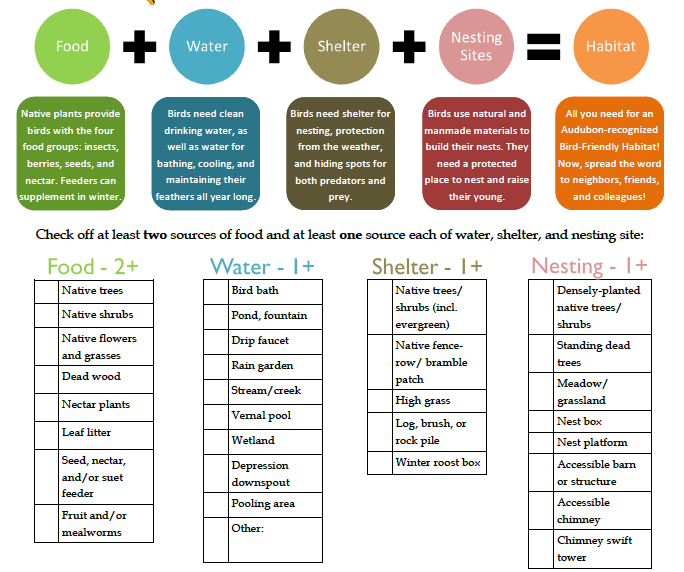
Screen Shot 2016-04-22 at 1.25.15 PM

And now, you ask, where do I avail myself of these native plants? Partnering with PPAC, Blue Water Baltimore’s Herring Run Nursery has all the native wonder you could ask for—over 250 varieties of trees, shrubs, vines, and flowers that support butterflies, pollinators, birds, and other wildlife. Can’t make it out to Herring Run? No problem–PPAC  will once again be hosting a Native Plant Sale in Patterson Park during the Butchers Hill Flea Market on Saturday, May 14th.

So, in honor of Earth Day, let your garden grow for the environment this year!

TNCS Elementary Engages in Conservation By the Barrel

With Earth Day 2016 only a week away, you must be wondering, what awesome environment-friendly project will The New Century School students be involved in this year? You are certainly recalling that, since his tenure at TNCS began, elementary STEM teacher Dan McGonigal has made the most out of Earth Day annually to explore conservation and ways to help the environment both locally and globally. Read about last year’s efforts here: TNCS Elementary Takes Earth Day by Storm!

And this year will not disappoint! In fact, this year’s project is one of those learning experiences where individual components come together in a beautiful whole worth far more than the sum of its parts. Mr. McGonigal managed to harness science, art, team-building, environmental advocacy, and fundraising for TNCS to do some actual, measurable good for the Chesapeake Bay Watershed area.

What is the product of this amazing, synergy? Handpainted rain barrels! Even better, these rain barrels will be raffled to four lucky winners on Friday, April 29th!

The project was a partnership with Barrels by the Bay, which Mr. McGonigal learned about through Blue Water Baltimore, who he worked with on last year’s storm drain stenciling. According to their website, “Barrels by the Bay is a non-profit organization focused on contributing to sustainable development of the communities within the Chesapeake Bay watershed and surrounding regions. [They] work to help combat flooding and stormwater runoff concerns throughout communities within these regions, educate community members about our world’s water issues and the importance of water conservation efforts, and inspire students to preserve our world’s water resources.”

The organization came into being on the 22nd Annual United Nations World Water Day, on March 22, 2015, in Annapolis, Maryland, kicking off with a project for area schools to repurpose 50-gallon Coca-Cola syrup drums as rain barrels. In 2016, they expanded their reach to other schools within the Chesapeake Bay Watershed region, including TNCS. Their efforts are having quite an impact: An average of 700 gallons is collected in one rainfall (1 inch of rain in 24 hours) in the 50-gallon rain barrel drum. If Maryland has an average of 41 inches of rain per year, then in just 1 year, one barrel can collect 28,700 gallons of water. That’s no mere drop in the bucket!

But, as mentioned, collecting tons of water is not all they are good for. Says Mr. McGonigal: “In the fall, we used the barrels to develop teamwork and cooperative learning skills in the 2nd–5th grades. They designed the artwork and then voted on the best designs (two per class). They then prepped the barrels for painting by sanding and priming them. They traced their designs on the barrels and, finally, painted them.”

You can watch the 6-month evolution of their creations in this slideshow.

This slideshow requires JavaScript.

“This was also another opportunity for us to put our environmental learning into action. It was a great experience and I hope to make this a yearly event in my class,” said Mr. McGonigal. They then decided to turn the rain barrel project into a fundraiser for TNCS and Barrels by the Bay (each organization gets half of the proceeds). “We also have one more barrel that will be used on our school campus. This will be decorated by student handprints on Earth Day. We hope to use it to help water our school garden,” he said.

Don’t miss the chance to win one of these beautiful and functional rain barrels for your home—get your raffle tickets through the TNCS office through Friday 4/29/16 (by 8:30 am). And don’t worry, Barrels by the Bay even offers workshops to demonstrate how to  harvest rainwater from your roof, store it, and use it for your own home as well as to explain how rain barrels also improve water quality in our rivers and streams.

Thanks to TNCS 2nd–5th science classes, Barrels by the Bay, and the TNCS community, what a great Earth Day this one will be! And a big shout-out to Mr. McGonigal for his continued in-class focus on environmental conservation!

ColorCycling Comes to TNCS!

Does having to throw away something plastic but perhaps unrecyclable make you uneasy, especially single- or short-term-use items? Plastic drinking straws, for example, were once thought to be wonderful innovations because of their apparent cost-effectiveness and ease of manufacture. But when you consider that, globally, about 300 million tons of plastic are produced, half of which is for such disposable items, blithely discarding that straw starts to loom a little larger in significance (and, ultimately, cost). The plastic problem makes many among The New Century School community uncomfortable, too, so TNCS is doing something about it!

Bold Strokes

Head of School Alicia Danyali has enrolled TNCS as a participant in Crayola’s ColorCycling Program, which allows K–12 students to collect and repurpose used markers of any brand. This program also offers classroom opportunities for emphasizing each individual’s capacity for protecting the Earth. In fact, says TNCS Art Teacher Jenny Miller, “I steer away from markers or any other individually plastic encased art product for the very reason of unnecessary waste. I will investigate any other ways that we can practice sustainability in art class.”

tncs-recycles-markers

Don’t throw away used markers—colorcycle them!

It’s good to note, though, that the Crayola company is implementing ColorCycling and other green initiatives, such as “using 100% reforested wood for colored pencils  . . . and recycling ground water through [their] crayon cooling process.” How are the colorcycled markers repurposed? Into fuel!

Crayola conducted extensive research into various new and emerging technologies that would allow the company to repurpose its markers and found the most efficient and beneficial solution at this time is the plastic to energy process, which allows the company to repurpose the entire marker. If a classroom recycles 193 markers, that is enough to move a city bus for 3 miles.

For the marker program, all we have to do, TNCS community, is bring our “dead soldiers”—again, any brand—to TNCS, where they will be collected in a specially designated box and kept in the art room. TNCS students will count them and pack them up for shipping—and Crayola even pays the shipping costs!

And voilà—TNCS is an “eco-cool school”!

Fine Print

Most of us are well aware that plastic waste is a huge environmental concern and a growing problem for future generations, but it never hurts to read the plain, if pretty horrifying, facts.

• Plastics impair human health. Plastics contain a variety of endocrine-disrupting chemicals (EDCs) that have been demonstrated to interfere with human endocrine, cardiovascular, respiratory, and neurodevelopment systems. The long-term effects of these EDCs are still being investigated, and researchers are uncovering other insidious effects all the while.

• Plastics damage the environment. All the plastic so far produced is still with us in some form because it takes 500 years for plastic to decompose. Recycling plastic is not always easy or possible to do, and what doesn’t get recycled winds up in landfills, a clearly unsustainable practice at close to 30 million tons per year (just in the United States!). However, incinerating plastic is an even worse proposition, as burning plastic causes it to release EDCs and other toxins into the air, polluting it and adding to the human bioaccumulated burden. It also gives off CO2, contributing to global warming. And then there’s plastic litter that ultimately finds its way into waterways, polluting the ocean and inducing a cascade of effects on the environment and on wildlife.

Plastics have infiltrated almost every aspect of life because of their sheer convenience, but we are now reckoning the hidden costs. Programs like ColorCycling not only help start to address the problem, but also increase awareness that there is a problem—a marker is such a seemingly innocent thing, after all . . . until the magic wears off.

TNCS Elementary Attends Healthy Harbor Report Card Release!

tncs-elementary-attend-healthy-harbor-report-card-release

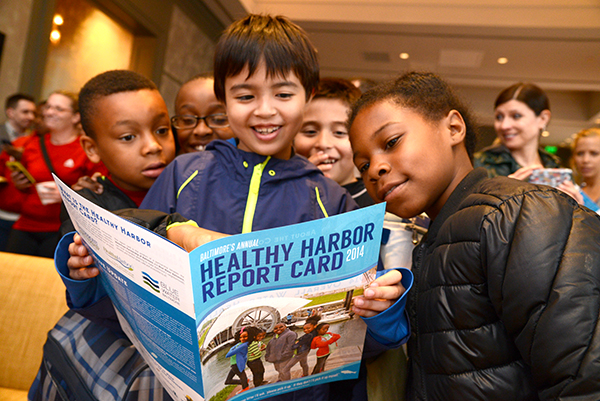
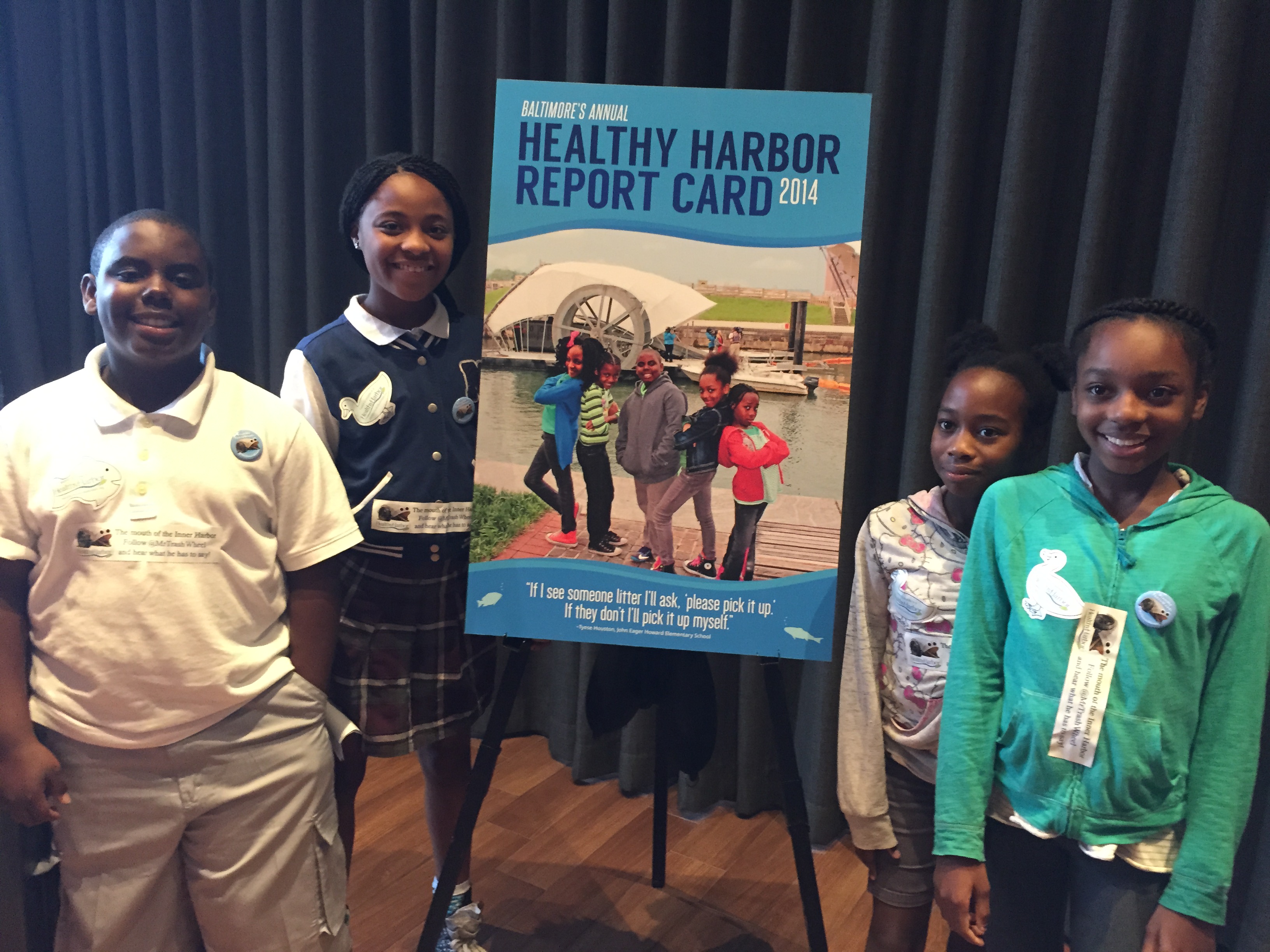
TNCS upper elementary enjoyed their last field trip of the year that was fun and educational. (Photo courtesy of The Daily Record.)

On June 4th, The New Century School‘s upper elementary class took a walking trip to Harbor East to attend Baltimore’s annual “Healthy Harbor Report Card 2014 Release”. This field trip was the culminating event of STEM teacher Dan McGonigal’s yearlong in-class exploration of our local waterways—how to keep them clean, why they are so critically important, and what responsibility Baltimore citizens individually should assume regarding these bodies of water. It was an ideal theme, inviting exploration from many STEM angles, and it also set the tone for Mr. McGonigal’s extremely successful first year at TNCS. From the STEM Fair, to Earth Day community outreach in the form of storm drain stenciling, to attending the Health of the Harbor announcement, TNCS elementary students have made a deep connection with Baltimore’s very special natural environments this year.

Mr. McGonigal said that in addition to closing out the water theme of the 2014–2015 school year, he also wanted “to make the end of the year productive, but also fun for the students.” Achieved in spades if these photos are any indication!
And it’s no wonder—Baltimore has achieved something unique with its concerted efforts to make the Inner Harbor swimmable and fishable by 2020. Swimmable?! Fishable?! You read correctly: Healthy Harbor is an initiative of the Waterfront Partnership of Baltimore, and the Report Card, which is ultimately a tool that helps communicate the swimmable/fishable goal and track progress, is the result of the Waterfront’s partnership with Blue Water Baltimore (whom you may recall donated TNCS’s storm drain stenciling materials).
tncs-elementary-attend-healthy-harbor-report-card-release

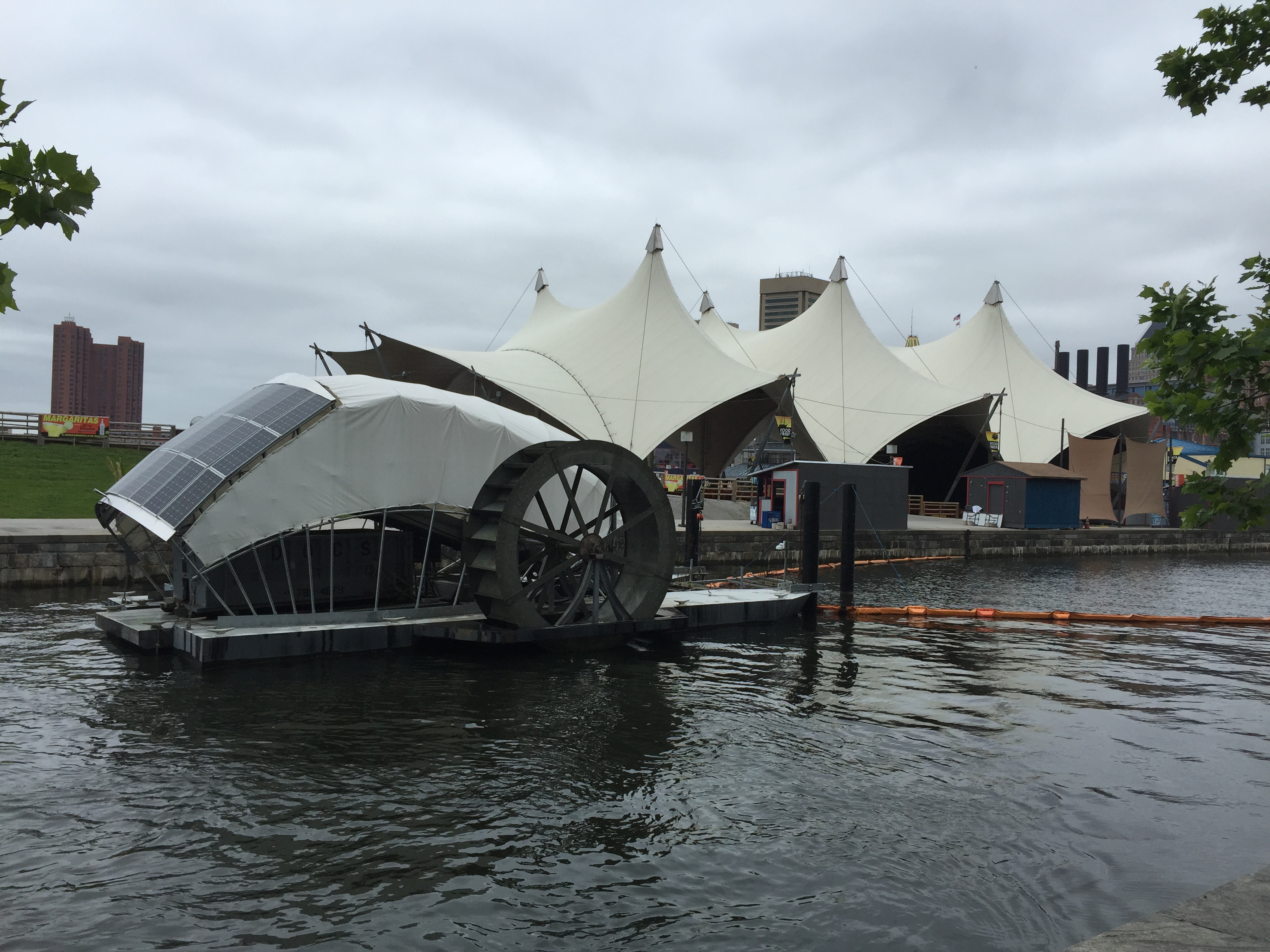
The water wheel in all its glory—Fun fact: trash picked up by Mr. Trash Wheel generates power for Maryland homes!

To meet this lofty aim, which many once deemed utterly impossible, Baltimore installed the Inner Harbor Water Wheel at the end of the Jones Falls in May 2014 to intercept trash (which everyone who has ever laid eyes on the Inner Harbor recognizes as its biggest current plague). Invented by Baltimore resident John Kellett and his company Clearwater Mills, the water wheel has gained worldwide fame and provided the inspiration for similar water clean-up initiatives to be proposed globally, from Rio De Janeiro to Rotterdam. 

mr-trash-wheel

The ingenious design of this water wheel is a “game-changer for trash in urban water bodies!”

“Mr. Trash Wheel,” as the water wheel is now known, has accomplished some pretty extraordinary feats, as his Facebook page and frequent tweets attest (#MrTrashWheel). As of this week, in fact, Mr. Trash Wheel has intercepted 205 tons of trash before it reaches the Inner Harbor in its first year, and a whopping 45 tons from this past Monday’s storm alone! This more than doubles Mr. Trash Wheel’s former single-day record of 19 tons! Read more about the water wheel.

tncs-elementary-attend-healthy-harbor-report-card-release

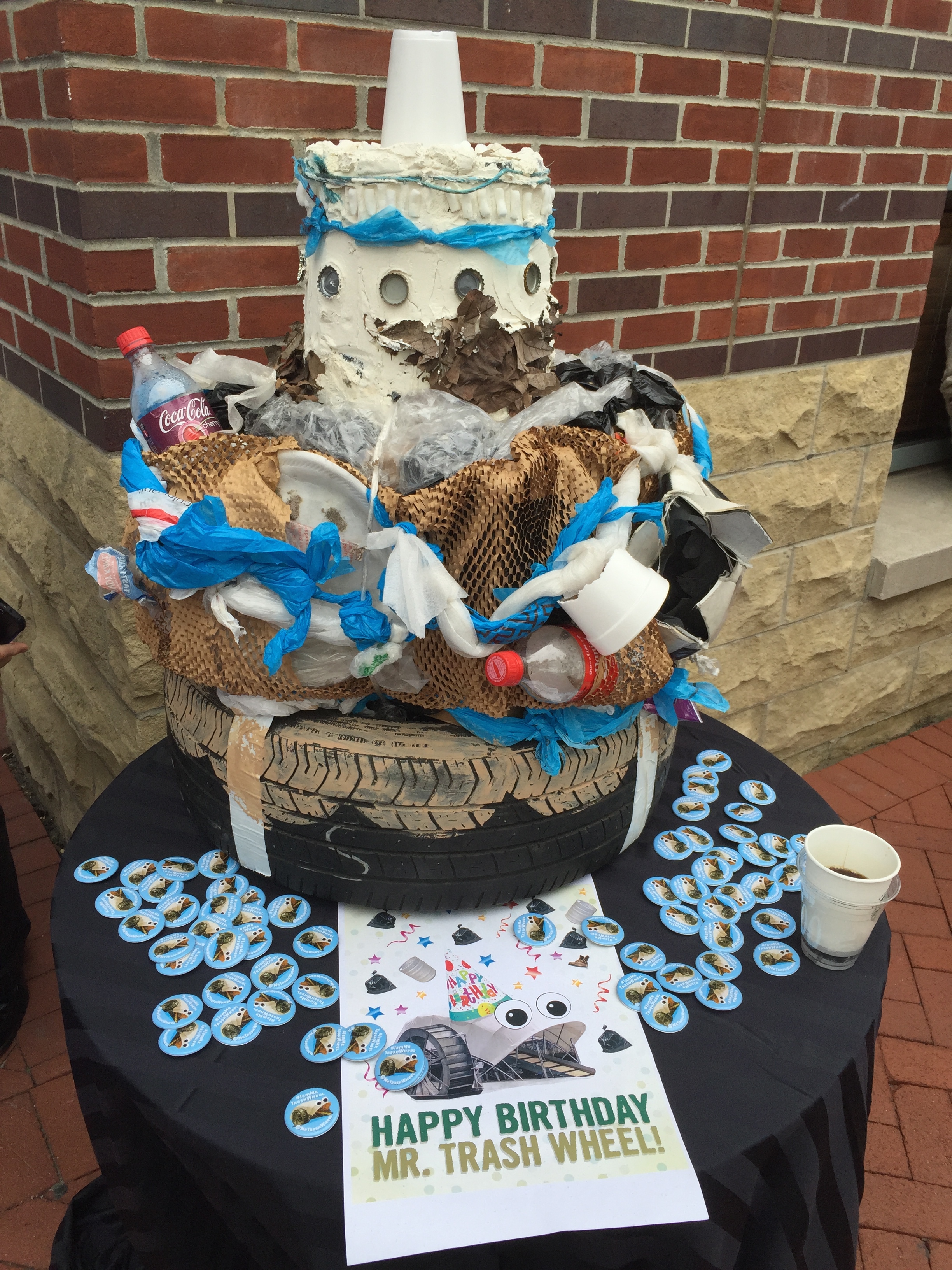
Mr. Trash Wheel’s first year of very hard work was commemorated with the world’s most disgusting-looking cake!

Healthy Harbor showed its appreciation for Mr. Trash Wheel’s hard work at the Report Card Release by celebrating his first birthday with a cake made of refuse—Mr. Wheel’s preferred intake, of course. And there was certainly cause to celebrate, because the Report Card—for the first time ever—showed a passing grade for Gwynns Falls! That the grade, a D–, is only barely passing is not the point. As one TNCS student remarked, “even though things seem bad, they are getting better.” That’s exactly right! Baltimore waterways are moving in the right direction. The plan is working, as presentations by representatives from the various stakeholders, including District 46 Delegate Brooke Lierman, clearly demonstrate.

tncs-elementary-attend-healthy-harbor-report-card-release

Featured on the Report Card’s cover, these John Eager Howard elementary students are part of their school’s Green Team and gave a lovely speech on cleaning up the harbor.

Delegate Lierman (and TNCS parent) said of TNCS’s attendance at the event: “Involvement by students, like those at TNCS and John Eager Howard, is instrumental in helping us to ensure that Baltimore residents of all ages are invested in and working together to create a cleaner harbor! I’m so glad that students from both of these schools were able to attend the Report Card Release to learn firsthand about the need for advocacy and involvement to bring about positive change in our City.”

Afterward, Mr. McGonigal voted the walking field trip, “an awesome experience” and was very proud of his homeroom students who were respectful and focused during the speeches and presentations. “We learned a lot about the efforts in place to improve the health of the Baltimore Harbor and other area waterways. We also learned that there is a great effort by many people who are trying to help improve the situation. I hope we as a school can get further involved in projects related to the health of the harbor,” said Mr. McGonigal. He invites your suggestion and ideas for continued work by TNCS students.

In the meantime, you can read the 2014 Report Card here. Need still more good news? It’s here—officially announced just yesterday, Canton may be getting its very own water wheel! Also visit cantonwaterwheel.com for more information and to donate in support of Baltimore’s second water-powered trash interceptor.

TNCS Elementary Field Trip: A Natural Choice

tncs-elementary-robinson-nature-center

This is one happy TNCS elementary student!

A big theme of the 2014–2015 school year for The New Century School elementary students has been environmental sustainability. Ever a core school value, STEM teacher Dan McGonigal’s special focus on conservation efforts this year made environmental sustainability the axis on which many elementary projects turned, such as the STEM Fair and storm drain stenciling.

True to his “nature,” Mr. McGonigal organized an elementary field trip to the James and Anne Robinson Nature Center last month, so all elementary divisions headed out to Howard County to visit the state-of-the-art facility. Featuring interactive exhibits on local habitats, wildlife, and the Chesapeake Bay, the center was the perfect destination for TNCS elementary, who love joining learning with fun and also had studied habitats and local waterways in various formats throughout the year. Said Mr. McGonigal, “We chose this trip because it provided our students with exposure to the outdoors in a local environment, which most of our students don’t get a chance to see on a regular basis. The center provided a lot of hands-on experiences that were meaningful for the students and helped them to better understand conservation efforts. They also had several differentiated lessons for the students based on age and grade level. This allowed us to choose topics that better met our areas of study this year.”

This slideshow requires JavaScript.

Between the discovery room and the digital, domed nature theater inside and the walking paths alongside native plants and rain gardens outside, the center kept TNCS students happily engaged. Additionally, each of the three divisions (K/1st, 1st/2nd, 3rd/4th) was accompanied by a guide who gave mini lessons, maintained an ongoing dialogue, and directed games and activities. “It was a wonderful experience. The classes were super interactive, the kids loved walking in the woods, and the exhibits were fun. The kids had a blast and learned a lot. It was fun to leave the city for the day!” said another TNCS elementary teacher, Adriana DuPrau.

This slideshow requires JavaScript.

The center is also renowned for marrying form with function—it was designed not only to teach appreciation of the environment, but its design itself demonstrates environmentally sound practices! It has earned such awards as “Best Sustainability Project of the Year in New Construction” and Platinum LEED (Leadership in Energy Design) Certification, the highest rating from the U.S. Green Building Council—none of which was lost on Mr. McGonigal. “The center uses earth-friendly materials, such as solar panels for geothermal heating, a permeable or porous pavement, green roof, rain garden, and more. Our third and fourth grade students focused on environmental technologies that helped the Chesapeake Bay ecosystem as part of their STEM Fair projects, and they got to see some other projects in action as well,” he said.

“It was a great trip, and our kids seemed to really enjoy it!” said Mr. McGonigal. It was certainly a great wrap-up to a very productive—and environmentally aware—year!

This slideshow requires JavaScript.