The Painting Workshop at TNCS: Kids Paint the Town!

Summer sessions at The New Century School continue with an exciting block of camps hosted by The Painting Workshop! The first week of this summer-long workshop was called “The Art of Charm City.” Artist-campers explored questions like, “What is a neighborhood? A town? Baltimore? They got better acquainted with Baltimore symbols such as the Domino Sugar sign and Chesapeake Bay crabs through painting, drawing, crafts, and sculpture. They also celebrated our local artists—from Paul Darmafall (a.k.a., the Baltimore Glass Man) to Grace Hartigan. (Scroll below for upcoming themes and to register.)

Charming Art

Baltimore! Inspired by the Inner Harbor

Baltimore! Inspired by the Inner Harbor

Led by two camp instructors from The Painting Workshop, Rachel Stein and Elisabeth Willis, kids made paintings inspired by all things Baltimore—the harbor, rowhouses, local food, etc. Each day they worked on one painting as well as had lots of free-drawing time and afternoon crafts. Their culminating project for the week was self-portraits . . . on actual canvas!
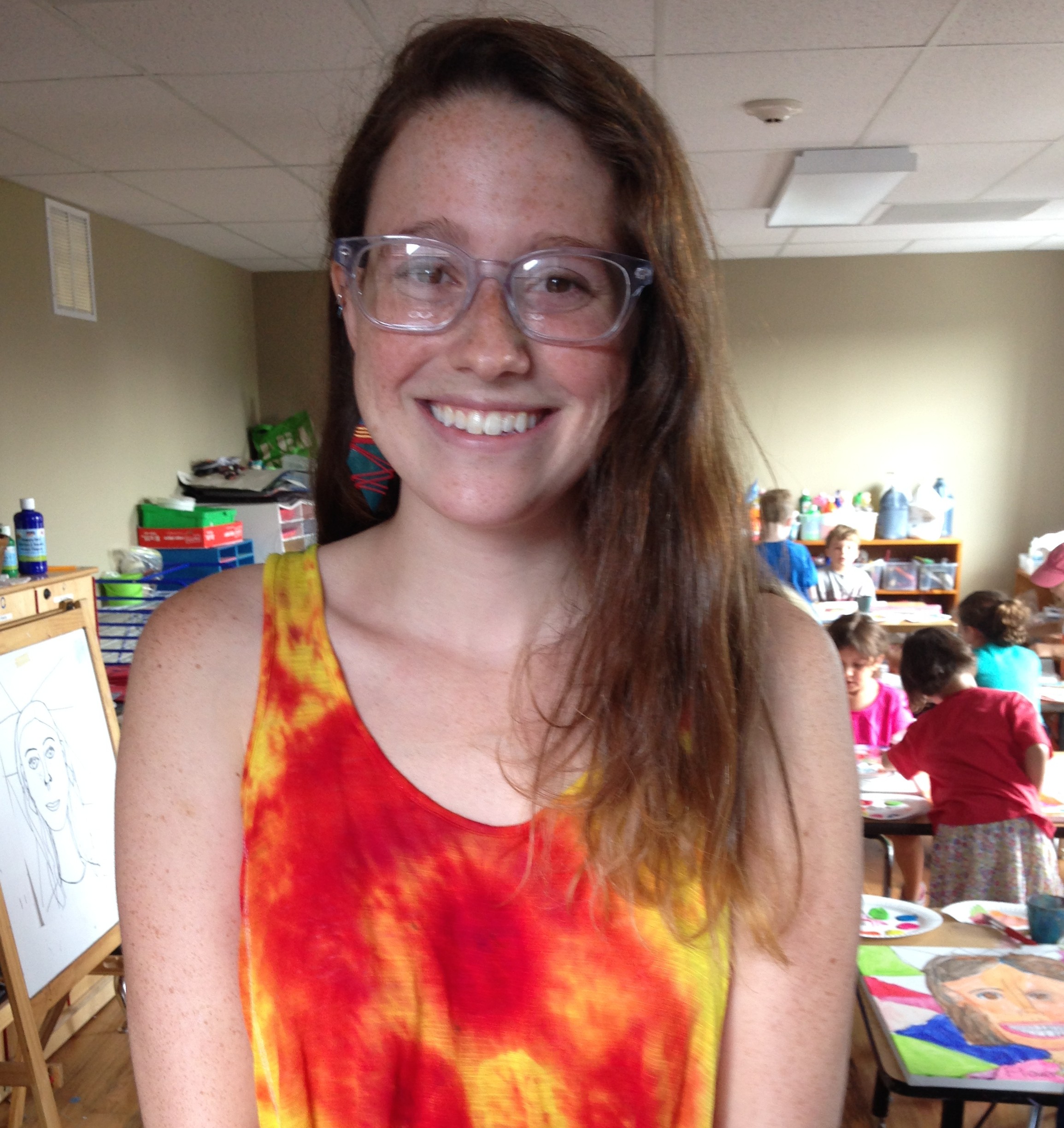
Rachel Stein, from The Painting Workshop

Rachel Stein, from The Painting Workshop

“Their self-portraits look great,” said Ms. Stein “It’s so exciting to see them pick up the techniques so easily.” Instructors demonstrated how to make eyes, noses, and lips and how to manage proportions. “But overall we let them do it how they want,” said Ms. Stein. This space to express themselves is part of Ms. Stein’s philosophy of instruction. An undergrad at Towson University, she studies art and psychology. “I like watching them expressing themselves, getting out what happened that day, their emotions. That’s how I see it—as a way to arrive at camp and not worry about anything else except just making art.”

The artist-campers really got the message. They experimented with colors, patterns, and actual brush techniques to their hearts’ content. They also “expressed” themselves in other ways—a table of several girls quietly sang “Let It Go” as they worked on their self-portraits (perhaps more than one envisioning herself triumphing over obstacles just like the beleaguered Princess Elsa). Meanwhile a table of boys sang “We Will Rock You” and did an admirable job of keeping even the drumbeats hushed so as not to disturb anyone else.

Despite all the “self-expression,” going on, the atmosphere was calm and productive. Spills were handled without fuss, and the kids were always reminded to keep working until they finished. “I want to work with kids and art in the future. I’m thinking about becoming a teacher,” said Ms. Stein. She has been with The Painting Workshop for 3 years.
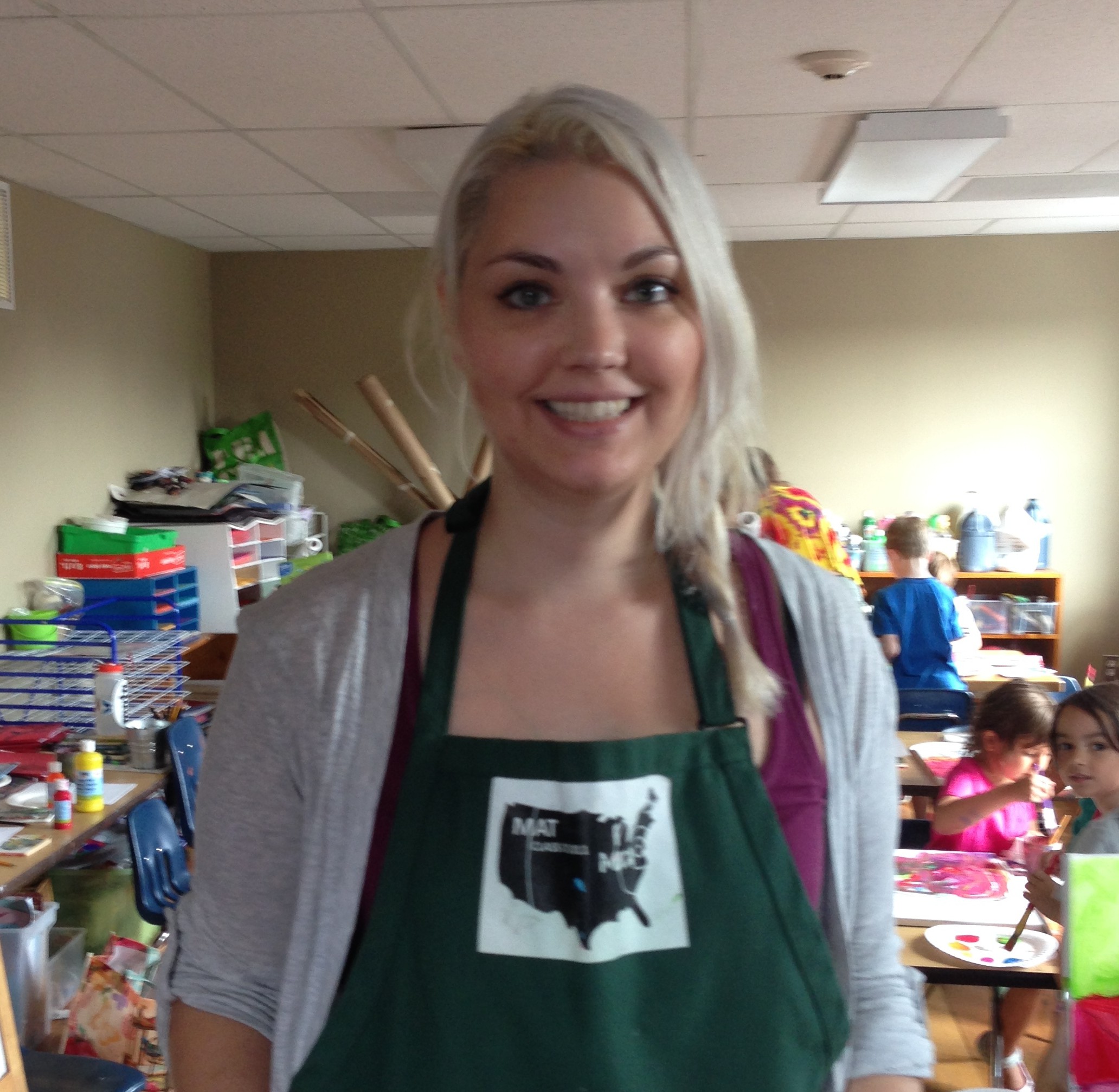
Elisabeth Willis, from The Painting Workshop

Elisabeth Willis, from The Painting Workshop

Ms. Willis brings an impressive amount of experience to her role as well. She has both a Bachelors of Fine Arts in Art History and a Masters in Art and Teaching from Maryland Institute College of Arts (MICA). She freelanced after graduating in 2011 to spend time on her art but would like to become a high school art teacher or work in the education department of a museum. She has been with The Painting Workshop for the last 3 months.

Typical Day

The day starts out with free draw (and each child got a folder to collect their drawings to bring home at week’s end). About midmorning when everyone has gotten the wiggles (and the squiggles) out, they move on to the main project of the day. For the self-portrait day, Ms. Stein and Ms. Willis gave step-by-step instructions involving sketching out the face with a pencil and then going back over it with a Sharpie to make the lines clear. After that, each child got a mixing plate with blobs of primary colors and went to work.

Hard at work, painting away

Hard at work, painting away

While the artists work, instructors move through the classroom, responding to questions and comments. “What do yellow and orange make? What about blue and pink and white?” asked one boy. “How about you and try it out?” replied Ms. Stein, encouragingly. “I know three ways to make purple!” he came back with. “Red into blue . . . blue into—well, actually I only know how to do it two ways—pink.”

“I figured out the category,” said another student, excitedly! “It’s all about Baltimore—the crabs, the harbor, everything!” “That’s right; you figured out the puzzle; you added it all up,” replied Ms. Stein. “Can I make my skin whatever color I want? Like brown?” “Of course!”

A finished portrait

A finished portrait

Once they finished their portraits, they were free to draw or read books until lunch. “At TNCS they get to leave the classroom to eat somewhere else, and they get to play on the playground. I like that,” said Ms. Stein, who is normally at the Mt. Washington Painting Workshop location. “It’s really fun [at TNCS]!” she said. “The kids here are really intelligent and have great vocabularies. One boy was painting an animal and told me ‘this animal is aggressive toward these other animals’, for example.”
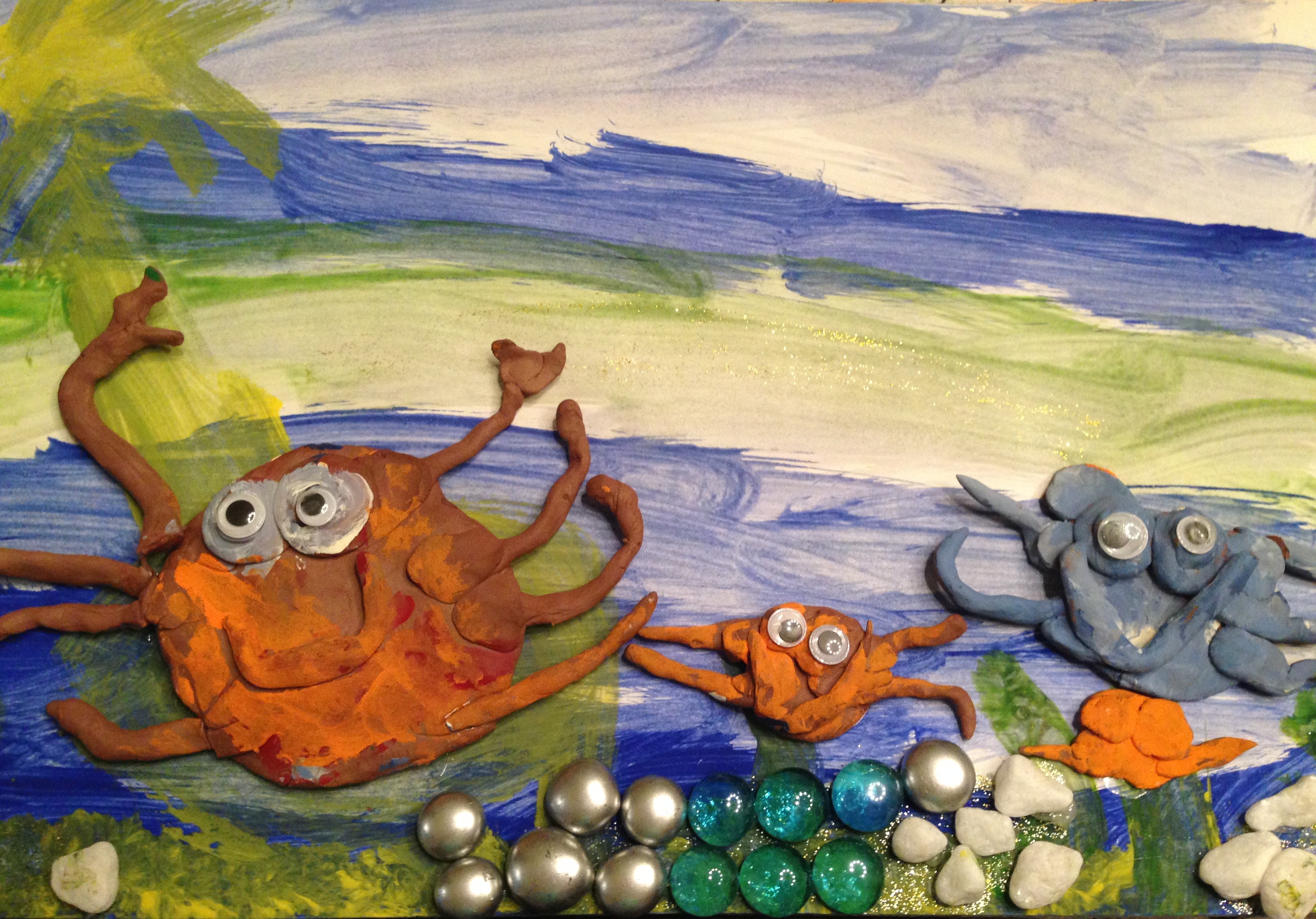
Crabs in their habitat

Crabs in their habitat

For their afternoon activity, the artist-campers were going to make habitats for the crabs they had sculpted earlier in the week. Those are some lucky crabs!

Schedule

“Creativity! Art Around the World Camp” begins 7/14 and continues through 7/18. Artist-campers will create their own passports and focus on the indigenous art of each country they visit, such as aboriginal paintings in Australia, pottery in Greece, rice paper and pagoda prints in Japan, craft papier-mâché maracas in Spain, and beautiful landscape paintings in France.

7/21–7/25: Penguins, Whales, and Surf: Oceans and Seas Camp

Water covers more than two-thirds of our planet. Within it, we find amphibious life of all description, and fauna and flora that exist only in the mysterious world of the sea. This camp celebrates the waters of planet Earth–through painting, drawings, sculpture, and of course the use of water in art projects! The geology of the ocean, the uses of the ocean, the wonder of the sea–it’s a watery week of imaginative fun!

7/28–8/1: Birds, Butterflies, Wind, and Sky: Art and Nature Camp

The outside world comes alive in this camp where we are inspired by nature. From leaf rubbings and clay pressings, to plein-air painting, and sponge paintings of trees, we celebrate nature through our art!

8/4–8/8: Dragons and Wild Things Camp

Who doesn’t love dragons? We will look to the art of Asia for inspiration, as well as Dragons in medieval times, and then closer to home with Maurice Sendak and his book, Where the Wild Things Are. Projects will include sculpture, puppets, jewelry, paintings, and more.

8/11–8/15: Hear the Sounds of Art! Art and Music Camp

Can you listen to the sounds of art? What is the overlap between the artistic expressions of music and visual art? Let’s find out in this multi-faceted camp experience.

We will create our own instruments, explore how sound and music affects our art, and have fun!

Would you like to register your child(ren)? Please go here.
TNCS “Pops” the Trash!

“I want to do at least one project a year in which students work with the community outside the school,” said The New Century School art teacher Jenny Miller. “Doing community art is good for them.” Working for and with the larger Baltimore community is also an important TNCS value.

So, in continuing his 2013 “Hack the Trash” campaign, when environmental advocate and photographer Brian Schneider invited six area schools to contribute new trash drums as part of a larger initiative to beautify Baltimore’s parks (called “Hack the Parks”), TNCS was in! Mr. Schneider especially hoped for TNCS’s participation and was thrilled when Ms. Miller requested six cans for her upper elementary class to paint. Said Mr. Schneider, “I’m excited to see what TNCS produced and to have them debut in the park along with the other schools participating: Patterson Park Charter, Highlandtown Elementary/Middle, Hampstead Hill Academy, The John Rogers School, and Christo Rey Jesuit.”

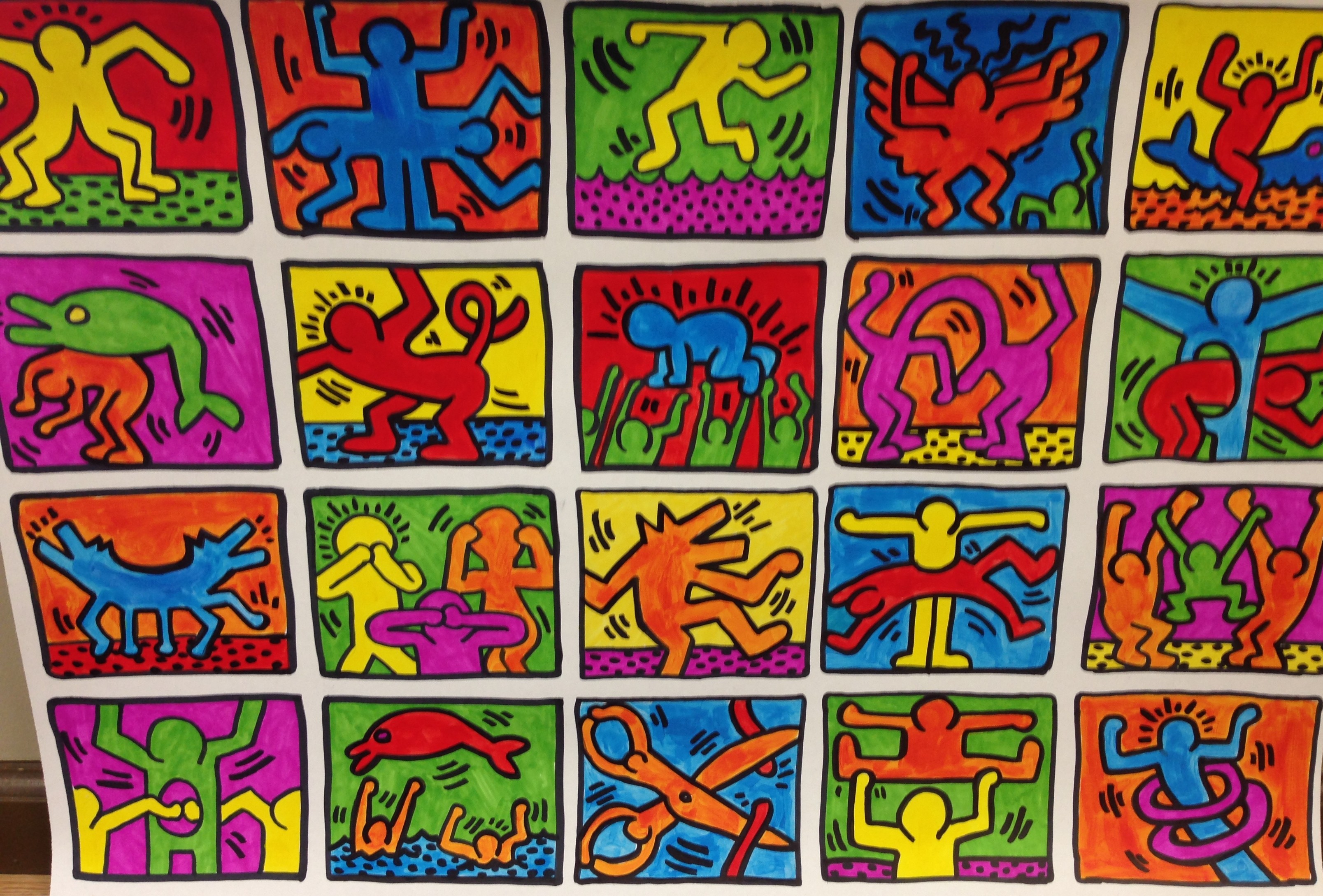
Keith Haring

Keith Haring was an American artist and social activist whose “imagery has become a widely recognized visual language of the 20th century.”

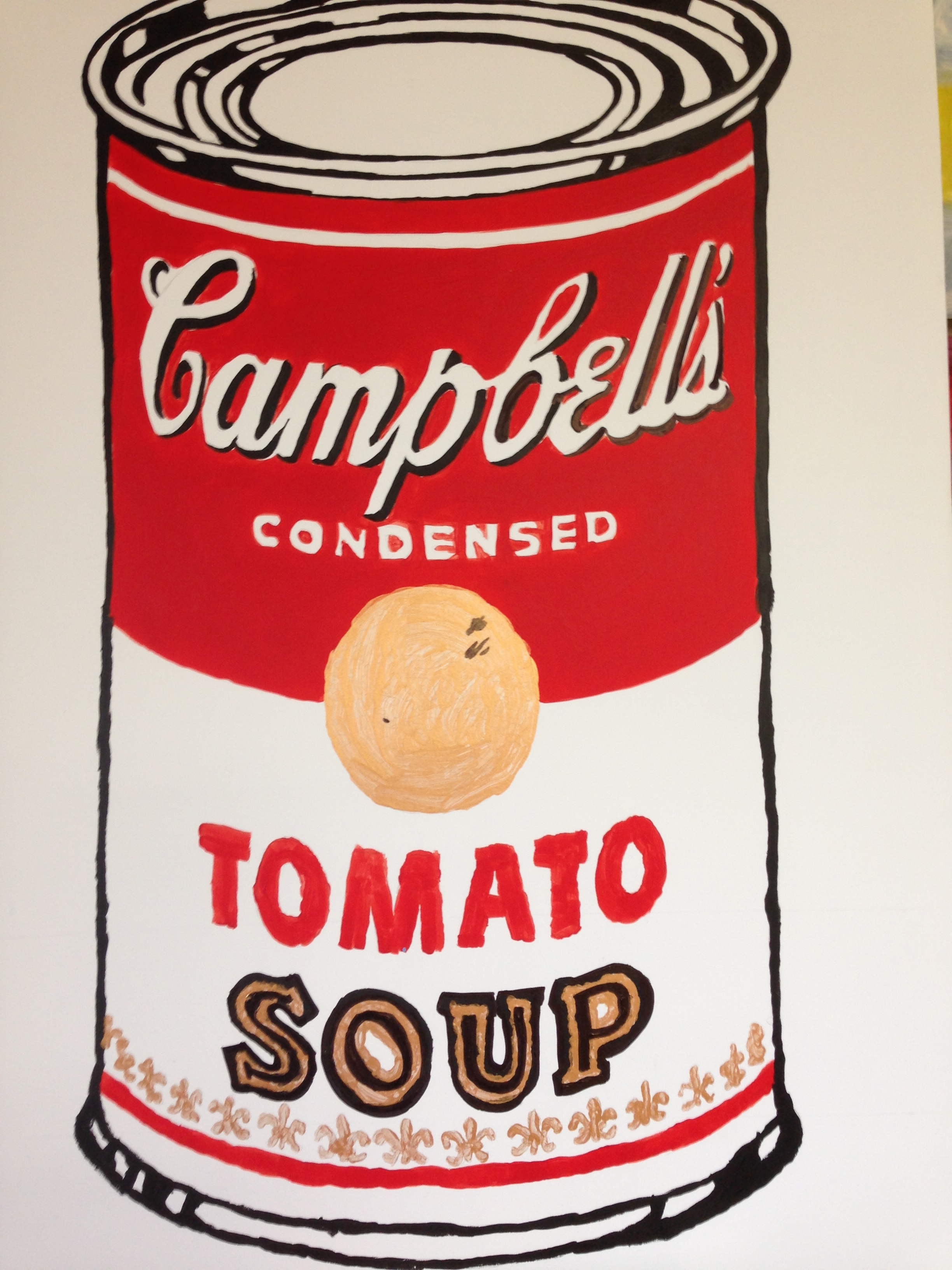
The elementary students studied Warhol's iconic style, recreated here by Mrs. Raccuglia!

The elementary students studied Warhol’s iconic style, recreated here by Mrs. Raccuglia!

Pop the Trash in the Can

Instead of using stencils as has been done in Patterson Park’s existing “hacked” cans, Ms. Miller seized the opportunity to hone her students’ brush skills while simultaneously introducing them to Pop Art. As such, “Pop the Trash in the Can” was born, a project spanning the last 8 weeks of the 2013–2014 academic year. Students created their own designs based on the Pop Art artists they studied—Andy Warhol, Keith Haring, Yayoi Kusama, and Takashi Murakami. These artists use imagery from popular culture, simple shapes, cartoon-like images, bright colors, and lots of patterns to create their own special brand of fine art.

Collaborative Art

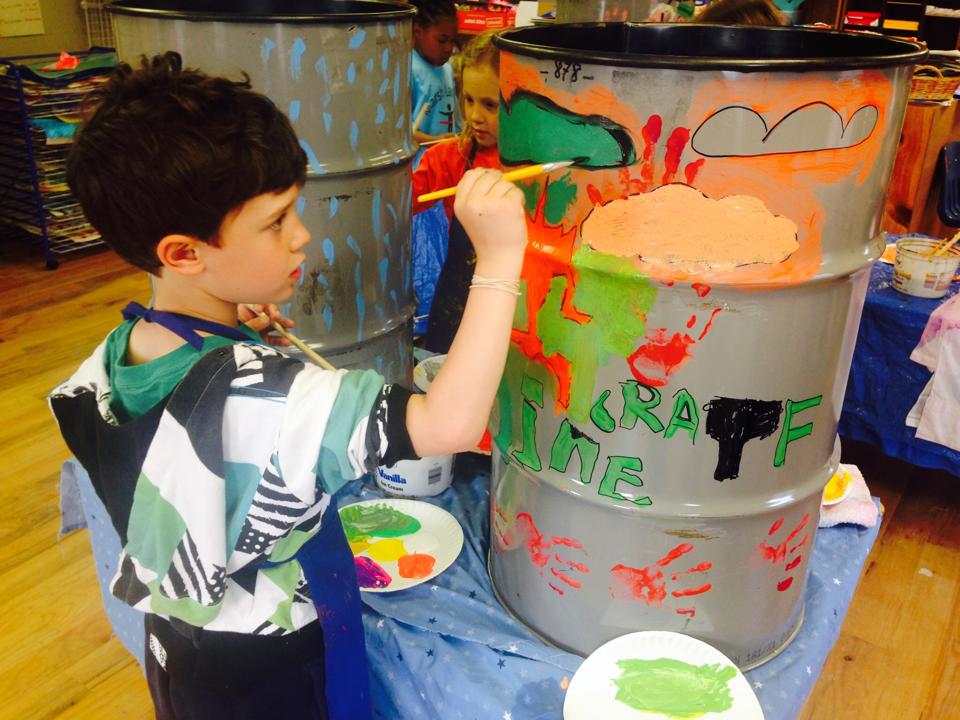
Another aspect of this fun, educational, multidimensional art project is that students were asked to collaborate on the cans. Working in pairs or trios, they brainstormed their ideas, drew up their designs, and then transferred them onto transparencies, which were projected onto the trash drums on a larger scale for the students to trace and fill in. Incidentally, this is not only how some of the pop artists they studied also work, but also a process familiar to them from their mural creation with the Baltimore Love Project artists.

“It’s been fun just painting the cans,” said Ms. Miller. “They’ve been really into it, making little impromptu adjustments as they go along and see what works and what doesn’t.” Once the basic design had been painted onto the cans, Ms. Miller next had the students add the bold black outlines and clean lines so characteristic of pop art. “Outlining something can make it look better and hide mistakes!” It will also help the cans be seen from a distant across the park. “They really want people to throw their trash in these cans,” said Ms. Miller. “They’re proud of them and really understand the environmental benefit.”

This elementary student works hard at getting his design just right

This elementary student works hard at getting his design just right

TNCS elementary students thoroughly enjoyed “Pop the Trash in the Can.” “They loved working ‘big,’ they loved working for the public and knowing that lots of people would see their work, and they actually liked working together on this,” said Ms. Miller. They worked through disagreements about design, palette, and approach as they arose and figured out how to resolve their conflicts as a team. It was the ideal TNCS assignment, bringing together creativity, investigation, and problem-solving. “They were true collaborators,” said Ms. Miller. “They treated each other’s work with respect and always asked before painting someone else’s side.”

Don’t Throw It All Away!

As the project drew to an end, catastrophe nearly thwarted the students’ efforts when they discovered that their initial  painting did not produce the desired results on the cans. “The paint was thin and transparent and not nearly as bright as they had been anticipating. “Some were very unhappy and ready to abandon their efforts,” said Ms. Miller, “but  they were encouraged to rework some of the areas, and this perseverance has yielded results that they are very proud of. It was a great learning experience.”

We have to agree, Ms. Miller! Don’t forget to look for these cans any day now in Patterson Park after Mr. Schneider clear-coats and unveils them—finding all six would make a great scavenger hunt!

Admissions Fridays: Your Ticket To Getting To Know TNCS!

Our very own Robin Munro, TNCS Admissions Director

Our very own Robin Munro, TNCS Admissions Director

Friday, April 25th, marked the first-ever Admissions Friday event at The New Century School, and what a success it was! The brainchild of Admissions Director Robin Munro, this weekly event is designed to give prospective families a taste of TNCS and to give currently enrolled families the chance to drop by and hang out. Ms. Munro says she came up with this idea to be able to respond to more families more quickly and hopes to make it a standing happening. Families interested in the school naturally have lots of questions; Admissions Fridays not only get those questions answered in a timely fashion, but also show you the real deal—this is what TNCS looks like and how it operates in real time.

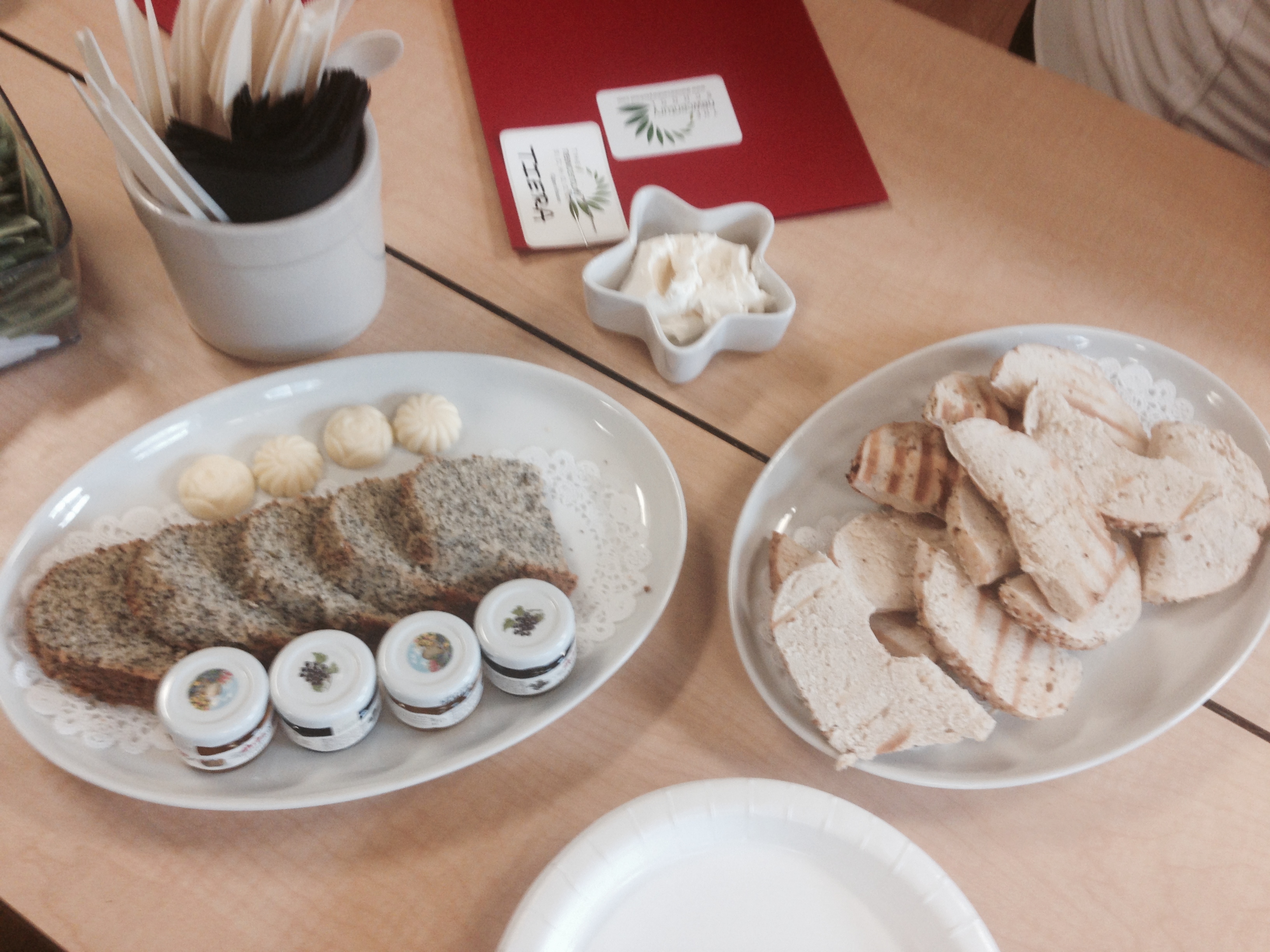
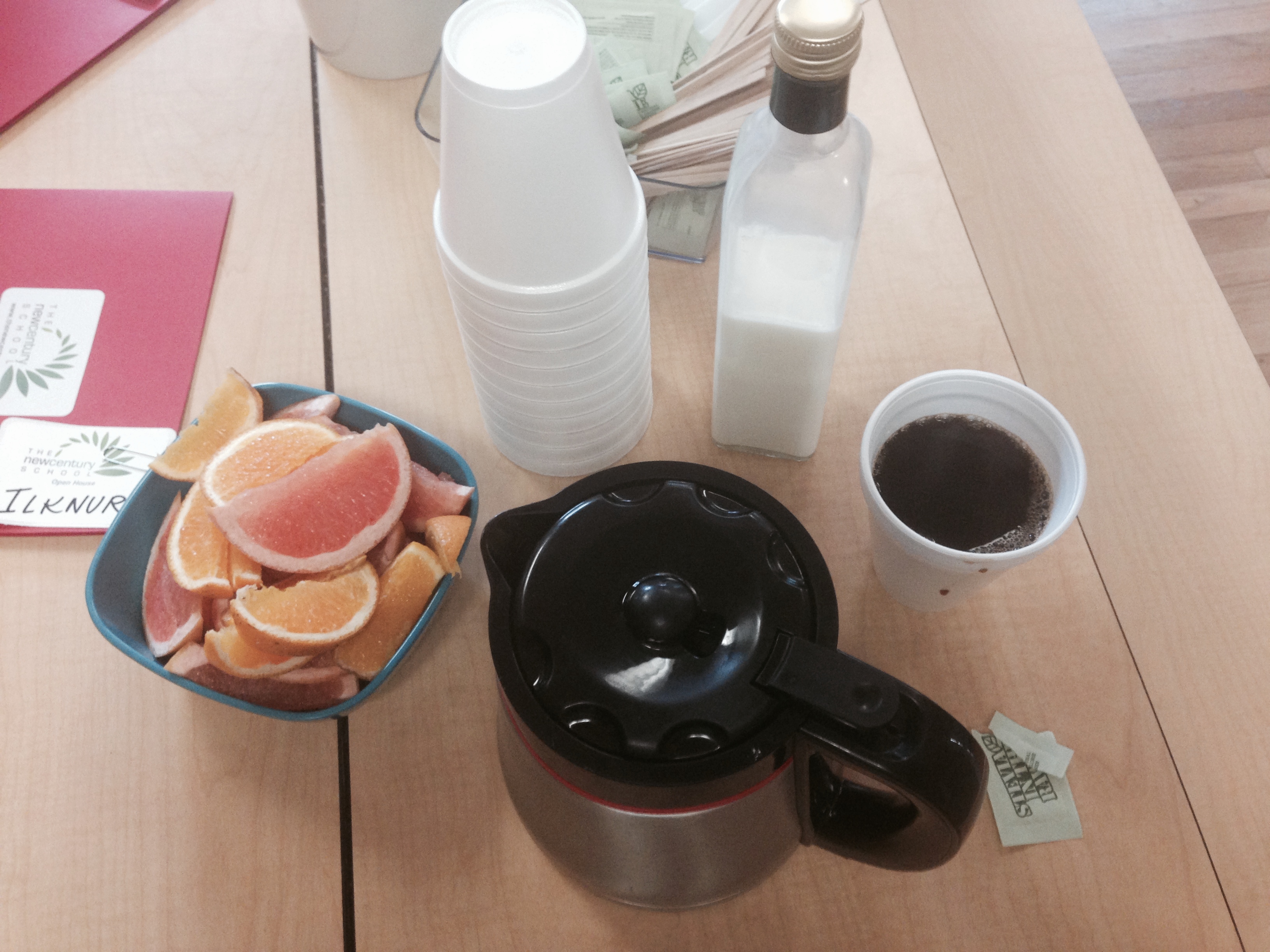
The inaugural event was well attended by parents (as well as a couple of prospective students!) curious about TNCS’s inner workings. The morning began informally with attendees gathering in the Multipurpose Room for coffee and a nosh prepared by Chef Emma. (Her lemon poppyseed cake was divine!) Prospective parents were looking at a range of enrollment levels from nursery-age, to preschool-age, right up to elementary-age, which Ms. Munro was particularly glad to see. Although TNCS started as a preschool, it has grown up right alongside its original student body and is thriving as it broadens its scope to encompass school-age children. After a chat to get acquainted and a preliminary Q&A, Ms. Munro escorted the group around the school, giving everyone a chance to see each program in action and all of the other special aspects of TNCS that set it apart.

Chef Emma baked lemon poppyseed cake and provided bagels courtesy of Cunningham's Cafe and Bakery. The butter rosettes were Chef's own special flourish!

Chef Emma baked lemon poppyseed cake and provided bagels courtesy of Cunningham’s Cafe and Bakery. The butter rosettes were Chef’s own special flourish!

Refreshing citrus and strong coffee---the perfect combo! Cream is courtesy of Trickling Springs dairy farm.

Refreshing citrus and strong coffee—the perfect combo! Cream was courtesy of Trickling Springs dairy farm.

TNCS offers three divisions: pre-primary (ages 2–3), primary (ages 3–5), and elementary (ages 6 and up). A fourth division in the form of a middle school will debut in the Fall of 2016 for grades 6–8. Extended care and before care are also available. Across all programs, emphases include small classes, language learning, and independent (but guided) academic exploration. Though all share common guiding principles, each program also boasts a unique identity. The pre-primary is complete immersion in either Mandarin Chinese or Spanish, the primary is Montessori, and the elementary is progressive and technology- and inquiry-based. This is, of course, a very cursory description of program highlights. Observing these classes in action tells the complete story, and they really are wondrous sights to behold. The mix of ages all helping one another, the classroom harmony, the freedom-within-limits to choose a topic of exploration . . . these are very integral to TNCS and are best appreciated firsthand.

Then there are the features that put the finishing touches on this one-of-a-kind school—the Kitchen Garden Tuck Shop, the music and art programs, and The Lingo Leap. These are, again, aspects of TNCS that deserve to be appreciated in person, but, in brief, TNCS students have the option of a daily locally sourced lunch of the freshest, best ingredients around (if not from the school greenhouse itself); they get formal instruction in art and music by instructors Jenny Raccuglia and Martellies Warren; and they have gym class with Gerstung equipment and the Imagination Playground!

With so much exciting  information to absorb, Ms. Munro recognized that families might prefer to mull details over later and gave each attendee a comprehensive packet to take home. Prospective families enjoyed getting to know TNCS, while currently enrolled families relished the chance to be there taking part.

So if you are exploring options for where to educate your child(ren), register for an Admissions Friday now through June 6th. Figuring out where your child will be enabled to flourish is no small decision. TNCS openly welcomes your observation, your questions, and you.


Happy Birthday, Immersed!

Dear Readers, this is a proud day, marking the end of Year 1 of The New Century School‘s blog. That’s right, 52 posts later, here we are (this is #53). To celebrate, let’s take a look back at what your favorite posts have been—after all, we’re here for you.

Top 10 Most Popular Posts

  1. Preschool Conundrum Solved: Research Demonstrates Benefits of Montessori Education  (224 views so far)
  2. Achieving Balance in Education at TNCS  (215 views so far)
  3. Sustainable School Lunch: Garden Tuck Shop Program Part I  (199 views so far)
  4. Elementary Science Fair!   (175 views so far)
  5. Top 10 Reasons to Attend Montessori Kindergarten  (171 views so far)
  6. Inside the Montessori Classroom  (156 views so far)
  7. Exercising That Mind–Body Connection  (146 views so far)
  8. Elementary Program Merges Montessori and Progressive Education at The New Century School  (130 views so far)
  9. A TNCS Original  (128 views so far)
  10. Language, Math, and Science—Montessori Style!  (125 views so far)

Because a little analysis is just irresistible, let’s draw some conclusions. It’s pretty clear that Montessori and Elementary are the  commonest themes on this list, which is entirely appropriate. TNCS is achieving something entirely unique in education in meshing a progressive, rigorous curriculum with the gentleness and humanity of the Montessori approach. TNCS students learn the standard academics but also get a firm grounding in foreign language and an abundance of the arts, movement, and technology. Perhaps most important and often overlooked in conventional schools is the attention to social relationships and building mutually respectful interactions with peers and with the administration.

So thank you, readers, for your following and your support. What would you like to read more about in future?

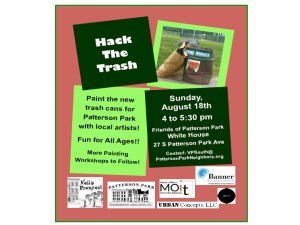
Hack the Trash: Community Art Project

Hack the trashOn Sunday, August 11th, an exciting new public art project began in Patterson Park of particular interest to The New Century School community. Merging social activism and environmental awareness with art, “Hack the Trash” is part of a city-wide venture to improve our parks. Hack the Trash, a trash drum painting project, targets three main goals simultaneously: 1) adding more trash cans in public areas to deter littering, 2) beautifying the drums to promote increased use, and 3) raising awareness about a social issue—the art delivers a message on a chosen theme. The first session centered on Chesapeake Bay consciousness; the next, to be held Sunday, August 18th, also in Patterson Park, will focus on the park itself.

Led by artist Ben Peterson, Session 1 began with an explanation of “the importance of the Harris Creek Watershed and its connection to Patterson Park,” said the project’s main organizer, photographer Brian Schneider. Harris Creek runs below Canton, with its watershed covering a geographic area from Clifton Park down to the harbor at Harris Creek (north/south boundary) and from Johns Hopkins Hospital to Patterson Park (west/east boundary). In urban watersheds, stormwater management becomes highly important insofar as stormwater runoff transports bacteria, nutrients, sediments, toxins, and trash through storm drains into tributaries and ultimately into the Chesapeake Bay. So, about 15 people gathered to paint the eight cans raising public awareness about the watershed (photos courtesy of Brian Schneider Photography shown below).

Mr. Schneider says that Hack the Trash is actually part of a bigger venture called “Hack the Parks,” a partnership between the Mayor’s Office of Information Technology (MOIT) and Baltimore’s Department of Recreation and Parks, which challenged Baltimoreans to improve our urban green spaces. A series of grants was awarded in June to the cream of the project proposals. Hack the Trash was one of six pilot projects receiving this seed money in addition to park space and Rec and Parks resources. Though MOIT underwrites the project, technology is not necessarily a prerequisite for getting funded. The Hack the Park website states: “By hacking, we mean [that] citizens develop their own applications (whether they be technology-based or not) which create simple, tangible benefits for the community.” Now the name “Hack the Trash” begins to make a lot of sense—but with “paint application” rather than something we can run on our smartphones!

Altogether, Hack the Trash plans to hold 5–10 sessions, depending on the number of artists and participants, to paint a total of 30 cans purchased with their $1,200 grant. Mr. Schneider told the Baltimore Guide that he and his neighbors “applied for the grant because they got sick of seeing trash blowing all over Patterson Park.” Comparing Baltimore to larger cities that have less litter, they felt that part of the problem was simply not enough trash receptacles, and Hack the Trash was born. The project will also make sure that the receptacles are immediately visible but in an aesthetically pleasing way, rather than blending in with the background and getting missed, as sometimes might be the case.

So Patterson Park lovers, be sure to look for the new cans during your next visit—as well as consider joining Leanna Wetmore from Banner Neighborhoods at the Friends of Patterson Park House for Session 2 on August 18th at 4 p.m.  All ages can participate, and the kids would get a chance to have some fun, beautify their surroundings, and learn, all at the same time! Isn’t “technology” wonderful?