Strengthening Friendships, Creating Art: TNCS Welcomes Back Baltimore Love Project

Welcome BLP!

Over two art lessons, BLP helped TNCS elementary students understand what public art is and how it can help communities.

In “Baltimore Love Project” last fall, we profiled artist Michael Owen’s and executive director Scott Burkholder’s joint mission to connect people through public art. With the goal of painting 20 LOVE murals across Baltimore city, they have made significant progress in that lofty aim; as of this writing they have completed 16. They returned to The New Century School in March to update TNCS on their progress and their future plans as well as to teach the elementary students about public art.

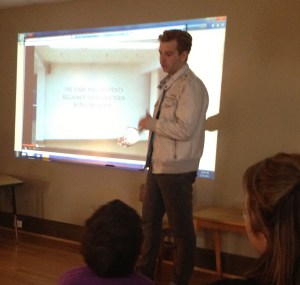
Mr. Burkholder was first to visit the elementary kids’ art class, and Mr. Owen stopped by 2 days later. Presenting to schoolchildren is something Baltimore Love Project (BLP) does frequently because kids are so receptive to their message, but TNCS elementary students were their youngest group so far. Mr. Burkholder began by asking the group, “What is art?” to which he received some pretty insightful answers, such as “art is a mixture of colors . . . imagination” and “art is making up your own theme.” He next showed the group several slides and asked whether what was depicted there qualified as art. When a Mark Rothko abstract painting flashed up on the projector screen, one boy said, “I see a portal leading to an imaginary scene . . .” (yes—he really said “portal!”) and another said, “it makes me feel really weird” and turned away. Needless to say, there were a lot of laughs that day!

BLP executive director Scott Burkholder

BLP executive director Scott Burkholder visited TNCS elementary art class March 19th.

Once the merriment died down, the group talked about different kinds of art—sculpture, music, performance art, collage, television shows, even cooking. “Humans use art,” said Mr. Burkholder, to “tell how we feel, to express an idea.” And with that, he threw out the “biggie.”

Why Does Art Matter?

The elementary students initially had mostly practical answers to this question, such as, “without art, we couldn’t make buildings,” but Mr. Burkholder pushed them to examine a deeper meaning. With Dorothea Lange’s Migrant Mother up on the screen, he explained that art should evoke strong feelings and encourage discussion. “Art gives us the opportunity to engage with it and with what the artist may have been feeling. It helps us think about what we are feeling, too,” he said. Art also helps us understand what our world is really like or puts a face to a story that might have otherwise been overlooked, such as the Lange photography does. Or, art might express something you wish were true. “It’s powerful to be able to share your ideas about the world with other people,” said Mr. Burkholder, “If you have the opportunity to change the way people think, then you can change how they act.” With art, he says, you can change the world.
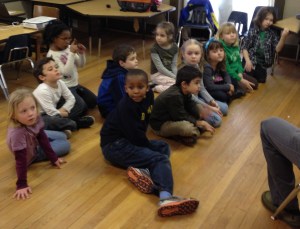
TNCS elementary art class

The elementary students wax poetic on their feelings about art with Baltimore Love Project’s Scott Burkholder.

As the visit drew to a close, the kids turned the tables on Mr. Burkholder, putting him on the spot. One girl asked him what he hopes to accomplish in his lifetime. It was a surprisingly mature question and revealed that she had really taken in his message. Mr. Burkholder did not miss a beat, however, and said simply, “I would like to help people value art.”
Q&A with Michael Owen

BLP artist Michael Owen demonstrated how collaborating on art can change environments and cultures in meaningful ways.

DIY Muraling

Mr. Owen’s visit took a slightly different tack, as you may have guessed it would. “I came here to show you some secrets about mural painting,” announced Baltimore’s reigning mural king. He showed the kids a time-lapse video of himself painting a LOVE mural (see it here) and then gave them the four-step list of instructions he uses for the BLP:

  1. Project a picture on a large vertical surface (i.e., a wall).
  2. Trace the picture with sidewalk chalk or pencil.
  3. Paint it in with primer.
  4. One day later, cover over with black paint.

Voilà! Mr. Owen then asked the kids what a LOVE mural makes them think of, feel, or do. Their responses ranged from profound to poignant. “It stops people from fighting,” said one; “I imagine what a lovely place Baltimore is,” said another. “It makes me think of the loved ones I’ve lost,” said one girl, tearing up. Mr. Owen must be accustomed to having such an effect on people. After all, he creates those murals, he says, “to inspire people to show how they love each other.” What really must have blown him away, though, was the response he got when he asked why the hands spelling out L-O-V-E on each mural are in black. “They can be anybody’s hands,” he began. “But there are four of them,” interrupted one child, “so it takes two people. That’s how the love starts to spread.”
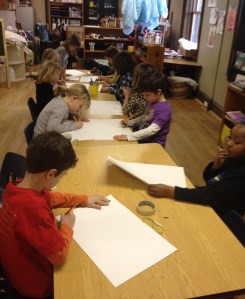
Sketchwork

TNCS elementary students sketch out their ideas for the mural.

By now the kids were literally itching to make some art. Inspired? Definitely. Having allowed all of their feelings and ideas to surface, they were now ready to turn them into something beautiful. “Have fun drawing,” said Mr. Owen, and rushed off to go inspire more people.

TNCS Kids Paint a . . .

Mural! Surprise! Art teacher Jenny Raccuglia said having BLP present was “really a very special treat.” Her idea all along was to have this lesson on public art culminate with her class creating their own mural. Like BLP, the students also wanted their mural concept to center on an inspirational word. There are currently more than 10 elementary students, so they needed a nice, big word to give each kid equal canvas space. See for yourselves what word these clever kids brought to colorful, glorious life in their collaborative work.

Friendship mural

The finished product shows friendship as conceptualized by the TNCS elementary students but also represents friendship in another way: the students joined together—engaged in this project together—in an act of joyful creation. It was made by friends to spread friendship. Way to go, kids!

“This engagement,” said Scott Burkholder, “is what it’s all about. . . In our society, we tend to appreciate art because of craft and aesthetic, but we miss important aspects like the idea, the concept.” Getting people engaged, talking, thinking—that’s the true value of art.

The Importance of Being Artistic

In a scholastic environment increasingly focused on science, math, and technology, the arts can get short shrift. This issue is not a new one, and yet, despite empirical data, loud protests from the vox populi, and common sense, the arts are always first on the chopping block. According to The Impact of Arts Education on Learning study, “The arts enhance the process of learning. The systems they nourish, which include our integrated sensory, attentional, cognitive, emotional, and motor capacities, are, in fact, the driving forces behind all other learning.” But education policymakers seem to persist in the belief that art is less important than the scientific disciplines.

Process-oriented Art

Not so at The New Century School, fortunately, where balance in all subjects is a primary goal, and the arts are as highly valued as anything else. Art teacher Jenny Raccuglia, with a B.F.A. from The Maryland Institute College of Art supplemented by classical art study at The Schuler School of Fine Art in Baltimore, originally began teaching at TNCS in their first year as Patterson Park Montessori and has been affiliated with the school ever since. The 2012–2013 schoolyear is her first year teaching dedicated art classes to all levels, pre-primary through elementary. She tailors classes to each level, so that no matter what their ages, kids are making the most of art class (see Art for All Levels below).

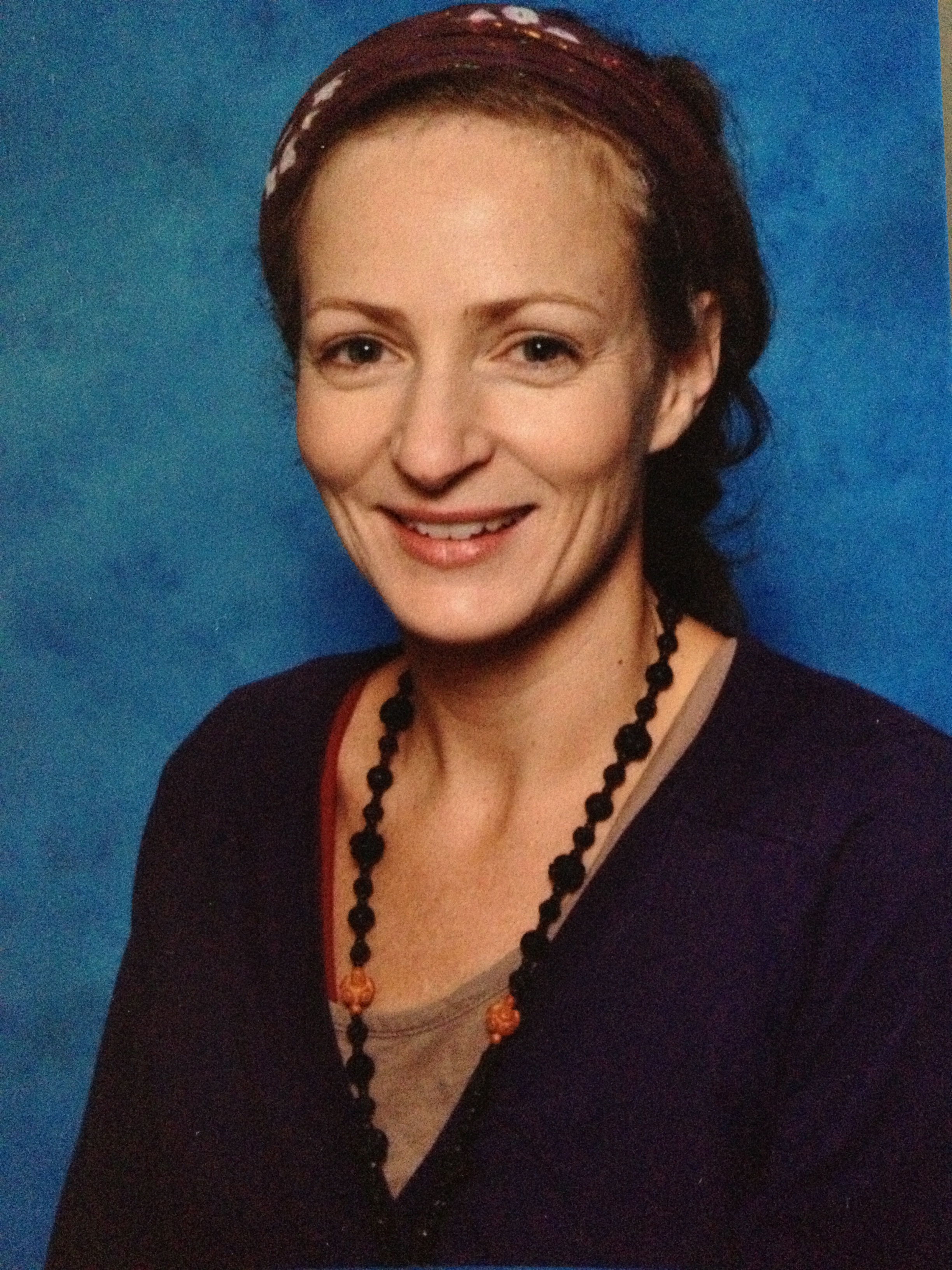
Jenny Raccuglia

Art teacher Jenny Raccuglia believes that art education is essential to human development

Mrs. Raccuglia’s approach to teaching art meshes very well with TNCS’s progressive, Montessori-inspired approach. Instead of perpetuating the dichotomy that traditional education is a teacher-led series of instructions to follow and Montessori is a student-centric and completely volitional (i.e., kids do what they want when they want, within reason), art class (and TNCS in general) merges the two. This union produces what Mrs. Raccuglia calls “process-oriented art” in which students are taught certain steps to create a project, but the spaces between those steps, says Mrs. Raccuglia, “leave a lot of room for individual interpretation.” The results are not only technically sound, but individual pieces show a broad spectrum of style, creativity, and  innovation. They’re really wonderful, in short.

Art for All Levels

Says Mrs. Raccuglia, “I approach each of the four groups [pre-primary through elementary levels] differently, but always with the goal of priming them for the next step.” Each group is assessed on age-appropriate manual dexterity and expression of creativity.

• Hands-on skills: In pre-primary (ages 2–3 years) classes, kids are taught the basics, like color-mixing. They learn what the materials are and how to use them appropriately (i.e., not to eat them, joked Mrs. Raccuglia). A typical pre-primary project is painting a paper mouse. Kids are given pre-cut mouse shapes to paint with a blotter, using their choice of color(s). This project gives them plenty of creative space and also takes into consideration that their manual dexterity is still developing. Grasping a blotter in their fists comes much more easily to them than holding a paintbrush. Thus, they build confidence by seeing the results of their handiwork while learning technique and effective material use. “Kids learn with their hands,” says Mrs. Raccuglia, “that’s how they explore the world. As long as they are confident in using the materials, I give them the opportunity to practice doing what they want with them.”


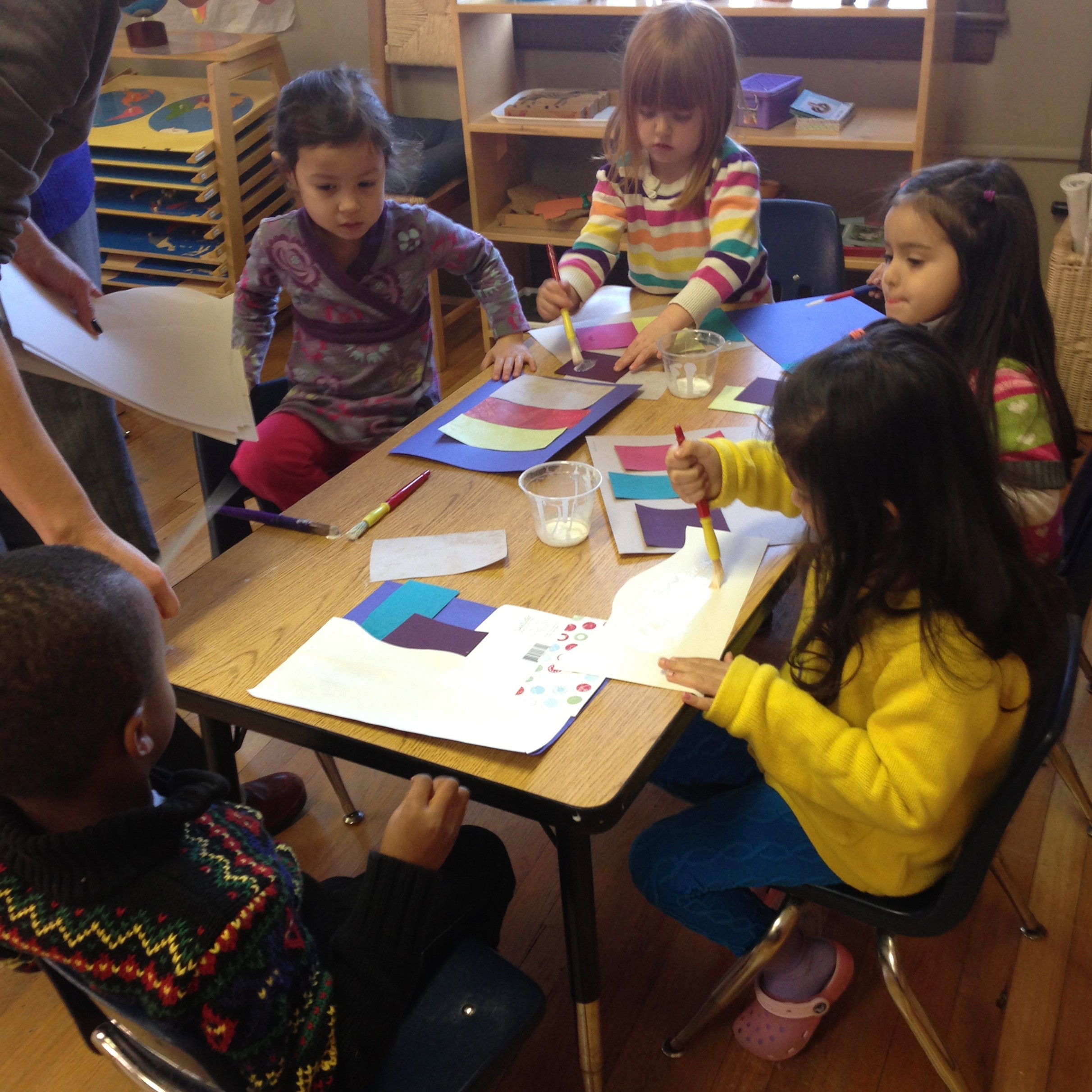
Primary art class

Primary students hard at work snipping, gluing, and arranging their own Snowy Days

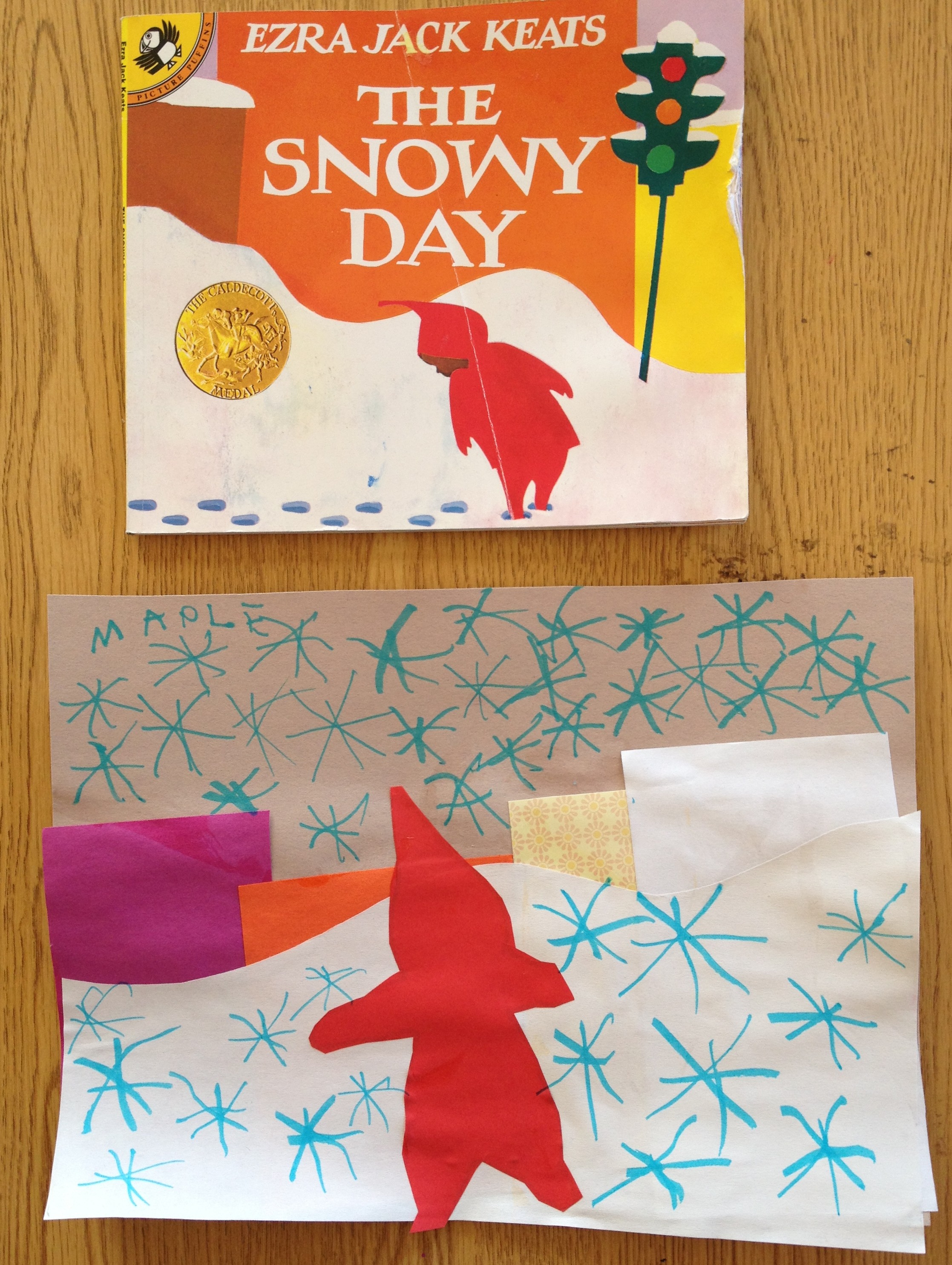
• Creative autonomy: In primary (ages 3–5 years) classes, kids continue to develop their new skills and are encouraged to try new ways of approaching tasks. Assignments vary, but skills such as gluing, painting, cleaning brushes, and cutting are reinforced periodically throughout the term. Classes begin with what Mrs. Raccuglia calls an “imagination sparker,” which is a storybook that inspires the class project. Beginning class with a story also helps kids at this age transition to a new work cycle; it helps them shift their focus. The Snowy Day, by Ezra Jack Keats, is a recent example of this project structure. After hearing the story, kids were asked to design their own interpretations, using paper cutouts similar to the book illustrations. Mrs. Raccuglia stresses that the students should approach the project in new ways, rather than simply reproducing the original artwork, to gain confidence in their ideas. This approach drove another recent art project, in which kids designed owls to roost in a tree hanging in the TNCS all-purpose room. Parents might have noticed quite a bit of variance in each owl, even though kids drew from the same sets of materials. Says Mrs. Raccuglia, “the eyes shouldn’t always have to go on the face.” That’s one good way of making an owl, she concedes, but it isn’t the only way, and those other ways can spark tremendous creativity in children.

Note the variety of materials and media this primary student used to interpret the assignment

Note the variety of materials and media this primary student used to interpret the assignment

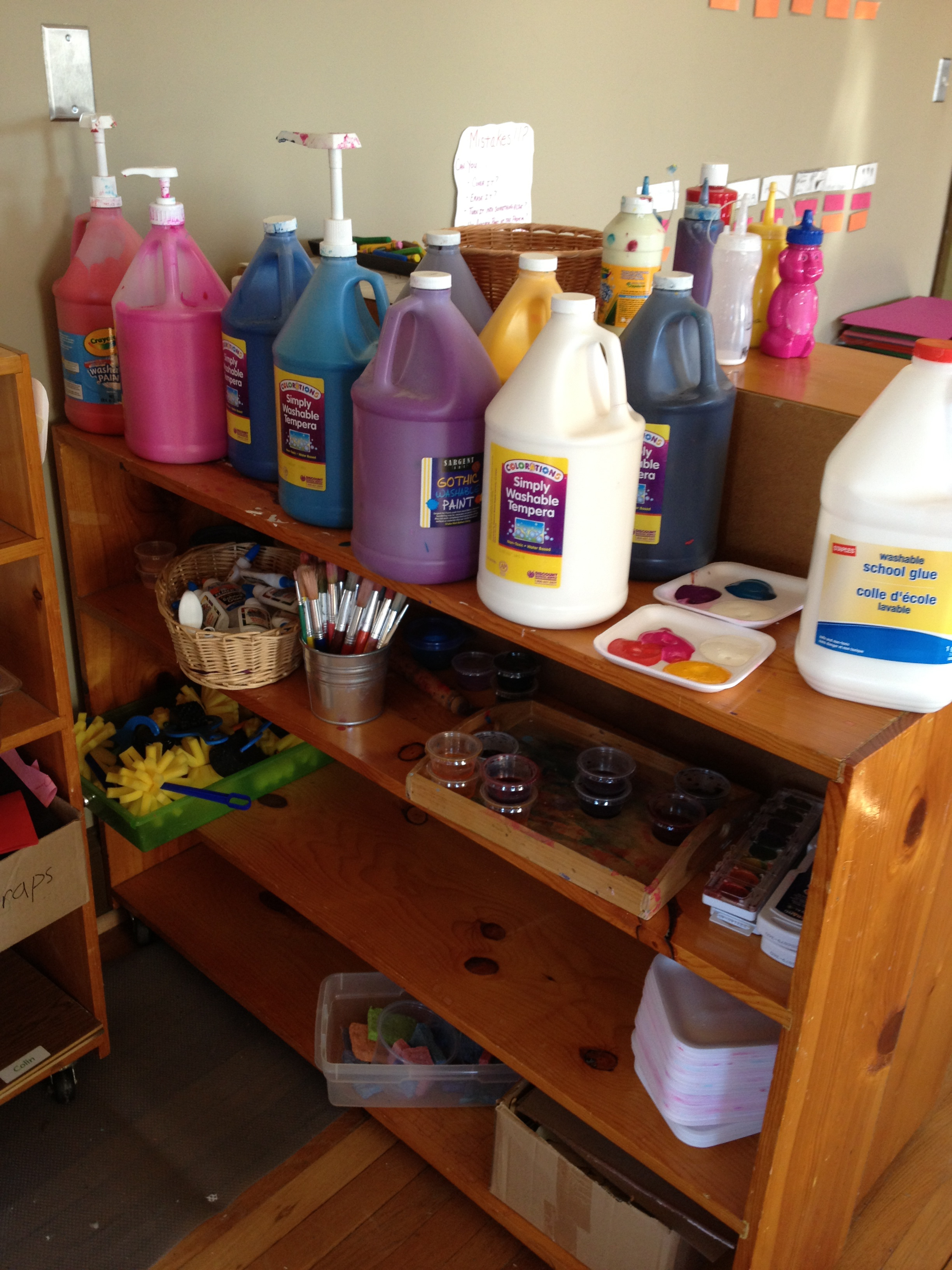
Art room

A variety of materials at the ready, placed Montessori-style within kids’ reach

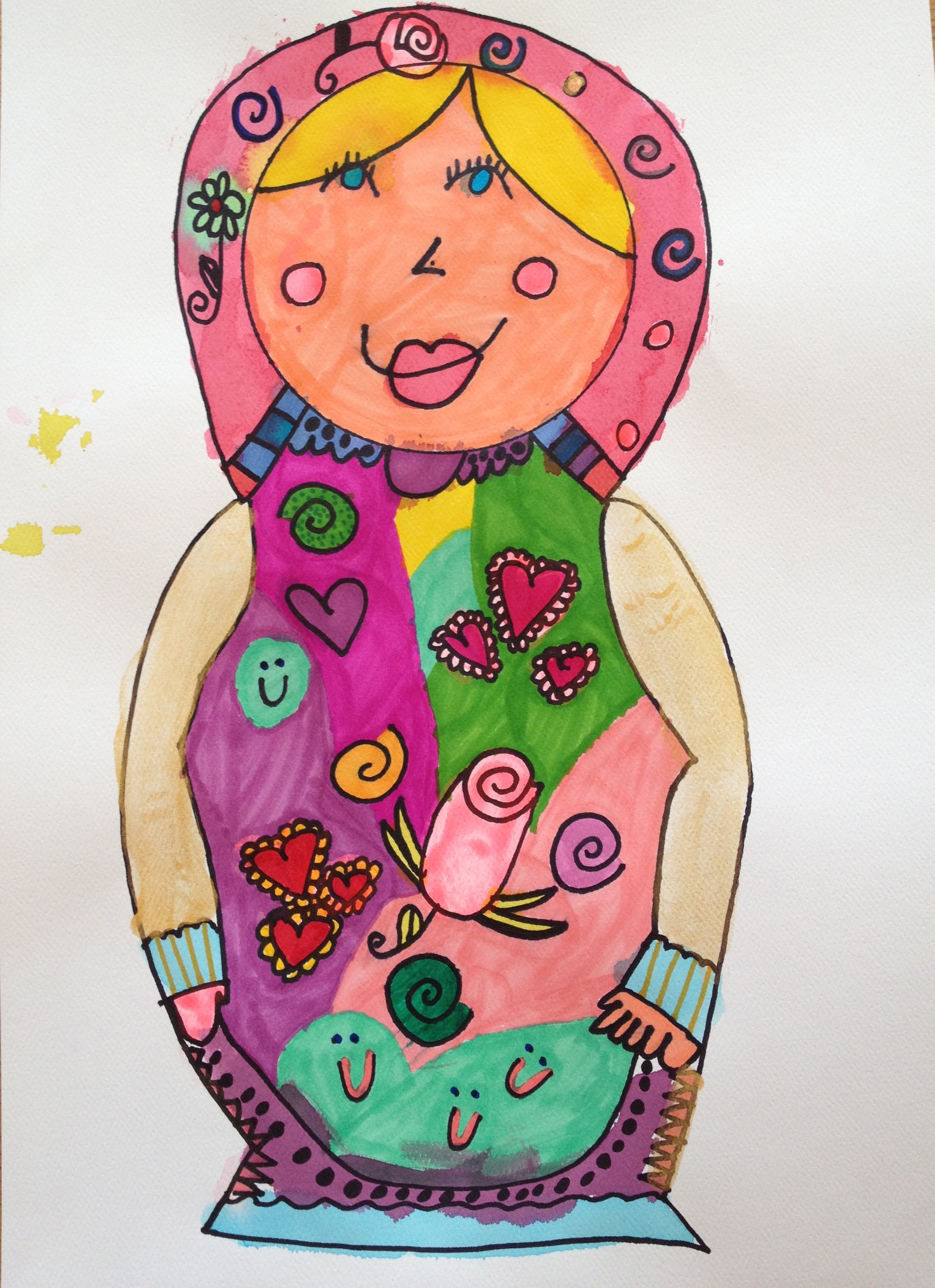
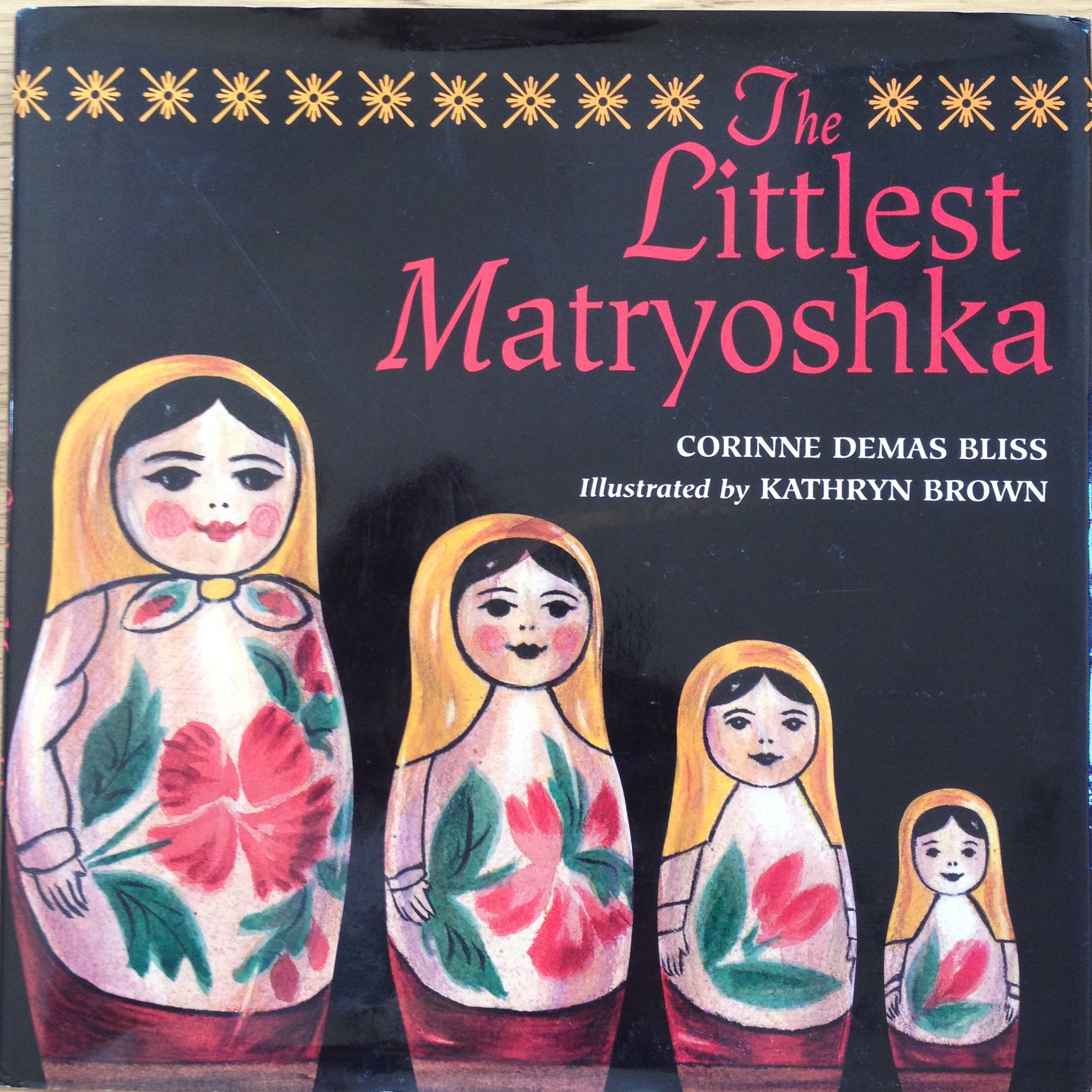
• Command of ideas: In kindergarten (approximately ages 5–6 years) classes, kids are further encouraged to explore. They have some technical fluency; now it’s time to really put it to use. Younger kids are willing to explore, according to Mrs. Raccuglia, but by this age they tend to think there’s only one right way to approach a project. We talked about why that is. By age 5 years or so, kids have begun to develop self-consciousness, to see themselves outside of themselves. This is a natural part of human development, but the initial reaction to this new awareness of self can be self-doubt and a tendency to retreat. So, Mrs. Raccuglia counters that with encouragement to trust themselves. “I don’t necessarily set out materials and say, ‘have at it,’ ” she says, “but I do introduce the project, set boundaries, and then leave plenty of room for experimentation.” It’s clearly working. In a project inspired by The Littlest Matryoshka (pictured at bottom), by Corrine Demas Bliss, kids designed their own matryoshka. Given just the basic outline of the doll, kids then had free range to design their doll however they chose. Other than their graduated sizes, sets of nesting dolls don’t vary, so this was a real test of kids’ ability to produce something according to their own lights. Just see how well they rose to the challenge!

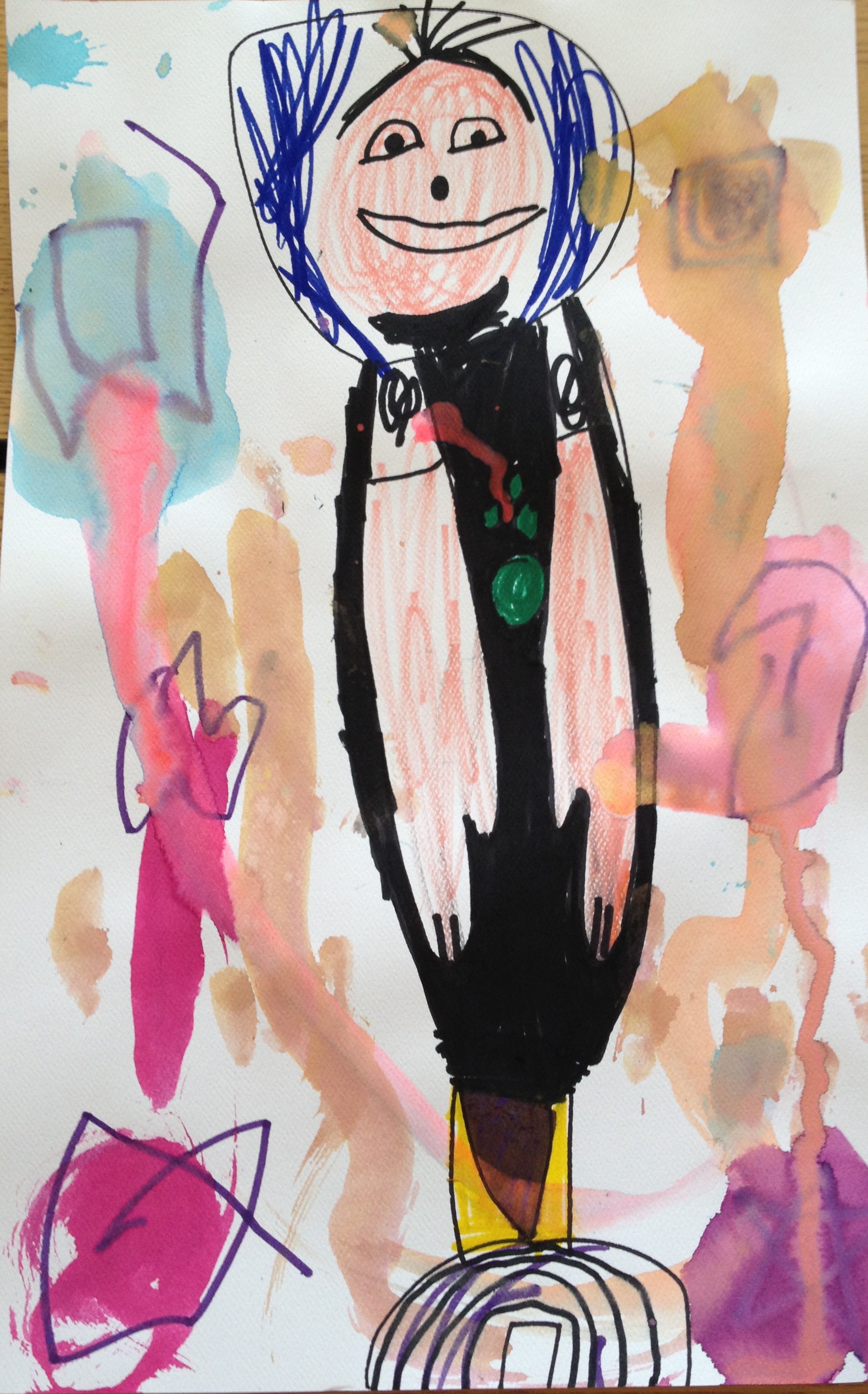
This student brings a bit of masculine perspective to his doll---isn't it amazing how differently the individual kids see the same assignment?

This student brings a bit of masculine perspective to his doll—isn’t it amazing how differently the individual kids see the same assignment?

Although the doll in the story was a brunette, the student who created this lovely rendition chose to give her version more familiar coloring

Although the doll in the story was a brunette, the student who created this lovely rendition chose to give her version more familiar coloring

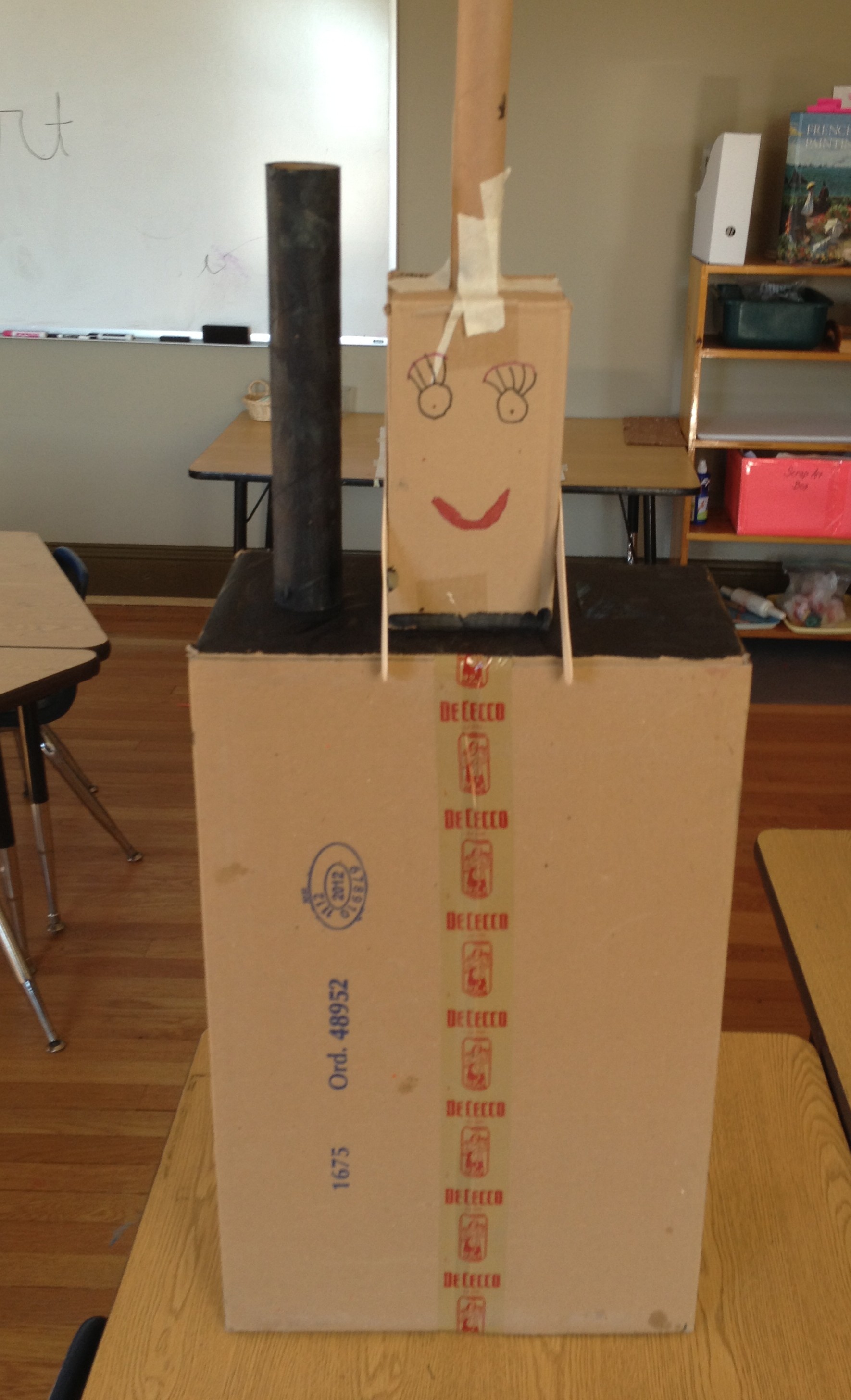
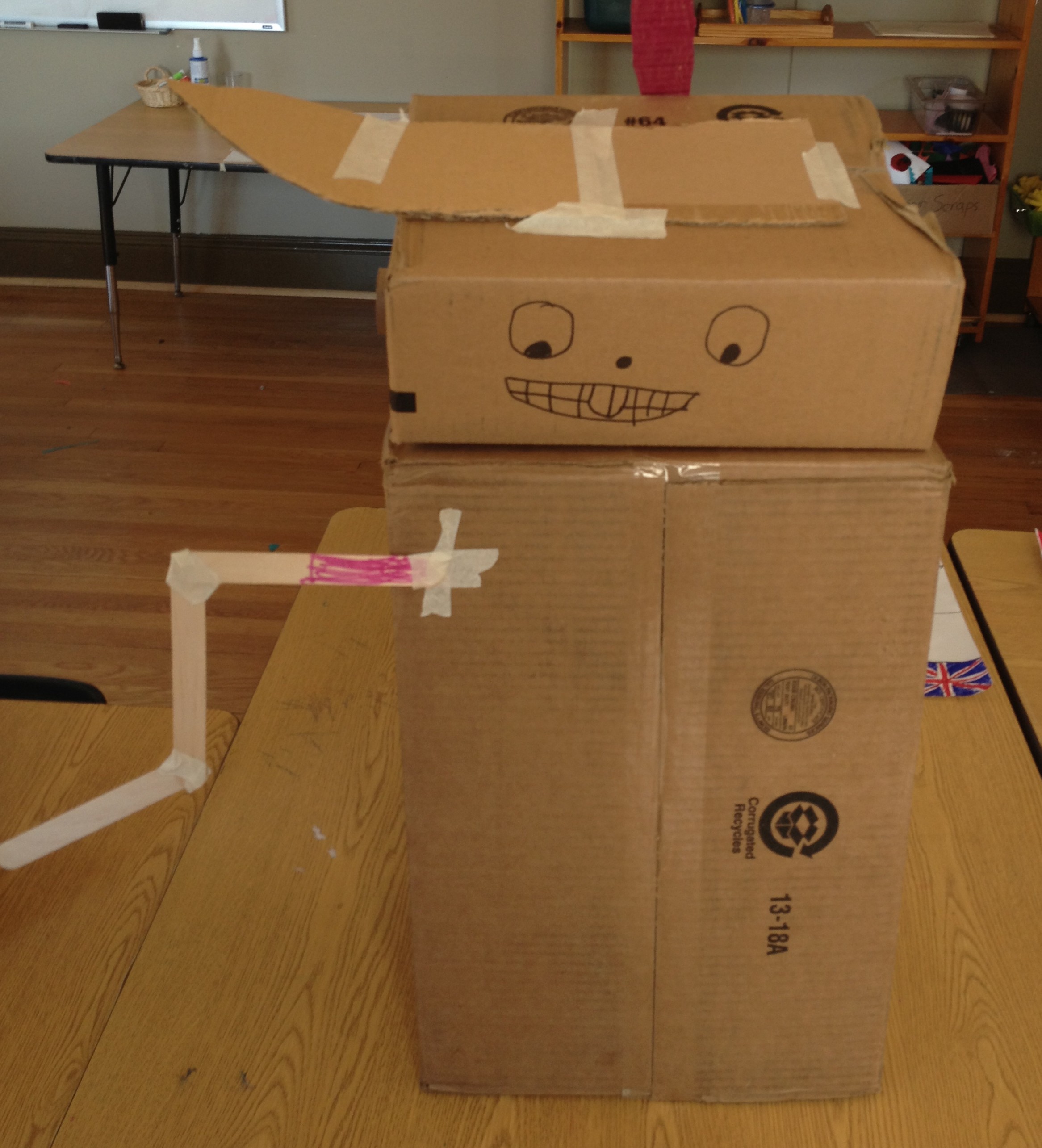
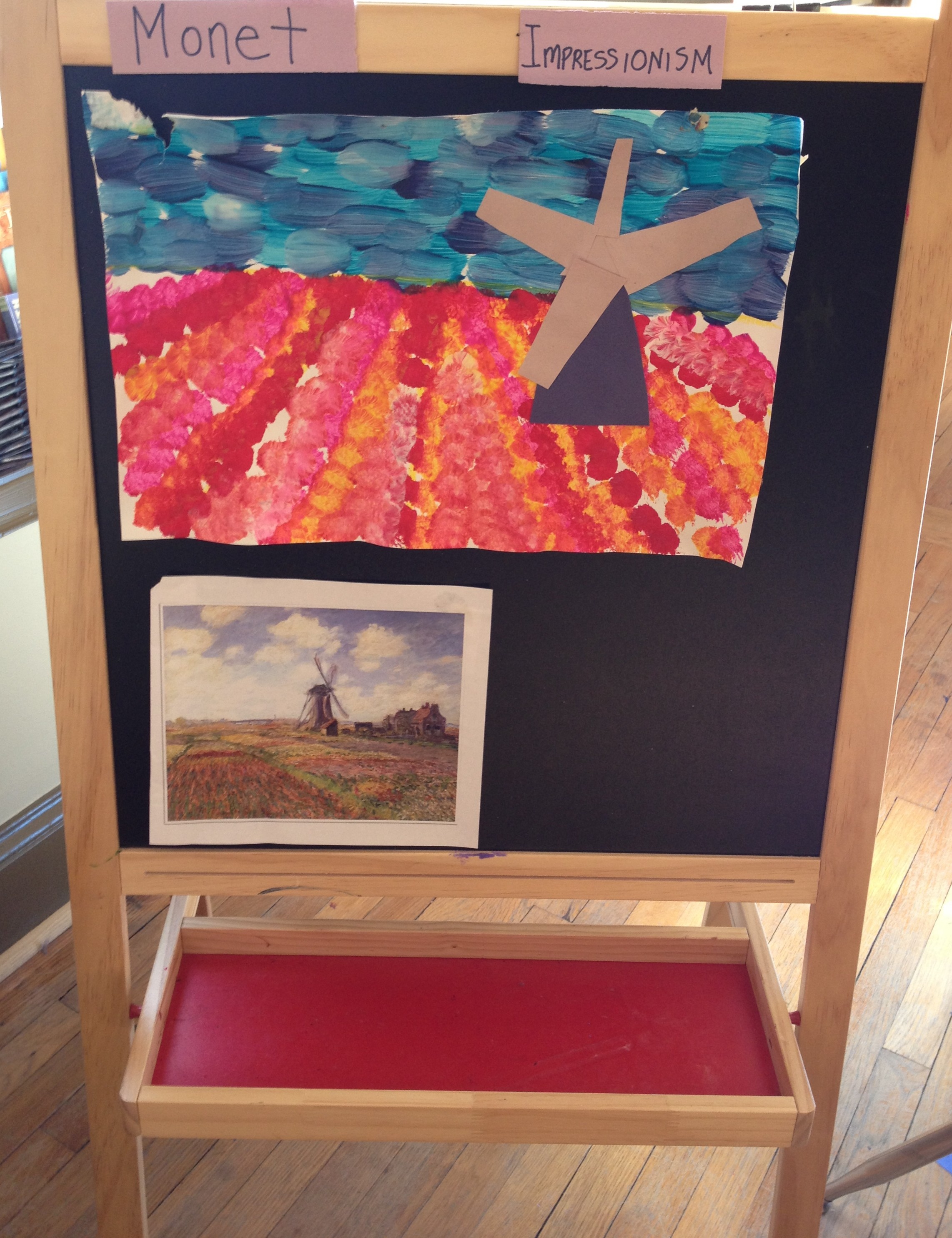
• Being artists: In elementary (ages 6 years and up) classes, kids have mastered basic techniques and are ready for new aspects of art to explore. They learn about artists, for example, and art history. More importantly, they learn how to think like artists. “The big secret of being an artist is not being afraid to make mistakes to get to something you like. Being an artist is fearlessly making mistakes,” says Mrs. Raccuglia. One way she fosters this receptivity to the experience of making art is by giving the elementary students “free days,” during which they present an idea to her, and she makes it happen by supplying materials and advice, if necessary. So, after a recent lesson about Da Vinci, the kids were naturally enthused about inventions and suggested building robots. “The main thing is to capture that idea,” says Mrs. Raccuglia, “and then we work out the how.” If the robots (pictured) are any indication, those kids feel incredibly empowered by this kind of trust and collaboration. The students also keep portfolios at this level, which they are encouraged to go back through periodically to finish up or revise individual pieces.

This robot likes to look her best

This robot likes to look her best

Elementary kids "invented" these robots after a lesson on Leonardo Da Vinci

Elementary kids “invented” these robots after a lesson on Leonardo Da Vinci

Postscript: Why Art?

It may be safe to assume that anyone reading this post has already answered that question for him or herself, but a new book on the subject could offer some new twists. In The Artistic Edge, author Lisa Phillips suggests that art is critical to teaching the life skills that kids will need to navigate adulthood. Phillips also lists the Top 10 skills children learn from the arts, a list that promotes qualities like perseverance, similar to those gaining currency by education researchers like Paul Tough, author of How Children Succeed and profiled in Getting the Education Nitty Gritty in this blog last November.

Mrs. Raccuglia says that Phillips’ list aligns closely with her own goals, and that’s easy to see. Creativity, Confidence, and Problem-solving (also a recurrent theme of this blog), are the top three on the list, and those themes cropped up again and again during our discussion (which, by the way, preceded publication of Phillips’ list). “If there’s one thing I want to successfully teach the kids, it’s how to build skills but stay open,” she says. Expanding on that thought, she says she often asks herself, “What is my role?” as she designs a particular project or lesson. “Not all of these kids will become artists, so what can I teach them that will help them through life? The ability to trust in their imagination and their own ideas,” she finishes emphatically.

What better qualities to instill in kids facing a very new and different world?

A lesson that incorporates an artist, a style, spatial perspective, and multiple media

A lesson that incorporates an artist, a style, spatial perspective, and multiple media

Projects start with the "imagination sparker"

Primary and kindergarten projects start with the “imagination sparker”

Have an anecdote, question, or comment to share? Your participation in this important discussion is welcome!