In China, the weeks leading up to the Lunar New Year, culminating on February 16th this year, are generally a time off for many Chinese. For the past few years, The New Century School has hosted many visitors from China coinciding with this break, with 2018 seeing the largest overall numbers of visitors yet.
The first group comprised 15 university students, who clearly wanted to have a good time in addition to learning about TNCS’s unique educational approach. They had fun and made sure everyone around them did as well. They all came from various cities in Hunan Province—Chongqing (Holly), Wugang (Phoebe), Zhuzou (Dragon), Changde (Bella), Zhangjiaie (Jamie), Beijing (Elaine), Hengyang (Tiffany), Wenzhou (Bunny), Urumqi (Michelle), and the capital Changsha (Fire, Miki, Ishine, Shirley, Jane, and Smart).
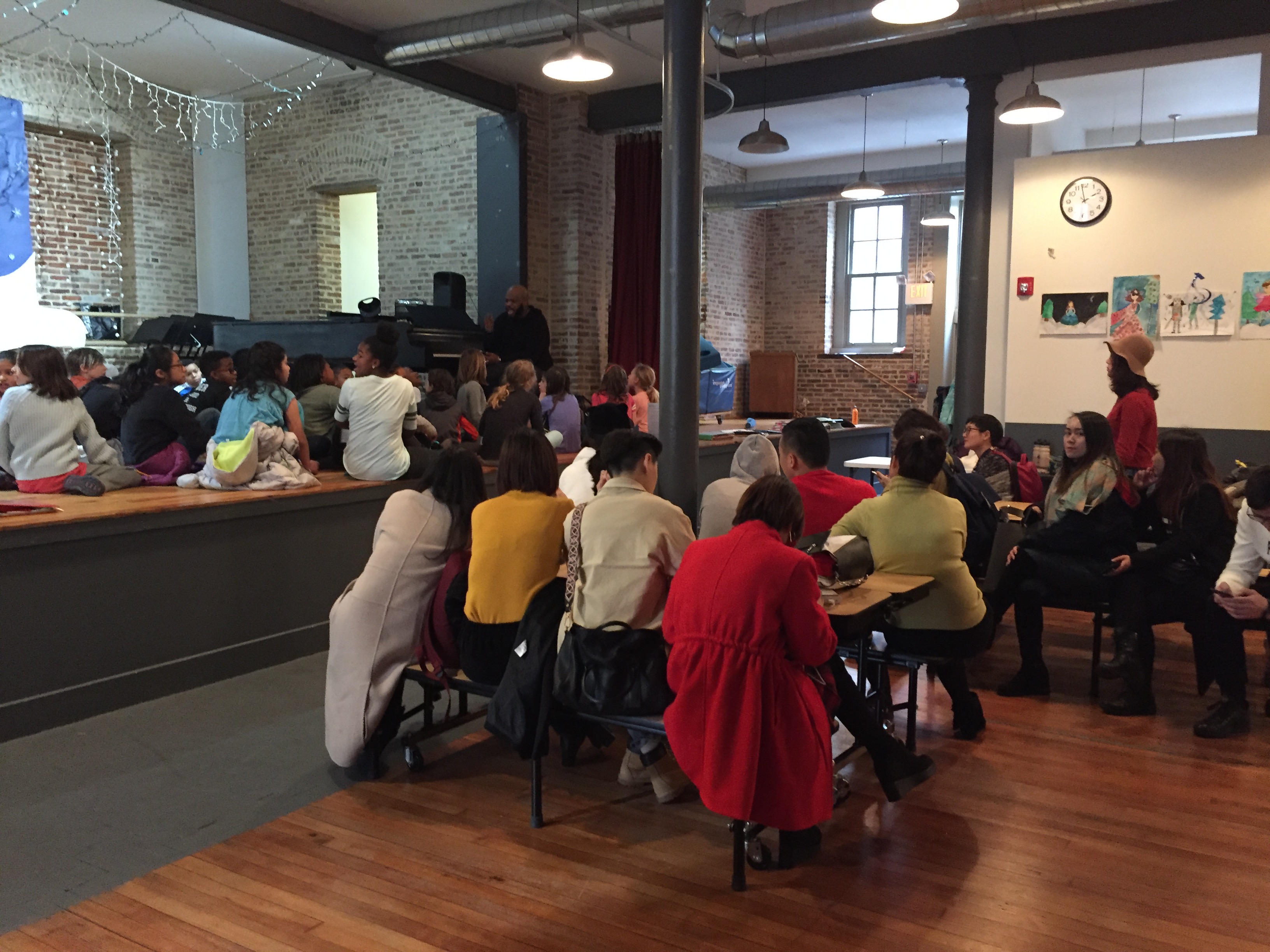
Their stay at TNCS was brief, as they had lots of sightseeing around the country on their trip itinerary. So, to make sure they got the most of their time here, their 2 days at TNCS were very full. They visited classrooms and interacted with students among other activities, divided into two alternating groups. They were eager to learn firsthand how education is handled in an independent school, and they were very receptive to the innovative ideas presented to them.
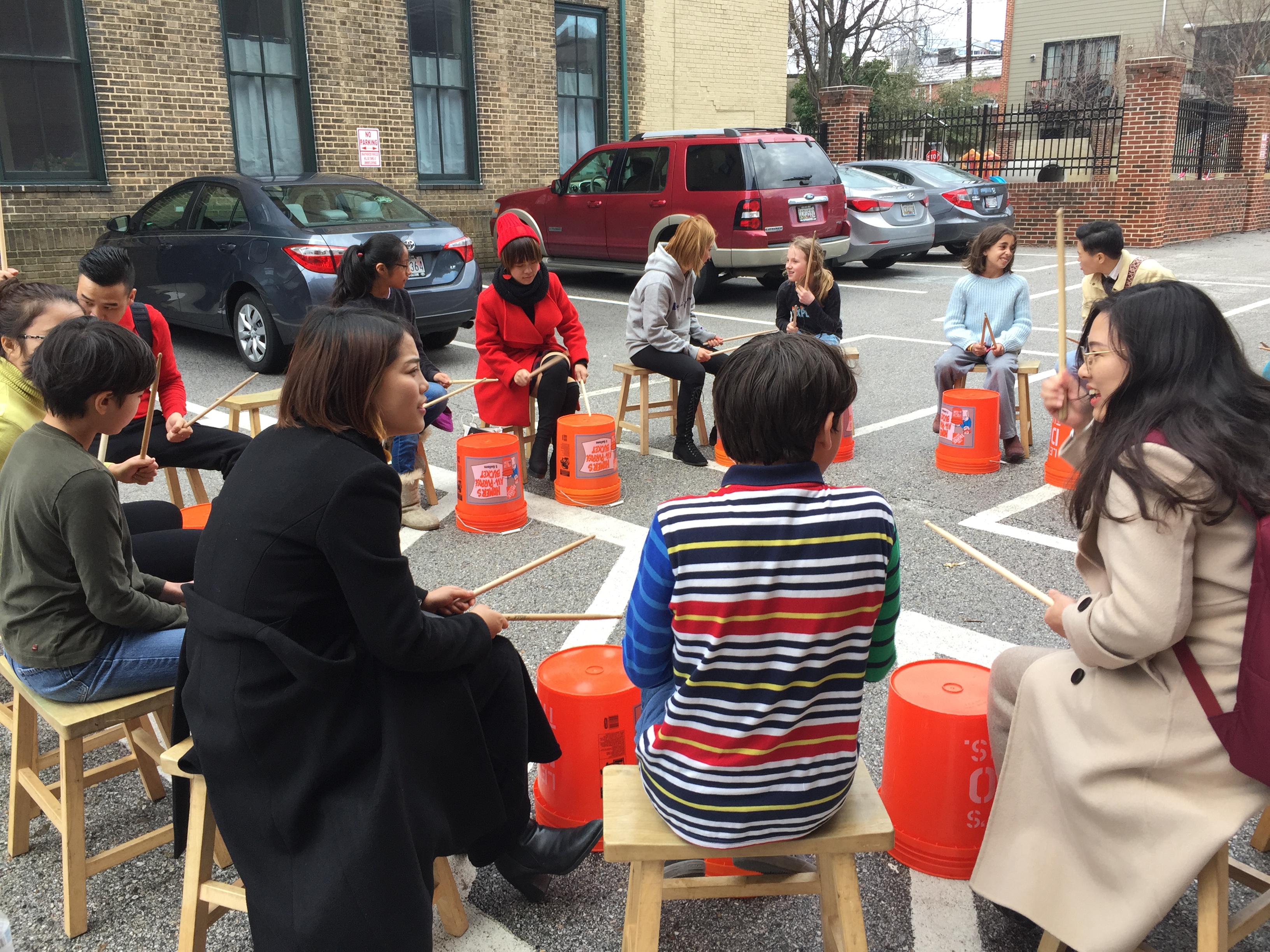
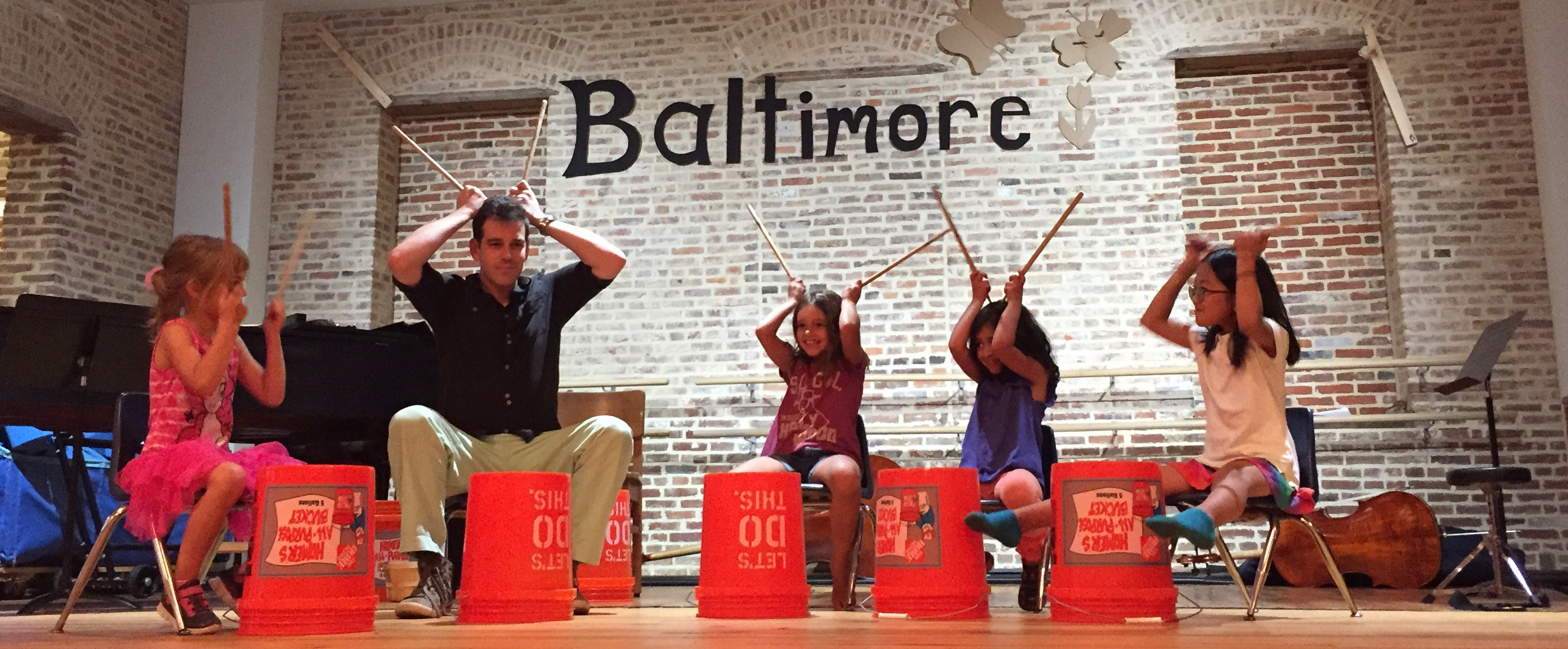
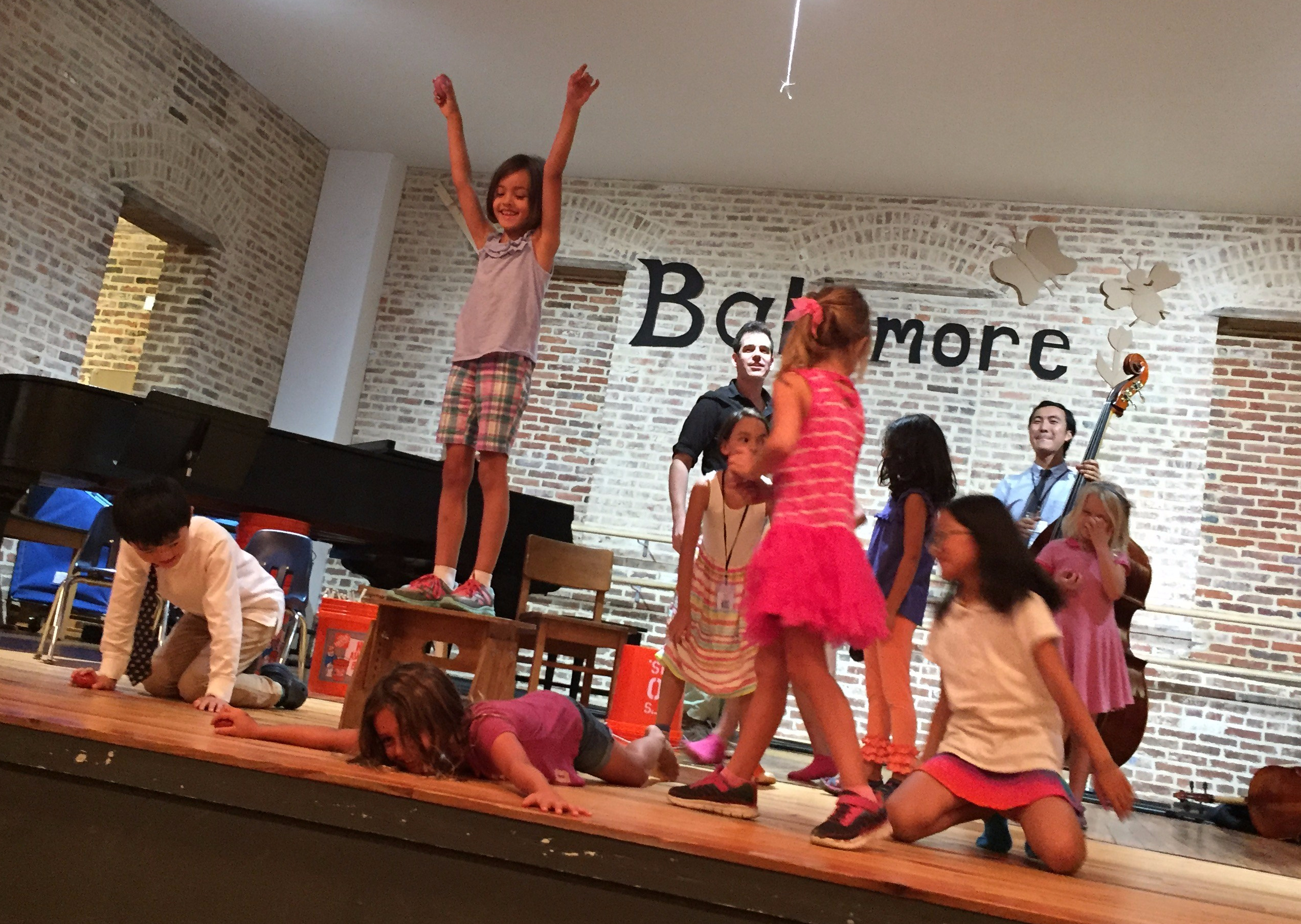
They even got the chance to participate in some group exercises designed to get them thinking and problem-solving creatively. While one group played “Lost at Sea” in the Ozone Snack Bar with half of the upper elementary students, the second group joined the remaining upper elementary students in a bucket band with Mr. Yoshi. The late January day was surprisingly warm, so the bucket band played outside.
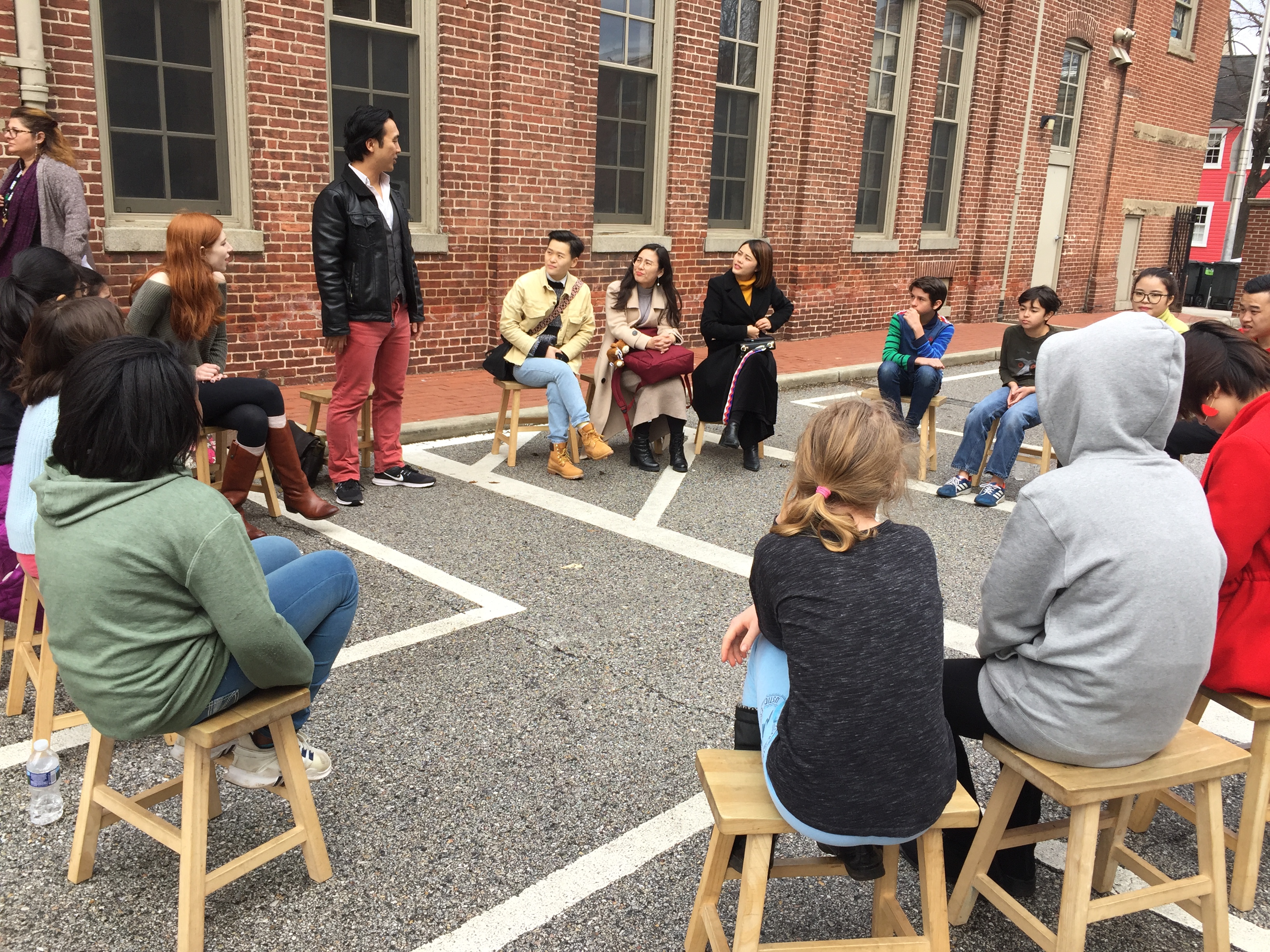
Not only was it a special treat to be outside in the middle of winter, but there were some subtle messages here as well. The Chinese university students saw that TNCS is an urban school, asphalt and all, and they also saw that with so much going on around the school campus, adaptability and flexibility are necessary (not to mention often make for fun surprises). Mr. Yoshi first gave a short talk, describing his background and explaining that he is a proponent of El Sistema—using music to promote social change. From there, he demonstrated some simple techniques until the group was able to play “Rufus My Dog.”
Then, it was time for the group to go off script and add their own flourishes, working in pairs of one university student and one TNCS student.
They all enjoyed that a lot. As one put it, “This kind of activity makes kids very creative and is very interesting. In China we just repeat, repeat, repeat.”
Back in the Ozone, TNCS Co-Founder and Executive Director Roberta Faux led the group in playing “Lost at Sea,” working in teams of four or five. “Imagine you chartered a yacht and are sailing from Baltimore to New York,” she instructed. “In 100 miles, your boat blows up. You’re on a little raft, wearing a life vest waiting to be rescued. There are 15 items listed. Number your paper from 1 to 15 and rank the items you would want from most to least. There are no right or wrong answers, and you have 5 minutes.”
The results varied widely, but no teams would have survived and only one individual scored high enough to just barely make it! Despite the high number of casualties, this exercise got everyone thinking as well as collaborating. Oh, and laughing.
Download the rules and how to play here. It’s loads of fun and would be perfect for Family Game Night!
The day ended with a cooking lesson and dinner from Chef Danielle.
The group left Baltimore a day later but were unanimous in saying that they would not forget TNCS and the fun they had while there!
Part 2 continues next week when Immersed checks in with the second group who came to visit TNCS during the Lunar New Year holiday. Stay tuned!
This year, The New Century School had the very special honor of hosting Baltimore’s first-ever American Music System (AMS) camp from August 14th through 18th. Directed by TNCS’s acclaimed strings instructor Yoshiaki Horiguchi, the camp was an unqualified success, and “Mr. Yoshi” and all plan to bring AMS camp to Baltimore (at TNCS) annually. If you missed out this time, mark you calendars for next, because a lot of magic happened over the course of that camp week.
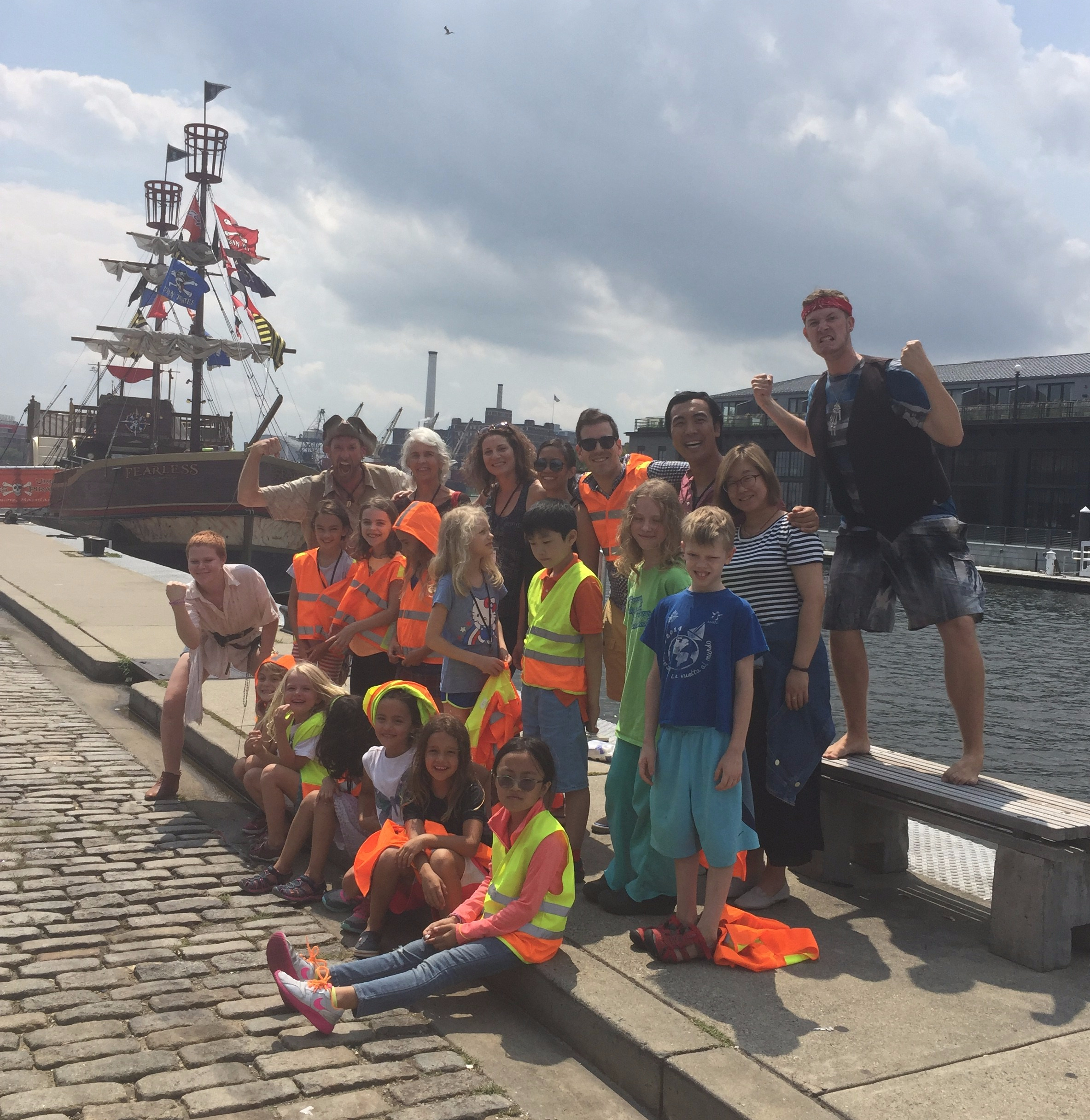
According to their website, AMS-Baltimore gives kids in grades 1–8 “a chance to take part in the musical fabric of America.” What this means was described eloquently by the faculty who taught this year’s camp and follows, but in many ways, the video below captures the essence. One tenet of AMS is that context is relevant—where you make music influences the music, and the music you make in turn influences your surroundings. So, on a walk through Fell’s Point to let campers stretch their legs and grab a quick group photo, when the spirit struck, everyone joined together in a song by the water.
This lovely moment came right on the heels of the aforementioned group photo being photobombed by the local pirates, much to everyone’s delight—again, context is everything! Send out love . . . arrrr!
The Who and the How
AMS-Baltimore camp would not have been the same without the amazing instructors who took a week out of their lives to come to Baltimore and share their talents and their sheer wonderfulness.
Pamela Wiley
It all started with Pamela Wiley, who teaches fiddle and violin. She helped Mark O’Connor develop the O’Connor Method (an approach to teaching strings), which eventually broadened to the American Music System Camp. She met Yoshi at a teacher training she was holding in Napa, CA in 2013 and was taken by his enthusiasm. For the next 3 years, he taught at her camp in Charleston, SC. He loved the concept so much that he expressed his dream of bringing the camp to Baltimore. As the head of AMS, Pam likes to be at all the camps around the country to make sure that the concept is being faithfully implemented.
One of the things that we really want to accomplish is that the kids actually learn something at the camp. They learn the different styles of American music, they learn to play a little bit in each style, and they learn to get comfortable making music together—not just their own skills but the concept of making music with their peers.
And that’s one of the primary principles, that at some point each day, kids play music together in “recitals.” These recitals are relatively unstructured and a way for the kids to experience the joy of playing music together but also to enhance their musicianship exponentially. Pam explains: “The kids get together with friends, and they put together little bands. Then they go up on stage and do a little arrangement of a song they’ve learned. It’s very nice, really truly educational. We teachers stay out of this part of the day.” Pam herself learned to fiddle in a similar way. Having played violin in a symphony orchestra for 28 years, she wanted to be able to jam with her guitar- and banjo-playing friends and so became a “back-porch fiddler” to join in the fun.
Another principle is what Pam calls the “3M principle,” an acronym for music more than melody. “The AMS is holistic music. With most instruments, you learn melodies, one note to the next. Whereas with us, from the beginning, we incorporate harmony and rhythm and awareness of the chord changes,” she explained.
American music itself is also an essential component. “We incorporate as many styles of American music, as possible, including classical. There are several different kinds of fiddling, bluegrass, old time, and Irish, and then there’s jazz, ragtime, pop, and folk music. We also encourage singing.” This music connects us to our history and culture.
We are playing songs that our ancestors played, all of our ancestors played 300 or 400 years ago, so we are actually living American history. We’re playing the same music, the same songs, on the same instrument. We’re doing the real thing, and we try to talk about songs from the Civil War, the Revolutionary War. We’re playing “Cumberland Gap” in the old-time class and talking about where Cumberland Gap is and what a really big part of American history it was.
In addition to Yoshi and Pam, the team of instructors included Pattie Kinlaw from Greenville, NC; Rob Flax from Boston, MA; and Melissa Tong from New York, NY. “I’ve put this faculty together from the teacher-training classes I did from around the country,” said Pam. “I did about 35 states and could just tell from the teacher-training classes just who was going to fit into to this, and those are the people you see at the camp. They all wouldn’t know each other but for me, and I’m so really proud of that.”
It’s clear why she would be proud. In Yoshi’s words:
The most inspiring thing to me about the faculty who are working here is that they just don’t teach at a world class level, but they’re also playing at a world class level. There are very few people you’ll find who can do both. So the thing about this faculty is that every one of them have been amazing players and are trained and study their teaching as hard as they do, so you can tell that they are really committed to the kids and making sure that the music spirit kind of lives through the kids. I’m really inspired by that and glad to be able to work with them again.
Yoshiaki Horiguchi
Yoshi has been profiled here before (see TNCS Launches Strings Program Under Yoshiaki Horiguchi), but he has a lot more to say about his new role as AMS-Baltimore director. He explains that not actively teaching gave him a whole new perspective: “I am able to observe and absorb the teaching styles of these phenomenal teachers. It’s kind of nice to complete that circle.” He also got to see camp from a new vantage point:
It provides a nice balance between the kind of classical training that this area has loads of and that kind of jamming, improvising mindset. It’s nice musically for the kids but also for finding a balance between perfectionism and improvising through life. Once you’re out of school there are a lot more decisions that you have to make on your own. So starting that mindset early through music education is really a great thing. I’m seeing the students learn how to improvise and take more ownership in the decisions that they make. Instead of being told what note they have to play through sheet music or their teachers telling them it has to be a certain way, it’s them asking the questions that can be tough to ask, like, ‘Why am I doing this?’ or ‘What if I don’t do it, what happens?’ and realizing that the worst thing that happens is you play a wrong note, you learn from it, and you just move on. Seeing that manifest itself more concretely in music is a really great thing. Hopefully, they can take that out into their lives.
Jamming, it turns out, becomes a very good metaphor for resilience, and that’s part of why this camp is so vitally important to the dedicated instructors who give so much of themselves to hold it year after year. Music is art, wonder, humanity, math . . . and a vehicle for developing good people. But how do you get kids ages 5 years to 11 years to jam, exactly?
At first it was a little tough to get the kids to start a jam session, which is why we have most of the kids taking a ‘how to jam’ class. Imagine a classically trained player who has never performed anything before it’s perfected now being asked to play something on the spot that he or she has never seen. Having that mindset of the classical player and entering a jam session where mistakes are encouraged and kind of expected is challenging. So those two contradicting ideas were present at the beginning and everyone was a little bit shy. But over the course of the week, they realized that’s kind of the process. You are in a jam session, and you quietly try to figure out the notes. It’s okay to play wrong notes, and eventually you’ll play more and more notes that you know fit in certain parts of the song until the song is over. And that’s your jam session—and it’s okay, you don’t have to play it perfectly.
Pattie Kinlaw
As a violinist and fiddle player, Pattie Kinlaw teaches classical as well as American roots music and specializes in bluegrass. Enthusiastic and energetic, she says she probably had as much fun as the kids did during camp.
This week has been great! The kids are learning all different tunes, ways to play, and ways to work together. They are a range of ages and also a range of abilities, but, as teachers, and especially because this is a non-method camp, we just want the kids to interact with one another, create music with one another, and make decisions about their own creativity—just really get out of the box. It seems to work really well on various levels.
Although this wasn’t her first visit to Baltimore, she appreciated the opportunity to get to know it a little better, “to hang out, get a feel for the city, get vibe of the people. It’s been a very wonderful experience.” Back in North Carolina where she both teaches and plays, her ensemble Hank, Pattie, and the Current just released their second album.
Rob Flax
“I play things with strings, I hit stuff, and I sing. I consider myself an artist, teacher, scholar, an instrumentalist, songwriter, composer, producer, and educator,” said Rob, whose sense of fun is immediately apparent.
I’m a multi-instrumentalist and I play a lot of different instruments. I’m a strong believer in multi-instrumentalism, and I think that it was something that was very valuable for me. So I am teaching, officially, violin technique, and co-conducting an orchestra here at camp, and I’m also teaching drumming on buckets, and shakers, and other hand percussion. I am here on faculty as a bassist and as a mandolin teacher as well. I’m not teaching much mandolin or bass, but I am playing those roles as needed. Everybody in all of my classes will sing as well, because I’m a strong believer in singing as part of that multi-instrumental strategy. There’s also a little bit of dancing here and there—that should be connected to music, I think, especially with the drumming classes.
He isn’t kidding, as you can see here:
He also enjoyed camp very much, saying it went “fantastically well.” “This is the first year of this camp, and everything is running very smoothly. The faculty is outstanding—I’m really honored to be working with these tremendous musicians and educators. The kids are all very enthusiastic, which helps, too.” During his downtime, Rob found bands to jam with all over Baltimore.
“All the faculty are amazing to watch teach. The kids look like they’re having a good time, and they’re getting a nice balance between music time on their own instruments and music making on other instruments.”–Yoshi Horiguchi
Melissa Tong
As a freelance violinist, pianist, and singer, Melissa plays with orchestras as well as rock bands, pop artists, and singer/songwriters in addition to her own blues band. She also sits in on recording sessions and plays on Broadway.
How she has time to teach AMS camp is a mystery, yet it’s clear why she’s here:
It’s been really inspiring to watch the students blossom throughout the week. On day one, everyone is naturally hesitant and shy, and we’re throwing a lot of new ideas and experiences at them. Then, to watch them open up and embrace it; to jump at the opportunities and take control; to start arranging their own tunes, organizing bands, and performing at the recitals has been really beautiful. One student in particular, who is visiting from China for the summer and speaks basically no English, was at first not engaging in the group activities. But, as the week went on, we have found music, of course, to be the universal language and he has really come around. Also, the kids have started counting off in Chinese for him. When he had his first recital, I almost started crying when he hopped on stage.
Melissa has friends in Baltimore so was able to meet up with them during her spare time as well as get out to see some shows and experience the Baltimore restaurant scene. She also tapped into the Baltimore acro-yoga community and made some new friends while upside down.
As each of her colleagues did, she felt it important to mention how special their coming together is. “We’re all a family; it’s hugely important for us to just get together for camp. We feel like the dream team. We really wouldn’t want to be working with anyone else.” “I hope that we can keep growing it,” she added. “I congratulate Yoshi and the school and community for a great first year.”
Final Concert
On the last day of camp, parents and families were invited to a performance of all the great American (and other) music their children so enjoyed learning throughout their glorious week. From instrumentation to vocalizing to “learning to jam” class, they were immersed in music and being musicians. Here are their songs in the order they were played.
South Appalachian Old Time Class
Blues Class
Piano Class
Guitar Class
Violin Class
Cello Class
How to Jam Class
Meyer Orchestra
Ungar Orchestra
AMS-Baltimore Choir
And Thank You, Host Families!
Said Yoshi, “The community has been amazing also, between the hosts and the area around here. The hosts especially have been so incredible to house our faculty for the week and make them feel really welcome. I’ve gotten word from all of the faculty that they’re really enjoying where they’re staying.”
“Making music should be a communal thing and it should be accessible to everyone.” –Yoshiaki Horiguchi.
This year at The New Century School, Music Education, although always an essential component of the curriculum, has grown a new branch. Beginning instruction in cello and violin as well as an intermediate-level String Ensemble have just entered their third month, thanks to the arrival of strings teacher Yoshiaki Horiguchi.
Meet Yoshi
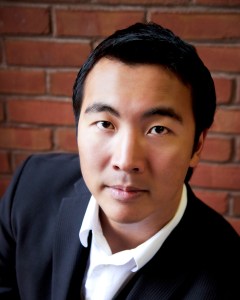
Born in Tokyo, Japan, “Yoshi,” as he likes to be known, moved to Washington, D.C. when he was 5 years old and attended Horace Mann Elementary School From there, he moved to Maryland’s Montgomery County, where he completed schooling. After graduating as a Linehan Artists Scholar from the University of Maryland, Baltimore County (UMBC), and then taking a couple of years to play music on a freelance basis, Yoshi landed a full scholarship as an Aegon USA scholar at the Peabody Conservatory at the Johns Hopkins University to pursue graduate studies, where he is currently in his second year.
From an early age, Yoshi saw music as a means to make positive change. He humbly credits his musical opportunities to kindnesses that people along the way have paid him more than to his own gifts, which are indisputably extraordinary. He says he was drawn to strings in particular over another class of instruments because of one such experience: “In the 6th grade, my mom sent me to school with the tiny violin that I started on when I was 3 years old to enroll in school orchestra. I was also the tallest kid in my 6th grade orchestra class. When my band director saw this mismatch, she immediately switched me to bass.” Yoshi soon learned just how uplifting a force music could be:
Everyone has a specific connection to music that’s personal to him or her. For me, my particular connection to music is that it was my only way out of a life that I didn’t want to have. It allowed me to continue and finish high school. It allowed me to go to college on full scholarship to UMBC (which I’m extremely grateful for—I wouldn’t have been able to go to college without that). And it has given me a purpose in life and given me a purpose in why I make music, not so much for fame and glamor but to harness the power that music has to heal and to bring people together—like music was able to do for me growing up. I hope to continue to put that back into this world.
His work with TNCS, he says is partly to cultivate a music culture in Baltimore. There are not many strings programs in city schools, unfortunately, and Yoshi thinks that’s a real shame. In talking with school co-founder Jennifer Lawner, whom Yoshi met at a “fiddle camp” in Charleston, SC, they floated the idea of a strings program at TNCS, based on their common belief in “what music can do for not just a child or individual, but for an entire community.”
I think the most important thing [that music can do] is in its potential for a shared experience—it’s a reminder that whatever differences we may have, we’re all human, and we’re all able to have some central core of humanity. So when we make music together and then put our instruments down, music has laid the foundation with those shared experiences to debate constructively about whatever social or political issues are at hand from a humanitarian point of view. The power of music is in reminding us that we are all human.
Yoshi says this humanizing power of music derives from both an emotional and sensory connection and more. “On the emotional side, if a group is going to play a song together, whether it’s for a class or a concert, there’s an exhilaration, a joy . . . some sort of personal breaking through and sharing. Research says that what we remember most are experiences we had during periods of heightened emotion. Making music together, not necessarily doing it perfectly, but figuring things out together and looking at each other across the stage as that music is being made sears the experience into your brain.” Neurologic studies show that listening to and playing music increases dopamine activity in the caudate nucleus, and the nucleus accumbens, the brain’s reward center, correspondingly activates. Yoshi also finds connecting with the audience to be an important facet of playing and enjoys playing solo or in smaller groups to facilitate the interaction—to “tear down the wall between the audience and the stage,” as he puts it.
TNCS Strings Program
This 2016–2017 school year marks the first year of that program as part of the enormous value TNCS places on Music Education, and it’s off to a soaring start. The TNCS strings program is open to students from other area schools, as well, in an effort to broaden the reach and get more city students playing strings instruments.
Yoshi is quick to provide hands-on, personalized help.
Beginning cello class
Beginning violin class
His hope for the TNCS strings program is to add beginning cello and violin classes annually, such that the current-year beginning students will welcome and mentor the incoming protégés—very much in keeping with TNCS’s own philosophy about the synergy of the mixed-age classroom. This approach would not only feed the growing program with fresh crops of students, it would also allow second-year students to learn more deeply from the act of teaching and role-modeling. “When they’re able to practice on their own and teach at the same time, they’re in effect doubling the results of their efforts,”said Yoshi. After 2 years as first a beginner then a mentor, students would progress to Ensemble-level playing, and the Ensemble would grow correspondingly, if Yoshi’s plans are approved and implemented.
An ancillary hope is to take students to performances, depending on what concerts are being scheduled in terms of duration and content. He says Peabody Conservatory is eager to be more community oriented, partly because the state of classical music is that audiences are shrinking. Attending performances has become inaccessible and cost-prohibitive, whereas it should be widely available. Paradoxically, Yoshi says, musicians are playing with increasing technical skill and at ever younger ages, likely due to good-old YouTube, as well as the availability of very small instruments, which allows very young children to begin playing and achieve mastery that much sooner. Peabody, however, is developing community relationships and offering free performances—and is only a couple of blocks away from TNCS. Yoshi sees in this outreach stance an additional opportunity to possibly pair up TNCS students with Peabody teachers-in-training so that TNCS students can benefit from one-on-one instruction in addition to whole-class instruction.
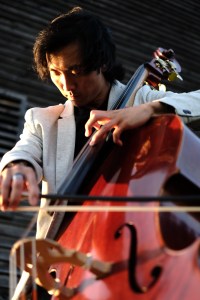
Yoshi plays his double bass.
Musician-Teacher: Merging Two Worlds
In his personal playing, Yoshi has been acclaimed by the Baltimore Sunfor his ability to put on a “dazzling display of dexterity and panache.” As an active double bassist, he spans a broad spectrum of genres and has performed with the York Symphony, Baltimore Boom Bap Society, Opera Camerata of Washington, Classical Revolution Baltimore, and more. Recently, he was the principal bassist to record works by Pulitzer Prize winner Kevin Puts. “Yoshi proudly hails from the studios of Ed Malaga, Jeff Koczela, Laura Ruas, Paul DeNola, and Paul Johnson.”
“In addition to being an active performer, Yoshi is a highly sought-after pedagogue.” Having served as the low-strings department chair and string ensemble director of the Baltimore Symphony Orchestra’s El Sistema–inspired ORCHKids program, faculty for Peabody’s Bass Works, and faculty for American Music System, his teaching credentials are robust. Yoshi’s International Society of Bassists pedagogy research submission is currently being used as a resource to influence bass teachers across the country. He is also certified in the Mark O’Connor string method and has studied the Suzuki string method, making him an all-around strings pedagogy expert. (Bio was quoted and paraphrased from Yoshi’s website: BassHoriguchi.com.)
But even all of this, as Yoshi explains, is not an exhaustive accounting. He keeps moving forward professionally and finding ways to bring strings to kids. He says that he aims to earn respectability as a classical player but also to continue growing as a teacher so that he has his feet firmly in both worlds and can act as a bridge between these worlds. He explained:
Diversifying your skill set opens your eyes and gives you a more worldly context—it allows you to see how you fit into the world. Teaching for underserved West Baltimore ORCHKids, for example, has given me a reason to get up in the mornings and has honestly made me want to practice more. It’s not that I don’t care about my music career, but I think I care less about that than I care about what I can do for the world. Now, pushing myself as a musician means discovering my potential to give back. Breaking through technical obstacles and overcoming hurdles allows me to teach from a place of empathy, of understanding that this is hard, and maybe even guiding students so they can apply these skills elsewhere.
Yoshi attributes his drive to “pay it forward” to having been so nurtured by his own early teachers, to whom he says wants to both show respect and give back. Finally, he wants to dispel the dual stigma that music teachers are nothing but strict and demanding and that classical music is stultifying and too rigid: “I hope that parents considering enrolling their child here will trust that this program is not at all like that. The kids are wonderful, and I’m learning from them everyday, so hopefully my teaching self will reflect this continual growth. Don’t let that image of what you think classical music may be prevent you from signing up, because you might miss out on something very special happening here.”
You can see just what he means during this year’s Winter Concert, where TNCS strings students will be performing. Additionally, TNCS administration hopes to offer a Strings Camp next summer. “Stay tuned”!
Yoshi, instruments in hand, sits both on top of the world and very much in it.