Cooking and Gardening Camp at TNCS Is a Recipe for Fun!

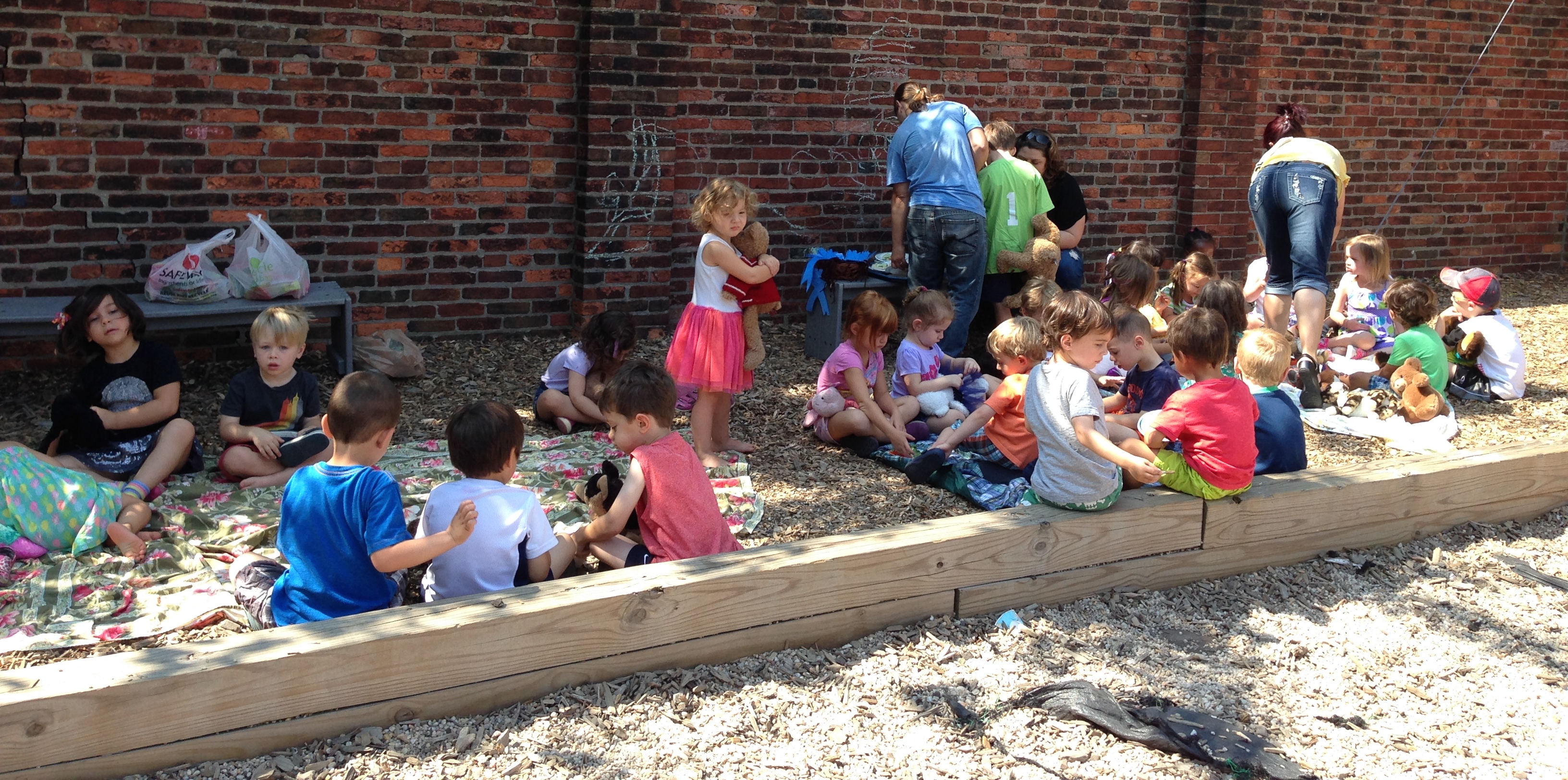
Mrs. Reynolds' and Mrs. Lazarony's campers joined forces for the Teddy Bear Picnic.

Mrs. Reynolds’ and Mrs. Lazarony’s campers joined forces for the Teddy Bear Picnic.

What do you get when you group together about a dozen 2- to 4-year-olds and teach them to grow produce that they can turn into lunch? “Cuteness overload.” At least that’s how camp teachers Angela Lazarony and Lisa Reynolds describe it. The second installment of Cooking and Gardening camp at The New Century School started the last week of July and continues through the second week of August. This one is led by Mrs. Reynolds with TNCS Spanish teacher Yurisan Gonzalez assisting. Campers spend most of the morning outside, usually in TNCS’s on-premise greenhouse. They learn to cultivate vegetables and fruit, and they also create recipes with the ingredients they harvest. All in all, they are learning about healthy eating habits while enjoying getting their hands dirty!

The first week of the 2-week camp included such projects as making sun tea, learning about the various kinds of gardens (potted, urban, greenhouse, herb, flower, vegetable, etc.), drying herbs and making tea bags, learning the parts of a flower and sculpting “anatomically correct” versions with clay, and making so-called “clean dirt” with dish detergent and shredded toilet paper rolls. Each of these projects included a learning component coupled with a hands-on experience, which is how kids learn best. With the clean dirt, for example, which has the consistency of mud, kids were able to enjoy a sensorial experience while engaging in a practical application, although it cannot be used for actual gardening. They sculpted with their clean dirt and practiced working with it. Mrs. Reynolds herself designed the projects. “I really enjoy cooking and gardening,” she said, “and so do the kids. We are having a lot of fun—they get so excited about each activity!”

Week 1 culminated with a Teddy Bear Picnic (hence the aforementioned cuteness overload). For the picnic, Mrs. Reynolds’ and Mrs. Lazarony’s campers joined forces, and there was a perfect riot of plush animals also in attendance. Picnic fare consisted of a bounty of fruits, a salad, and veggie sandwiches. As a special contribution, Mrs. Reynolds’ campers concocted a salad dressing, mostly from greenhouse ingredients. Who came up with recipe? They did. “It’s a little on the sweet side,” said Mrs. Reynolds, “but actually pretty good!” Peppermint, vinegar, sugar, lemon, oil, bananas (!), etc. all went into the blender and out came a lovely green emulsion. The kids did a taste test to make sure their dressing was suitable for sharing.

After eating their snacks, games and crafts closed out the Teddy Bear Picnic. Campers raced with (toy) eggs in wooden spoons, made parachutes for their plushies, and played other field day–type games. Everyone was awarded a blue ribbon. Using artichokes as stamps, they also painted flowers. Clever!

This slideshow requires JavaScript.

With Cooking and Gardening Camp off to such a great start, Week 2 promises to continue growing the fun!

TNCS Summer Camp Heats Up Under New Directorship

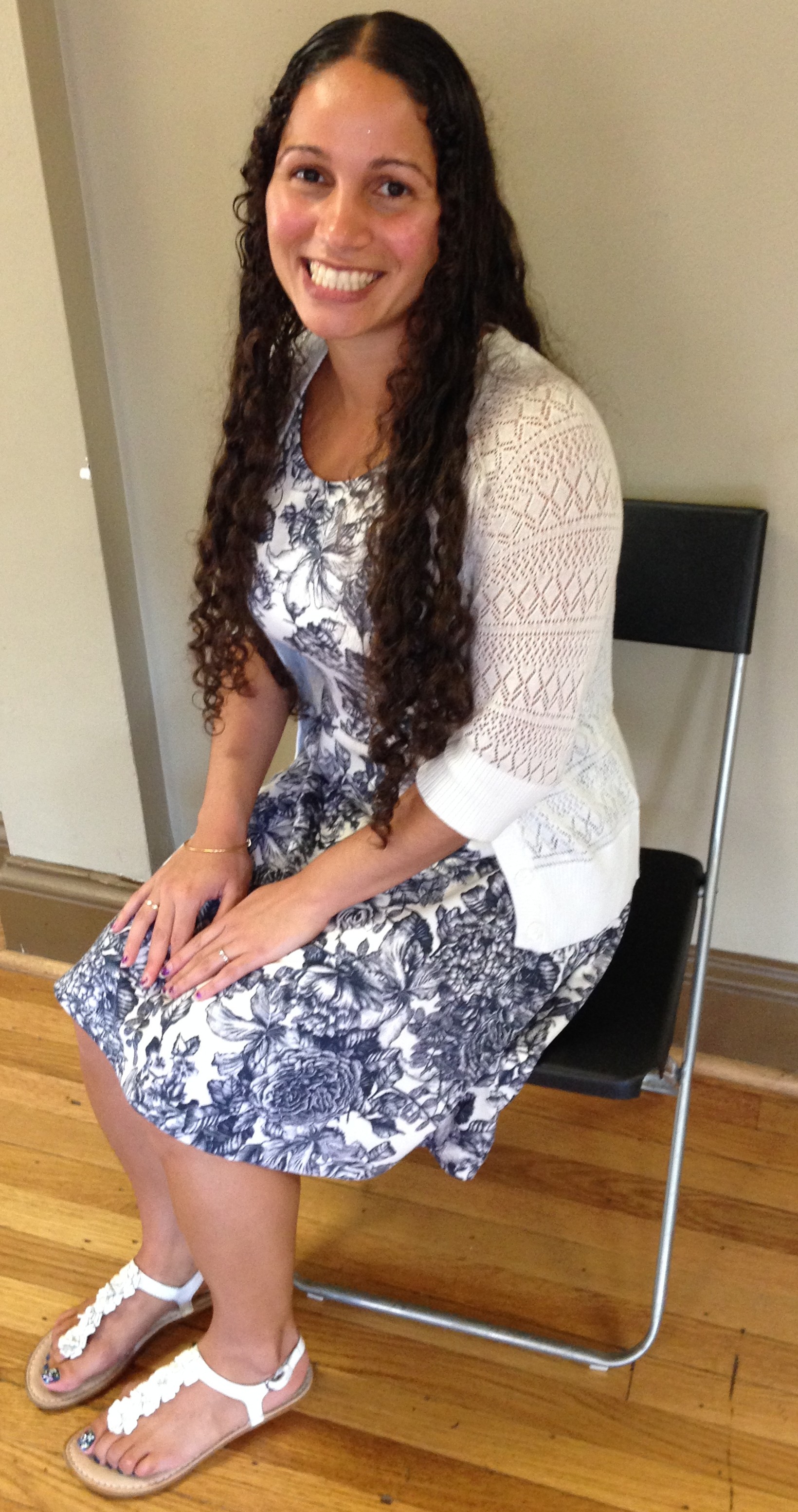
TNCS Summer Camp Director Jennifer Hodapp

TNCS Summer Camp Director Jennifer Hodapp

Although she is not new to The New Century School, Jennifer Hodapp is new to her administrative role as TNCS Summer Camp Director. Sra. Hodapp began at TNCS last year as a Spanish-speaking assistant teacher in the primary classrooms. At the start of the 2014–2015 school year, she will take over the elementary Spanish program. And, in between, she is running summer camp like a seasoned pro!

“From parent and staff feedback, I can say that camp is going well,” she said smiling. “In terms of organization, camp themes, and overall camper participation, everyone seems to be pleased with how this year is shaping up.” That’s no surprise, given Sra. Hodapp’s track record. She brings tremendous enthusiasm and commitment to whatever task she has turned her attention to at TNCS and beyond, as described in an earlier post this year.

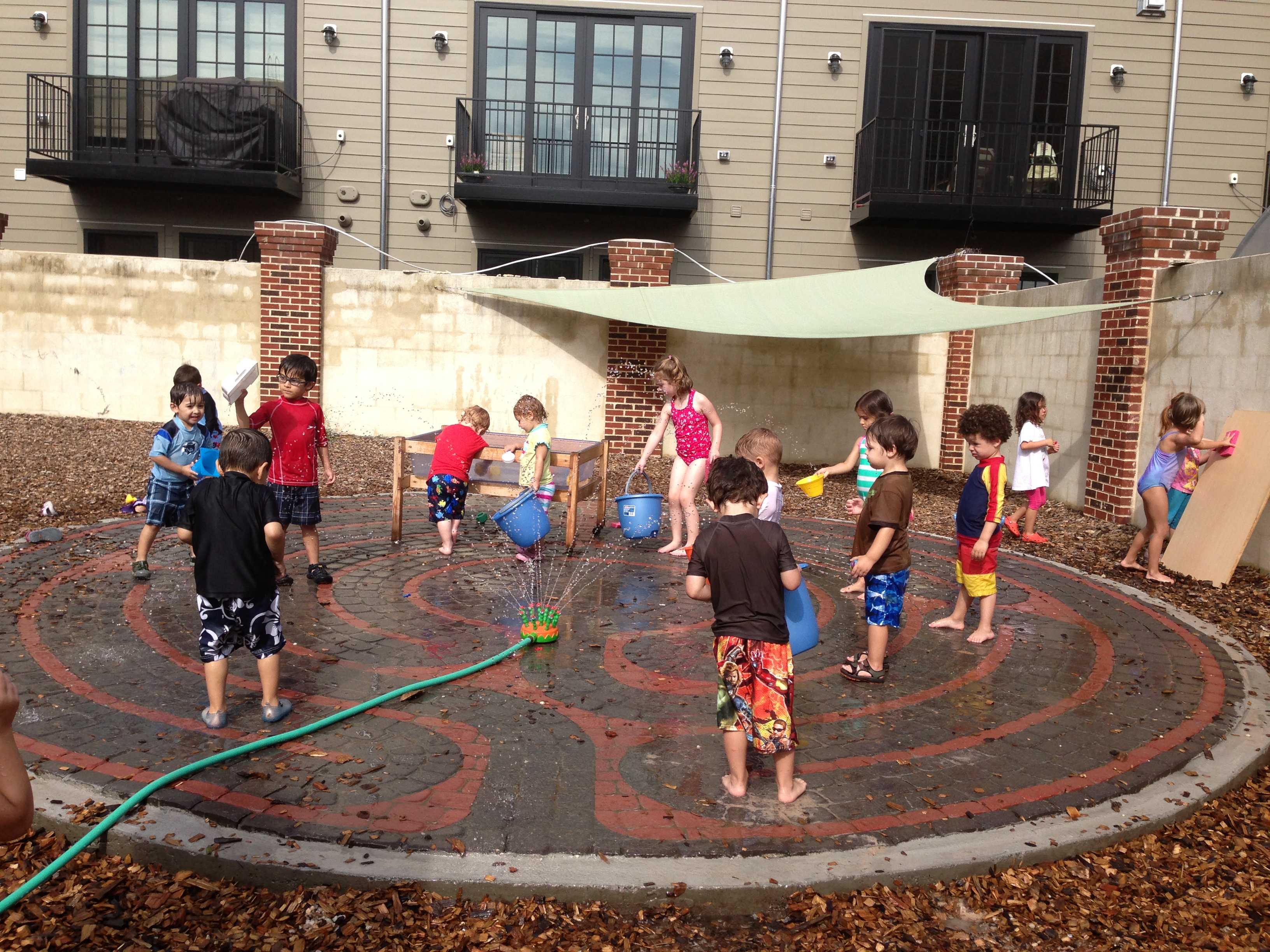
Water Playday!

Water Playday!

Although, in general, a lot has stayed the same over the course of the few years TNCS has offered summer camp, refinements have been made so that this year, the programming (divided into pre-primary, primary, and elementary) is especially exciting and well suited to the tastes of the bright, energetic campers in attendance. One aspect that particularly appeals to Sra. Hodapp—a “heritage” Spanish speaker and a firm believer in the benefits of multilingualism—is that pre-primary Spanish and Mandarin Immersion camps were merged, so that 2- and 3-year-old campers get both simultaneously. That might sound complicated, but it’s working, and Sra. Hodapp is hearing positive feedback. It may help that vocabulary is inspired by summery things, like the sea, so that the kids are already in that mindset. Sra. Hodapp observes when she can and is amazed to see how quickly the littlest campers are able to follow instructions given by instructors Sras. Ramos and Gonzalez and Li Laoshi, to get their own materials, and to find their places during “circle time.” Lucky pre-primary campers also get to participate in the popular carry-over from last year, Water Playday!

Primary camps have progressed in 2-week blocks and have included Movement, Sing-a-Song, Cooking & Gardening, and Spanish Fiesta. Cooking and gardening, says Sra. Hodapp, is far and away the most popular so far (although summer is only half over, and there are plenty of great things ahead!). Elementary camps are largely third-party hosted, including Lego Camp, The Painting Workshop, and—exclusive to TNCS and grant-funded—Startalk.

Welcome to TNCS summer camp!

Welcome to TNCS summer camp!

Another aspect that Sra. Hodapp says is a bit different this year is that a larger proportion of campers are not already-enrolled TNCS students. As part of its commitment to be a part of and to serve a larger community, TNCS welcomes kids from all over, from any school. This makes camp look and feel different from school, and this is also very important to Sra. Hodapp. “The kids are relaxed and enjoying this,” she said. “They’re having fun!” After all, this is summer break, and although that shouldn’t be an excuse to turn brains completely off, it should also offer kids the chance to lighten up a little (see “Making Summer Count” for more). Sra. Hodapp has this balance very much in mind and is making sure campers are engaged, happy, and having fun in creative and educational ways. Make no mistake—the kids really know the difference. If parents mistakenly refer to TNCS summer camp as “school,” their kids are quick to correct them: “No, this is camp!” Sounds like a clear indicator of its success!

Of course, as is everything at TNCS, this successful venture is a collaborative effort. “This is my first directorship,” said Sra. Hodapp, “and it has been quite a learning experience. But I couldn’t do this without the rest of the amazing summer staff—Robin Munro and Lindsay Duprey as well as all of the truly wonderful teachers, assistants, and aftercare leaders!” What “this” is amounts to is just about everything that goes on in a day on the campus. “Our number one priority is keeping everyone safe,” she said. She makes several rounds per day, checking and rechecking everything from the security gates to the catered lunches to voice- and email messages. “Communication is key, as I have learned very quickly. We’re so busy all day that sometimes it’s difficult for all of us to stay connected, so I implemented a communication log to record parent, teacher, and aftercare staff messages and questions to make sure that nothing slips through the cracks.”

Would she consider a future directorship? “I am certainly enjoying this, but I do really miss teaching! I like to be with the kids; that’s where I need to be during the school year.”

“I want to continue to grow here,” she said in closing. Doubtless, she will exceed this goal while contributing enormously to the school, as she has done since first joining the TNCS community! Enjoy the rest of the summer!

The Painting Workshop at TNCS: Kids Paint the Town!

Summer sessions at The New Century School continue with an exciting block of camps hosted by The Painting Workshop! The first week of this summer-long workshop was called “The Art of Charm City.” Artist-campers explored questions like, “What is a neighborhood? A town? Baltimore? They got better acquainted with Baltimore symbols such as the Domino Sugar sign and Chesapeake Bay crabs through painting, drawing, crafts, and sculpture. They also celebrated our local artists—from Paul Darmafall (a.k.a., the Baltimore Glass Man) to Grace Hartigan. (Scroll below for upcoming themes and to register.)

Charming Art

Baltimore! Inspired by the Inner Harbor

Baltimore! Inspired by the Inner Harbor

Led by two camp instructors from The Painting Workshop, Rachel Stein and Elisabeth Willis, kids made paintings inspired by all things Baltimore—the harbor, rowhouses, local food, etc. Each day they worked on one painting as well as had lots of free-drawing time and afternoon crafts. Their culminating project for the week was self-portraits . . . on actual canvas!

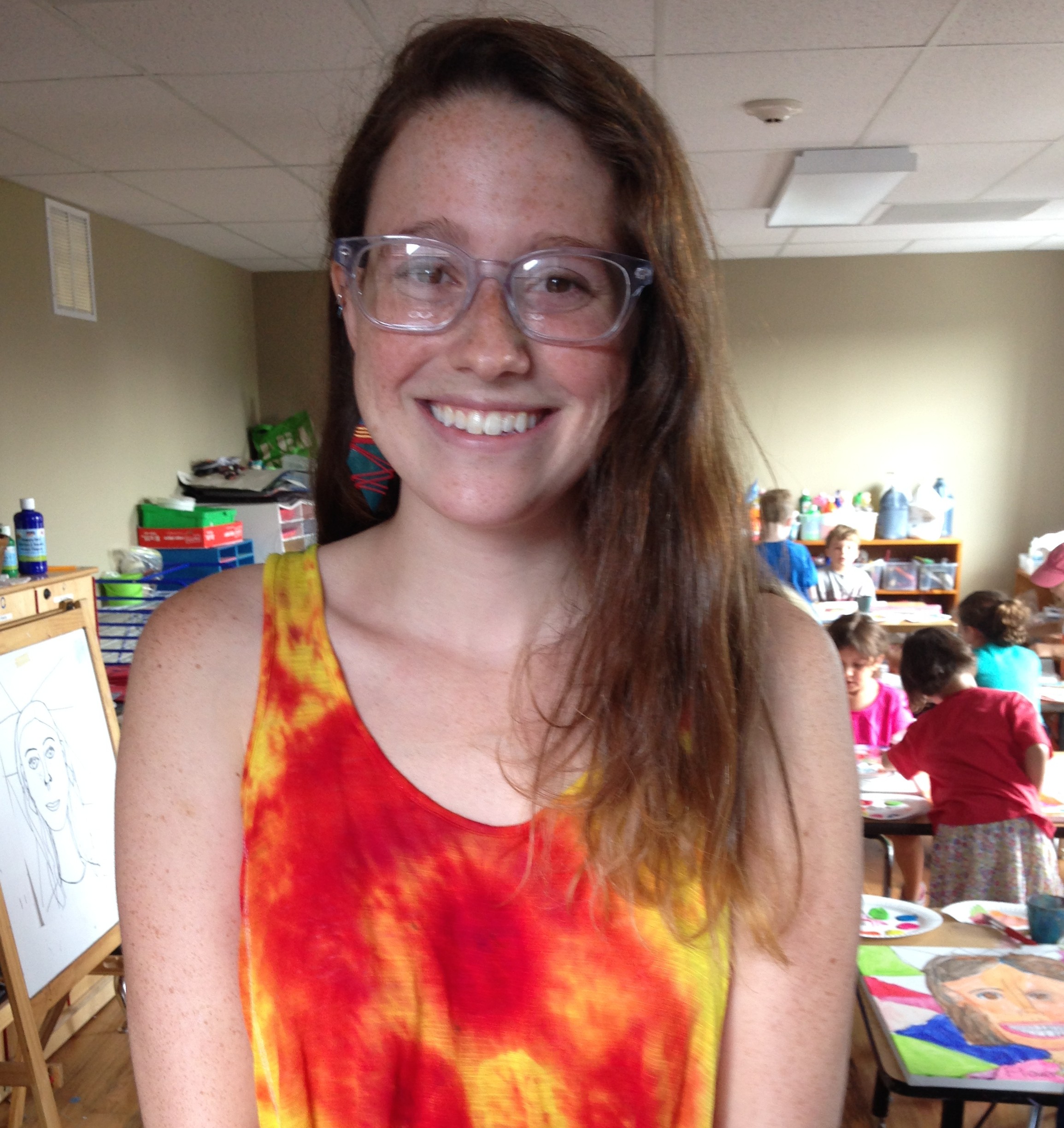
Rachel Stein, from The Painting Workshop

Rachel Stein, from The Painting Workshop

“Their self-portraits look great,” said Ms. Stein “It’s so exciting to see them pick up the techniques so easily.” Instructors demonstrated how to make eyes, noses, and lips and how to manage proportions. “But overall we let them do it how they want,” said Ms. Stein. This space to express themselves is part of Ms. Stein’s philosophy of instruction. An undergrad at Towson University, she studies art and psychology. “I like watching them expressing themselves, getting out what happened that day, their emotions. That’s how I see it—as a way to arrive at camp and not worry about anything else except just making art.”

The artist-campers really got the message. They experimented with colors, patterns, and actual brush techniques to their hearts’ content. They also “expressed” themselves in other ways—a table of several girls quietly sang “Let It Go” as they worked on their self-portraits (perhaps more than one envisioning herself triumphing over obstacles just like the beleaguered Princess Elsa). Meanwhile a table of boys sang “We Will Rock You” and did an admirable job of keeping even the drumbeats hushed so as not to disturb anyone else.

Despite all the “self-expression,” going on, the atmosphere was calm and productive. Spills were handled without fuss, and the kids were always reminded to keep working until they finished. “I want to work with kids and art in the future. I’m thinking about becoming a teacher,” said Ms. Stein. She has been with The Painting Workshop for 3 years.

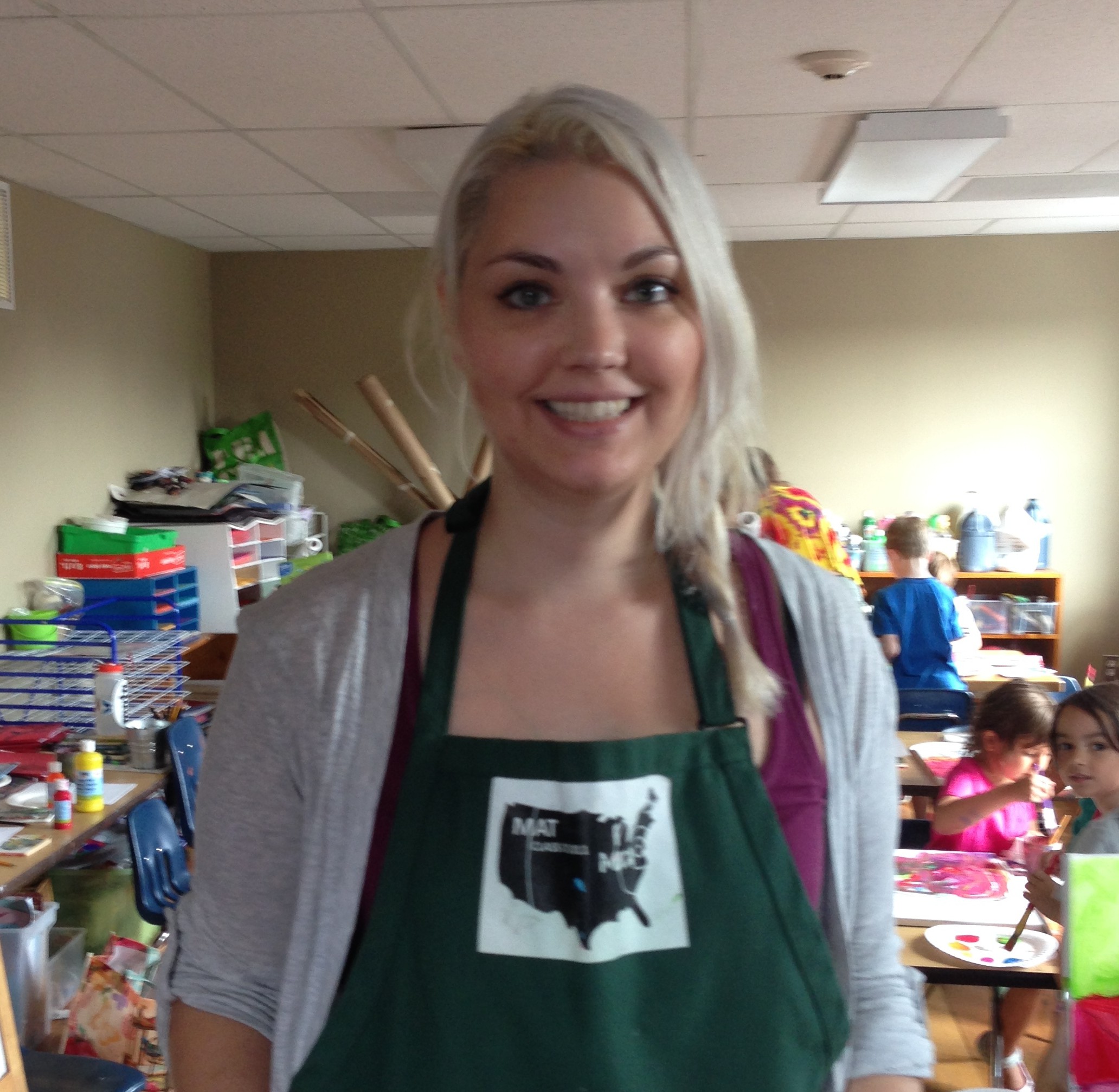
Elisabeth Willis, from The Painting Workshop

Elisabeth Willis, from The Painting Workshop

Ms. Willis brings an impressive amount of experience to her role as well. She has both a Bachelors of Fine Arts in Art History and a Masters in Art and Teaching from Maryland Institute College of Arts (MICA). She freelanced after graduating in 2011 to spend time on her art but would like to become a high school art teacher or work in the education department of a museum. She has been with The Painting Workshop for the last 3 months.

Typical Day

The day starts out with free draw (and each child got a folder to collect their drawings to bring home at week’s end). About midmorning when everyone has gotten the wiggles (and the squiggles) out, they move on to the main project of the day. For the self-portrait day, Ms. Stein and Ms. Willis gave step-by-step instructions involving sketching out the face with a pencil and then going back over it with a Sharpie to make the lines clear. After that, each child got a mixing plate with blobs of primary colors and went to work.

Hard at work, painting away

Hard at work, painting away

While the artists work, instructors move through the classroom, responding to questions and comments. “What do yellow and orange make? What about blue and pink and white?” asked one boy. “How about you and try it out?” replied Ms. Stein, encouragingly. “I know three ways to make purple!” he came back with. “Red into blue . . . blue into—well, actually I only know how to do it two ways—pink.”

“I figured out the category,” said another student, excitedly! “It’s all about Baltimore—the crabs, the harbor, everything!” “That’s right; you figured out the puzzle; you added it all up,” replied Ms. Stein. “Can I make my skin whatever color I want? Like brown?” “Of course!”

A finished portrait

A finished portrait

Once they finished their portraits, they were free to draw or read books until lunch. “At TNCS they get to leave the classroom to eat somewhere else, and they get to play on the playground. I like that,” said Ms. Stein, who is normally at the Mt. Washington Painting Workshop location. “It’s really fun [at TNCS]!” she said. “The kids here are really intelligent and have great vocabularies. One boy was painting an animal and told me ‘this animal is aggressive toward these other animals’, for example.”

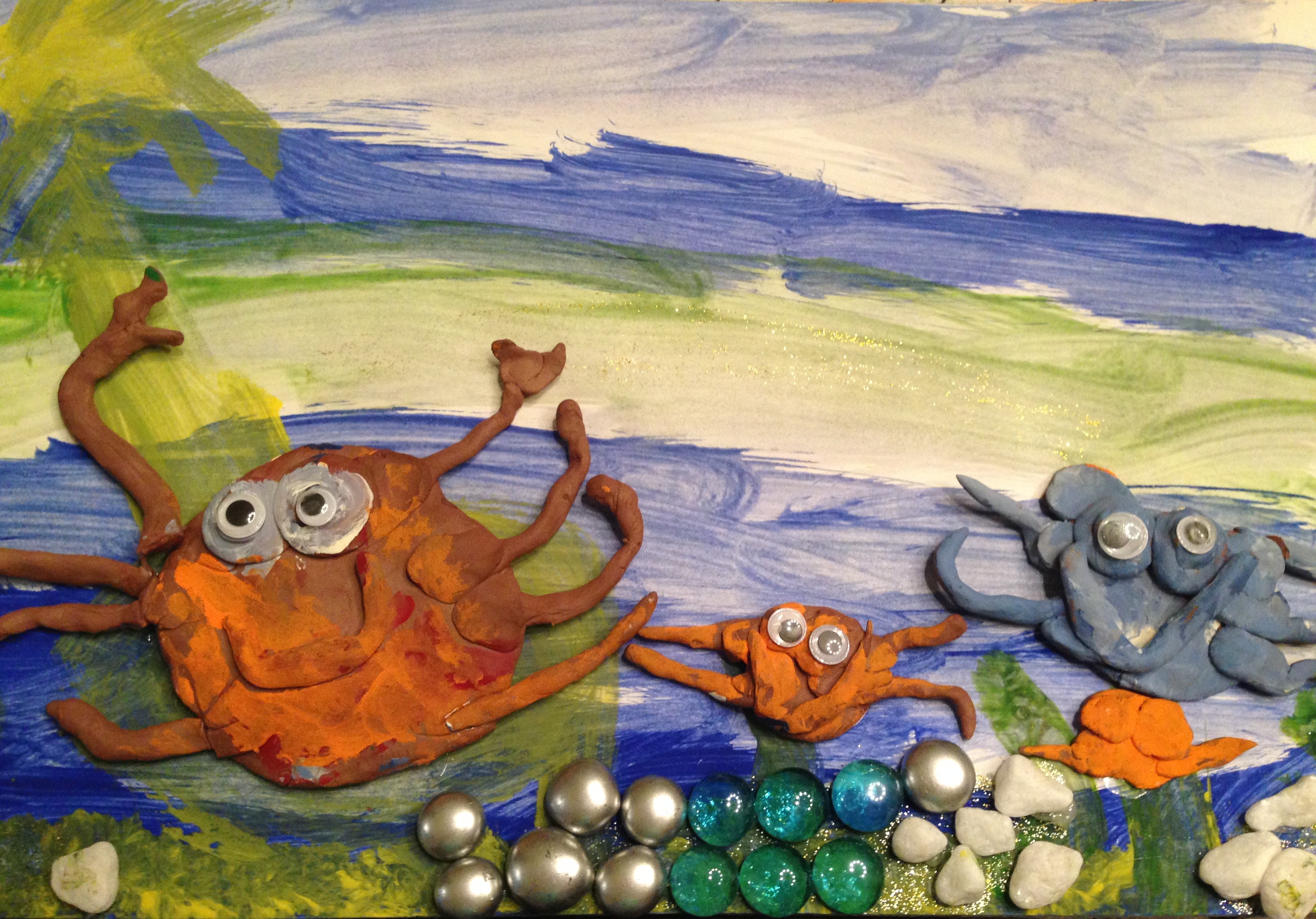
Crabs in their habitat

Crabs in their habitat

For their afternoon activity, the artist-campers were going to make habitats for the crabs they had sculpted earlier in the week. Those are some lucky crabs!

Schedule

“Creativity! Art Around the World Camp” begins 7/14 and continues through 7/18. Artist-campers will create their own passports and focus on the indigenous art of each country they visit, such as aboriginal paintings in Australia, pottery in Greece, rice paper and pagoda prints in Japan, craft papier-mâché maracas in Spain, and beautiful landscape paintings in France.

7/21–7/25: Penguins, Whales, and Surf: Oceans and Seas Camp

Water covers more than two-thirds of our planet. Within it, we find amphibious life of all description, and fauna and flora that exist only in the mysterious world of the sea. This camp celebrates the waters of planet Earth–through painting, drawings, sculpture, and of course the use of water in art projects! The geology of the ocean, the uses of the ocean, the wonder of the sea–it’s a watery week of imaginative fun!

7/28–8/1: Birds, Butterflies, Wind, and Sky: Art and Nature Camp

The outside world comes alive in this camp where we are inspired by nature. From leaf rubbings and clay pressings, to plein-air painting, and sponge paintings of trees, we celebrate nature through our art!

8/4–8/8: Dragons and Wild Things Camp

Who doesn’t love dragons? We will look to the art of Asia for inspiration, as well as Dragons in medieval times, and then closer to home with Maurice Sendak and his book, Where the Wild Things Are. Projects will include sculpture, puppets, jewelry, paintings, and more.

8/11–8/15: Hear the Sounds of Art! Art and Music Camp

Can you listen to the sounds of art? What is the overlap between the artistic expressions of music and visual art? Let’s find out in this multi-faceted camp experience.

We will create our own instruments, explore how sound and music affects our art, and have fun!

Would you like to register your child(ren)? Please go here.

TNCS Drama Camp Brings Out Kids’ Inner Artists

Drama Camp instructor, therapist, actress, and mom, the illustrious Alex Hewett!

Drama Camp instructor, therapist, actress, and mom, the illustrious Alex Hewett!

“Things are great,” said Alex Hewett, The New Century School‘s Drama Camp Instructor on the last day of her 3-week stint. “This is my third year here, and it’s funny because my first year here, I taught for 1 week; the second year, 2 weeks, and now this time I had 3 weeks!” That’s because it became increasingly apparent that she’s terrific—inspirational, committed, and lovely both inside and out! Her 3 weeks were one with pre-K and K–aged kids for a half-day camp, the next week was elementary for a full day, and this last week was with kids entering K or 1st- or 2nd-grade.

The Artist’s Way

“I know I’m billed as a drama teacher,” she explains, “but I prefer to call it ‘theatre’ instead because we laugh mostly—it’s not so dramatic. [Beat] But there is drama with this age.” (We laugh.) “It’s intense fun. I had such a great group of kids.” Her approach is really very effective. She is trying to instill in her theatre students much more than an ability to project their voices, although such  skills necessary for braving the footlights are certainly touched on. What she is modeling is something akin to life skills, a way of being that allows full expression of oneself while respecting and leaving plenty of space for everyone else around to also be and express themselves.

This technique is fundamentally about good communication and confidence-building: “Really communicating with your eyes to show that you’re connected is one example,” says Ms. Hewett. “If you are going to go on to become an actor, you need to have life in you to tell a story, and a lot of that comes from your eyes and from your voice. Some of the skills that we work on translate into the real world, such as being a person who feels good about himself or herself and who can communicate with others. Those are really basic social interaction skills that I think can be enhanced, because if you don’t feel good about yourself, it’s going to be hard for people to believe in you, if you don’t believe in you.” Parents, even if your kids are not planning to tread the boards one day, they are certainly going to walk away from drama camp with some important new skills and increased self-confidence.

All About Balance

In joining acting skills with life skills, Ms. Hewett reveals her yin-and-yang instructional style, and that wholeness is evident in all aspects of the camp, including the overall structure: “One of the things I encourage in theatre is using your own mind and being creative without following rules, but yet we still have to incorporate rules in order to keep everyone safe, so it’s a delicate balance,” she said. “The balance of what I’m trying to achieve is having some structure and getting the kids to listen but also getting a little silly and being creative.” So there is freedom within certain limits, hard work relieved by playtime. It’s quite Montessori-esque, not to mention oh-so TNCS!

Regarding the work/play balance, Ms. Hewett tailors the best fit to each particular group. With younger kids:

We are playing, basically. We do a lot of playing; it’s mostly fun. We do a lot of silly exercises, like The Laughing Chair. If someone walks into the room who is in a bad mood or is having a bad day, that energy can bring everybody else down. Or not paying attention or not following the rules—that disrupts everybody, so I like to try to reinforce the positive by saying, ‘even if you feel crummy, you can make someone else feel better’.

Even though “The Laughing Chair” is a way to let loose and have a little fun, it incorporates lots of other important skills. The exercise is really about connecting with each other,” says Ms. Hewett. The way it works is that someone sits in the designated chair, and somebody else tries to make him or her laugh. “You can’t touch them or tickle them or throw anything at them or push them out of the chair. But what can you do to make them laugh? Meanwhile, the sitter’s goal is to not laugh. If you laugh, you’re out.” Kids this age tend to use pratfalls and their whole bodies to make somebody laugh. But they learn to refine and particularize their comedy routines according to who is sitting in the chair. They start to learn to read facial and emotional cues, although some sitters are simply “unbreakable” as you can see below.

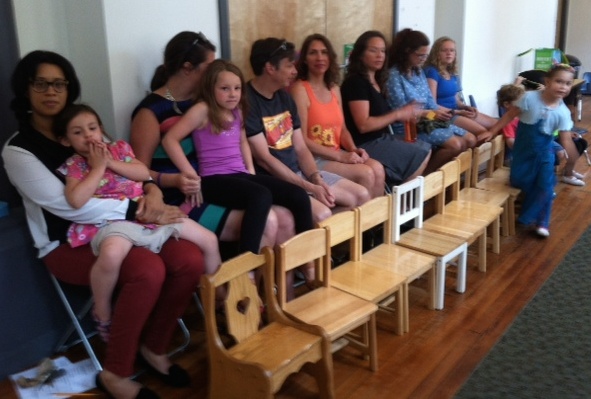
The audience eagerly awaits the performance of The BFG (Big, Friendly Giant).

The audience eagerly awaits the performance of The BFG (Big, Friendly Giant).

With older groups, Ms. Hewett is able to do more formal productions, but this requires a lot of focused effort from the kids. They are starstruck to learn that their camp instructor is a real, live actress and press her for details. “I do film, theatre, commercials, television, but the point isn’t to be famous; I want to do good work, and it’s hard work, not just a vehicle to becoming famous,” she says. And the kids learn about that hard work quickly—problem-solving and learning how to be patient and mindful. They also have to collaborate well. Her second-week group put on a scene from Roald Dahl’s The BFG (Big, Friendly Giant):

We worked really hard on this scene, and the timing of everything had to be perfect. Everybody had a part (everybody wants ‘THE’ part, but it all kind of worked out that everybody had enough to do and everybody was satisfied with their roles). We had to rehearse it over, and over, and over, and at times I heard, ‘this is boring,’ or, ‘I’m bored,’ and I said, ‘well, you know, if you really want to do something well, you have to repeat it,’ and in the end they were all happy. It was nice to watch them grow in that process.

Stretching, yoga, and breathing were other exercises they did regularly. The goal of the Week 3 camp was to get up to 15 minutes of quiet mindfulness. “We got up to 10. For some it was great; for others it was a real challenge to just listen to their breathing. But when you’re on stage, you have to be aware of yourself and of everything around you. So knowing how to focus and center yourself if you get nervous (because everyone gets nervous—I still do) is vital, and your breath is one of the things you have control of in this world,” said Ms. Hewett. TNCS students are already accustomed to this practice. “That makes a lot of sense. You don’t know what children are walking out of, even if it’s just the stress of trying to arrive at school on time and being too tired to start the day,” she said. It’s a great way to get them grounded and ready for the day.

Transformative Power of Theatre and Story-Telling

“One of my favorite things I was told when I first started out,” says Ms. Hewett, “is that when you walk into the theater, it’s a sacred space, and it’s a privilege to be here.” So, at theatre camp, the kids take their shoes off to symbolize that whatever troubles they may have been experiencing are left at the door. “We become immersed in an imaginative world. There’s something joyful about that. Stories are really powerful, and art can make a difference in people’s lives.” For instance, with the Week 2 older kids, who happened to be all girls and were obsessed with all things Frozen, Ms. Hewett helped them to see that women can have strong roles other than princesses. “You can be the king; you can be a dragon. Or, you can be something completely different form who you are—that’s the power of the theater.” They also read Amelia Earhart as another example of a person who triumphed over her obstacles and embraced her differences to become a role model for all women.

To introduce this concept of transformation to her younger actors, for whom some of the more conceptual aspects of theatre can be a bit more challenging, she talks about where stories come from. In another Dahl story, James and the Giant Peach, the protagonist’s parents get eaten, leaving him to be raised by two very nasty aunts. Dahl wrote this story during a particularly tough period in his own life, and, happily, both he and James Henry Trotter came through just fine. Says Ms. Hewett, “I had students tell a story about having felt some kind of pain in their lives to incorporate that aspect of the transformative power of stories and art to make the world better. I’m also a therapist. I work with nontraditional actors at Sheppard Pratt [hospital] doing creative therapy in which we use theater and improv and writing as a way to be a little bit more free from yourself, while still working problems out.”

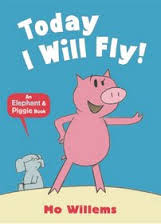
Today I Will Fly! is from the popular Elephant and Piggie series.

Today I Will Fly! is from the popular Elephant and Piggie series.

Other stories they put on included Today I Will Fly!, by Mo Willems, which demonstrates the value of perseverance and a little creative problem-solving. “If someone tells you you can’t do something, don’t get discouraged, just keep trying harder.” Charlie and the Chocolate Factory is about consequences. The characters who behaved badly and didn’t heed warnings met with very horrible (albeit funny) demises, whereas Charlie Bucket, who was the opposite of his demanding, impatient fellow golden-ticket winners, is the hero of the story.

“Being patient and kind always wins,” said Ms. Hewett. Fortunately, as drama camp shows, these can be learned traits. In essence, drama camp teaches nothing less than the art of being.

TNCS Summer “Move It!” Camp Gets Kids Moving and Learning!

TNCS's new Kindergarten teacher/first-grade teacher also taught the Move It! summer camp

TNCS’s new Kindergarten teacher/first-grade teacher Teresa Jacoby also taught the Move It! summer camp

At The New Century School‘s Move It! camp, campgoers learned all about movement—how their own bodies move as well as some of the physics of how other things move—and they also moved, a lot. This ages 3–K 2-week summer camp emphasizing learning and physical activity through art, music, movement, and play was led by Teresa Jacoby, TNCS’s new for the 2014–2015 academic year Kindergarten/first-grade teacher. Mrs. Jacoby brings a wealth of knowledge, experience, and enthusiasm to the classroom, and TNCS is pleased to welcome her!

A former 3rd- and 4th-grade science teacher in the Baltimore City school system, this “self-proclaimed scientist” gears even her reading and art lessons toward science, and Move It! camp was no different. She designed the camp curriculum herself, and it becomes not just about expending some pent-up summertime energy but also a thoughtful way to incorporate scientific thinking into having fun. “The kids are so naturally curious; it’s nice to discuss [science] with them, and they like to talk about it,” said Mrs. Jacoby.

A typical class discussion starts with something the kids can relate to—their own bodies—and moves progressively outward from there to the world beyond. “We talked a lot about, ‘what is movement?’ and ‘what can we move on our bodies?’. I get the typical legs and arms response and then ask, ‘what about our faces?’ Do we move anything on our faces?’,” she recounts. She invites them to blink their eyes, smile, wiggle their eyebrows, etc. She also talks a good deal about deep, yogic breathing, which has the dual benefit of teaching them how to calm themselves while still continuing the exploration of body movement. “I teach them how to listen to their breath hit the back of their throats and fill into their lungs. They really worked hard to get this right and made a lot of progress,” said Mrs. Jacoby.

As the light starts to dawn and they begin to see that movement really is a continuous, perpetual process fundamental to life, she expands the perspective, and they talk about what we use our bodies to move, such as picking up objects and carrying them from one place to another. “We talk about what’s hard to move and why and what’s easy to move and why,” said Mrs. Jacoby. Next, the line of inquiry widens farther still. “What do we see outside that moves?” she asks. “Cars. Well how do cars move?” This leads into a discussion of wheels and how it’s easier to move something on wheels than to push it. The kids really benefit from this inquiry-based, hands-on approach. They are learning about movement while moving, which reinforces the learning but also makes it applicable and more real. Relevant knowledge is learned more effectively and efficiently.

But hang on—this is summer camp, and fun is supposed to be an integral part of that. Move It! camp cannot be accused of skimping on the fun! With the particular focus on physical activity built in to this camp’s theme, Mrs. Jacoby really gets the kids moving with ample time either in the outdoor playground or on the Gerstung equipment and Imagination Playground located in TNCS’s gym, The Lingo Leap. Campgoers also get “water play day” every Friday, which includes playing with water toys outside and running in the sprinkler. Weather permitting, campgoers might also take neighborhood walks.

At TLL, Mrs. Jacoby sets up obstacle courses with the Gerstung equipment that the kids navigate while carrying balloons, to develop an extra layer of skill. “They do such a great job,” she said, “and it’s delightful to see how hard they work to walk on the balance beam, for example. It’s really fun to watch them practice those gross motor skills.” She also incorporates the parachute into movement time, which she is again able to tie back to physics, with observations about how the parachute behaves differently under different circumstances, such as with fast versus slow movements.
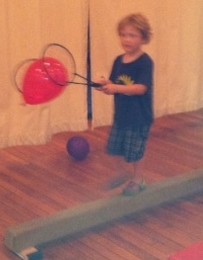
This camper has a lot going on! He walks across the balance beam without falling off, while delicately carrying a balloon between two rackets without popping or dropping it! What skill!

This camper has a lot going on! He walks across the balance beam without falling off, while delicately carrying a balloon between two rackets without popping or dropping it! What skill!

Other fun ways to get them moving include playing badminton with balloons and learning and performing funny songs and dances. Songs like “A Tooty Ta Ta,” a hipper, updated take on the “Hokey Pokey,” get them isolating one movement at a time, then building progressively on each movement until by the end they are wriggling in time to the music with thumbs up, elbows back, knees together, feet apart, bottoms up, and tongues out! (Picture playing Twister to “Gangnam Style,” or similar.) “The kids did a fabulous job getting all that together while singing along and turning in a circle with their eyes closed!” said Mrs. Jacoby. See below for the lyrics to “A Tooty Ta Ta”—your kids will be thrilled to do this with you!

“I really, really enjoyed camp Move It!,” said Mrs. Jacoby. “I got to meet some of the students I’ll have next year, which is so nice. This camp has been a lot of fun.”
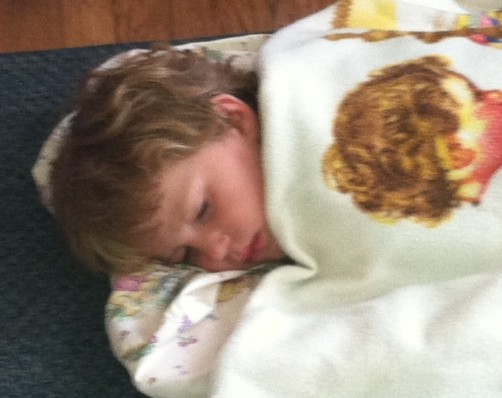
Those breathing exercise sure work some relaxing magic!

Those breathing exercise sure work some relaxing magic!

A Tooty Ta Ta

Thumbs up

A tooty-ta, a tooty-ta, a tooty ta-ta!

Thumbs up, Elbows back

A tooty-ta, a tooty-ta, a tooty ta-ta!

Thumbs up, Elbows back, Knees together

A tooty-ta, a tooty-ta, a tooty ta-ta!

Thumbs up, Elbows back, Knees together, Feet apart

A tooty-ta, a tooty-ta, a tooty ta-ta!

Thumbs up, Elbows back, Knees together, Feet apart, Bottoms up

A tooty-ta, a tooty-ta, a tooty ta-ta!
Thumbs up, Elbows back, Knees together, Feet apart, Bottoms up, Head back

A tooty-ta, a tooty-ta, a tooty ta-ta!

Thumbs up, Elbows back, Knees together, Feet apart, Bottoms up, Head back, Tongue out

A tooty-ta, a tooty-ta, a tooty ta-ta!