ColorCycling Comes to TNCS!

Does having to throw away something plastic but perhaps unrecyclable make you uneasy, especially single- or short-term-use items? Plastic drinking straws, for example, were once thought to be wonderful innovations because of their apparent cost-effectiveness and ease of manufacture. But when you consider that, globally, about 300 million tons of plastic are produced, half of which is for such disposable items, blithely discarding that straw starts to loom a little larger in significance (and, ultimately, cost). The plastic problem makes many among The New Century School community uncomfortable, too, so TNCS is doing something about it!

Bold Strokes

Head of School Alicia Danyali has enrolled TNCS as a participant in Crayola’s ColorCycling Program, which allows K–12 students to collect and repurpose used markers of any brand. This program also offers classroom opportunities for emphasizing each individual’s capacity for protecting the Earth. In fact, says TNCS Art Teacher Jenny Miller, “I steer away from markers or any other individually plastic encased art product for the very reason of unnecessary waste. I will investigate any other ways that we can practice sustainability in art class.”

tncs-recycles-markers

Don’t throw away used markers—colorcycle them!

It’s good to note, though, that the Crayola company is implementing ColorCycling and other green initiatives, such as “using 100% reforested wood for colored pencils  . . . and recycling ground water through [their] crayon cooling process.” How are the colorcycled markers repurposed? Into fuel!

Crayola conducted extensive research into various new and emerging technologies that would allow the company to repurpose its markers and found the most efficient and beneficial solution at this time is the plastic to energy process, which allows the company to repurpose the entire marker. If a classroom recycles 193 markers, that is enough to move a city bus for 3 miles.

For the marker program, all we have to do, TNCS community, is bring our “dead soldiers”—again, any brand—to TNCS, where they will be collected in a specially designated box and kept in the art room. TNCS students will count them and pack them up for shipping—and Crayola even pays the shipping costs!

And voilà—TNCS is an “eco-cool school”!

Fine Print

Most of us are well aware that plastic waste is a huge environmental concern and a growing problem for future generations, but it never hurts to read the plain, if pretty horrifying, facts.

• Plastics impair human health. Plastics contain a variety of endocrine-disrupting chemicals (EDCs) that have been demonstrated to interfere with human endocrine, cardiovascular, respiratory, and neurodevelopment systems. The long-term effects of these EDCs are still being investigated, and researchers are uncovering other insidious effects all the while.

• Plastics damage the environment. All the plastic so far produced is still with us in some form because it takes 500 years for plastic to decompose. Recycling plastic is not always easy or possible to do, and what doesn’t get recycled winds up in landfills, a clearly unsustainable practice at close to 30 million tons per year (just in the United States!). However, incinerating plastic is an even worse proposition, as burning plastic causes it to release EDCs and other toxins into the air, polluting it and adding to the human bioaccumulated burden. It also gives off CO2, contributing to global warming. And then there’s plastic litter that ultimately finds its way into waterways, polluting the ocean and inducing a cascade of effects on the environment and on wildlife.

Plastics have infiltrated almost every aspect of life because of their sheer convenience, but we are now reckoning the hidden costs. Programs like ColorCycling not only help start to address the problem, but also increase awareness that there is a problem—a marker is such a seemingly innocent thing, after all . . . until the magic wears off.

TNCS’s Go-Green-for-Earth-Day Raffle!

TNCS-uses-green-energy

TNCS supports and uses green energy!

One of The New Century School‘s core values is a commitment to environmental sustainability, and TNCS demonstrates this commitment in a variety of ways. From serving lunch from homegrown or locally sourced produce, to running recycling campaigns, to powering the school buildings with green energy, TNCS strives to keep its carbon footprint as low as possible for the good of the planet.

In honor of Earth Day 2015, which is Wednesday, April 22nd, TNCS is inviting you to join in and go green, too! As detailed in TNCS Uses Viridian’s Power with Purpose, TNCS sources electricity through green-energy company Viridian, who has helped avoid more than 4 billion pounds in carbon emissions to date. By enrolling with Viridian, you not only opt to affordably supply your home with green energy, but you also earn cash rewards for TNCS without lifting a finger. There is no cost to change your energy provider to Viridian, and all you need is your current utility bill to quickly and easily make the switch.

You Win, TNCS Wins, Earth Wins!

TNCS-green-energy

Why enroll for green energy with Viridian? Reduce your carbon footprint, show your support for socially responsible companies, and raise funds for TNCS!

Many of you have probably been considering signing up with Viridian, but, for one reason or another, just haven’t gotten around to it. Well, now’s the time! To sweeten the deal, TNCS and Viridian are jointly hosting a raffle for enrollees to be held at the April 24th Potluck. Just for enrolling, you receive a TNCS tee shirt, and you will also be entered in a raffle to win a $50 Amazon gift card, donated by Viridian.

How do you enroll? It’s so easy to do, and you have three convenient options to choose from!

1. Register online at: www.viridian.com/newcenturyschool. (Helpful tips include: Use Internet Explorer or Firefox rather than Safari, which is glitchy, and if you are opting for electricity only rather than electricity and gas, make sure to select “Not at this time” for gas on the Step 1 page.)

2. Call Viridian Customer Care at (866) 663-2508 (be sure to mention TNCS!).

3. Bring your current electric bill to the Potluck on April 24th, where TNCS Head of School Alicia Danyali will be manning a sign-up table to switch you to Viridian on the spot.

And, regardless of how, when, or where you enroll, as long as you bring proof of registration to the Potluck, you will receive your TNCS tee and be entered in the raffle.

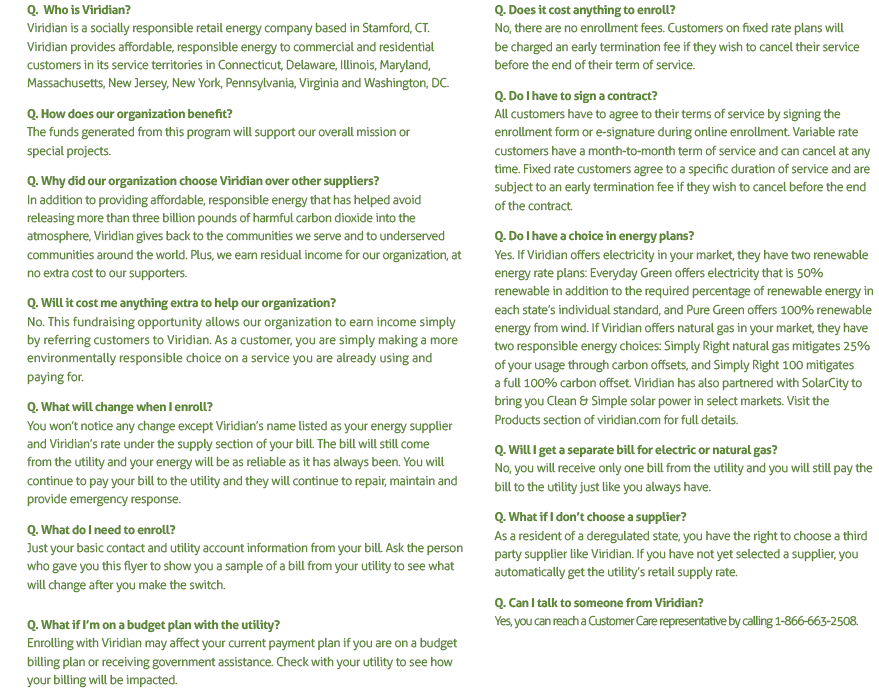
viridian-faqs

Viridian FAQs.

If you need more information, please download this informative brochure of FAQs and other details, visit the website above, or contact Viridian at the number above.

This Earth Day—the 45th annual—is going to be a very special one, and some are calling 2015 the the most exciting year in environmental history. With the slogan “It’s Our Turn To Lead,” the Earth Day network is galvanizing countries globally to participate in this great enterprise. Choosing green energy is how we can contribute our voice and our support. With the coming week being Climate Education Week, we can also teach our future citizens the importance of behaving responsibly toward the environment—in fact, Thursday is Renewable Energy Day!

Other resources for your information include Affordable_Energy and Why Go Solar Now?.

TNCS Uses Viridian’s Power with Purpose!

power-with-purpose-at-tncs

Power with Purpose!

The New Century School has always prioritized environmental sustainability through recycling, community responsibility, and supporting local agriculture to name just a few ways. TNCS has also always strived to use and to support green energy. Remember our Green Neighborhood Energy Challenge? Although Clean Currents was shuttered due to circumstances beyond their control, TNCS has now partnered with Viridian, a larger socially and environmentally responsible energy company. Says Head of School Alicia Danyali, “Leaving a smaller carbon footprint can make a big long-term difference for our environment. The more invested, the bigger impact on conservation.” TNCS has once more gone green!

Raise Money for TNCS while Lowering Your Carbon Footprint!

Even better, Viridian is sponsoring a TNCS fundraising initiative. By enrolling in Viridian’s affordable green energy service, you can monetarily support TNCS. That’s right—every time you pay your utility bill, TNCS receives income! More importantly, you can make a significant and measurable impact on the environment. Says Viridian’s Eric Forseter, “We help TNCS raise money and simultaneously help green the Earth. Instead of paying a sales person a commission, for every electric meter that signs up under TNCS, Viridian donates a minimum of $24 a year to the school. If 20 families sign up, that’s nearly $500 in annual donations.” Not bad! Key here is that this is an ongoing donation. Unlike Clean Currents that made a 1-time contribution to TNCS per enrolled family, Viridian pays out every time you pay your utility bill. “This goes on forever!” said Mr. Forseter.

And it’s so easy! Instructions for enrolling are given below, and you continue to get the same delivery, service, and billing from your current utility (BGE for most of us). Enrollment in either of two electric options (50% green or 100% green) takes less than 5 minutes. Mr. Forseter explains that the 50% option costs less and is therefore what many people opt for (saving the earth while saving money). Even going 50% green for 1 month is the equivalent of recycling for 1 year, so just imagine what going 100% green would do for the environment! Enrollment in a green gas option is also available.

Seeing Green

Check out these truly wonderful benefits—benefits to our shared environment, to our beloved school, and to your individual pocket.

  • Viridian donates a minimum of $24 annually for every customer TNCS enrolls.
  • Choosing Viridian will result in an average offset of 11,000 pounds of carbon annually, the equivalent of planting 134 trees.
  • Your rates will remain competitive with your utility, and your billing service will never change (you are only choosing the supplier of your energy, not your utility, which distributes the energy).

Note that Viridian is guaranteeing a better rate than the utility can provide on the 50% green option. The average household can expect to save $5 to $50 per month. “A great deal is that the company will refund you 110% if their rate exceeds the utility’s,” says Mr. Forseter.

How To Enroll with Viridian

To sign up, you will need your electric account number; BGE customers will need your Electric Choice ID on your bill:

  1. Go to viridian.com/newcenturyschool. (Make sure you have your energy account number.)
  2. Click the “Become a customer” link at the top of the page.
  3. Enter your zip code and electric utility, then select Electric. Select Gas if you want a carbon offset for Gas supply.
  4. Follow the steps to enroll in the 50% fixed-rate plan 3DOM for electric and 25% carbon offset for gas (if you choose 100%, your environmental contribution will be higher but your bills will increase).
  5. If you are interested in going solar, check the box to receive a free consultation with SolarCity, the solar partner for the program. Solar customers result in a donation of $100 to TNCS and ongoing annual payments.
  6. Questions? Contact Eric Forseter (eforseter@hotmail.com) or call Viridian Customer Care at (866) 663-2508 for more information.

Please spread the word—Viridian is not just local to Maryland, but is also licensed in Washington, D.C. on up through Massachusetts. As long as your friends and families sign up for responsible energy under the special TNCS-specific Viridian URL given above, TNCS will reap the fund-raising benefits.

Frequently Asked Questions

Please click FAQs for answers to many of your questions. Then join us and the more than 3,800 other non-profit organizations in “greening the energy grid!”

TNCS elementary parent volunteer LaShon Johnson (lashon.johnson85@gmail.com) will be coordinating this fundraising event. Ms. Johnson will be contacting the TNCS community with additional information as this fundraising initiative gets going!

TNCS’s Garden Tuck Shop Program Relaunches!

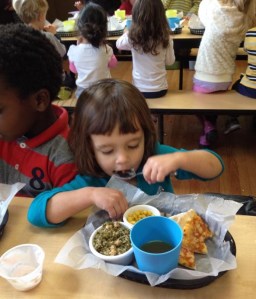
This wee one enjoys her lunch of pizza, tabouleh, and corn.

This wee one enjoys her lunch of pizza, tabouleh, and corn.

Now in its third year,  The New Century School‘s Garden Tuck Shop Lunch Program has implemented some exciting new changes, a new lunch menu foremost among them. These modifications grew out of some parent and TNCS staff feedback that Chef Emma Novashinski used to enhance and refine her already popular program. Menus and newsletters will also be part of this relaunch to ensure that communication about her meals is precise and detailed. “This is exciting,” she says, “it’s a nice turning point that has renewed my vigor to figure out which direction to take the program in.” She calls her refreshed program “the cleanest kids’ lunch downtown”! By “clean,” she refers to the source of the foods she serves. The closer to you it originates, the cleaner (healthier) it is. Trickling Springs Creamery in Chambersburg, PA provides local milk, produce and eggs come from nearby Tuscarora Farms, and fresh local bread comes daily from Cunningham’s Bakery in Towson.

Pilot Program

In mid-November, Chef Emma began piloting a series of new lunches that assembled components most popular with former and existing program participants. Popularity was not the only prerequisite, however. Chef Emma’s primary target for this new lunch series was to include food items “high in both protein and lysine to have the full plate components that the kids need for lunch.” As before, the lunches are vegetarian. L-lysine is an essential amino acid that—although it is necessary for every protein in our bodies—our bodies don’t produce, so it must be ingested. Both protein and L-lysine are critical for proper growth. Chef Emma says, “Protein and lysine content are big concerns for parents faced with a vegetarian school lunch. . . I have developed 13 perfectly balanced meals, which are appealing to tiny taste buds.”
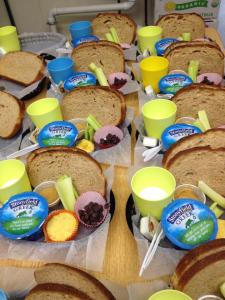
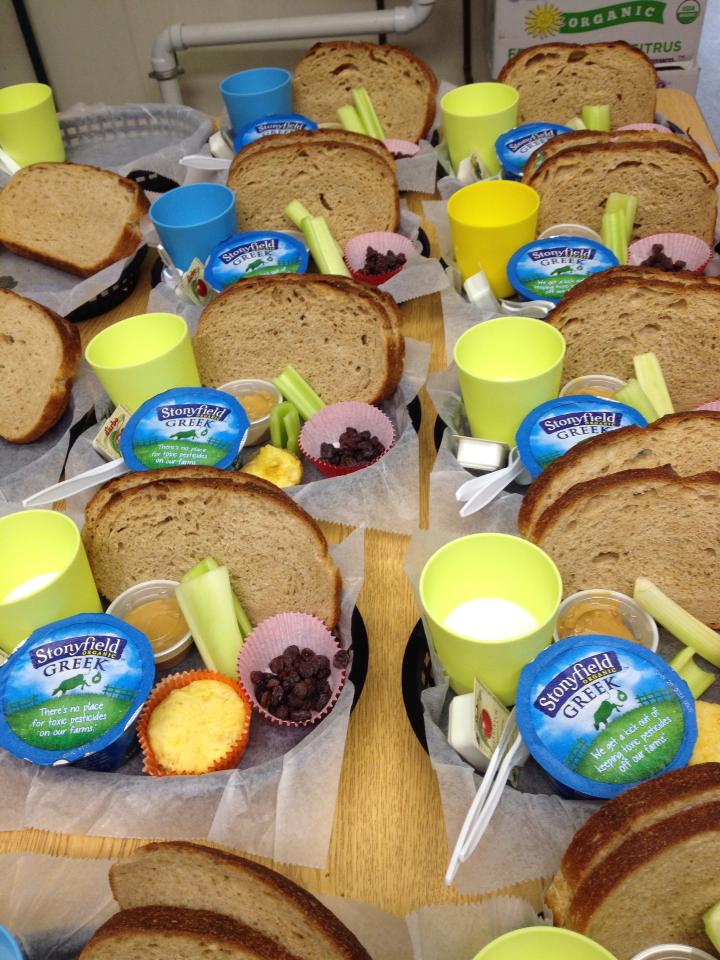
A typical lunch includes an organic dairy item or two, fruits, veggies, a home-baked item, and multi-grain  bread.

A typical lunch includes an organic dairy item or two, fruits, veggies, a home-baked item, and multi-grain bread.

She used November and December to nail down her menu to be able to hit the ground running when school started back up this month. “I just kept honing, and honing, and honing it until the kids were getting a product they like,” she said. Having previously juggled a range of about 30 meals, she started thinking, why not pick 2 weeks’ worth of food and keep repeating those meals? She wants TNCS students to really embrace the Garden Tuck Shop program in all its facets, from enjoying the food to understanding its importance for their health. By using a regularly rotating system of meals, she would limit the unfamiliarity aspect that turns some kids off to a new food. “They might respond better to something that’s a bit more consistent,” she says. “Simplicity is better; you can put as much protein into a meal as you want, if they don’t eat it, it doesn’t really matter how protein-packed it is.”
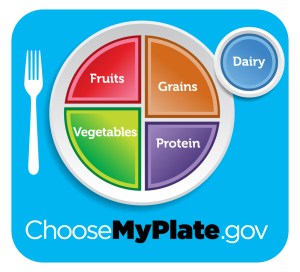
The MyPlate poster hangs on the cafeteria wall to remind students that eating a balanced meal is necessary for optimum functioning and health!

The MyPlate poster hangs on the cafeteria wall to remind students that eating a balanced meal is necessary for optimum functioning and health!

Transitioning

During this 2-month transition phase, Chef Emma also made “personal appearances” in the classrooms to talk to the kids about their lunches. “Once I went round to the classroom to discuss color, texture, and taste and well as vitamins and nutrients and what they do for your body, even kids who hadn’t previously been eating very much had at least tried everything on the plate, and overall the results were really quite amazing.” To support the educational component, she posted MyPlate information around the cafeteria. “I want the kids to be able to tell me where the dairy is coming from on the plate, where the grains are,” she says. MyPlate is a visual reminder to kids to balance their meal with healthful choices and is endorsed by First Lady and healthy school lunch advocate Michelle Obama.

Also during the transition phase, Chef Emma received a lot of parent questions about some of the newly appearing menu items, particularly with desserts. She said she suddenly realized that what she does in the kitchen hasn’t always been quite clear to parents. “I cook from scratch every single day. The ‘cookie’ is homemade; the sandwich is homemade with homemade bread.” Concerns arose that kids participating in the program would come to expect dessert every day or, worse, eat only the dessert item. Says Chef Emma, “If the kids were going to eat anything, it was going to be dessert, so if I could hide vegetables and seeds in those baked goods, the kids are still getting proper nutrition. However, I just want to reassure everybody that during the transition, when we were trying to see how far we could go with certain salads, breads, and other baked items, that whenever you saw a cookie, a cupcake, or a slice of cake, it was enriched with hemp, chia, flax, sunflower seeds, or poppy seeds, because I know that there were concerns about having desserts on the menu.”
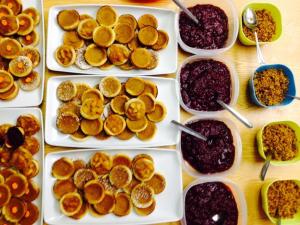
Each  component of this dessert is homemade, nutritious, and thoughtful.

Each component of this dessert is homemade, nutritious, and thoughtful.

She has arrived at a happy medium, she reports. Program participants get their main dish (e.g., pizza, faux chicken nuggets, tomato soup with cheesy toasts, etc.), which is consistently accompanied by sides such as tabouleh, cous cous, warm bean salad, or Waldorf salad as well as the CSA supplementary vegetables and plenty of fresh fruit. “The homemade muffin or granola bar is there only to get more dried fruit and seeds into the kids—not as a treat per se,” says Chef Emma.

Another change is that she now serves lunch in a basket to avoid using so many disposables. “Also, clean-up isn’t so bad and lunch is a bit more fun.” It’s certainly appetizing! Another advantage is that the basket helps kids know what to expect, which is, again, part of Chef’s overall strategy. “When confronted with something they don’t all know, if we repeat it every 2 weeks the year round,” she says, “eventually they’ll grow to like it.”

The repetition is ideal for young kids, but it also presents challenges to the menu creator. “If the foods aren’t locally available because of seasonal changes, I’m going to have to supplement with conventional foods. But I also add in whatever local ingredients are available to balance.” That rolls into her greenhouse curriculum as well. “I want to get more students gardening and cooking.” So, they harvest what’s available and pickle and preserve what they can for these “leaner” months in addition to keeping season-appropriate vegetables and herbs growing all year to supplement the Garden Tuck Shop program. “The plants in the greenhouse are indigenous and perennial, allowing the children to witness the changing of the seasons and to become familiar with the plants they can grow in their temperature zone. We have a fig tree, an olive tree, three grape vines, an asparagus patch, a strawberry patch, a rhubarb patch, blackberry and raspberry brambles, and two blueberry bushes!” They also seasonally plant root veggies like carrots and sweet potatoes, and lettuce, tomatoes, peppers, and cucumbers in spring. Herbs include rosemary, mint, lavender, marjoram, oregano, sage, thyme, and bay laurel leaf. (Parents are welcome to the fresh herbs!)

Her next step was to calculate the exact nutrient content (proteins, carbs, lysine, etc. down to the smallest mineral) of each meal, based on portion size. “I want kids to understand that food is fuel and that’s why nature gives us the food that it does at the time of the year that it does. It’s so we can remain balanced and feel good.”
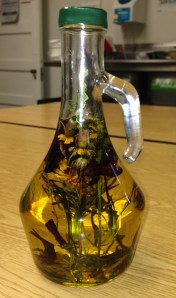
Flavoring oil is just one way Chef Emma makes use of herbs and flowers growing in the greenhouse.

Flavoring oil is just one way Chef Emma makes use of herbs and flowers growing in the greenhouse.

“Cleanest Kids’ Lunch Downtown!”

In early January, she held a seminar for teachers to educate them about each plate, and at a coming TNCS Information Night or Potluck she will also present to parents. “The last couple of years with this program have taught me that it’s all down to communication,” she said. “Success is really about communication, and I don’t want that to fall to the wayside going forward.” We’ll also be learning about how the greenhouse factors in. Classes have been drying herbs and flowers to make potpourris, flavored oils, and bouquets garni, and body scrubs and other products may also soon be available.

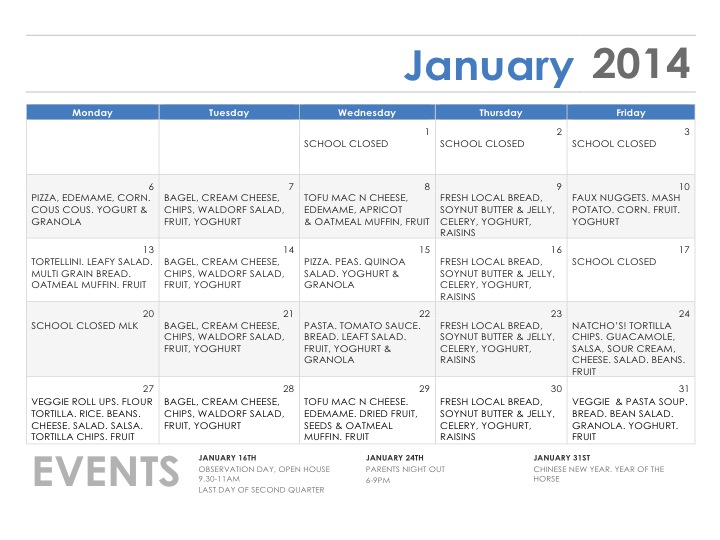
About program participants Chef Emma says, “They’ve been superstars putting up with all of this experimentation, and I think we’ve really gotten to a marketable product.” Typical lunches are faux (soy) nuggets, edamame and corn, organic Greek yogurt, fruit, and milk; spinach and cheese tortellini or ravioli, leafy salad, apricot and banana muffin, fruit, and milk; or bagel with soy nut butter and jelly, celery, raisins, organic Greek yogurt, and milk. See much of the rotating roster of 13 complete lunches, each with a minimum of 24 g protein and 1,925 mg lysine, below. Click Menu: January 2014 to download.
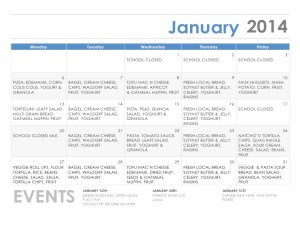
January's menu features most of the 13 available meals. Looks delicious!

January’s menu features most of the 13 available meals. Looks delicious!

Haven’t signed your child up yet? Click here to register for the Garden Tuck Shop program at TNCS!

Like Garden Tuck Shop’s Facebook page to receive updates and photos of Chef Emma’s beautiful, delicious, and healthful lunches!

Composting and collecting rainwater are next on the horizon, possibly this spring!

Open House at TNCS

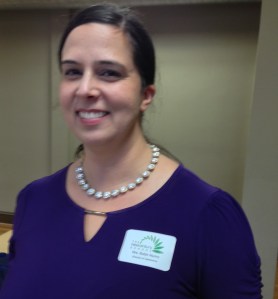
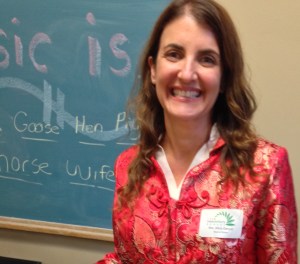
Our very own Robin Munro, TNCS Admissions Director

Our very own Robin Munro, TNCS Admissions Director

The first Open House of The New Century School‘s 2013–2014 school year got a magnificent turnout of both prospective and current families. Why attend a TNCS Open House? Admissions Director Robin Munro says:

“The easiest way for parents wanting to learn more about the Elementary, Primary, and Pre-primary programs is to attend a weekday Open House. The Head of School, Ms. Danyali, offers a presentation that provides parents a thorough overview of the school. There will also be parents of current students on hand to answer questions and ample opportunity to observe students in their classrooms. If parents like the school, I suggest that they return for a small group tour where they can bring their children for a classroom visit. We also offer a Saturday Open House, which is a perfect event for the entire family. All of our lead teachers invite children into their classrooms to explore and ask questions. Current TNCS parents should also attend to observe their own child in the classroom and to learn about the other programs. As a delicious bonus, all Open House events are catered by our very own Chef Emma and her Kitchen Garden Tuck Shop!”

Main Presentation

Today’s Open House began with a short introduction by Ms. Munro after which Ms. Danyali gave her three-part presentation. Attendees were given take-home information packets as well. Highlights of Ms. Danyali’s talk are broken down into synopses of each program:

Pre-primary: For children ages 2–3 years, the pre-primary classroom offers full immersion in either Spanish or Mandarin Chinese. The children are instructed only in the theme language. This phase of education at TNCS focuses on the children’s social and emotional development. “We want them to begin learning and demonstrating some independence while being able to interact well with others, too,” said Ms. Danyali.

Primary: For children ages 3–5 years, the mixed-age primary classroom offers a more traditional Montessori approach. The lead teacher is trained in Montessori instruction and guides students in correct use of Montessori materials. Language is still a fundamental part of each day, however. Assistants in the primary classrooms are native speakers of either Spanish or Mandarin and come from a variety of countries and cultures. At TNCS, the assistants give specific lessons (e.g., Practical Life and Cultural Studies) in their native language. In other words, students learn a Practical Life skill while simultaneously developing their foreign language skills. The benefits of mixed ages are numerous and include instilling pride and confidence in the older children who serve as leaders for their younger counterparts, developing socially by being able to cooperate with peers as well as children older and younger, and enjoying a sense of nurturing or being nurtured. Kindergarten is included in the primary program; Ks from each primary classroom join together in the afternoons (while the younger children are napping) for some more advanced work.

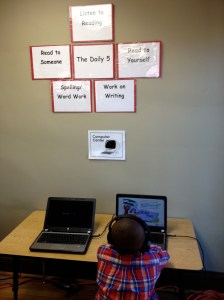
Daily 5: Read to Self, Work on Writing, Read to Someone, Listen to Reading, Word Work

Daily 5: Read to Self, Work on Writing, Read to Someone, Listen to Reading, Word Work

Elementary: For children in grades “pre-first” through fifth (and adding a grade each year), the elementary classroom emphasizes critical thinking and unit-based discovery. They incorporate the Daily 5, a literacy curriculum that helps students develop the daily habits of reading, writing, and working independently. They read Junior Great Books to encourage critical thinking and deeper understanding. Singapore Math workbooks and SuccessMaker computer software round out the STEM subjects.

Ms. Danyali next spoke passionately about what sets TNCS apart from other private schools. The following list is by no means exhaustive, but here are some perennial favorites.

Head of School, Ms. Danyali gave an overview of TNCS programs for today's Open House.

Head of School, Ms. Danyali gave an overview of TNCS programs for today’s Open House.

What Really Sets TNCS Apart

  • Sustainability: TNCS has initiated Recycling Teams; uses green, non-toxic 7th Generation cleaning and paper products exclusively; and is 100% wind powered by Clean Currents!
  • Kitchen Garden Tuck Shop Program: Run by Executive Chef/Master Gardener Emma Novashinski, this program provides an organic, locally sourced, homemade lunch to participants as part of TNCS’s emphasis on healthful foods for kids. For all TNCS students, the on-premise greenhouse offers chances to explore plant growth from the seed up. Students plant, tend, and harvest produce as well as cook and eat it.
  • The Lingo Leap: The gymnasium/auditorium houses Gerstung equipment and the Imagination playground as well as a stage for our two school-wide annual performances. TLL is also available to host really great kids’ birthday parties!
  • Volunteering: Each TNCS family contributes a minimum of 8 volunteer hours to the school per year. TNCS believes that parents can be better involved in their children’s lives at school this way as well as meet other TNCS families. The volunteer coordinator makes it easy to match your particular skill set to specific volunteer tasks.
  • Lecture Series: New this year, TNCS will be inaugurating this initiative with Dr. Bonnie Zucker on November 13th, 9 am–10 am. Come hear Dr. Zucker’s presentation on how to raise Anxiety-Free Kids.
  • Extended Campus: Because TNCS believes strongly in community, we want students to become very familiar with the school’s environs. They take walks to nearby parks, the post office, or to special Fell’s Point happenings. In learning about their broader community, they will better participate in and contribute to it.
  • Multilingualism: Learning foreign languages increases brain elasticity, executive function, and critical-thinking capacity. How you learn a language is key. Research shows time and again that rote learning is far less effective than immersion. Throughout each phase of TNCS education, full or partial immersion is implemented.
  • Differentiation: Each child is an individual, with strengths, preferences, and traits particular to him or her. TNCS is unique in being able to individualize instruction to each child. “We can accommodate whatever level your children need in terms of education. We will meet them were they are,” says Ms. Danyali. This is possible both because of mixed-age classes and small class sizes.
  • Immersed: TNCS publishes this blog weekly to keep you informed about school events, initiatives, and relevant topics. we invite your participation and feedback!
  • Specials: TNCS emphasizes The Arts. Our art, music, and movement classes are truly special and cultivate your child’s creativity and humanity.
  • Staff: TNCS staff are truly dedicated, loving people. Our children are nurtured—cherished, even—as they are guided through their school day, learning, absorbing, and discovering the while.

Again, the list goes on and on . . . TNCS is a very special place.

Q&A and Classroom Observation

The Open House presentation ended with a Q&A series during which parents asked a lot of great questions about school particulars. A particularly incisive one asked of the currently enrolled families was, “What’s it like to have bilingual kids if you don’t speak the language?” Answers ranged from getting additional support from apps to learn with the child to the child intuitively understanding the correct context for speaking in Spanish or Chinese (i.e., to another speaker of that language). TNCS is also making more opportunities available to parents to learn these languages. The Word of the Week appears on TNCS’s home page, and an upcoming blog post will offer tips for practice at home from our two resident language curriculum experts Senora Capriles and Xie Laoshi.

Finally, parents were free to roam about the school and observe students in classrooms in real time, which is where TNCS really shines.

If you missed this first Open House, not to worry! Two more are offered in November and a third in January. Visit the website to register, because, as Ms. Munro says, Open Houses are the best way to learn more about TNCS’s programs—first hand!