Two TNCS Elementary Teachers Lead Education Conference in China!

At the end of October, The New Century School elementary teachers Kiley Stasch and Dan McGonigal traveled to Beijing, China to present at the International Cooperation Project for RiSE Teachers. The actual conference was held in a town that was a 2-hour drive outside of the city.
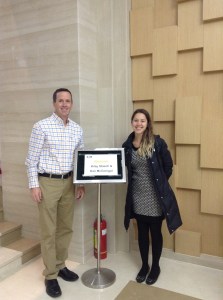
tncs-elementary-teachers-lead-conference-in-china

Our fearless conference leaders!

Mr. McGonigal explained that TNCS Co-Founders approached him and Ms. Stasch with the idea to lead a 3-day conference in China involving extensive educational professional development at the “RiSE Center,” which is an afterschool and weekend educational program. “In China, afterschool and weekend programs does not have the same meaning. There, such programs mean extensive education, so RiSE takes advantage of that time and immerses students in the English language by teaching all of their subjects in English. Very much like what we are doing at TNCS—teaching core content in another language. So they want to Americanize their approach to get students more engaged, incorporating more hands-on activities. They wanted to see how we handle classroom structure and appealing to different learners,” he said.

For some background, in China, younger students have about 6 hours additional learning each week; older students have about 8. This is on top of an already 10-hour school day, so on the 2 days a week the students attend the RiSE Centers, their school day stretches to 12 hours. They will also spend 4 to 6 hours there in weekends.

Many of the approximately 100 conference attendees were teaching at the pre-Kindergarten level and looking for tools for English language learning. “So, we had to adapt some of the materials we had prepared in advance to better target their needs,” said Ms. Stasch. “Yes, they were especially excited about the Language Arts aspects,” agreed Mr. McGonigal.

Ms Stasch provided this overview:

With one exception, the RiSE teachers were native Chinese but had all taught English abroad and spoke English very well—no translators were needed. They were all so excited and really enjoyed the opportunity we were bringing to them. Some of the STEM-teaching concepts were different for them and a little harder to grasp, but they were  eager to implement a lot of our teaching recommendations in their classrooms. Their curriculum is already designed, and they do not have a lot of say in that matter, but some of the founders and top members of the program were participating and were listening very carefully to our presentations. They seemed amenable to restructuring some of the curriculum to incorporate more STEM and maybe the Daily 5, for example.

The teachers were trying to convey two primary concepts: the value of independent learning and how to better manage the classroom. Their presentations are available for download at the end of this post.

Said Mr. McGonigal:

What they kept coming back to in their questions was how to get and keep students engaged. As part of their culture, Chinese students are naturally reserved and maybe a little shy, so getting them to actively participate can be a bit of a struggle. Instructors also wanted suggestions on how to help their students understand that answers are not always black and white and that they do not always have to be ‘right,’ or perfect per se. But they are scared that if they share something in class that they will be wrong and will be shunned for it.

“Yes,” agreed Ms. Stasch, “they seem to have a very matter-of-fact way of thinking. Rather than explore ideas, they want to know what is the correct answer because they know they will later be tested on it. Even the RiSE teachers had some trouble understanding how to teach using questions and open-ended lines of inquiry. They were bewildered that we were giving them questions instead of answers!”

“But we helped them see that if students ask their own questions, they are in charge of their own learning and will get them thinking on their own,” said Mr. McGonigal. He continued:

Another recurring topic was behavior management. We tried to instill in them the idea that these are practices that help manage behavior, too, because if you get students asking questions they are more focused and there are naturally fewer behavior problems as a result. In everything we did, we tried to incorporate why independent learning is so valuable. Using a stations approach instead of whole class is also helpful because you’re more able to meet students at their particular levels and help them individually, which also helps reduce behavior problems.

Believe it or not, even given the respect for teachers and for the classroom ingrained in students since before kindergarten, they do “act up” from time to time. Ms Stasch explained that, “this might be because the RiSE teachers tend to be newer teachers with less experience and therefore less-developed classroom management skills.” Another factor is that because this is an afterschool and weekend program, the kids probably feel more relaxed than they would in regular day school, where the environment is more rigid (see TNCS Visits Schools in China!)
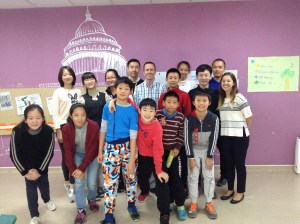
tncs-elementary-teachers-lead-conference-in-china

RiSE students

“We saw this when we did our demo lessons,” said Mr. McGonigal. “The kids were very loose and relaxed with their teachers. It was similar to an America classroom. But the minute we started teaching , they became very attentive, very minds on. Part of this might be because we were speaking in English so they had to pay close attention in order to understand what we were saying. Some other reasons could be that we were new faces to them and also that there were cameras in the room. But I think behavior is always relative. What is considered a behavior problem there might not be here.”

When asked about their overall impressions of the trip, Mr. McGonigal replied, “One of the things that really hit home with me is that the teachers there are amazingly dedicated. We were doing this professional development with them until 5:30 pm, and then they were also given homework to complete before the next day’s session. They would often be up until midnight working with their teammates.”

Ms. Stasch agreed: “And they ask lots and lots of questions. They really needed to know that they were headed in the right direction and are eager to please. They expected assessments the next morning and were very excited about those. They charted the assessments and then had a cumulative assessment at the end. We really adjusted our process to add these assessments and to allow more time for questions.”

Mr. McGonigal explained the rationale for the cumulative assessment: “They did this to determine who was the valedictorian. They also wanted a points system for in-class work. Everybody earned their certificates at the end!”

Although with 3 days for their conference, 1 day for teacher interviews, and 1 day for the demo lesson, it sounds like an all-work, no-play trip, they actually also had 2 1/2 days for sightseeing and visited the Great Wall, the Summer Palace, and the Forbidden City. They loved the food and tried lots of unfamiliar dishes. (However, eating fine-boned fish with  chopsticks proved a challenge.) “It was a really great experience,” said Kiley. “For both of us it was the first time to take on a leadership role in professional development, and we both learned a lot,” said Dan.

This slideshow requires JavaScript.

For their presentations, please download the following powerpoints:
TNCS Lower Elementary Goes Around the World in 80 Days

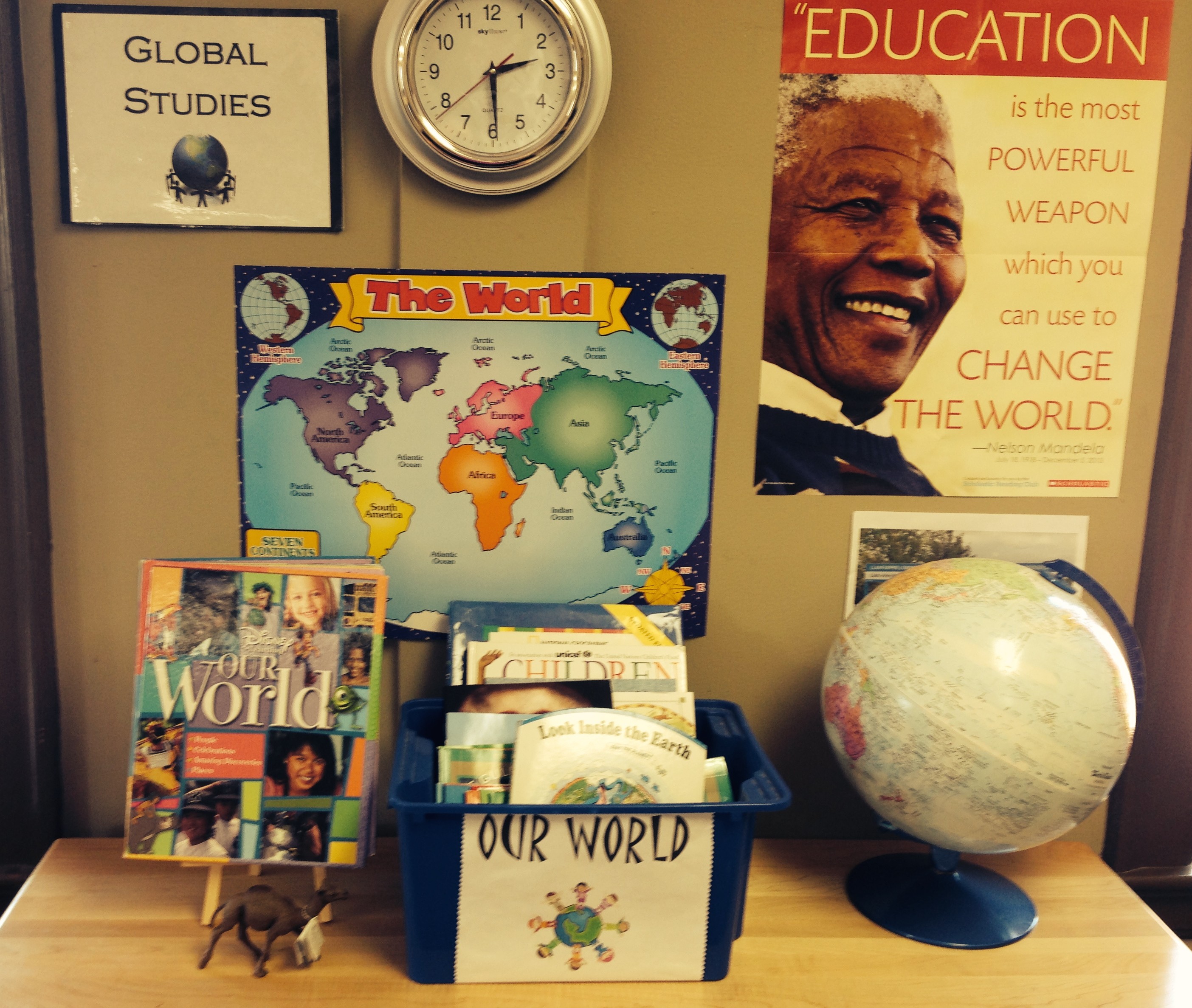
Global studies is always an important theme in Ms. DuPrau's classroom.

Global studies is always an important theme in Ms. DuPrau’s classroom.

All while never leaving the classroom! The New Century School lower elementary teacher Adriana DuPrau designed a project to stimulate her 1st-graders and expand their horizons—passports to circumnavigate the globe! They created passport books to prepare for their global “travel” beginning the first week of the 2014 school year. In less than 3 months, the class visited six of the world’s seven continents, missing only South America. (It really was just about 80 days, just like in the original 1873 Jules Verne adventure novel. No hot air balloons, though.) To launch this fantastic and inspired undertaking, Southwest Air pilot and TNCS dad “Captain Marc” visited the class to talk about air travel, time zones, airplanes in general, and airplane safety. Each child then got a Southwest travel pack with pretzels, activities, and even a pair of wings to pin on their lapels! Ms. DuPrau says, “the kids were so excited and asked Captain Marc lots of very good questions, like ‘how do airplanes fly?'” Captain Marc managed to fly above that one.

Having gotten their passports in order and received their wings, the kids were ready to set out. Oops! One more thing. Before exploring each new country, the students profile a day in the life of a first-grader from that country to compare and contrast it to their own lives. Africa was their first destination, Kenya, to be exact. The students had learned that classrooms in Kenya comprise as many as 60 students—quite a difference from what they are used to!  Two guests spoke about this exotic country. One class mom lived there for a year and brought in lots of pictures and taught the kids to carry things on their heads, just like the Kenyans do. She also talked about climate, geography, culture, cuisine, and the native animals. The other guest spoke about his experience growing up on a giraffe farm, such as awaking in the mornings to see a giraffe poking its head through the window of a bedroom conveniently located on an upper floor. The kids were utterly enchanted!

From Kenya, the class traveled on to Switzerland, escorted by another class dad who once lived there. Before moving on to a new country, however, says Ms. DuPrau, students color the flag of the country they just visited and will compile these in a special flag book. Skiing, chocolate, and watches were the highlights of the iPad presentation on Switzerland. The kids were very interested in Swiss culture, and they especially loved hearing about the extensive rail transportation system. Swiss money was another object of fascination, and from here the kids began collecting currency from each new place.

With Chinese New Year looming, the class went on to China, with presentations by Wen Laoshi and Xie Laoshi as well as by Ms. DuPrau herself. The class had learned that first-graders in China have much longer school days and felt pretty lucky by comparison. They delved into holidays and cooked Chinese dumplings together as part of their cultural exploration of China.

All aboard for India! Next, “Ms. J.” (TNCS aftercare teacher) came in to take the kids to her native India. Ms. J. focused on music, cuisine, religion, and traditional clothing. She also sang a classical Bharatanatyam South Indian song, which is her special talent, and passed out honey and fennel pastries—“the kids loved them!” They washed it all down with mango juice, which was another wonderful new treat.

A quick stop in California represented the class’s North American visit, and a class grandmother came in to present this one. She created an interactive map that the kids could place stickers on after hearing about a particular part of California’s geography (e.g., mountains, desert, beaches, etc.).

From the west coast of the United States, the class returned to Africa with another member of TNCS staff who came to us from Ethiopia. This presentation took a slightly different tack. Ms. Kipnesh first prepared a written overview of her country. We learned that Ethiopia has a very temperate climate, ranging from 50°–70° and that it’s the second most populous country in Africa, after Nigeria, comprising over 80 nationalities within its narrow borders! It has several other important distinctions as well, we learned, being the only African country to resist colonization and having maintained its independence for more than 3,000 years! It’s also where a very early human ancestor was discovered—“Lucy“, an Australopithecus afarensis, is about 3.2 million years old. For the presentation itself, the first-graders trooped down to the TNCS kitchen where they got to watch Ms. Kipnesh in action, preparing an authentic Ethiopian dish, while teaching a few words in her native language and donning Ethiopian fancy dress, called habesha kemis. During the preparation of Ethiopia’s national dish, enjera (also injera) be doro wot, Chef Emma helped out by explaining how Ms. Kipnesh made the dish step by step and providing other useful information about Ethiopian cuisine. This highly nutritious and delicious dish traditionally is made with chicken and eggs, cabbage, and cheese, but TNCS students got a lentil substitute for the chicken and eggs.

Back to Asia! Saudi Arabia was the next stop, which a class mom originally from that country spoke about. She brought in headdresses for the boys to wear and showed traditional women’s garb. She made a big poster detailing the climate, the geography, and the animals living there. Did you know that Saudi Arabia is one of just a few native camel habitats? The fun didn’t stop humped beasts, however—fig cupcakes were next! We have it on good authority (i.e., Ms. DuPrau) that these cupcakes were the best anyone had ever eaten.

Next they headed west back to Europe. (This was a zig-zagging journey of necessity.) A British class dad presented Wales and Scotland to the class. Rugby and biscuits were a big part of this talk, natch. Wales is notable for having one of the world’s longest place names. (Serendipitously, the class was able to visit the place with the longest name before their journey’s end.) Llanfairpwllgwyngyllgogerychwyrndrobwyll-llantysiliogogogoch and its surrounds were full of interesting facts, even if no one was able to pronounce what sounds those 58 letters combine to produce. If you have given up and the suspense is killing you, click here!

And on back to Asia for a Skype visit to former class assistant teacher Ms. Chae in Korea! This trip wasn’t as strictly educational—the kids were just eager to catch up with their dear friend! However, they did learn about the Korean flag, the cuisine, and traditional Korean clothing in between the flurry of news exchanges!

Veering southeast, the class finished up with a trip to Thailand. The kids learned about Thailand’s tropical monsoon climate, why elephants are immensely important, and that rambutans and mangosteens taste sublime but that durian is extremely off-putting to the foreign nose! They also learned how to properly wai their ajarns. Finally, it is Bangkok that actually has the distinction of having the world’s longest place name. With 163 Thai letters without spaces, “กรุงเทพมหานคร อมรรัตนโกสินทร์ มหินทรายุธยา มหาดิลกภพ นพรัตนราชธานีบูรีรมย์ อุดมราชนิเวศน์มหาสถาน อมรพิมานอวตารสถิต สักกะทัตติยวิษณุกรรมประสิทธิ์” (or, Krungthepmahanakhon Amonrattanakosin Mahintharayutthaya Mahadilokphop Noppharatratchathaniburirom Udomratchaniwetmahasathan Amonphimanawatansathit Sakkathattiyawitsanukamprasit) translates to “The city of angels, the great city, the residence of the Emerald Buddha, the impregnable city (unlike Ayutthaya) of God Indra, the grand capital of the world endowed with nine precious gems, the happy city, abounding in an enormous Royal Palace that resembles the heavenly abode where reigns the reincarnated god, a city given by Indra and built by Vishnukarn.” Who knew? Click here for audio pronunciation.

It goes without saying that our now seasoned world travelers enjoyed themselves tremendously and learned scads of information about each country but also broadened their mental vistas. Volunteer speakers also benefited greatly by sharing their cultures or reliving once-in-a-lifetime experiences. Ms. DuPrau, this was a truly wonderful class project, combining the best elements of learning—discovery, interactivity, and real life. Wherever you take TNCS elementary students next along their scholastic journey, the destination will be well worth the visit!