Together We Can: TNCS’s Black History Month Celebration 2025!

At The New Century School, “creating an inclusive environment is at the heart of everything we do.” So said Head of School Ann Marie Simonetti to open last night’s Black History Month Celebration. It will be lost on exactly no one just how poignant those few simple words were at this . . . beleaguered moment in U.S. history.

Commitment to Inclusion in Challenging Times

Last night, however, was all about the hope, joy, and community that TNCS represents. And what a way to close out Black History Month! As she continued her opening remarks, Ms. Simonetti set the tone for the evening by reaffirming TNCS’s unwavering dedication to fostering an inclusive environment:

Our core values and portrait of a graduate reflect our dedication to honoring the diverse identities, experiences, and backgrounds of our students, families, and staff. As a school community, we strive to prepare students to thrive in the increasingly diverse world. Understanding history, embracing different perspectives, and standing for equity and inclusion are not just ideals, but necessities. In times when efforts to diminish equity and the truth of history are making headlines, it’s more important than ever that we remain committed to recognizing and preserving the contributions of individuals from all backgrounds and ensuring that every story is valued, and every voice is heard. Dr. Maria Montessori called on us to provide conditions that will allow our children to give us a true picture of the society of the future. Tonight’s celebration is one way that we do just that.

She then asked the audience to stand, as TNCS students raised their voices in song, and TNCS’s auditorium rang for the next hour with powerful voices, moving poetry, call-and-response, and joyous songs commemorating Black History Month.

Celebration Through Expression

Parents and staff watched with pride as TNCS students demonstrated not just their artistic talents, but their growing understanding of equity, justice, and the importance of amplifying diverse voices. We cannot overstate how much team effort went into making this event a resounding success, from the student-made art festooning the walls, to TNCS Music Director Martellies Warren’s rousing—and beautiful—choral selections, to all of the behind-the-scenes-but-no-less-appreciated support from teachers and other staff.

This slideshow requires JavaScript.

The Show Must Go On. . . 

When TNCS K–8 students took to the stage (in high style), the enthusiastic response from audience members confirmed that our community treasures these opportunities to come together in celebration of our shared humanity and diverse heritage.

Lift Every Voice and Sing

First up, the “Black National Anthem”!

Something Inside So Strong

Wade in the Water

Some Very Special Extras 

But that wasn’t all. TNCS students read excerpts from Amanda Gorman’s “The Hill We Climb” and spoke on themes central to Black History Month, like the importance of the Divine Nine.

The grandmother of a TNCS preschooler even came up to read Amanda Gorman’s Change Sings, backed by slides showing the beautiful illustrations by Loren Long.

This slideshow requires JavaScript.

And TNCS favorite LaTriese Sussman led the audience in a Call and Response adapted from Rebecca Parker’s poem “Choose to Bless the World.” Ms. Simonetti confessed that she knew this moving celebration was going to bring her to tears at some point, and this beautiful, whole-community participation piece did the trick.

Reflections . . . and Looking Forward

In a time when difficult conversations about race and history are sometimes avoided, TNCS embraces them as essential to developing compassionate, informed citizens who will shape a better world. This Black History Month celebration wasn’t just about looking back—it was about moving forward together with greater understanding and purpose.

This commitment feels particularly significant today. While some governmental policies appear to be rolling back progress on diversity initiatives and historical accuracy in education, TNCS stands firm in its belief that understanding our complete history and embracing multiple perspectives are essential for preparing students to navigate our diverse world. The light of understanding that shone so brightly during our celebration continues to guide us forward—illuminating not just where we’ve been, but the more inclusive, equitable world we’re working to create.

Together, we can.

Meet the Teacher: Andrew Callahan Joins TNCS’s Middle School Program!

The New Century School occupies an elite niche in education, providing instruction and learning opportunities for students ages 2 all the way up through 8th grade. To accomplish this mighty task, TNCS uses both programmatic and physical divisions to optimally serve the spectrum of needs all these students will have at their very different developmental levels. Importantly, the same amount of care and resources pour into each division.

Now in its 15th year, TNCS began as just a preschool. As the years went by and the student body got older, TNCS sequentially added grades—and physical spaces—to keep up with its students and to be able to continue flourishing, serving an expanded enrollment with its mission.

TNCS’s middle school (grades 6–8) is special for all these reasons, but it also stands out in other ways. It represents a double turning point: it’s the culmination of an 11-year educational journey for many TNCS students, and it’s also the safe place where TNCS students prepare to join a much larger world. As the middle school has matured, other opportunities inherently aligned with TNCS’s mission and identity have emerged—namely, scholarships. TNCS offers these scholarships to Baltimore students in underserved populations who have demonstrated academic excellence. The middle school years are critical in so many ways, and TNCS makes sure its middle school students are advantageously equipped.

Welcome, Andrew Callahan!

Its teachers are the key. Enter Andrew Callahan, who joined TNCS in the 2024–2025 school year as the middle school homeroom teacher. He also serves as both English and Global Studies teacher for grades 6–8, along with the additional role of Student Engagement Coordinator. “In that capacity, I run the social-emotional learning program, help out with the service-learning program, and try to provide additional supports to our students who need it the most,” he explains. He also helps out after school during after care.

Background

Born and raised in Taunton, Massachusetts (“about halfway between Boston and Providence, Rhode Island”), Mr. Callahan’s path to teaching—and to Baltimore—was anything but direct. His educational background includes studying film and psychology at Wesleyan University, with significant experience in leadership training through the Boy Scouts of America. On graduating in 2020, he initially found himself, like many others during that pandemic-dominated time, isolated from the world and not by choice.

His first post-college position was as a work-from-home paralegal, which meant clicking away on a computer all day with no real human interaction. He asked himself, “How can I get out of this and become a more social person again?” The answer: “There are very few more social places in the world than a school.”

So, in 2021, once vaccines became available, Callahan made a dramatic change. “I was getting tired of living so isolated and just kind of wanted the opposite,” he explains. He moved to New York City, where he taught at Brooklyn Ascend High School, a charter school in Brownsville, one of Brooklyn’s poorest neighborhoods. “I’ve always really been interested in how people learn and the way you communicate to get things to stick in the long-term memory,” he shares. “Film felt like an analog into English. A lot of the thinking work is the same, and so it really has gelled really nicely.”

While teaching the students at Ascend (he managed four classes of 30 students each) was often very rewarding, other aspects that can plague any school, like teacher apathy and burnout, had a dampening effect. Fortunately, this did not extend to his newfound passion for teaching in general.

Mr. Callahan at TNCS

When his girlfriend was accepted into a Ph.D. program in clinical psychology at Loyola University Maryland, they moved to Baltimore in August 2024. After becoming interested in TNCS through an online job search, he was further drawn by its smaller size as well as its focus on service learning, which he was well versed in through the Boy Scouts. Also, he says:

The move from high school to middle school was appealing to me because when I was teaching freshman at Ascend, I was struck by how underprepared a lot of them were, and there were so many foundational things that I didn’t have the time to work on with them because we had to keep moving through the curriculum. It’s heartbreaking to have 9th grade students who literally can’t read—and it wasn’t because of intellectual disabilities, it was because no one had given them a shot. I realized I would love the chance to lay these foundations to set students up for success in high school.

Mr. Callahan initially spoke to Head of School Ann Marie Simonetti about coming to work at TNCS, and he said he immediately felt welcomed, a feeling that has persisted. “It really does feel like a place where I’ve gotten to meet so many different types of people,” he said. “My coworkers here are incredibly diverse, and I get to learn from all of them and build relationships with people who I otherwise might not meet.” Mr. Callahan also appreciates the intimate scale of his current position. He can spend one-on-one time with each of his students, a luxury he could not afford with his former larger caseload.

The significant educational challenges he witnessed early in his teacher career have made him particularly appreciative of TNCS’s approach: “Being here is a lot more uplifting. Everyone here cares so much, and no one’s going to get through 8th grade at TNCS not knowing how to read. I’m 100% confident in that.”

In his English classes, Mr. Callahan is currently teaching memoirs. “We’re reading ‘Born a Crime’ by Trevor Noah and another memoir called ‘How Dare the Sun Rise.’ It’s a great story about a woman who was raised in the Democratic Republic of Congo during wartime and then she and her family moved as refugees to the United States when she was middle school age. It’s really exciting for the middle schoolers to be able to read about this completely different middle school experience.”

In Global Studies, he’s connecting this work to ancient African history. “We started the school year at the very beginning of time. We talked about how life formed on the earth, the Cambrian explosion, then moved into the Jurassic period, and then got to humans just before winter break. Now we’re on civilizations.” Although teaching Global Studies is new to him, an uncle taught history (Mr. Callahan was actually also his student at one point), and Mr. Callahan reached out to him for insight. “[My uncle] has this great passion for what it means to be a human, what it means to be a society, and so I used that in class. We jumped way back in time to the hominids and Homo erectus then looked at how we got to today. It’s been really fun to go on this journey with the students,” he said.

Regarding his teaching philosophy, Callahan emphasizes the importance of critical thinking and of meaningful challenge:

I think that’s what education is when it comes down to it—it’s making connections and pathways. One of the things you’re teaching is media literacy and understanding the world, but you’re also teaching students how to think. Math is great and really important for understanding things that you do in your day-to-day life. People don’t think that novels and literature come up in your day-to-day life as much, but when you’re teaching people how to think critically, that’s the skill.

I want students to feel comfortable in my classroom, but I don’t want them to feel too comfortable. Growing does not happen without a little discomfort and a little frustration. Students appreciate being taken seriously, and that means holding them accountable a lot, and that’s what I hope to bring to my classroom and to everything I do here at the school.

Regarding TNCS’s multilingual curriculum, Mr. Callahan says he’s very glad to see it. Although he currently speaks only English (with a dabble of high school Latin), he studied abroad in Sweden, where he encountered jokes like:

What do you call someone who knows two languages? Bilingual.
What do you call someone who knows three languages? Trilingual.
What do you call someone who knows one language? American.

Unless they attend TNCS, that is!

Mr. Callahan is also enjoying his new city and exploring its quirky character with his girlfriend. Coming from New York City, they are surprised by all the fun, free community events happening all over. He also maintains a range of hobbies. “I love to go on hikes, which is something that I’ve been able to do a lot more in Maryland than in New York City.” He also enjoys video games, Dungeons & Dragons, basketball, and comics—a connection that runs deep: “My dad raised me on superhero comics. That’s how I learned how to read, with the first issues of The Amazing Spider-Man from the 1960s.”

These personal interests often help him connect with his students. “My video game hobby is something I’m able to relate to students with. We’re able to talk about what games we’re playing, and it really is nice to be able to talk to each other in this way.”

Mr. Callahan has obviously settled in beautifully at TNCS, and TNCS is grateful to have him on board. He looks forward to what spring at TNCS holds in store . . . and more fun around Baltimore!


Pictured is Mr. Callahan giving an English lesson. (Just kidding—he officiated his brother’s wedding last summer!)

Teaching the Art of Possibility: Adriana Boucher Joins TNCS As K–8 Art Instructor!

Art education has always been an integral part of The New Century School‘s approach to educating “the whole child.” For the 2024–2025 school year, TNCS welcomes Adriana Boucher, whose path to becoming an art teacher began in Jamaica, where she was born and raised. In 2015, at age 20, she made the pivotal decision to move to New York. Though her initial plan was simply to complete her college education while helping her mother out with her new baby brother and return home, life had other plans for her.

Her academic journey started at Kingsborough Community College, where she began working as a camp counselor and aftercare counselor. Coming from a family of teachers, education was in her blood, although she initially resisted following that path. Instead, she chose to pursue art, believing that mastering various mediums would make her a more versatile instructor. “I want to be able to teach my students everything, not just what the school says, such as you have to stick with drawing, or you have to stick with painting,” she explains. This led her to Brooklyn College, where she earned her bachelor’s degree in art, graduating during the challenging times of the COVID-19 pandemic.

After graduation, Ms. Boucher began teaching at Success Academy in New York, where she started developing her unique teaching philosophy. She discovered that creating museum-style displays of student work not only showcased their achievements but also built their confidence. “When you’re working on something, like in life, when you’re so close to something and so focused on having something done, you don’t realize how much progress you’ve made until it’s finished and you’ve stepped back from it,” she reflects.

Now teaching at TNCS, Ms. Boucher works with students from kindergarten through 8th grade. Her classes meet twice weekly, where she implements a structured yet nurturing approach to art education. She begins with fundamental concepts—her first quarter focuses on the basics of line and shading before progressing to more complex projects like portraiture.

This slideshow requires JavaScript.

She conducts “art walks” during which students present and discuss their work, fostering an environment of constructive criticism and peer feedback. She’s particularly mindful of students who start her class feeling intimidated: “I know art can be intimidating… there are kids who on the first day told me ‘I don’t like art, I don’t want to be in here,’ and I said, ‘Well, since we have to be in here, like I was with physics—I hated it but I had to do it—we’re going to do our best.'” She made the conscious decision to use the same art materials as her students, believing this demonstrates fairness and shows that success comes from skill and effort, not superior supplies.

Despite a challenging 1-hour commute each way from Westminster, Ms. Boucher finds fulfillment in her role. “Someone sent me an article about loving what you do—it doesn’t matter how far you have to go or how much you get paid to do it, you will do it, and you will love it,” she shares. Family members have questioned her commitment to the commute, but Adriana’s response was simple: “I do it because I love it.”

She continues her professional development through required certifications and maintains her passion for art education. Her teaching methodology emphasizes process over product, helping students build confidence while learning time management skills. “I try to encourage them to not focus on how the final product will look while they’re doing it, just focus on the parts of it that they are working on,” she says. She maintains a clear grading system that focuses on effort and participation, believing that every student can succeed in art with the right encouragement and instruction: “It does not need to be perfect. I just need to know if you follow the instructions, I see you put effort in it, and your work is nice and clean and presentable.”

What started as a temporary move to New York has transformed into a meaningful career in art education. As she reflects on her journey, Ms. Boucher notes with amazement, “I cannot believe that from being a camp counselor in 2015, I am still in the schools… and I have no thought of leaving, of not teaching, of not being here. I love seeing kids just be surprised at what they can do.” Through her journey from Jamaica to New York and finally to Maryland, Ms. Boucher has developed a teaching style that combines rigorous instruction with compassionate understanding. Her story demonstrates how following one’s passion—even when it takes unexpected turns—can lead to a fulfilling professional life that positively impacts future generations.

TNCS’S Annual Character Dress-Up Parade!

One of The New Century School‘s longest standing traditions, the Annual Character Dress-Up Parade around the Fell’s Point neighborhood never fails to delight. But this year, TNCS Head of School Ann Marie Simonetti put her own special spin on it. On Thursday, October 31st, TNCS older students took TNCS younger students literally by the hand and led them lovingly along the parade route. Ms. Simonetti said, “Pairing middle schoolers with preschoolers in this year’s ‘Parade of Characters’ provided a safe, supportive experience for our youngest students and a valuable leadership opportunity for our older ones—building connection and community across all ages.”

As in years past, faculty and staff joined in the fun, showing their own creative sides! If You Give a Mouse a Cookie, anyone?

Without further ado, all hail, ye Maleficents, Harry Potters, Very Hungry Caterpillars, and Thomas the Trains! Go forth and conquer, ye firefighters, princesses, witches, fairies, and superheroes! Bag your treats, ye Jack Skellingtons, Beetlejuices, Minions, Monarch Butterflies, and Mutant Ninja Turtles!

This slideshow requires JavaScript.

We can just imagine, as TNCS students headed home after school, possibly to more trick-or-treating, minds brimming with the excitement of the day, how they recounted their favorite moments to parents and siblings, maybe even as they recited lines from the books and movies they adore. During Halloween at TNCS, every costume tells a story and every child is a hero in their own tale.

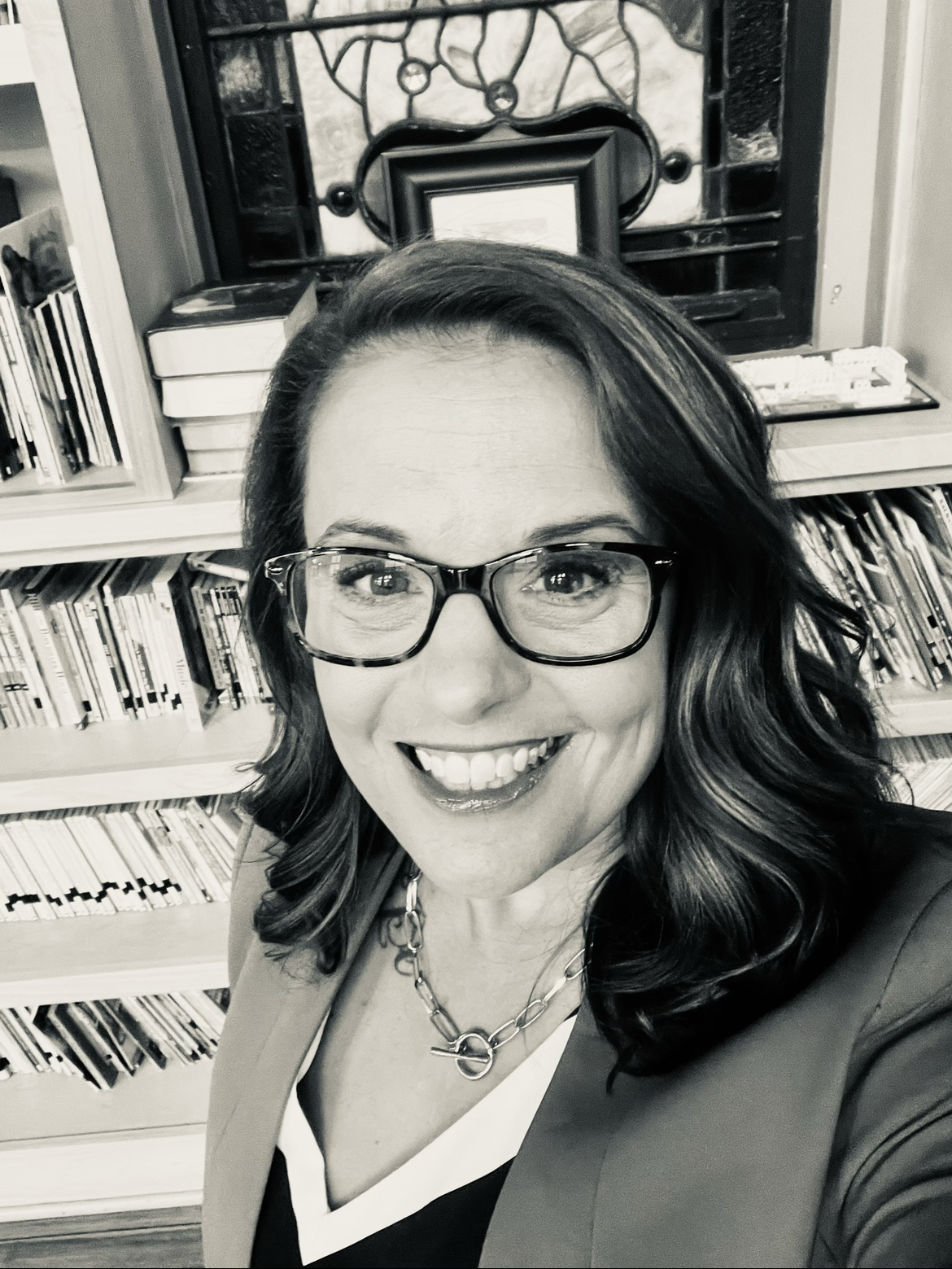
Ann Marie Simonetti is TNCS’s Head of School!

Heading into its 15th year, The New Century School made some “strategic” changes. A big one is Ann Marie Simonetti’s new role as Head of School and Director of Strategic Initiatives. Ms. Simonetti is not new to TNCS, however, having served as TNCS Admissions Director since 2021.

With her extensive background in nonprofit education, she brings a strategic approach to her role, emphasizing the importance of planning in various aspects of school management, including enrollment, marketing, family engagement, and financial sustainability.

It’s All About the Strategy!

As part of her Director of Strategic Initiatives, er, strategy, Ms. Simonetti is focused on aligning TNCS’s initiatives with its Core Values and Portrait of a Graduate.

She aims to create a shared understanding of the school’s objectives among leadership, faculty, staff, and the newly formed steering team. This approach ensures that everyone is working toward common goals, both short-term and long-term. “I think everyone must be tired of hearing me say the ‘S’ word—strategic,” she joked. “But, in all seriousness, the purpose of strategic initiatives is to serve our families’ needs as they evolve and ebb and flow.”

Organizational Approach

The school has recently adopted a more collaborative leadership model, moving away from a traditional hierarchical structure to a flatter, more circular organizational approach. This shift aligns with the agile philosophy, which emphasizes transparency, flexibility, and shared responsibility. To implement this approach, Ms. Simonetti uses a Kanban board—a visual management tool that helps track tasks, their progress, and who’s responsible for each item.

The newly formed steering team is another initiative aimed at increasing stakeholder engagement. This team, composed of families, faculty, and staff (with potential for student ambassadors in the future), provides a platform for sharing ideas, discussing successes, and addressing areas for improvement. It serves as a continuous feedback loop between the school community and leadership. Ms. Simonetti describes it as “giving families and faculty and staff, depending on what we might be working on or toward in a given season, a venue to bring ideas to the group, share successes, and what areas might need improvement.”

The 3 Cs” Communication, Community, and Connection

Communication is a crucial aspect of Ms. Simonetti’s strategy. The school has implemented a structured communication system, including daily reports for preschoolers, weekly newsletters for different grade levels, and a monthly “Third Thursday” update. Ms. Simonetti also writes a Head of School newsletter, which she sees as an opportunity to connect with families and share important information and reflections. “I see it as another way to connect with the community and do that in a really purposeful way,” she explained.

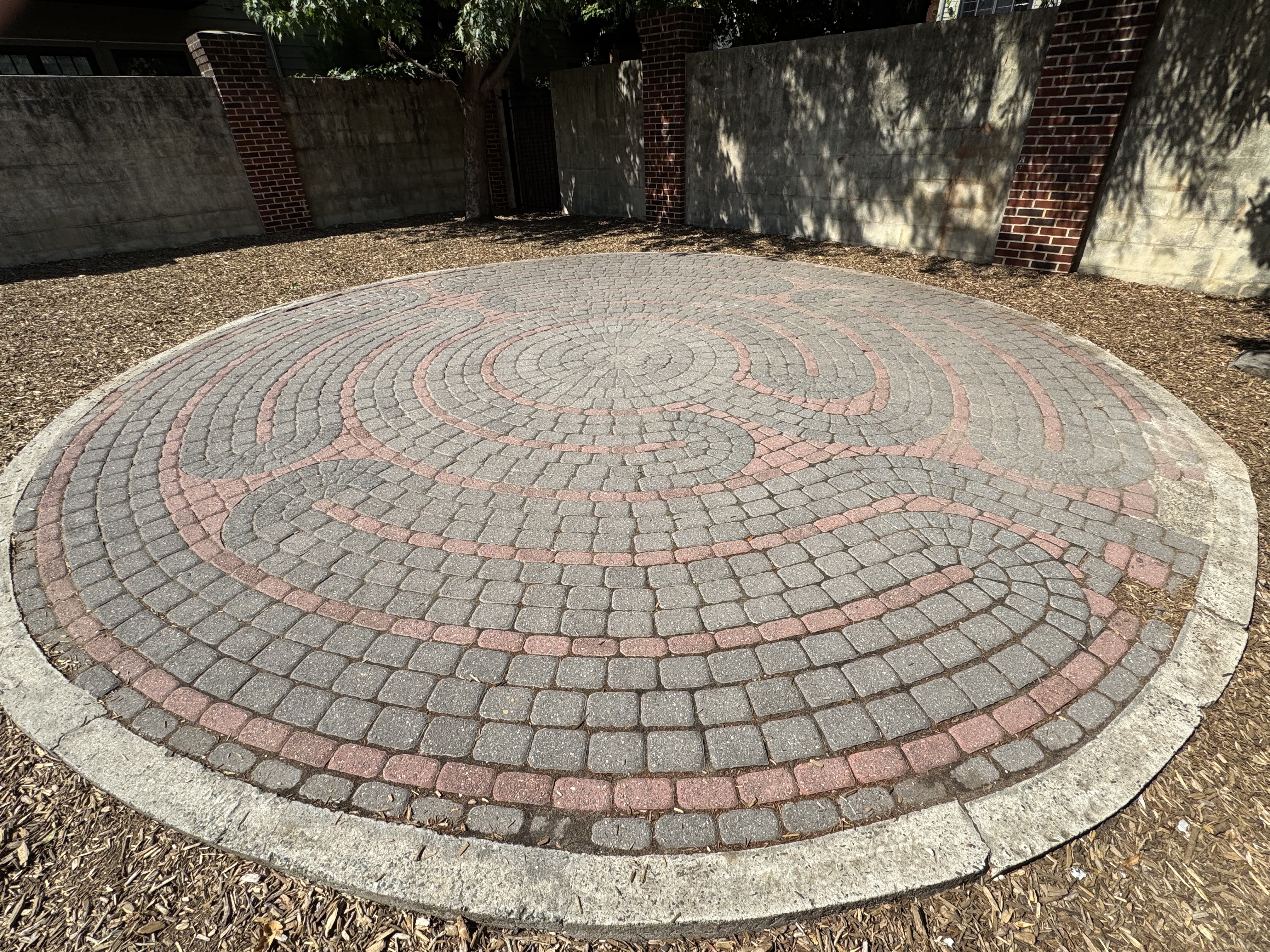
Ms. Simonetti emphasizes the importance of community and connection in her leadership approach. This was exemplified in a recent staff development activity in which the team walked the school’s labyrinth as a mindfulness exercise and sang together, setting an intention for the upcoming school year: “The way we come together as a group reflects the way that we’ll be able to bring students together in our school community.”

Customer Centricity

More Cs! Ms. Simonetti has also introduced a customer-centric model to TNCS, drawing inspiration from the Ritz-Carlton’s renowned customer service approach. During a staff development week, she used Ritz-Carlton training materials to help the team understand how to create positive experiences for students, families, and the broader community.

This approach ties into the Montessori philosophy, which emphasizes sensory experiences and mindful interactions.


Through these various initiatives, Ms. Simonetti aims to foster a connected, engaged, and purposeful school community at TNCS, where everyone understands their role in contributing to the school’s mission and success. “I start with the mission statement every time,” she said, “even if it’s for a group of people familiar with it because it’s the why. It’s why we are here in the first place.”


Ann Marie Simonetti—here’s to a great year with you helping steer the ship!