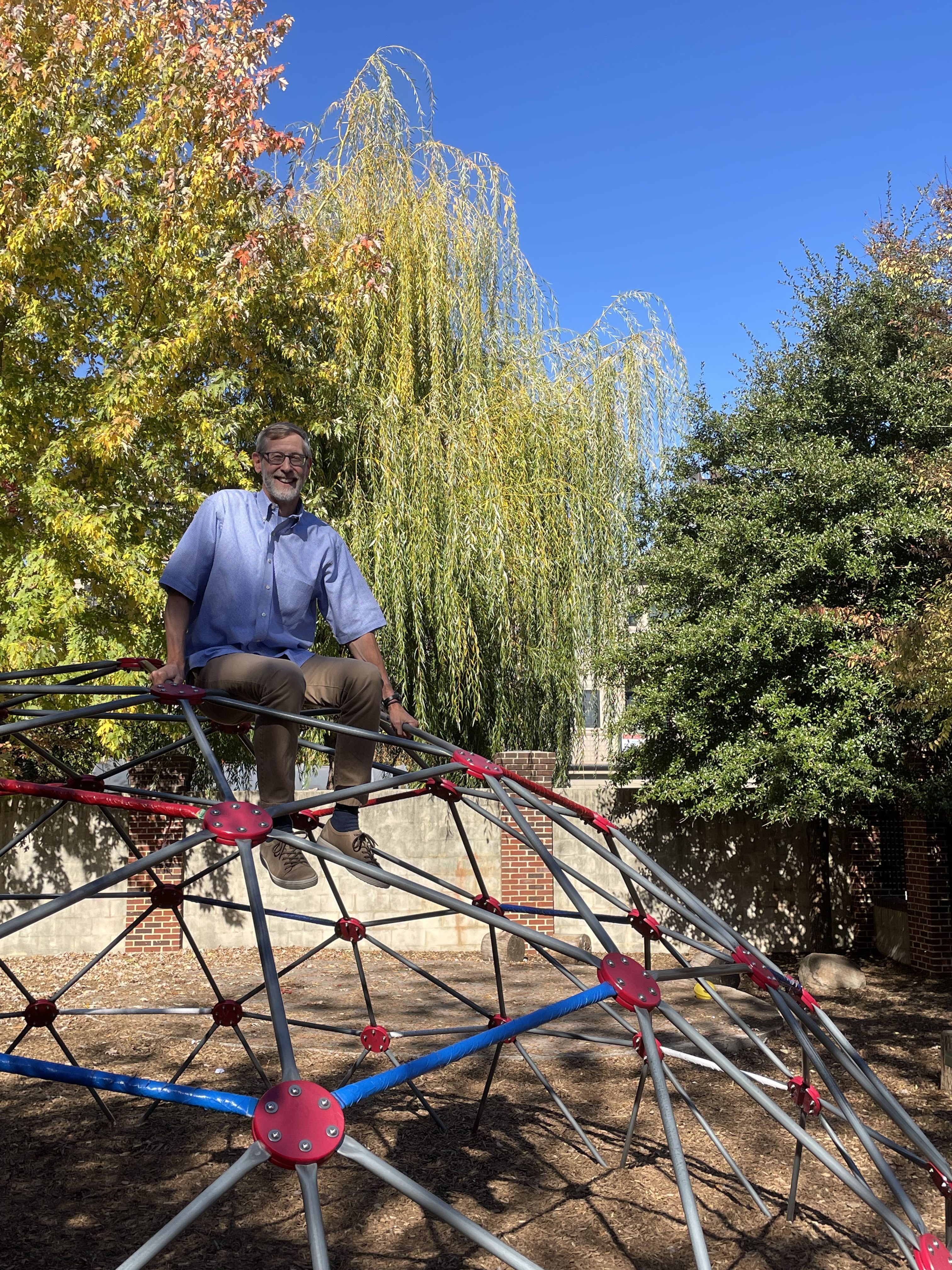
Meet Terriann Lane: TNCS’s New Preschool Coordinator!

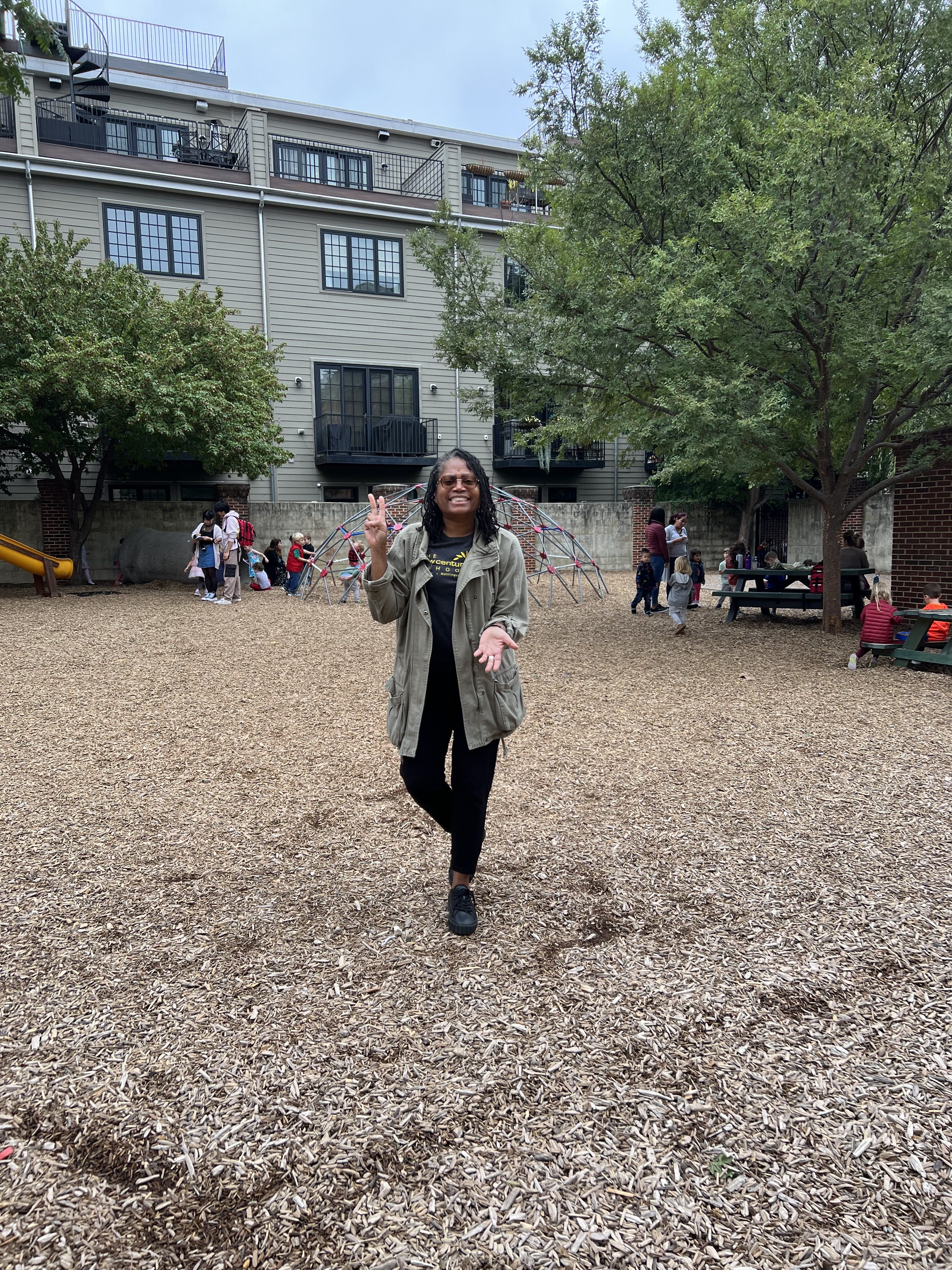
Preschool at The New Century School is where it all starts—and started! Opening its doors in September 2010, TNCS has since nurtured thousands of students ages 2 years and up. Its preprimary and primary divisions are, in some ways, the heart of the school, so it is with great pleasure that we introduce Terriann Lane, who has taken over as Preschool Coordinator! Ms. Lane’s journey spans diverse experiences and roles within the Montessori educational system.

Background

Ms. Lane is mom to two adult children. She and her family traveled extensively while dad was a naval officer. Originating from Louisville, KY, she acquired her degree in elementary education from the University of Louisville. Although she did her practicum in a traditional 4th-grade classroom, there was a period where she stepped away from teaching, focusing on raising her children while moving around in multiple states, including Rhode Island, Florida, Georgia, and Hawai’i. This geographical tapestry forms a backdrop to her diverse experiences, providing a rich context to her journey in Montessori education.

She decided to settle in Maryland around 10 years ago, drawn by the state’s abundance of Montessori schools.

Terriann Lane: A True Montessorian

Her journey in the Montessori system started as a parent looking for a suitable school for her children. Her introduction to Montessori education was a transformative moment. Comparing Montessori to what she learned during her undergraduate study, she found the former to make significantly more sense. The sight of 4-year-olds reading and writing in a Montessori classroom was a revelation, showcasing a stark contrast to her own educational experiences and what she had observed in traditional settings. This difference fueled her fascination and determination to integrate her children into the Montessori environment.

Her children embraced Montessori education — her son through primary and her daughter until elementary.

Her background in elementary education quickly came to light during her visits, and she was invited to teach, despite her initial lack of Montessori-specific training.

Deciding against teaching without proper training, she was fortunate enough to receive sponsored training in Celebration, Florida. Post-training, her journey involved extensive travel before she found herself settled and teaching in Maryland.

She taught in the Montessori classroom for 18 years, later ascending to the head of the primary program for 2 years. During her tenure at her last school, which lasted 6 years, she transitioned into a role as an instructional guide for adults at the Center for Guided Montessori Studies (CGMS). This role, which she has now embraced for 4 years, involves guiding adults aspiring to become Montessorians—an endeavor she finds incredibly rewarding. “I really love growing the learning of adults who are passionate about Montessori,” she said.

Despite her extensive experience, she maintains a humble perspective, considering herself no veteran in comparison to mentors with 30 years’ and more experience still active in the classroom. Now, venturing into a new chapter, she is excited to continue growing and fostering learning within a Montessori-inspired program at TNCS. Here, she values the palpable passion for children’s development, a cornerstone of the Montessori method.

Her journey reveals a story of growth, adaptation, and a perpetual passion for Montessori education, shedding light on the intricate tapestry of experiences that mold educators in this unique educational landscape.

Ms. Lane at TNCS!
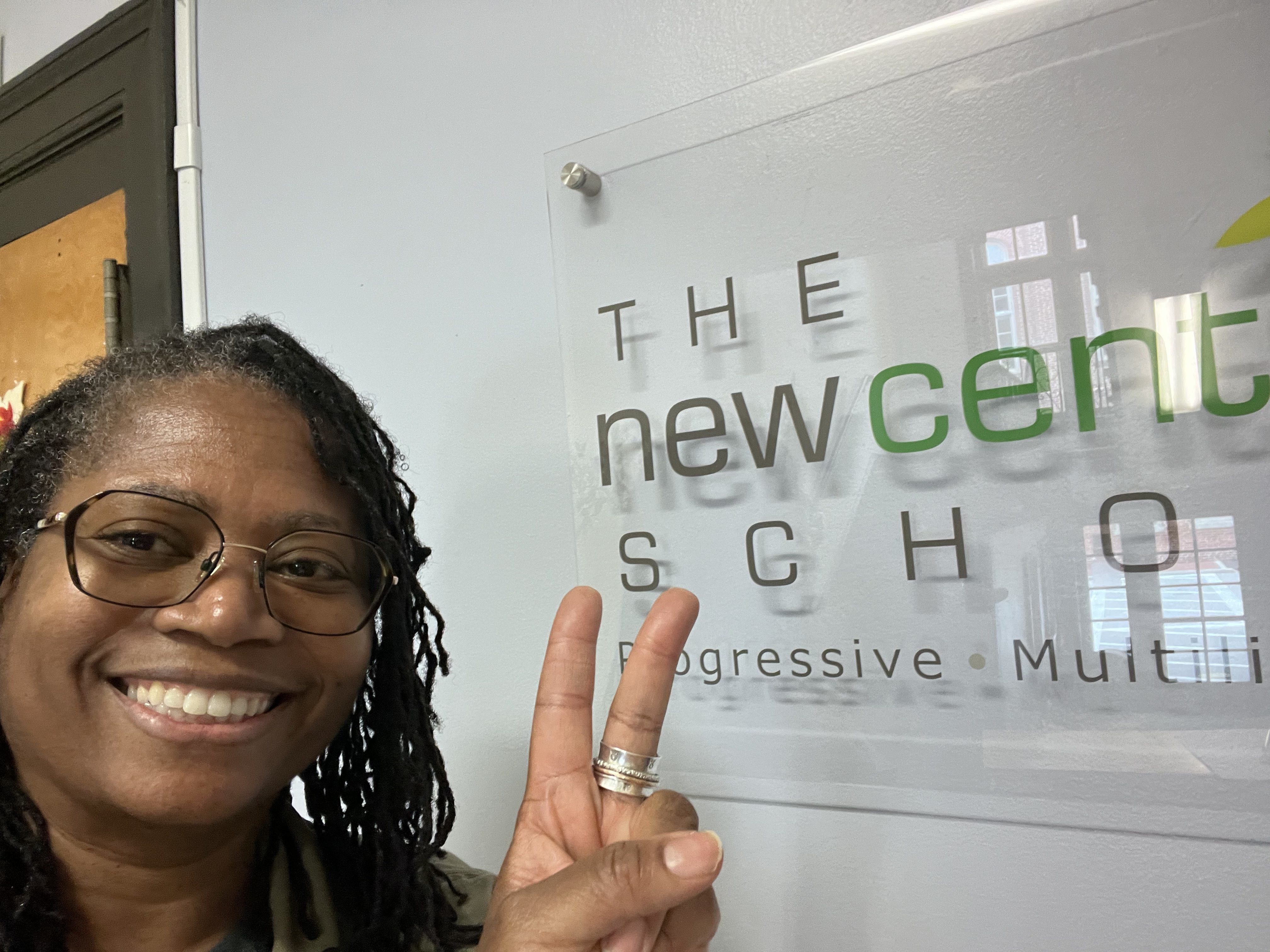
Arriving at TNCS was a consequence of change. The closure of her previous school, Nurturing Nest Montessori, in Columbia, due to the owners’ retirement, prompted Ms. Lane to view this as an opportunity to grow and embrace a new role. It was a chance to expand what she loves to do with CGMS.

Reflecting on her initial impressions of TNCS, she expressed enthusiasm for the opportunities it presents. Montessori education’s emphasis on grace, courtesy, kindness, respect, and valuing children’s independence resonates deeply with her. She sees the potential for impact, believing in the power of young learners to enact positive change in the world. Traditional education doesn’t focus as intently on this crucial aspect of growth and development.

In Montessori, the emphasis on valuing the the power of children gives us an opportunity to to change the world. We have an opportunity to do something different and and to actually change the world, even if it’s a teeny bit in our little building.

Addressing her goals for the year, she shared her vision of building a stronger Montessori program. TNCS hails itself as Montessori-inspired, and she believes that this approach can significantly benefit students. “The curriculum speaks for itself: if we follow it, we do a great service to the children,” she explained. Her ambition is to enhance the program’s strength and provide the necessary support to the adults involved, embodying her passion for Montessori education and her commitment to nurturing learning and supporting families the Montessori way.

Her transition to TNCS involved several structural changes in the classroom, focusing primarily on transforming the preprimary classroom from a more traditional daycare setting to one aligned with Montessori principles. The classroom environment is pivotal in Montessori education, serving as the foundation and an integral part of the curriculum, so ensuring it was specifically prepared to meet the children’s needs was essential.
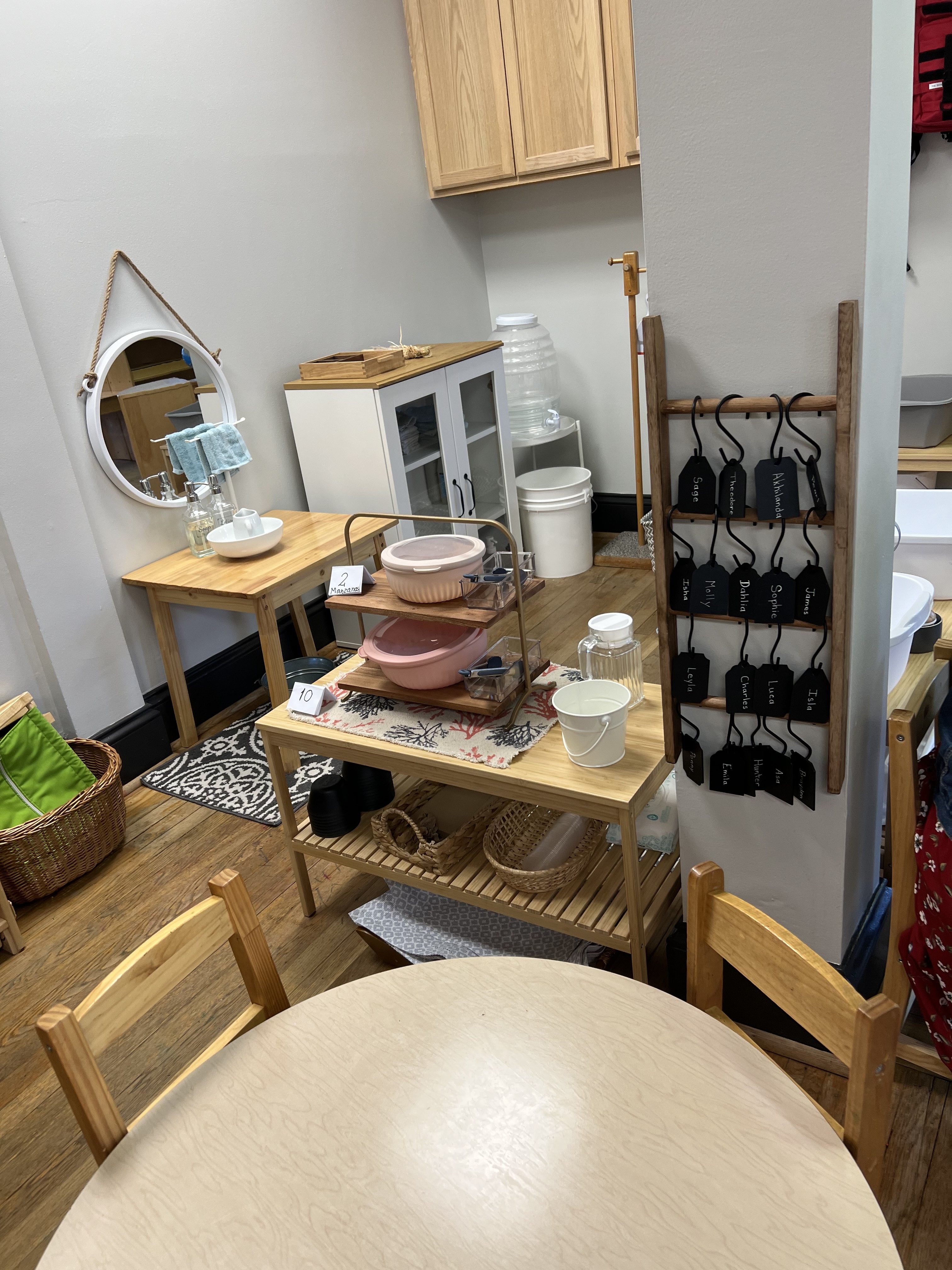
This transition was no small task and involved a thorough revamp to address aspects that were previously lacking and ensure the classrooms were authentic, prepared Montessori environments. The process required a great deal of work and resources . . . and IKEA . . . to meet the specific needs of the redesigned space.

Prior to implementing the changes, Ms. Lane held meetings to understand the needs, challenges, and requirements of the teachers. She inquired about what was working, what was lacking, and how she could offer support, emphasizing the importance of open communication.
Her approach is grounded in support rather than imposition, recognizing the importance of respecting teachers’ autonomy and not dictating every aspect of how things should be done. This balanced approach demonstrates her commitment to supporting the teaching staff while ensuring the authenticity of the Montessori environments. “What has always bugged me about traditional education is you have a lot of people telling the experts in the classroom what to do, and they all have a different opinion, so it either works—if the child gets lucky—or it doesn’t work,” she said.

Feeling embraced by the TNCS community, Ms. Lane appreciates the warm reception she has received at TNCS. While adjusting to her new role was a shift from being a classroom teacher, she still feels closely connected to teaching. Having been a teacher, she believes, enables her to offer valuable perspective and support to the current teachers. She acknowledges the clear difference between traditional and Montessori education.

Her day at TNCS is dynamic and diverse, with no 2 days being the same. She usually arrives with bags full of materials to share with teachers—items they have requested or things she believes they need. After settling in, she makes her rounds through the classrooms, observing, organizing, and preparing for discussions and quick meetings to check on progress. She then assists with the arrival of the children before addressing her emails.

The day unfolds with a mix of tasks—people knocking on her door with various needs, possible administrative meetings, and interacting with parents. The role involves more time on the computer than she had previously experienced. Despite this, she doesn’t remain stationary, actively observing in classrooms and engaging with teachers. Discussions revolve around lesson planning, observations, record-keeping, and the logistics of managing their classrooms.

Although her role primarily involves coordination and administrative tasks, Ms. Lane can’t resist engaging directly with the children. Recounting a recent experience, she shared how a visit to a classroom to observe turned into an impromptu teaching session, which she found incredibly rewarding. Eager to repeat such experiences, she informed the preschool teachers that she is available for more hands-on interaction with the students whenever they like.

She is even transforming her office space into a dual-purpose area, serving both as her workspace and an additional classroom space for children. By simply repositioning her table and adding a screen, she aims to create a multifunctional area, which, in her view, is a logical and practical adaptation of the space.


When asked what she would like parents to know, her message was heartfelt and straightforward: “From all of us, we care about your children, and we want this to be an amazing year!”

TNCS Celebrates Lunar New Year and the Lantern Festival!

One of the most anticipated annual events at The New Century School is celebrating the Lunar New Year. This year rang in Year of the Rabbit, TNCS’s second rabbit year, with the last happening in 2011, when TNCS was very much still in its infancy.

For the second year running, TNCS held a Chinese bazaar to honor the occasion. (See Li Laoshi’s Chinese Night Market from last year here.) So, on January 24th and 25th, the auditorium in building north was transformed into an indoor market of craft and clothing stalls, food vendors, and performances. This, says Yujie Peng (“Peng Laoshi”), allows students to collaborate with their peers and to communicate about real-life subjects in Mandarin Chinese.

The bazaar, she explained, presents an opportunity to explore different Chinese cultures. Students were so excited leading up to the event, she said, and it turned out even better than she had hoped. So much better, in fact, that she thinks she will need to double the goods offered next year (Year of the Dragon)! The bazaar was not only a sell-out, but it also came close to tripling the funds raised last year, with more proceeds still to come. Parents, said Peng Laoshi, had lots of positive feedback to share. Not surprising, as you’ll see!

This slideshow requires JavaScript.

As the photos (courtesy of Peng Laoshi) show, 4th- through 8th-grade students set up stations focusing on a topic that  interested them, such as Kung Fu, Chinese food, pandas, traditional traditional crafts, and traditional clothing. Qipao, for example, is the traditional Chinese dress and is commonly worn to celebrate the New Year. Students created trifold poster presentations and presented their topics in a mix of English (so attending parents could understand) and Mandarin Chinese, as part of the lesson in learning new vocabulary related to culture. New this year, Peng Laoshi asked her students to use the three parts of their posterboards trilingually, each in a different color to represent the three languages TNCS students learn: Chinese characters and pinyin in green, English in blue, and Spanish in orange. Younger students (K through 3rd-grade) made posters to decorate the walls of the auditorium.
Another special bonus is that each class did a classroom presentation in Mandarin that was recorded and shown on a loop during that class’s time at the bazaar. Courtesy of TNCS’s Mandarin Chinese teachers, these are sprinkled throughout the remainder of the post.

At the bazaar, students needed to demonstrate their proficiency in buying and selling in Mandarin as well as advertising their stations. Goods were bought and sold with tickets that attendees could buy prior to entering. “This not only allowed them to practice their language skills, but also practice life-ready skills,” said Peng Laoshi. “They need to know how to cooperate with their peers, because each station had two, three, or four students. They also need to know how to organize their station with the different items.” Prior to the event, more learning took place as students developed online research skills and then how to coherently present their research on Chinese culture according to parameters set by Peng Laoshi.

But it wasn’t all work for these industrious bazaar managers! Each student got a package that included a red Year of the Rabbit tee-shirt in one of two styles depending on division to wear on bazaar days. At the bazaar, they each got a red cup containing two dumplings and a spring roll—they could buy more if still hungry! (This proved to be very much the case, and next year Peng Laoshi plans to have extra air fryers on hand!)

The tee-shirts were a runaway hit and have made several subsequent appearances at school, including during this past spirit week’s Twin Day.

Peng Laoshi said she didn’t have a favorite presentation—they were all great—but she did express how impressed she was with some of the beginners, who learned very quickly and brought their A game to the bazaar. “Overall,” she said, “I see that students can really learn a lot from this kind of activity.”

And now, we look forward to the Lantern (Shangyuan) Festival, which happens on the 15th day of the lunar calendar and coincides with the full moon. That is Sunday, February 5th this year. Peng Laoshi says, “I hope more people around the world can know about the Lunar New Year and the Lantern Festival. It’s like a new beginning—everything’s new, and we have new hope and a whole new start.”

When asked what the celebration means to her personally, Peng Lasohi said:

The Chinese new year is one of the most important holidays in Chinese culture. It means reunion of family and celebration of the beginning of a new year. I am so happy to celebrate it with TNCS families, which is like a big family reunion and celebration. The rabbit symbolizes peace, longevity, and prosperity in Chinese culture. The year of the rabbit is predicted to be a year of hope. May the year of the rabbit bring every TNCS family good health, happiness, and abundance.


Wishing you lots of luck this rabbit year! Tù nián dà jí! 兔年大吉

Guest Blogger Ann Marie Simonetti Offers Musings on Gratitude!

Gratitude is woven into the fabric of The New Century School, a daily observance. On Thanksgiving Eve, Ann Marie Simonetti, TNCS’s Director of Admissions and Marketing and Montessori Programming Advisor, was inspired to share her deeper thoughts on gratitude and how it connects so beautifully with the Montessori ethos. 

In addition to Admissions and Marketing, “Montessori Programming” has been added to my purview this year. This is a natural addition aligned with my Montessori teacher and administrator certifications.

As we approach the season of Thanksgiving, the Montessori lessons of Grace and Courtesy often come to my mind. One element that speaks to my heart is that of gratitude, and not just in the “thank you” we say throughout the day. We show gratitude when we give and receive a compliment and in the way we actively listen to one another. One benefit of the broad “Montessori-inspired” scope of curriculum here at TNCS is the way we draw awareness and foster appreciation for all that has come before us, and all that is to come. Revisiting these concepts as part of our spiral curriculum—revisiting topics/content previously experienced and building on prior knowledge to deepen/broaden understanding—helps children place themselves in context of time and cultivate a sense of belonging.

Part of awareness comes from mindfulness, which is holistically ingrained in our social emotional curriculum. There is an art to being present in the moment; and it is truly moments— not days or weeks—that make up our lives. In order for us to appreciate each moment, we must truly experience it. Being fully present is one of the unique qualities of children. They innately appreciate the joy of each moment and savor the most minute details.

If you’ve ever taken a walk with a young child, you know that a short distance can take a long time as they stop to notice every little thing along the path. Stopping every few steps to examine and exclaim their excitement over something you may not have even noticed. This savoring and sharing is intrinsically linked to the curious nature of children.

I’m reminded of a quote describing gratitude as bestowing reverence…

Allowing us to encounter everyday epiphanies, those transcendent moments of awe that change forever how we experience life in the world.

This is just one of the countless examples of the knowledge children innately possess and opportunities to learn from them, if we are willing. Dr. Maria Montessori offered this advice: “In order to become great, the grownup must become humble and learn from the child.” 

Seeing each experience as an opportunity fosters reflection in the same way gratitude does. Even when things don’t go the way we wanted, or the way we had planned:

During staff week, I talked about how giving ourselves grace during these times, and modeling it for children, demonstrates the value of failing forward. I shared one of my favorite anecdotes from my residential Montessori training, It is in this way that we model for children the full range of human imperfection and the assurance that they too will be greatly, if imperfectly, loved.

These types of authentic experiences not only serve as models for children, but also meet our needs, as adults, for love and acceptance. Much like the tiny leaf we walk right past, that enthralls the young child, these moments help us to slow down, be fully in the moment, and to acknowledge and appreciate. Ram Dass tells us that we are all just walking each other home. But when we are gifted the opportunity to walk hand-in-hand with a child, each step becomes more meaningful, purposeful, and joyful….and for that we must be grateful.

Dr. Montessori eloquently shared, “We shall walk together on this path called life. For all things are part of this universe and are connected with each other to form one whole unity.


Immersed and the TNCS Community are grateful to you, Ms. Simonetti, for sharing these truly beautiful thoughts at this very special time of year. Your inspiration is inspiring!

Introducing Stephen Billhardt, TNCS’s New Interim Director of Preschool!

Since its inception 10 years ago, The New Century School has certainly grown into more than a preschool, having expanded to comprise both Lower and Upper School divisions. But in many ways, TNCS’s youngest students are still at its heart, and the lower school requires specialized guidance.

Meet Stephen Billhardt!

That’s why Stephen Billhardt has become TNCS’s new Interim Director of Preschool. He came to TNCS in sort of a roundabout fashion . . . but you’ll soon see how clear the path actually was! He and his wife were living and working outside of Boston when, in early 2021, she took a job with Baltimore City public schools. They did what Mr. Billhardt calls a “commuter marriage” for a year while he stayed in Massachusetts temporarily to complete his commitment working at an integrated preschool and kindergarten (and, over the summer, help his elderly father recover from a recent health incident). With both their son and daughter in their respective colleges, and the now 28-year married couple missing each other, he says it was the right move to also relocate to Baltimore. He joined his wife in mid-September and remembered TNCS from previous visits to Baltimore on walkabouts with his wife through Fell’s Point. “Any small school is of interest to me, so I had researched it to find out more about it. After 2 weeks of settling in, I reached out.” After speaking with both Co-Founder/Co-Executive Director Roberta Faux and Head of School Erika Johnson, he was hooked. Part of the appeal, he says, was the Montessori primary program, which he was familiar with because his own children went to Montessori school through 3rd and 4th grades.

Although—spoiler alert—Mr. Billhardt has been in education for more than 30 years, that’s not how his professional life began. “I didn’t know I was going to be an educator,” he recounts, “I thought I was going into business. My dad was in business, my brother was in business, so I just thought that’s what I would do. I actually sold car phones, fax machines, and antitheft devices for a summer.”

Background

Originally from southern Connecticut, he attended Dickinson College in Carlisle, PA, earning an undergraduate degree in Economics and Political Science. “My first experience working with children was as a Big Brother in college. I had the same little brother for 3 years, and that got me interested in early childhood education.” He then ended up in Boston, where a couple of his friends were living who thought he’d make a great teacher and suggested he give it a try. While student teaching, he got a Master’s in Education, then a second Master’s in Educational Leadership from the Harvard Graduate School of Education. It was there that he met his wife, joking that that was the “best part of the program.”

After Boston, he moved to Vermont for his first full-time teaching job. “I just love Vermont. I taught at a small elementary school called Moretown Elementary—it’s just a great little school, and it’s right on the river.” What drew him to early childhood education? “It’s a great age. Early childhood is a wonderful learning opportunity for the children, for the teachers, for the parents. (As parents, we’re all still learning.) The developmental stage is so great—I appreciate all the smiles and the ready-to-learn attitudes,” he said.

And that sealed the deal! Since then, he has always worked in elementary school or preschool divisions. Next, he and his wife relocated to Michigan. She taught in Detroit public schools, and he went to Grosse Pointe to lead a grade 1 through 5 lower school. After a couple of years in Michigan, they relocated to Cambridge, MA, across the river from Boston. For the next 14 years, he assumed the principalship of schools in the Southborough and Watertown Public Schools.

“I’ve had the opportunity to be in independent and public schools for 33 or 34 years, 27 of those in educational leadership, and I like having that experience.” His most recent independent school experience was as Lower School Head at a pre-K through 4th-grade all-boy’s school called The Fessenden School in Newton, MA. “Once every 10 days he gathered all the students together and marveled at the range of learners and the developmental span. “Although that was challenging, it allowed me to really develop my skill set to engage children. They need some sort of activity; they’re attention spans are only so long, so you have to have little snippets of things and visuals. I would always have music at these assemblies.” Like TNCS, Fessenden “wears a lot of hats” being both a pre-K through grade 4 school but also having an upper school for 5th- through 9th-graders with a boarding option for domestic and international students. Mr. Billhardt was there from 2012 through 2020.

“Finally, over the last 2 years, I had a wonderful experience at the Willett Early Childhood Center, a public integrated preschool for children with and without disabilities. From age 3 there, students have the opportunity to get an individual education plan (IEP), and the public school is required to support them with the hope that they would learn strategies to overcome some of the disabilities or help support them with their disability. We had about 75 children on IEPs with another group of typically developing children as peer role models. All public schools have that opportunity, but I find it very effective. That was one building. Then there was also a stand-alone kindergarten building with 275 kindergarteners.”

Stephen Billhardt at TNCS!

His initial impressions of TNCS will surprise no one. “It’s a very nice community,” he said. “And there’s a lot going—a lot of exciting things. For me, it’s fun learning about such a language-rich immersion experience with the children. I’ve had Spanish in my schools in the past, but nothing to the level of what you see in the classrooms here.” He’s also excited to be back in the Montessori atmosphere. “Montessori is the greatest approach education has to offer for that age group.” He appreciates the multiage component of Montessori and the work ethic it inspires. “I love the open-ended work, the communication, and the collaboration,” he said. “I appreciate the methodical approach to the materials: how they’re laid out, how children access them, when they access them, and how long they access them. So, walking into classrooms and seeing that really gels with me.”

After this long in education, Mr. Billhardt says, he wants to be at a school that excites him. He also wants his role to work for everyone involved. “Let’s see if what I bring works for everybody and for the institution first,” he said of his new position.

With 33 years in the public and private sectors, Mr. Billhardt is excited to help contribute to TNCS. “I’ve had a unique opportunity to see and work with children and families in those sectors. I think all schools offer different opportunities for educators and school leaders to learn. Independent school leaders have a lot to learn from public school leaders and vice versa. I think finding what works best for children, how we communicate with families, how we support and develop educators—each school does it differently. But there are some very good practices out there, and being able to pick the best from the different schools I’ve been at and the experiences that I’ve had, I hope to bring those to this school.”

As for how he’s settling into his new city, he picked the perfect fall to do it, as he greatly enjoys being outside. With these warmer-than-normal fall temperatures, he’s getting plenty of opportunities to walk around and get to know Baltimore: “I like the water; I walk along the harbor in the morning and watch the sunrise, or I take the water taxi. I’ve climbed the Washington monument, but I haven’t yet made it to the art museums.” He particularly wants to get to the American Visionary Art Museum, and we all know what a treat he’s in for. He’s also excited to start sampling some of Charm City’s food. Then there’s the Enoch Pratt Free Library—he has been to four branches so far. Reading and listening to audio books are a favorite pastime. “I like spending time on my own to recharge,” he said. “I love being around people, but at the end of the day I like to get some alone time to rejuvenate.”

When he’s not in Baltimore, he likes road biking and boogie boarding. With our nation’s capital so close by, he and his wife are also looking forward to visits there. They also travel to their daughter’s music performances; she plays the upright bass. “I love spending time with my kids who are 21 and 20. I love seeing how they’ve developed as students and now young people/young adults. As parents, even if you’re an educator, you look back and at some point, you have to say, ‘I did a pretty good job’. I think it’s important as parents and guardians to celebrate our children’s successes and be there to support and nurture them as they grow up. They still need us. That’s our role; our role doesn’t go away.”

Meet the Teacher: Joan Cui Takes Over TNCS’s Chinese Immersion K/1st Classroom!

Rounding out the second floor of The New Century School‘s building south, this post features Kindergarten/1st grade teacher Jingqiong “Joan” Cui!

As promised, Immersed has been highlighting the younger student divisions this spring (see posts on preschool, K/1st, and the preschool/lower elementary coordinator), and with this post, we introduce Cui Laoshi, who joined TNCS for the 2021–2022 school year.

Meet Jingqiong “Joan” Cui!

Cui Laoshi arrived in Baltimore in 2015 from Chongqing in Shanxi Province, China, about a 3–4-hour car ride from Beijing. She explains that she had just graduated college, but there was a job shortage, so she decided to come to the United States to improve her proficiency with the English language. “I had no real plans,” she said. “I thought I would stay maybe 2 or 3 months, finish my language learning, and then go back to China to find a job, but it didn’t happen.” She was accompanied by a close friend and her son, and all three were education-minded. The son attended high school here, and Cui Laoshi and her “cousin” enrolled in language classes at Notre Dame of Maryland University here in Baltimore.

Cui Laoshi says that she always knew she would work in the field of education but wasn’t sure in exactly what role. “I just knew I wanted to work in education,” she said. “I got a Master’s degree from Towson University in instructional technology in 2019. No matter what I was studying, it was all around education.”

Cui Laoshi at TNCS!

And here we are! Cui Laoshi says that she began as an assistant at TNCS in January, 2020, just a month after earning her graduate degree. She joined then-primary teacher Maria Mosby’s classroom and got her first taste of the Montessori method. “It was a new teaching style for me,” she said, “as I had only known traditional education before. I learned it step by step.” She is grateful to TNCS for giving her the opportunity to learn something new and to grow as an educator.

Of course, soon after she adopted her new role as assistant teacher, TNCS shut down because of the COVID-19 pandemic. Cui Laoshi was ready, though, and used her instructional technology expertise to create videos to teach students during the lockdown. These were language themed as well as crafty—young children love to make things with their hands! She also helped edit videos that other teachers made. “Using technology is helpful for teaching. Every teacher uses technology tools and equipment to improve teaching quality,” she said.

With the start of the 2021–2022 school year and the teaching vacancy left by Ge Laoshi when she assumed her new Curriculum Coordinator role, Cui Laoshi got her own Chinese immersion homeroom class and a promotion to lead teacher. “It’s challenging because I’m a totally new teacher, but I’m really excited,” she said. She also has some totally new subject matter to teach: in addition to teaching Mandarin Chinese, she also teaches Global Studies and Science . . . in Chinese. For this, she had to translate a lot of materials into Chinese. She says her students gave adapted very well, and that in the beginning she taught these core subjects in 60% English and 40% Chinese but has since progressed to 80% Chinese. Her methods are ingenious: she works the necessary GS and Science vocabulary into her language class, so her students have a foundation to build knowledge on, all 15 of whom are learning Mandarin for the first time.

This slideshow requires JavaScript.

She now has ample opportunities to incorporate technology in her classroom. She uses apps   like WordWorld, for example, to “make words come alive” for her K/1st students who are just beginning their reading journeys. She also finds tools that help them practice writing. Other “tools,” like stickers, reinforce positive learning experiences.

As for what she likes best about TNCS, one special aspect is that she gets more than 1 year to get to know her “loving and warm” students, some of whom she knew from the primary classroom and will have them for 2 years in her homeroom. This makes for a lot of beautiful memories, she says. She also has made lots of new friends among her colleagues.

Cui Laoshi’s desire to educate is clear, and because she knows her students are hungry to learn, she pushes herself to do her best for them, such as preparing more materials to engage them. “There’s two things I know,” she said “they still need to work hard and to improve, and I’m so proud of them.”

When she does allow herself time to relax, she likes to play card games with friends and to travel around the country, which has been curtailed lately. She enjoys the Mid-Atlantic area best but has also visited Boston, New York City, Las Vegas, and so on. One day soon, she hopes to resume her exploration of the United States.

In the meantime, she continues striving to be the best teacher she can be and to encourage her students. “I may not have a lot of teaching experience yet,” she said, “but I have a lot of love. I always remind myself that I’ll get more teaching experience because the kids are giving it to me.” That’s really a very wonderful insight—that, in teaching, she is also learning.

Welcome to TNCS, Cui Laoshi!