Language Curriculum Specialist Joins TNCS

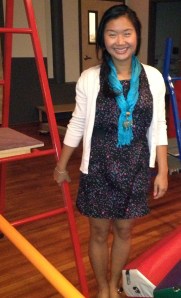
Lisa Warren, Language Curriculum Specialist

Lisa Warren, Language Curriculum Specialist

Piggybacking on a post (Multilingualism at TNCS: Optimizing Your Child’s Executive Function) from earlier this year, this discussion profiles Lisa Warren, on-staff language curriculum specialist at The New Century School. Ms. Warren came on board in October 2012 to organize and standardize the existing language education at the school. With a Master’s Degree in linguistics from Georgetown University that combined research into how kids acquire second language with curriculum design as well as previous experience teaching Spanish, French, and English, she is well qualified for this new role.

Her role, she says, is primarily to integrate language education throughout TNCS’s progressive, Montessori-inspired curriculum. The primary components of language education are already firmly in place—the teachers, the native speakers, the classes, and (in some cases) the immersion—but Ms. Warren has erected a framework on which these pieces can connect, be reproduced in successive classes annually as well as across the same level (i.e., all primary classes are focusing on the same lessons), and meet national standards. As she puts it, “There was a lot happening in language education around the school.”

She came to TNCS as the result of Head of School Alicia Cooper-Danyali’s active search for such a specialist. Mrs. Cooper-Danyali herself brings a wealth of language-immersion experience to her position and saw the need for the dedicated staff member who could connect all the language dots at TNCS in addition to crafting “plans that document the school’s long-term goals, which include a language curriculum both reproducible and adjustable.”

The Curriculum Map

Key to this exciting new TNCS initiative is a rubric called the curriculum map*. This level-specific document serves two purposes: 1) it provides a comprehensive overview of what is being taught in a given language (i.e., Spanish or Mandarin) and 2) it allows Ms. Warren to identify gaps and fill those in. Aspects of language education like culture and how well a particular class matches up with current themes guide her assessments. She is passionate about her work.

“Being able to talk about something in a lot of different ways is very important for cognitive development,” she says, drawing on her impressive research background. Indeed, the benefits of learning another language have been touched on in earlier blog posts, but Ms. Warren adds to the growing list. Wider cultural understanding, the ability to communicate with multiple populations, and keener analytic skills are among her special foci in what advantages speaking more than one language affords. Multilinguals have an “expanded view,” she says, “which makes them more creative and better problem-solvers.” She cites a study in which a cohort of bilingual kids and another of monolingual kids were asked to list alternative uses for a plastic water bottle. The monolinguals averaged only a couple; the bilinguals’ list stretched to 10 or more. This ingenuity translated to better Scholastic Aptitude Test (SAT) scores in a related study. It’s a known, but unfortunate fact that kids from lower socioeconomic groups tend to fare worse on standardized tests. Speaking more than one language abolishes this demographic disadvantage—bilinguals, no matter what their socioeconomic stratum, score higher in both math and verbal sections as well as overall. Click here for a comprehensive, annotated bibliography on this critical research.

Perhaps the best part of the curriculum map is that it allows teachers to target their teaching to students in the same class according to their individual levels. This means that students can enter TNCS at any age and have their learning needs met. This “differentiated instruction” is also rounded out by groupwork, such that, for example, elementary students are currently working on sustainable environment projects (sponsored by Clean Currents) for the Science Fair, part of which they are required to do in Spanish. Because they are working as a group, all levels support and help each other with the result that they learn the scientific method in two languages!

In the Classroom

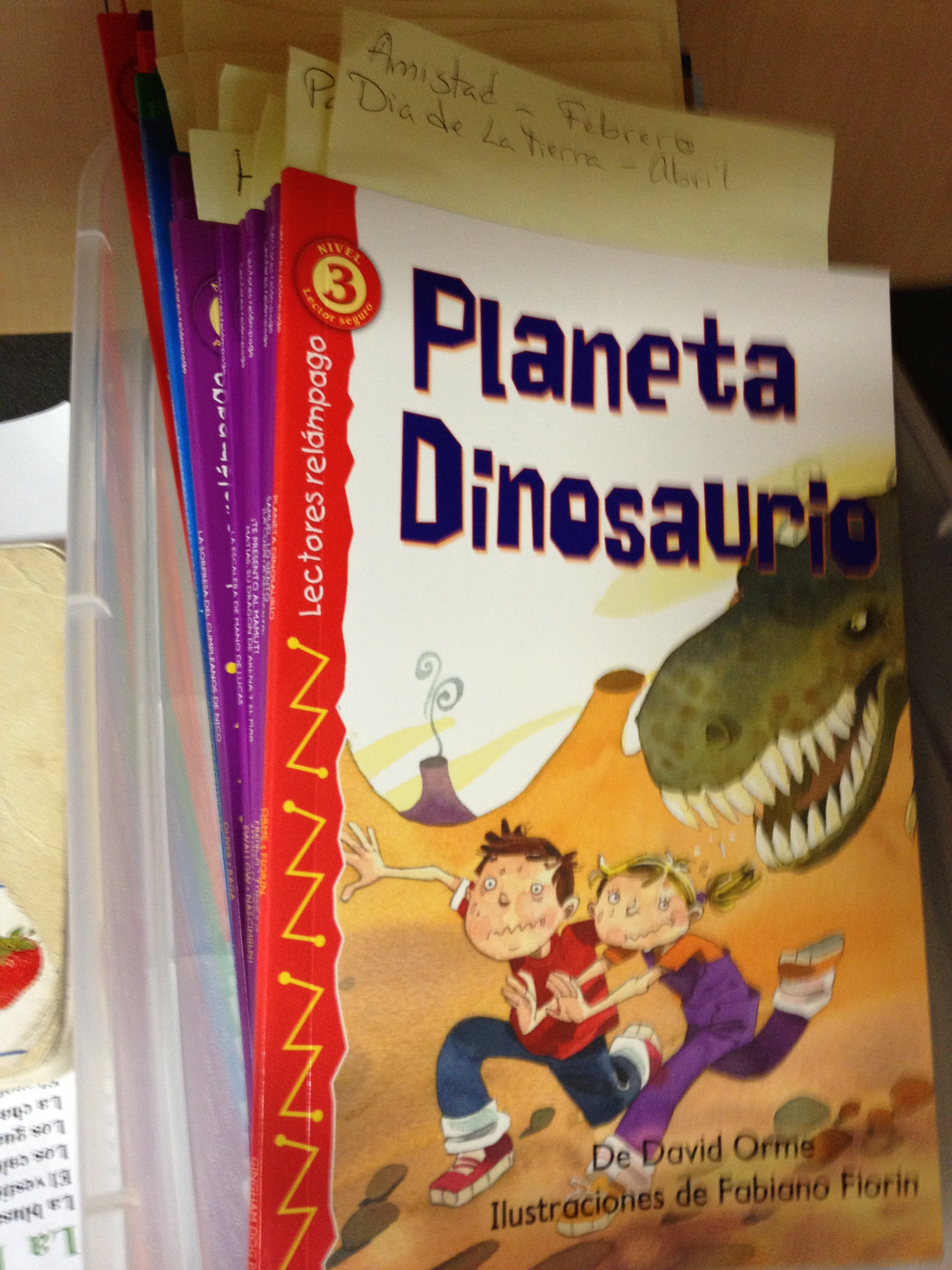
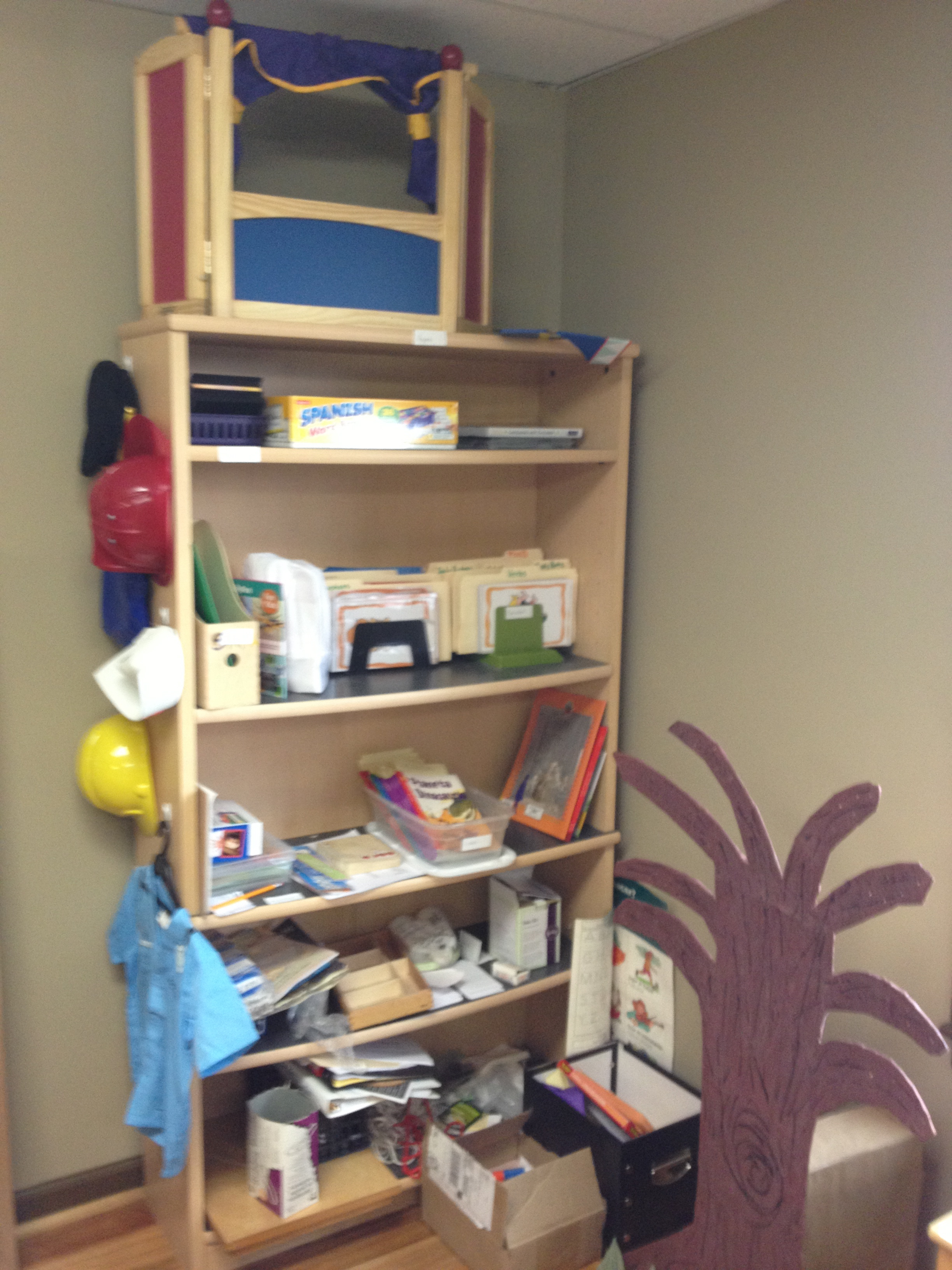
Ms. Warren’s work is not all behind the scenes. She likes to spend time in the classroom, getting to know the kids and working with the teachers to have a very clear sense of the application of her work. She provides a library of resources for teachers to draw from, for example, that includes books, puppets, costumes, flashcards, music, and more. She also offers professional development. For the latter, she might model certain behaviors to show a teacher how to maintain a focus on language while redirecting a disruptive student. Or, she might serve as her own “lab rat” in language class: if she is able to follow an activity in Mandarin, which she doesn’t currently speak, she knows it’s an appropriate activity for the students. If she gets lost, she helps the teacher reshape the activity to the students’ level.

Part of this is ensuring that activities/lessons meet The American Council on the Teaching of Foreign Language (ACTFL)’s  “5 Cs”: Communication, Cultures, Connections, Comparisons, and Communities, each of which is subdivided into series of standards. (Click here to read the standards.) It’s reassuring to know that TNCS students are organically acquiring other languages via their interactions with native speakers around the school, but that there is also a sound pedagogic infrastructure supporting that process. Again, though, this kind of balance is what TNCS is all about.
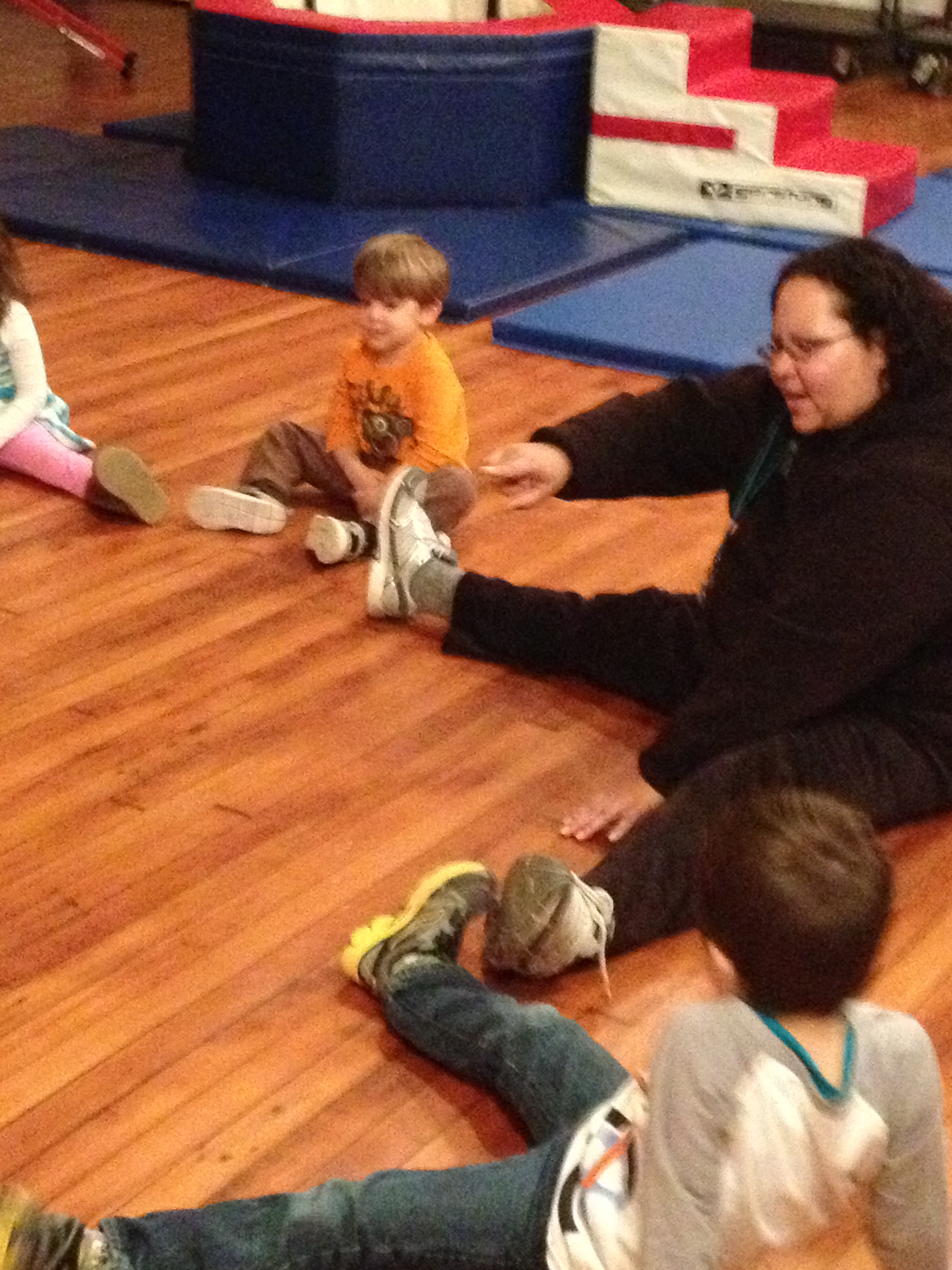
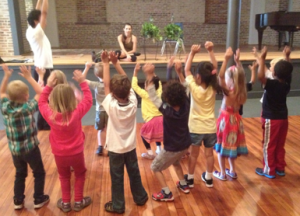
Spanish gym class

Senora Casado plays a game with primary students during gym class. “Encouraging the children to speak and communicate in Spanish is the goal in our weekly gym lessons,” she says.
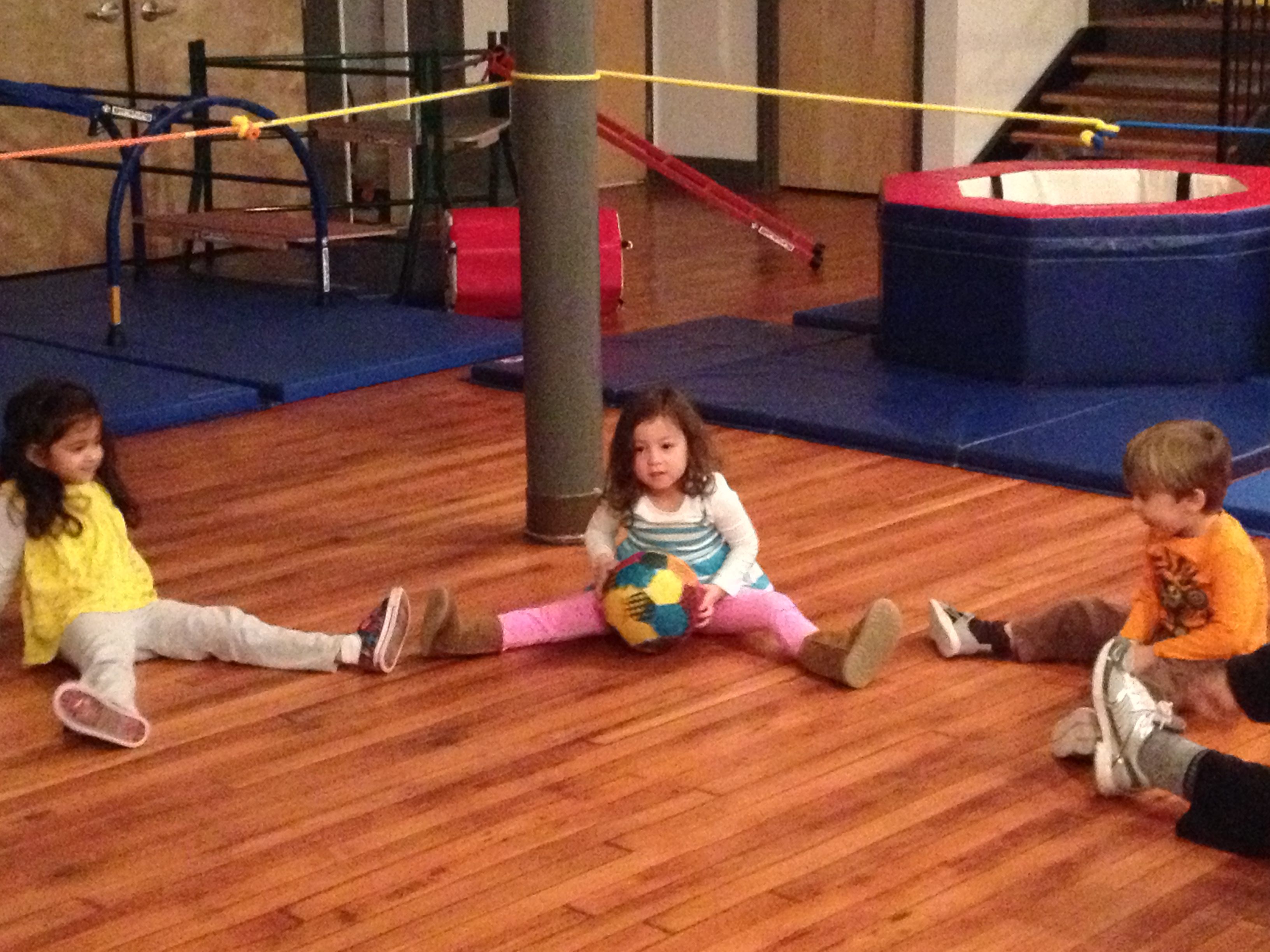
To play, students must understand and respond to commands given solely in Spanish. They learn lots of action verbs this way!

Students play Rolling the Ball (“Rueda la bola”), in which they roll the ball to a friend while reciting a Spanish chant. To play, students must also understand and respond to commands given solely in Spanish. They learn lots of action verbs this way!

At Home

A final piece that Ms. Warren is locking into place is with parents. Regardless of whether parents are themselves multilingual or not, TNCS is exploring ways to encourage and support language acquisition at home. You can learn along with your kid(s), or you can print and post the Word of the Week around the house. Ms. Warren can usually be found in attendance at TNCS Info Nights, and she is even considering holding an Info Night dedicated to language strategies parents can use at home.

Welcome to TNCS, Lisa Warren!

Have an anecdote, question, or comment to share? Your participation in this important discussion is welcome!

*Note: Mrs. Cooper-Danyali plans to implement curriculum maps for all other disciplines as well.
Elementary Program Merges Montessori and Progressive Education at The New Century School

Since its inception in 2007 (back then known as Patterson Park Montessori) as a preschool for kids ages 2–5 years, The New Century School has “grown up” right along with its student body. Adding a grade level each year to accommodate the earliest students and expand its scholastic reach, TNCS currently offers classes through 3rd grade. The 2013–2014 year will add 4th grade, and so on annually through grade 8. Watching this growth unfolding and the school really come into its own has been an exciting process for staff, students, and parents.

But what is elementary in a Montessori setting? Many find those concepts incompatible. In elementary school, after all, students are expected to achieve standardized goals, which, at its worst, can result in lecture after boring lecture masquerading as education. In the Montessori model, however, the classroom has much more relaxed parameters that allow room for voluntary exploration at an individual pace but that some say might not always be quite so academically rigorous. Let’s take a closer look at how TNCS has harmoniously merged these seemingly antithetical approaches to create an environment where real learning happens . . . and where kids want to be. They have choice, variety, and a say in their own education. Most importantly, they learn how to think.

First, it’s important to point out that for primary through elementary age groups, TNCS isn’t classically Montessori. Rather, they take the best of Montessori, such as fostering self-discipline and encouraging intellectual curiosity, and couple it with a profoundly progressive approach to education that includes a focus on foreign language acquisition, to forge something completely new. This unique blend grew out of a desire to provide the optimal learning environment. Alicia Cooper-Danyali, Head of School, says, “Our Lower Elementary program (grades 1–3)  focuses on the strength of meeting individual needs of mixed-age abilities, development of both Spanish and Mandarin, and true community building.”

Above all, learning should be an active process in which students are engaging with intriguing material, not a passive one in which they absorb factoids. TNCS is not education by osmosis; it’s a fruitful collaboration between student and teacher and among students themselves.

Here are some ways TNCS seeks to achieve this goal:

  • Small class size: The benefits to kids of individualized, differentiated instruction are innumerable. Kids are as different from one another as snowflakes, and their methods of learning are just as varied. Small class sizes allow teachers to customize each child’s education for the best, most effective fit.

    kids are hard at work together and independently, fully engaged in their reading, writing, and core math and science skills

    The smoothly functioning TNCS elementary classroom is a marvel of productive learning.

  • Enhanced learning via technology: Students in Lower Elementary use SuccessMaker and other state-of-the-art educational software daily to hone math and reading skills. They not only love this work, but the software programs are carefully aligned with national education standards, so the students are getting the foundational knowledge that secondary schools will require. Upper Elementary students will additionally learn basic computer programming.

    strengthening his core on a balance ball while honing his core curriculum skills

    Strengthening his core curriculum skills on the computer while strengthening his core on a balance ball!

  • Inquiry- and skill-based curriculum: A solid foundation in the core subjects allows teachers to develop science and global studies lessons based on student questions and interests. Being interested from the outset ensures students’ close attention and deepens their learning.
  • Mixed-age classrooms: Grouping students of various ages allows children to work at their skill level, not just their grade level. If they need more time with a particular concept, they get it. Likewise, when something clicks right away, they don’t need to wait for the rest of the class to catch up to them before moving ahead to the next wondrous topic of exploration. Mixing ages also continues the Montessori tradition of mentor–mentee relationships, which are mutually beneficial for social, intellectual, and emotional development.
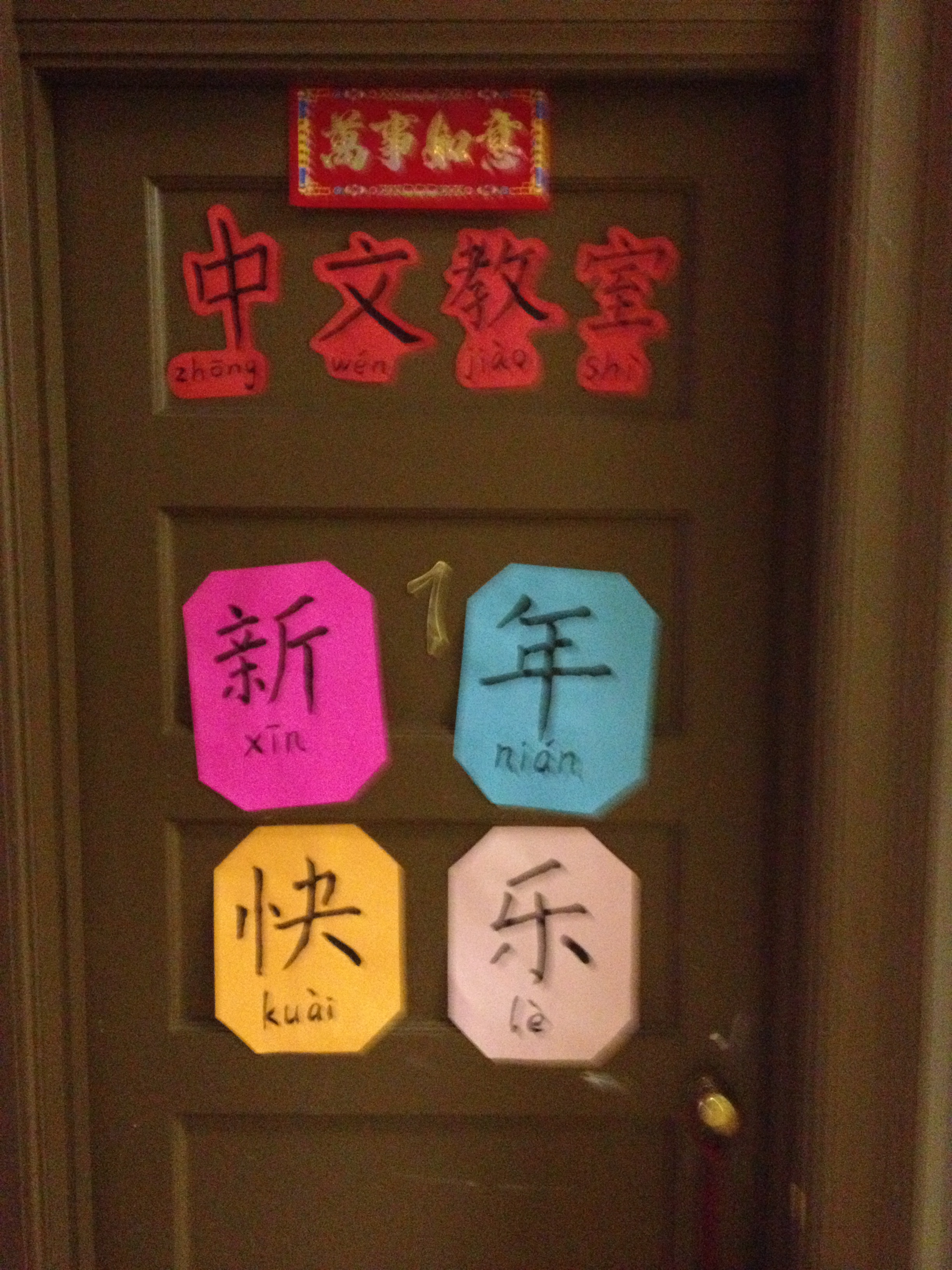
  • Spanish and Mandarin classes: Where else are students given daily lessons in both of these languages critical to global citizenship? They learn conversation, reading, and writing at a time when their brains are elastic enough to achieve real fluency with relative ease.

    TNCS elementary student's Chinese workbook shows great progress

    Chinese characters practice–Hello Kitty and friends signal a job well done!

  • Music, art, and physical education classes: On staggered days, students get weekly or twice weekly instruction in these areas so important for encouraging creativity, self-expression, and overall physical and mental health. In an atmosphere of looming federal budget cuts—some of which will surely impact education—U.S. public schools may find that they lack the funds to keep the humanities in their curricula, sadly.
  • Field trips: The on-site greenhouse established by Master Gardener Emma Novashinksi affords plenty of opportunity for scientific investigation of all stripes. Lower Fell’s Point, TNCS’s “extended campus” additionally provides community involvement opportunities to broaden students’ social and environmental awareness.

    greenhouse visit is a chance to get hands dirty and explore caterpillar life

    In hot pursuit of a particularly interesting caterpillar!

  • Emphasis on values: Students at TNCS learn to treat themselves and others with respect. By the time they have reached the elementary level, this really shows. Peace, compassion, and kindness pervade the smoothly functioning elementary classroom.

Still have questions? Comments? Please let us know your thoughts in the comments section—we value your participation in this discourse! By the way, are any of your TNCS elementary kids among the original students from 2007? Let us know!

Also, did you know? TNCS is hosting an Elementary Information Night on Thursday, January 17, 2013 from 6:00–7:30 p.m. for current and prospective families. This will be the ideal opportunity to familiarize yourself with TNCS’s elementary programs, to ask questions, and to hear other families’ experiences.

TNCS cofounder Roberta Faux will offer a brief keynote talk, and free childcare is available. Click the above link to find out more and to RSVP. You don’t want to miss it!

Exercising That Mind–Body Connection

New for the 2012–2013 school year, The New Century School provides a gymnasium for physical education! In keeping with TNCS’s progressive, forward-thinking style, though, this gym is no ordinary gym. The Lingo Leap (TLL), as it is now known officially, integrates physical exercise with cognitive development—moving and learning!

TLL’s philosophy is that brains work more efficiently when the body is also engaged, and there’s plenty of hard science to back up this notion. In fact, neuroimaging shows that during movement, more brain areas are lit up, meaning that more of the brain is active and in use. Why not take advantage of this “powered-up” state and give the brain something to do with its extra energy? Let’s face it—one of the most challenging tasks we can give our hungry brains is learning a new language.

The Lingo Leap is run by Amy Pothong

TLL Director Amy Pothong

So, TLL focuses on multiple language acquisition; currently, yoga, dance, and other movement classes are being offered for ages 2 and up (including for interested parents) in your choice of English, French, or Spanish with plans to add classes in Mandarin and Arabic soon. TNCS students, by the way, get regular phys ed at the gym in Spanish. TLL Director Amy Pothong says that “when [students] are totally immersed, they speak like natives.” Although this idea might sound revolutionary, it’s actually “getting back to the basics.” “As we get older,” says Pothong, we must get more socially standardized, which can hinder our natural ability to learn through movement.” Babies, she points out, largely communicate through gestures, which are a very basic form of movement and hearken back to the earliest human communication by our ancient ancestors.

The connection, then, between bodily movement and thought conveyance is well established in our being. Two main schools of thought have emerged to explore how we can optimize this connection to actually learn to communicate better (or at least in more than one language). First was Total Physical Response (TPR), developed in the mid-1960s by Dr. James Asher as a method of learning a second language. Asher noted that the conventional approach to learning second languages differed dramatically from how infants learn their first language. Infants learn to communicate by internalizing language, a process of protracted listening and absorbing. TPR is a technique that replicates that process for learning second languages and beyond by giving a command, modeling the action described in the command, and then having the student imitate that action. Students are not initially asked to speak, but to comprehend and obey the command. Understanding is at the root of language acquisition, according to Asher. This makes a lot of sense when you consider how babies learn to respond to increasingly complex utterances before ever verbalizing a thought.

Language acquisition expert Stephen Krashen has found this method very effective. Read his article on TPR here. He says, “A constraint on all activities that we might consider is that they be interesting for both the teacher and the students; it is difficult to fake enthusiasm.” Enter TLL with engaging movement classes for kids plus their parents!

The second school of thought is known as SPARK. SPARK was put forth by Dr. John J. Ratey, a clinical associate professor of psychiatry at Harvard Medical School. Exercise, contends Ratey, dramatically enhances circulation to the brain and encourages synaptic growth, thereby priming the brain for improved function—providing the “spark,” in other words. Improvements in function include both mental health as well as cognitive ability (think, learning languages at TLL!). A significant corollary to SPARK theory is that exercise also improves academic performance after exercise, whereas TPR focuses on learning during movement. Read more about Dr. Ratey’s findings and about his latest book, Spark: The Revolutionary New Science of Exercise and the Brain, on his website. (His wasn’t the first, incidentally: Plato argued for the ideal education to incorporate physical training in The Republic more than 2,000 years ago.)

Gerstung equipment can be moved and reconfigured in endless ways

Gerstung Movement Education equipment at TLL

About that physical training, TLL features state-of-the-art Gerstung gym equipment that “[encourages] children to use their own innate curiosity to stimulate movement. Created by Siegfried Gerstung, a world-renowned educator, Gerstung equipment is not only customizable and moveable to provide “movement education” in three dimensions, but the Gerstung company is locally owned, with that commitment to community shared by TNCS and TLL.

Director Pothong and her staff are themselves polylingual, and instructors are native speakers of the language they are teaching in. Pothong is Thai and may even hold Thai cooking classes at TLL next year. It’s a “multipurpose space,” she says, “that encourages social, mental, verbal, and physical development.” (And culinary!)

Registering for classes is a snap on TLL website–make the jump to polylingualism!

TMCS students stretch and move, following instructions given in Spanish

TMCS students participate in Spanish gym class