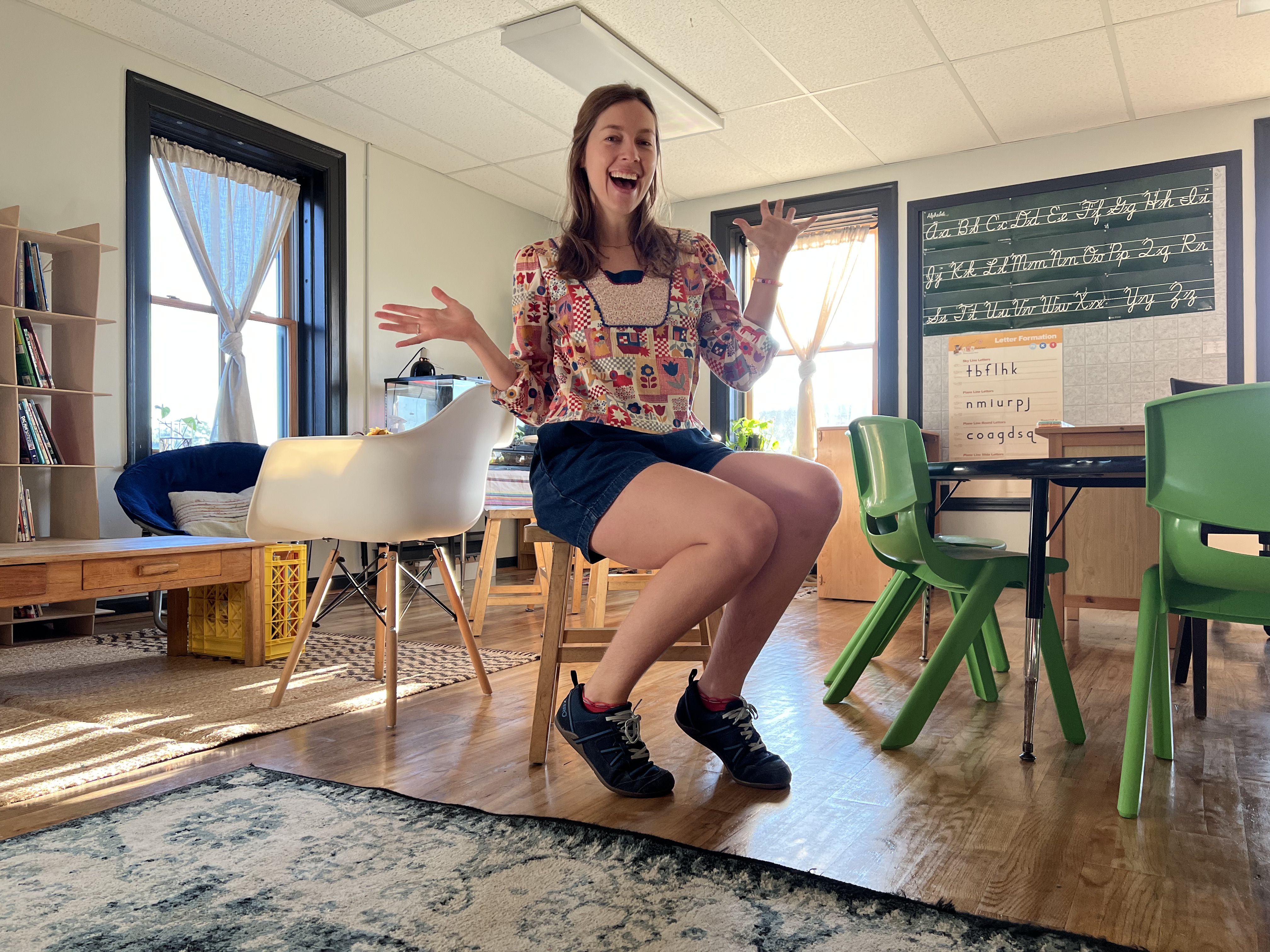
Meet the Teacher: Bailey Miller Takes Over Kindergarten at TNCS!

The New Century School is well known for many unique attributes, such as discovery-based learning, engaging the whole child, meeting the child where they are, a commitment to both multilingualism and the arts, and expanding the physical boundaries of the TNCS campus to encompass beautiful Fell’s Point and beyond (to name just a few). These attributes are what draw teachers to TNCS, where they can really teach and engage their students (rather than, for example, being restrained by a curriculum that must address the majority needs and the requirement to meet certain quotas or metrics). This desire to explore alongside students and participate as a true guide along their educational journeys characterizes TNCS kindergarten teacher Bailey Miller’s approach to the classroom.

“Miss Bailey,” as she prefers to be called, took over as TNCS lead kindergarten teacher for the 2025–2026 school year after working as Mr. Warren’s assistant in last year’s K-2 class, which she describes as a great educational experience. She had not thus far worked with that age group and had to learn classroom management skills and how to connect with and teach younger students.

Mr. Warren was on tour with his band for part of the year, so Miss Bailey had to adapt quickly to leading the classroom. When Mr. Warren returned from touring, they finished out the year together. “He was a really incredible mentor figure and the kids loved him—he’s a legend,” Miss Bailey recalls. Working with him helped her learn the ropes, and he expressed confidence in her ability to take over his position when he left TNCS to take over as Music Director at St. Paul’s School. “It’s big shoes to fill,” Miss Bailey admits, but the transition is working out beautifully. Each year, the classroom makeup at TNCS fluctuates with enrollment changes, with the upshot that this year, sufficient numbers of kindergarteners enrolled to sustain a K only classroom. (Ms. Sharma now leads the lower elementary students.) Miss Bailey appreciates having all the same age group for her first year as lead teacher at TNCS: “It’s been nice to be able to go all in on what kindergarteners need and meet them where they’re at socially. It’s a huge adjustment for kids to become kindergarteners because now they’re in primary school territory. I’m really really enjoying it—it is so much fun.”
How Miss Bailey Got Here

Originally from the west coast of North Central Florida—”the manatee capital of the world,” a town called Homosassa—Miss Bailey now lives in Butcher’s Hill. She moved to Baltimore specifically for the “walkable urban fabric.” She graduated from The Ohio State University with a degree in physics. “I’m a big science nerd. I love science,” she says. Then she got involved in physics education research, and everything changed. “I didn’t think I wanted to be a teacher, but the more I learned about education, the more I appreciated the art and service of it.”

She started working with college students as an MCAT physics prep instructor as well as tutor, then created online high school content with UK- and Cairo-based ed-tech startup Nagwa. Making and narrating physics videos was right up her alley—she has always been adept at explaining concepts. While working remotely this way she also got a Master’s degree in Instructional Design. She then turned to doing education research and creating science curricula for upper elementary grades based on the Next Generation Science Standards. Although she enjoyed that work, and especially the introduction to educating younger students as well as science in general (as opposed to focusing on physics), something was missing. After having worked remotely for 4 years, Miss Bailey was eager for human encounters!

Her criteria for looking for new work were simple: providing some form of education at a location she could walk to and from. And that is how she now finds herself as a kindergarten teacher at TNCS. “It’s so fun,” she says. “I find kids to be super energizing. I feel like I gain energy being around them because they’re so inspiring and they’re so sweet. They’re so psyched to learn anything—which is awesome because I’m psyched to teach them anything.” She recalls walking by TNCS and not really knowing what the school was about. When she went in to interview, she realized she had entered someplace special. Not only was it her first exposure to Montessori, but she says, “this school experience is so different from every other school experience I’d known.” One thing that immediately stood out is how the school is the environment, both within and without. “How TNCS is integrated into the city is enriching for students’ sense of community and trust. We also have this amazing architecture and culture all around us. The inner workings of the school and the classroom are just fabulous too. I immediately saw that this was a really special place.”

Miss Bailey at TNCS

Miss Bailey emphasizes the importance of routine for kindergarteners: “They thrive on consistency.” So, a typical day begins calmly with journal time and soft music. Students take their journals from their cubbies and find a sentence on the board to copy, always including the date. “Kindergartners journaling?” you might be wondering. “I’m looking for punctuation, spelling, capitalization, the form of the letters,” Miss Bailey explains. This is not only great practice for them and laying important foundations (more on that to come), but “they’re working silently and with intense focus, so it’s a really nice start to the day,” she says.

After journal time, they continue with more English Language Arts (ELA), such as working together in small groups for activities focusing on speaking and hearing. Miss Bailey also has an assistant: Yunyi Wu, “Wu Laoshi,” joined TNCS in November after finishing his master’s degree in education here in Baltimore.

Then comes snack time, followed by Global Studies, in which they’re currently learning about different continents. She describes one memorable moment when she was quizzing her students about Antarctica. She gave the prompt, “this continent is so cold that nobody lives there,” to which a student responded, “Minnesota!” “It was so cute,” she laughs.
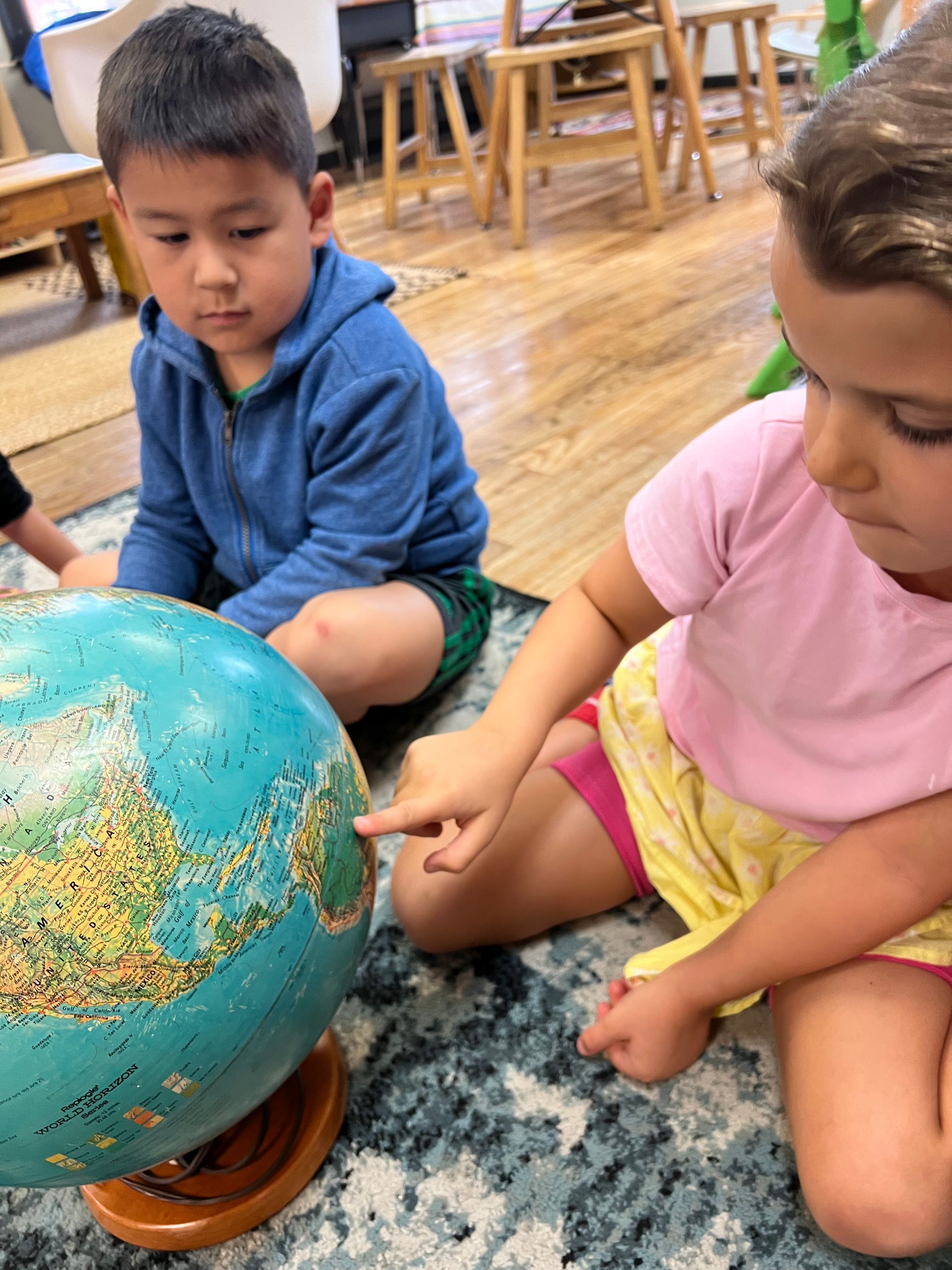
The students then transition to Chinese and Spanish in the language lab, followed by midday recess and lunch. On Fridays, Miss Bailey likes to take them to Thames Street Park for a “Friday fun day thing.”

After lunch comes math time, which the students love. “They tell me, ‘I want to do more of this!’ They love it. You can make it really fun for them, and they love a challenge. At this age, they’re so fresh and confident and stoked to learn,” she said.

After math, students go to their specials (music, art, or PE), then return for science 4 days a week. Science at the end of the day can be challenging, but Miss Bailey keeps it hands-on and group-oriented to help students stay focused and alert.

That’s Science!

Many traditional kindergarten curricula do not “go there” when it comes to teaching science, but TNCS understands that children learn by doing, and science is exactly that—exploring, questioning, trying something out. In fact, Miss Bailey incorporates those Next Generation Science Standards principles (though not the standards themselves) she studied into her approach. She says they represent “a radical shift in science education away from learning little factoids like ‘the mitochondria is the powerhouse of the cell’ to ‘do you know how to ask questions? Do you know how to test things? Do you know how to explain what you found and make organized data?'” She focuses on actionable science skills within engaging topics—in last quarter’s microbiology unit, for example, she took science class to the harbor, where students got to encounter the “pistachio tide,” a bacterial bloom that occurs annually in the Inner Harbor when the water temperature drops rapidly in the fall. “We’re going to go smell the stinky water; we’re going to look at the color,” said Miss Bailey. “It was right down the street, so it’s great to be able to make these connections to get them to see that learning is all around, not just in the classroom.”

Miss Bailey’s physics background shines through in her teaching, especially during the second quarter when the science focus is on physics. Again, while most K classrooms do not even touch on physics, Miss Bailey finds it’s actually quite accessible: “Physics can be really intuitive because we are interacting with objects in motion all the time. But there’s also tons of misconceptions, and it can be really mystifying. When I tell people I’m in physics, a lot of times the first thing they say is, ‘Physics was my least favorite class. My teacher was horrible.’ That was part of what made me want to get into education—if I could be a good physics teacher and help people have a good relationship with physics… I don’t care if you don’t want to do science as a career, but just having that appreciation and making it a little more accessible is important to me.” So far, so good if user feedback is any indication—her students say things like, “Miss Bailey, I love when you teach science” and “I love forces.” She recounts observing one student moving a block around and mimicking her, saying, “Is this in motion? Now is it in motion?” Miss Bailey felt validated to say the least: “I was like, yes! That is so adorable. They’re really soaking it in.”

She admits she sometimes misses more advanced math and science, but “It’s always out there. I can buy a textbook and do calculus again whenever I want.” And she has certainly found satisfaction in her current work: “When I was in physics, I would not have guessed I’d be a kindergarten teacher because I would have thought, ‘Well, then I can’t do physics.’ But now that I’m here and I’m breaking it down for the kids—obviously not as deeply—but if I can help 15 small children be like, “Physics is fun. I like physics,’ that’s success for me.”

Building Reading Foundations

While Miss Bailey might be a science teacher at heart, she most certainly recognizes the critical importance of other subjects. “I want to really lay a strong foundation for them before we really start reading,” she explains. “Sometimes in more conventional school systems, kids can just get swept along with where expectations are, and if they have these holes in their foundation, it gets really frustrating for them. Or they’re in third grade and have to go back and fill in those holes.”

She’s focusing intensively on phonemic awareness and composition, including handwriting. “It’s going to be like releasing a dam once we really dive into more and more reading in the third and fourth quarter. I feel like they’re getting wound up like a toy and then they’re going to be set free.” They practice reading every day, but for now, the emphasis is on mastering the elements of reading before putting it all together next quarter.

Languages and Specials

The kindergarteners have a full schedule of language instruction, going to the language lab on the third floor of building south daily for Chinese with Cui Laoshi and Spanish with “Profé J” (Josee Molavi—whom you’ll read about soon!), the new Spanish teacher. Moving throughout the campus for different classes is “a really big adjustment” and “a really big-kid thing to do” for students transitioning from pre-K explained Miss Bailey.

The students also take art twice a week with Mr. Fede (Federico), who also teaches PE. They have music twice a week, PE with Mr. Fede once a week, and teacher-led PE with Miss Bailey and Miss Sharma once a week.

Extended Care and ECAs

Miss Bailey sometimes works aftercare with the preschool class, staying until 4:45. She also leads Extended Care Activities (ECAs) with many of her kindergarteners. Last quarter, she ran “Zine” (a magazine-making club). This quarter it’s “Brick Masters”—building with Legos, dominoes, and other materials in the gym.

Upcoming ECAs include a chess club (“I taught a lot of chess during summer camps this year, even to 5-year-olds. They picked it up so fast and loved it”) and an art and nature club in the springtime. “I want to do a lot of neighborhood walks because that’s one of the things I like most about this school—it’s part of the neighborhood. I love any chance I can to get them out there and go see things.”

Reflection and Gratitude

Becoming the lead teacher came with more than just teaching a classroom of young students, it also meant that Miss Bailey would be parents’ primary point of contact. “I’m responsible for so much for their children,” she said. But the experience has been overwhelmingly positive. “I’ve received so much kindness and gratitude from parents. It’s been really lovely. I am so proud of the kids and all of the work that they’re doing. Genuinely, they’re working hard—I don’t know if they know it, but they’re doing a lot of hard work, and they have such great attitudes. I feel honored to be entrusted with them.”

Even though this is her first year as lead teacher, Miss Bailey is already thinking about next year and whether she will still be involved with her current students—that is, whether classroom fluctuations might work in her favor and allow her to continue teaching them. “I think about them all the time,” she said. “The thought of not being in their lives is incomprehensible. I’m excited to see them grow and move on and do other things, but they’re such a big part of my life right now that it’s hard to picture my life without this whole environment.”

Then again, she also knows the current preschoolers from aftercare and finds herself thinking, “I want to be your kindergarten teacher, too.” Even the students from Mr. Warren’s class last year, now in the other building, still light up when they see her: “It’s so nice that we stay such a tight-knit kind of community.”

Her hope for parents is simple: “I hope they know I enjoy working with their kids so much. I love them so much.”
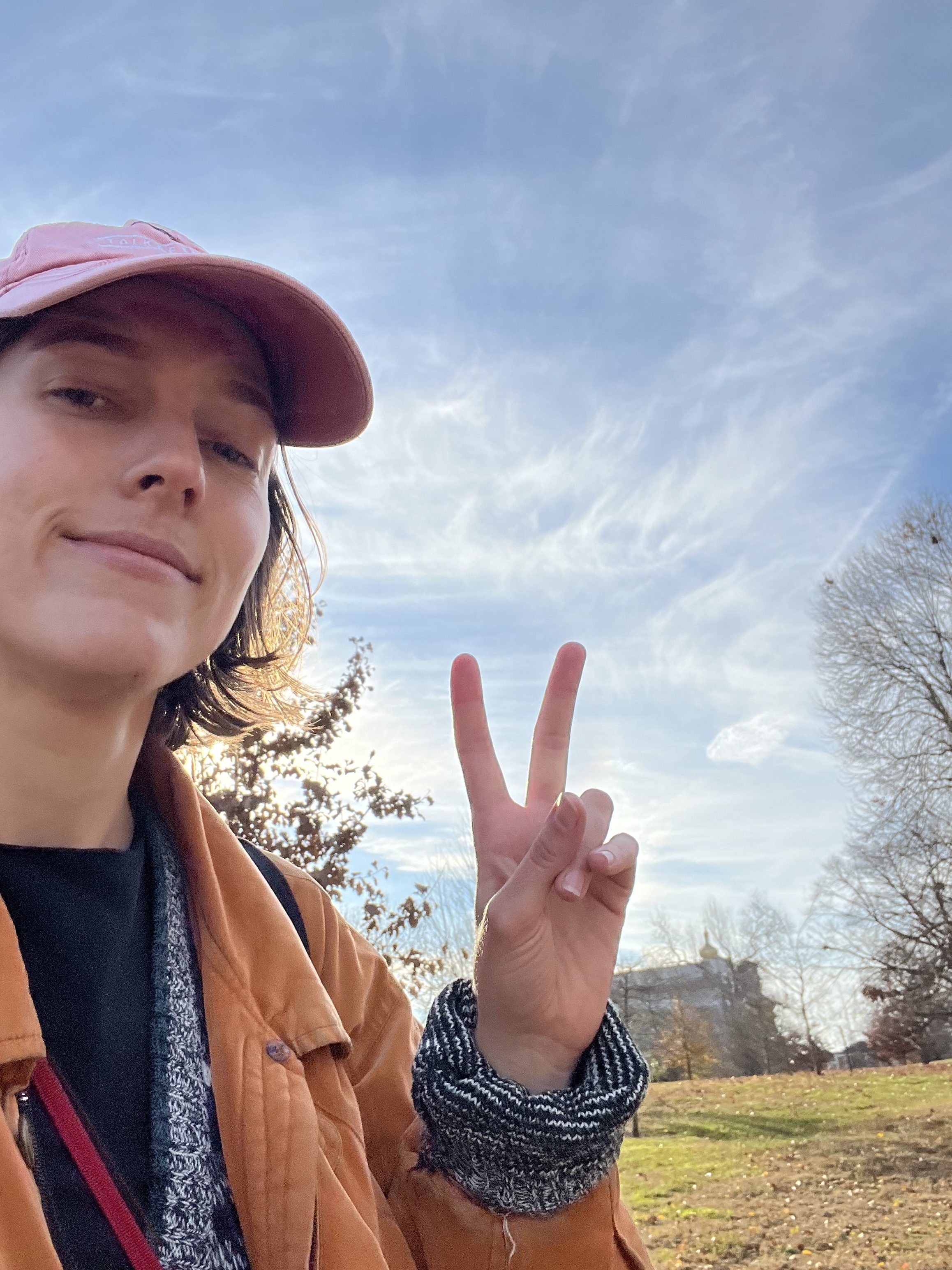
Meet LaTriese Sussman: TNCS’s Parent Liaison and So Much More!

As anyone will tell you, it’s the community that makes The New Century School what it is. Each individual community member offers their gifts to form a whole that’s greater than the sum of its parts. Even so, each single part is pretty special in its own right. Enter LaTriese Sussman. To know her is to know a hug in human form—she truly is the embodiment of warmth.

Born and raised in Baltimore, Ms. Sussman has spent her entire life caring for others. “I get it from my mother,” she explains. “She was the one who would give you the shirt off her back, and she passed it down to me as well.” That spirit of generosity has defined her path, from babysitting at age 12 to raising five children of her own, now ranging from ages 12 to 29, plus helping take care of her four grandkids, ages 1, 3, 6, and 11. Her brother jokingly calls her “that little old lady who lived in the shoe with all the kids.”

But it was her personal journey with one of her sons that truly shaped her calling. Born with two holes in his lung, he wasn’t getting adequate oxygen to the brain, leading to a disability. Doctors warned that life would only get harder as he grew older. “But as a parent, you’re like, ‘I can do it,'” she recalls. “And there were times I had those down days, those blue days. But I was like, ‘Nope,’ and I kept pushing for him.” Ms. Sussman, already deeply compassionate, became a fierce advocate for children, learning to balance love with the toughness her son needed to navigate the world. “I babied my son, and then I thought about it. I was like, ‘When I’m gone, the world’s not going to baby him.’ So I started to encourage more independence.” Her approach worked. Today, at 24, her son is employed and thriving. “When people say, ‘Maybe he’s not on the spectrum,’ I tell them he is, but it’s not who he is,” she says proudly. She taught him a lesson she now shares with every child who needs extra support: “Just because you’re on the spectrum, you don’t let it define you.”

Finding Her Place at TNCS

Back in 2020, Ms. Sussman’s childhood friend Jatiya Richardson worked at TNCS and thought TNCS would be a good fit for Ms. Sussman. When she visited the school, she felt right at home and applied for a position. She was hired and immediately made her warm presence felt, despite the many challenges brought by the pandemic. She was the after care teacher who stayed late with the last child when a snowstorm would delay pickup. In fact, in her first 2 years, Ms. Sussman never took a single day off. The administration eventually had to insist she take time away. “I’m always here an hour early,” she explains. “My son has to be at school at 7:30, so I drop him off and come straight to work because it doesn’t make sense to go home at that point.” She sits in her car drinking coffee—unless someone needs something, in which case, she’s ready.

Floating Like a Butterfly

As a “floater,” Ms. Sussman moves throughout the school wherever she’s needed—covering for absent teachers, assisting in classrooms, and providing support to both staff and students. “It’s always good to have a second pair of hands,” she says. “I take floating to the max.” The role suits her need for constant movement and her desire to help everyone. It’s fun to think of her “pollinating” students and staff in this way with warmth, care, and compassion.

When a student is having a rough day, for example, Ms. Sussman steps in with a calming presence. “You have to find out what’s wrong. We all have stuff going on at different times,” she explains. “Sometimes that means taking a child for a walk to help them reboot. Other times, it means giving teachers a bathroom break or a break in general. I know what it’s like to just need a break.”

She’s also mastered the art of helping children sleep during rest time. When teachers return to find their entire class peacefully napping, they ask in amazement, “What did you do?” Her answer is simple: “Nothing. I just sit with them and comfort them.” Ms. Sussman treats each child according to their individual needs, a skill honed from raising her own family. “All my kids—at home and at school—understand I treat you according to what you need, not what you want.” Her secret to maintaining relationships through tough moments? “After you give instruction, whether it’s good or bad, always tell them you love them. That way they come back. That’s why none of them stay mad at me. I’ll be like, ‘You can’t do that. No, we’re not having that. But I love you.'”

Parent Liaison

This school year marks a big transition for Ms. Sussman at TNCS, although not a surprising one. When she naturally began greeting parents and sharing updates about their children’s days before they even asked, TNCS recognized her gift and formalized her role as parent liaison. She understands the anxiety of first-time parents. “You’re dropping your kids off with people they don’t know and who don’t know them. Will they know what to do if the child cries or just doesn’t want to talk?” So she breaks the ice, opening with, “Well, I’m a mom, too.” When she mentions her five children and four grandkids, parents immediately relax. “How did you do it? I don’t know how you do it,” they ask. Her response: “It’s easy. It’s fun.”

In her first month and a half as parent liaison, Ms. Sussman, true to form, took it upon herself to come in early every morning, so she could personally greet each arriving family: “Good morning, how are you? Have a wonderful day.” She understood the morning struggle—she’d been that parent herself. “I used to hate mornings,” she admits. But her cheerful presence transformed other people’s days. One parent told her, “Do you know that just saying good morning changed my whole day?”

On Fridays, she would play celebratory music. “It’s Friday. We made it. Do a dance or something.” She doesn’t even let rain stop her. On one rainy day, a parent asked why she wasn’t using an umbrella. Her response is classic Ms. Sussman: “I don’t need an umbrella because I’m covered with love. The rain doesn’t bother me.”

Beyond greetings, Ms. Sussman actively helps children develop social skills. We all know that kids can “say the darndest things,” but she encourages them to open up, even if what comes out is unexpected. “This is them starting a conversation. They’re not saying anything to hurt anyone.” She helps shy children make friends by facilitating introductions, teaching them how to initiate conversations naturally.

Her efforts ripple outward. Parents who’ve never met her come to the school asking for “Ms. Sussman” based on recommendations from other families. Children she has only minimally interacted with on a given day go home talking about her constantly. “My child talks about you 24/7,” parents tell her.

To the children themselves, she occupies whatever role they need. “You’re like grandma, you’re auntie, you’re mom,” they tell her, “everything all at once.” She tells parents at pickup, “When you leave them here with me, they’re my babies. You come back, you get them, they’re your babies again.”

“Doing it for the Kids”

What drives this relentless dedication? “Somebody has to take care of the kids. Somebody has to be here for the kids, and somebody has to be here for the parents as well.” She tries to instill this philosophy in everyone around her: “Let’s do this for the kids. Let’s look out for the kids.”

Ms. Sussman says she draws inspiration and motivation from her colleagues. “Seeing somebody do good work makes you want to do even more.” She makes sure such dedication doesn’t go unnoticed, believing recognition from the heart matters.

At home, she extends the same care she gives at school. Her house is completely kid-friendly, a safe haven where visiting children never want to leave. When parents bring their kids over, she tells them, “You relax. I’ve got this.” In her spare time, her own children and grandkids pile into her room to watch shows together—they’re “9-1-1 fanatics” in the Sussman household.

Even delivery drivers feel her warmth. She greets UPS workers and food delivery people, offering them water and making them smile. One driver told her, “Every time I come here, you got me smiling.” Her response captures her entire philosophy: “That’s just the way I like to be—happy.”

She has a simple, yet profound message for parents (anyone, in fact): “If you need me, just come find me. I’m always here. We just need people to care about one another more and give back more.”

In LaTriese Sussman, TNCS has someone who embodies that vision every single day—one greeting, one hug, one calmed child at a time.

Heart of Admissions: Sarah Steffan Finds Her Calling at TNCS

You may have seen Sarah Steffan around The New Century School campus—she’s everywhere in a day!—or even met with her during an admissions encounter. One thing you may not realize, though, is that Mrs. Steffan, formerly Ms. Weiskopf, was once a lower elementary teacher at TNCS!

It’s been a minute since Immersed sat down with her, and a lot has happened in her life since then. She has gotten married, for one, and is also expecting the couple’s first child, a son, due on Valentine’s Day (<3). This catch-up comes none too soon, as Mrs. Steffan will be on maternity leave once her son is born for the remainder of the school year (but back in time for TNCS summer camp).

Big professional changes have likewise transpired. Mrs. Steffan views herself as an integral part of the admissions team, working closely alongside TNCS Head of School Anne Marie Simonetti, with whom she is very close. “We work together in admissions because I am still learning every day.” You may recall that when Ms. Simonetti joined TNCS in 2021, it was as Admissions Director, and Mrs. Steffan benefits from her mentor’s experience. In fact, she notes that while last year felt mostly like training for the role, this year, she’s truly doing the work. Karen Cintron (IT, among many other roles–look for a future blog about all that Ms. Cintron does for TNCS) and Co-Executive Director Jennifer Lawner have also been instrumental in her successful transition to admissions, and she considers the group a cohesive team.

Path to Admissions

Mrs. Steffan’s journey to her current position has been, in her words, “a winding road.” She taught 2nd and 3rd grade at TNCS for approximately 2 1/2 years, but her teaching career spans a decade in total. After college, she went directly into education, spending 3 years in the Czech Republic working at a Montessori school where she fell in love with the philosophy and completed her training (details are here). That foundation now serves her well in admissions, giving her deep understanding of what the school offers families.

However, by her 10th year of teaching, something shifted. “I think that teaching is not for everyone, and I think it takes strength to admit that,” Mrs. Steffan reflects. Her wife, by contrast, is a first-grade teacher who will likely remain in the classroom until retirement. Mrs. Steffan had believed she would follow the same path, but ultimately recognized that teaching was not her calling. The catalyst for change came at the beginning of the 2023 school year when Mrs. Steffan’s mother passed away. She needed time with her family and knew she couldn’t return to the classroom at half capacity. “You have to be 100% for the children every single day in the classroom, and I just had to admit that I wasn’t able to do that,” she explains. Not wanting to leave TNCS, however, she found a way to stay connected to all facets of the TNCS community: she took over the front desk.

After the “dopamine boosts” she derived there, she realized she prefers a more task-oriented environment: “Teaching is not a task that can be completed; in fact, oftentimes things are left unlearned or untaught.” Admissions, by contrast, offers a full cycle of stepwise “to-dos.” At the end, very gratifyingly, a new student has joined TNCS! Mrs. Steffan did not necessarily set out to join the admissions team; instead, Ms. Simonetti serendipitously asked for her assistance on an admissions-related project, and she instantly found her new passion! She describes it as the ideal stepping stone to admissions by acquainting her with all of the many, many customer facing as well as back-end operations a school requires. “I thought to myself like this would be a really great transition to kind of step out of the front desk role in the sense that I knew I was capable of doing more,” she recalls.

The timing for Mrs. Steffan to fully embrace admissions aligned perfectly when Ms. Simonetti moved into the Head of School role, and she’s confident about the future: “I can see being in admissions long-term.”

Multifaceted Role

While admissions forms the core of Mrs. Steffan’s responsibilities, her role extends far beyond it. She continues to help out with administrative responsibilities and is currently training Zanyah Hawkins, the new part-time front desk person. She also continues to handle some of the incidental billing while gradually transferring those responsibilities to TNCS’s new office admin Amini Nkere.

Event planning and communication also fall under her purview. Mrs. Steffan coordinates important dates with families and assists Ms. Simonetti and Preschool Director Terriann Lane in creating school events. All admission and enrollment management flows through Blackbaud, and she plays a crucial role in onboarding new students—reviewing medical paperwork and ensuring all requirements are met.

Her commitment to relationship-building extends to daily operations. “I like to be around for arrival and dismissal just to continue the relationships that I’ve made with families from enrolling their children,” she says. “I like to maintain those family relationships.” She even considers her morning stop sign duty an important part of staying connected.

Admissions Process

Mrs. Steffan describes how families discover TNCS through various channels: Facebook and other social media, magazine advertisements, the TNCS website, word of mouth, and even local foot traffic. When families reach out, they’re directed to submit an inquiry that enters them into the Blackbaud system, creating profiles for both child and parents.

From there, the school contacts them to schedule either a campus visit or Zoom tour. Following the visit, families submit an application that helps TNCS understand the child and family—their educational background, interests, and other relevant information. The depth of information requested varies by the child’s age, with school records and report cards required for students in 2nd through 8th grade but not for younger children.

The student visit comes next, ranging from 15 minutes to a full day depending on age. The teacher who hosts the visit writes a recommendation that goes to the admissions committee, which reviews the complete application and eligibility for enrollment. Once accepted, families receive a contract, and Mrs. Steffan begins the substantial onboarding work.

Supporting Student Visits

During student visits, Mrs. Steffan makes herself strategically available. She schedules no meetings during these times so teachers can call her to the front desk if needed. “I’d love to greet them again just so they see a familiar face when they come in,” she says. She wants teachers to be able to focus solely on interacting with the child, and direct any admissions questions to her. “It’s really an opportunity for the teacher and the child to interact,” she said. Parents observe only preschool visits; for K through 8th grade, they leave their child at TNCS for the full experience.

Open House Success

For families inquiring between August and the start of school, Mrs. Steffan often suggests attending the open house in addition to or instead of an individual campus tour. The most recent event, held on a beautiful late October Saturday (10/25), drew a good number of attendees.

The day began with teachers escorting arriving families to age-appropriate classrooms where they met lead teachers, learned about curriculum, and let their children explore. Meanwhile, Mrs. Steffan circulated among classrooms, making herself available for admissions questions. Everyone later gathered in the gym for Ms. Simonetti’s presentation on core values, community, curriculum, and exciting school events, which Mrs. Steffan carefully observed to prepare to potentially lead it herself next year. A current TNCS 8th-grader performed a Beethoven piece, followed by refreshments and additional classroom visits.

The event generated significant inquiries, many of which are now converting to applications. “It’s really great to see, yes, you’ve done the first step, which has meant that you met us or met someone here who made a great impression, and now you’ve moved on to do the second step,” Mrs. Steffan says. That new student influx is exciting for everyone in the TNCS community and is what keeps us so vital.

Relationships

For Mrs. Steffan, the heart of admissions lies in family relationships—an aspect she always cherished as a teacher. She still maintains contact with families from her teaching days in the Czech Republic and at Greenspring Montessori school. She finds deep satisfaction in building connections from the first tour or online inquiry through enrollment and beyond. Her exceptional memory serves her well in this regard. If a parent mentions working in IT during a tour, she’ll remember to reach out during Computer Science Education Week. “I really love making the relationship first when I meet them for the tour or the online inquiry,” Mrs. Steffan explains. “I really love getting to know them more at every step and then once the child is enrolled, continuing that relationship.”

She gives current and prospective parents and families an important takeaway: bring us your questions.  “We are a team,” she says. “You can come to any of us about kind of any concern or question, and we’re happy to help and answer.” She acknowledges this message may not be new, but believes it bears repeating—and she really means it.


We can’t wait to welcome Mrs. Steffan—and growing family, including dog Charlie—back to TNCS this summer!

The New Century School: A Harvest of Learning and Discovery!

Although every season is special, isn’t there just something about fall in Baltimore? Pumpkin spice vibes aside, autumn evokes warmth in a different way than summer does. We happily don cozy sweaters, make hearty soups, and watch It’s the Great Pumpkin, Charlie Brown for the umpteenth time.

The New Century School students certainly embraced it—learning about and being inspired by the changing landscape and weather all throughout the month of October (and ongoing).

(F)All About TNCS!

The fall theme was everywhere in amber, crimson, and gold touches; seasonally themed reading materials; and, of course, autumnal decor from preschool up through middle school. An activities-packed month harvested smiles galore!

“Monster”sorri!

Preschool Coordinator Terriann Lane implemented fall-themed work stations in the preschool classrooms, tying together the Montessori principle of the work cycle with the current season. Keeping it relevant, in other words!
Each station focused on the development of motor skills in some way but also incorporated wonder and joy—all while enhancing concentration skills (and maybe throwing in a little anatomy lesson!).

“Hammering nails into a pumpkin builds fine motor skills, concentration, and hand-eye coordination. It is seasonal work,” said Ms. Lane. Needless to say, it’s a favorite!

Students also practiced washing pumpkins, which Ms. Lane characterized as “a seasonal Care of the Environment Practical Life multistep work that develops concentration, coordination, order, and independence and develops fine motor skills.”

Finally, “the Art area,” explained Ms. Lane, “is the hidden curriculum where fine motor skills are strengthened and concentration, coordination, order, independence, and creativity are developed. In Primary, the study of color theory also has seasonal activities as the children work to mix colored water, paint, and Playdoh (separately of course) to make the secondary color orange using primary colors red and yellow.”

In fact, pumpkin painting may have tied nailing the pumpkins for favorite activity. Teacher Jia Liu’s Plumeria Classroom (as well as others) in particular enjoyed themselves very much. Liu Laoshi said:

The children in our 2–3-year-old class have started to notice the changes in weather and temperature—they now know they need to put on a jacket before going outside. As we enter the fall season, we’ve been collecting leaves and doing lots of gluing and coloring activities. And of course, fall wouldn’t be complete without pumpkins! Some of the children even told me they went to a farm to pick pumpkins. They used brushes to paint the pumpkins and decorated them with colorful materials—it’s a wonderful way for them to express themselves.

This slideshow requires JavaScript.

Book Character Dress-Up Parade

An annual favorite since TNCS first opened, this chance to put on a costume and show it off through Fell’s Point never disappoints—neither onlookers nor participants. Staff even got in on the action in a big way this year, too! And this year, TNCS students got lucky: the parade day fell on Halloween, making it extra fun and closing out what was an absolutely flawless fall!

This slideshow requires JavaScript.


Immersed will be back soon with lots to be grateful for in November!


TNCS’s 2025–2026 Back-to-School Night!

The New Century School welcomed new and returning families to the 2025–2026 school year—TNCS’s 15th anniversary year! The Back-to-School night event blended reflection, connection, and forward-thinking vision. The sense of community and anticipation for the year ahead was immediately palpable.

For those who were unable to attend and for those who want a refresh, this blog is for you!

Celebrating Milestones

Head of School Ann Marie Simonetti greeted families with warmth and enthusiasm, setting the tone for an evening that honored both past achievements and future possibilities. She also used the occasion to introduce plans for commemorating this significant anniversary. TNCS is exploring various celebration ideas for later in the year, leaning toward a spring event that would take advantage of the campus’s exceptional outdoor spaces. “We want to do some type of celebration for current as well as alumni students and families,” said Ms. Simonetti. “We want it to be something that that they want to be a part of and is meaningful to them.”

As befits such an important milestone year, both Executive Co-Chairs, Roberta Faux and Jennifer Lawner, also gave remarks.

Mission-Driven Community

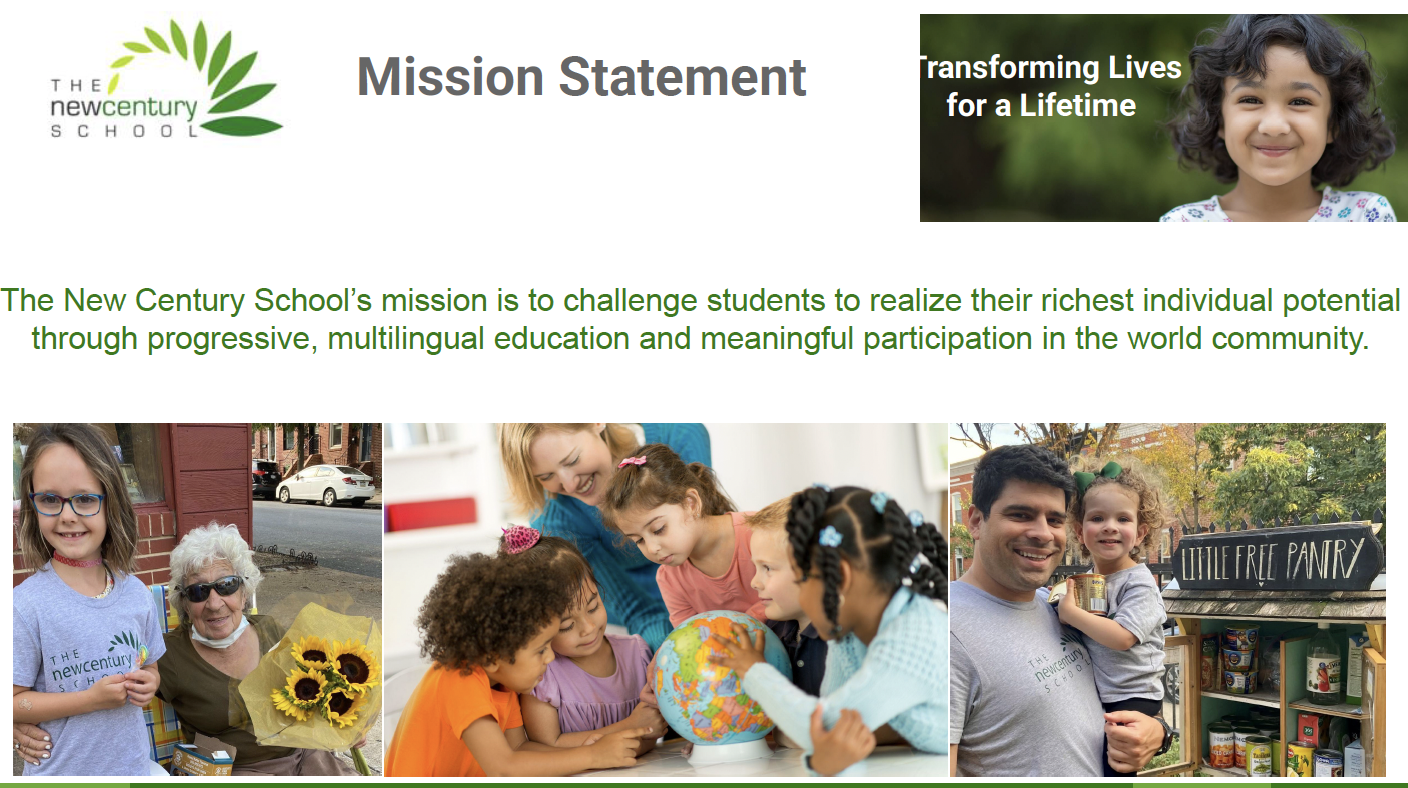
Throughout the evening, TNCS’s mission statement served as a north star. The tagline “Transforming Lives for a Lifetime” underscored the school’s dedication to lasting impact.

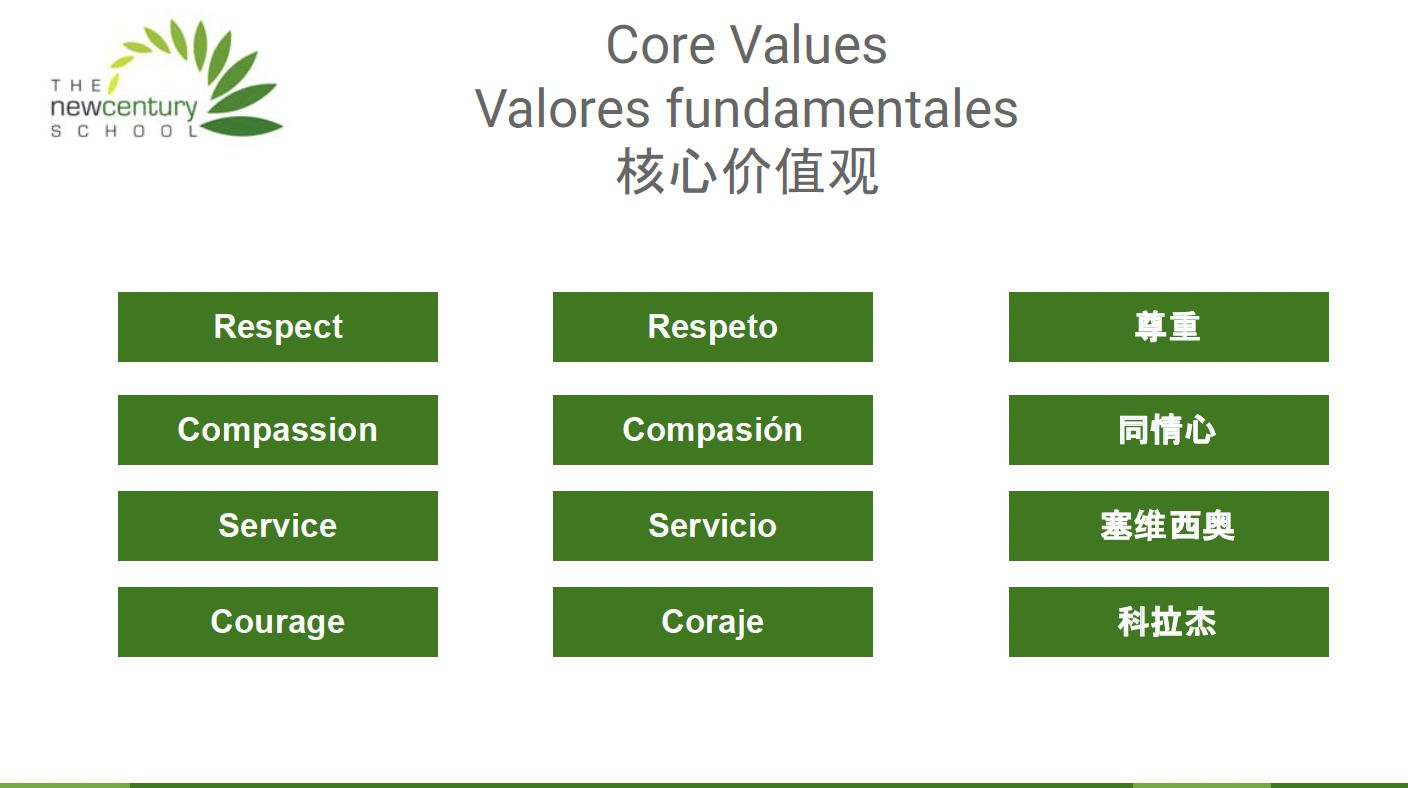
This mission manifests in the school’s four core values—Respect, Compassion, Service, and Courage—displayed in English, Spanish, and Mandarin Chinese, reflecting the commitment to multilingual education.

Always a Team Effort

The evening showcased the school’s diverse staff, from the extensive preschool team of educators, the K–8 teaching staff, and the administrative and facilities personnel who keep the school running smoothly. For Ms. Simonetti, now in her second year as Head of School, the strong team dynamic has been essential to a smooth start. “We have a great team,” she reflected, “from our newest to our most seasoned members we are able to come together.”

New Systems, Enhanced Communication

As mentioned in School Year 2025–2026: A Year of Growth and Belonging at TNCS!, the school’s transition to Transparent Classroom was introduced, a change representing a direct response to both family and staff feedback.

The platform integrates three key components: a calendar system for both community-wide and class-specific events, communication tools for school news and class updates, and student records including attendance and progress reports. Preschool Coordinator Terriann Lane and others on the team had researched multiple options before selecting Transparent Classroom, influenced in part by positive past experience using it. “It was designed by Montessori educators,” Ms. Simonetti noted, “so it’s very much aligned with some of the things that Ms. Lane has brought on board over the past couple of years.”

TNCS’s Steering Team

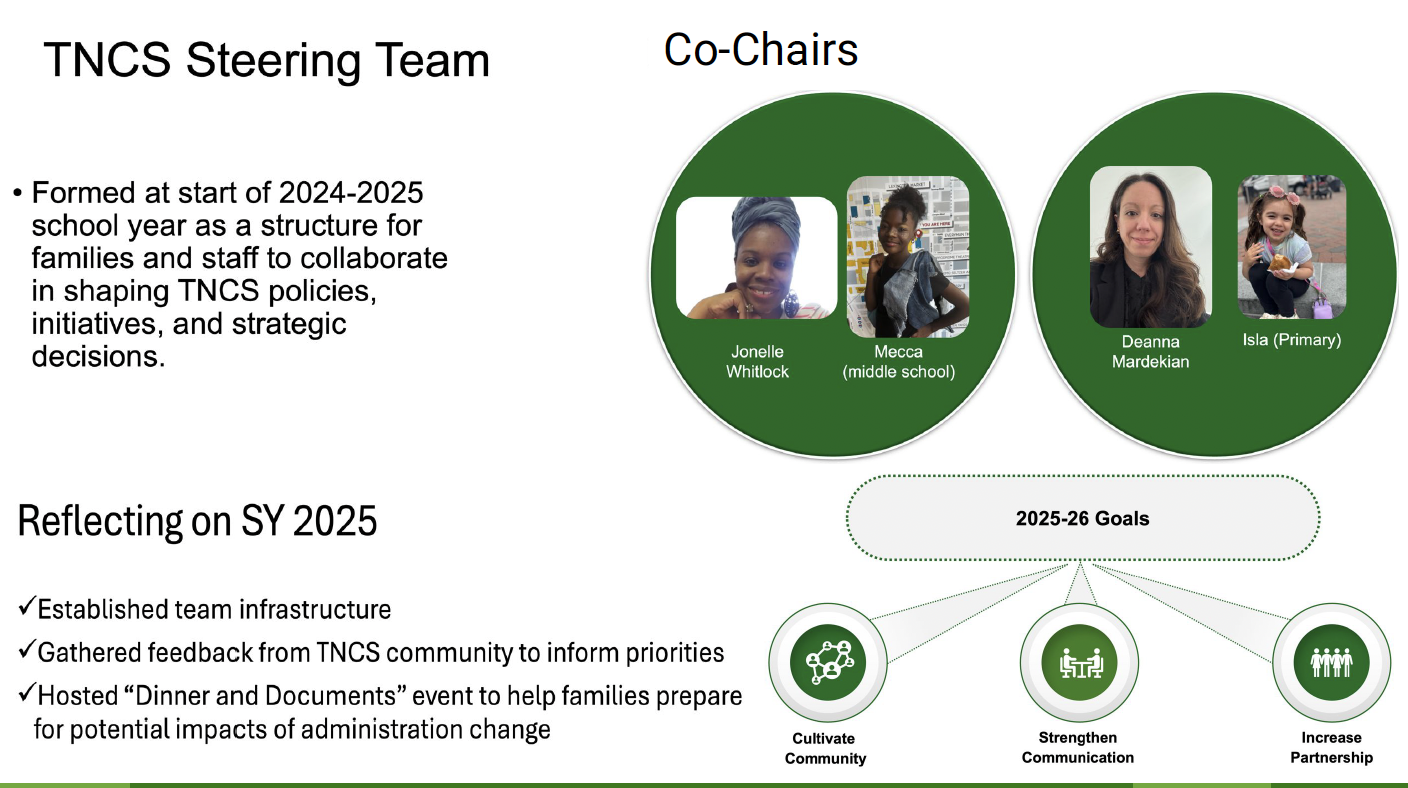
A highlight of the evening was the introduction of the latest iteration of the TNCS Steering Team, a collaborative structure bringing together families and staff to shape school policies, initiatives, and strategic decisions. The team is co-chaired by a middle school and a primary parent.

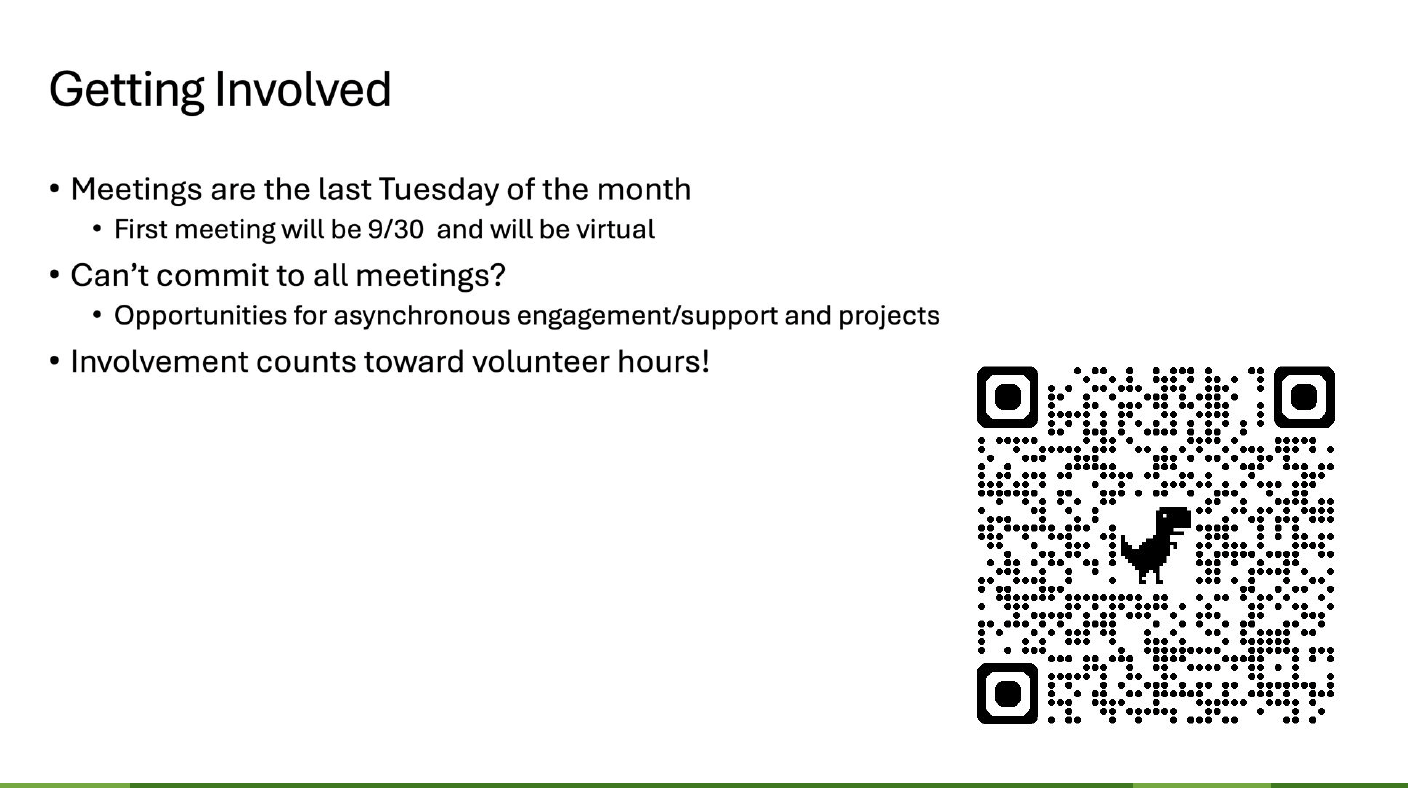
The team meets on the last Tuesday of each month, with the first meeting having taken place September 30th. For families unable to attend all meetings, there are opportunities for asynchronous engagement and project-based involvement, with all participation counting toward volunteer hours.

The Steering Team’s three primary goals for the 2025–2026 academic year are to Cultivate Community, Strengthen Communication, and Increase Partnership—themes that resonated throughout the evening’s presentations and are perfectly in line with TNCS’s approach to all things.

Looking Ahead

As families moved between classroom visits and engaged with teachers, the evening reinforced the school’s central theme for the year: community and belonging. “As a very diverse community, we want to be sure that everybody feels a sense of belonging and that they have a voice and a place to be heard, seen, and valued,” said Ms. Simonetti.