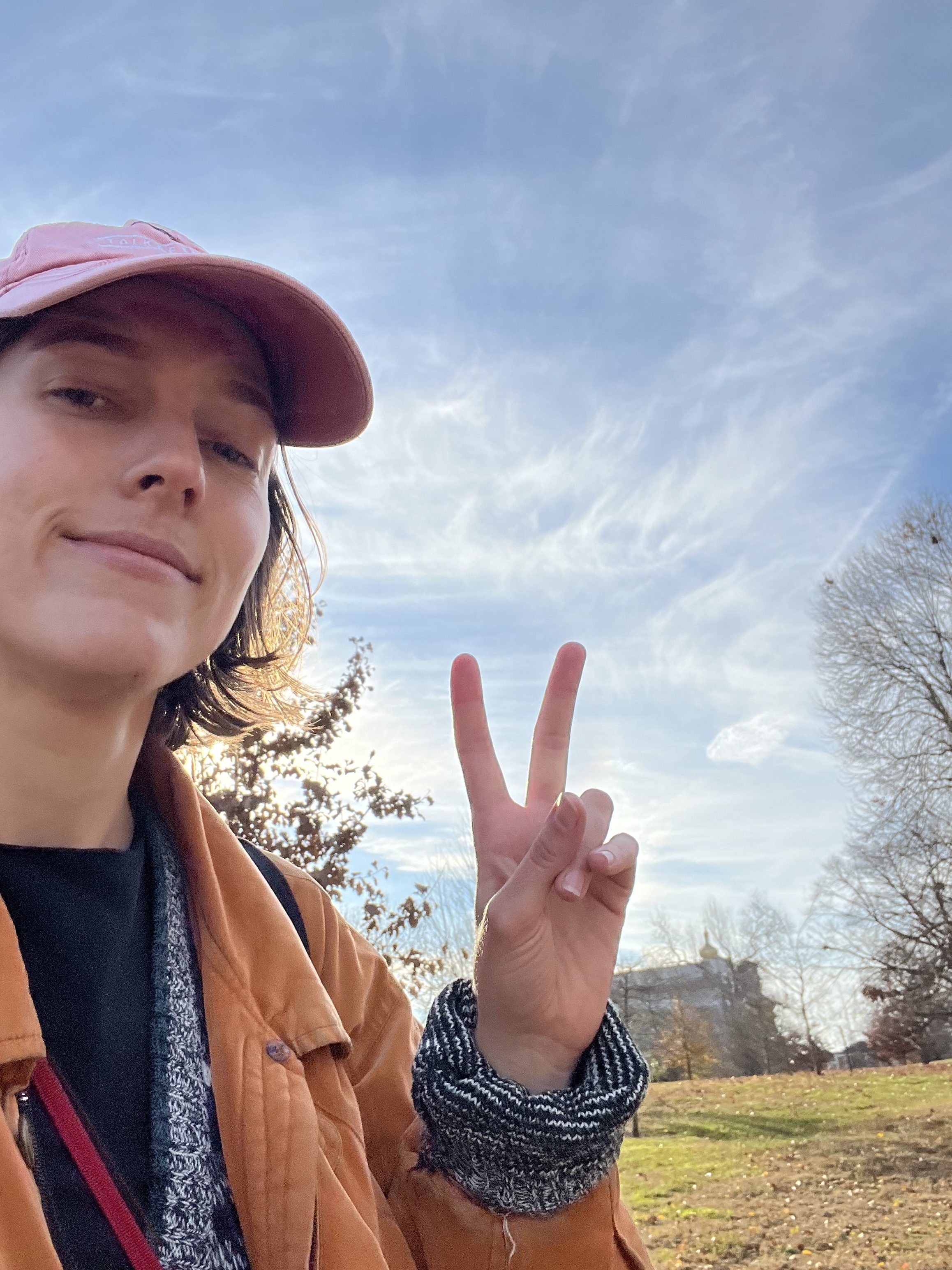
The New Century School is well known for many unique attributes, such as discovery-based learning, engaging the whole child, meeting the child where they are, a commitment to both multilingualism and the arts, and expanding the physical boundaries of the TNCS campus to encompass beautiful Fell’s Point and beyond (to name just a few). These attributes are what draw teachers to TNCS, where they can really teach and engage their students (rather than, for example, being restrained by a curriculum that must address the majority needs and the requirement to meet certain quotas or metrics). This desire to explore alongside students and participate as a true guide along their educational journeys characterizes TNCS kindergarten teacher Bailey Miller’s approach to the classroom.
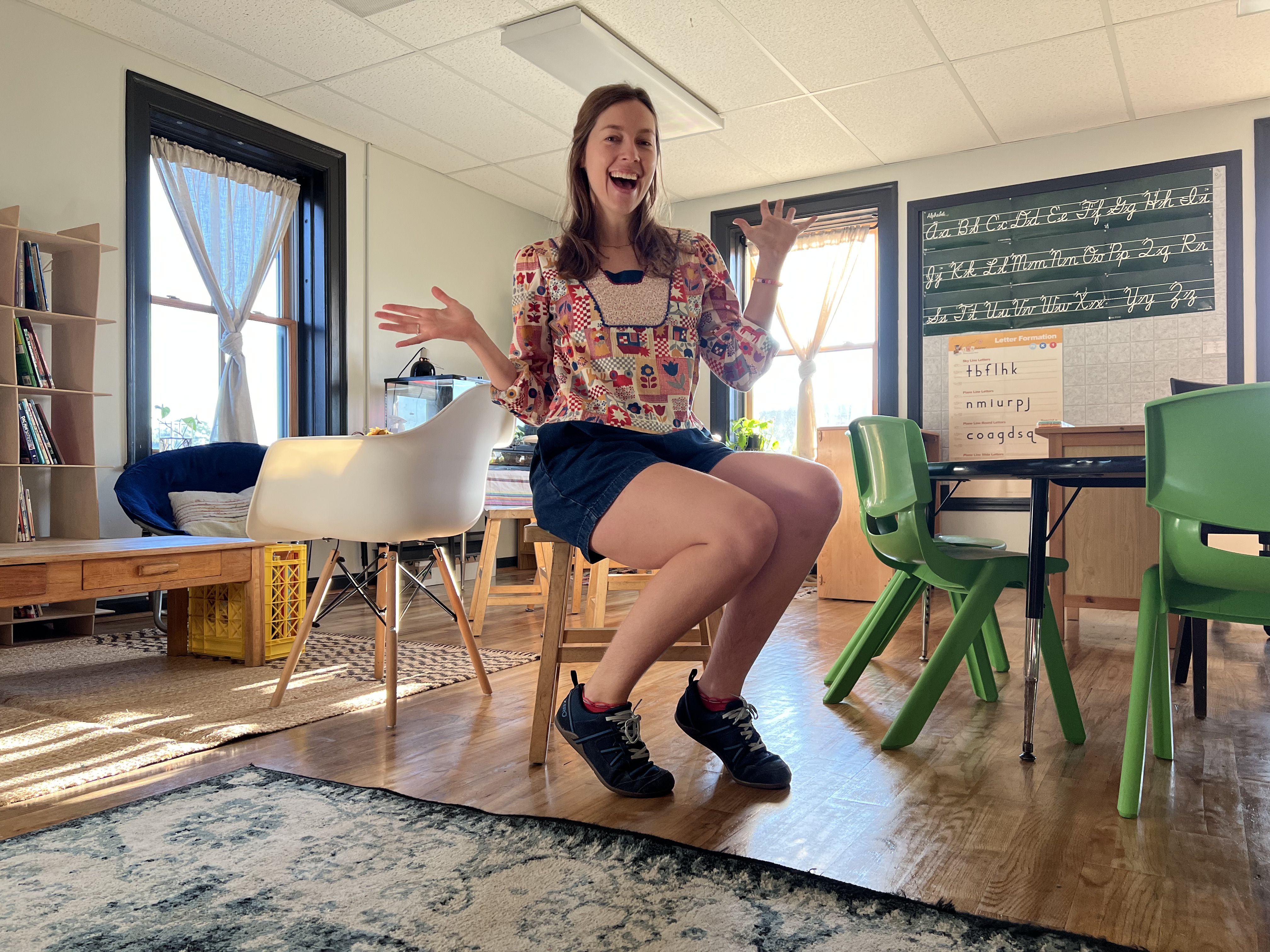
“Miss Bailey,” as she prefers to be called, took over as TNCS lead kindergarten teacher for the 2025–2026 school year after working as Mr. Warren’s assistant in last year’s K-2 class, which she describes as a great educational experience. She had not thus far worked with that age group and had to learn classroom management skills and how to connect with and teach younger students.
Mr. Warren was on tour with his band for part of the year, so Miss Bailey had to adapt quickly to leading the classroom. When Mr. Warren returned from touring, they finished out the year together. “He was a really incredible mentor figure and the kids loved him—he’s a legend,” Miss Bailey recalls. Working with him helped her learn the ropes, and he expressed confidence in her ability to take over his position when he left TNCS to take over as Music Director at St. Paul’s School. “It’s big shoes to fill,” Miss Bailey admits, but the transition is working out beautifully. Each year, the classroom makeup at TNCS fluctuates with enrollment changes, with the upshot that this year, sufficient numbers of kindergarteners enrolled to sustain a K only classroom. (Ms. Sharma now leads the lower elementary students.) Miss Bailey appreciates having all the same age group for her first year as lead teacher at TNCS: “It’s been nice to be able to go all in on what kindergarteners need and meet them where they’re at socially. It’s a huge adjustment for kids to become kindergarteners because now they’re in primary school territory. I’m really really enjoying it—it is so much fun.”
How Miss Bailey Got Here
Originally from the west coast of North Central Florida—”the manatee capital of the world,” a town called Homosassa—Miss Bailey now lives in Butcher’s Hill. She moved to Baltimore specifically for the “walkable urban fabric.” She graduated from The Ohio State University with a degree in physics. “I’m a big science nerd. I love science,” she says. Then she got involved in physics education research, and everything changed. “I didn’t think I wanted to be a teacher, but the more I learned about education, the more I appreciated the art and service of it.”
She started working with college students as an MCAT physics prep instructor as well as tutor, then created online high school content with UK- and Cairo-based ed-tech startup Nagwa. Making and narrating physics videos was right up her alley—she has always been adept at explaining concepts. While working remotely this way she also got a Master’s degree in Instructional Design. She then turned to doing education research and creating science curricula for upper elementary grades based on the Next Generation Science Standards. Although she enjoyed that work, and especially the introduction to educating younger students as well as science in general (as opposed to focusing on physics), something was missing. After having worked remotely for 4 years, Miss Bailey was eager for human encounters!
Her criteria for looking for new work were simple: providing some form of education at a location she could walk to and from. And that is how she now finds herself as a kindergarten teacher at TNCS. “It’s so fun,” she says. “I find kids to be super energizing. I feel like I gain energy being around them because they’re so inspiring and they’re so sweet. They’re so psyched to learn anything—which is awesome because I’m psyched to teach them anything.” She recalls walking by TNCS and not really knowing what the school was about. When she went in to interview, she realized she had entered someplace special. Not only was it her first exposure to Montessori, but she says, “this school experience is so different from every other school experience I’d known.” One thing that immediately stood out is how the school is the environment, both within and without. “How TNCS is integrated into the city is enriching for students’ sense of community and trust. We also have this amazing architecture and culture all around us. The inner workings of the school and the classroom are just fabulous too. I immediately saw that this was a really special place.”
Miss Bailey at TNCS
Miss Bailey emphasizes the importance of routine for kindergarteners: “They thrive on consistency.” So, a typical day begins calmly with journal time and soft music. Students take their journals from their cubbies and find a sentence on the board to copy, always including the date. “Kindergartners journaling?” you might be wondering. “I’m looking for punctuation, spelling, capitalization, the form of the letters,” Miss Bailey explains. This is not only great practice for them and laying important foundations (more on that to come), but “they’re working silently and with intense focus, so it’s a really nice start to the day,” she says.
After journal time, they continue with more English Language Arts (ELA), such as working together in small groups for activities focusing on speaking and hearing. Miss Bailey also has an assistant: Yunyi Wu, “Wu Laoshi,” joined TNCS in November after finishing his master’s degree in education here in Baltimore.
Then comes snack time, followed by Global Studies, in which they’re currently learning about different continents. She describes one memorable moment when she was quizzing her students about Antarctica. She gave the prompt, “this continent is so cold that nobody lives there,” to which a student responded, “Minnesota!” “It was so cute,” she laughs.
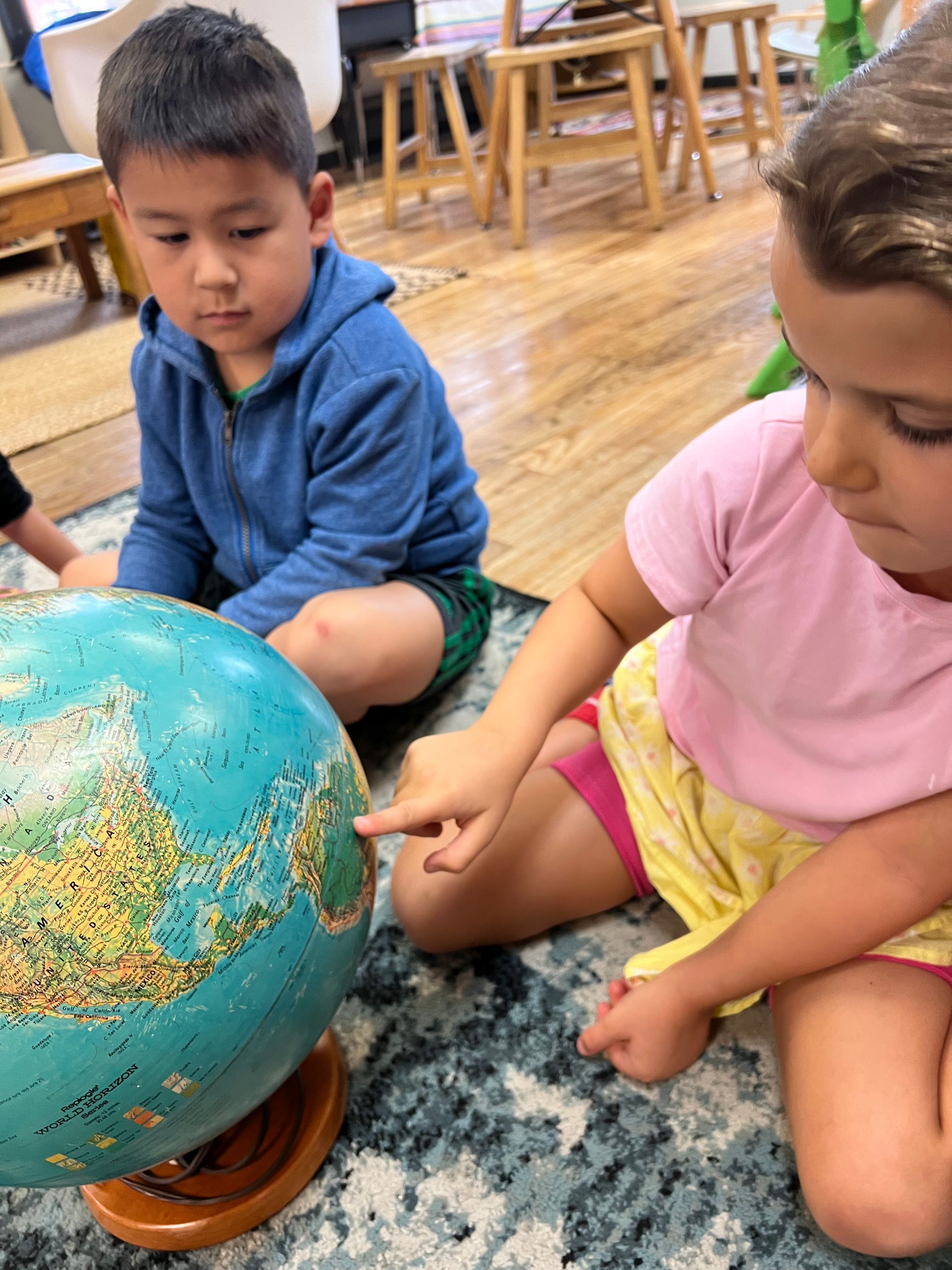
The students then transition to Chinese and Spanish in the language lab, followed by midday recess and lunch. On Fridays, Miss Bailey likes to take them to Thames Street Park for a “Friday fun day thing.”
After lunch comes math time, which the students love. “They tell me, ‘I want to do more of this!’ They love it. You can make it really fun for them, and they love a challenge. At this age, they’re so fresh and confident and stoked to learn,” she said.
After math, students go to their specials (music, art, or PE), then return for science 4 days a week. Science at the end of the day can be challenging, but Miss Bailey keeps it hands-on and group-oriented to help students stay focused and alert.
That’s Science!
Many traditional kindergarten curricula do not “go there” when it comes to teaching science, but TNCS understands that children learn by doing, and science is exactly that—exploring, questioning, trying something out. In fact, Miss Bailey incorporates those Next Generation Science Standards principles (though not the standards themselves) she studied into her approach. She says they represent “a radical shift in science education away from learning little factoids like ‘the mitochondria is the powerhouse of the cell’ to ‘do you know how to ask questions? Do you know how to test things? Do you know how to explain what you found and make organized data?'” She focuses on actionable science skills within engaging topics—in last quarter’s microbiology unit, for example, she took science class to the harbor, where students got to encounter the “pistachio tide,” a bacterial bloom that occurs annually in the Inner Harbor when the water temperature drops rapidly in the fall. “We’re going to go smell the stinky water; we’re going to look at the color,” said Miss Bailey. “It was right down the street, so it’s great to be able to make these connections to get them to see that learning is all around, not just in the classroom.”
Miss Bailey’s physics background shines through in her teaching, especially during the second quarter when the science focus is on physics. Again, while most K classrooms do not even touch on physics, Miss Bailey finds it’s actually quite accessible: “Physics can be really intuitive because we are interacting with objects in motion all the time. But there’s also tons of misconceptions, and it can be really mystifying. When I tell people I’m in physics, a lot of times the first thing they say is, ‘Physics was my least favorite class. My teacher was horrible.’ That was part of what made me want to get into education—if I could be a good physics teacher and help people have a good relationship with physics… I don’t care if you don’t want to do science as a career, but just having that appreciation and making it a little more accessible is important to me.” So far, so good if user feedback is any indication—her students say things like, “Miss Bailey, I love when you teach science” and “I love forces.” She recounts observing one student moving a block around and mimicking her, saying, “Is this in motion? Now is it in motion?” Miss Bailey felt validated to say the least: “I was like, yes! That is so adorable. They’re really soaking it in.”

She admits she sometimes misses more advanced math and science, but “It’s always out there. I can buy a textbook and do calculus again whenever I want.” And she has certainly found satisfaction in her current work: “When I was in physics, I would not have guessed I’d be a kindergarten teacher because I would have thought, ‘Well, then I can’t do physics.’ But now that I’m here and I’m breaking it down for the kids—obviously not as deeply—but if I can help 15 small children be like, “Physics is fun. I like physics,’ that’s success for me.”
Building Reading Foundations
While Miss Bailey might be a science teacher at heart, she most certainly recognizes the critical importance of other subjects. “I want to really lay a strong foundation for them before we really start reading,” she explains. “Sometimes in more conventional school systems, kids can just get swept along with where expectations are, and if they have these holes in their foundation, it gets really frustrating for them. Or they’re in third grade and have to go back and fill in those holes.”
She’s focusing intensively on phonemic awareness and composition, including handwriting. “It’s going to be like releasing a dam once we really dive into more and more reading in the third and fourth quarter. I feel like they’re getting wound up like a toy and then they’re going to be set free.” They practice reading every day, but for now, the emphasis is on mastering the elements of reading before putting it all together next quarter.
Languages and Specials
The kindergarteners have a full schedule of language instruction, going to the language lab on the third floor of building south daily for Chinese with Cui Laoshi and Spanish with “Profé J” (Josee Molavi—whom you’ll read about soon!), the new Spanish teacher. Moving throughout the campus for different classes is “a really big adjustment” and “a really big-kid thing to do” for students transitioning from pre-K explained Miss Bailey.
The students also take art twice a week with Mr. Fede (Federico), who also teaches PE. They have music twice a week, PE with Mr. Fede once a week, and teacher-led PE with Miss Bailey and Miss Sharma once a week.
Extended Care and ECAs
Miss Bailey sometimes works aftercare with the preschool class, staying until 4:45. She also leads Extended Care Activities (ECAs) with many of her kindergarteners. Last quarter, she ran “Zine” (a magazine-making club). This quarter it’s “Brick Masters”—building with Legos, dominoes, and other materials in the gym.
Upcoming ECAs include a chess club (“I taught a lot of chess during summer camps this year, even to 5-year-olds. They picked it up so fast and loved it”) and an art and nature club in the springtime. “I want to do a lot of neighborhood walks because that’s one of the things I like most about this school—it’s part of the neighborhood. I love any chance I can to get them out there and go see things.”
Reflection and Gratitude
Becoming the lead teacher came with more than just teaching a classroom of young students, it also meant that Miss Bailey would be parents’ primary point of contact. “I’m responsible for so much for their children,” she said. But the experience has been overwhelmingly positive. “I’ve received so much kindness and gratitude from parents. It’s been really lovely. I am so proud of the kids and all of the work that they’re doing. Genuinely, they’re working hard—I don’t know if they know it, but they’re doing a lot of hard work, and they have such great attitudes. I feel honored to be entrusted with them.”
Even though this is her first year as lead teacher, Miss Bailey is already thinking about next year and whether she will still be involved with her current students—that is, whether classroom fluctuations might work in her favor and allow her to continue teaching them. “I think about them all the time,” she said. “The thought of not being in their lives is incomprehensible. I’m excited to see them grow and move on and do other things, but they’re such a big part of my life right now that it’s hard to picture my life without this whole environment.”
Then again, she also knows the current preschoolers from aftercare and finds herself thinking, “I want to be your kindergarten teacher, too.” Even the students from Mr. Warren’s class last year, now in the other building, still light up when they see her: “It’s so nice that we stay such a tight-knit kind of community.”
Her hope for parents is simple: “I hope they know I enjoy working with their kids so much. I love them so much.”