

On Monday, May 20th, middle schoolers at The New Century School took a very special jaunt to Washington, D.C.—they went on a Chinese field trip! The trip was organized and led by TNCS Chinese teacher Wei Li (“Li Laoshi”), and middle school student whisperer Adriana DuPrau also accompanied the group.
Culture (and Communication) Club
“I really want students at our school to know more about Chinese culture as well as practice their Chinese in an authentic environment,” said Li Laoshi, and so off to D.C. they went! They first toured the Freer|Sackler Gallery of Asian art and then strolled through Chinatown and had lunch at a Chinese restaurant. Li Laoshi’s twofold objectives of culture and communication were thus perpetually being met.
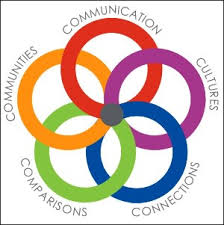

ACTFL characterizes communication as, “. . . at the heart of second language study, whether the communication takes place face-to-face, in writing, or across centuries through the reading of literature.” At TNCS, Li Laoshi has always made sure that communication occurs in “real-life” situations to emphasize what students can do with language rather than what they know about a language, such as how many vocabulary words.
As for culture, ACTFL says, “Through the study of other languages, students gain a knowledge and understanding of the cultures that use that language and, in fact, cannot truly master the language until they have also mastered the cultural contexts in which the language occurs.” It’s knowledge. It’s not just a cultural event—it’s a connection between the language and another subject. TNCS students regularly engage in everything from Chinese cooking (dumplings, noodles, pancakes) to learning how to use an abacus, to practicing calligraphy. The field trip for middle schoolers brought a lot of these experiences home.
Chinese Art
As the national museums of Asian art at the Smithsonian Institute, “the Freer Gallery of Art and the Arthur M. Sackler Gallery preserve, exhibit, and interpret Asian art in ways that deepen our understanding of Asia, America, and the world.” TNCS students were treated to a private tour of the exhibit Empresses of China’s Forbidden City, 1644–1912, which “provides an insightful look into the public and private lives of imperial women during the Qing dynasty. This first-ever, in-depth exhibition focuses on five empresses to reveal their long-overlooked influence on the arts, religion, politics, and diplomacy of China.”
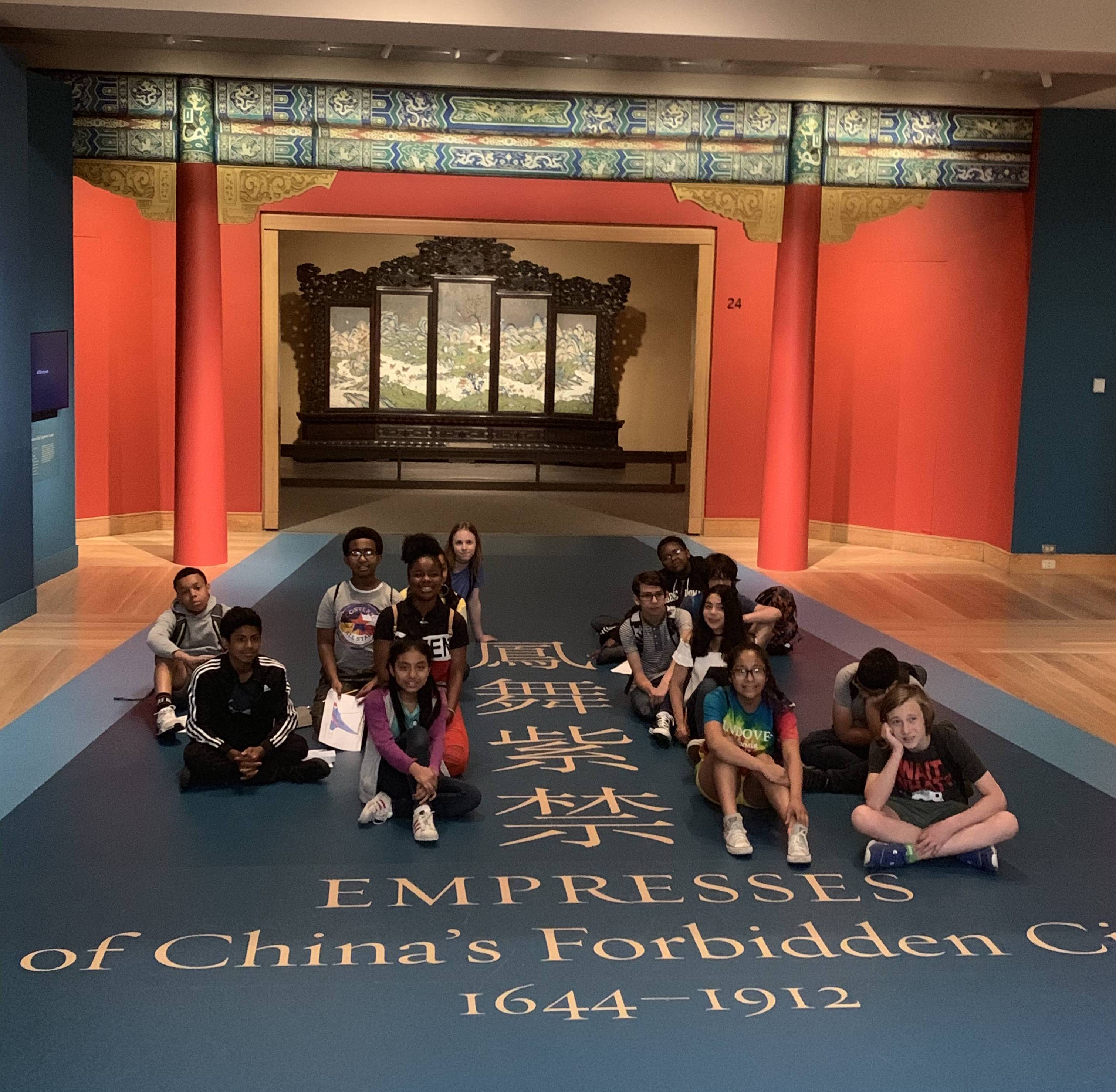

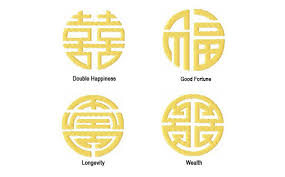


There were even clever riddles to solve!
1. What has the claws of a hawk
the horns of a deer
the eyes of a rabbit
the teeth of a tiger
the neck of a snake
the belly of a frog
the head of a camel
the scales of a fish?
Hint: The answer is also the symbol of imperial authority.
“The exhibition was awesome. The tour was very educational, and the tour guide was very knowledgeable,” said Li Laoshi.
2. What has the head of a golden pheasant
the body of a mandarin duck
the tail of a peacock
the legs of a crane
the mouth of a parrot
the wings of a swallow?
Hint: The answer is also the symbol for empress.
Chinatown
After a wonderful time at the museum, TNCS students got to walk around Chinatown a bit in the warm, pre-summer afternoon. So warm, in fact, that the Chinese Rita’s was all anyone could talk about!


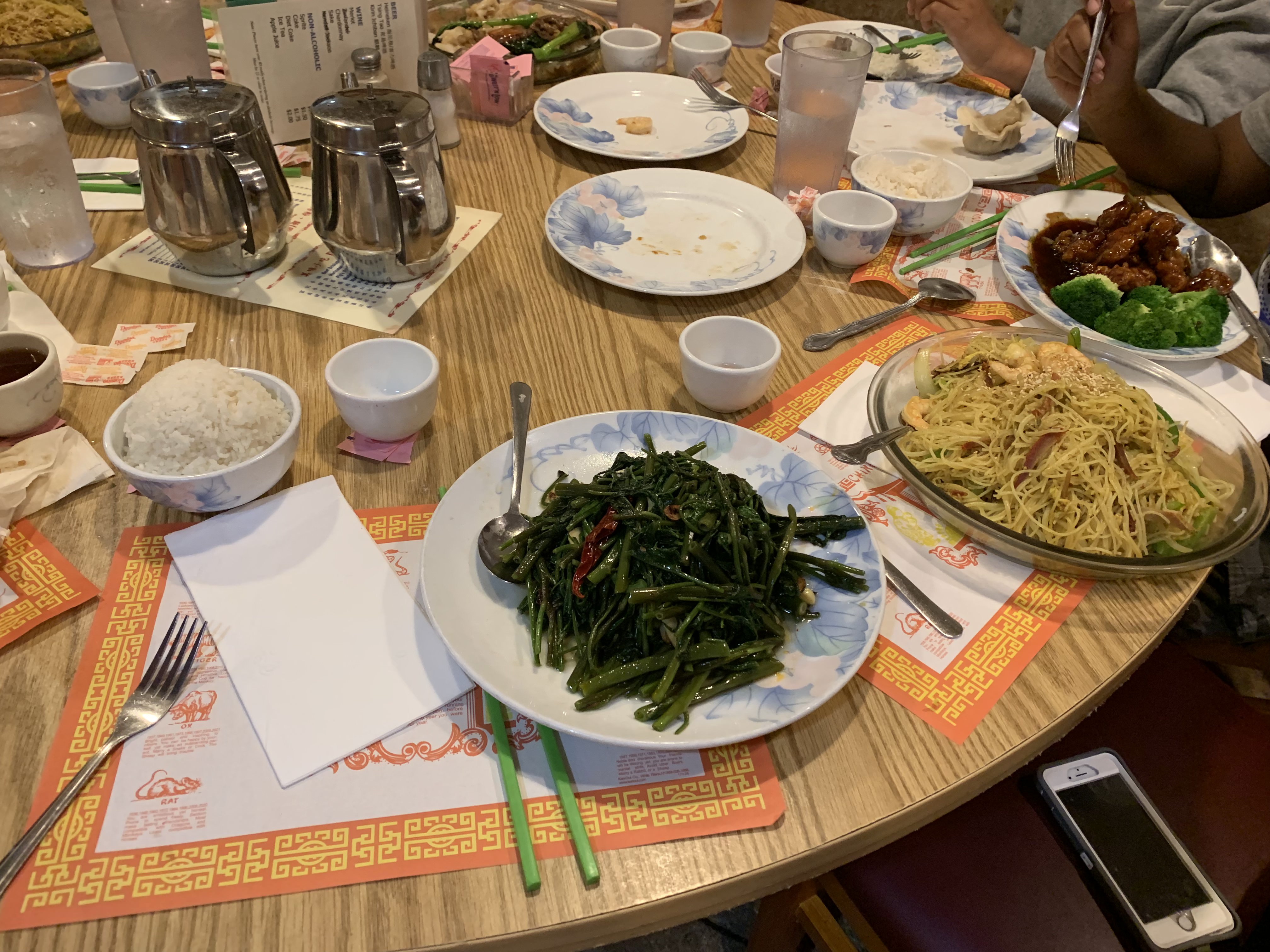
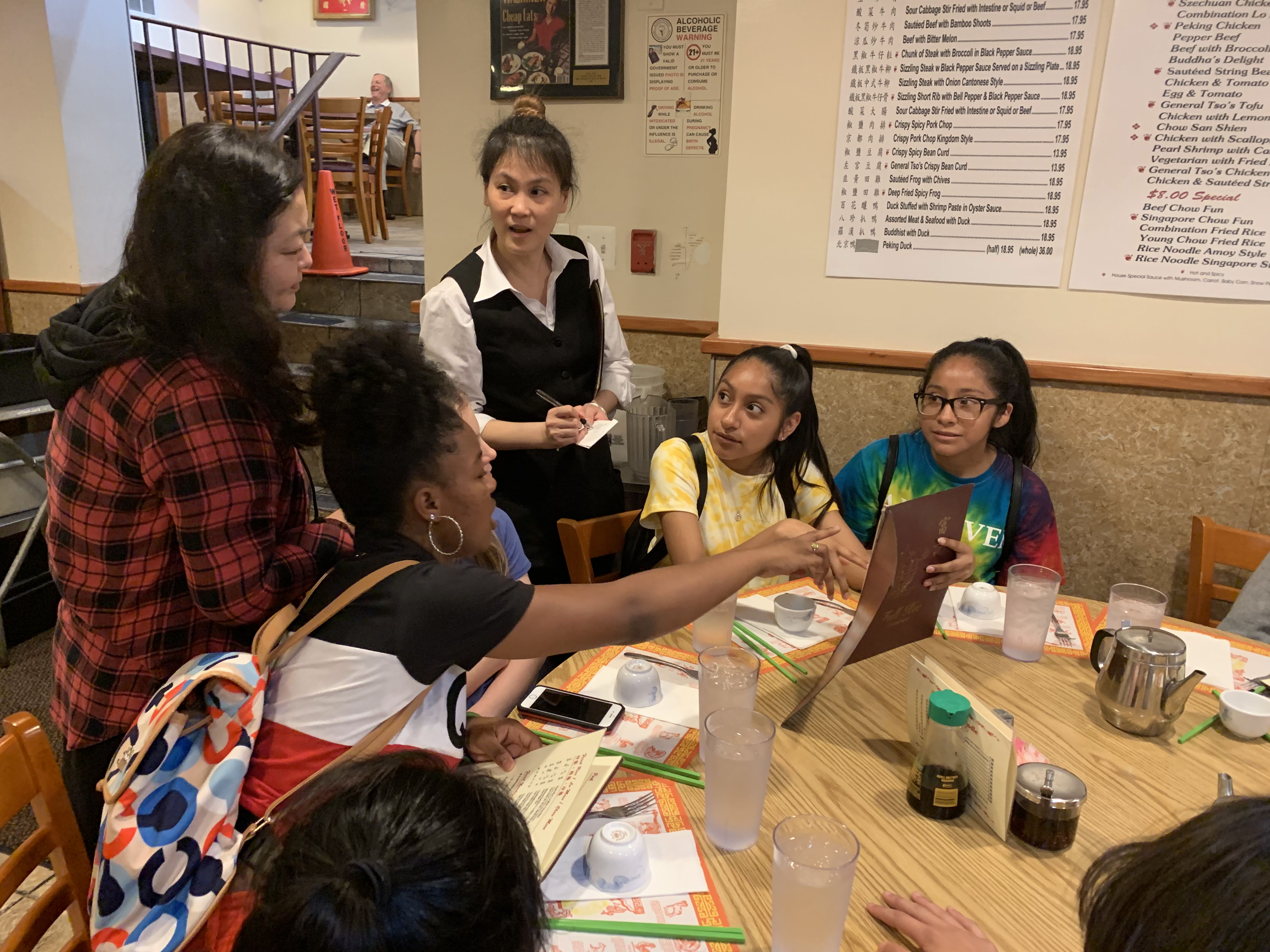
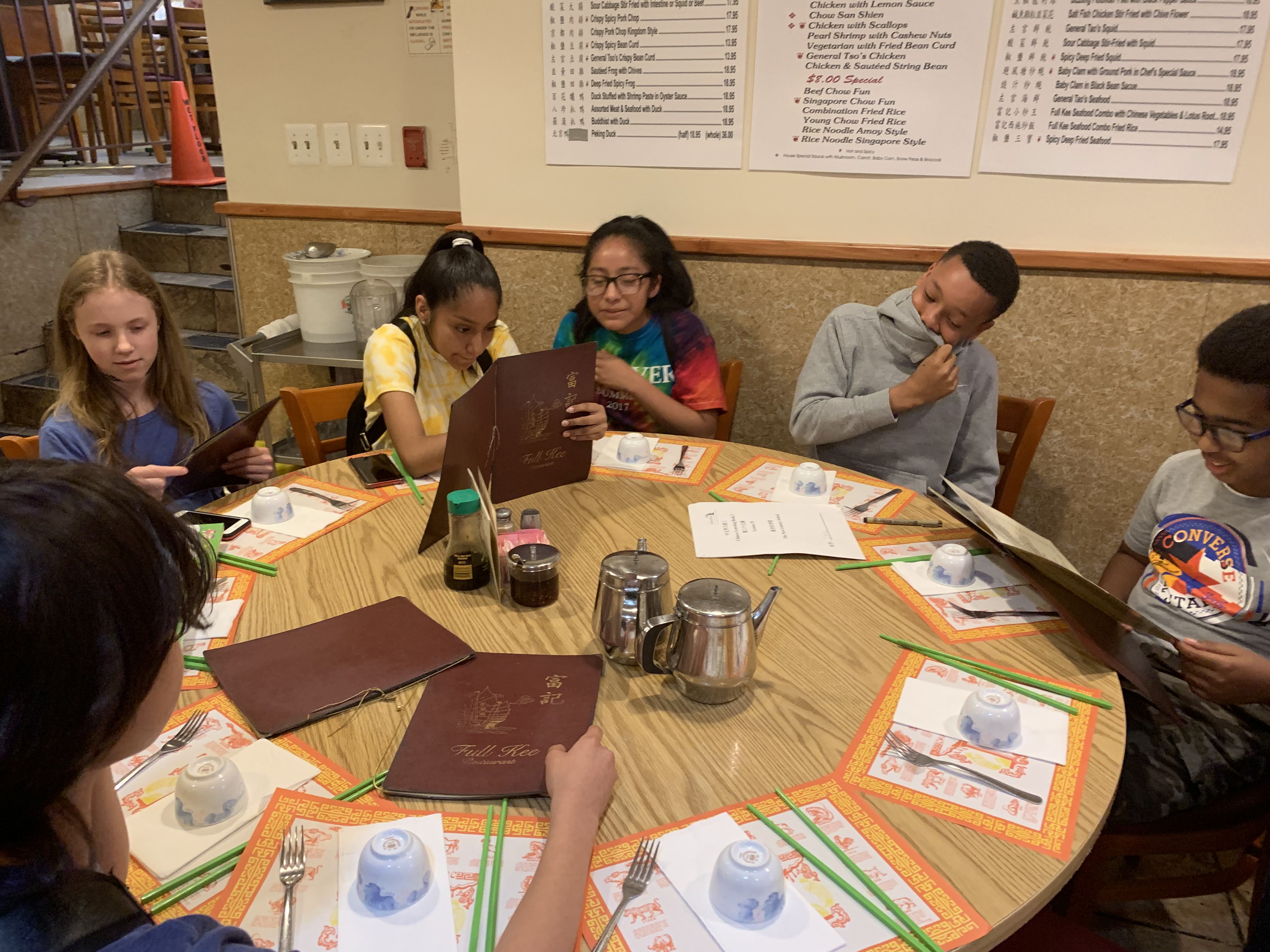
While in Chinatown, the group stopped at Full Kee Restaurant for lunch. This was their chance to speak Mandarin in a real-life situation, and the middle schoolers were instructed that they had to at least order in Chinese as well as try to use as much additional conversational Chinese as they could. They did great, and even tried some new dishes. “I was very proud and touched when I watch my students use Chinese for ordering food in the Chinese restaurant,” said Li Laoshi. She had one other request—that her students attempt to eat with chopsticks. Here is her tutorial in Mandarin:

Warning: Do not watch the slideshow below on an empty stomach! Delicious food photos ahead!

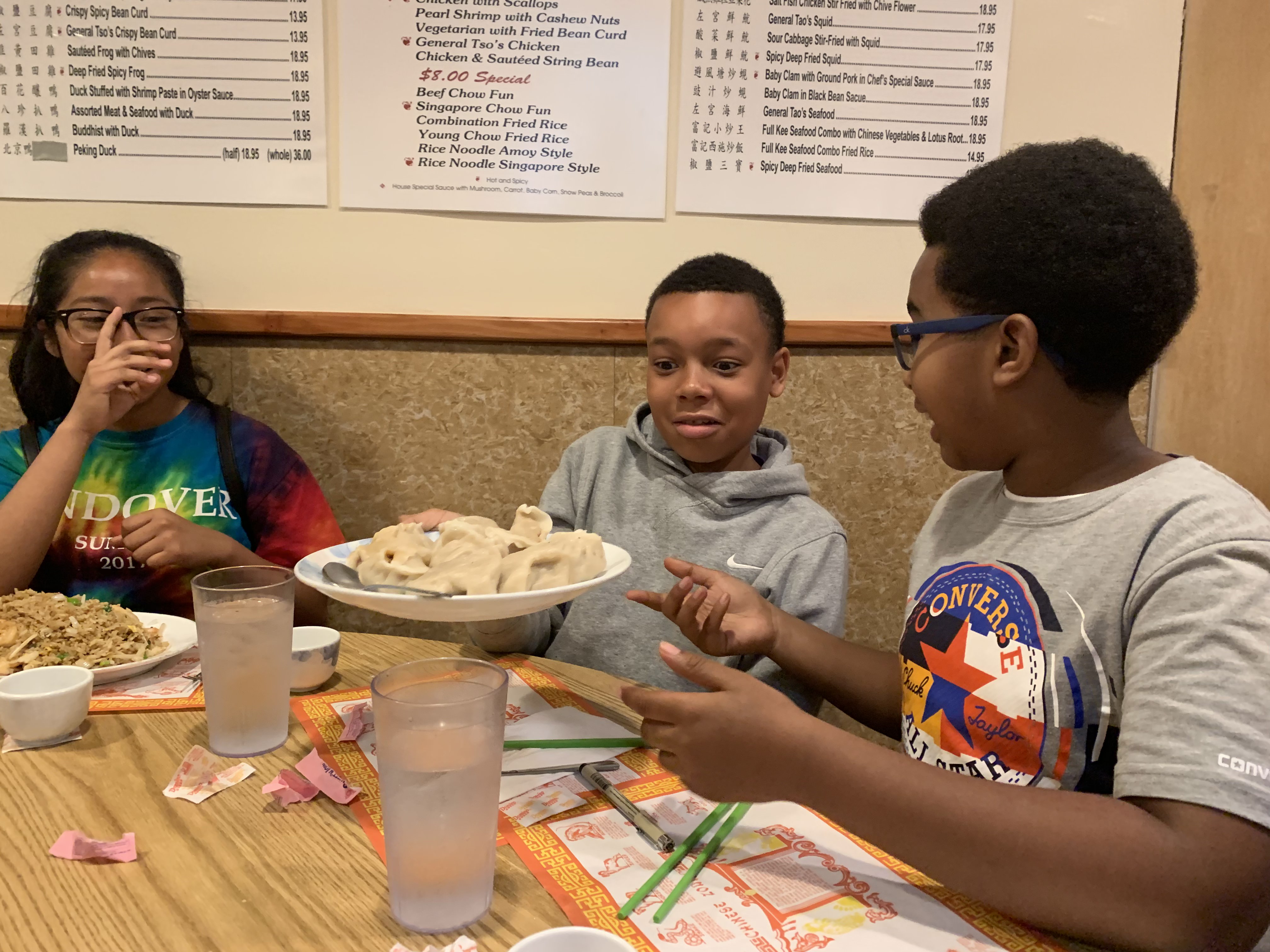

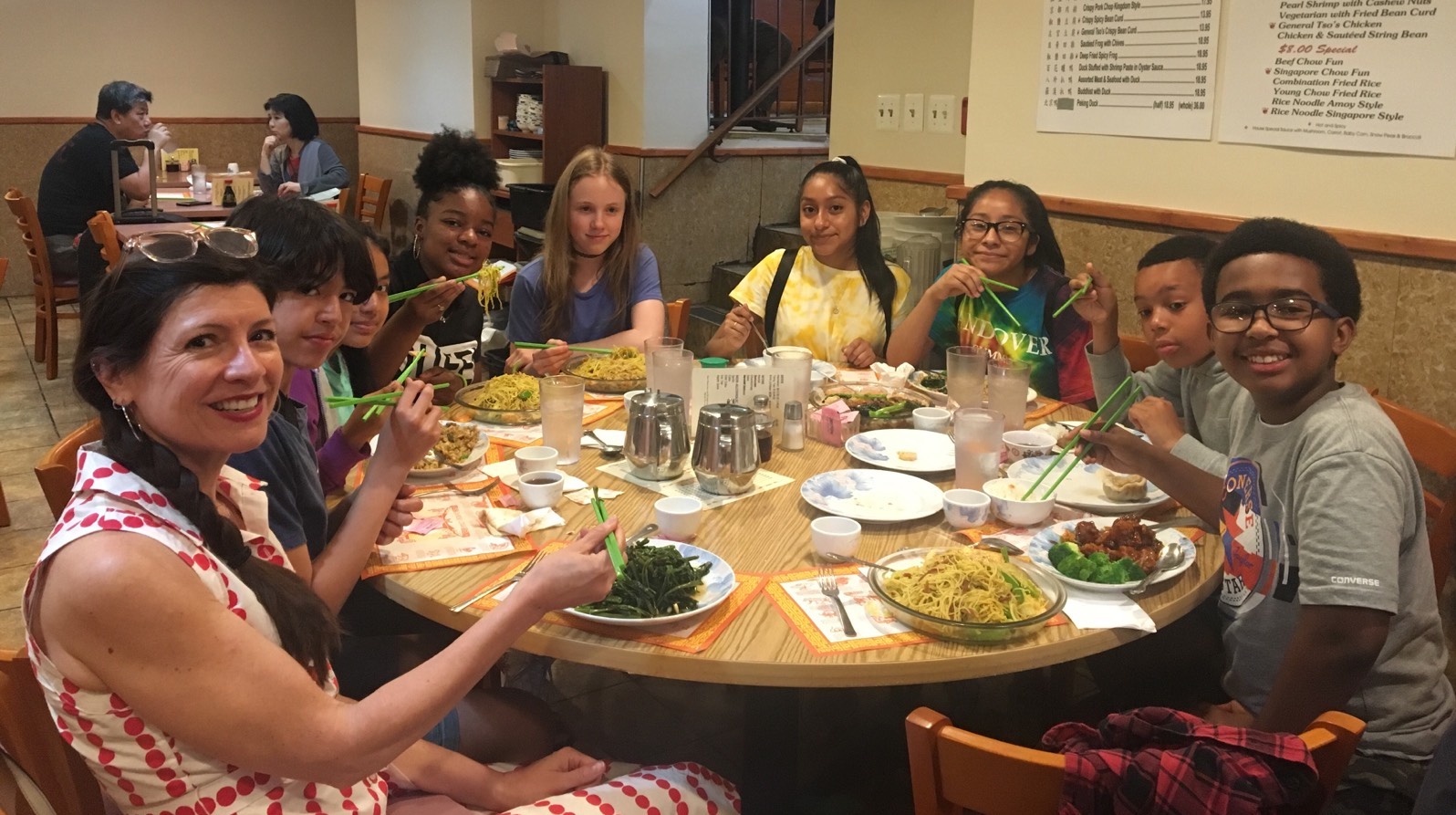
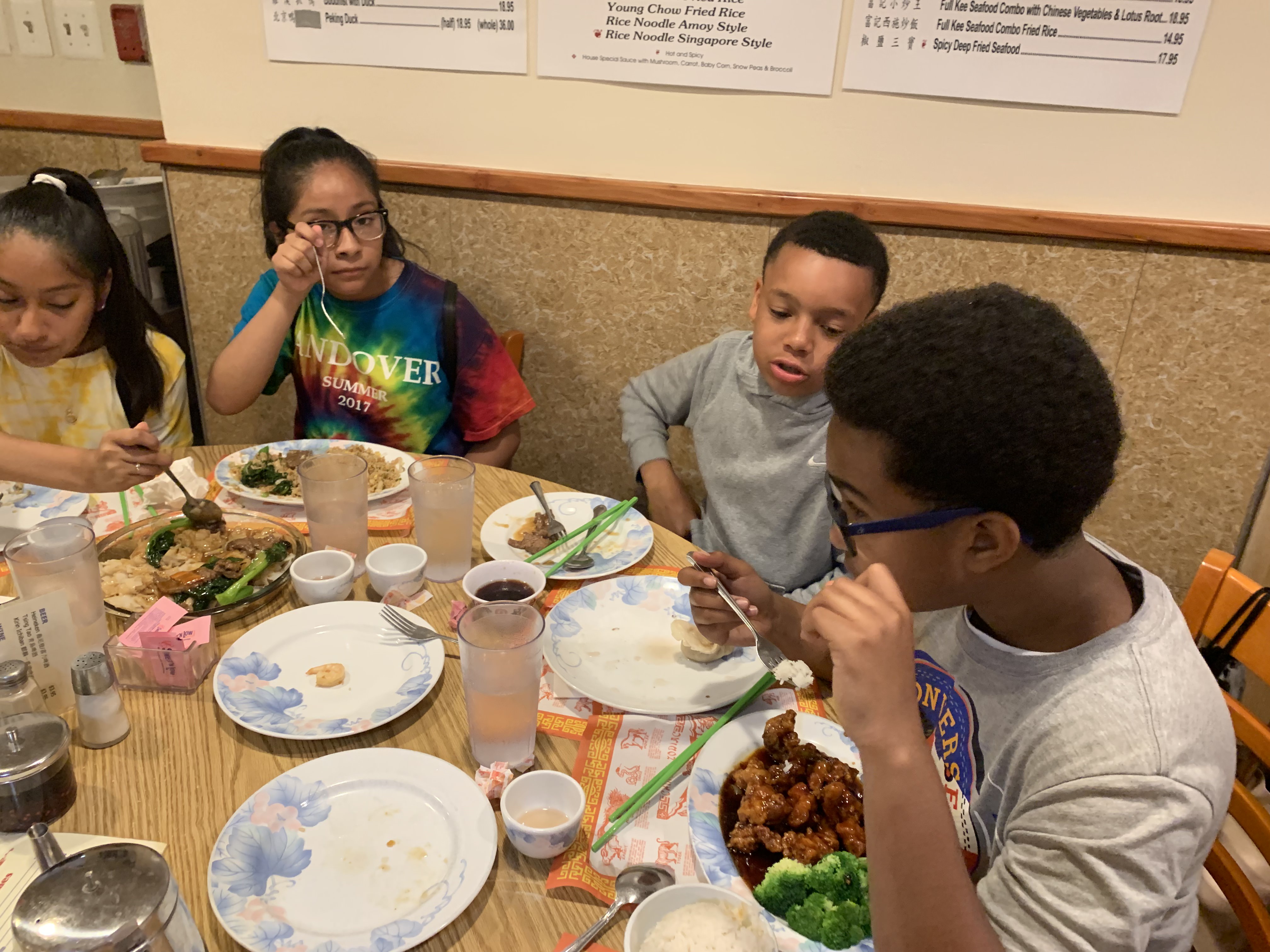
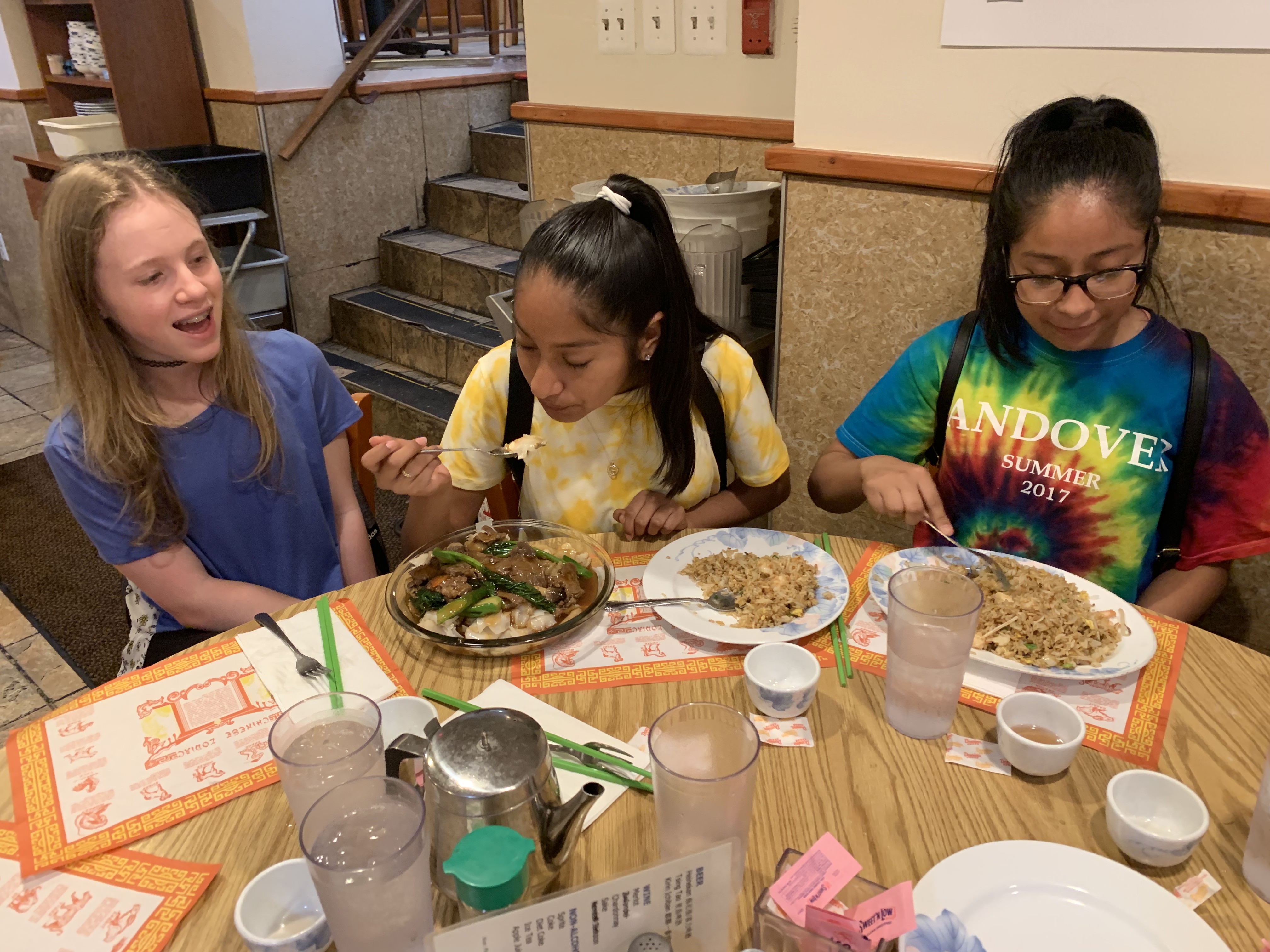

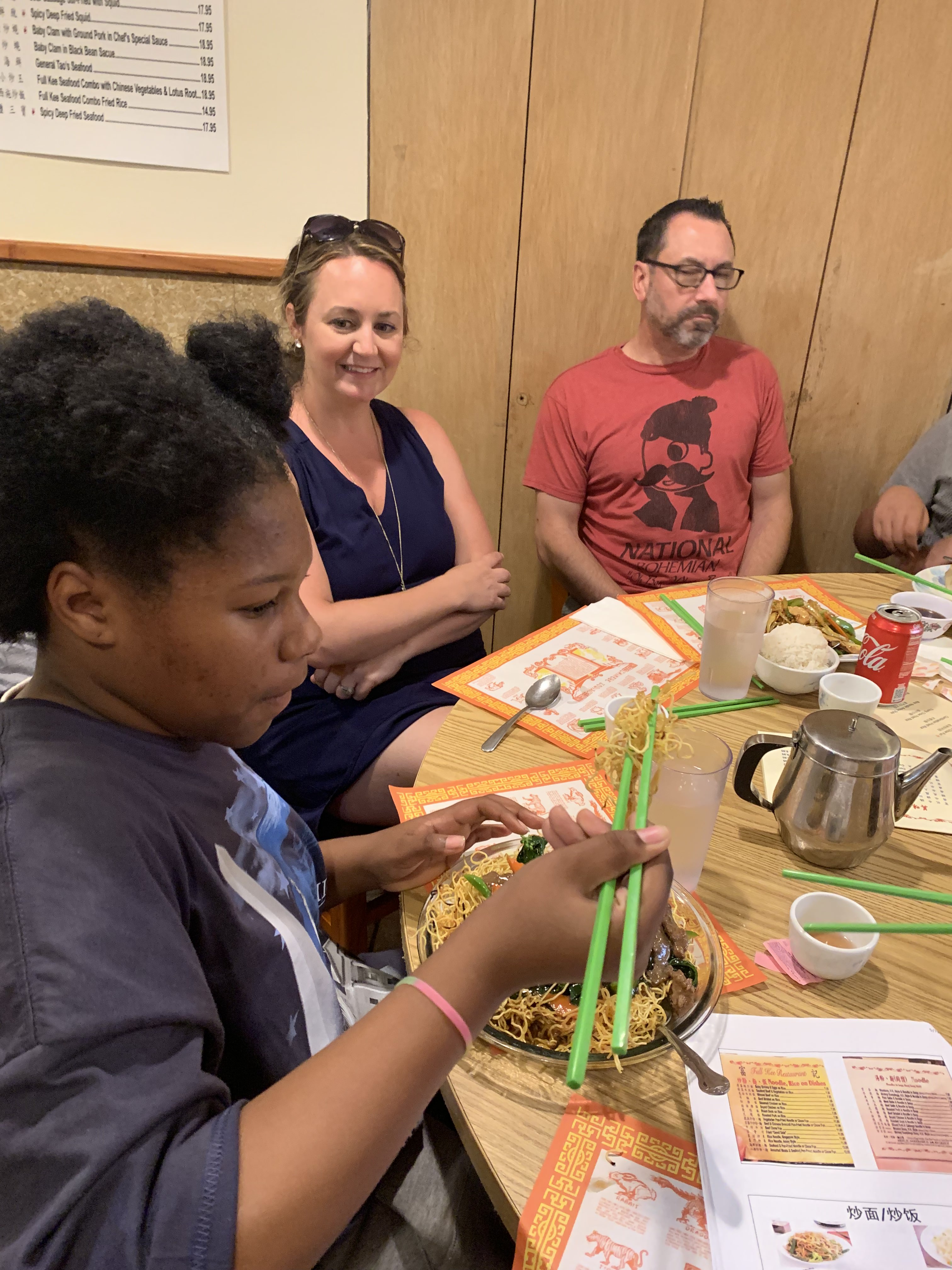
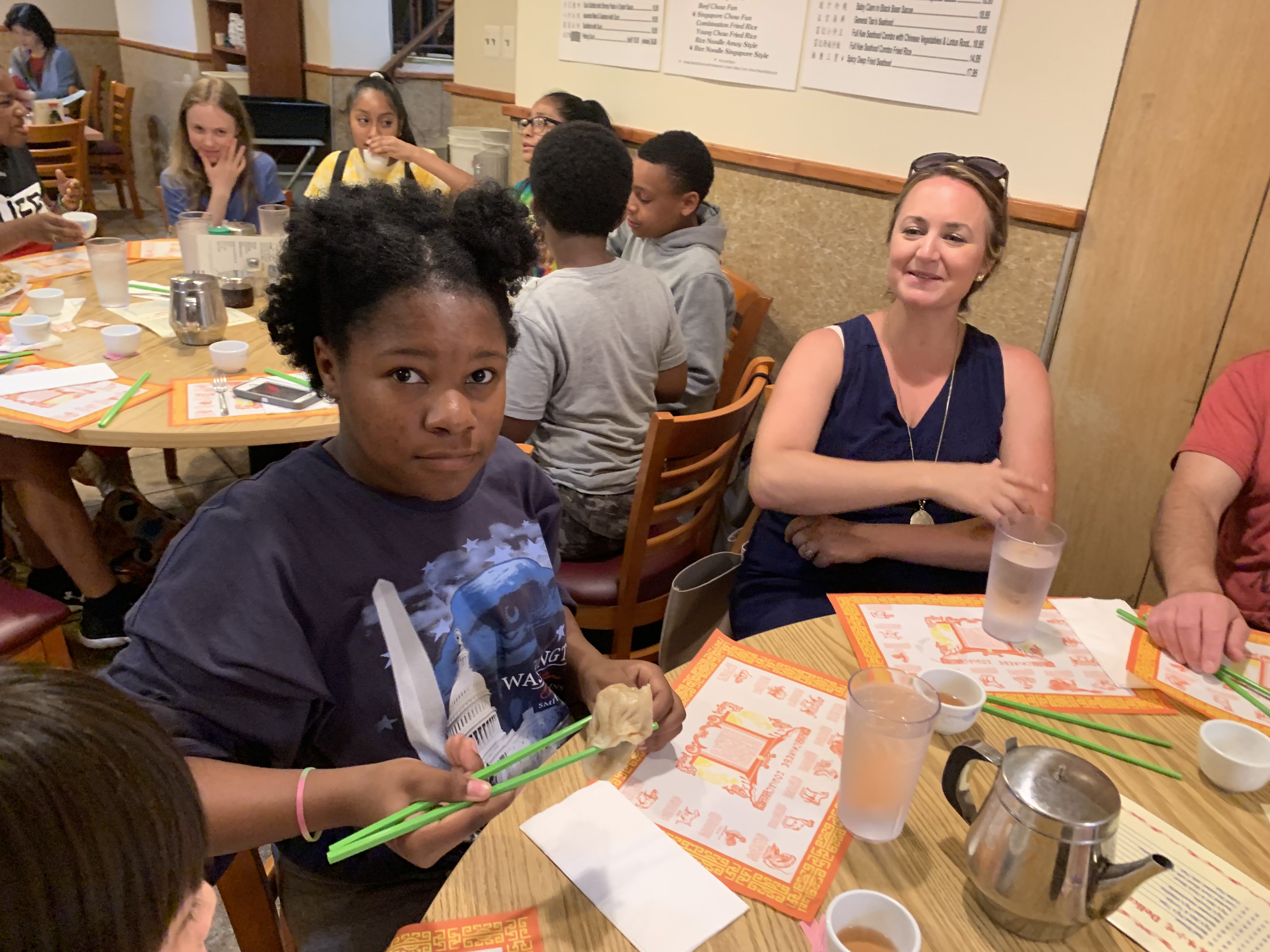

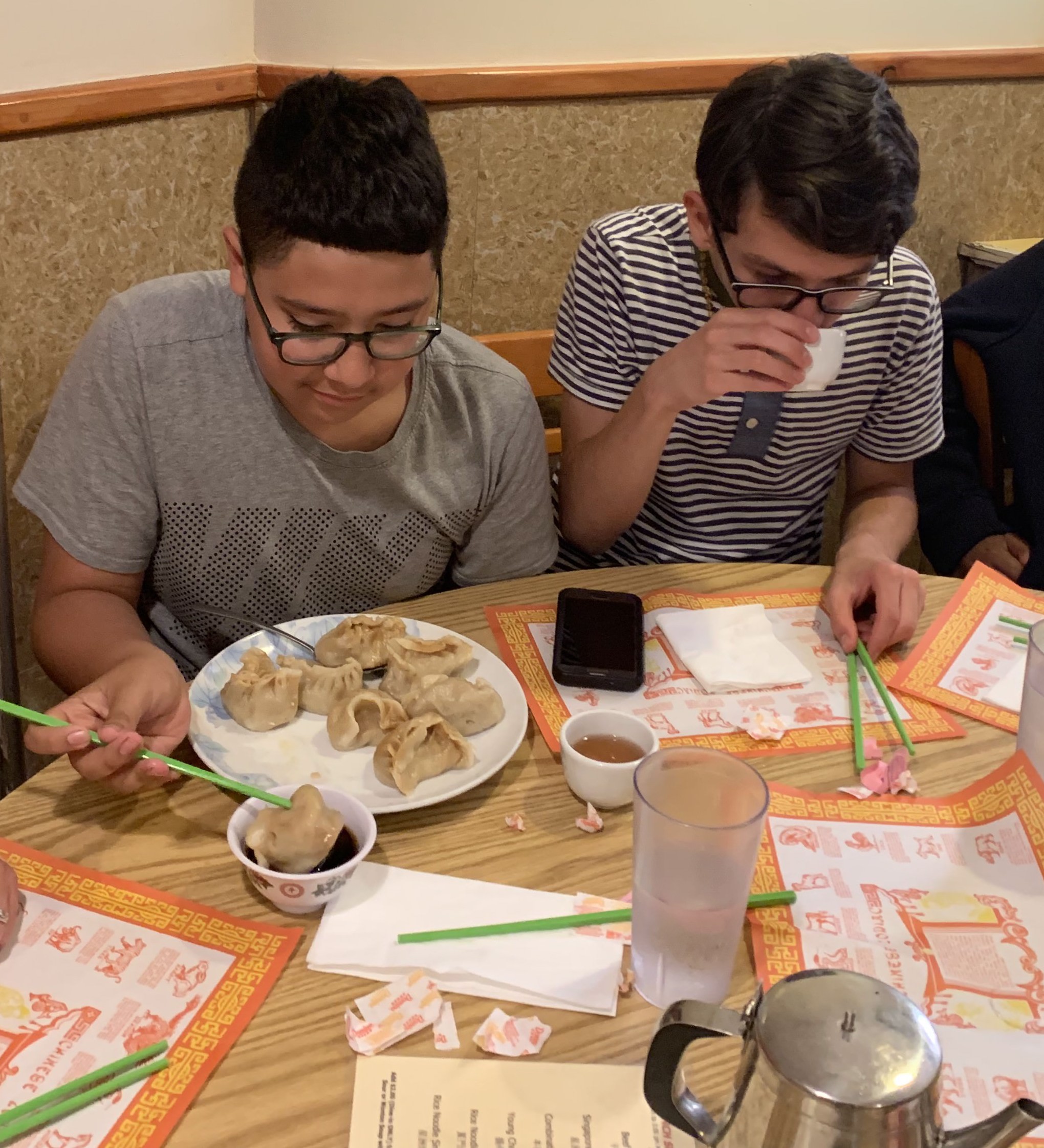
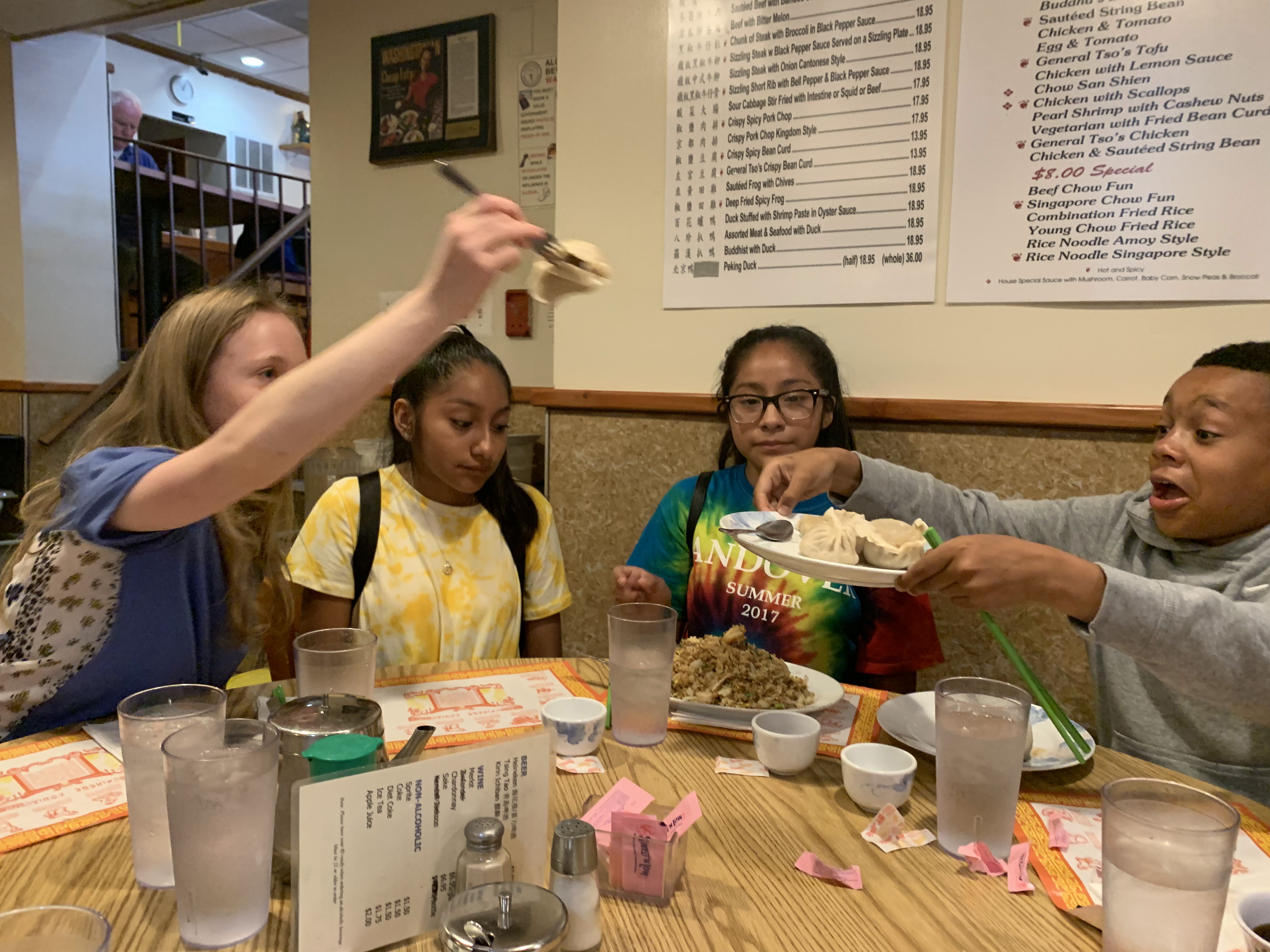
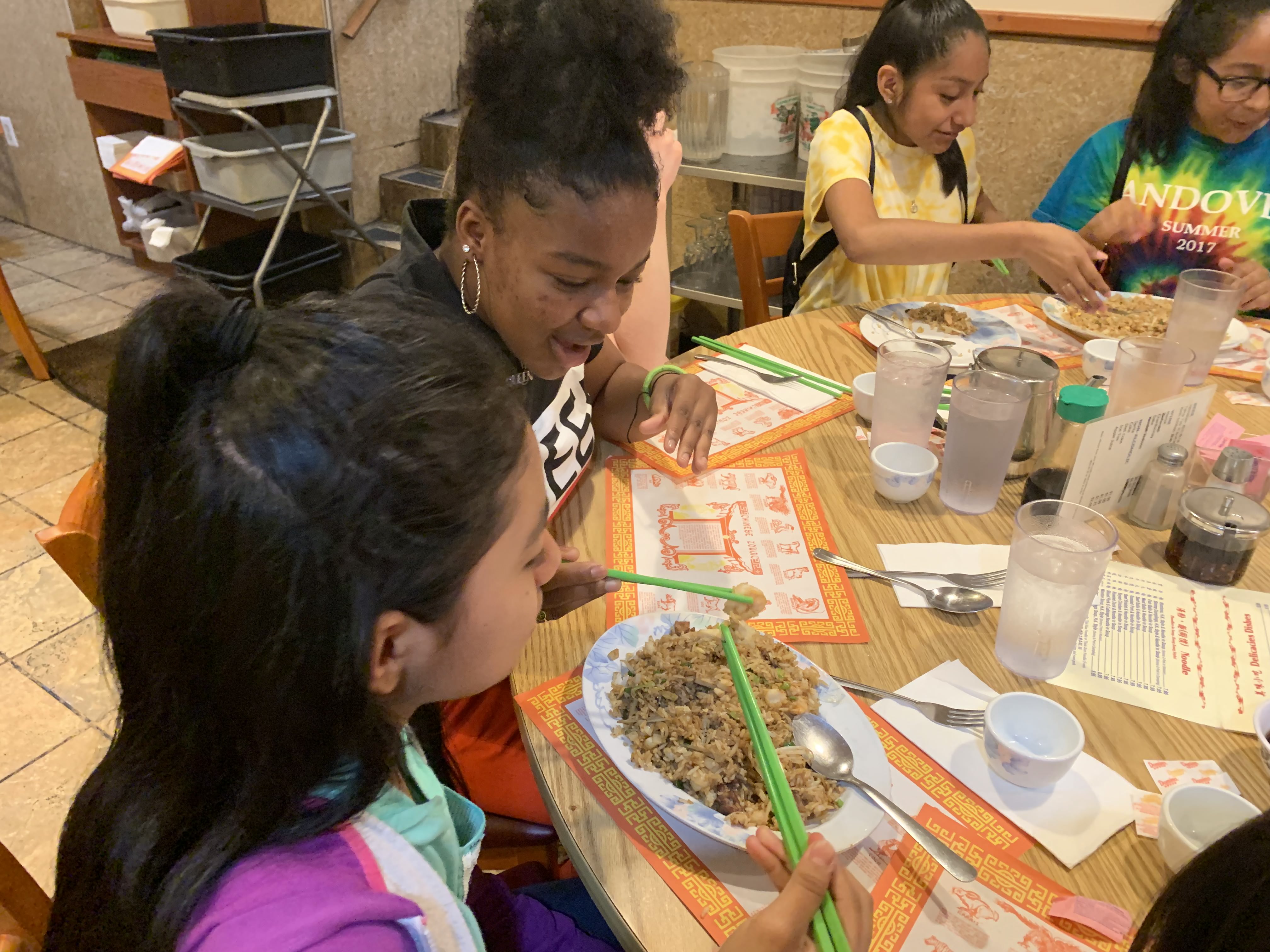


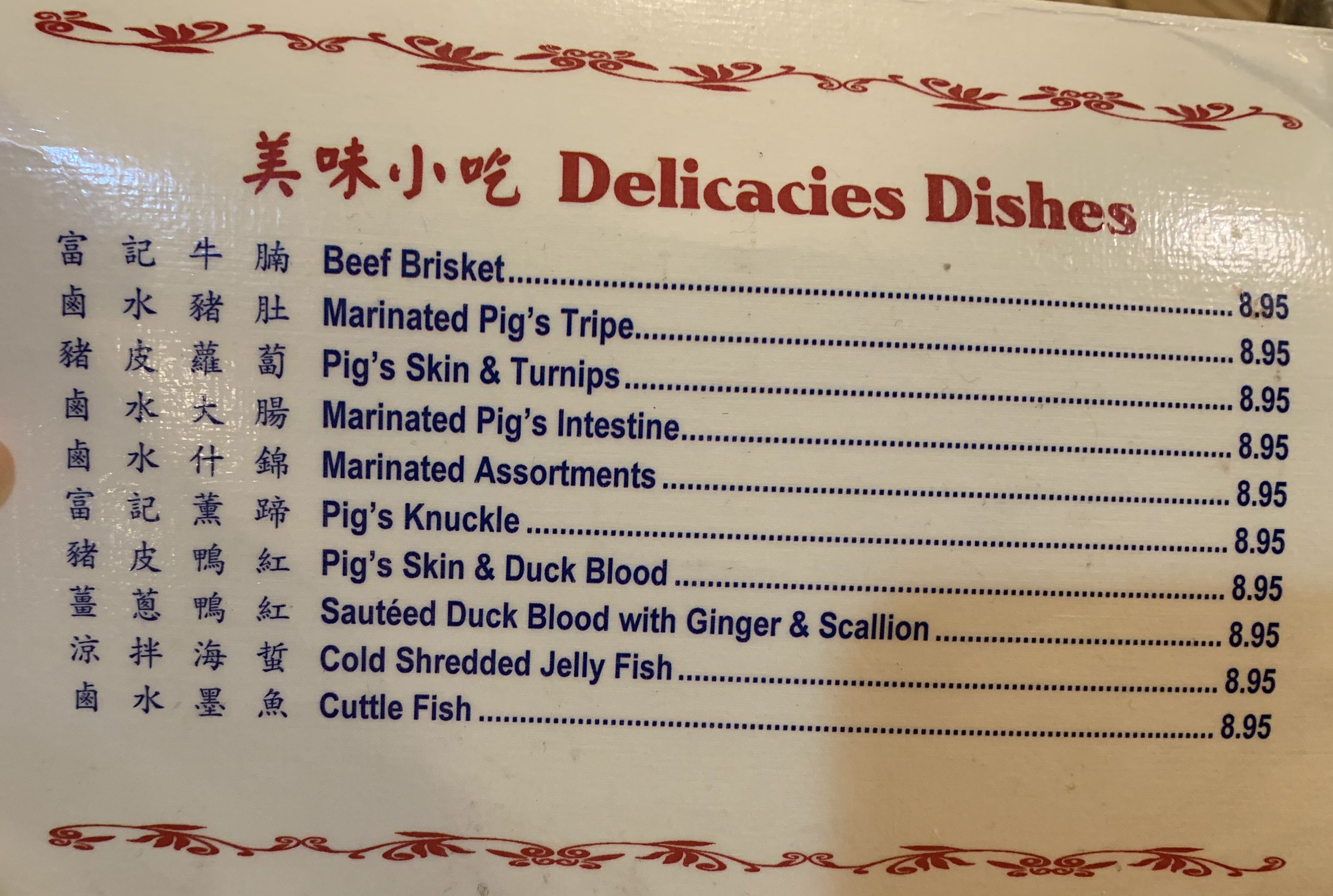

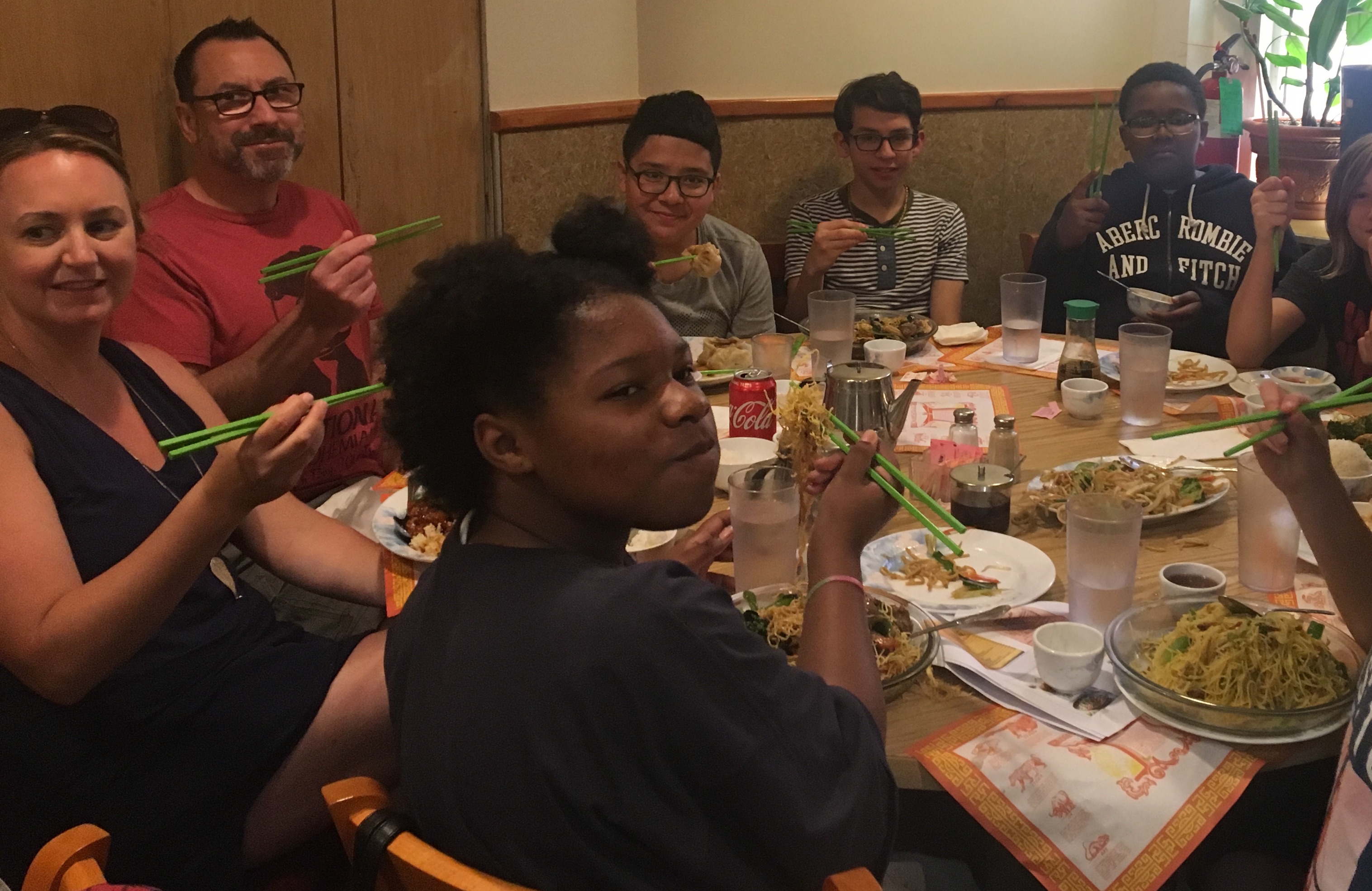

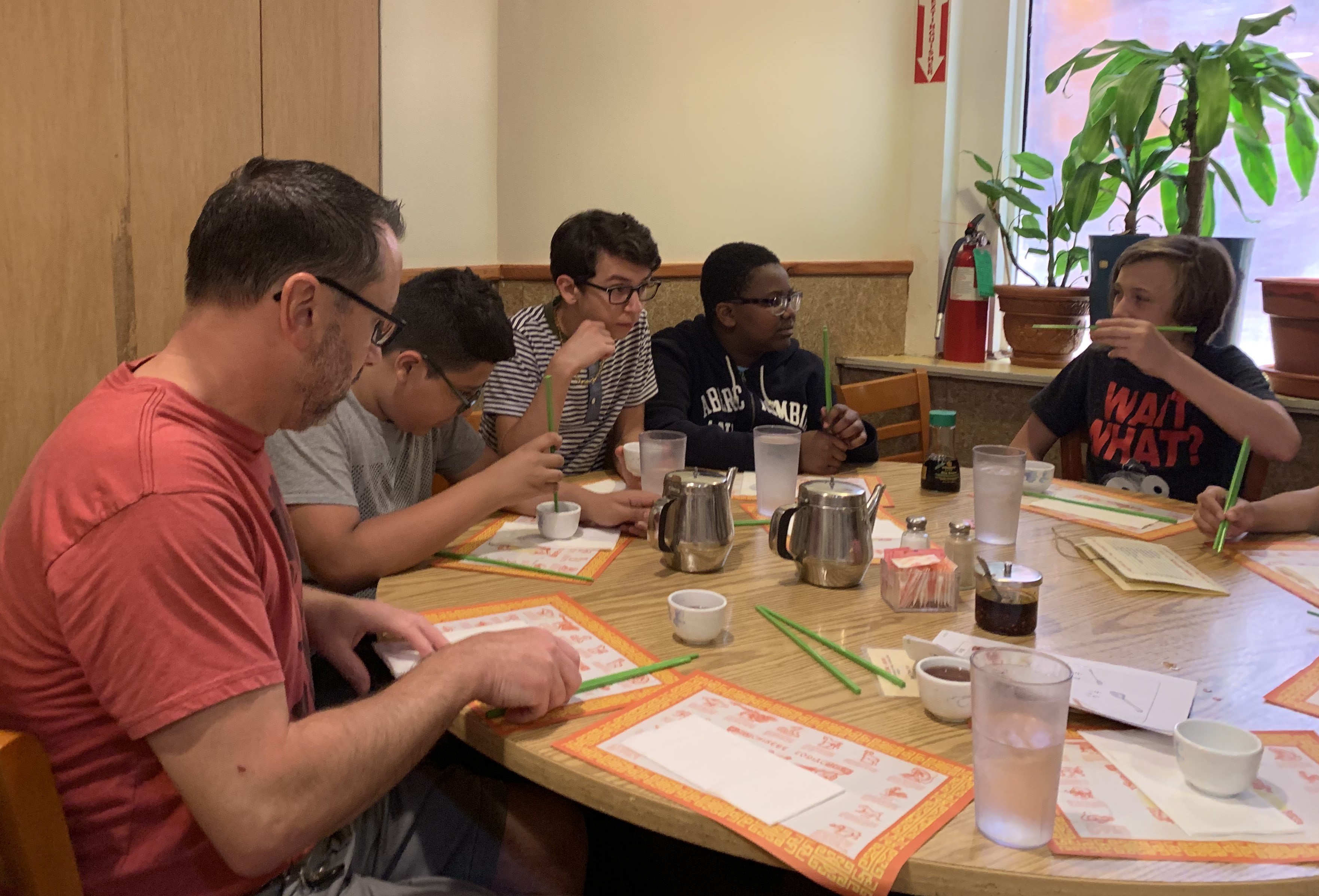

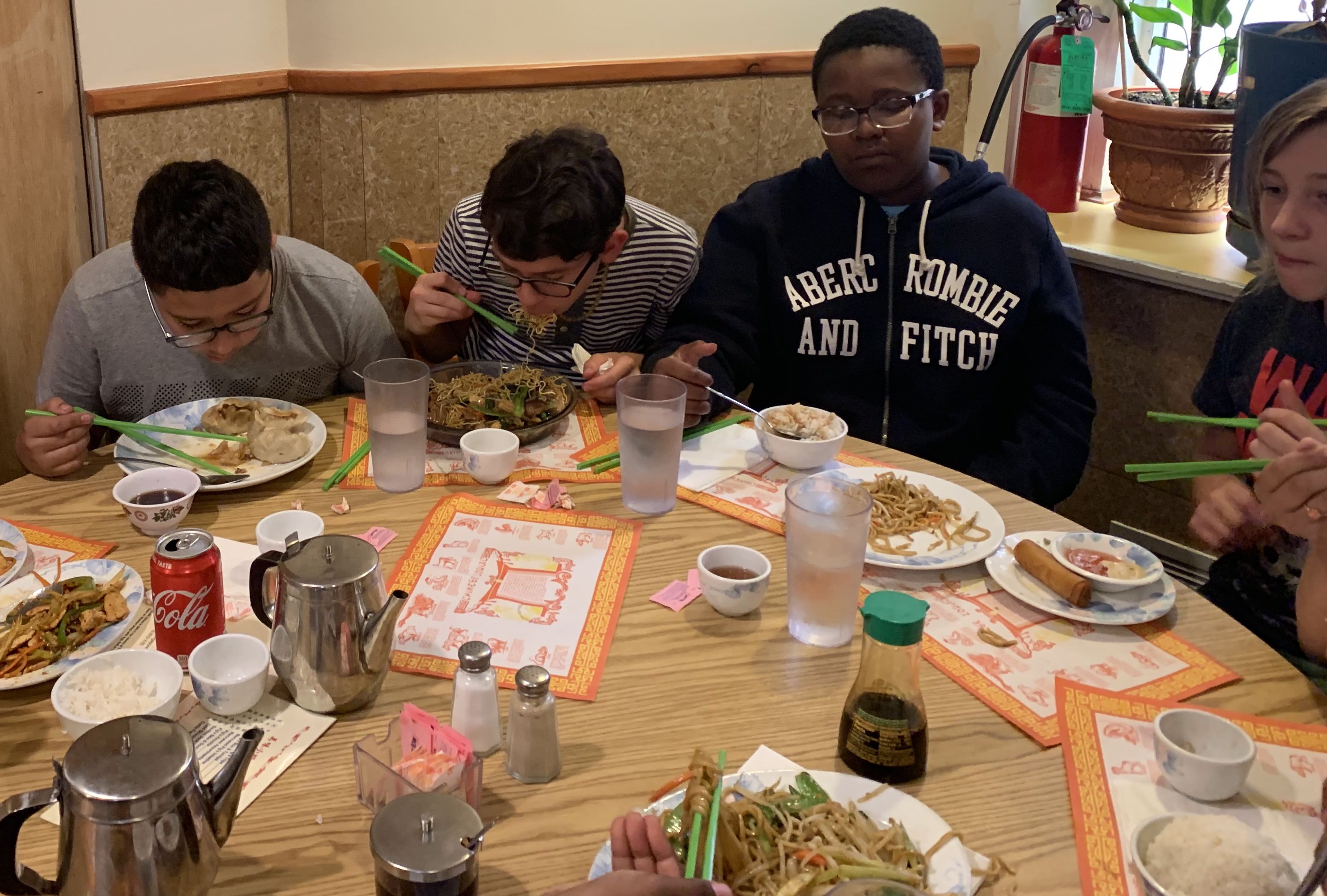
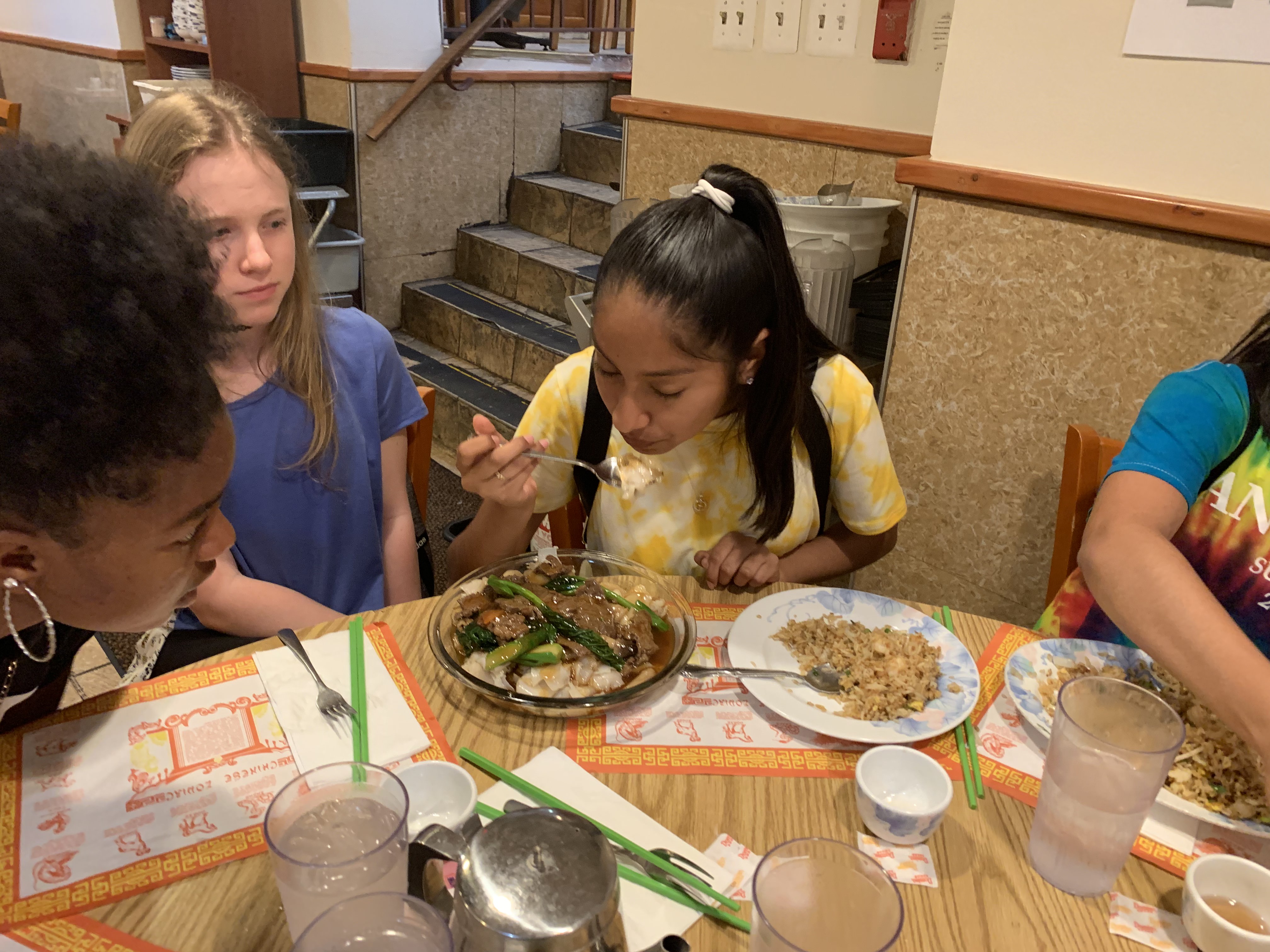


Everyone had a wonderful experience, and it was a lovely way to close out the 2018–2019 school year and bid farewell to the graduating 8th-graders (sniff). To them, we say:

Wait—what? You still don’t know the answers to the riddles??? Okay, okay—here you go: 1. Lóng (龙) 2. Fènghuáng (凤凰). Happy now?