


Looks nice, huh?
Sleep. That beautiful, elusive state of dormant consciousness we just can’t get enough of. As adults, many of us enjoy a torrid relationship with sleep: desiring it mightily, while in return, it plays hard to get.
But for kids, sleep is not something to flirt with. Say doctors writing for WebMD, “Sleep is no less important than food, drink, or safety in the lives of children.” And yet, with our busy lives and comings and goings, we can inadvertently contribute to sleep deprivation in our kids. “With parents working long hours, schedules packed with school, after-school activities, and other lifestyle factors, naps are missed, bedtimes are pushed back, mornings start earlier and nights may be anything but peaceful. Missing naps or going to bed a little late may not seem like a big deal, but it is. It all adds up, with consequences that may last a lifetime.”
This dire pronouncement is no exaggeration, as more and more research on the importance of sleep illuminates. In Healthy Sleep Habits, Happy Child, Marc Weissbluth, M.D., writes,
“Sleep is the power source that keeps your mind alert and calm. Every night and at every nap, sleep recharges the brain’s battery. Sleeping well increases brainpower just as weight lifting builds stronger muscles, because sleeping well increases your attention span and allows you to be physically relaxed and mentally alert at the same time. Then you are at your personal best.”
Sleep Tight
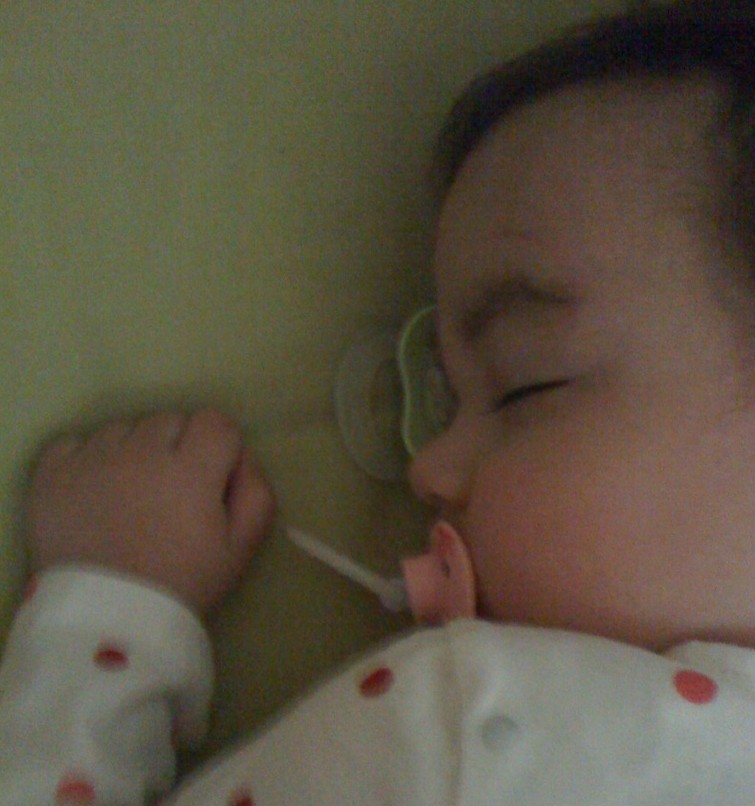
We all have our sleep triggers. This baby girl gets to sleep with–and on–a pacifier.
According to the National Sleep Foundation, here are the recommended number of hours per age group.
- Toddlers: Kids ages 1–3 years need about 12–14 hours of sleep in a 24-hour period.
- Preschoolers: Kids ages 3–5 years need about 11–13 hours of sleep in a 24-hour period. Most do not nap after age 5.
- School-aged kids: Kids ages 5–10 years need about 10–11 hours of sleep in a 24-hour period.
In addition to sleeping in sufficient amounts, sleep should have certain other important characteristics. Sleep should be:
- uninterrupted to allow the child to cycle through all sleep stages, which is important for brain development;
- timed correctly and with the right number of age-appropriate naps, which will optimize the child’s alertness; and
- in sync with the child’s circadian rhythms.
Golden Slumbers
Healthy sleep will provide the necessary foundation for your child’s optimal mind and body development. Although it may seem counterintuitive to trade your budding genius’s classroom time for sleep, the opposite is true. In fact, check out these sleep stats (compiled from multiple sleep studies):
- Children who sleep longer during the day have longer attention spans.
- Children with higher IQs sleep longer.
- Toddlers who sleep more are more sociable and less demanding, whereas those who sleep less can exhibit hyperactivity.
- Sleeping more helps children with attention deficit/hyperactivity disorder both socially and academically.
- Healthy sleep enhances neurologic development and can prevent both learning and behavioral problems.
The New Century School takes naptime seriously. All preprimary and primary kids either nap or have a resting (quiet) period every day. Naptimes are consistent, and so are the rules. Our kids are healthier and happier for it—and they are learning the good sleep habits that will keep them that way throughout their adult lives.


Speaking of adults, healthy sleep is essential for us, too. The Harvard Medical School gives us the following inducements to grab some zzzz’s:
- Learning and memory: Sleep helps the brain commit new information to memory through a process called memory consolidation. In studies, people who’d slept after learning a task did better on tests later.
- Metabolism and weight: Chronic sleep deprivation may cause weight gain by affecting the way our bodies process and store carbohydrates, and by altering levels of hormones that affect our appetite.
- Safety: Sleep debt contributes to a greater tendency to fall asleep during the daytime. These lapses may cause falls and mistakes such as medical errors, air traffic mishaps, and road accidents.
- Mood: Sleep loss may result in irritability, impatience, inability to concentrate, and moodiness. Too little sleep can also leave you too tired to do the things you like to do.
- Cardiovascular health: Serious sleep disorders have been linked to hypertension, increased stress hormone levels, and irregular heartbeat.
- Disease: Sleep deprivation alters immune function, including the activity of the body’s killer cells. Keeping up with sleep may also help fight cancer.
In October, a new U.S. study hypothesizes a new benefit to sleep, one that begins to explain why we and, in fact, every animal on earth (some up to 20 hours a day!) and even some primitive life forms like nematodes, evolved requiring sleep. In Sleep Drives Metabolite Clearance from the Adult Brain, researchers report that when we sleep, cerebrospinal fluid washes through the brain, flushing out built-up debris. “I think we have discovered why we sleep,” the study leader Maiken Nedergaard said. “We sleep to clean our brains.” The mechanism sounds kind of like MacKeeper for your head. At any rate, it’s a very cool theory.
What time we go to bed also makes a difference. You may have heard that every hour you sleep before midnight counts double? It’s not a myth. The underlying physiology probably has to do with hormones and metabolism, says Susan R. Johnson, M.D. in The Importance of Sleep.
Need any more convincing? Thought not. Now go get some rest—you probably need it. Smiles await you when you rise.