

The day before Mother’s Day, a group of birders gathered at Thames St. Park—just around the corner from The New Century School—looking for the colony of black-crowned night herons (Nycticorax nycticorax) known to roost there annually. They were not disappointed: dozens of feathered mothers and fathers (both parents incubate in this species) flew about or made adjustments to their nests.
You may be wondering, why is Immersed covering this? Because they’re awesome, that’s why! Also, they need the TNCS community’s help this year.
Meet the Black-Crowned Night Heron
This bird is one of the most widespread heron species in the world and one of the most striking. Stocky and compact compared to the great blue heron, adults sport a glossy black cap and back, soft gray wings, and vivid red eyes. Juveniles are streaky brown and look like an entirely different bird. Both are beautiful.

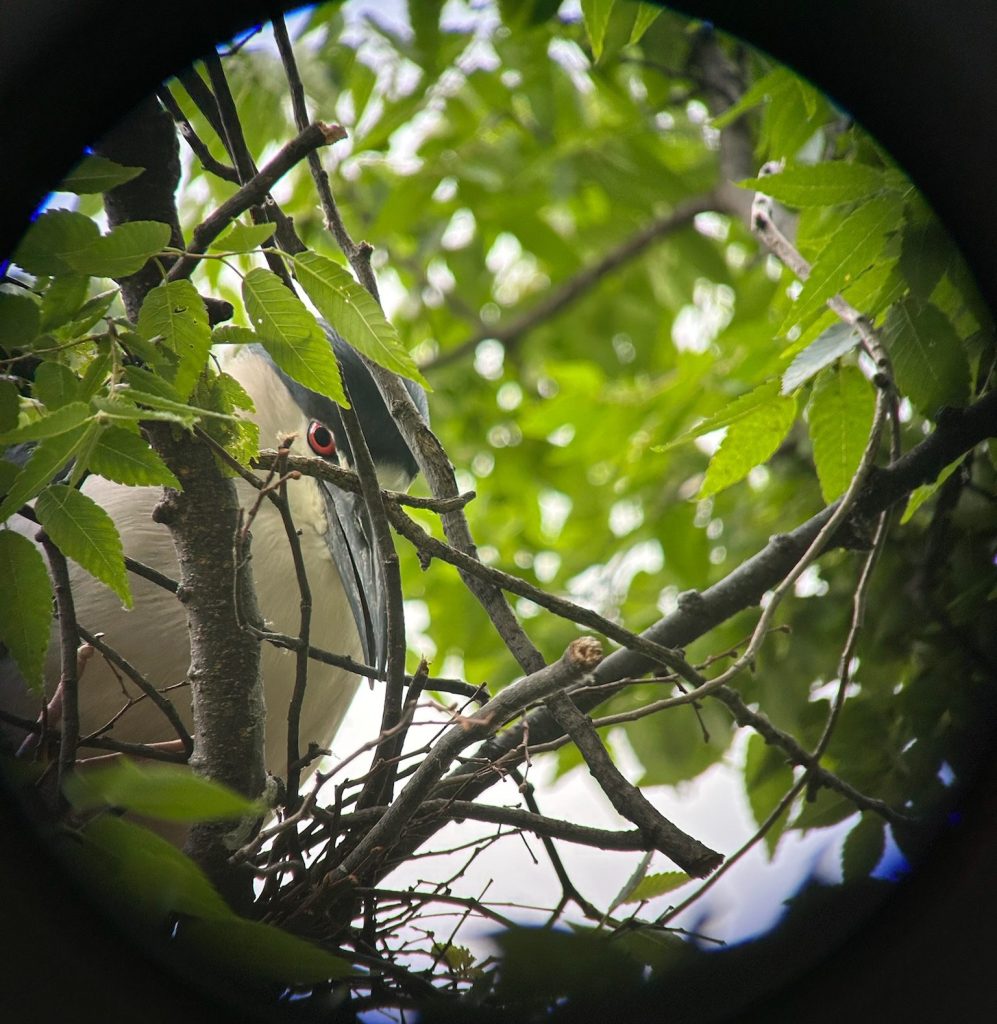
Photo courtesy of Elizabeth Sotoudeh
They’re also, as their name suggests, largely nocturnal, most active at dusk and into the night, when they wade the shallows hunting fish, frogs, and invertebrates. During the day, they roost in trees. As of May 9th, the colony at Thames St. Park included:
- 30 active nests across 9 trees (a couple have 6 or more nests in a single tree!)
- 24 nests currently holding eggs


The birding event was hosted by Jim Rapp of Delmarva Birding Weekends and Baltimore Birding Weekends. Bud Poole, a wildlife rescuer who works with Phoenix Wildlife Center, has been watching this colony closely and spoke about the herons’ plight.
Don’t Blame Thames!
Here’s where the story gets complicated . . . and where the TNCS community comes in. The trees lining Thames St. Park are Japanese Zelkovas, a non-native species. Nobody is entirely sure why the herons chose them. The park location has advantages: the bulkhead along the water is good overwintering habitat, and the pier offers easy fishing. But Japanese Zelkovas are structurally problematic for a heron colony. They have few low branches and little understory vegetation. In Thames St. Park, the ground beneath them is (or was!) hard, consisting of rock and pavement, largely devoid of anything soft to land on until recently.

Now, thanks to Wild Ones, a native plant organization, native plantings have recently been installed beneath the trees, providing a cushion designed to break falls and give downed birds somewhere to shelter while they wait for rescue. Those plants will hopefully be established before nestling activity peaks.
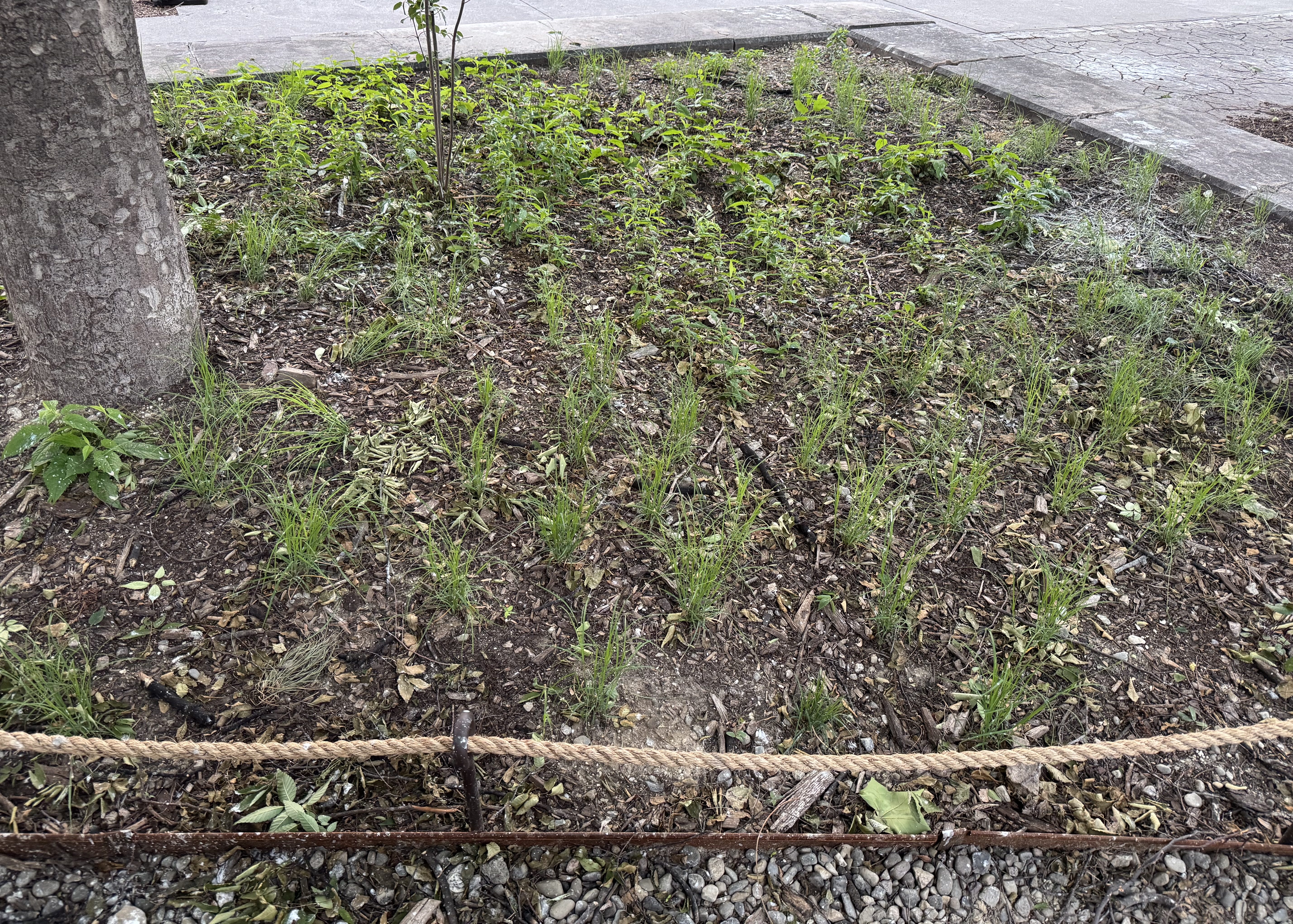
This initiative will be a tremendous help, but it may not completely solve the problem. Here’s where we can help.
Be a Heron Hero!
Service is a TNCS core value. We understand that we have a responsibility to the world beyond our own walls and that meaningful action starts close to home. The herons are part of our neighborhood ecosystem, and they are raising their young in a place that makes survival difficult, not because of anything they did wrong, but because the urban landscape offers imperfect options. A little human attention, at the right moment, can make all the difference.
You may have seen the well-meaning guidance that circulates on social media every spring: If you find a baby bird, leave it alone. Mom is nearby. For many species, in many situations, that’s sound advice. Fledglings (birds in the process of learning independence), for example, are often on the ground intentionally, still under parental supervision.
This guidance does not apply to the black-crowned night herons at Thames St. Park, however. If you find a downed heron chick, here’s what to do:
- Gently place the chick in a box or bag. You don’t need gloves, but do handle the chick calmly and minimally.
- Move it somewhere dark and quiet. Darkness dramatically reduces a bird’s stress; this step is important.
- Call Phoenix Wildlife Center immediately. They will guide you from there.
- 📞 410-628-WREN (410-628-9736)
- ✉️ contact@phoenixwildlife.org
- 🌐 phoenixwildlife.org
- Consider becoming a transporter. Phoenix Wildlife Center relies on community volunteers to transport birds to their facility. You don’t need a special permit; you’re covered under theirs. It takes an hour and it saves a life.
- Follow them on social media. @TS_Nightherons on Instagram and Thames Street Night Herons on Facebook faithfully document the colony. (Looks like some eggs have hatched since the 9th!)
Eggs take 23 to 26 days to hatch after laying, and because hatching within a nest is staggered (not all eggs hatch at once), the window of vulnerability will be extended rather than concentrated. That means sustained community awareness matters more than a single week of vigilance.
This Mother’s Day weekend, as we celebrated the mothers in our lives, 30 or so heron mothers were sitting on eggs, waiting, tending. Their chicks will hatch soon. Some will fall. We can be there when they do.
Special thanks to the 10th annual Baltimore Birding Weekend for hosting the event that opened our eyes to this remarkable colony right in our own backyard.